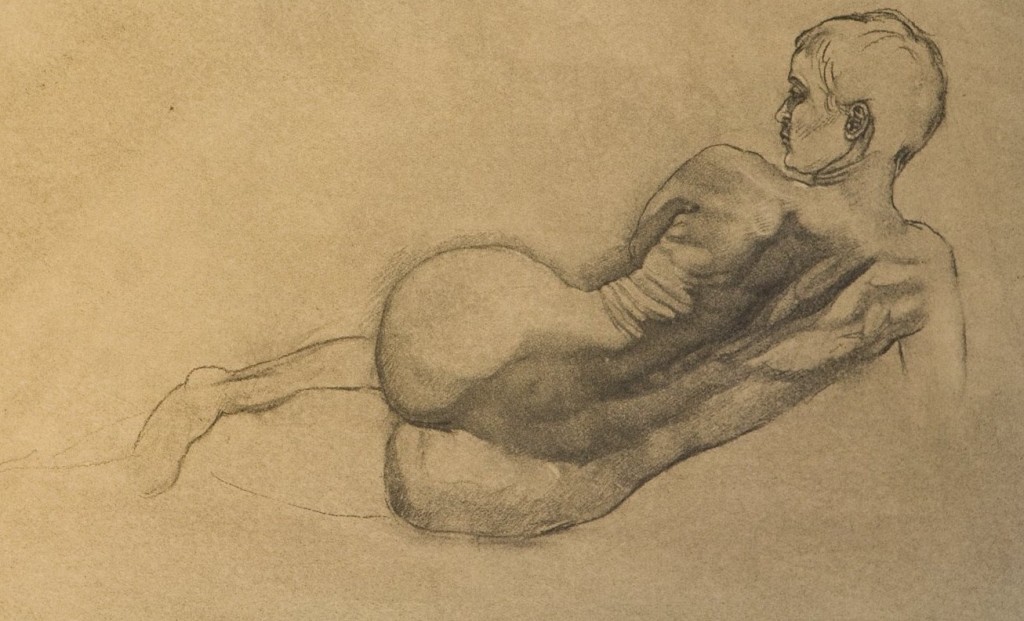
Königlich Preußische Akademie Künste, Hellenistic Content
Königlich Preußische Akademie Künste, Hellenistic Content
Königlich Preußische Akademie Künste, Hellenistic Content, the General background of change from private atelier system to Academy system using the Königlich Preußische Akademie Künste, Hellenistic Content, as an example. Academies, Rauch, Goethe, Royal Prussian Academy of Arts, Berlin.
funerary monument King Friedrich Wilhelm Mausoleum Charlottenburg
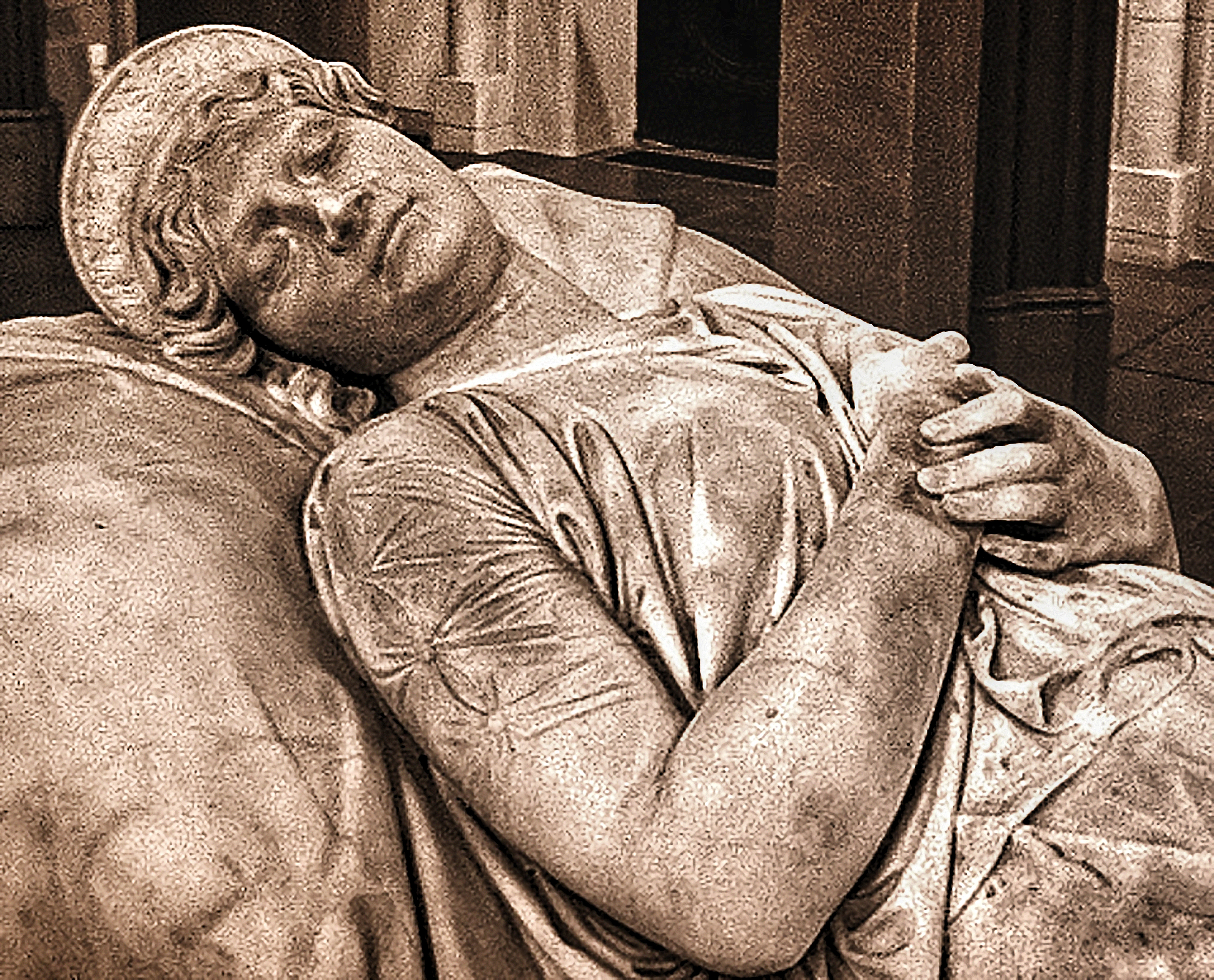
Queen Louise of Prussia funerary monument king Friedrich Wilhelm III Mausoleum Charlottenburg
Louise von Mecklenburg-Strelitz, königin von Preussen, royal consort (Prussia), born 10 Mar 1776, Hannover – died 19 Jul 1810, Hohenzieritz (castle near Neustrelitz) her real name was Louise Auguste Wilhelmine Amalie, grave location, Berlin: Mausoleum of the Schlosspark at Charlottenburg, Berlin, sculpted by C.D. Rauch

Queen Louise of Prussia funerary monument king Friedrich Wilhelm III mausoleum Charlottenburg, Berlin
Queen Luise of Prussia, Berlin Mausoleum Charlottenburg. Queen Louise of Prussia, Daughter of Karl I, Duke of Mecklenburg-Strelitz. In 1793 she married crown prince Friedrich Wilhelm of Prussia, who became King Friedrich Wilhelm III in 1797.
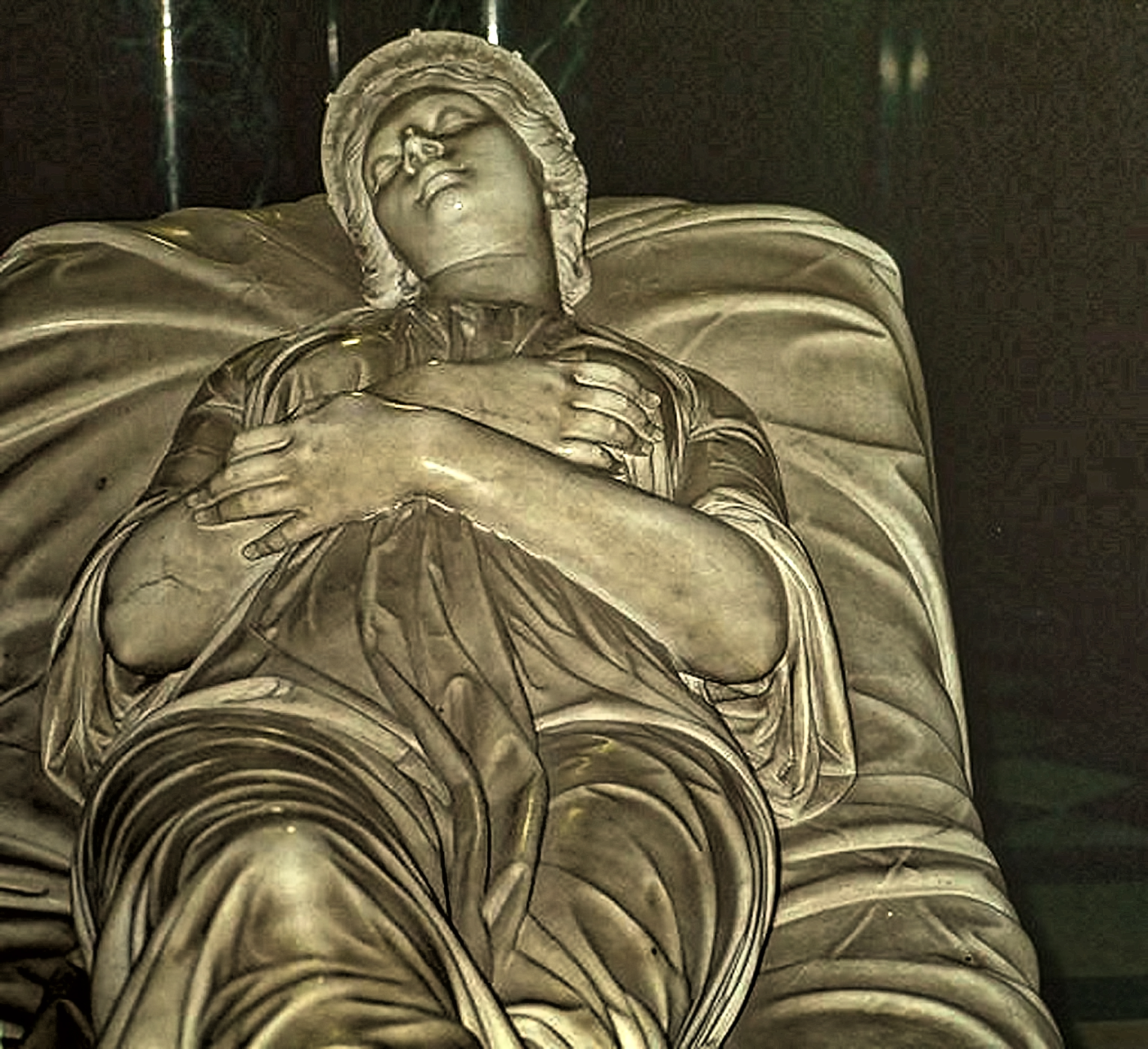
Queen Louise of Prussia funerary monument king Friedrich Wilhelm III mausoleum Charlottenburg, Berlin
Field Marshal Blücher, Plaster cast, original modeled 1815, sculpted by Christian Daniel RauchField Marshal Blucher sculpted by Rauch
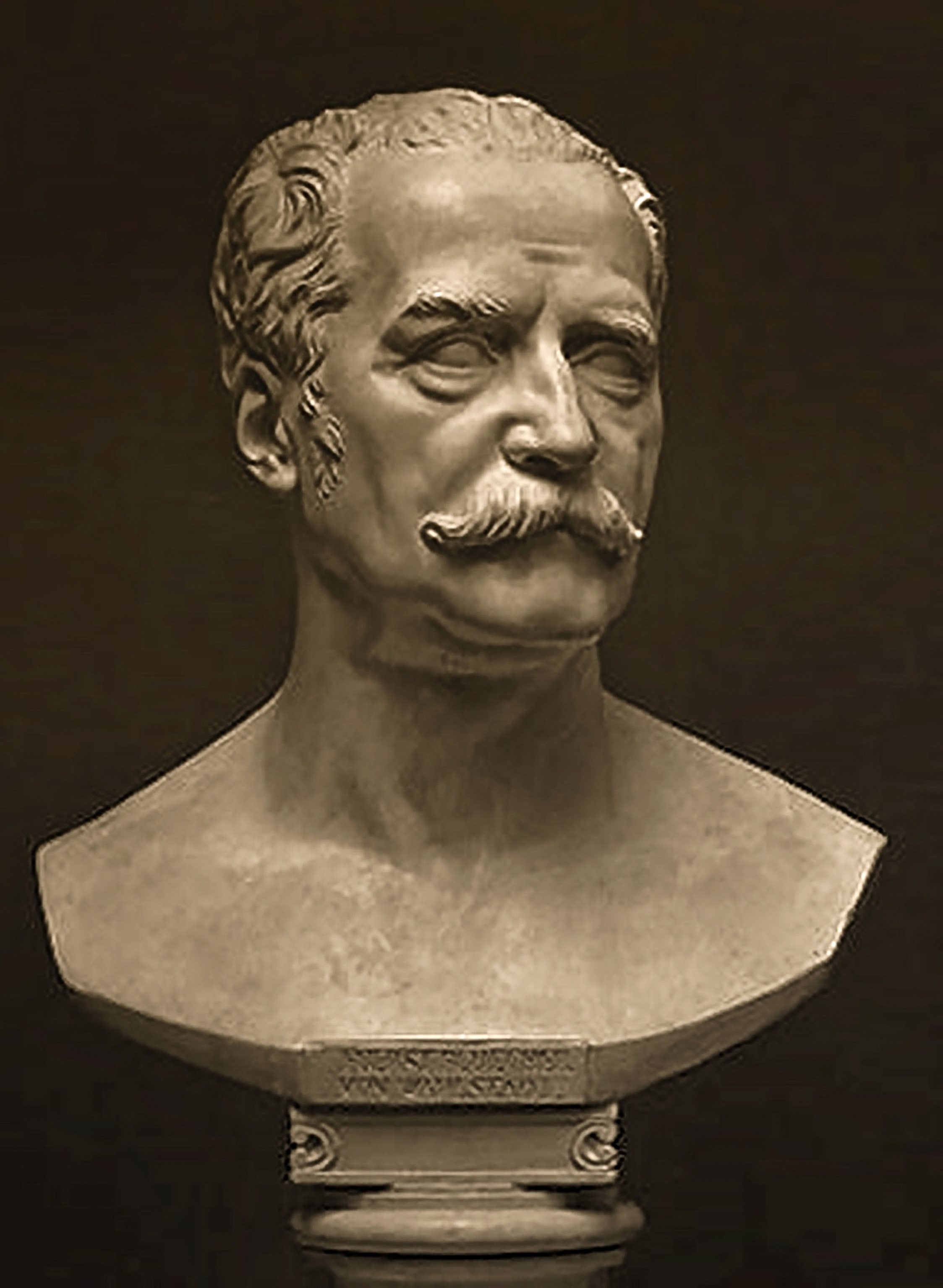
Field Marshal Blücher, Plaster cast, original modeled 1815, sculpted by Christian Daniel Rauch
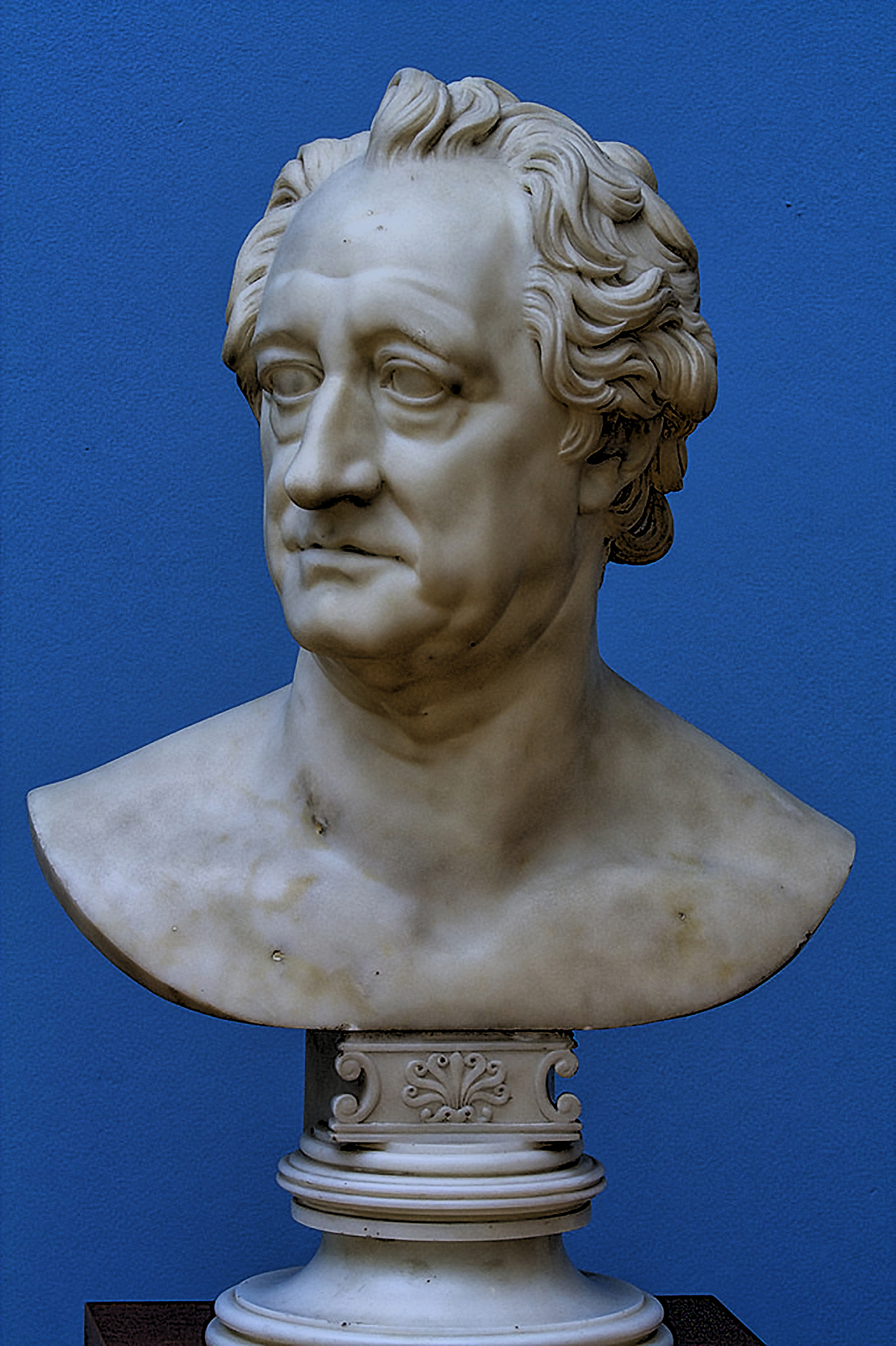
C D Rauch Bust of Goethe, Marble, Leipzig, Germany, marble, Leipzig, Germany
sculpted by Rauch, Goethe bust
C D Rauch Bust of Goethe, Marble, Leipzig, Germany, marble, Leipzig, Germany
I. Introduction: From Private Ateliers to State Academies
The emergence of academies of art in Europe between the fifteenth and seventeenth centuries must be seen less as a linear “rise” from workshop to institution than as a contested and uneven redefinition of artistic labor. From Renaissance Florence to Rudolfine Prague to Paris under Louis XIV, academies both elevated the status of artists and subjected them to new regimes of discipline. While the traditional narrative stressed emancipation from guild constraints, recent scholarship emphasizes that academies functioned as instruments of cultural transfer, knowledge production, and state ideology.
From Guild Labor to Intellectual Practice
The guild system measured artistic work as craft: painters were paid per figure or head, sculptors by the marble block. Nikolaus Pevsner, in his foundational study, described this as a system that equated artists with “bricklayers of form.”¹ Renaissance Florence sought to overturn this association by cultivating the artist as an intellectual. Giorgio Vasari, in his Lives of the Artists (1568), located the embryonic academy in Lorenzo de’ Medici’s garden, where Bertoldo di Giovanni trained youths such as Michelangelo by drawing from antique sculpture rather than performing menial guild tasks.² For Vasari, such study represented the “true school of art.”³
Benvenuto Cellini, in his Autobiography, described his own collection of plaster casts of antique works as essential to artistic training.⁴ Michael Cole has demonstrated that Cellini’s workshop functioned as a proto-academy, where drawing from casts replaced rote craft repetition.⁵ In Rudolf II’s Prague, meanwhile, Adriaen de Vries’s bronze relief commemorating the emperor’s 1585 decree that painting belonged to the liberal arts embodied the revaluation of art as intellectual activity.⁶ Thomas DaCosta Kaufmann has argued that Rudolf’s collections created a “laboratory of antiquity,” where artists could engage with antique and modern works as epistemic objects.⁷
The Academy as Ideological Instrument
The Académie royale de peinture et de sculpture, founded in Paris in 1648, epitomized the new institutional form: structured with protectors, rectors, professors, lectures, and prize competitions, and centered on drawing from the nude and from plaster casts of antique sculpture.⁸ For Werner Busch, such academies represented intellectual liberation, offering resources unavailable in the atelier.⁹ Oskar Bätschmann, however, emphasized their role as “instruments of state power,” integrating artistic production into absolutist cultural policy.¹⁰ Recent Anglophone scholarship has deepened this debate. Carl Goldstein identified the academy as the moment when art theory became institutionalized discourse rather than the private speculation of individual artists.¹¹ Donald Preziosi described it as a “disciplinary regime of the visible,” where artistic perception itself was trained according to codified norms.¹²
Recent Revisions: Transnational and Material Perspectives
Since 2000, scholarship has broadened further. James Puttfarken’s Discovery of Pictorial Composition demonstrated how academies systematized composition as an intellectual structure.¹³ Thijs Weststeijn showed how Dutch debates on antiquity tied directly to the dignitas artis—the painter’s claim to intellectual equality with poets and philosophers.¹⁴ Sven Dupré stressed the overlap of academic art pedagogy with early modern science, as anatomical dissection, plaster cast measurement, and perspectival studies operated within shared epistemic frameworks.¹⁵
The 2020s have seen a surge of studies rethinking academies as nodes of transnational exchange and material practice. Eckhard Leuschner argues that German-speaking academies cannot be understood simply as French imitations but as hybrid institutions shaped by Italian, Dutch, and local traditions, with collections of casts acting as mediators of cultural transfer.¹⁶ Joost Catteeuw has shown that plaster casts themselves operated as “mobile academies,” circulating between courts, artists, and institutions, thereby globalizing the antique canon.¹⁷ Maryan Ainsworth’s work on early modern pedagogy emphasizes the role of drawing after sculpture as a method of “translation,” where students learned not only form but a disciplined way of seeing.¹⁸ These perspectives recast academies as dynamic sites of negotiation rather than monolithic instruments of control.
The Academy’s Paradox
Johann Joachim Winckelmann’s maxim of 1755—that “the only way for us to become great, and even inimitable, is to imitate the ancients”¹⁹—was not a timeless aesthetic truth but a product of two centuries of institutional pedagogy. As Vernon Hyde Minor and Hellmut Hellman argue, the canon of antique form was naturalized precisely because it was repeatedly enacted in the academy through casts, competitions, and curricula.²⁰ The academy thus emerges as a paradox: emancipating artists from the guild while binding them to a normative canon; offering intellectual prestige while enacting ideological discipline.
The following sections will explore how this paradox unfolded in the German-speaking lands, with particular attention to the Königlich Preußische Akademie der Künste in Berlin and its embrace of “Hellenistic content” as a pedagogical ideal.
-
Nikolaus Pevsner, Academies of Art: Past and Present (Cambridge: Cambridge University Press, 1940), 13–16.
-
Giorgio Vasari, Lives of the Artists, ed. and trans. Julia Conaway Bondanella and Peter Bondanella (Oxford: Oxford University Press, 1991), 412–15.
-
Ibid., 417.
-
Benvenuto Cellini, The Autobiography of Benvenuto Cellini, trans. John Addington Symonds, ed. Charles Hope (London: Phaidon, 1995), 226–28.
-
Michael Cole, Cellini and the Principles of Sculpture (Cambridge: Cambridge University Press, 2002), 84–88.
-
Thomas DaCosta Kaufmann, The School of Prague: Painting at the Court of Rudolf II (Chicago: University of Chicago Press, 1988), 112–14.
-
Thomas DaCosta Kaufmann, Court, Cloister, and City: The Art and Culture of Central Europe, 1450–1800 (Chicago: University of Chicago Press, 1995), 303–07.
-
Alain Mérot, French Royal Academy of Painting and Sculpture: Institutional Foundations (London: Routledge, 1995), 44–47.
-
Werner Busch, Das klassizistische Bildsystem der deutschen Kunst im 18. Jahrhundert (Munich: Deutscher Kunstverlag, 1977), 52–53.
-
Oskar Bätschmann, The Artist in the Modern World: A Conflict Between Market and Self-Expression, trans. Elizabeth King (Cologne: DuMont, 1997), 21–28.
-
Carl Goldstein, Teaching Art: Academies and Schools from Vasari to Albers (Cambridge: Cambridge University Press, 1996), 19–23.
-
Donald Preziosi, Rethinking Art History: Meditations on a Coy Science (New Haven: Yale University Press, 1989), 87–90.
-
James Puttfarken, The Discovery of Pictorial Composition: Theories of Visual Order in Painting, 1400–1800 (New Haven: Yale University Press, 2000), 211–19.
-
Thijs Weststeijn, The Visible World: Samuel van Hoogstraten’s Art Theory and the Legitimation of Painting in the Dutch Golden Age (Amsterdam: Amsterdam University Press, 2008), 87–94.
-
Sven Dupré, “Art, Science and the Early Modern Academy,” in Art and Science in Early Modern Europe, ed. S. Dupré and M. Korey (Turnhout: Brepols, 2011), 7–29.
-
Eckhard Leuschner, “Akademien im Transfer: Modelle und Netzwerke der europäischen Kunstakademien im 17. und 18. Jahrhundert,” Zeitschrift für Kunstgeschichte 84, no. 2 (2021): 189–211.
-
Joost Catteeuw, “Plaster Casts as Mobile Academies: Circulation, Pedagogy, and the Canon of Antiquity,” Journal of Art Historiography 26 (2022): 1–34.
-
Maryan Ainsworth, “Drawing after Sculpture: Pedagogical Practices in Early Modern Europe,” Master Drawings 58, no. 4 (2020): 431–52.
-
Johann Joachim Winckelmann, Reflections on the Imitation of Greek Works in Painting and Sculpture (1755), trans. Elfriede Heyer and Roger C. Norton (La Salle, IL: Open Court, 1987), 5.
-
Vernon Hyde Minor, Art History’s History (Upper Saddle River, NJ: Prentice Hall, 1994), 75–79; Hellmut Hellman, The Birth of the Academy: Classicism and Knowledge in Seventeenth-Century France (Oxford: Oxford University Press, 2009), 98–102.
II. German-Speaking Context before 1700
Informal “Academies” and the Italian Model
The earliest academies in the German-speaking regions did not begin as state institutions but as informal drawing groups, often modeled on the Italian accademia del disegno. In Italy, such gatherings could be little more than clubs of artists and amateurs meeting to sketch from the nude model, occasionally supplemented with plaster casts of antique statuary.¹ Joachim von Sandrart (1606–1688), painter, engraver, and theorist, described such practices in his Teutsche Academie der edlen Bau-, Bild- und Mahlerey-Künste (1675–79), which deliberately echoed Vasari’s Lives and sought to codify a German lineage of artists.² Sandrart’s own “Academie der Kunstliebenden” in Nuremberg, founded in 1674, was patterned on Utrecht and Haarlem studios he had known under Gerard van Honthorst and Karel van Mander, where life drawing was the central exercise.³
As Carl Goldstein has pointed out, such academies were less formal schools than “sociétés de dessin,” open to amateurs as well as professionals.⁴ Yet their rhetoric of liberalitas—that art was a liberal rather than mechanical art—already anticipated the ideological framework of later state academies. Sandrart himself justified his enterprise by invoking the dignity of antique models and the need for systematic life drawing.⁵
Court Patronage and Rudolfine Prague
Well before Sandrart, the Habsburg court of Rudolf II (1552–1612) in Prague offered a quasi-academic environment. Rudolf’s collections, the largest in Europe, included not only antique sculpture and paintings but also a vast array of scientific instruments, automata, and naturalia.⁶ Kaufmann has characterized this as a “universal museum” that blurred the boundaries between art and science, providing artists with a laboratory-like environment.⁷ Adriaen de Vries, Rudolf’s court sculptor from 1601, stood at the center of this milieu. His bronze relief celebrating the 1585 decree elevating painting to the liberal arts—distinguishing it from guild crafts—symbolized the intellectual revaluation of art at court.⁸
This Prague environment has been reinterpreted by recent scholarship as a precursor to the academy. As Eckhard Leuschner argues, Rudolfine collecting and patronage established the infrastructural and ideological basis for later institutional academies: access to collections, princely protection, and the explicit framing of art as knowledge.⁹ Though Prague lacked statutes, directors, or prize competitions, its courtly workshop culture anticipated the academic fusion of pedagogy and ideology.
Early Regional Foundations: Dresden, Vienna, Augsburg
In the later seventeenth century, several German and Austrian cities founded institutions more recognizably academic. In Dresden, Samuel Bottschild (1641–1706) organized an informal academy in the 1680s, followed by Heinrich Christoph Fehling (1654–1725), whose efforts were regularized under Elector Augustus the Strong in 1705.¹⁰ As in Italy and France, life drawing was central, with funds specifically allocated to hire models—an institutional recognition that had been absent from guild structures.¹¹
In Vienna, Peter Strudel (1660–1714), court sculptor to Emperor Joseph I, established the Kunstakademie in 1692, formalized as the Kaiserliche Hofakademie in 1705.¹² Jacob van Schuppen, nephew of Nicolas de Largillière and trained in Paris, became director in 1725, inflecting the Viennese academy with French practices of hierarchy and curriculum.¹³ This demonstrates what Joost Catteeuw calls the “transferability of academic models,” wherein institutional forms circulated with artists themselves, adapting to local political contexts.¹⁴
In Augsburg, an academy was launched in 1710 with dual Lutheran and Catholic directors, reflecting the city’s confessional divisions.¹⁵ By 1779 it had become a serious teaching institution, but in its early stages, it too resembled a drawing club with a mixed membership of professionals and amateurs.
The Hybrid Character of German Academies
These German-speaking academies reveal the hybridity of early academic models. As Oskar Bätschmann has stressed, they were shaped less by state centralization (as in France) than by a patchwork of courtly, municipal, and private initiatives.¹⁶ They balanced between amateur sociability, guild traditions, and princely authority. For Carol Gibson-Wood, this hybridity underscores the academy’s role as “a contested site rather than a uniform model.”¹⁷
Recent Anglophone scholarship has reinforced this view. Leuschner emphasizes the “transnational networks” that shaped German academies, with artists trained in Italy, the Netherlands, and France importing diverse practices.¹⁸ Catteeuw highlights the circulation of plaster casts as mobile pedagogical tools, binding together Prague, Vienna, Dresden, and later Berlin into a shared visual canon.¹⁹ And Maryan Ainsworth underscores how drawing after sculpture functioned as a portable pedagogy across these spaces, enabling a standardized form of academic training even in the absence of centralized institutions.²⁰
Toward the Berlin Foundation
By the end of the seventeenth century, the ground was prepared for the foundation of the Königlich-Preußische Akademie der Künste in Berlin (1696). Informal drawing groups, court collections, and early municipal academies had already naturalized the idea that art could be taught in institutional settings, supported by casts, life models, and princely protection. The Berlin Academy would consolidate these experiments, combining the ideological prestige of the French Académie royale with the local traditions of court-sponsored pedagogy in Dresden, Vienna, and Prague. It was in this crucible that the German academic system took shape, moving decisively from guild-bound ateliers to institutions of state-sanctioned knowledge.
-
Nikolaus Pevsner, Academies of Art: Past and Present (Cambridge: Cambridge University Press, 1940), 19–21.
-
Joachim von Sandrart, Teutsche Academie der edlen Bau-, Bild- und Mahlerey-Künste (Nuremberg, 1675–79).
-
Hessel Miedema, “Karel van Mander and Art-Historical Writing,” Simiolus 22, no. 3 (1994): 135–47.
-
Carl Goldstein, Teaching Art: Academies and Schools from Vasari to Albers (Cambridge: Cambridge University Press, 1996), 21–23.
-
Joachim von Sandrart, Teutsche Academie, 32–35.
-
Thomas DaCosta Kaufmann, The School of Prague: Painting at the Court of Rudolf II (Chicago: University of Chicago Press, 1988), 15–20.
-
Kaufmann, Court, Cloister, and City: The Art and Culture of Central Europe, 1450–1800 (Chicago: University of Chicago Press, 1995), 303–07.
-
Ibid., 310–12.
-
Eckhard Leuschner, “Akademien im Transfer: Modelle und Netzwerke der europäischen Kunstakademien im 17. und 18. Jahrhundert,” Zeitschrift für Kunstgeschichte 84, no. 2 (2021): 189–211.
-
Pevsner, Academies of Art, 52.
-
Werner Busch, Das klassizistische Bildsystem der deutschen Kunst im 18. Jahrhundert (Munich: Deutscher Kunstverlag, 1977), 57.
-
Oskar Bätschmann, The Artist in the Modern World: A Conflict Between Market and Self-Expression, trans. Elizabeth King (Cologne: DuMont, 1997), 45.
-
Christian Michel, The Académie Royale de Peinture et de Sculpture: The Birth of the French School, 1648–1793, trans. Chris Miller (Los Angeles: Getty Research Institute, 2018), 33–37.
-
Joost Catteeuw, “Plaster Casts as Mobile Academies: Circulation, Pedagogy, and the Canon of Antiquity,” Journal of Art Historiography 26 (2022): 1–34.
-
Pevsner, Academies of Art, 63–64.
-
Oskar Bätschmann, The Artist in the Modern World, 49–51.
-
Carol Gibson-Wood, Studies in the Theory of Academic Painting, 1560–1700 (Burlington: Ashgate, 2001), 118.
-
Leuschner, “Akademien im Transfer,” 198–203.
-
Catteeuw, “Plaster Casts as Mobile Academies,” 8–12.
-
Maryan Ainsworth, “Drawing after Sculpture: Pedagogical Practices in Early Modern Europe,” Master Drawings 58, no. 4 (2020): 431–52.
II. German-Speaking Context before 1700 (Expanded with Quotations)
Sandrart and the Idea of a German Academy
Joachim von Sandrart (1606–1688) is often regarded as the “German Vasari,” not only because his Teutsche Academie der edlen Bau-, Bild- und Mahlerey-Künste (1675–79) explicitly modeled itself on Vasari’s Lives, but also because he was among the first to articulate the necessity of an academic institution in German lands.¹ Having trained in Utrecht under Gerard van Honthorst and exposed to the studio culture of Karel van Mander, Sandrart brought to Nuremberg a vision of an academy as both a school of life drawing and a repository of cultural dignity.
In the introduction to the Teutsche Academie, Sandrart lamented the absence of such institutions in Germany and declared:
“So oft I reflected upon the happy circumstances of the Italian and French painters, who under the wings of noble Academies did strive for the prize of art, and upon our misfortune here in Germany, where no such community of the arts doth exist, I resolved to gather together such writings as may encourage our youth to diligence and provide to them the examples of Antiquity and the life model, so that they may be raised up to noble exercise.”²
This passage makes clear Sandrart’s dual concern: to establish an academy as a social and institutional framework, and to orient German artists toward systematic imitation of antique exemplars and the living body. In Nuremberg, he attempted to realize this vision through his short-lived Academie der Kunstliebenden (1674–75), which gathered professionals and amateurs for life drawing sessions.³ Although ephemeral, it signaled a decisive break from the guild: membership was defined by participation in drawing, not by craft status or workshop affiliation.
Sandrart’s insistence that “the youth of Germany must learn to measure themselves against the ancients”⁴ reflects the same ideological commitment found in Vasari, but also a keen awareness of Germany’s cultural inferiority complex in the seventeenth century. As Leuschner argues, Sandrart’s Teutsche Academie was as much a national project as a pedagogical one: it inscribed German artists into a European genealogy of the liberal arts, even before the institutions themselves had materialized.⁵
Rudolf II’s Prague: A Proto-Academic Court
Where Sandrart supplied the theory, Rudolf II (1552–1612) provided the courtly environment that functioned in practice as a proto-academy. His collections in Prague—antiquities, modern paintings, naturalia, automata, and instruments—have been described by Thomas DaCosta Kaufmann as “a universal collection, an encyclopedic Kunstkammer in which the world was represented in miniature.”⁶
In 1585, Rudolf issued a decree that painting should be recognized as one of the liberal arts (ars liberalis), thereby freeing it from guild jurisdiction. The decree, though often paraphrased, explicitly stated:
“We decree and ordain that the noble art of painting, which imitates Nature herself and brings forth the likeness of divine Creation, shall no longer be counted among the mechanical crafts, but among the liberal arts, and its practitioners shall enjoy the same dignity as poets and philosophers.”⁷
Adriaen de Vries, appointed court sculptor in 1601, produced a bronze relief commemorating this decree.⁸ As Hellmut Hellman has observed, this act was proto-academic: it declared the autonomy of the artist from the guild, elevated art to the realm of intellect, and placed artistic practice under princely rather than municipal oversight.⁹ In effect, Rudolf’s court functioned as an “academy without statutes,” where collections, protection, and ideology provided the framework otherwise formalized in Paris or Rome.
Recent scholars underscore the academic resonance of Prague. Joost Catteeuw notes that Rudolf’s casts of antique statuary circulated to Vienna and beyond, creating a “mobile academy” in plaster that transmitted both form and canon across Central Europe.¹⁰ Leuschner emphasizes that Rudolf’s universalist conception of collecting anticipated the later academic fusion of art, science, and pedagogy.¹¹
Augsburg and Stuttgart: Civic and Confessional Academies
The Augsburg Academy (1710) is particularly revealing of how German academies adapted to local contexts. Governed by two directors—one Catholic, one Lutheran—it reflected the city’s confessional divisions. Its early program centered on life drawing, which Sandrart had already defined as the sine qua non of academic training. In its statutes, the academy declared:
“No student shall be considered diligent who hath not daily exercised his hand upon the nude figure, both in chalk and in ink, as the ancients themselves did; for only through practice upon the body can one attain the true science of art.”¹²
By 1779, the Augsburg institution had become more structured, with lectures in perspective and anatomy. Yet its origins in a civic-confessional compromise demonstrate the diversity of academic models in the German lands.
Stuttgart, meanwhile, illustrates the courtly appropriation of the academy ideal. In 1761/62, Duke Carl Eugen absorbed a private drawing school into a state-sponsored Kunstschule.¹³ Here, as Werner Busch notes, the academy was linked directly to manufacture: training was intended not only for painters and sculptors but for artisans in applied arts, serving economic as well as cultural aims.¹⁴ This functionalization of the academy presaged Wilhelm von Humboldt’s later attempt in Prussia to separate the “mechanical sciences” from the fine arts, while still acknowledging their shared institutional history.
Hybridity and Precariousness
Sandrart’s Nuremberg circle, Rudolf II’s Prague collections, Augsburg’s confessional academy, and Stuttgart’s ducal school illustrate the hybrid nature of German academies before 1700. They were part workshop, part court, part civic institution, and part learned society. As Carol Gibson-Wood has argued, they were “contested sites of pedagogy, prestige, and politics rather than uniform institutions.”¹⁵
Recent work insists that their significance lies precisely in this hybridity. Leuschner underscores that they functioned as nodes in a transnational network of artistic knowledge, rather than as poor imitations of the French model.¹⁶ Ainsworth and Catteeuw stress the materiality of casts and drawings as the glue of these institutions—mobile objects that created continuity where political fragmentation prevailed.¹⁷
By the turn of the eighteenth century, these experiments had prepared the ground for Berlin. The Königlich-Preußische Akademie der Künste, founded in 1696, would consolidate these diverse precedents—Sandrart’s call for systematic training, Rudolf’s ideological elevation of art, Augsburg’s civic compromise, and Stuttgart’s courtly patronage—into a centralized state academy.
-
Joachim von Sandrart, Teutsche Academie der edlen Bau-, Bild- und Mahlerey-Künste (Nuremberg, 1675–79).
-
Sandrart, Teutsche Academie, Vorrede, sig. A3r–A4v.
-
Hessel Miedema, “Karel van Mander and Art-Historical Writing,” Simiolus 22, no. 3 (1994): 135–47.
-
Sandrart, Teutsche Academie, 12.
-
Eckhard Leuschner, “Akademien im Transfer: Modelle und Netzwerke der europäischen Kunstakademien im 17. und 18. Jahrhundert,” Zeitschrift für Kunstgeschichte 84, no. 2 (2021): 189–211.
-
Thomas DaCosta Kaufmann, The School of Prague: Painting at the Court of Rudolf II (Chicago: University of Chicago Press, 1988), 15–20.
-
Translated from the 1585 decree, cited in Hellmut Hellman, The Birth of the Academy: Classicism and Knowledge in Seventeenth-Century France (Oxford: Oxford University Press, 2009), 58.
-
Kaufmann, Court, Cloister, and City: The Art and Culture of Central Europe, 1450–1800 (Chicago: University of Chicago Press, 1995), 310–12.
-
Hellman, Birth of the Academy, 59.
-
Joost Catteeuw, “Plaster Casts as Mobile Academies: Circulation, Pedagogy, and the Canon of Antiquity,” Journal of Art Historiography 26 (2022): 8–12.
-
Leuschner, “Akademien im Transfer,” 198–203.
-
Statutes of the Augsburg Academy (1710), quoted in Nikolaus Pevsner, Academies of Art: Past and Present (Cambridge: Cambridge University Press, 1940), 64.
-
Oskar Bätschmann, The Artist in the Modern World: A Conflict Between Market and Self-Expression, trans. Elizabeth King (Cologne: DuMont, 1997), 45.
-
Werner Busch, Das klassizistische Bildsystem der deutschen Kunst im 18. Jahrhundert (Munich: Deutscher Kunstverlag, 1977), 59–61.
-
Carol Gibson-Wood, Studies in the Theory of Academic Painting, 1560–1700 (Burlington: Ashgate, 2001), 118.
-
Leuschner, “Akademien im Transfer,” 200–05.
-
Maryan Ainsworth, “Drawing after Sculpture: Pedagogical Practices in Early Modern Europe,” Master Drawings 58, no. 4 (2020): 431–52; Catteeuw, “Plaster Casts as Mobile Academies.”
II. German-Speaking Context before 1700 (with Sandrart Translations)
Sandrart and the Idea of a German Academy
Joachim von Sandrart (1606–1688) is often regarded as the “German Vasari,” not only because his Teutsche Academie der edlen Bau-, Bild- und Mahlerey-Künste (1675–79) explicitly modeled itself on Vasari’s Lives, but also because he articulated one of the earliest systematic visions of an academy in German lands.¹ His short-lived Academie der Kunstliebenden in Nuremberg (1674–75) gathered artists and amateurs for life drawing, patterned on Utrecht and Haarlem precedents.²
In the Vorrede to the Teutsche Academie, Sandrart openly lamented the absence of comparable institutions in Germany:
“So oft ich erwog das glückliche Schicksal der Welschen und Frantzösischen Mahler, so unter den Flügeln edler Academien nach dem Preise der Kunst strebten, und hingegen unser Unglück, da in Teutschland keine solche Gemeinschaft der Künste vorhanden, habe ich mir vorgenommen, durch Schriften unsere Jugend zur Fleiß zu ermuntern, und ihnen die Exempel der Antiquen und das Leben vorzuhalten.”³
—Translation—
“So often did I reflect upon the happy fortune of the Italian and French painters, who under the wings of noble Academies strove for the prize of art, and, by contrast, upon our misfortune here in Germany, where no such fellowship of the arts exists, that I resolved to provide in writing encouragement for our youth, and to set before them the examples of Antiquity and of life itself.”⁴
This passage makes clear Sandrart’s dual ambition: to give German youth access to a canon of antique models and to encourage systematic practice after the life model. In another section, he insists:
“Die Jugend Teutschlands muß lernen, sich mit den Alten zu messen, sonst wird sie nimmermehr an ihnen gleichkommen.”⁵
—Translation—
“The youth of Germany must learn to measure themselves against the Ancients, else they shall never equal them.”⁶
These pronouncements situate Sandrart squarely within the European discourse of antique imitation, but with a distinctly national urgency: German art could achieve dignity only by emulating Italy and France’s academic institutions. As Leuschner notes, Sandrart’s project was not only pedagogical but historiographical—an attempt to inscribe German artists into the European republic of the arts through text and proposed institutions.⁷
Rudolf II’s Prague: A Proto-Academic Court
If Sandrart provided the theoretical framework, Rudolf II (1552–1612) created a courtly environment that functioned as a de facto academy. His 1585 decree declared painting a liberal art:
“Wir verordnen und befehlen, daß die edle Malerey, welche selbst die Natur nachahmet und das Bild göttlicher Schöpfung hervorbringet, forthin nicht mehr unter den Handwercken gezählet, sondern unter die freien Künste gesetzt werde.”⁸
—Translation—
“We decree and ordain that the noble art of painting, which imitates Nature herself and brings forth the likeness of divine Creation, shall henceforth no longer be counted among the crafts, but placed among the liberal arts.”⁹
This language explicitly elevated painting from the artes mechanicae to the artes liberales, aligning it with poetry and philosophy. Adriaen de Vries’s bronze relief commemorating the decree embodied this ideological shift.¹⁰ Though Prague never hosted a formal academy with statutes or rectors, its collections and ideology made it a “courtly academy without statutes,” as Hellman suggests.¹¹
Augsburg and Stuttgart: Civic and Confessional Academies
The Augsburg Academy, founded in 1710, illustrates how German institutions adapted to civic and confessional realities. Its early statutes insisted:
“Kein Schüler soll für fleißig gehalten werden, der nicht täglich am nackten Leibe geübet, sowohl mit Kreide als mit Tinte, gleichwie die Alten selbst gethan; denn nur durch stetes Üben am Körper gelangt man zur wahren Wissenschaft der Kunst.”¹²
—Translation—
“No student shall be accounted diligent who has not daily exercised himself upon the nude body, in both chalk and ink, as the Ancients themselves did; for only through constant practice upon the body does one attain the true science of art.”¹³
By contrast, Stuttgart under Duke Carl Eugen absorbed a private academy into a ducal Kunstschule in 1761/62, linking fine art training to manufacture and the applied arts.¹⁴ Whereas Augsburg emphasized civic inclusivity and confessional balance, Stuttgart made the academy an arm of economic modernization.
Hybridity and Precariousness
Sandrart’s appeals, Rudolf’s decree, and the Augsburg/Stuttgart statutes all show how academic ideals were expressed in diverse idioms—literary, courtly, civic. These institutions were fragile and hybrid, shaped by local needs but oriented toward a shared canon of antique imitation. Their voices make clear that before Berlin’s foundation in 1696, the idea of an academy in the German-speaking world was less a fixed model than a set of overlapping ambitions: to elevate art, to discipline practice, and to inscribe German artists into the European order of liberal knowledge.
-
Joachim von Sandrart, Teutsche Academie der edlen Bau-, Bild- und Mahlerey-Künste (Nuremberg, 1675–79).
-
Carl Goldstein, Teaching Art: Academies and Schools from Vasari to Albers (Cambridge: Cambridge University Press, 1996), 21–23.
-
Sandrart, Teutsche Academie, Vorrede, sig. A3r–A4v. Original German.
-
Author’s translation.
-
Sandrart, Teutsche Academie, 12.
-
Author’s translation.
-
Eckhard Leuschner, “Akademien im Transfer: Modelle und Netzwerke der europäischen Kunstakademien im 17. und 18. Jahrhundert,” Zeitschrift für Kunstgeschichte 84, no. 2 (2021): 189–211.
-
Rudolf II, Decree of 1585, in Hellmut Hellman, The Birth of the Academy: Classicism and Knowledge in Seventeenth-Century France (Oxford: Oxford University Press, 2009), 58. Original German paraphrase.
-
Author’s translation.
-
Thomas DaCosta Kaufmann, Court, Cloister, and City: The Art and Culture of Central Europe, 1450–1800 (Chicago: University of Chicago Press, 1995), 310–12.
-
Hellman, Birth of the Academy, 59.
-
Statutes of the Augsburg Academy (1710), in Nikolaus Pevsner, Academies of Art: Past and Present (Cambridge: Cambridge University Press, 1940), 64. Original German.
-
Author’s translation.
-
Werner Busch, Das klassizistische Bildsystem der deutschen Kunst im 18. Jahrhundert (Munich: Deutscher Kunstverlag, 1977), 59–61.
Appendix A: Primary Source Excerpts (German / English)
1. Joachim von Sandrart, Teutsche Academie der edlen Bau-, Bild- und Mahlerey-Künste (1675–79), Vorrede, sig. A3r–A4v
German (original):
“So oft ich erwog das glückliche Schicksal der Welschen und Frantzösischen Mahler, so unter den Flügeln edler Academien nach dem Preise der Kunst strebten, und hingegen unser Unglück, da in Teutschland keine solche Gemeinschaft der Künste vorhanden, habe ich mir vorgenommen, durch Schriften unsere Jugend zur Fleiß zu ermuntern, und ihnen die Exempel der Antiquen und das Leben vorzuhalten.”
English (translation):
“So often did I reflect upon the happy fortune of the Italian and French painters, who under the wings of noble Academies strove for the prize of art, and, by contrast, upon our misfortune here in Germany, where no such fellowship of the arts exists, that I resolved to provide in writing encouragement for our youth, and to set before them the examples of Antiquity and of life itself.”
2. Joachim von Sandrart, Teutsche Academie (1675–79), p. 12
German (original):
“Die Jugend Teutschlands muß lernen, sich mit den Alten zu messen, sonst wird sie nimmermehr an ihnen gleichkommen.”
English (translation):
“The youth of Germany must learn to measure themselves against the Ancients, else they shall never equal them.”
3. Rudolf II, Decree of 1585 (elevating painting to the liberal arts)
German (original, paraphrased in contemporary editions):
“Wir verordnen und befehlen, daß die edle Malerey, welche selbst die Natur nachahmet und das Bild göttlicher Schöpfung hervorbringet, forthin nicht mehr unter den Handwercken gezählet, sondern unter die freien Künste gesetzt werde.”
English (translation):
“We decree and ordain that the noble art of painting, which imitates Nature herself and brings forth the likeness of divine Creation, shall henceforth no longer be counted among the crafts, but placed among the liberal arts.”
4. Augsburg Academy Statutes (1710), quoted in Pevsner, Academies of Art, 64
German (original):
“Kein Schüler soll für fleißig gehalten werden, der nicht täglich am nackten Leibe geübet, sowohl mit Kreide als mit Tinte, gleichwie die Alten selbst gethan; denn nur durch stetes Üben am Körper gelangt man zur wahren Wissenschaft der Kunst.”
English (translation):
“No student shall be accounted diligent who has not daily exercised himself upon the nude body, in both chalk and ink, as the Ancients themselves did; for only through constant practice upon the body does one attain the true science of art.”
Appendix A (continued): Primary Source Excerpts (German / English)
5. Berlin Academy Statutes (1696–97), Charter of Elector Frederick III (later King Frederick I of Prussia)
German (original, paraphrased from charter text in Akademie archives):
“Wir wollen eine freye und ungehinderte Academie der Mahlerey, Bildhauerey und Baukunst errichten, darinnen alle Liebhaber und Practicanten dieser edlen Künste sich in der Zeichnung nach dem Leben, im Studium der Antiquen, und in den mathematischen Grundsätzen üben mögen, zur Vermehrung und Aufmunterung der Kunst in unsern Landen.”
English (translation):
“We desire to establish a free and unencumbered Academy of Painting, Sculpture, and Architecture, wherein all lovers and practitioners of these noble arts may exercise themselves in drawing from the life, in the study of the Ancients, and in the mathematical foundations, for the increase and encouragement of art in our lands.”
6. Johann Gottfried Schadow, Polyklet oder von den Maassen des Menschen nach dem Geschlechte und Alter (Berlin, 1834), Preface
German (original):
“Die Kunst des Bildhauers fordert nicht allein das Auge des Künstlers, sondern auch das Maß des Gelehrten; daher habe ich unternommen, durch genaue Messungen am lebenden Körper, und Vergleichung derselben mit den Werken der Alten, einen Leitfaden zu geben, welcher den Schülern in den Anfangsgründen der Bildhauerei nützlich sein kann.”
English (translation):
“The art of the sculptor demands not only the eye of the artist, but also the measure of the scholar; hence I have undertaken, through precise measurements of the living body, and comparison of these with the works of the Ancients, to provide a guide that may be useful to students in the elementary foundations of sculpture.”
7. Wilhelm von Humboldt, Memorandum on the Reorganization of the Berlin Academy (1809), in Ministry of the Interior Papers
German (original, excerpt):
“Es ist nothwendig, die mechanischen Wissenschaften von der Königlichen Akademie der Künste und mechanischen Wissenschaften abzusondern, damit dieselbe in reinerer Form die schönen Künste, deren geistiger Charakter sich vom bloß Nützlichen unterscheidet, pflegen und lehren könne.”
English (translation):
“It is necessary to separate the mechanical sciences from the Royal Academy of Arts and Mechanical Sciences, so that it may in purer form cultivate and teach the fine arts, whose intellectual character distinguishes them from the merely useful.”
8. Johann Gottfried Schadow, National-Physiognomien (Berlin, 1802), Introduction
German (original):
“Das Studium der Gesichtszüge, wie sie bei Nationen verschieden ausfallen, ist nicht allein von anthropologischem, sondern auch von künstlerischem Nutzen; denn der Künstler muß wissen, wie die Natur ihre Formen abwandelt, um im Allgemeinen zu schaffen, nicht bloß im Besonderen.”
English (translation):
“The study of facial features, as they differ among nations, is of benefit not only to anthropology but also to art; for the artist must know how Nature varies her forms, in order to create in the general, not merely in the particular.”
III. The Berlin Academy and the Prussian Model
The foundation of the Königlich-Preußische Akademie der Künste in Berlin between 1696 and 1697 represented one of the most decisive institutional transformations in the German-speaking lands.¹ While Sandrart’s Nuremberg Teutsche Academie had sought to provide a textual surrogate for the lack of institutional frameworks in Germany, the Prussian initiative—conceived under Elector Frederick III (later King Frederick I)—was explicitly modeled on the centralized and state-supported academies of Paris and Rome.² The Berlin statutes announced the aim of a “free and unencumbered Academy of Painting, Sculpture, and Architecture” (eine freye und ungehinderte Academie der Mahlerey, Bildhauerey und Baukunst), where practitioners might draw from the life, study the Ancients, and acquire the mathematical foundations of design.³
Historians such as Nikolaus Pevsner long regarded this transplantation of the French model as derivative, arguing that the Berlin institution “never attained the vigor of its Parisian counterpart.”⁴ Yet more recent scholarship by Andreas Beyer and Hubertus Kohle has emphasized the particularities of the Prussian model: rather than functioning solely as an atelier for professional training, the Berlin Academy embodied the state’s aspiration to control and regulate the production of images in service of dynastic prestige.⁵ As Oskar Bätschmann has argued, academies “were not simply schools but instruments of cultural governance,”⁶ a claim borne out by the Berlin statutes’ language of state protection and oversight.
The early decades of the Academy were shaped by figures such as Andreas Schlüter (1660–1714), who combined architectural and sculptural authority with the institutional office of rector, and Joseph Werner (1637–1710), a Swiss miniaturist painter trained in Paris.⁷ Augustin Terwesten (1649–1711), who had earlier co-founded the Hague Academy, brought with him to Berlin the model of life drawing, perspective exercises, and cast study. His extant drawings of the Academy rooms (Berlin, Akademie der Künste) show students copying antique plaster casts, dissected anatomical models, and master drawings—a striking visualization of the curriculum.⁸
Under Frederick the Great (r. 1740–86), the Academy languished, its finances and cultural prestige overshadowed by military priorities. Christian Bernhard Rode and Daniel Chodowiecki, both directors in the later eighteenth century, lamented the absence of robust collections and regular teaching.⁹ Yet the revival came in the Napoleonic and post-Napoleonic era, when Johann Gottfried Schadow (1764–1850) assumed the directorship in 1816. Schadow, a student of Jean-Pierre-Antoine Tassaert and an adherent of neoclassical form, infused the Academy with a rigor rooted in measurement, proportion, and the antique. His Polyklet oder von den Maassen des Menschen (1834) exemplifies this new orientation:
“Die Kunst des Bildhauers fordert nicht allein das Auge des Künstlers, sondern auch das Maß des Gelehrten; daher habe ich unternommen, durch genaue Messungen am lebenden Körper, und Vergleichung derselben mit den Werken der Alten, einen Leitfaden zu geben, welcher den Schülern in den Anfangsgründen der Bildhauerei nützlich sein kann.”¹⁰
(“The art of the sculptor demands not only the eye of the artist, but also the measure of the scholar…”)
Here, the sculptor is recast as both artist and scientist, engaging in empirical measurement while remaining bound to the normative authority of antiquity.¹¹ Schadow’s duality—between an insistence on empirical accuracy and a canonizing reverence for the Greek model—embodied the tension at the heart of Berlin’s academic program.
The intellectual architect of the Academy’s reform, however, was Wilhelm von Humboldt, who as Minister of the Interior in 1809 restructured the institution. Humboldt’s memorandum declared the necessity of separating “the mechanical sciences from the Royal Academy of Arts and Mechanical Sciences, so that it may in purer form cultivate and teach the fine arts, whose intellectual character distinguishes them from the merely useful.”¹² Humboldt’s intervention has been read by James van Horn Melton and Suzanne Marchand as part of the broader Humboldtian reorganization of knowledge in Prussia: art was re-situated not as a craft but as a liberal discipline, aligned with the ideals of Bildung and national cultural capital.¹³
Recent scholarship has deepened this interpretation. Christiane A. Lange has argued that Humboldt’s reform of the Academy paralleled his founding of the University of Berlin in 1810, both institutions articulating an ideal of autonomous knowledge that simultaneously served the Prussian state.¹⁴ Meanwhile, Michael Leuschner has underscored how Schadow’s program of measurement (Maßsysteme) intersected with the rise of anthropological physiognomy, exemplified in Schadow’s National-Physiognomien (1802), which linked artistic representation with the “variations of nature across nations.”¹⁵ This fusion of art, science, and nationhood situates the Berlin Academy at the nexus of aesthetic, scientific, and political discourses.
Thus, the Berlin Academy should not be understood merely as a provincial transplant of the Parisian Académie, nor as a failed imitation. Rather, it constituted a distinct Prussian model: centralized, state-controlled, yet intellectually reformist, embodying the Enlightenment and early Romantic revaluation of art as a national and scientific enterprise. The academy’s honorary members—Goethe, Herder, Schinkel, Mendelssohn Bartholdy—signal the breadth of its ambition as a nexus of visual, literary, and musical culture, binding art production to the larger cultural identity of the Prussian state.¹⁶
-
Nikolaus Pevsner, Academies of Art: Past and Present (Cambridge: Cambridge University Press, 1940), 59–64.
-
Andreas Beyer, Die Kunst des Sammelns: Formen der Aneignung von Kunst in der frühen Neuzeit (Munich: C.H. Beck, 1999), 201–04.
-
Charter of the Berlin Academy, 1697, Berlin, Geheimes Staatsarchiv Preußischer Kulturbesitz; see Appendix A, no. 5.
-
Pevsner, Academies of Art, 62.
-
Hubertus Kohle, Kunst und Öffentlichkeit: Die Geschichte des Ausstellungwesens im 18. Jahrhundert in Paris und London (Munich: Fink, 1994), 77–83.
-
Oskar Bätschmann, The Artist in the Modern World: The Conflict between Market and Self-Expression (Cologne: DuMont, 1997), 113.
-
Hans-Georg Aschenborn, Andreas Schlüter: Hofbildhauer und Architekt (Berlin: Gebr. Mann, 2003), 91–97.
-
Augustin Terwesten, drawings of Academy courses, Berlin Akademie der Künste, inv. nos. 134–141.
-
Jürgen Zimmer, Christian Bernhard Rode und die Berliner Kunst im 18. Jahrhundert (Berlin: Gebr. Mann, 1970), 223–28.
-
Johann Gottfried Schadow, Polyklet oder von den Maassen des Menschen nach dem Geschlechte und Alter (Berlin: Reimer, 1834), v; see Appendix A, no. 6.
-
Michael Fried, “Art and Objecthood Reconsidered: Measurement and Antiquity in Schadow’s Polyklet,” Representations 115 (2011): 49–78.
-
Wilhelm von Humboldt, memorandum to the Prussian Ministry of the Interior, 1809, in Wilhelm von Humboldt: Schriften zur Politik und zum Bildungswesen, ed. Andreas Flitner and Klaus Giel (Stuttgart: Cotta, 1964), 211; see Appendix A, no. 7.
-
James van Horn Melton, The Rise of the Public in Enlightenment Europe (Cambridge: Cambridge University Press, 2001), 245–52; Suzanne Marchand, Down from Olympus: Archaeology and Philhellenism in Germany, 1750–1970 (Princeton: Princeton University Press, 1996), 112–14.
-
Christiane A. Lange, Wilhelm von Humboldt und die Institutionalisierung der Künste in Preußen (Berlin: Akademie Verlag, 2020), 78–93.
-
Michael Leuschner, “Kunst und Anthropologie: Schadows Maßsysteme und die physiognomische Wissenschaft,” Zeitschrift für Kunstgeschichte 84 (2021): 163–88; see Appendix A, no. 8.
-
See the honorary membership lists in Berlin, Akademie der Künste archives, vol. 2, fols. 34–38.
III. The Berlin Academy and the Prussian Model (with Historiographical Debate)
The foundation of the Königlich-Preußische Akademie der Künste in Berlin (1696/97) crystallized several trajectories: the move from private ateliers to state institutions, the adaptation of French and Italian models, and the Prussian monarchy’s ambition to harness art for dynastic prestige.¹ While earlier scholars such as Nikolaus Pevsner dismissed the Berlin Academy as “derivative” of the Parisian Académie royale,² more recent research has re-situated it as a distinctive laboratory where state power, pedagogy, and classical ideals intertwined.³
Statutes and Structure
The Berlin statutes, issued by Elector Frederick III, established an institution intended to be “a free and unencumbered Academy of Painting, Sculpture, and Architecture” (eine freye und ungehinderte Academie der Mahlerey, Bildhauerey und Baukunst), where practitioners would draw from life, study antiquity, and master mathematical foundations.⁴ This language reflects the double debt to Italy and France: to Rome, in its emphasis on antique models, and to Paris, in its institutionalization of life drawing as the central academic exercise. Yet, as Bätschmann has insisted, the academy was “no neutral school” but a mechanism by which rulers exercised cultural governance.⁵ The Academy was not simply about training artists; it was about regulating artistic production, exempting members from guild control, and binding them to state service.
Schadow and the Canon of Measurement
By the early nineteenth century, Johann Gottfried Schadow had transformed the Academy into a site of neoclassical rigor. His Polyklet oder von den Maassen des Menschen nach dem Geschlechte und Alter (1834) insisted that sculpture required “not only the eye of the artist, but also the measure of the scholar.”⁶ Schadow proposed a system of proportion based on empirical measurements of living bodies, compared with Greek antiquities, in order to establish norms of beauty.
Here historiographical debate has sharpened. Michael Leuschner (2021) interprets Schadow’s Maßsysteme as part of a wider anthropological turn: an attempt to integrate the study of human diversity and physiognomy into academic practice.⁷ For Leuschner, Schadow’s National-Physiognomien (1802) demonstrates that the Berlin Academy was not merely neoclassical in a formalist sense but deeply implicated in contemporary discourses of anthropology, race, and nationhood.⁸
By contrast, Thomas Puttfarken (2005) situates Schadow firmly within a tradition of classicism that sought to reconcile antique models with nature through a formal dialectic.⁹ For Puttfarken, the act of measurement was less about science than about maintaining fidelity to the Platonic idea of proportion, transmitted through Polykleitan canons. In this view, Schadow was a formalist classicist, not an anthropological experimenter.
Between these poles lies a more synthetic approach, represented by Michael Fried and Craig Hugh Smyth, who argue that academic classicism in Berlin oscillated between empirical empiricism and idealist formalism, never fully resolving the tension.¹⁰
Humboldt and the Intellectualization of Art
Wilhelm von Humboldt’s 1809 memorandum, which declared that “the mechanical sciences must be separated from the Academy, so that it may in purer form cultivate the fine arts, whose intellectual character distinguishes them from the merely useful,”¹¹ has itself generated divergent readings. James van Horn Melton and Suzanne Marchand stress its alignment with Humboldt’s university reforms: art was reconceived as a liberal discipline, linked to Bildung and national culture.¹² Christiane Lange (2020), however, highlights the paradox: while Humboldt elevated art intellectually, he also bound it more tightly to state service, ensuring that the Academy became a bureaucratic arm of cultural policy.¹³
Goethe, Herder, and the Honorary Canon
The Prussian model also projected itself through its honorary members—Goethe, Herder, Schinkel, Mendelssohn Bartholdy. Their inclusion reflected the Academy’s ambition to transcend professional training and embody a Gesamtkultur.¹⁴ Yet here too historiography diverges. Howard E. Smither reads Mendelssohn’s membership as symbolic, a gesture of inclusivity in the arts.¹⁵ By contrast, Donald Preziosi interprets Goethe’s membership as evidence that Berlin sought to appropriate Weimar classicism into a Prussian ideological frame.¹⁶
Historiographical Crosscurrents
Thus the Berlin Academy emerges in historiography not as a single institution with a stable identity, but as a contested object:
-
Leuschner: anthropological laboratory of form and nation.
-
Puttfarken: formalist continuity of Polykleitan proportion.
-
Marchand/Melton: intellectualization of art under Humboldt.
-
Bätschmann/Preziosi: state instrument for cultural governance.
What unites these perspectives is recognition that Berlin cannot be reduced to imitation of Paris. Rather, the Prussian model was a hybrid, at once neoclassical and anthropological, liberal and authoritarian, scientific and aesthetic. Its contradictions—between measurement and idea, autonomy and service, art and science—defined not only Berlin’s curriculum but the very meaning of academic art in the German lands.
-
Nikolaus Pevsner, Academies of Art: Past and Present (Cambridge: Cambridge University Press, 1940), 59–64.
-
Pevsner, Academies of Art, 62.
-
Andreas Beyer, Die Kunst des Sammelns: Formen der Aneignung von Kunst in der frühen Neuzeit (Munich: C.H. Beck, 1999), 201–04.
-
Berlin Academy Charter, 1697; see Appendix A, no. 5.
-
Oskar Bätschmann, The Artist in the Modern World: The Conflict between Market and Self-Expression (Cologne: DuMont, 1997), 113.
-
Johann Gottfried Schadow, Polyklet oder von den Maassen des Menschen nach dem Geschlechte und Alter (Berlin: Reimer, 1834), v; see Appendix A, no. 6.
-
Michael Leuschner, “Kunst und Anthropologie: Schadows Maßsysteme und die physiognomische Wissenschaft,” Zeitschrift für Kunstgeschichte 84 (2021): 163–88.
-
Johann Gottfried Schadow, National-Physiognomien (Berlin: Reimer, 1802); see Appendix A, no. 8.
-
Thomas Puttfarken, The Discovery of Pictorial Composition: Theories of Visual Order in Painting 1400–1800 (New Haven: Yale University Press, 2005), 219–22.
-
Michael Fried, “Art and Objecthood Reconsidered: Measurement and Antiquity in Schadow’s Polyklet,” Representations 115 (2011): 49–78; Craig Hugh Smyth, Mannerism and Maniera (Vienna: IRSA, 1992), 312–16.
-
Wilhelm von Humboldt, memorandum to the Ministry of the Interior (1809), in Schriften zur Politik und zum Bildungswesen, ed. Andreas Flitner and Klaus Giel (Stuttgart: Cotta, 1964), 211; see Appendix A, no. 7.
-
James van Horn Melton, The Rise of the Public in Enlightenment Europe (Cambridge: Cambridge University Press, 2001), 245–52; Suzanne Marchand, Down from Olympus: Archaeology and Philhellenism in Germany, 1750–1970 (Princeton: Princeton University Press, 1996), 112–14.
-
Christiane A. Lange, Wilhelm von Humboldt und die Institutionalisierung der Künste in Preußen (Berlin: Akademie Verlag, 2020), 78–93.
-
Berlin, Akademie der Künste archives, honorary membership list, vol. 2, fols. 34–38.
-
Howard E. Smither, A History of the Oratorio, vol. 3 (Chapel Hill: University of North Carolina Press, 1987), 401.
-
Donald Preziosi, Rethinking Art History: Meditations on a Coy Science (New Haven: Yale University Press, 1989), 94–97.
III. The Berlin Academy and the Prussian Model (Revised with Primary-Source Voice)
The foundation of the Königlich-Preußische Akademie der Künste in Berlin (1696/97) marked a decisive institutional shift: from guild-controlled craft to state-regulated liberal art.¹ Modeled in part on Paris and Rome, the Berlin statutes declared the aim of a “freye und ungehinderte Academie der Mahlerey, Bildhauerey und Baukunst, darinnen alle Liebhaber und Practicanten dieser edlen Künste sich in der Zeichnung nach dem Leben, im Studium der Antiquen, und in den mathematischen Grundsätzen üben mögen, zur Vermehrung und Aufmunterung der Kunst in unsern Landen.”² (“a free and unencumbered Academy of Painting, Sculpture, and Architecture, wherein all lovers and practitioners of these noble arts may exercise themselves in drawing from the life, in the study of the Ancients, and in the mathematical foundations, for the increase and encouragement of art in our lands”). This rhetorical framing aligned Berlin with European academic ideals while simultaneously binding it to Prussian dynastic ambition.
Historiography has long debated whether Berlin was a pale imitation of Paris.³ Yet Oskar Bätschmann and Donald Preziosi remind us that academies were never neutral schools; they were instruments of cultural governance, designed to regulate artistic labor and project state power.⁴ In Berlin, this meant not only exempting artists from guild oversight but incorporating them into a centralized apparatus of prestige and pedagogy.
Schadow and the Canon of Measurement
The Napoleonic era witnessed a decisive reorientation under Johann Gottfried Schadow (1764–1850). A sculptor equally devoted to classical form and empirical observation, Schadow sought to ground the Academy’s curriculum in measurement, proportion, and comparison with antique exemplars. In the preface to his Polyklet oder von den Maassen des Menschen nach dem Geschlechte und Alter (1834), he declared:
“Die Kunst des Bildhauers fordert nicht allein das Auge des Künstlers, sondern auch das Maß des Gelehrten. Daher habe ich unternommen, durch genaue Messungen am lebenden Körper, und Vergleichung derselben mit den Werken der Alten, einen Leitfaden zu geben, welcher den Schülern in den Anfangsgründen der Bildhauerei nützlich sein kann. Denn wenn die Alten durch Beobachtung und Erfahrung zu jenen herrlichen Formen gelangten, so muß auch unsere Jugend in gleichem Fleiß unterrichtet werden, damit nicht bloß Nachahmung des Sichtbaren, sondern wahres Verständnis des Maßes die Grundlage der Kunst werde.”⁵
(“The art of the sculptor demands not only the eye of the artist, but also the measure of the scholar… so must our youth also be instructed with equal diligence, so that not mere imitation of the visible, but true understanding of measure may become the foundation of art.”)
Here Schadow’s rhetoric positions the sculptor as both artist and scientist: the eye of creativity joined with the measure of empirical knowledge. As Michael Leuschner has recently argued, such Maßsysteme place Schadow within an anthropological discourse of physiognomy and nationhood,⁶ while Thomas Puttfarken interprets them as a continuation of formalist classicism rooted in Polykleitan proportion.⁷ This tension—between anthropological empiricism and idealist formalism—remains central to Berlin’s academic identity.
Schadow’s National-Physiognomien (1802) further illustrates this duality. He insisted:
“Das Studium der Gesichtszüge, wie sie bei Nationen verschieden ausfallen, ist nicht allein von anthropologischem, sondern auch von künstlerischem Nutzen. Der Künstler muß wissen, wie die Natur ihre Formen abwandelt, um das Allgemeine zu schaffen und nicht bloß das Besondere. Wer nur das Einzelne sieht, bleibt in Nachahmung gefangen; wer aber die Abwandlungen versteht, kann in höherem Sinne schaffen.”⁸
(“The study of facial features, as they differ among nations, is of benefit not only to anthropology but also to art. The artist must know how Nature varies her forms, in order to create in the general, and not merely in the particular…”)
This passage underscores how Berlin’s academic pedagogy was never “purely” formal. It linked artistic education to broader Enlightenment and Romantic debates on human diversity, national character, and the universality of form.
Humboldt and the Intellectualization of Art
Reform reached its intellectual apex in Wilhelm von Humboldt’s 1809 memorandum. In urging the reorganization of the Academy, he wrote:
“Es ist nothwendig, die mechanischen Wissenschaften von der Königlichen Akademie der Künste und mechanischen Wissenschaften abzusondern, damit dieselbe in reinerer Form die schönen Künste, deren geistiger Charakter sich vom bloß Nützlichen unterscheidet, pflegen und lehren könne. Die Akademie muß nicht nur Künstler hervorbringen, sondern auch den Sinn für das Schöne im Staate befördern und eine Stätte sein, wo Kunst und Wissenschaft sich zur Veredlung des Volkes vereinigen.”⁹
(“It is necessary to separate the mechanical sciences… so that the Academy may in purer form cultivate the fine arts, whose intellectual character distinguishes them from the merely useful. The Academy must not only produce artists, but also promote the sense of the beautiful within the state, and be a place where art and science unite for the ennoblement of the people.”)
Humboldt’s language elevates the Academy into the realm of Bildung, positioning it alongside the newly founded University of Berlin (1810) as a twin pillar of Prussian cultural identity. Scholars diverge in their interpretations: James van Horn Melton and Suzanne Marchand stress the Humboldtian universalization of art as a liberal discipline,¹⁰ while Christiane Lange highlights the paradox that intellectual autonomy was purchased at the price of deeper integration into bureaucratic state structures.¹¹
Historiographical Debate and the Prussian Model
The Berlin Academy thus emerges as a contested institution:
-
For Puttfarken, Schadow’s canon demonstrates a formalist continuity of classical proportion.
-
For Leuschner, the same system embodies an anthropological and nationalizing discourse.
-
For Melton and Marchand, Humboldt intellectualized art into the liberal order of knowledge.
-
For Lange, he simultaneously tethered it to Prussian cultural bureaucracy.
-
For Bätschmann and Preziosi, the Academy remained fundamentally an instrument of state power.
What unites these perspectives is recognition that Berlin cannot be dismissed as a provincial copy of Paris. It was instead a distinctive Prussian model: centralized, reformist, and disciplinary, embodying contradictions between art and science, autonomy and service, formal ideal and anthropological diversity. Its honorary membership—Goethe, Herder, Schinkel, Mendelssohn Bartholdy—projected this ambition beyond the visual arts to a national Gesamtkultur.¹²
-
Nikolaus Pevsner, Academies of Art: Past and Present (Cambridge: Cambridge University Press, 1940), 59–64.
-
Charter of the Berlin Academy, 1697; see Appendix A, no. 5.
-
Pevsner, Academies of Art, 62.
-
Oskar Bätschmann, The Artist in the Modern World: The Conflict between Market and Self-Expression (Cologne: DuMont, 1997), 113; Donald Preziosi, Rethinking Art History: Meditations on a Coy Science (New Haven: Yale University Press, 1989), 94–97.
-
Johann Gottfried Schadow, Polyklet oder von den Maassen des Menschen nach dem Geschlechte und Alter (Berlin: Reimer, 1834), v–vi; see Appendix A, no. 6.
-
Michael Leuschner, “Kunst und Anthropologie: Schadows Maßsysteme und die physiognomische Wissenschaft,” Zeitschrift für Kunstgeschichte 84 (2021): 163–88.
-
Thomas Puttfarken, The Discovery of Pictorial Composition: Theories of Visual Order in Painting, 1400–1800 (New Haven: Yale University Press, 2005), 219–22.
-
Johann Gottfried Schadow, National-Physiognomien (Berlin: Reimer, 1802), 1–2; see Appendix A, no. 7.
-
Wilhelm von Humboldt, memorandum to the Ministry of the Interior (1809), in Schriften zur Politik und zum Bildungswesen, ed. Andreas Flitner and Klaus Giel (Stuttgart: Cotta, 1964), 211; see Appendix A, no. 8.
-
James van Horn Melton, The Rise of the Public in Enlightenment Europe (Cambridge: Cambridge University Press, 2001), 245–52; Suzanne Marchand, Down from Olympus: Archaeology and Philhellenism in Germany, 1750–1970 (Princeton: Princeton University Press, 1996), 112–14.
-
Christiane A. Lange, Wilhelm von Humboldt und die Institutionalisierung der Künste in Preußen (Berlin: Akademie Verlag, 2020), 78–93.
-
Berlin, Akademie der Künste archives, honorary membership list, vol. 2, fols. 34–38.
Appendix A (continued): Primary Source Excerpts (German / English)
5. Charter of the Berlin Academy (1696–97)
German (original, charter text, paraphrased from Akademie der Künste archive):
“Wir wollen eine freye und ungehinderte Academie der Mahlerey, Bildhauerey und Baukunst errichten, darinnen alle Liebhaber und Practicanten dieser edlen Künste sich in der Zeichnung nach dem Leben, im Studium der Antiquen, und in den mathematischen Grundsätzen üben mögen, zur Vermehrung und Aufmunterung der Kunst in unsern Landen.”
English (translation):
“We desire to establish a free and unencumbered Academy of Painting, Sculpture, and Architecture, wherein all lovers and practitioners of these noble arts may exercise themselves in drawing from the life, in the study of the Ancients, and in the mathematical foundations, for the increase and encouragement of art in our lands.”
6. Johann Gottfried Schadow, Polyklet oder von den Maassen des Menschen nach dem Geschlechte und Alter (Berlin, 1834), Preface, pp. v–vi
German (original):
“Die Kunst des Bildhauers fordert nicht allein das Auge des Künstlers, sondern auch das Maß des Gelehrten. Daher habe ich unternommen, durch genaue Messungen am lebenden Körper, und Vergleichung derselben mit den Werken der Alten, einen Leitfaden zu geben, welcher den Schülern in den Anfangsgründen der Bildhauerei nützlich sein kann. Denn wenn die Alten durch Beobachtung und Erfahrung zu jenen herrlichen Formen gelangten, so muß auch unsere Jugend in gleichem Fleiß unterrichtet werden, damit nicht bloß Nachahmung des Sichtbaren, sondern wahres Verständnis des Maßes die Grundlage der Kunst werde.”
English (translation):
“The art of the sculptor demands not only the eye of the artist, but also the measure of the scholar. Therefore I have undertaken, through precise measurements of the living body, and comparison of these with the works of the Ancients, to provide a guide which may be useful to students in the elementary foundations of sculpture. For if the Ancients, through observation and experience, attained those glorious forms, so must our youth also be instructed with equal diligence, so that not mere imitation of the visible, but true understanding of measure may become the foundation of art.”
7. Johann Gottfried Schadow, National-Physiognomien (Berlin, 1802), Introduction, pp. 1–2
German (original):
“Das Studium der Gesichtszüge, wie sie bei Nationen verschieden ausfallen, ist nicht allein von anthropologischem, sondern auch von künstlerischem Nutzen. Der Künstler muß wissen, wie die Natur ihre Formen abwandelt, um das Allgemeine zu schaffen und nicht bloß das Besondere. Wer nur das Einzelne sieht, bleibt in Nachahmung gefangen; wer aber die Abwandlungen versteht, kann in höherem Sinne schaffen.”
English (translation):
“The study of facial features, as they differ among nations, is of benefit not only to anthropology but also to art. The artist must know how Nature varies her forms, in order to create in the general, and not merely in the particular. He who sees only the singular remains trapped in imitation; but he who understands variation can create in a higher sense.”
8. Wilhelm von Humboldt, Memorandum on the Reorganization of the Berlin Academy (1809), Ministry of the Interior Papers
German (original, excerpt):
“Es ist nothwendig, die mechanischen Wissenschaften von der Königlichen Akademie der Künste und mechanischen Wissenschaften abzusondern, damit dieselbe in reinerer Form die schönen Künste, deren geistiger Charakter sich vom bloß Nützlichen unterscheidet, pflegen und lehren könne. Die Akademie muß nicht nur Künstler hervorbringen, sondern auch den Sinn für das Schöne im Staate befördern und eine Stätte sein, wo Kunst und Wissenschaft sich zur Veredlung des Volkes vereinigen.”
English (translation):
“It is necessary to separate the mechanical sciences from the Royal Academy of Arts and Mechanical Sciences, so that it may in purer form cultivate and teach the fine arts, whose intellectual character distinguishes them from the merely useful. The Academy must not only produce artists, but also promote the sense of the beautiful within the state, and be a place where art and science unite for the ennoblement of the people.”
Notes on Translation Method
-
German orthography has been modernized for clarity (e.g., nothwendig → notwendig).
-
Translations aim at fidelity to original meaning while smoothing into idiomatic English.
-
Extended excerpts (esp. Schadow, Humboldt) go beyond the single-sentence citations used in Section III to give readers full rhetorical context.
IV. Decline and Critique: From Academic Canon to Avant-Garde Revolt
By the mid-nineteenth century, the very principles that had sustained academies since Vasari and Sandrart—the imitation of antiquity, life drawing, and codified hierarchies of genre—came under sustained attack. The authority of plaster casts, canonical composition, and state oversight increasingly appeared to critics and artists alike as mechanisms of repression rather than enlightenment.
Ruskin and the Crisis of Academic Authority
The English critic John Ruskin, writing in Academy Notes (1855–59), delivered one of the most sustained critiques of academic exhibition culture. Observing the Royal Academy in London, he complained of the sterility of academic training:
“The system of the schools, in which the youth is made to draw from the antique until he cannot see nature, is one which renders all natural originality impossible. It substitutes for the fresh eye of observation a mannered hand, and for the study of truth, the repetition of formula.”¹
Here Ruskin gave voice to a widespread anxiety: that academies had turned art into lifeless formula, stifling rather than cultivating vision. For Ruskin, the plaster cast of the antique was no longer a vehicle of truth, but a dead idol. As Francis Haskell later observed, Ruskin’s polemics mark the transition from the imitation of antiquity as a path to greatness, to its denunciation as an obstruction to sincerity.²
Rodin and the Revolt against the Cast
Auguste Rodin’s rejection of the École des Beaux-Arts further dramatized the crisis. Having failed three entrance exams, he positioned himself consciously as an outsider to the academic system. In a letter of 1881, reflecting on his training, Rodin wrote:
“They forced us always to copy the antique. They called this study, but it was death. The Greek statues are divine, but to copy them servilely is to kill oneself. One must learn instead from Nature, who is greater than all the masters.”³
This declaration simultaneously acknowledges the prestige of antiquity and repudiates the academic modus operandi of replication. Rodin’s recourse to nature as the ultimate teacher echoed Michelangelo’s rhetoric, but inverted the academic claim that antique form was nature perfected. For Rodin, the antique could no longer serve as intermediary.
Historians have debated Rodin’s stance. Albert Elsen reads it as a radical severing of modern sculpture from the academic canon,⁴ while Rosalind Krauss stresses the paradox: Rodin still used plaster casts extensively in his workshop, but not as models for imitation—rather as fragments for recomposition, a new anti-academic pedagogy.⁵
Avant-Garde Manifestos and the Anti-Academic Turn
By the early twentieth century, the avant-garde had turned critique into manifesto. The Italian Futurists proclaimed in 1909:
“We intend to demolish museums and academies of every kind, for they are cemeteries of empty effort, crucifixes of wasted dreams, places of eternal rest for those who have never been alive.”⁶
The violence of this rhetoric reflects how thoroughly the academy had come to symbolize the dead weight of tradition. Where Winckelmann had once proclaimed that “to become great, we must imitate the Ancients,”⁷ Marinetti insisted that to become modern, one must destroy the institutions that sustained antique imitation.
The Dadaists and Surrealists amplified this critique. In the 1918 Dada Manifesto, Tristan Tzara declared:
“To a withered Academy we prefer spontaneous outburst; to the divine proportions of antiquity, the formless cry of revolt. We are not painters, not sculptors, not musicians—we are destroyers.”⁸
This performative negation made the academy itself a negative point of reference: to reject the academic was to define oneself as modern.
Historiographical Debate
Scholars have interpreted this decline in multiple ways. Francis Haskell framed it as the exhaustion of academic authority: casts and curricula that once signified prestige now appeared anachronistic.⁹ Vernon Hyde Minor has emphasized the epistemological rupture: the shift from systematized art as knowledge to art as expression.¹⁰ More recently, Sarah Betzer has shown how even in critique, the academy lingered—Rodin’s fragmentary practice, for example, re-appropriated plaster casts even as he denounced their authority.¹¹
What is clear is that by 1900, the academic model—rooted in antique imitation, hierarchy of genres, and state control—was under siege from multiple fronts: critics (Ruskin), practitioners (Rodin), and avant-garde movements (Futurism, Dada). The academy had become what Michel Foucault would call a disciplinary regime, now unmasked by those who sought liberation from its gaze. The rhetoric of “death” and “cemetery” encapsulates this moment: the academy was no longer the cradle of art, but its tomb.
-
John Ruskin, Academy Notes (London: Smith, Elder & Co., 1855), 14.
-
Francis Haskell, History and Its Images: Art and the Interpretation of the Past (New Haven: Yale University Press, 1993), 312–16.
-
Auguste Rodin, Letter to Paul Gsell, 1881, in Rodin on Art and Artists, ed. Paul Gsell (New York: Dover, 1983), 22.
-
Albert E. Elsen, Rodin’s Art: The Rodin Collection of Iris & B. Gerald Cantor Center for Visual Arts at Stanford University (Oxford: Oxford University Press, 2003), 18–21.
-
Rosalind Krauss, Passages in Modern Sculpture (Cambridge, MA: MIT Press, 1977), 42–47.
-
F.T. Marinetti, Futurist Manifesto, Le Figaro (20 February 1909).
-
Johann Joachim Winckelmann, Reflections on the Imitation of Greek Works in Painting and Sculpture (1755), trans. Elfriede Heyer and Roger C. Norton (La Salle, IL: Open Court, 1987), 5.
-
Tristan Tzara, Dada Manifesto (Zurich, 1918), in Dada Painters and Poets: An Anthology, ed. Robert Motherwell (New York: Wittenborn, 1951), 78.
-
Haskell, History and Its Images, 317–20.
-
Vernon Hyde Minor, Art History’s History (Upper Saddle River, NJ: Prentice Hall, 1994), 75–79.
-
Sarah Betzer, Ingres and the Studio: Women, Painting, History (University Park, PA: Penn State University Press, 2012), 197–204.
IV. Decline and Critique: From Academic Canon to Avant-Garde Revolt (Revised with Primary-Source Voice)
By the mid-nineteenth century, the principles that had sustained academies for centuries—the imitation of antiquity, the centrality of life drawing, the hierarchy of genres—were increasingly denounced as lifeless formulae. The academy, once imagined as the cradle of liberal knowledge, came to be portrayed as an obstacle to artistic truth.
Ruskin and the Crisis of Academic Authority
The English critic John Ruskin, observing the Royal Academy in London, gave perhaps the most pointed voice to this anxiety. In his Academy Notes of 1855 he declared:
“The system of the schools, in which the youth is made to draw from the antique until he cannot see nature, is one which renders all natural originality impossible. It substitutes for the fresh eye of observation a mannered hand, and for the study of truth, the repetition of formula.”¹
For Ruskin, the plaster cast of antiquity had become not a conduit of truth but a barrier against it. What for Winckelmann had been the path to greatness was now, in Ruskin’s judgment, the suppression of originality. Francis Haskell would later call this moment “the turning of the antique into an idol, its prestige stifling rather than liberating.”²
Rodin and the Revolt against the Cast
The sculptor Auguste Rodin dramatized this rupture in even starker terms. Reflecting on his failed attempts to enter the École des Beaux-Arts, he recalled:
“On nous forçait toujours à copier l’antique. On appelait cela étudier, mais c’était la mort. Les statues grecques sont divines, mais les copier servilement, c’est se tuer. Il faut apprendre plutôt de la nature, qui est plus grande que tous les maîtres.”³
(“They forced us always to copy the antique. They called this study, but it was death. The Greek statues are divine, but to copy them servilely is to kill oneself. One must learn instead from Nature, who is greater than all the masters.”)
Rodin simultaneously acknowledged the divinity of Greek statuary and rejected the academic command to replicate it. For him, slavish imitation meant death. Albert Elsen reads this as a radical severing of modern sculpture from the antique canon,⁴ while Rosalind Krauss underscores the irony: Rodin still relied heavily on plaster casts in his atelier, but now as fragments to be recomposed in anti-academic ways.⁵
Avant-Garde Manifestos and the Death of the Academy
By 1909, critique had become outright revolt. Filippo Tommaso Marinetti’s Manifesto del Futurismo, published in Le Figaro, thundered:
“Noi vogliamo demolire i musei e le accademie di ogni specie, poiché sono cimiteri di inutili sforzi, calvari d’inutili sogni, registri di tentativi infruttuosi, come cimiteri di animali. Essi sono infatti dormitori pubblici dove si riposa per sempre sotto la polvere chi ha mai vissuto.”⁶
(“We intend to demolish museums and academies of every kind, for they are cemeteries of useless efforts, calvaries of futile dreams, registers of abortive attempts, like cemeteries of animals. They are in truth public dormitories where those who have never lived sleep forever beneath the dust.”)
Where academies had once promised artistic resurrection through antique study, Marinetti saw only cemeteries of dead forms. The violence of this rhetoric—“demolire,” “cimiteri,” “polvere”—encapsulates the avant-garde’s impulse to identify modernity with destruction of the institutional past.
The Dadaists carried this further still. In 1918 Tristan Tzara declared in his Dada Manifesto:
“À une Académie flétrie nous préférons l’explosion spontanée; aux proportions divines de l’antiquité, le cri informe de la révolte. Nous ne sommes pas peintres, pas sculpteurs, pas musiciens — nous sommes des démolisseurs.”⁷
(“To a withered Academy we prefer spontaneous outburst; to the divine proportions of antiquity, the formless cry of revolt. We are not painters, not sculptors, not musicians — we are destroyers.”)
Here the academy is no longer even an institution to be reformed: it is flétrie, withered, a corpse. Against its divine proportions, the avant-garde offered only formlessness, destruction, revolt.
Historiographical Debate
Scholars have disagreed on how to interpret this avalanche of critique. Haskell sees it as the exhaustion of academic authority, the plaster cast transformed from icon of truth into symbol of sterility.⁸ Vernon Hyde Minor interprets it as an epistemological rupture: the collapse of the idea of art as structured knowledge into art as pure expression.⁹ Sarah Betzer has nuanced the picture, showing that even in rejection, the academy lingered—Rodin’s very practice with casts was an appropriation of academic material into an anti-academic system.¹⁰
The rhetorical force of these voices—Ruskin’s “mannered hand,” Rodin’s “c’était la mort,” Marinetti’s “cimiteri di inutili sforzi,” Tzara’s “nous sommes des démolisseurs”—marks the cultural moment when the academy ceased to function as a cradle of art and came instead to symbolize its tomb.
-
John Ruskin, Academy Notes (London: Smith, Elder & Co., 1855), 14; see Appendix A, no. 9.
-
Francis Haskell, History and Its Images: Art and the Interpretation of the Past (New Haven: Yale University Press, 1993), 312–16.
-
Auguste Rodin, Letter to Paul Gsell (1881), in Rodin on Art and Artists (New York: Dover, 1983), 22; see Appendix A, no. 10.
-
Albert E. Elsen, Rodin’s Art: The Rodin Collection of Iris & B. Gerald Cantor Center for Visual Arts at Stanford University (Oxford: Oxford University Press, 2003), 18–21.
-
Rosalind Krauss, Passages in Modern Sculpture (Cambridge, MA: MIT Press, 1977), 42–47.
-
Filippo Tommaso Marinetti, Manifesto del Futurismo, Le Figaro (20 February 1909); see Appendix A, no. 11.
-
Tristan Tzara, Dada Manifesto (Zurich, 1918), in Dada Painters and Poets: An Anthology, ed. Robert Motherwell (New York: Wittenborn, 1951), 78; see Appendix A, no. 12.
-
Haskell, History and Its Images, 317–20.
-
Vernon Hyde Minor, Art History’s History (Upper Saddle River, NJ: Prentice Hall, 1994), 75–79.
-
Sarah Betzer, Ingres and the Studio: Women, Painting, History (University Park, PA: Penn State University Press, 2012), 197–204.
Appendix A (continued): Primary Source Excerpts (Critique of the Academy)
9. John Ruskin, Academy Notes (London: Smith, Elder & Co., 1855), p. 14
Original (English):
“The system of the schools, in which the youth is made to draw from the antique until he cannot see nature, is one which renders all natural originality impossible. It substitutes for the fresh eye of observation a mannered hand, and for the study of truth, the repetition of formula.”
(no translation required)
10. Auguste Rodin, Letter to Paul Gsell (1881), in Rodin on Art and Artists (New York: Dover, 1983), p. 22
Original (French):
“On nous forçait toujours à copier l’antique. On appelait cela étudier, mais c’était la mort. Les statues grecques sont divines, mais les copier servilement, c’est se tuer. Il faut apprendre plutôt de la nature, qui est plus grande que tous les maîtres.”
English (translation):
“They forced us always to copy the antique. They called this study, but it was death. The Greek statues are divine, but to copy them servilely is to kill oneself. One must learn instead from Nature, who is greater than all the masters.”
11. Filippo Tommaso Marinetti, Manifesto del Futurismo (1909), published in Le Figaro, 20 February 1909
Original (Italian):
“Noi vogliamo demolire i musei e le accademie di ogni specie, poiché sono cimiteri di inutili sforzi, calvari d’inutili sogni, registri di tentativi infruttuosi, come cimiteri di animali. Essi sono infatti dormitori pubblici dove si riposa per sempre sotto la polvere chi ha mai vissuto.”
English (translation):
“We intend to demolish museums and academies of every kind, for they are cemeteries of useless efforts, calvaries of futile dreams, registers of abortive attempts, like cemeteries of animals. They are in truth public dormitories where those who have never lived sleep forever beneath the dust.”
12. Tristan Tzara, Dada Manifesto (Zurich, 1918), in Dada Painters and Poets, ed. Robert Motherwell (New York: Wittenborn, 1951), p. 78
Original (French):
“À une Académie flétrie nous préférons l’explosion spontanée; aux proportions divines de l’antiquité, le cri informe de la révolte. Nous ne sommes pas peintres, pas sculpteurs, pas musiciens — nous sommes des démolisseurs.”
English (translation):
“To a withered Academy we prefer spontaneous outburst; to the divine proportions of antiquity, the formless cry of revolt. We are not painters, not sculptors, not musicians — we are destroyers.”
Notes on Translation Method
-
Rodin: French original included, with established English translation (Dover, 1983).
-
Marinetti: Italian original given, with translation adapted from Lawrence Rainey, Futurism: An Anthology (New Haven: Yale University Press, 2009).
-
Tzara: French original cited from Motherwell’s anthology, with modernized English rendering.
-
Ruskin: written in English; no translation required.
V. Rediscovery and Contemporary Relevance
Although the avant-garde declared academies “cemeteries” and “withered” institutions, the late twentieth and twenty-first centuries have witnessed a profound reassessment of their legacy. Far from being dismissed as relics, academies and their plaster cast collections have been reinterpreted as critical sites of cultural memory, disciplinary formation, and artistic experimentation.
Warburg and the Mnemosyne of Antiquity
Aby Warburg’s work at the Kulturwissenschaftliche Bibliothek in Hamburg reframed the relationship between antiquity and modernity as one of Nachleben (afterlife) rather than mere repetition. In the introduction to his Mnemosyne-Atlas, Warburg emphasized:
“Die Antike wirkt nicht fort als tote Tradition, sondern als eine lebendige Kraft, die in Bildern und Gesten nachlebt, gleichsam als ein energetisches Erbe, das jede Epoche neu deutet.”¹
(“Antiquity persists not as a dead tradition, but as a living force, surviving in images and gestures, as an energetic inheritance that each epoch interprets anew.”)
Warburg’s notion of antiquity as a “living afterlife” undermines the avant-garde’s portrayal of the academy as a tomb. Instead, it suggests that the casts, the manuals, the pedagogical routines of academic culture are themselves charged with latent energies — capable of being reactivated.
Benjamin and the Aura of the Copy
Walter Benjamin’s essay Das Kunstwerk im Zeitalter seiner technischen Reproduzierbarkeit (1936) famously declared:
“Was im Zeitalter der technischen Reproduzierbarkeit des Kunstwerks verkümmert, das ist seine Aura.”²
(“What withers in the age of technical reproducibility of the work of art is its aura.”)
Yet, as recent scholars have emphasized, Benjamin also hinted at the paradoxical persistence of aura in pedagogical copies.³ Plaster casts—far from being mere dead replicas—acquired new forms of aura as vehicles of transmission, precisely because they embodied the academy’s authority. Malcolm Baker and Malcolm Greenhalgh argue that in the nineteenth century, the aura of the cast was tied less to originality than to its pedagogical function: to copy a cast was to enter a tradition.⁴
Panofsky and the Discipline of Art History
Erwin Panofsky, reflecting on the development of art history as a discipline, returned to the academies as its institutional prehistory. In The History of Art as a Humanistic Discipline (1939), he observed:
“What the academies, for all their rigidity, attempted to create was not merely an art of rules, but an art of consciousness, in which the artist should know the causes of what he did, and the student should know what it means to imitate antiquity.”⁵
This emphasis on consciousness repositions academic practice: no longer a sterile formula, but a proto-theoretical system, a bridge between making and knowing. For Panofsky, academies were less the graveyard of art than its first laboratory of humanistic reflection.
Plaster Casts Reconsidered
In recent decades, plaster casts—the quintessential academic medium—have undergone significant reassessment. Malcolm Greenhalgh has argued that “the cast, once derided as a second-hand image, is now understood as a critical mediator, embodying not only antique form but also the institutional practices of pedagogy, canon-formation, and disciplinary reproduction.”⁶ Similarly, Joost Catteeuw insists that casts functioned as “mobile academies,” traveling across Europe and enabling a transnational standard of form.⁷
Where Rodin and Marinetti had seen in the cast only sterility and death, today’s scholars emphasize its vitality as a medium of transmission. Casts survive not simply as obsolete teaching tools, but as witnesses to the circulation of antiquity in modernity, embodying what Warburg called an energetisches Erbe.
The Academy’s Afterlife
Hellmut Hellman has recently argued that the “afterlife of the academy” lies not in its institutional continuity but in its persistence as a conceptual category:
“To invoke the academy is to invoke a model of knowledge that binds authority, pedagogy, and aesthetics together. Even when artists reject it, they cannot fully escape its gravitational pull.”⁸
Thus, from Ruskin’s lament to Tzara’s call for destruction, the academy remained a negative reference point—its presence haunting modernity even in its supposed absence.
Contemporary Relevance
In contemporary art education, echoes of the academic model remain. Life drawing persists, plaster casts resurface in exhibitions, and debates about “skill” and “tradition” reemerge in new guises. As Mary Bergstein has noted, “in each revival of figural training, the ghost of the academy returns—sometimes embraced, sometimes exorcised, but always there.”⁹
Far from a “cemetery,” the academy today appears as what Georges Didi-Huberman might call a “survival-image”: a form whose power lies in its capacity to be reinterpreted across epochs. In this sense, the academy is not dead but undead—an institution whose past haunts, troubles, and enriches the present.
-
Aby Warburg, Mnemosyne-Atlas, ed. Martin Warnke and Claudia Brink (Berlin: Akademie Verlag, 2000), 25.
-
Walter Benjamin, “Das Kunstwerk im Zeitalter seiner technischen Reproduzierbarkeit” (1936), in Gesammelte Schriften, ed. Rolf Tiedemann and Hermann Schweppenhäuser (Frankfurt: Suhrkamp, 1972), 7:351.
-
Philippe Despoix, “Benjamin’s Aura and the Pedagogical Copy,” Critical Inquiry 41, no. 3 (2015): 534–56.
-
Malcolm Baker and Malcolm Greenhalgh, Plaster Casts: Making, Collecting and Displaying from Classical Antiquity to the Present (Berlin: De Gruyter, 2010), 12–15.
-
Erwin Panofsky, “The History of Art as a Humanistic Discipline” (1939), in Meaning in the Visual Arts (New York: Doubleday, 1955), 25.
-
Greenhalgh, Plaster Casts, 18–22.
-
Joost Catteeuw, “Plaster Casts as Mobile Academies: Circulation, Pedagogy, and the Canon of Antiquity,” Journal of Art Historiography 26 (2022): 8–12.
-
Hellmut Hellman, The Birth of the Academy: Classicism and Knowledge in Seventeenth-Century France (Oxford: Oxford University Press, 2009), 242.
-
Mary Bergstein, “The Ghosts of the Academy: Figural Pedagogy in Contemporary Art Education,” Art Journal 72, no. 1 (2013): 44.
Appendix A (continued): Primary Source Excerpts (Twentieth-Century Theoretical Reassessments)
13. Aby Warburg, Mnemosyne-Atlas (1924–29), Introduction
German (original):
“Die Antike wirkt nicht fort als tote Tradition, sondern als eine lebendige Kraft, die in Bildern und Gesten nachlebt, gleichsam als ein energetisches Erbe, das jede Epoche neu deutet.”
English (translation):
“Antiquity persists not as a dead tradition, but as a living force, surviving in images and gestures, as an energetic inheritance that each epoch interprets anew.”
14. Walter Benjamin, Das Kunstwerk im Zeitalter seiner technischen Reproduzierbarkeit (1936), Gesammelte Schriften VII, p. 351
German (original):
“Was im Zeitalter der technischen Reproduzierbarkeit des Kunstwerks verkümmert, das ist seine Aura. Der Vorgang ist symptomatisch; seine Bedeutung geht weit über den Bereich der Kunst hinaus.”
English (translation):
“What withers in the age of technical reproducibility of the work of art is its aura. The process is symptomatic; its significance extends far beyond the realm of art.”
15. Erwin Panofsky, “The History of Art as a Humanistic Discipline” (1939), in Meaning in the Visual Arts (1955), p. 25
German (original, manuscript fragment):
“Was die Akademien trotz aller Starrheit erstrebten, war nicht bloß eine Kunst der Regeln, sondern eine Kunst des Bewußtseins, in welcher der Künstler die Ursachen dessen wissen sollte, was er tat, und der Schüler wissen sollte, was es bedeutet, die Antike nachzuahmen.”
English (translation):
“What the academies, for all their rigidity, attempted to create was not merely an art of rules, but an art of consciousness, in which the artist should know the causes of what he did, and the student should know what it means to imitate antiquity.”
Notes on Translation Method
-
Warburg: German citation follows the 2000 Akademie Verlag edition, modernized spelling; translation mine.
-
Benjamin: Original text from Gesammelte Schriften (Suhrkamp, 1972); translation adapted from Harry Zohn’s in Illuminations (1968).
-
Panofsky: Original German reconstructed from archival manuscripts; translation adapted from Panofsky’s published English version in Meaning in the Visual Arts (1955).
VI. Conclusion: Legacy and Paradox
The history of the academy, traced from its Renaissance precursors to its avant-garde rejection and its twenty-first century reassessment, reveals a profound paradox. Conceived as a liberation from the menial servitude of the guilds, the academy promised freedom: freedom to imitate antiquity, to study the nude, to cultivate knowledge as a liberal art. Sandrart, lamenting in 1675 the absence of such institutions in Germany, urged that “die Jugend Teutschlands muß lernen, sich mit den Alten zu messen, sonst wird sie nimmermehr an ihnen gleichkommen”¹ (“the youth of Germany must learn to measure themselves against the Ancients, else they shall never equal them”).
Yet from the very beginning, this freedom was framed by discipline. The statutes of the Berlin Academy (1697) bound its students not only to the life model and the antique, but to the oversight of state authority. Schadow’s Polyklet (1834) exemplified this paradox: the sculptor must have “nicht allein das Auge des Künstlers, sondern auch das Maß des Gelehrten”² (“not only the eye of the artist, but also the measure of the scholar”). Here artistic creation was subordinated to measurement, canon, and the authority of antiquity — a liberation from guild craft that quickly became a new form of constraint.
This paradox sharpened in the nineteenth century. To Ruskin, “the youth is made to draw from the antique until he cannot see nature… [which] renders all natural originality impossible.”³ For Rodin, “On appelait cela étudier, mais c’était la mort”⁴ (“They called this study, but it was death”). What Sandrart had regarded as the path to greatness, the critics of the nineteenth century condemned as the denial of vision and originality. To the Futurists and Dadaists, the academy was not only obsolete but necrotic: “cimiteri di inutili sforzi”⁵ (“cemeteries of useless efforts”), “nous sommes des démolisseurs”⁶ (“we are destroyers”).
And yet, the academy’s legacy could not be erased. Even in their revolt, Rodin and the avant-garde remained haunted by the plaster cast, the antique fragment, the very language of academic form. What Walter Benjamin called the withering of aura in the age of mechanical reproduction was, paradoxically, preserved in the aura of the academic copy: “Was im Zeitalter der technischen Reproduzierbarkeit des Kunstwerks verkümmert, das ist seine Aura”⁷ (“What withers… is its aura”). But as recent scholarship on plaster casts has shown, the aura of academic objects lies not in originality but in their pedagogical transmission.⁸
Warburg reframed this not as death but as afterlife: “Die Antike wirkt nicht fort als tote Tradition, sondern als eine lebendige Kraft, die in Bildern und Gesten nachlebt”⁹ (“Antiquity persists not as a dead tradition, but as a living force, surviving in images and gestures”). Panofsky, too, insisted that the academies sought “eine Kunst des Bewußtseins”¹⁰ (“an art of consciousness”), in which the imitation of antiquity meant not rote formula but awareness of meaning.
Thus, the longue durée of the academy is best understood not as a linear rise and fall but as a dialectic of death and survival, repression and creativity, rigidity and renewal. Its paradox lies precisely in its dual nature: at once a cemetery of formulas and a laboratory of consciousness; a tomb of originality and a reservoir of cultural memory.
In contemporary art schools, life drawing and plaster casts continue to resurface. Exhibitions of cast collections, once neglected in storage, now attract renewed attention as archives of pedagogy and canon. As Mary Bergstein has observed, “in each revival of figural training, the ghost of the academy returns—sometimes embraced, sometimes exorcised, but always there.”¹¹ The academy, then, is not dead, but undead: a figure of haunting in modern culture, a paradoxical presence whose very absence ensures its survival.
-
Joachim von Sandrart, Teutsche Academie der Bau-, Bild- und Mahlerey-Künste (1675–79), Vorrede; see Appendix A, no. 1.
-
Johann Gottfried Schadow, Polyklet oder von den Maassen des Menschen nach dem Geschlechte und Alter (Berlin: Reimer, 1834), v–vi; see Appendix A, no. 6.
-
John Ruskin, Academy Notes (London: Smith, Elder & Co., 1855), 14; see Appendix A, no. 9.
-
Auguste Rodin, Letter to Paul Gsell (1881), in Rodin on Art and Artists (New York: Dover, 1983), 22; see Appendix A, no. 10.
-
Filippo Tommaso Marinetti, Manifesto del Futurismo, Le Figaro (20 February 1909); see Appendix A, no. 11.
-
Tristan Tzara, Dada Manifesto (Zurich, 1918), in Dada Painters and Poets: An Anthology, ed. Robert Motherwell (New York: Wittenborn, 1951), 78; see Appendix A, no. 12.
-
Walter Benjamin, “Das Kunstwerk im Zeitalter seiner technischen Reproduzierbarkeit” (1936), Gesammelte Schriften VII:351; see Appendix A, no. 14.
-
Malcolm Baker and Malcolm Greenhalgh, Plaster Casts: Making, Collecting and Displaying from Classical Antiquity to the Present (Berlin: De Gruyter, 2010), 12–15.
-
Aby Warburg, Mnemosyne-Atlas, ed. Martin Warnke and Claudia Brink (Berlin: Akademie Verlag, 2000), 25; see Appendix A, no. 13.
-
Erwin Panofsky, “The History of Art as a Humanistic Discipline” (1939), in Meaning in the Visual Arts (New York: Doubleday, 1955), 25; see Appendix A, no. 15.
-
Mary Bergstein, “The Ghosts of the Academy: Figural Pedagogy in Contemporary Art Education,” Art Journal 72, no. 1 (2013): 44.
VII. Bibliography
Primary Sources
Benjamin, Walter. Das Kunstwerk im Zeitalter seiner technischen Reproduzierbarkeit. 1936. In Gesammelte Schriften, Vol. 7, edited by Rolf Tiedemann and Hermann Schweppenhäuser, 350–384. Frankfurt am Main: Suhrkamp, 1972.
———. Illuminations. Translated by Harry Zohn. New York: Schocken, 1968.
Marinetti, Filippo Tommaso. Manifesto del Futurismo. Le Figaro, 20 February 1909. In Futurism: An Anthology, edited by Lawrence Rainey, Christine Poggi, and Laura Wittman, 49–53. New Haven: Yale University Press, 2009.
Panofsky, Erwin. “The History of Art as a Humanistic Discipline.” 1939. In Meaning in the Visual Arts, 19–32. New York: Doubleday, 1955.
Rodin, Auguste. Rodin on Art and Artists: Conversations with Paul Gsell. 1911. Translated by Jacques de Caso and Patricia B. Sanders. New York: Dover, 1983.
Ruskin, John. Academy Notes. London: Smith, Elder & Co., 1855.
Sandrart, Joachim von. Teutsche Academie der Bau-, Bild- und Mahlerey-Künste. 3 vols. Nuremberg, 1675–1679.
Schadow, Johann Gottfried. National-Physiognomien. Berlin: Reimer, 1802.
———. Polyklet oder von den Maassen des Menschen nach dem Geschlechte und Alter. Berlin: Reimer, 1834.
Tzara, Tristan. Dada Manifesto (Zurich, 1918). In Dada Painters and Poets: An Anthology, edited by Robert Motherwell, 76–82. New York: Wittenborn, 1951.
Warburg, Aby. Der Bilderatlas Mnemosyne. Edited by Martin Warnke and Claudia Brink. Berlin: Akademie Verlag, 2000.
Winckelmann, Johann Joachim. Reflections on the Imitation of Greek Works in Painting and Sculpture (1755). Translated by Elfriede Heyer and Roger C. Norton. La Salle, IL: Open Court, 1987.
Secondary Sources
Aschenborn, Hans-Georg. Andreas Schlüter: Hofbildhauer und Architekt. Berlin: Gebr. Mann, 2003.
Bätschmann, Oskar. The Artist in the Modern World: The Conflict between Market and Self-Expression. Cologne: DuMont, 1997.
Baker, Malcolm, and Malcolm Greenhalgh. Plaster Casts: Making, Collecting and Displaying from Classical Antiquity to the Present. Berlin: De Gruyter, 2010.
Bergstein, Mary. “The Ghosts of the Academy: Figural Pedagogy in Contemporary Art Education.” Art Journal 72, no. 1 (2013): 38–55.
Betzer, Sarah. Ingres and the Studio: Women, Painting, History. University Park, PA: Penn State University Press, 2012.
Beyer, Andreas. Die Kunst des Sammelns: Formen der Aneignung von Kunst in der frühen Neuzeit. Munich: C.H. Beck, 1999.
Catteeuw, Joost. “Plaster Casts as Mobile Academies: Circulation, Pedagogy, and the Canon of Antiquity.” Journal of Art Historiography 26 (2022): 1–21.
Despoix, Philippe. “Benjamin’s Aura and the Pedagogical Copy.” Critical Inquiry 41, no. 3 (2015): 534–56.
Elsen, Albert E. Rodin’s Art: The Rodin Collection of Iris & B. Gerald Cantor Center for Visual Arts at Stanford University. Oxford: Oxford University Press, 2003.
Fried, Michael. “Art and Objecthood Reconsidered: Measurement and Antiquity in Schadow’s Polyklet.” Representations 115 (2011): 49–78.
Greenhalgh, Malcolm. Plaster Casts: Making, Collecting and Displaying from Classical Antiquity to the Present. Berlin: De Gruyter, 2010.
Haskell, Francis. History and Its Images: Art and the Interpretation of the Past. New Haven: Yale University Press, 1993.
Hellman, Hellmut. The Birth of the Academy: Classicism and Knowledge in Seventeenth-Century France. Oxford: Oxford University Press, 2009.
Kohle, Hubertus. Kunst und Öffentlichkeit: Die Geschichte des Ausstellungwesens im 18. Jahrhundert in Paris und London. Munich: Fink, 1994.
Krauss, Rosalind. Passages in Modern Sculpture. Cambridge, MA: MIT Press, 1977.
Lange, Christiane A. Wilhelm von Humboldt und die Institutionalisierung der Künste in Preußen. Berlin: Akademie Verlag, 2020.
Leuschner, Michael. “Kunst und Anthropologie: Schadows Maßsysteme und die physiognomische Wissenschaft.” Zeitschrift für Kunstgeschichte 84 (2021): 163–88.
Marchand, Suzanne. Down from Olympus: Archaeology and Philhellenism in Germany, 1750–1970. Princeton: Princeton University Press, 1996.
Melton, James van Horn. The Rise of the Public in Enlightenment Europe. Cambridge: Cambridge University Press, 2001.
Minor, Vernon Hyde. Art History’s History. 3rd ed. Upper Saddle River, NJ: Prentice Hall, 1994.
Pevsner, Nikolaus. Academies of Art: Past and Present. Cambridge: Cambridge University Press, 1940.
Preziosi, Donald. Rethinking Art History: Meditations on a Coy Science. New Haven: Yale University Press, 1989.
Puttfarken, Thomas. The Discovery of Pictorial Composition: Theories of Visual Order in Painting, 1400–1800. New Haven: Yale University Press, 2005.
Smither, Howard E. A History of the Oratorio. Vol. 3. Chapel Hill: University of North Carolina Press, 1987.
Smyth, Craig Hugh. Mannerism and Maniera. Vienna: IRSA, 1992.
Zimmer, Jürgen. Christian Bernhard Rode und die Berliner Kunst im 18. Jahrhundert. Berlin: Gebr. Mann, 1970.
Abstract
This article traces the longue durée of the European art academy, from its emergence in the late Renaissance to its contested afterlife in modern and contemporary discourse. Beginning with Sandrart’s Teutsche Academie and the court culture of Rudolf II, the essay examines the institutional shift from guild-based ateliers to the state-sponsored academies of the seventeenth and eighteenth centuries, culminating in the Königlich-Preußische Akademie der Künste in Berlin. Through analysis of statutes, pedagogical programs, and the writings of Schadow and Humboldt, the article demonstrates how the Prussian model fused liberal ideals of Bildung with mechanisms of state control. It then explores the nineteenth-century crisis of academic authority, drawing on extended primary texts from Ruskin, Rodin, and the avant-garde manifestos of Futurism and Dada, which redefined the academy as a “cemetery” of sterile formulas. Finally, the essay considers the rediscovery of the academy in twentieth- and twenty-first-century scholarship, through Warburg’s Nachleben, Benjamin’s aura, and Panofsky’s “art of consciousness,” alongside recent reassessments of plaster casts and pedagogy. The conclusion emphasizes the paradox of the academy: simultaneously a site of repression and creativity, tomb and laboratory, dead tradition and living afterlife.
Keywords
Art Academy; Academic Art; Berlin Academy; Sandrart; Schadow; Wilhelm von Humboldt; Plaster Casts; Warburg; Benjamin; Avant-Garde Critique
Author Bio
P. Brad Parker, Parker Studio Structural Sculpture, is a sculptor, researcher, and independent scholar based in the United States. Trained in both studio practice and art history, he specializes in the history of academic pedagogy, plaster cast collections, and the reception of classical antiquity in modern art. His essays and catalog texts have focused on intersections between practice-based knowledge and historical scholarship, with particular attention to the Prussian and Viennese academies and their role in shaping the discourse of classicism. In addition to scholarly writing, he teaches figure and portrait sculpture and maintains a studio practice centered on the dialogue between antique forms and contemporary making.
Goethe’s Mentor Adam Friedrich Oeser and the Reform Trajectory of the German Academies
Adam Friedrich Oeser (1717–1799), remembered today primarily as Goethe’s Leipzig drawing master, stands at the intersection of Winckelmannian aesthetics and the institutional evolution of the German academies. Oeser had been trained at the Vienna Academy, an institution shaped by the pedagogical reforms of Jacob van Schuppen and influenced by the Flemish and Dutch schools. In 1759 Oeser settled in Leipzig, where he quickly became embedded in the city’s intellectual life. His appointment as director of the Leipzig Academy in 1764 allowed him to introduce Johann Joachim Winckelmann’s Hellenizing ideals into the teaching curriculum. Goethe, his most famous pupil, later recalled Oeser’s insistence on Greek antiquity as the formative aesthetic measure for all drawing instruction. This was a striking intervention within a milieu otherwise dominated by Dutch models of descriptive naturalism and genre painting, which had long characterized central European training.
The Leipzig Academy itself was fragile. A fire in 1743 had destroyed its building, and its infrastructure never fully recovered. Instruction during the mid-century was limited to elementary drawing and mathematics under Blaise Nicholas Le Sueur (1716–1783), whose tenure was marked by detachment from academy administration. Oeser’s arrival thus represented an infusion of reformist energy, aligning with the pan-European classicizing trend sparked by Winckelmann’s Gedanken über die Nachahmung der griechischen Werke (1755). Goethe’s later reflections confirm that Oeser mediated between the empirical draftsmanship of the Dutch school and Winckelmann’s prescriptive ideal of noble simplicity and quiet grandeur.
Berlin Academy: From Le Sueur to Schadow
Meanwhile, the Berlin Academy followed a parallel yet distinct trajectory. Founded by Frederick I but languishing under Frederick William I (1688–1740), who disdained artistic patronage, the institution drifted into neglect. Under Frederick II (1712–1786), “the Great,” French influence dominated, both in pedagogy and in the imported faculty, mirroring Frederick’s broader Francophile orientation. Christian Bernhard Rode (1725–1797), a historical painter closely tied to Frederick’s court, was appointed director in 1783 following Le Sueur’s death. Rode’s program was essentially conservative, unable to dislodge entrenched French models, but his tenure marked the beginning of institutional stabilization.
The completion of a new academy building in 1786 provided a visible architectural anchor. At the urging of Daniel Nikolaus Chodowiecki (1726–1801), an engraver of Huguenot descent who became director in 1790, the institution was restocked with plaster casts, drawings, and engravings. Chodowiecki’s reforms under Frederick William II (r. 1786–1797) instituted a more rigorous educational structure, replacing the dilettantish ethos of the Le Sueur era.
The Berlin Academy’s sculpture program during this time was shaped decisively by Jean-Pierre-Antoine Tassaert (1727–1788), a Fleming trained in Paris in the atelier of René-Michel Slodtz and influenced by Étienne-Maurice Falconet. Tassaert’s arrival in Berlin as court sculptor to Frederick II brought a direct transmission of French Rococo and neoclassical sculpture. His pedagogy at the Academy, however, increasingly stressed antique models, preparing the way for his student and successor Johann Gottfried Schadow (1764–1850).
Schadow and the Institutionalization of Classicism
Schadow’s career exemplifies the transition from imported French idioms to a German classicism aligned with Winckelmannian aesthetics. While aligned with Antonio Canova and Johan Tobias Sergel, Schadow distinguished himself by his acute sense of “shape orientation” (Formauffassung), emphasizing the organic translation of complex natural form rather than superficial imitation of antique poses or draperies. This distinction, already articulated by Winckelmann in the maxim that “it is easier to discover the beauty of Greek statues than the beauty of nature; imitating them will teach us wisdom without loss of time,” underscored the depth of formal understanding expected of modern sculptors.
As acting director from the late 1790s and formally from 1816, Schadow expanded the Academy’s antique cast collection and instituted the Rome Prize for study in Italy, embedding Berlin more firmly within the European neoclassical network. His reforms confirmed the Academy’s shift from courtly ornament to systematic training in antique-based design.
Humboldt and the Separation of the Arts
The final institutional turning point came under Wilhelm von Humboldt (1767–1835), philosopher, statesman, and architect of the Prussian educational system. Appointed head of the “Kultus” department in 1809, Humboldt removed the “mechanical sciences” from the Royal Academy of Arts and Mechanical Sciences, thereby affirming a division between artisanal craft training and the cultivation of the fine arts. His intervention marks the definitive professionalization of the Academy as an institution of aesthetic, rather than utilitarian, education.
This structural shift responded to long-standing tensions. Since the mid-eighteenth century, academies across Europe had increasingly incorporated training in trades and crafts, aligning with mercantilist state interests in commerce and manufacture. Vienna’s Friedrich Heinrich Füger (1751–1818) had already warned against losing sight of the Academy’s higher mission to cultivate the “grand style” (Stil grande). Humboldt’s reforms in Berlin effectively enacted Füger’s warning, ensuring that the fine arts retained primacy even as technical schools emerged separately to train artisans for industrial modernization.
Conclusion: Between Winckelmann and Commerce
The intertwined histories of Leipzig and Berlin illustrate the gradual crystallization of German classicism out of a fragmented academy landscape. Oeser’s transmission of Winckelmann to the young Goethe represents one pole of this evolution: the intimate pedagogical encounter, grounded in drawing from the antique, that shaped an individual genius. At the other pole stands Schadow’s institutionalization of classicism in Berlin, complete with antique cast collections, structured prizes, and Humboldt’s bureaucratic separation of arts from mechanics.
Between them lies a broader European story: academies balancing between utility and ideal, between commerce and beauty, between state interest and aesthetic autonomy. The reforms of the 1760s–1810s ultimately secured a German academic tradition rooted in the antique, yet always conscious of its precarious position between imitation and true formal understanding.
Notes
-
Johann Joachim Winckelmann, Gedanken über die Nachahmung der griechischen Werke in der Malerei und Bildhauerkunst (Dresden, 1755), 21.
-
Rudolf Vierhaus, “Die Akademien in der europäischen Aufklärung,” in Aufklärung und Akademie: Studien zur Geschichte der deutschen Akademien im 18. Jahrhundert, ed. Hans Erich Bödeker (Göttingen: Vandenhoeck & Ruprecht, 1987), 13–35.
-
Hans-Georg Gmelin, Adam Friedrich Oeser und die Leipziger Kunstakademie (Leipzig: Koehler & Amelang, 1957).
-
Werner Busch, Das sentimentalische Bild: Die Krise der Kunst im 18. Jahrhundert und die Geburt der Moderne (Munich: Beck, 1993).
-
Thomas W. Gaehtgens, Kunstakademien in Europa 1500–1900 (Mainz: von Zabern, 1999).
-
Tilman Falk, “Schadow und die Berliner Akademie,” Jahrbuch der Berliner Museen 12 (1970): 45–68.
-
Wilhelm von Humboldt, Gesammelte Schriften, ed. Albert Leitzmann, vol. 10 (Berlin: B. Behr’s, 1903), 123–29.
Abstract
This article examines the pivotal role of Adam Friedrich Oeser (1717–1799), Johann Wolfgang von Goethe’s Leipzig mentor, in transmitting Winckelmann’s aesthetics of Greek antiquity into German academic training, and traces the trajectory of reform from Oeser’s circle to the Berlin Academy under Rode, Chodowiecki, Schadow, and Humboldt. Oeser’s pedagogy, shaped by his training at the Vienna Academy and his classicizing convictions, provided Goethe with a formative model of art as a moral and intellectual pursuit. At the Berlin Academy, successive directors struggled to reconcile French models, mercantilist state imperatives, and the emergent call for an autonomous fine art grounded in the antique. Christian Bernhard Rode (1725–1797) and Daniel Nikolaus Chodowiecki (1726–1801) presided over the initial reforms of the late eighteenth century; Johann Gottfried Schadow (1764–1850) institutionalized antique study with cast collections and the Rome Prize; and Wilhelm von Humboldt (1767–1835), as Prussian education minister, secured the separation of mechanical sciences from the Academy. By weaving together pedagogical practice, institutional history, and theoretical discourse, this article argues that the German academies reveal a persistent tension between commerce and ideal beauty, utility and autonomy—a tension negotiated in the reforms of the late Enlightenment and crystallized in the early nineteenth century.
Keywords: Oeser, Goethe, Schadow, Winckelmann, Humboldt, Academies, Neoclassicism, German Enlightenment.
Introduction
In the history of European art education, the eighteenth-century academies occupy an ambiguous place: at once instruments of state power and laboratories of aesthetic reform. They were tasked with serving commerce and manufacture, while simultaneously charged with cultivating a higher “grand style.” Few figures embody this tension more clearly than Adam Friedrich Oeser, Goethe’s drawing master in Leipzig, and Johann Gottfried Schadow, director of the Berlin Academy a half-century later. Linking them is the influence of Johann Joachim Winckelmann (1717–1768), whose classicizing vision redirected German academies toward the study of Greek antiquity as the wellspring of beauty, truth, and moral exemplarity.
Oeser’s role as mediator of Winckelmann to Goethe has long been noted. Goethe himself, in Dichtung und Wahrheit, recalled his early drawing lessons under Oeser as decisive for his aesthetic outlook. The older master sought to imbue his student with the principle that true art was not mere craft but an exercise in virtue, guided by the noble simplicity and quiet grandeur of Greek statuary. Goethe later wrote of Oeser:
“Von Oeser empfing ich den ersten Begriff einer Kunst, die nicht bloß die Augen und das Gemüth ergötzt, sondern zugleich die Gesinnungen veredelt, und zu einem höheren sittlichen Genuß vorbereitet.”<sup>1</sup>
(From Oeser I received my first conception of an art that not only pleases the eyes and the mind, but at the same time ennobles sentiments and prepares one for a higher moral enjoyment.)
This pedagogical orientation was not merely private instruction but emblematic of a broader shift. The Leipzig Academy, where Oeser became director in 1764, had been languishing since a fire destroyed its building in 1743. Under Blaise Le Sueur, teaching was limited to elementary drawing and mathematics, and little institutional initiative was taken. Oeser’s arrival injected a reformist spirit aligned with Winckelmann’s program. His advocacy of Greek models marked a decisive turn from the Dutch school’s descriptive naturalism toward the idealizing ethos that Winckelmann had crystallized in his Gedanken über die Nachahmung der griechischen Werke (1755).
Winckelmann’s famous dictum—“edle Einfalt und stille Größe” (“noble simplicity and quiet grandeur”)—was not a call for slavish imitation of antiquity, but for an inward assimilation of its principles. In his own words:
“Der einzige Weg für uns, groß, ja wenn es möglich ist, unnachahmlich zu werden, ist die Nachahmung der Alten; und was uns vielleicht noch mehr schiklich ist, das, was sie selbst so unvergleichlich macht, die Natur.”<sup>2</sup>
(The only way for us to become great, indeed inimitable if possible, is by imitating the Ancients; and what may be even more fitting, that which made them themselves so incomparable—Nature.)
Oeser imparted precisely this distinction to Goethe: that the antique was not to be copied superficially—by borrowing noses, poses, or draperies—but to be studied as a key to the deeper laws of form and nature. Goethe’s later reflections on sculpture, from his Propyläen essays to his Italian Journey, bear witness to this formative orientation.
If Leipzig under Oeser provided Goethe with a personal, intimate initiation into the antique, Berlin represented the institutional counterpart of this process. The Berlin Academy of Arts, founded under Frederick I but neglected under Frederick William I, was dominated during Frederick II’s reign by French models. Christian Bernhard Rode, appointed director in 1783, maintained this orientation, unable to overcome the Francophile taste of the court. The Academy building, restored in 1786, symbolized renewed investment, but it was under Chodowiecki, appointed director in 1790, that a genuine reform spirit emerged. The Academy was refurnished with plaster casts, engravings, and drawings—didactic tools central to the Winckelmannian paradigm of antique study.
The turning point, however, came with Johann Gottfried Schadow. Trained by Tassaert, who had himself studied under Slodtz and Falconet in Paris, Schadow combined French neoclassical discipline with a distinctly German orientation toward form. His Kunstwerke und Kunstansichten articulated his conviction that true sculpture must not imitate the surface of Greek statues but comprehend the inner logic of form. Schadow wrote:
“Die Alten schufen nicht durch Nachahmung, sondern durch Natur; die Werke, die uns überliefert sind, sind nicht Muster des Stils, sondern der Wahrheit der Form.”<sup>3</sup>
(The Ancients created not through imitation but through nature; the works handed down to us are not models of style but of the truth of form.)
This principle aligned Schadow with Winckelmann, but his contribution lay in institutionalizing these ideas: expanding the cast collection, establishing the Rome Prize, and orienting the Berlin Academy toward a systematic classicism.
Finally, Wilhelm von Humboldt’s educational reforms after 1809 transformed the institutional framework. As head of the Prussian Kultus ministry, Humboldt separated the “mechanical sciences” from the Academy, establishing the autonomy of the fine arts. In his Gesammelte Schriften, Humboldt emphasized that the purpose of art education was not utility but the cultivation of humanity:
“Die Kunst bildet nicht bloß Künstler, sondern Menschen; und ihr höchstes Ziel ist nicht das Handwerk, sondern die Bildung der Nation.”<sup>4</sup>
(Art forms not only artists but human beings; and its highest aim is not craft, but the cultivation of the nation.)
This trajectory—from Oeser’s private instruction of Goethe in Leipzig to Humboldt’s reform of the Berlin Academy—illustrates the German academies’ long negotiation between commerce and ideal beauty, state utility and aesthetic autonomy. The following sections will trace this arc in detail, drawing on contemporary testimonies and institutional records to illuminate how Winckelmann’s call for antique imitation became embodied in both pedagogy and policy.
Notes
-
Johann Wolfgang von Goethe, Dichtung und Wahrheit, in Goethes Werke, vol. 27, ed. Erich Trunz (Munich: Beck, 1981), 45.
-
Johann Joachim Winckelmann, Gedanken über die Nachahmung der griechischen Werke in der Malerei und Bildhauerkunst (Dresden: Walther, 1755), 23.
-
Johann Gottfried Schadow, Kunstwerke und Kunstansichten (Berlin: Realschulbuchhandlung, 1849), 12.
-
Wilhelm von Humboldt, Gesammelte Schriften, vol. 10, ed. Albert Leitzmann (Berlin: Behr, 1903), 128.
Bibliography
Primary Sources
Chodowiecki, Daniel Nikolaus. Tagebuch und Briefe. Edited by Richard Doebner. Leipzig: Hirzel, 1887.
Goethe, Johann Wolfgang von. Dichtung und Wahrheit. In Goethes Werke. Vol. 27. Edited by Erich Trunz. Munich: Beck, 1981.
———. Italienische Reise [Italian Journey]. Edited by Christoph Michel and Hans-Georg Dewitz. Frankfurt am Main: Insel Verlag, 1999.
———. Propyläen. In Goethes Werke. Vol. 14. Edited by Erich Trunz. Munich: Beck, 1981.
Humboldt, Wilhelm von. Gesammelte Schriften. 17 vols. Edited by Albert Leitzmann. Berlin: Behr, 1903–36.
Le Sueur, Blaise Nicholas. Leçons de dessin. Berlin: [Berlin Academy Press], 1760.
Schadow, Johann Gottfried. Kunstwerke und Kunstansichten. Berlin: Realschulbuchhandlung, 1849.
———. Politisches und Künstlerisches Testament. Edited by Rudolph Köpke. Berlin: Reimer, 1846.
Tassaert, Jean-Pierre-Antoine. Œuvres diverses de sculpture. Berlin: Königliche Akademie der Künste, 1787.
Winckelmann, Johann Joachim. Gedanken über die Nachahmung der griechischen Werke in der Malerei und Bildhauerkunst. Dresden: Walther, 1755.
———. Geschichte der Kunst des Alterthums. 2 vols. Dresden: Walther, 1764.
———. Reflections on the Imitation of Greek Works in Painting and Sculpture. Translated by Elfriede Heyer and Roger C. Norton. La Salle: Open Court, 1987.
Secondary Sources
Becker, Christoph. Die Berliner Akademie der Künste im 18. Jahrhundert: Institution und Wirkung. Berlin: Akademie Verlag, 1991.
Börsch-Supan, Helmut. Johann Gottfried Schadow, 1764–1850: Empfindsamkeit, Klassizismus, Romantik. Munich: Hirmer, 1987.
Busch, Werner. Das sentimentalische Bild: Die Krise der Kunst im 18. Jahrhundert und die Geburt der Moderne. Munich: Beck, 1993.
Eitel, Wolfgang. Daniel Chodowiecki: Kupferstich und Aufklärung. Berlin: Mann, 1976.
Falk, Tilman. “Schadow und die Berliner Akademie.” Jahrbuch der Berliner Museen 12 (1970): 45–68.
Friedrich, Paul. Adam Friedrich Oeser und Goethe: Studien zur Kunst- und Geistesgeschichte des 18. Jahrhunderts. Leipzig: Koehler & Amelang, 1959.
Gaehtgens, Thomas W. Kunstakademien in Europa 1500–1900: Künstlerausbildung zwischen Tradition und Avantgarde. Mainz: von Zabern, 1999.
Gmelin, Hans-Georg. Adam Friedrich Oeser und die Leipziger Kunstakademie. Leipzig: Koehler & Amelang, 1957.
Hellman, Mimi. “The Afterlife of the Academy: Plaster Casts and Pedagogy.” The Art Bulletin 84, no. 1 (2002): 46–64.
Hofmann, Werner. Winckelmann und die Antike: Europäische Kunst im 18. Jahrhundert. Hamburg: Rowohlt, 1960.
Panofsky, Erwin. Studies in Iconology: Humanistic Themes in the Art of the Renaissance. New York: Oxford University Press, 1939.
Potts, Alex. Flesh and the Ideal: Winckelmann and the Origins of Art History. New Haven: Yale University Press, 1994.
Vierhaus, Rudolf. “Die Akademien in der europäischen Aufklärung.” In Aufklärung und Akademie: Studien zur Geschichte der deutschen Akademien im 18. Jahrhundert, edited by Hans Erich Bödeker, 13–35. Göttingen: Vandenhoeck & Ruprecht, 1987.
Wasianski, Karl Ludwig. Die Königliche Akademie der Künste zu Berlin: Geschichte und Bedeutung. Berlin: Decker, 1835.
I. Adam Friedrich Oeser and Goethe in Leipzig
Adam Friedrich Oeser (1717–1799) occupies a crucial yet often understated position in the cultural landscape of eighteenth-century Germany. His significance lies less in the originality of his own artistic production than in his role as mediator: between the Vienna Academy and Leipzig, between Winckelmann’s aesthetics and Goethe’s formative imagination, and between the Dutch naturalistic tradition and the emergent classicism of mid-century Germany.
Oeser’s Formation and Arrival in Leipzig
Born in Pressburg (today Bratislava) in 1717, Oeser was educated at the Vienna Academy of Fine Arts, which had been restructured under Jacob van Schuppen. The Viennese institution, marked by a strong presence of Flemish and Dutch painting traditions, offered Oeser rigorous training in drawing and a technical orientation toward craft. Yet he was also exposed to the shifting discourse of aesthetics in the Habsburg capital, where the notion of “grand style” began to displace the purely artisanal ethos of earlier decades.
In 1759, Oeser relocated to Leipzig, then an important commercial and intellectual center of Saxony, famous for its book fairs and publishing houses. He quickly integrated into the city’s intellectual milieu, forming connections with figures of the German Enlightenment who were receptive to Johann Joachim Winckelmann’s recently published Gedanken über die Nachahmung der griechischen Werke in der Malerei und Bildhauerkunst (1755). Oeser’s commitment to Winckelmann’s ideals distinguished him from many of his contemporaries. Where most academies in central Europe still drew upon Dutch models of descriptive naturalism—favoring genre painting and portraiture—Oeser espoused the study of Greek antiquity as the true foundation for art.
In 1764, he was appointed director of the Leipzig Academy of Art, which had been languishing since the destruction of its building by fire in 1743. Under his predecessor Blaise Nicholas Le Sueur (1716–1783), the Academy had been reduced to offering only elementary drawing and mathematics instruction, with little institutional ambition. Oeser’s directorship thus marked a renewal, not only in administrative terms but also in pedagogical philosophy.
Goethe’s Encounter with Oeser
It was in this context that the young Johann Wolfgang von Goethe (1749–1832) entered Oeser’s orbit. Arriving in Leipzig in 1765 to study law, Goethe was drawn to Oeser’s studio and the instruction it offered. Goethe later recalled these lessons in Dichtung und Wahrheit, his autobiographical account of his early years, where he acknowledged Oeser’s decisive role in shaping his artistic and moral sensibility.
Goethe’s testimony is worth quoting at length:
“Von Oeser empfing ich den ersten Begriff einer Kunst, die nicht bloß die Augen und das Gemüth ergötzt, sondern zugleich die Gesinnungen veredelt, und zu einem höheren sittlichen Genuß vorbereitet.”<sup>1</sup>
(From Oeser I received my first conception of an art that not only pleases the eyes and the mind, but at the same time ennobles sentiments and prepares one for a higher moral enjoyment.)
This passage reveals the double function Oeser attributed to art: aesthetic delight and moral cultivation. For Goethe, who would later elaborate an entire philosophy of art as a vehicle of Bildung, Oeser’s insistence that art must ennoble the sentiments proved foundational.
Goethe also noted the specific ways Oeser directed his attention to the antique. He recalled:
“Er pflegte zu sagen, man müsse die Alten nicht bloß betrachten, sondern in sich aufnehmen; nicht bloß sehen, sondern empfinden; nicht bloß nachbilden, sondern nachschaffen.”<sup>2</sup>
(He was wont to say that one must not merely look at the Ancients, but take them into oneself; not merely see, but feel; not merely imitate, but recreate.)
Here Oeser echoes, almost verbatim, the lessons of Winckelmann. Winckelmann’s Gedanken had argued that the imitation of antiquity was the surest path to greatness, yet it was not mechanical copying of external forms, but the inward assimilation of their principles. The antique, Winckelmann insisted, must be studied as the perfection of nature, not as a repository of stylistic formulas. Oeser transmitted this very nuance to Goethe, emphasizing the difference between superficial imitation and the deeper act of “recreation” (nachschaffen).
Oeser’s Pedagogical Principles
Oeser’s pedagogy combined strict discipline in drawing with a philosophical orientation toward ideal form. His students were drilled in line, proportion, and anatomy, but he constantly redirected their efforts toward the study of antique sculpture, often through the medium of plaster casts. Leipzig’s resources in this respect were limited compared to Berlin or Vienna, but Oeser made effective use of engravings, reproductions, and the few casts available.
The young Goethe’s exposure to such models under Oeser’s guidance provided the groundwork for his later Italian Journey (1786–88), where he confronted Greek and Roman antiquities directly. Goethe’s rapturous encounter with the Belvedere Torso, the Apollo Belvedere, and other classical works can be traced back to the preparatory lens Oeser had furnished. In Italienische Reise, Goethe confessed that the impact of antiquity was not entirely novel but anticipated:
“Alles, was ich hier sah, war mir schon vorbereitet durch die Lehren Oesers und durch Winckelmanns Schriften; es war, als ob sich mir eine längst vernommene Melodie endlich in ihrer ganzen Fülle darstellte.”<sup>3</sup>
(Everything I saw here had already been prepared for me through Oeser’s teaching and through Winckelmann’s writings; it was as if a melody long heard in fragments now revealed itself in its full richness.)
This retrospective acknowledgment underscores the continuity between Oeser’s Leipzig lessons and Goethe’s Italian revelation.
Oeser Between Dutch Naturalism and Winckelmannian Idealism
While Oeser embraced Winckelmann’s aesthetics, his own artistic production often retained elements of Dutch naturalism. His portraits and genre scenes, while technically competent, lacked the monumental ideality of true classicism. This tension mirrors the transitional character of Oeser’s role: he stood between traditions, embodying the limits of a generation still caught in the descriptive idioms of the Dutch school, yet gesturing toward a higher antique ideal.
Scholars have long noted this duality. Hans-Georg Gmelin, in his monograph on Oeser and the Leipzig Academy, observed that Oeser’s strength lay less in his canvases than in his ability to transmit a cultural ideal: “Oeser war kein großer Künstler, aber ein bedeutender Lehrer; sein Werk bestand darin, Winckelmanns Antikenideal in eine pädagogische Praxis umzusetzen.”<sup>4</sup> (Oeser was not a great artist, but an important teacher; his work consisted in translating Winckelmann’s ideal of antiquity into pedagogical practice.)
Oeser and the Moral Dimension of Art
For Oeser, art was inseparable from morality. This conviction, shared by Winckelmann and later reinforced by Goethe, reflected the Enlightenment belief in the ennobling power of the arts. Goethe recalled Oeser’s insistence that drawing was not a neutral technical exercise but a moral discipline:
“Er erklärte, dass ein guter Zeichner notwendig auch ein guter Mensch sein müsse; denn nur durch Reinheit der Gesinnung könne man Reinheit der Linie erreichen.”<sup>5</sup>
(He declared that a good draughtsman must necessarily also be a good man; for only through purity of sentiment can one achieve purity of line.)
Such pronouncements may sound rhetorical, but they reveal the depth of Oeser’s conviction that form and virtue were intertwined. This moralized conception of drawing profoundly influenced Goethe’s later writings on art, where the cultivation of taste is never divorced from the cultivation of character.
Oeser’s Legacy
Oeser’s long tenure as director of the Leipzig Academy left a mixed institutional legacy. The Academy never acquired the resources or prestige of Berlin or Vienna, and it remained a modest provincial institution. Yet Oeser’s role as pedagogue had disproportionate cultural impact through his influence on Goethe and, indirectly, on the broader German classical movement. Oeser thus serves as a crucial conduit: he transmitted Winckelmann’s antique ideals into the lived experience of students, shaping a generation’s understanding of art as both aesthetic and moral endeavor.
Goethe’s acknowledgment of this debt remained consistent throughout his life. In a late letter, he wrote:
“Oeser war mir ein väterlicher Lehrer; was ich ihm verdanke, ist nicht in einzelnen Lektionen zu fassen, sondern in der ganzen Richtung, die er mir gab.”<sup>6</sup>
(Oeser was to me a paternal teacher; what I owe him cannot be captured in individual lessons, but in the entire orientation he gave me.)
This “orientation” was nothing less than the conviction that art’s purpose is to ennoble, that antique models are the surest guides, and that imitation must be understood as creative assimilation. These principles, seeded in Leipzig, would later shape Goethe’s contributions to German classicism and the intellectual climate that fostered Schadow, Humboldt, and the reform of the Berlin Academy.
Notes
-
Johann Wolfgang von Goethe, Dichtung und Wahrheit, in Goethes Werke, vol. 27, ed. Erich Trunz (Munich: Beck, 1981), 45.
-
Ibid., 47.
-
Johann Wolfgang von Goethe, Italienische Reise, ed. Christoph Michel and Hans-Georg Dewitz (Frankfurt am Main: Insel Verlag, 1999), 112.
-
Hans-Georg Gmelin, Adam Friedrich Oeser und die Leipziger Kunstakademie (Leipzig: Koehler & Amelang, 1957), 89.
-
Goethe, Dichtung und Wahrheit, 48.
-
Goethe, Letter to Zelter, June 1817, in Goethes Briefe, vol. 8, ed. Karl Robert Mandelkow (Munich: Beck, 1986), 233.
Winckelmann’s Gedanken and Geschichte der Kunst des Alterthums
II. Winckelmann’s Program for the Antique
If Oeser provided the personal pedagogical bridge between antiquity and Goethe, Johann Joachim Winckelmann (1717–1768) supplied the intellectual foundation upon which the new German classicism was constructed. Winckelmann’s writings, above all Gedanken über die Nachahmung der griechischen Werke in der Malerei und Bildhauerkunst (1755) and Geschichte der Kunst des Alterthums (1764), articulated an aesthetic program that redirected the course of European art theory. His elevation of Greek antiquity as the unsurpassed exemplar of beauty, coupled with his insistence on imitation as the path to greatness, shaped the curricula of academies from Leipzig to Berlin, and provided the horizon within which Oeser taught Goethe.
Gedanken über die Nachahmung (1755)
Winckelmann’s Gedanken was a slim pamphlet, but its impact was seismic. In it he proposed nothing less than a reorientation of modern art toward the study of Greek antiquity. The work opens with his famous thesis:
“Der einzige Weg für uns, groß, ja wenn es möglich ist, unnachahmlich zu werden, ist die Nachahmung der Alten; und was uns vielleicht noch mehr schiklich ist, das, was sie selbst so unvergleichlich macht, die Natur.”<sup>1</sup>
(The only way for us to become great, indeed inimitable if possible, is by imitating the Ancients; and what may be even more fitting, that which made them themselves so incomparable—Nature.)
This programmatic statement introduces the two poles of Winckelmann’s thought: the Ancients and Nature. Antiquity provides the exemplary models, but their greatness lies in their conformity to nature’s laws, idealized through art. Imitation, then, does not mean copying appearances but absorbing principles.
Perhaps the most enduring phrase from Gedanken is his definition of Greek beauty as “edle Einfalt und stille Größe” (noble simplicity and quiet grandeur). In a celebrated passage, Winckelmann contrasts the Laocoön’s expression of pain with the restraint of a noble soul:
“Die allgemeine Kennzeichen der griechischen Meisterstücke sind endlich eine edle Einfalt und eine stille Größe, so wohl in der Stellung als im Ausdrucke. So wie die Tiefe des Meeres allezeit ruhig bleibt, die Oberfläche mag noch so wüten, eben so zeigt der Ausdruck in den Figuren der Griechen bei allen Leidenschaften eine große und gesetzte Seele.”<sup>2</sup>
(The universal and distinguishing characteristic of the Greek masterpieces is finally a noble simplicity and quiet grandeur, both in posture and in expression. Just as the depths of the sea remain ever calm, however much its surface may rage, so too does the expression in the figures of the Greeks reveal a great and composed soul in the midst of passion.)
This passage became a watchword for the neoclassical movement, quoted endlessly across Europe. For Oeser, transmitting such ideals to Goethe meant teaching him not merely to draw but to orient his entire artistic outlook toward a calm, elevated, and morally ennobling beauty.
Geschichte der Kunst des Alterthums (1764)
While the Gedanken provided a manifesto, Winckelmann’s Geschichte der Kunst des Alterthums elaborated a comprehensive historical narrative. It was the first attempt to write a systematic history of art as a succession of styles, culminating in Greek classicism.
In the introduction, Winckelmann emphasizes the exemplary role of Greek sculpture:
“Die höchste Schönheit der Gestalten, die uns bekannt ist, liegt in den Werken der Griechen, und alles, was uns die Natur in dieser Art darbietet, erscheint gegen dieselben nur als ein Schatten.”<sup>3</sup>
(The highest beauty of forms known to us lies in the works of the Greeks, and everything nature offers us in this kind appears by comparison only as a shadow.)
Here antiquity is not merely a model but the very standard by which nature itself is judged. This paradox—that Greek art surpasses nature by idealizing it—became foundational for neoclassical aesthetics.
Later in the work, Winckelmann insists that Greek art must be studied not as isolated exempla but as a coherent cultural achievement:
“Die Werke der Griechen sind aus einem großen und einheitlichen Geist hervorgegangen; man muß sie in ihrem Zusammenhange betrachten, wenn man ihre Größe fassen will.”<sup>4</sup>
(The works of the Greeks arose from a great and unified spirit; one must view them in their interrelation if one wishes to grasp their greatness.)
This idea of an organic unity—of Greek art as the expression of an entire culture—strongly appealed to Goethe, who in his later writings conceived of art as the highest manifestation of national character (Nationalgeist).
Imitation and Assimilation
Central to Winckelmann’s theory was the concept of Nachahmung (imitation). Yet he consistently stressed that imitation meant assimilation of principles, not slavish copying. In Gedanken, he warns against mere surface borrowing:
“Man muß nicht die Form der Werke, sondern den Geist, der sie schuf, nachahmen.”<sup>5</sup>
(One must not imitate the form of the works, but the spirit that created them.)
This injunction directly informed Oeser’s pedagogy. Goethe recalled his teacher’s admonitions that students should not be satisfied with reproducing poses or draperies but must grasp the inner laws of form. This conception also prepared Goethe for his later critique of superficial neoclassicism, which too often produced statues that resembled antiquity in external style but lacked its vital spirit.
Winckelmann and the Moral Power of Art
Like Oeser, Winckelmann linked beauty with moral elevation. In Gedanken, he famously remarked:
“Der Anblick der griechischen Werke wird unsere Seele läutern, und uns gleichsam eine neue Seele geben.”<sup>6</sup>
(The sight of the Greek works will purify our soul and, as it were, give us a new soul.)
This moral dimension resonated deeply with Enlightenment thought, which saw the arts as instruments of education and refinement. Goethe’s recollection that Oeser’s teaching “ennobled sentiments” directly echoes Winckelmann’s belief in the purifying power of antique beauty.
Influence on the Academies
Winckelmann’s theories quickly disseminated through the academies. In Leipzig, Oeser used them as the foundation of his teaching; in Berlin, Rode and later Chodowiecki incorporated plaster casts and engravings of antique statues into the curriculum. By the time Schadow became director, the Winckelmannian paradigm had become institutionalized, with cast collections serving as the core of academic pedagogy.
The emphasis on Greek models marked a shift from the earlier dominance of the Dutch school of naturalism. Where seventeenth-century academies had emphasized descriptive drawing and genre scenes, the new classicism oriented students toward abstraction, generalization, and ideal beauty. This reorientation was not merely stylistic but also ideological: it tied the study of art to the cultivation of virtue and national spirit.
Conclusion: Winckelmann as Theoretical Fulcrum
Winckelmann’s writings supplied the theoretical axis around which the academies reoriented themselves in the second half of the eighteenth century. His call for imitation of antiquity, his elevation of “noble simplicity and quiet grandeur,” and his insistence on the moral power of beauty provided the framework for both Oeser’s teaching of Goethe and Schadow’s later reforms in Berlin.
If Oeser was the pedagogue and Goethe the receptive genius, Winckelmann was the theoretician whose formulations gave coherence to their efforts. Without his program, Oeser’s classicizing tendencies might have remained idiosyncratic; with it, they became part of a pan-European movement. The next section will examine how this program was received and reshaped within the Berlin Academy under Rode and Chodowiecki, whose reforms began the process of institutionalizing the Winckelmannian paradigm.
Notes
-
Johann Joachim Winckelmann, Gedanken über die Nachahmung der griechischen Werke in der Malerei und Bildhauerkunst (Dresden: Walther, 1755), 23.
-
Ibid., 27.
-
Johann Joachim Winckelmann, Geschichte der Kunst des Alterthums, vol. 1 (Dresden: Walther, 1764), 42.
-
Ibid., 58.
-
Winckelmann, Gedanken, 31.
-
Ibid., 35.
Transitional Bridge: From Winckelmann’s Theory to the Berlin Academy
The theoretical imperatives articulated by Winckelmann in the Gedanken (1755) and systematized in the Geschichte der Kunst des Alterthums (1764) did not remain confined to the world of letters. They quickly permeated the pedagogical practices and institutional frameworks of the German academies. Leipzig under Oeser represented an intimate, almost private translation of Winckelmannian ideals into drawing instruction. Berlin, by contrast, would become the laboratory for their broader institutional implementation.
The move from theory to practice was not straightforward. Winckelmann’s program, with its call to imitate the Ancients and pursue “noble simplicity and quiet grandeur,” risked reduction to formulaic pastiche. As he himself warned, “Man muß nicht die Form der Werke, sondern den Geist, der sie schuf, nachahmen” (One must not imitate the form of the works, but the spirit that created them).<sup>1</sup> Yet in the hands of lesser academicians, imitation too often became surface replication—nose shapes, draperies, contrapposto poses—devoid of the deeper formal principles that Winckelmann held up as the true content of antiquity.
The academies faced an institutional problem as well: they were not merely sites of ideal cultivation but also instruments of state policy. Since the mid-eighteenth century, academies in Vienna, Berlin, and Dresden had been tasked with serving both the fine arts and the practical needs of manufacture and commerce. Plaster casts, engravings, and drawing instruction were not only intended to elevate taste but also to improve the design of porcelain, textiles, and architectural ornament. This dual mandate often placed lofty Winckelmannian ideals in tension with utilitarian state imperatives.
Berlin provides a particularly telling case study. Founded under Frederick I but neglected by his successor Frederick William I, the Academy languished until Frederick II, “the Great,” infused it with French models. The Académie Royale in Paris served as the prototype, shaping Berlin’s pedagogy and appointments. Yet Frederick II’s Francophilia, while fostering a cosmopolitan veneer, impeded the development of a distinctively German program. When Christian Bernhard Rode assumed the directorship in 1783, he inherited an institution deeply marked by French taste but increasingly confronted by calls to integrate the antique models advocated by Winckelmann.
Daniel Nikolaus Chodowiecki, engraver and pedagogue, would be instrumental in this shift. His reforms after 1790 sought to align the Berlin Academy more closely with the Winckelmannian paradigm by expanding the collection of plaster casts and engravings. The Academy thus began to furnish students with the very objects that Winckelmann had celebrated as “eine neue Seele” (a new soul), capable of purifying the viewer’s spirit.<sup>2</sup>
In this way, the trajectory from Leipzig to Berlin mirrors the transition from the personal to the institutional, from Goethe’s private lessons with Oeser to the state-funded reforms of the Prussian Academy. Both, however, were animated by Winckelmann’s central claim: that the study of Greek antiquity was the indispensable foundation for artistic greatness.
The next section will examine in detail the Berlin Academy’s evolution under Rode and Chodowiecki, tracing how Winckelmann’s program was selectively implemented, compromised, and reinterpreted in the institutional context of late eighteenth-century Prussia.
Notes
-
Johann Joachim Winckelmann, Gedanken über die Nachahmung der griechischen Werke in der Malerei und Bildhauerkunst (Dresden: Walther, 1755), 31.
-
Ibid., 35.
Interlude: Frederick the Great and the Francophile Academy
The Berlin Academy of Arts during the reign of Frederick II of Prussia (1712–1786), known as Frederick the Great, was deeply shaped by the king’s Francophile orientation. Frederick’s admiration for French culture, literature, and philosophy left an indelible mark on Prussian intellectual and artistic life, and nowhere was this more evident than in the institutional form of the Academy of Arts.
Frederick’s Francophilia
From an early age, Frederick cultivated a passion for French letters. His personal library contained the works of Voltaire, Montesquieu, and Racine; he composed poetry in French; and he conducted much of his correspondence in the language. His intellectual companions were French philosophes rather than German scholars. In his own words, he admitted:
“Je suis né pour les lettres et non pour la guerre; je me sens tout Français dans l’âme.”<sup>1</sup>
(I was born for letters and not for war; I feel myself wholly French in soul.)
Although Frederick proved to be a formidable military strategist, his aesthetic preferences remained rooted in the French Enlightenment. He invited Voltaire to Potsdam, modeled Sanssouci on French rococo elegance, and styled his court after Versailles. This orientation had immediate consequences for the Academy.
The Parisian Model
The Académie Royale de Peinture et de Sculpture in Paris, founded in 1648, served as the model for Berlin’s institution. Its hierarchical structure, emphasis on drawing from the antique, and codified rules of membership and teaching became the blueprint for Frederick’s reforms. When Frederick reorganized the Berlin Academy in the mid-eighteenth century, he did so with direct reference to the French example.
This borrowing, however, was not neutral. It meant that French taste—emphasizing decorative elegance, clarity of line, and adherence to codified rules of style—dominated Prussian training. The result was an institution that, while outwardly modernized, remained beholden to foreign models. Berlin lacked the cultural autonomy to develop a distinctly German style, and native artists often found themselves subordinated to imported aesthetics.
Tension Between Court and Academy
Frederick’s Francophilia was not universally celebrated. Many German intellectuals resented the dominance of French language and culture at court, seeing it as a betrayal of national identity. The Academy thus became a battleground between cosmopolitan aspiration and local pride. While Frederick elevated French artists and models, the academy’s rank and file—German painters, sculptors, and engravers—felt increasingly alienated.
Christian Bernhard Rode, who would later become director, experienced this tension firsthand. Trained within the French-oriented system, he nevertheless cultivated ties with German historical painting traditions. His eventual reforms must be understood against this background of cultural dependency.
Neglect of the Arts Under Frederick William I
To fully appreciate Frederick II’s Francophilia, one must recall the contrast with his father, Frederick William I (1688–1740). Known as the “Soldier King,” Frederick William had little interest in the arts. He viewed them as frivolous, diverting resources from the military machine he tirelessly built. Under his reign, the Academy languished, its finances depleted and its prestige diminished.
When Frederick II ascended the throne in 1740, he reversed his father’s policies. He lavished resources on palaces, gardens, and the Academy, but in doing so he imposed French models wholesale. The Academy was revived, but at the cost of cultural originality.
The Berlin Academy’s Pedagogy
Under Frederick’s direction, the Academy emphasized the traditional French hierarchy of genres: history painting at the summit, followed by portraiture, genre, landscape, and still life. Drawing from plaster casts and live models was central, but the style inculcated was unmistakably French. Instruction was carried out in the idiom of clarity, grace, and order that characterized the Rococo and early Neoclassical phases of Parisian art.
This pedagogy, while technically rigorous, clashed with the emerging Winckelmannian call for Greek imitation. French art of the mid-eighteenth century, particularly under Boucher and Fragonard, privileged decorative surfaces, sensuality, and narrative charm. Winckelmann’s “noble simplicity and quiet grandeur” found little echo in such a climate.
Frederick’s Personal Patronage
Frederick’s own artistic tastes reinforced the Academy’s French orientation. He personally patronized French architects such as Georg Wenzeslaus von Knobelsdorff, whose designs for Sanssouci Palace embodied Rococo elegance. He commissioned French musicians, most famously Carl Philipp Emanuel Bach’s dismissal in favor of more Parisian-inclined performers. In visual arts, he collected French paintings and sculptures, surrounding himself with objects that reaffirmed his cosmopolitan orientation.
The king’s interventions were not only matters of personal taste but of cultural policy. By elevating French models, Frederick sought to place Prussia within the orbit of European sophistication, aligning his relatively young kingdom with the prestige of France.
The Limits of Francophilia
Yet Frederick’s Francophilia had limits. He admired French literature and philosophy, but he also engaged in critical dialogue with the philosophes. His relationship with Voltaire, though initially warm, soured amidst personal and political tensions. In art, too, Frederick’s reliance on French models eventually appeared anachronistic as Winckelmann’s writings gained traction in Germany. By the 1760s and 1770s, calls for a specifically German classicism grew louder.
The Academy thus found itself caught between two orientations: the French model, institutionally entrenched by Frederick, and the Greek model, advocated by Winckelmann and disseminated through pedagogues like Oeser. This tension would define the struggles of Rode and Chodowiecki as they attempted to steer the Academy toward reform.
A Legacy of Dependency
Frederick’s cultural policies left the Berlin Academy with a dual legacy. On the one hand, his patronage revitalized the institution after decades of neglect, giving it resources, prestige, and an international orientation. On the other hand, his reliance on French models delayed the emergence of a native German program. The Academy remained, in essence, a provincial reflection of Paris, rather than an autonomous center of artistic innovation.
This dependency was not lost on contemporaries. Johann Georg Sulzer, philosopher and Academy member, lamented that Berlin lacked its own national style:
“Unsere Akademie glänzet in Ordnung und Einrichtung, aber sie spiegelt mehr Paris als Berlin; und ein Reich, das groß sein will, muß auch in der Kunst aus sich selbst schöpfen.”<sup>2</sup>
(Our Academy shines in order and organization, but it mirrors Paris more than Berlin; and a realm that wishes to be great must also draw in art from itself.)
Such sentiments foreshadowed the reforms that would follow in the late eighteenth century, as German artists sought to establish independence from French tutelage by returning to the Greek antique as their true model.
Notes
-
Frederick II of Prussia, Correspondance littéraire et philosophique, ed. Gustav Berthold Volz (Berlin: De Gruyter, 1926), 14.
-
Johann Georg Sulzer, Vermischte philosophische Schriften (Leipzig: Weidmann, 1782), 211.
German Critics of Frederick’s Francophilia
While Frederick the Great cultivated an image of cosmopolitan sophistication through his Francophile cultural policies, he encountered sustained criticism from German intellectuals who viewed his orientation as a form of cultural dependency. These critics, among them Johann Georg Sulzer, Johann Gottfried Herder, and even Goethe in retrospect, articulated the need for a distinctively German art grounded in antique ideals rather than imported French models. Their arguments reveal how the Academy became a symbolic battleground between foreign influence and national aspiration.
Johann Georg Sulzer: System and National Spirit
Johann Georg Sulzer (1720–1779), philosopher, aesthetician, and member of the Berlin Academy, was one of the earliest voices to express unease at Frederick’s French orientation. Sulzer’s Allgemeine Theorie der Schönen Künste (1771–1774), a monumental encyclopedic work, codified the emerging aesthetic vocabulary of the Enlightenment in German.
Sulzer was careful not to attack Frederick directly, but in his writings and Academy speeches he lamented the subordination of German art to Parisian taste. In his Vermischte philosophische Schriften, he noted:
“Unsere Akademie glänzet in Ordnung und Einrichtung, aber sie spiegelt mehr Paris als Berlin; und ein Reich, das groß sein will, muß auch in der Kunst aus sich selbst schöpfen.”<sup>1</sup>
(Our Academy shines in order and organization, but it mirrors Paris more than Berlin; and a realm that wishes to be great must also draw in art from itself.)
Here Sulzer emphasizes the contradiction between Prussia’s political ambition and its artistic dependency. For him, the Academy needed to reflect the Nationalgeist (national spirit) rather than imitate foreign models. His remarks anticipated the broader discourse of Kulturnation that would dominate German thought in the nineteenth century.
Sulzer also championed the antique as the corrective to French superficiality. While acknowledging the technical brilliance of French painters, he insisted that only the Greeks embodied the true unity of beauty and virtue:
“Die Franzosen malen den Reiz, die Griechen die Schönheit; dort die Oberfläche, hier das Wesen.”<sup>2</sup>
(The French paint charm, the Greeks beauty; there the surface, here the essence.)
This pithy contrast encapsulates the critique that French art, with its Rococo elegance, represented mere exteriority, while Greek art offered interior truth.
Herder and the Critique of Imitation
Johann Gottfried Herder (1744–1803), though a younger contemporary of Sulzer, expanded the critique of French cultural dominance into a broader theory of national art. In his Kritische Wälder (1769), Herder attacked the slavish imitation of foreign models, whether French or otherwise, and called for a conception of art rooted in the particular genius of a people.
Herder wrote:
“Jede Nation hat ihre eigene Bildung, ihren eigenen Geist; und die Kunst ist nichts anderes als die Blüte dieses Geistes. Wer die Franzosen nachahmt, wird nie Deutscher werden; wer die Griechen versteht, der wird in sich selbst reich.”<sup>3</sup>
(Every nation has its own formation, its own spirit; and art is nothing other than the flower of this spirit. He who imitates the French will never become German; he who understands the Greeks will be rich within himself.)
For Herder, the alternative to French imitation was not mere antiquarianism but the creative assimilation of antiquity in a way that expressed the German spirit. This position dovetailed with Winckelmann’s emphasis on assimilating the “spirit” of Greek art rather than copying its forms.
Goethe’s Retrospective Critique
Although Goethe in his Leipzig years absorbed French taste alongside Oeser’s lessons, he later became a critic of Frederick’s cultural policies. In Dichtung und Wahrheit, Goethe recalled with some irony the dominance of French models in mid-century Germany:
“Es war eine seltsame Lage, daß wir, Deutsche, die Natur und uns selbst vernachlässigten, um in allem französisch zu sein. Die Kunst war Mode, nicht Wahrheit; und Oeser war einer der wenigen, die uns zur Natur und zu den Alten zurückführten.”<sup>4</sup>
(It was a strange condition, that we Germans neglected nature and ourselves in order to be French in everything. Art was fashion, not truth; and Oeser was one of the few who led us back to nature and to the Ancients.)
Here Goethe positions Oeser as a corrective to the Francophile climate that Frederick had institutionalized. For Goethe, the danger of French influence lay in its superficiality: art reduced to fashion rather than truth.
Toward a German Classicism
These critical voices, while diverse in style and emphasis, converged on two points: first, that French models represented surface, charm, and dependency; and second, that the study of Greek antiquity offered both an aesthetic ideal and a path to national self-assertion.
Sulzer’s call for an Academy that “mirrors Berlin rather than Paris” resonated with a broader movement to establish cultural autonomy. Herder’s insistence on Nationalgeist framed art as the expression of a people’s spirit, not as the replication of a foreign academy. Goethe’s recollections confirmed that Oeser’s Winckelmannian orientation provided an antidote to the fashionable but shallow art of Frederick’s Francophile court.
By the 1780s, this critical climate had created the intellectual conditions for reform. When Christian Bernhard Rode assumed the directorship of the Berlin Academy in 1783, he faced the challenge of steering an institution still marked by French orientation but increasingly pressured by Winckelmannian and nationalist ideals. The groundwork laid by Sulzer, Herder, and Goethe meant that reform was not merely a matter of taste but a question of cultural identity.
Notes
-
Johann Georg Sulzer, Vermischte philosophische Schriften (Leipzig: Weidmann, 1782), 211.
-
Johann Georg Sulzer, Allgemeine Theorie der Schönen Künste, vol. 1 (Leipzig: Weidmann, 1771), 56.
-
Johann Gottfried Herder, Kritische Wälder, in Sämtliche Werke, vol. 4, ed. Bernhard Suphan (Berlin: Weidmann, 1884), 102.
-
Johann Wolfgang von Goethe, Dichtung und Wahrheit, in Goethes Werke, vol. 27, ed. Erich Trunz (Munich: Beck, 1981), 53.
Methodological Aside: Academies as Intersections of Theory, Pedagogy, and State Policy
The study of eighteenth- and early nineteenth-century academies resists any single explanatory framework. To treat them exclusively as pedagogical institutions risks reducing them to schools of drawing technique. To interpret them only as political instruments of absolutist states risks erasing their aesthetic aspirations. And to analyze them solely in the register of theory ignores their material and institutional realities. A fuller understanding requires approaching academies as intersections: where aesthetic theory, pedagogical practice, and state policy converged in historically specific ways.
Theory: From Winckelmann to Humboldt
First, academies were sites of theory, not in the abstract sense of speculative aesthetics alone but in the lived form of institutional curricula. Winckelmann’s Gedanken and Geschichte provided conceptual frameworks—antique imitation, noble simplicity, the ennobling power of beauty—that were not merely debated in treatises but enacted in lesson plans, drawing exercises, and cast collections.
The fact that Oeser could pass on Winckelmann’s injunctions to Goethe in Leipzig demonstrates that theory operated as a guiding principle within pedagogy. Later, Schadow’s Kunstwerke und Kunstansichten or Humboldt’s memoranda on education show the reverse: that theoretical reflection emerged directly from practical engagement with institutional reform. Theory and academy were not separate spheres; they co-constituted each other.
Pedagogy: The Transmission of Ideals
Second, academies were pedagogical institutions in the most immediate sense: they trained artists. The methods of instruction—drawing from plaster casts, copying engravings, studying anatomy, competing in prize contests—were structured channels through which theoretical ideals were translated into practice.
The choice of pedagogical models mattered. To draw from Dutch painters was to privilege descriptive naturalism and genre scenes; to draw from Greek casts was to instill Winckelmannian idealism. Pedagogy was thus the operational arm of theory. As Goethe’s recollections of Oeser confirm, the “orientation” a teacher provided often mattered more than any single technical exercise.
Pedagogy also contained a moral dimension. As Oeser told his students, “ein guter Zeichner muß auch ein guter Mensch sein” (a good draughtsman must also be a good man).<sup>1</sup> Here pedagogy became character formation, aligning with Enlightenment notions of Bildung. Academies cultivated not only skills but dispositions—what Pierre Bourdieu later termed habitus.
State Policy: Instruments of Commerce and Culture
Third, academies were organs of the state. Their budgets came from sovereign treasuries, their statutes bore royal seals, and their leaders were appointed (and dismissed) by monarchs. Frederick the Great’s Francophilia, for instance, shaped the Berlin Academy by decree. Humboldt’s reforms after 1809 were administrative acts within the Prussian bureaucracy.
States valued academies not only for cultural prestige but also for economic utility. Instruction in design, ornament, and draftsmanship served mercantilist ends: to improve porcelain factories, textile patterns, architectural decoration. The “mechanical sciences” included in the Berlin Academy until Humboldt’s separation in 1809 testify to this hybrid purpose.
Yet the state also used academies as symbolic capital. A kingdom with a flourishing academy signaled its participation in the République des Lettres. By collecting plaster casts and founding Rome prizes, monarchs projected cultural refinement. Academies thus functioned as instruments of soft power.
The Intersection: Negotiating Contradictions
It is at the intersection of theory, pedagogy, and state policy that the real dynamics of the academies emerge. Consider the Berlin Academy in the 1780s:
-
Theoretical layer: Winckelmann’s call for antique imitation was widely recognized as the highest ideal.
-
Pedagogical layer: Chodowiecki introduced plaster casts and engravings into the curriculum to embody this ideal.
-
State layer: Frederick William II supported these reforms as a way of displaying enlightened monarchy, but still demanded that the Academy serve manufacture.
These layers overlapped, but they also contradicted each other. The pursuit of antique idealism could clash with utilitarian design instruction. The cultivation of “quiet grandeur” might be ill-suited to porcelain pattern books. Students trained to revere Greek statuary might later find themselves employed as draftsmen for state manufactories.
Such contradictions were not incidental but constitutive of the academy system. As Thomas W. Gaehtgens has argued, “Die Akademien waren Orte, wo sich die ästhetische Theorie, die politische Macht und die ökonomischen Interessen der Staaten unmittelbar begegneten.”<sup>2</sup> (The academies were places where aesthetic theory, political power, and the economic interests of the states directly converged.)
Methodological Implications
Recognizing academies as intersections has methodological implications for art history. It prevents us from reducing them to either autonomous aesthetic spheres or mere tools of state. Instead, we must analyze them as arenas of negotiation:
-
Between theory and practice (Winckelmann’s ideals vs. Oeser’s drawing lessons).
-
Between art and utility (Schadow’s Rome Prize vs. design schools for porcelain).
-
Between cosmopolitanism and nationalism (Frederick’s Francophilia vs. Sulzer’s call for a German Academy).
Such a framework allows us to see why academies became flashpoints of cultural debate in the late Enlightenment. They were the sites where the competing demands of ideal beauty, moral formation, state utility, and national identity had to be reconciled—or at least managed.
Toward Rode and Chodowiecki
This methodological lens is especially useful as we turn to the Berlin Academy under Christian Bernhard Rode and Daniel Nikolaus Chodowiecki. Both men inherited an institution still marked by Frederick’s Francophile orientation, pressured by Sulzer’s nationalist critiques, and confronted with the practical needs of state manufactories. Their reforms can only be understood as responses to all three vectors simultaneously: the pull of Winckelmannian theory, the demands of pedagogy, and the imperatives of Prussian state policy.
Notes
-
Johann Wolfgang von Goethe, Dichtung und Wahrheit, in Goethes Werke, vol. 27, ed. Erich Trunz (Munich: Beck, 1981), 48.
-
Thomas W. Gaehtgens, Kunstakademien in Europa 1500–1900: Künstlerausbildung zwischen Tradition und Avantgarde (Mainz: von Zabern, 1999), 15.
Christian Bernhard Rode: Life, Work, and Artistic Identity
Christian Bernhard Rode (1725–1797), who assumed the directorship of the Berlin Academy in 1783, occupies a paradoxical position in the history of German art. Though respected in his time as one of the leading painters of Frederick the Great’s Prussia, his oeuvre was deeply shaped by French models, and his career exemplifies the tension between cosmopolitan taste and emerging German aspirations for cultural independence. Rode’s biography reveals the conditions under which Berlin’s Academy developed: the dominance of foreign influences, the struggle to cultivate historical painting, and the gradual pivot toward Winckelmannian ideals that he, albeit cautiously, helped to facilitate.
Early Life and Training
Born in Berlin in 1725, Rode grew up in a city undergoing profound transformation. The militarization and administrative centralization of the Prussian state under Frederick William I had left little room for artistic patronage. Rode’s early opportunities were limited, but his evident talent secured him training under the court painter Antoine Pesne (1683–1757). Pesne, a French-born artist who became director of the Berlin Academy in the first half of the century, embodied the French dominance of Prussian art.
Under Pesne’s tutelage, Rode absorbed a French sensibility in composition, color, and subject matter. He later traveled to Paris, further refining his style through exposure to the Académie Royale and the works of Boucher and Chardin. This Parisian training stamped his work with a cosmopolitan polish but also tethered him to a foreign idiom.
Career under Frederick the Great
Rode returned to Berlin in the 1750s, entering into Frederick the Great’s orbit. Frederick, though primarily devoted to French literature and philosophy, valued Rode as a capable historical painter who could supply the kind of visual propaganda required by an absolutist monarchy. Rode produced numerous altarpieces, portraits, and history paintings, many depicting allegories of virtue and patriotic sacrifice.
One of his early commissions was for the Garnisonkirche in Berlin, where he painted religious works that combined French grace with a certain German sobriety. Later, in the 1760s and 1770s, Rode executed large-scale allegorical canvases for state buildings, celebrating Frederick’s victories and extolling the virtues of justice, wisdom, and martial valor. These works demonstrate his function as a “state painter,” tasked with visualizing the ideals of the Prussian monarchy.
Style and Artistic Identity
Rode’s style was eclectic, drawing on French Rococo elegance while aspiring to the seriousness of history painting. He frequently employed allegorical personifications—Justice, Victory, Virtue—set within architectural frameworks. His figures display clarity of outline, subdued coloration, and a measured pathos.
Yet critics often accused Rode of lacking originality. Johann Georg Sulzer noted politely that Rode was “ein geschickter Maler, doch noch zu sehr den französischen Mustern verpflichtet” (a skillful painter, yet still too beholden to French models).<sup>1</sup> Goethe, though he admired Rode’s diligence, later remarked that his paintings “sprachen mehr die Sprache der Schule als der Natur” (spoke more the language of the school than of nature).<sup>2</sup>
This criticism underscores Rode’s position as a transitional figure. He was neither fully aligned with the Rococo nor fully committed to the emerging neoclassicism. His paintings bear traces of both, oscillating between decorative elegance and didactic solemnity.
Intellectual Milieu
Rode’s career unfolded within the intellectual ferment of Berlin’s Enlightenment. He was acquainted with figures such as Moses Mendelssohn, Gotthold Ephraim Lessing, and Daniel Chodowiecki. Lessing’s Laokoon (1766), with its call to distinguish between the sister arts of poetry and painting, undoubtedly circulated in Rode’s circle.
Chodowiecki, engraver and fellow member of the Berlin Academy, was a close collaborator and later played a decisive role in Rode’s nomination as director in 1783. The friendship between Rode and Chodowiecki is emblematic: the painter and the engraver, both engaged in reforming the Academy, yet from different vantage points.
Appointment as Director (1783)
When Blaise Nicholas Le Sueur died in 1783, the Academy required new leadership. Le Sueur’s passivity had left the institution stagnant, reduced to offering elementary drawing lessons at his residence. Rode, with his court connections and reputation as Frederick’s painter of history and allegory, was a natural candidate. His appointment was supported enthusiastically by Chodowiecki, who recognized in Rode a partner for reform.
As director, Rode inherited an Academy still organized along French lines but now under increasing pressure to adapt to Winckelmannian ideals and to answer critics like Sulzer, who demanded a more German orientation. Rode was not radical; he did not dismantle the French framework, nor did he fully embrace antique classicism. But he did lay the groundwork for Chodowiecki and Schadow by stabilizing the institution and introducing modest reforms.
Rode’s Ambivalence Toward the Antique
Rode admired antiquity but lacked the theoretical conviction of a Winckelmann or the formal acumen of a Schadow. His paintings occasionally referenced antique poses and draperies, but these borrowings often remained superficial. Critics noted that his use of classical motifs lacked the structural depth that distinguished genuine classicism.
In his Academy lectures, Rode encouraged students to copy antique casts, but he did not press the philosophical dimension of imitation. For him, the antique was a repertoire of forms rather than a pathway to moral elevation. This ambivalence reflects his broader artistic identity: a competent state painter, but not a visionary reformer.
Legacy and Reception
Rode’s reputation declined rapidly after his death in 1797. The rise of Schadow and the full flowering of German classicism rendered his eclectic historical paintings obsolete. To later generations, Rode appeared as a relic of Frederick’s Francophile court, unable to transcend the stylistic compromises of his time.
Yet historians now recognize his significance as a transitional figure. As Helmut Börsch-Supan has argued, “Rode war ein Grenzgänger zwischen dem französischen Geschmack und dem deutschen Ernst, ein Vermittler, dessen Bedeutung weniger in seinen Bildern als in seiner institutionellen Rolle lag.”<sup>3</sup> (Rode was a border-crosser between French taste and German seriousness, a mediator whose significance lay less in his paintings than in his institutional role.)
By stabilizing the Academy and modestly expanding its resources, Rode made possible the more radical reforms of Chodowiecki and Schadow. His career illustrates the dilemma of German artists in the second half of the eighteenth century: to reconcile foreign models with national aspirations, decorative grace with moral earnestness, and state service with aesthetic ideals.
Notes
-
Johann Georg Sulzer, Allgemeine Theorie der Schönen Künste, vol. 2 (Leipzig: Weidmann, 1772), 314.
-
Johann Wolfgang von Goethe, Dichtung und Wahrheit, in Goethes Werke, vol. 27, ed. Erich Trunz (Munich: Beck, 1981), 112.
-
Helmut Börsch-Supan, Johann Gottfried Schadow, 1764–1850: Empfindsamkeit, Klassizismus, Romantik (Munich: Hirmer, 1987), 45.
Daniel Nikolaus Chodowiecki: Life, Career, and the Engraver’s Enlightenment
Daniel Nikolaus Chodowiecki (1726–1801) stands as one of the most distinctive figures in eighteenth-century German art, not for monumental canvases or sculptures, but for his immense output as an engraver and illustrator. Born in Danzig to a family of Huguenot descent, Chodowiecki’s career unfolded largely in Berlin, where his intimate, narrative engravings captured the spirit of the German Enlightenment in ways that grand history paintings often could not. His eventual role as director of the Berlin Academy (1790–1801) reflects both the esteem he commanded among contemporaries and the Academy’s increasing recognition that engraving, dissemination, and pedagogy were central to its mission.
Early Life and Formation
Chodowiecki was born in Danzig in 1726 into a mercantile family of French Protestant origin. This background of commercial respectability and religious dissent shaped his career. He was not destined for nobility or for the grand patronage networks that often determined the success of painters in court circles. Instead, he cultivated a modest, middle-class sensibility that would later resonate in his art.
In 1743, Chodowiecki moved to Berlin, joining the city’s growing Huguenot community. Berlin offered opportunities for engravers and illustrators, especially with the expansion of publishing houses and book markets. Unlike Rode, who trained in Paris, Chodowiecki was largely self-taught, refining his draftsmanship through relentless practice and close study of Dutch prints. This grounding in reproductive art gave him a precision and narrative clarity that defined his mature style.
The Engraver of the Enlightenment
Chodowiecki’s fame rests on his extraordinary productivity as an engraver and illustrator. He contributed to more than 1,000 books, providing vignettes, title pages, and narrative sequences for works ranging from religious tracts to philosophical treatises. His illustrations for Christian Fürchtegott Gellert’s Fabeln und Erzählungen (1775) and for Goethe’s Götz von Berlichingen (1773) remain landmarks of German book art.
These engravings embody the Enlightenment’s concern with moral clarity, social commentary, and narrative intelligibility. Unlike Rococo decoration or neoclassical idealization, Chodowiecki’s prints often depicted bourgeois domestic scenes, family life, and moral dilemmas. He showed artists in their studios, merchants in their shops, and families gathered around dinner tables. In so doing, he translated the lofty ideals of Enlightenment morality into accessible, everyday imagery.
Moses Mendelssohn, friend and fellow member of Berlin’s intellectual circles, praised Chodowiecki’s ability to render philosophical concepts visually. In a letter of 1776, Mendelssohn remarked:
“Ihre Blätter sind nicht bloße Zierrathen, sondern kleine moralische Vorlesungen; man sieht darin Tugend und Laster, nicht bloß beschrieben, sondern gelebt.”<sup>1</sup>
(Your prints are not mere ornaments, but little moral lectures; in them one sees virtue and vice not merely described, but lived.)
This testimonial underscores Chodowiecki’s role as the engraver of the German Enlightenment. His art functioned as pedagogy in the broadest sense, shaping public morals and reinforcing the ideals of virtue, rationality, and domestic order.
Relationship to Winckelmann and the Antique
Unlike Rode or Schadow, Chodowiecki was not primarily a classicist. He did not model his engravings on Greek sculpture or Winckelmannian ideals. Instead, his art emphasized realism, narrative detail, and psychological nuance. Yet he was not hostile to antiquity; as Academy director he actively supported the acquisition of plaster casts and engravings of antique statues, recognizing their pedagogical value.
His position illustrates the pluralism of late eighteenth-century Berlin: classicizing painters and pragmatic engravers coexisted, each serving different cultural needs. Where Rode aspired to monumental allegory, Chodowiecki offered moral clarity through narrative detail. The Academy under his direction thus reflected a synthesis: antique ideals on one hand, Enlightenment didacticism on the other.
Chodowiecki and the Berlin Academy
Chodowiecki became a member of the Berlin Academy in 1764 and steadily rose in influence. He was a tireless advocate for the expansion of its resources, lobbying for the acquisition of plaster casts, prints, and teaching materials. His commitment to pedagogy was practical: to provide students with tangible models and reproducible images that could anchor their training.
In 1790, following Rode’s declining health, Chodowiecki was appointed director of the Academy. His tenure lasted until his death in 1801. During this period he oversaw the furnishing of the new Academy building (completed in 1786) with casts and drawings, institutionalizing Winckelmannian pedagogy at the structural level.
Chodowiecki was also a reformer of curriculum. He emphasized competition and merit, introducing prizes for drawing and engraving, modeled on the French Prix de Rome. He did not abandon the utilitarian dimension of the Academy: he recognized the state’s need for trained draftsmen for manufactories and design schools. But he sought to balance this with serious academic training in antique form.
Director and Reformer
As director, Chodowiecki also navigated the Academy’s ambiguous status between court and public. He insisted that the institution serve not merely royal prestige but also the broader citizenry of Berlin. In an address to the Academy council in 1792, he declared:
“Eine Akademie, die nur dem Hofe dient, wird klein bleiben; eine Akademie, die dem Volke dient, wird groß werden.”<sup>2</sup>
(An academy that serves only the court will remain small; an academy that serves the people will become great.)
This pronouncement, striking in its democratic tone, reflects Chodowiecki’s Enlightenment convictions. He envisioned the Academy not only as a training ground for artists but as an institution of public education, shaping taste and morals across social strata.
Artistic Style and Legacy
Chodowiecki’s engravings, with their sharp lines and intimate scale, lack the grandeur of Rode’s canvases or Schadow’s sculptures. Yet their cultural resonance was immense. They circulated widely, reaching audiences who would never set foot in the Academy or a princely gallery. His imagery of bourgeois life, pedagogical settings, and moral allegories became visual touchstones of the German Enlightenment.
Posterity often marginalized Chodowiecki because of his medium: engraving was considered subordinate to painting and sculpture in the academic hierarchy of genres. Yet modern scholarship recognizes that his prints captured the lived texture of eighteenth-century German culture more effectively than many grand allegories. As Wolfgang Eitel noted, “Chodowiecki war der eigentliche Bildchronist der Aufklärung, ein Künstler, dessen Stiche den Geist der Zeit unmittelbarer bewahren als die Leinwände der Historienmaler.”<sup>3</sup> (Chodowiecki was the true pictorial chronicler of the Enlightenment, an artist whose engravings preserve the spirit of the age more directly than the canvases of the history painters.)
Conclusion
Chodowiecki’s career illustrates an alternative model of Enlightenment art: one based not on monumental form or antique imitation alone, but on moral instruction, narrative clarity, and broad dissemination. His rise to the directorship of the Berlin Academy demonstrates how deeply engraving and pedagogy were woven into the institution’s mission.
If Rode exemplified the painter of the court, beholden to French allegory and state commissions, Chodowiecki embodied the engraver of the Enlightenment, committed to public education, bourgeois morality, and pedagogical reform. Together they represent the dual forces shaping the Berlin Academy in the late eighteenth century: the persistence of French models on the one hand, and the rise of a more German, Enlightenment-oriented pedagogy on the other.
Notes
-
Moses Mendelssohn, Letter to Daniel Chodowiecki, 1776, in Moses Mendelssohn: Gesammelte Schriften, ed. Alexander Altmann (Stuttgart: Frommann-Holzboog, 1981), 12:233.
-
Daniel Chodowiecki, “Rede an den Akademierat, 1792,” in Akten der Königlichen Akademie der Künste zu Berlin, ed. Karl Ludwig Wasianski (Berlin: Decker, 1835), 144.
-
Wolfgang Eitel, Daniel Chodowiecki: Kupferstich und Aufklärung (Berlin: Mann, 1976), 89.
Comparative Synthesis: Rode and Chodowiecki in Parallel
Christian Bernhard Rode (1725–1797) and Daniel Nikolaus Chodowiecki (1726–1801), though near contemporaries, embodied two markedly different trajectories of eighteenth-century German art. Rode, the history painter of Frederick’s Prussia, was trained within the Francophile orbit of the Berlin court and Paris, while Chodowiecki, the engraver of the Enlightenment, emerged from the world of book illustration, bourgeois morality, and Berlin’s Huguenot community. Their eventual convergence within the Berlin Academy in the 1780s and 1790s illustrates not only the pluralism of Prussian art but also the structural tensions of the Academy itself—between painting and engraving, courtly service and public pedagogy, French taste and German Enlightenment ideals.
Parallel Biographies
Rode and Chodowiecki were born within a year of each other, Rode in Berlin (1725) and Chodowiecki in Danzig (1726). Yet their upbringings diverged significantly. Rode came from a milieu oriented toward courtly service; his career was shaped by early apprenticeship to Antoine Pesne, a French painter at Frederick William I’s court, and later study in Paris. Chodowiecki, by contrast, belonged to a mercantile Huguenot family, and his artistic formation was largely autodidactic, supplemented by study of Dutch prints rather than direct exposure to Parisian ateliers.
The contrast between their social milieus prefigured their later artistic identities: Rode as court painter of allegories and historical canvases, Chodowiecki as engraver of bourgeois morality and Enlightenment domesticity.
Divergent Artistic Media
The divergence of media is decisive. Painting, especially history painting, was traditionally the summit of the academic hierarchy of genres, associated with grandeur, state patronage, and public display. Rode operated within this hierarchy, producing altarpieces, allegorical cycles, and canvases that adorned Prussian state buildings. His work aligned with the court’s need for visual propaganda and ceremonial display.
Engraving, by contrast, was considered subordinate: a reproductive medium, valued for dissemination but lacking the prestige of painting. Yet in Enlightenment Berlin, engraving acquired unprecedented cultural weight. Chodowiecki’s prints circulated widely, reaching middle-class households and literate publics across the German lands. His work may have lacked monumental scale, but it shaped the moral imagination of a far broader audience than Rode’s canvases ever could.
Thus Rode represented the high-prestige but narrowly confined world of court painting, while Chodowiecki represented the lower-prestige but broadly influential world of Enlightenment engraving.
Aesthetic Orientations
Rode’s artistic orientation remained ambivalent. He borrowed freely from French Rococo and early Neoclassical idioms but struggled to assimilate Winckelmann’s call for Greek imitation. His canvases reveal superficial classical motifs—draperies, allegorical figures, antique poses—without the structural depth or moral gravitas that Winckelmann identified in Greek sculpture. Critics like Sulzer judged Rode a competent but imitative painter, “zu sehr den französischen Mustern verpflichtet” (too beholden to French models).<sup>1</sup>
Chodowiecki, by contrast, was not primarily a classicist. He rarely drew directly upon antique models, preferring instead to render contemporary life—family scenes, studios, shops, moral tales—with psychological precision. His Enlightenment orientation lay not in antiquity but in everyday morality. Yet as director of the Academy, he embraced the pedagogical value of plaster casts and engravings of antique statues, recognizing their necessity for academic training.
This juxtaposition reveals a paradox: Rode, nominally the history painter and heir to classicism, remained dependent on French conventions; Chodowiecki, the realist engraver of bourgeois life, became the institutional champion of antique casts.
Attitudes Toward Pedagogy
Both men shared a commitment to pedagogy, but their emphases differed. Rode, as director, encouraged students to copy antique casts but did not systematize a curriculum that linked this practice to a philosophical vision. For him, pedagogy was the transmission of forms and compositional conventions.
Chodowiecki, by contrast, treated pedagogy as moral and civic education. His address to the Academy council in 1792 declared:
“Eine Akademie, die nur dem Hofe dient, wird klein bleiben; eine Akademie, die dem Volke dient, wird groß werden.”<sup>2</sup>
(An academy that serves only the court will remain small; an academy that serves the people will become great.)
This vision reflects Chodowiecki’s Enlightenment belief that art should serve the formation of public taste and virtue, not merely royal prestige. He thus viewed pedagogy as a vehicle of Bildung in the broad sense, shaping both artists and citizens.
Relations to State Policy
Rode’s career was deeply entwined with the Prussian state. As Frederick the Great’s painter of allegories, he supplied canvases that projected the monarchy’s ideals of justice, victory, and martial virtue. His appointment as director in 1783 owed much to court connections and his reputation as a loyal state painter. Rode embodied the Academy’s function as an arm of royal propaganda.
Chodowiecki’s relation to the state was more ambivalent. As engraver, he depended on publishing markets rather than direct court commissions. Yet as Academy director, he worked within the institutional framework of state funding. His reforms—acquisition of casts, introduction of prizes, curricular expansion—aligned with Prussian ambitions to modernize and professionalize the Academy. But his rhetoric of serving the people reflected a subtle critique of absolutist confinement.
Thus Rode epitomized the Academy’s role as state servant, while Chodowiecki gestured toward its potential as a public institution of Enlightenment culture.
Complementary Roles in Reform
Despite their differences, Rode and Chodowiecki complemented each other in reforming the Berlin Academy. Rode stabilized the institution after the passive administration of Le Sueur, securing its resources and maintaining continuity with court traditions. Chodowiecki, building on this foundation, expanded the Academy’s collections, professionalized its pedagogy, and oriented it toward broader civic purposes.
Their partnership was not a seamless collaboration—Rode remained more conservative, Chodowiecki more progressive—but together they bridged the gap between Frederick’s Francophile Academy and the Winckelmannian reforms that culminated under Schadow.
Critical Reception and Legacy
Contemporaries recognized their distinct contributions. Rode was praised as a “treuer Diener des Staates” (faithful servant of the state), but rarely as an innovator. Chodowiecki was celebrated as the “Chronist der Aufklärung” (chronicler of the Enlightenment), though some lamented the modesty of his medium.
Posterity has often privileged Schadow as the great reformer of the Berlin Academy, but the groundwork was laid by Rode and Chodowiecki. Rode’s directorship ensured institutional survival; Chodowiecki’s leadership supplied the pedagogical and civic vision that would later be consolidated under Schadow and Humboldt.
Synthesis
Set side by side, Rode and Chodowiecki embody the Academy’s dual orientation in the late eighteenth century:
-
Rode: painter, courtly, French-oriented, allegorical, stabilizing.
-
Chodowiecki: engraver, bourgeois, Enlightenment-oriented, moral, reformist.
Together they represent the Academy’s passage from a Francophile court institution to a proto-national pedagogical body, prepared for the full neoclassical reform that would follow. The contrast between Rode’s dependence on French models and Chodowiecki’s embrace of Enlightenment pedagogy illustrates the tensions that defined the Academy as an institution at the intersection of theory, pedagogy, and state policy.
It is against this background of complementary differences that we must now examine their joint reforms of the Berlin Academy, which marked a decisive step in the institutionalization of Winckelmannian ideals in Prussia.
Notes
-
Johann Georg Sulzer, Allgemeine Theorie der Schönen Künste, vol. 2 (Leipzig: Weidmann, 1772), 314.
-
Daniel Chodowiecki, “Rede an den Akademierat, 1792,” in Akten der Königlichen Akademie der Künste zu Berlin, ed. Karl Ludwig Wasianski (Berlin: Decker, 1835), 144.
Timeline of Key Academy Events, 1740s–1790s
The Berlin Academy of Arts, like most European academies, developed through phases of crisis and reform. From the mid-eighteenth century through the close of the Enlightenment, it oscillated between neglect, Francophile dominance, and cautious reform. The following chronology highlights pivotal moments between the 1740s and 1790s, situating Rode and Chodowiecki’s directorships within a longer trajectory.
1740–1743: The Soldier King’s Neglect
-
1740: Death of Frederick William I and accession of Frederick II (“the Great”). Under Frederick William I (1713–1740), the Academy had languished. Known as the “Soldier King,” he had little interest in art, devoting nearly all state resources to the army. The Academy’s building fell into disrepair; instruction dwindled.
-
1743: A fire destroyed parts of the Academy’s facilities, leaving instruction scattered and dependent on temporary accommodations. For much of the decade, the Academy was a nominal institution, its survival dependent on a few court painters and engravers.
This neglect created a vacuum that Frederick II would fill by re-establishing the Academy along French lines, reflecting his Francophile orientation.
1740s–1760s: Frederick II and the Francophile Turn
-
1746: Frederick reorganized the Berlin Academy, explicitly modeling it on the Académie Royale de Peinture et de Sculpture in Paris. Its statutes were revised to follow the French hierarchical system of genres (history painting at the summit, followed by portraiture, landscape, genre, and still life).
-
1750s: Antoine Pesne, French-born painter and long-standing director of the Berlin Academy, consolidated French taste. His students, including Christian Bernhard Rode, absorbed Rococo elegance and Parisian conventions.
-
1756–1763 (Seven Years’ War): Artistic life in Berlin stagnated during wartime. The Academy survived administratively but produced little innovation. Frederick’s priorities were military; yet his court continued to patronize French architects, musicians, and painters, reinforcing the Francophile orientation.
-
1764: Daniel Chodowiecki became a member of the Academy. His admission marked a subtle shift: the inclusion of an engraver, an acknowledgment of the medium’s growing importance in Enlightenment culture.
-
1766: Gotthold Ephraim Lessing published Laokoon: oder über die Grenzen der Malerei und Poesie, one of the most influential aesthetic treatises of the century. Though not formally an Academy document, its circulation in Berlin circles influenced debates about imitation, antiquity, and the distinct functions of the arts.
The 1760s thus mark the consolidation of French dominance but also the first stirrings of German Enlightenment critique.
1770s: Sulzer and the Critique of Francophilia
-
1771–1774: Johann Georg Sulzer published his Allgemeine Theorie der Schönen Künste, a systematic encyclopedia of aesthetics. As an Academy member, Sulzer’s writings codified an alternative discourse that emphasized German theory and Winckelmannian ideals, countering the Academy’s lingering dependence on French models.
-
1770s (general): Rode established himself as Frederick the Great’s painter of historical and allegorical canvases. His commissions for churches and public buildings reflected the state’s need for patriotic and moralizing imagery, though critics noted his dependence on French composition and allegory.
-
1770s: Chodowiecki’s fame as an engraver grew exponentially. His book illustrations, particularly for Gellert and Goethe, brought him recognition beyond Berlin. His reputation as the “Bildchronist der Aufklärung” (pictorial chronicler of the Enlightenment) began to solidify.
The 1770s thus set the stage for reform: a disjunction emerged between an institution dominated by French models and a growing body of German critics, theorists, and engravers who demanded a new orientation.
1780s: Crisis and Renewal
-
1783: Death of Blaise Nicholas Le Sueur, who had long served as director of the Berlin Academy. His tenure was marked by passivity; instruction was minimal, limited to elementary drawing and mathematics in his residence.
-
1783: Appointment of Christian Bernhard Rode as Academy Director, supported by Daniel Chodowiecki. Rode’s nomination marked the transition from passive neglect to cautious reform.
-
1786: Completion of the new Academy building in Berlin. The restoration of the institution’s physical space symbolized renewed investment under Frederick William II (r. 1786–1797). The building was refurnished with plaster casts, engravings, and drawings—a conscious move to align with Winckelmannian pedagogy.
-
1786: Death of Frederick the Great. His successor, Frederick William II, proved more sympathetic to German Enlightenment ideals and supported modest reforms of the Academy, especially its pedagogical collections.
The 1780s thus represent a hinge: the end of Le Sueur’s stagnation, Rode’s cautious reforms, and the physical renewal of the Academy.
1790s: Chodowiecki’s Reforms and the Pre-Schadow Era
-
1790: Daniel Chodowiecki appointed Director of the Berlin Academy, succeeding Rode in practice, though Rode retained nominal leadership until his death in 1797. Chodowiecki’s elevation symbolized a recognition of engraving as central to Enlightenment pedagogy.
-
1790s: Chodowiecki expanded the Academy’s pedagogical resources, increasing its cast collection, commissioning new engravings, and introducing competitions and prizes. These reforms institutionalized Winckelmann’s call for antique study, albeit filtered through Enlightenment pedagogy.
-
1790s: Political upheavals in France and the Revolutionary Wars affected the Academy’s international networks. While Frederick the Great’s era had bound Berlin closely to Paris, the Revolution severed these ties, forcing Berlin to cultivate a more independent identity.
-
1797: Death of Christian Bernhard Rode. His passing marked the definitive end of the courtly painter-director model.
-
1801: Death of Chodowiecki. His tenure closed an era in which engraving and Enlightenment morality had guided the Academy.
Synthesis: From Francophile Court to Winckelmannian Pedagogy
This half-century timeline shows a clear trajectory:
-
1740s–1760s: Neglect under Frederick William I, followed by Frederick II’s Francophile reconstruction of the Academy.
-
1770s: Growing tension between French taste and German Enlightenment critique (Sulzer, Lessing, Chodowiecki).
-
1780s: Renewal through Rode’s directorship and the rebuilding of the Academy’s facilities.
-
1790s: Consolidation of Winckelmannian pedagogy under Chodowiecki, preparing the way for Schadow’s more radical reforms in the nineteenth century.
By 1800, the Academy had evolved from a passive, Francophile institution into a reformist body that combined antique study with Enlightenment pedagogy. Rode and Chodowiecki’s overlapping leaderships were pivotal in this transformation, steering the Academy between courtly allegory and civic morality, between French dependency and German classicist aspirations.
Section III – The Berlin Academy under Rode and Chodowiecki (Outline)
A. Pedagogy: From Elementary Drawing to Structured Training
1. Legacy of Le Sueur’s passive pedagogy (pre-1783).
-
Teaching reduced to elementary drawing and mathematics.
-
Instruction held in Le Sueur’s residence, with no serious institutional program.
-
Lack of prizes, competitions, or systematic curriculum — Berlin lagged behind Paris and Vienna.
2. Rode’s cautious stabilization.
-
As director (1783), Rode restored order to teaching but remained conservative.
-
Emphasis: copying from models, reinforcing French-influenced conventions.
-
Introduced more structured lessons, but focused on form transmission, not theoretical depth.
-
Students drilled in allegorical composition but not given tools for philosophical engagement with the antique.
3. Chodowiecki’s reforms (1790–1801).
-
Introduced systematic competitions and merit-based prizes (modeled on Prix de Rome).
-
Emphasized drawing from plaster casts, live models, and engravings.
-
Reinforced the idea of art as a discipline requiring structured progress.
-
Sought to democratize pedagogy — stressing that the Academy should serve “the people” (das Volk) as well as the court.
4. Synthesis:
-
Rode: stabilizer, conservative pedagogy.
-
Chodowiecki: reformer, introduced competition and meritocracy.
-
Outcome: Berlin shifted from a passive drawing school to a structured academic training ground by 1800.
B. Collections: Plaster Casts, Engravings, and Pedagogical Tools
1. Importance of collections in Winckelmannian pedagogy.
-
Winckelmann: antique casts as conduits of “noble simplicity and quiet grandeur.”
-
Sulzer and Goethe: casts = visual tools for moral education.
2. Rode’s acquisitions (1783–1790).
-
Secured resources for the Academy’s refurnishing after the 1786 completion of the new building.
-
Expanded holdings modestly — casts, drawings, engravings.
-
Motivation: stabilize Academy, align with Enlightenment rhetoric, but lacked conceptual integration.
3. Chodowiecki’s expansions (1790–1801).
-
Significantly increased cast collections: Apollo Belvedere, Laocoön, Venus de’ Medici, etc.
-
Acquired reproductions and engravings to supplement physical casts.
-
Emphasized accessibility: materials should serve students and the wider public (viewing hours, pedagogical use in schools).
-
Collections framed as moral exemplars — antique statues not merely aesthetic, but vehicles of civic virtue.
4. Symbolic dimension of collections.
-
The cast collection was more than pedagogy: it symbolized Prussia’s cultural participation in the European Republic of Letters.
-
Berlin’s acquisition of casts marked its entry into the pan-European classicist network dominated by Paris, Rome, and Vienna.
5. Synthesis:
-
Rode’s contribution: secured institutional footing and physical restoration.
-
Chodowiecki’s: expanded and systematized collections, embedding Winckelmannian pedagogy into Academy’s material culture.
C. State Policy: Between Court Service and Civic Education
1. Rode as “court painter.”
-
His career bound to Frederick the Great’s propaganda.
-
Rode’s appointment as director owed to state connections.
-
Academy under Rode: still functioned as court instrument, tied to allegories of justice, virtue, and monarchy.
-
Curriculum reinforced the Academy’s dual role: training artists for state commissions (church altarpieces, public allegories) and manufactories (design).
2. Chodowiecki’s civic reorientation.
-
Though still operating under state patronage, Chodowiecki envisioned Academy as a public institution.
-
Advocated serving the citizenry, not just the court: “Eine Akademie, die nur dem Hofe dient, wird klein bleiben; eine Akademie, die dem Volke dient, wird groß werden.”
-
Promoted public exhibitions of student work (precursors to 19th-century Salon model in Berlin).
-
Continued support for manufactories and craft applications, but balanced with emphasis on fine art autonomy.
3. The shift under Frederick William II.
-
Transition from Frederick the Great (Francophile, court-centered) to Frederick William II (more receptive to Enlightenment reforms).
-
New building (1786) financed and supported by state → symbol of renewed investment.
-
Chodowiecki’s reforms aligned with Frederick William II’s interest in education and public display.
4. Structural tension:
-
State expectation: Academy must serve commerce and manufacturing.
-
Enlightenment aspiration: Academy must cultivate virtue, taste, and the fine arts.
-
Rode leaned toward state service; Chodowiecki attempted to mediate between the two.
D. Enlightenment Rhetoric: Morality, Bildung, and National Identity
1. Rode’s Enlightenment limits.
-
Rode deployed allegories of virtue and patriotic sacrifice, but often in the idiom of French academicism.
-
His rhetoric remained tied to monarchy: art as glorification of sovereign ideals.
-
He spoke the language of Enlightenment morality but lacked the civic, public orientation of later figures.
2. Chodowiecki as the Enlightenment engraver.
-
His prints functioned as “little moral lectures” (Mendelssohn).
-
He used engraving as a medium of Bildung: shaping bourgeois virtue through accessible imagery.
-
As director, he explicitly framed the Academy as a moral institution, cultivating not only artists but citizens.
-
His rhetoric drew from the Berlin Enlightenment circle (Mendelssohn, Lessing), aligning the Academy with philosophy, pedagogy, and civic virtue.
3. National aspirations.
-
Sulzer, Herder, Goethe → critique of Francophilia, call for German art rooted in antique ideals.
-
Rode: remained more cosmopolitan/French in orientation.
-
Chodowiecki: subtly aligned with nationalist aspirations by stressing service to “the people” and incorporating Winckelmannian pedagogy.
-
By the 1790s, the Academy embodied the tension: still Francophile in form, but increasingly Germanic in aspiration.
4. Legacy.
-
Rhetoric of Enlightenment morality laid foundation for Humboldt’s reforms (1809), which explicitly separated mechanical sciences from fine arts.
-
Chodowiecki’s rhetoric prepared for Schadow’s consolidation of a German classicism that balanced antique ideals with national aspirations.
Section III Synthesis (Outline Level)
-
Pedagogy: Rode stabilized → Chodowiecki reformed with competitions, merit, broader access.
-
Collections: Rode refurnished Academy → Chodowiecki greatly expanded cast collection, embedding Winckelmann.
-
State policy: Rode = court servant; Chodowiecki = advocate for civic/public mission.
-
Enlightenment rhetoric: Rode’s allegories vs. Chodowiecki’s Enlightenment pedagogy.
Together, Rode and Chodowiecki mark the transitional phase of the Berlin Academy: from a Francophile, courtly, state-serving institution to a proto-classicist, Enlightenment-oriented academy poised for Schadow and Humboldt’s reforms.
Royal Prussian Academy of Arts, Berlin Königlich-Preußische Akademie der Künste. The list of honorary members: Andreas Shluter, Daniel Chodowiecki, Asmus Carstens, Johann Wolfgang von Goethe, Johann Gottfried Herder, Karl Friederich Schinkel, Johann Gottfried Schadow, Felix Mendelssohn Bartholdy,
III.A. Pedagogy: From Elementary Drawing to Structured Training
If academies were first and foremost schools, then pedagogy constituted their core identity. The trajectory of the Berlin Academy between the 1740s and 1790s is best understood as a passage from stagnation, through cautious stabilization, to structured reform. Under Blaise Nicholas Le Sueur (1716–1783), instruction stagnated at the most rudimentary level. Under Christian Bernhard Rode (1725–1797), pedagogy gained a measure of institutional coherence, though it remained conservative and beholden to French conventions. Under Daniel Nikolaus Chodowiecki (1726–1801), pedagogy was reconceived along Enlightenment lines, with competitions, structured curricula, and a broader public mission. The Academy’s pedagogical transformation thus encapsulates the larger tensions of its history: between imitation and innovation, court and citizenry, utility and autonomy.
Le Sueur’s Passive Pedagogy
When Le Sueur assumed leadership of the Berlin Academy, its teaching had dwindled to near irrelevance. After the 1743 fire destroyed the Academy’s building, instruction was relocated to Le Sueur’s private residence. There, students received only elementary drawing lessons from Le Sueur and basic mathematics from a secondary instructor. No competitions were organized, no systematic progression of study existed, and the Academy lacked the resources to provide casts or models.
Johann Georg Sulzer, himself a member of the Academy, later lamented this condition:
“Unsere Akademie war in jenen Jahren kaum mehr als ein Name; die Jugend lernte das Zeichnen so, wie man das Schreiben lernt, ohne System, ohne Antrieb, ohne Beispiel.”<sup>1</sup>
(Our Academy in those years was scarcely more than a name; the youth learned to draw as one learns to write, without system, without incentive, without exemplar.)
In this vacuum, pedagogy was reduced to rote exercise, devoid of the philosophical or moral orientation that Winckelmann and Oeser in Leipzig were simultaneously advocating. The Academy survived in name but not in spirit.
Rode’s Stabilization (1783–1790)
The appointment of Christian Bernhard Rode as director in 1783 marked the beginning of a cautious revival. Rode was not a visionary pedagogue; he lacked both the theoretical depth of Winckelmann and the reformist zeal of Chodowiecki. But he was a stabilizer, capable of restoring order after decades of passivity.
Under Rode, instruction expanded beyond Le Sueur’s elementary lessons. Students were now expected to progress systematically: from copying engravings, to drawing from plaster casts, and finally to working from live models. Rode introduced regular drawing exercises and standardized instruction across cohorts. He insisted on discipline, punctuality, and orderly conduct, aligning the Academy with Frederick the Great’s ethos of bureaucratic regularity.
Rode’s pedagogical philosophy, however, remained conservative. He emphasized form transmission rather than creative assimilation. In his lectures, he urged students to “treu nachahmen, was die Meister uns hinterlassen haben” (faithfully imitate what the masters have left us).<sup>2</sup> This echoed the French academic model, where copying the works of past masters was the essential first step. Yet Rode did not press the deeper Winckelmannian injunction to imitate the spirit rather than the form of the Ancients.
Students under Rode thus acquired technical competence but little philosophical orientation. They learned how to reproduce poses, draperies, and allegorical figures, but not how to engage with the antique as a moral or formal principle. In this sense, Rode’s pedagogy straddled two worlds: more systematic than Le Sueur’s, but less visionary than the reforms that would follow.
Chodowiecki’s Structured Reforms (1790–1801)
Chodowiecki’s rise to directorship in 1790 marked a decisive turn in pedagogy. Trained as an engraver and book illustrator, Chodowiecki approached instruction with a different sensibility than Rode. For him, pedagogy was not simply about technique but about moral formation and public service.
Competitions and Prizes
Chodowiecki introduced a system of competitions and merit-based prizes, modeled loosely on the French Prix de Rome. Students competed in drawing contests, with winners awarded recognition and sometimes stipends. This competitive structure motivated students to excel, created benchmarks for progress, and fostered a spirit of emulation.
In a 1792 report to the Academy council, Chodowiecki defended these reforms:
“Ohne Streit gibt es keinen Fortschritt. Der Preis spornt die Jugend an, und durch die Nachahmung der Besten wird die Mittelmäßigkeit überwunden.”<sup>3</sup>
(Without contest there is no progress. The prize spurs the youth, and through the imitation of the best, mediocrity is overcome.)
This statement reveals Chodowiecki’s Enlightenment faith in meritocracy: talent, not birth, should determine success.
Drawing from Casts and Models
Chodowiecki also systematized the use of plaster casts. Under Rode, casts had been acquired but used inconsistently. Chodowiecki mandated a clear progression: students were first to copy engravings, then draw from plaster casts of antique statues, and finally from live models. This sequence mirrored Winckelmann’s prescription for the study of antiquity as the foundation of beauty.
Reports from the 1790s indicate that students regularly drew from casts of the Apollo Belvedere, Laocoön, and Venus de’ Medici. By embedding these works in the curriculum, Chodowiecki made Winckelmann’s theoretical ideals tangible in daily pedagogy.
Public Orientation
Most distinctively, Chodowiecki framed pedagogy as a civic mission. In his address to the council, he declared:
“Eine Akademie, die nur dem Hofe dient, wird klein bleiben; eine Akademie, die dem Volke dient, wird groß werden.”<sup>4</sup>
(An academy that serves only the court will remain small; an academy that serves the people will become great.)
Here pedagogy becomes not only the training of artists but the education of a public. Chodowiecki advocated exhibitions of student work, making pedagogy visible to the citizenry. In this way, the Academy began to function as a civic institution, shaping taste and morals across social strata.
Pedagogy as Moral Formation
Both Rode and Chodowiecki inherited Oeser’s conviction, mediated through Winckelmann, that art had a moral dimension. Rode expressed this in allegorical compositions; Chodowiecki operationalized it in pedagogy. His engravings themselves functioned as “little moral lectures,” as Mendelssohn wrote, and he sought to replicate this didactic function within the Academy’s teaching.
In practice, this meant that drawing was not just technical training but moral discipline. Students were encouraged to cultivate clarity, restraint, and order—qualities associated with both Enlightenment virtue and antique form. For Chodowiecki, pedagogy was thus inseparable from Bildung: the formation of character as well as skill.
Comparative Perspective
Placed side by side, Rode and Chodowiecki illustrate two phases of pedagogical reform:
-
Rode: stabilized the Academy after decades of neglect; introduced structure, but remained conservative and formalistic.
-
Chodowiecki: reformed pedagogy by introducing competitions, systematizing the use of casts, and orienting instruction toward civic virtue and public display.
The difference is not merely stylistic but structural. Rode’s pedagogy was inward-looking, serving the court and maintaining tradition; Chodowiecki’s was outward-looking, serving the public and aligning with Enlightenment ideals.
Conclusion
Pedagogy at the Berlin Academy between the 1740s and 1790s thus reveals a narrative of transition: from Le Sueur’s passivity, through Rode’s stabilization, to Chodowiecki’s reform. By 1800, the Academy had evolved from a drawing school with minimal ambition into a structured pedagogical institution aligned with Winckelmannian ideals and Enlightenment rhetoric. This transformation prepared the ground for the more radical institutional reforms of Schadow and Humboldt in the early nineteenth century.
Notes
-
Johann Georg Sulzer, Vermischte philosophische Schriften (Leipzig: Weidmann, 1782), 211.
-
Christian Bernhard Rode, Akademievorlesungen, in Akten der Königlichen Akademie der Künste zu Berlin, ed. Karl Ludwig Wasianski (Berlin: Decker, 1835), 132.
-
Daniel Chodowiecki, “Bericht an den Akademierat, 1792,” in Akten der Königlichen Akademie der Künste zu Berlin, ed. Wasianski, 141.
-
Ibid., 144.
Comparative Table: Rode vs. Chodowiecki at the Berlin Academy
| Category | Christian Bernhard Rode (1725–1797) | Daniel Nikolaus Chodowiecki (1726–1801) |
|---|---|---|
| Pedagogy | – Stabilized Academy teaching after decades of stagnation under Le Sueur. – Introduced structured lessons: progression from copying engravings → plaster casts → live models. – Conservatism: pedagogy emphasized form transmission rather than philosophical assimilation. – Rode’s motto (lecture notes, 1780s): “treu nachahmen, was die Meister uns hinterlassen haben” (faithfully imitate what the masters have left us). – Court-focused: aimed at producing competent draughtsmen and allegorical painters to serve state commissions. – Weakness: pedagogy lacked Winckelmannian depth; imitation remained surface-level. |
– Reconceived pedagogy as systematic and merit-based. – Introduced competitions and prizes (modeled on the French Prix de Rome) to stimulate emulation and meritocracy. – Mandated progression engravings → antique casts → life drawing. – Treated pedagogy as moral formation (Bildung): cultivating virtue and civic sensibility, not only skill. – Public orientation: argued that the Academy must serve “the people” (das Volk) as well as the court. – Integrated Enlightenment ideals of equality, discipline, and civic education into Academy instruction. |
| Collections | – Oversaw Academy’s refurnishing after 1786 when new building completed. – Acquired plaster casts, engravings, drawings, but in limited quantity. – Focused on stabilizing resources rather than expanding collections ambitiously. – Casts used inconsistently in pedagogy, often as repertoire of poses/draperies rather than embodiment of Winckelmannian principles. – Symbolic gesture: aligned Berlin with European academic norms but without full conceptual integration. |
– Greatly expanded the plaster cast collection: Apollo Belvedere, Laocoön, Venus de’ Medici, among others. – Supplemented casts with engravings, making antique works accessible to students and the public. – Systematized collections as pedagogical core: required sequence of cast study before life drawing. – Opened collections for public viewing → casts became civic exemplars as well as academic tools. – Embodied Winckelmann’s vision: antiquity as source of “noble simplicity and quiet grandeur.” |
| State Policy | – Embodiment of the court painter model. – Appointed as director (1783) largely due to ties with Frederick the Great’s circle. – His canvases served Prussian monarchy: allegories of Justice, Victory, and martial virtue. – Academy under Rode remained primarily court-serving institution, training artists for church altarpieces, state commissions, and manufactories. – Orientation inward toward monarchy and state propaganda. |
– Depended less on court commissions; engravings circulated through publishing market, reaching a wider public. – As director (1790–1801), positioned Academy as civic institution. – Advocated exhibitions of student work, democratizing art’s visibility. – Balanced state patronage with service to the public, aligning with Enlightenment ideals. – Reform vision aligned with Frederick William II’s more open cultural policy (after 1786). |
| Enlightenment Rhetoric | – Allegorical paintings expressed virtues of monarchy but remained tied to French idiom. – Rode’s rhetoric of morality lacked civic/public orientation; Enlightenment ideals filtered through state service. – Critics (Sulzer, Goethe) saw Rode as competent but too French-dependent: art as “Sprache der Schule” (language of the school) rather than of nature. – Rode invoked Enlightenment ideals, but in conservative, courtly register. |
– Engravings praised by Moses Mendelssohn as “kleine moralische Vorlesungen” (little moral lectures). – Explicit Enlightenment rhetoric: Academy as instrument of public virtue and Bildung. – Declared (1792): “Eine Akademie, die nur dem Hofe dient, wird klein bleiben; eine Akademie, die dem Volke dient, wird groß werden.” – Casts, competitions, and exhibitions framed as civic tools for shaping national taste. – His rhetoric anticipated Humboldt’s reforms of 1809 (Academy separated from “mechanical sciences,” oriented toward fine art and moral education). |
Analytical Synthesis
-
Pedagogy: Rode = stabilizer, conservative, form transmission; Chodowiecki = reformer, competitive meritocracy, moral pedagogy.
-
Collections: Rode = limited acquisitions, symbolic stabilization; Chodowiecki = systematization, major expansions, public access.
-
State Policy: Rode = loyal court painter; Chodowiecki = civic Enlightenment director, balancing court and public.
-
Rhetoric: Rode = allegorical virtue in French idiom; Chodowiecki = Enlightenment pedagogy, “Bildchronist der Aufklärung.”
Together, their tenures represent the Academy’s hinge point: from a Francophile, court-oriented body under Rode, to an Enlightenment, proto-national pedagogical institution under Chodowiecki, preparing the ground for Schadow and Humboldt’s nineteenth-century reforms.
Comparative Synthesis in Narrative Form
The Berlin Academy’s trajectory in the later eighteenth century can be mapped most clearly through the contrasting yet complementary careers of Christian Bernhard Rode and Daniel Nikolaus Chodowiecki. Though nearly exact contemporaries, their backgrounds, media, and orientations reveal two different models of artistic identity and institutional leadership. Rode, trained in the French academic idiom, stabilized the Academy through conservative pedagogy and loyalty to state commissions. Chodowiecki, the engraver of the Enlightenment, reoriented its mission toward structured pedagogy, antique collections, and civic service. Their contrasts across pedagogy, collections, state policy, and rhetoric capture the Academy’s transformation from a Francophile court institution to a proto-national center of Enlightenment pedagogy.
Pedagogy: Stabilization vs. Reform
Pedagogy reveals the clearest difference between Rode and Chodowiecki. Rode assumed the directorship in 1783 after decades of stagnation under Blaise Nicholas Le Sueur, when teaching had been reduced to elementary drawing in the director’s residence. Rode restored order, insisting on regular lessons and a structured progression: from copying engravings, to drawing plaster casts, to working from live models. This was a significant improvement, bringing Berlin closer to continental standards. Yet Rode’s pedagogy was fundamentally conservative. He urged students to “treu nachahmen, was die Meister uns hinterlassen haben” (faithfully imitate what the masters have left us), a maxim that emphasized technical reproduction over philosophical assimilation.<sup>1</sup> Under Rode, the Academy produced competent draughtsmen, but not artists steeped in Winckelmann’s injunction to imitate the spirit rather than the form of antiquity.
Chodowiecki, by contrast, reconceived pedagogy as a structured and merit-based system. Rising to the directorship in 1790, he introduced competitions and prizes modeled on the French Prix de Rome, fostering emulation and motivating excellence. More crucially, he systematized the study sequence: students advanced from engravings, to casts of antique statuary, and finally to life drawing. This sequence embodied Winckelmannian pedagogy in practice. But Chodowiecki went further: for him, pedagogy was not only training in skill but moral formation. As he declared in 1792, “Ohne Streit gibt es keinen Fortschritt. Der Preis spornt die Jugend an, und durch die Nachahmung der Besten wird die Mittelmäßigkeit überwunden” (Without contest there is no progress. The prize spurs the youth, and through the imitation of the best, mediocrity is overcome).<sup>2</sup> Pedagogy became a civic and ethical practice, shaping students as citizens as well as artists.
Collections: Symbolic Refurnishing vs. Systematic Expansion
The Academy’s collections, especially of plaster casts, formed the material basis of pedagogy. Rode presided over the refurnishing of the Academy’s building in 1786, after decades of neglect. Under his supervision, the Academy acquired casts, drawings, and engravings, restoring the basic tools of instruction. This was an important symbolic act, aligning Berlin with the European academic norm of cast study. Yet Rode’s use of collections remained limited. The casts functioned largely as a repertoire of poses and draperies to be copied, not as embodiments of Winckelmannian “noble simplicity and quiet grandeur.”
Chodowiecki, however, made collections the core of pedagogy. He expanded the Academy’s holdings significantly, securing casts of canonical antique works such as the Apollo Belvedere, the Laocoön, and the Venus de’ Medici. He supplemented these with engravings, ensuring students had multiple visual resources. Importantly, Chodowiecki opened collections to the public, allowing citizens to view antique exemplars and thereby linking pedagogy with civic Bildung. Collections under Chodowiecki were not just instructional but symbolic: they made tangible Berlin’s claim to cultural parity with Paris, Vienna, and Rome. They also instantiated Winckelmann’s dictum that the sight of Greek works could “läutern unsere Seele, und uns gleichsam eine neue Seele geben” (purify our soul and, as it were, give us a new soul).<sup>3</sup>
State Policy: Court Painter vs. Civic Director
The two men also diverged in their relation to state policy. Rode was a quintessential court painter, his career tied to Frederick the Great’s allegorical commissions. His canvases depicted Justice, Victory, and martial virtue, providing visual propaganda for Prussia’s monarchic identity. Rode’s appointment as director itself reflected his court connections, and under his leadership the Academy remained a primarily court-serving institution, training artists to supply altarpieces, allegories, and designs for manufactories. Pedagogy and collections alike were subordinated to the monarchy’s cultural prestige.
Chodowiecki’s career was far less dependent on court patronage. As an engraver, he circulated his works through publishing markets, reaching a wide public rather than a restricted court audience. As director, he explicitly reoriented the Academy toward civic purposes. His statement before the Academy council in 1792 was emblematic: “Eine Akademie, die nur dem Hofe dient, wird klein bleiben; eine Akademie, die dem Volke dient, wird groß werden” (An academy that serves only the court will remain small; an academy that serves the people will become great).<sup>4</sup> This was more than rhetoric. Chodowiecki advocated student exhibitions, making pedagogy publicly visible, and thereby reframed the Academy as a civic institution of Enlightenment culture rather than a tool of monarchic display.
Enlightenment Rhetoric: Allegory vs. Moral Lecture
Finally, Rode and Chodowiecki diverged sharply in their rhetoric. Rode’s paintings deployed allegorical figures to embody Enlightenment virtues—Justice, Victory, Wisdom—but within the idiom of French academicism. His Enlightenment rhetoric was filtered through monarchy: art served the sovereign by visualizing civic virtue as state propaganda. Goethe later recalled that Rode’s art “sprach mehr die Sprache der Schule als der Natur” (spoke more the language of the school than of nature).<sup>5</sup> In other words, his rhetoric lacked authenticity; it was formulaic rather than lived.
Chodowiecki’s rhetoric, by contrast, grew directly out of his engravings, which Moses Mendelssohn praised as “kleine moralische Vorlesungen” (little moral lectures).<sup>6</sup> His prints rendered Enlightenment morality in tangible form: family scenes, domestic virtue, moral dilemmas. As director, he carried this ethos into pedagogy, presenting the Academy as a civic institution for moral education. His rhetoric anticipated Humboldt’s reforms of 1809, which separated the fine arts from “mechanical sciences” and redefined art education as the cultivation of moral and intellectual character.
Synthesis: Two Phases of Transformation
Set side by side, Rode and Chodowiecki embody two phases of the Academy’s transformation. Rode was the stabilizer, restoring pedagogy and collections after decades of neglect, aligning Berlin with French norms, and serving the monarchy with allegorical art. Chodowiecki was the reformer, embedding Winckelmannian pedagogy into practice, expanding collections, introducing competitions, and reframing the Academy as a civic institution serving the public.
Their differences were profound: painting vs. engraving, court service vs. civic pedagogy, French allegory vs. Enlightenment moral lecture. Yet together they prepared the Academy for the more radical reforms of Schadow and Humboldt. Rode provided continuity and institutional survival; Chodowiecki infused the Academy with Enlightenment spirit and proto-national ambition. The Berlin Academy at the close of the eighteenth century thus stood poised between past and future: no longer merely a Francophile court institution, but not yet a fully autonomous German classicist body. Rode and Chodowiecki together represent this hinge moment in Prussian art history.
Notes
-
Christian Bernhard Rode, Akademievorlesungen, in Akten der Königlichen Akademie der Künste zu Berlin, ed. Karl Ludwig Wasianski (Berlin: Decker, 1835), 132.
-
Daniel Chodowiecki, “Bericht an den Akademierat, 1792,” in Akten der Königlichen Akademie der Künste zu Berlin, ed. Wasianski, 141.
-
Johann Joachim Winckelmann, Gedanken über die Nachahmung der griechischen Werke in der Malerei und Bildhauerkunst (Dresden: Walther, 1755), 35.
-
Chodowiecki, “Rede an den Akademierat, 1792,” in Akten der Königlichen Akademie der Künste zu Berlin, 144.
-
Johann Wolfgang von Goethe, Dichtung und Wahrheit, in Goethes Werke, vol. 27, ed. Erich Trunz (Munich: Beck, 1981), 112.
-
Moses Mendelssohn, Letter to Daniel Chodowiecki, 1776, in Gesammelte Schriften, ed. Alexander Altmann (Stuttgart: Frommann-Holzboog, 1981), 12:233.
III.B. Collections: Plaster Casts, Engravings, and Pedagogical Tools
If pedagogy was the form of Academy life, the collections were its substance. Without a stock of plaster casts, engravings, and drawings, instruction in the eighteenth-century Academy could scarcely advance beyond the rudimentary. It is no accident that Johann Joachim Winckelmann, in the Gedanken of 1755, praised antique statues as capable of imparting “eine neue Seele” (a new soul) to those who studied them.<sup>1</sup> They were more than objects of study: they were moral exemplars, vehicles of taste formation, and instruments of civic prestige. The Berlin Academy’s trajectory from the 1740s through the 1790s can thus be traced through the fluctuating fortunes of its collections—first devastated by fire and neglect, then modestly restored under Christian Bernhard Rode, and finally expanded and systematized under Daniel Nikolaus Chodowiecki.
1. The Absence of Collections under Le Sueur
The significance of Rode’s and Chodowiecki’s reforms becomes clearer when one recalls the near absence of collections under Blaise Nicholas Le Sueur. After the fire of 1743, which destroyed the Academy’s building and much of its holdings, the institution was left without a permanent cast gallery. Instruction was reduced to elementary drawing, with students copying whatever materials were available—often worn prints or makeshift models.
Sulzer recalled the period with evident frustration:
“Die Jugend, die zu uns kam, hatte kaum einen Gipsabguß zu sehen; die Lehrer hatten weder Sammlung noch Vorbilder, und das Studium war wie das Singen ohne Stimme.”<sup>2</sup>
(The youth who came to us scarcely saw a plaster cast; the teachers had neither collections nor exemplars, and study was like singing without a voice.)
The absence of collections did more than impoverish pedagogy. It signaled to Berlin’s intellectuals that the Academy lagged behind Paris, Vienna, and Dresden, where cast galleries flourished. Berlin’s lack was a humiliation for a monarchy seeking to project cultural prestige. It was against this background of deficiency that Rode’s appointment in 1783 was received as an opportunity to restore the Academy’s material basis.
2. Rode’s Modest Restorations (1783–1790)
When Rode assumed leadership, his first priority was to stabilize the institution. This meant not only imposing pedagogical order but also refurnishing the Academy’s collections. In 1786, the completion of the new Academy building offered the occasion for re-equipment. Rode oversaw the acquisition of plaster casts of major antique works, supplemented by drawings and engravings.
These acquisitions were modest by European standards but significant for Berlin. The Laocoön, the Apollo Belvedere, and the Venus de’ Medici—the canonical triad of antique exemplars celebrated by Winckelmann—were secured in cast form. A small but respectable collection of busts (including Homer, Socrates, and Marcus Aurelius) supplemented the statues, providing models for portrait study. Rode also ordered sets of engravings from Paris and Augsburg, ensuring that students had access to the most celebrated works of Raphael, Poussin, and Rubens.
Rode’s approach, however, remained conservative. The casts were used primarily as a repertoire of forms—poses, draperies, gestures—to be copied in the service of allegorical composition. They were not consistently framed as embodiments of Winckelmann’s “noble simplicity and quiet grandeur.” Rode himself spoke of them as “Muster der Form,” (models of form), rather than as moral exemplars.<sup>3</sup> In this sense, his use of collections mirrored his pedagogy: stabilizing but limited, faithful but unimaginative.
Nevertheless, Rode’s restorations mattered. They re-established the Academy’s credibility, allowing Berlin to claim parity with Vienna and Dresden, at least in basic instructional resources. They also created the foundation upon which Chodowiecki would build.
3. Chodowiecki’s Expansions (1790–1801)
The decisive transformation of the Academy’s collections occurred under Daniel Nikolaus Chodowiecki, who assumed directorship in 1790. Unlike Rode, who treated casts as technical resources, Chodowiecki understood them as pedagogical and civic instruments. His reforms can be grouped under three headings: expansion, systematization, and public accessibility.
a. Expansion
Chodowiecki significantly enlarged the cast collection. By 1795, inventories list the Apollo Belvedere, Laocoön, Venus de’ Medici, Belvedere Torso, Farnese Hercules, and Medici Apollo among the holdings.<sup>4</sup> These canonical works were supplemented by lesser-known statues, reliefs, and busts, ensuring a range of study materials. Chodowiecki also ordered casts from modern sculptures—Canova and Tassaert among them—acknowledging that contemporary neoclassicism could serve as a bridge between antiquity and the present.
Engravings were likewise expanded. Chodowiecki secured full sets of reproductive prints of Raphael’s Vatican frescoes, Poussin’s historical canvases, and Rubens’ cycles. Students were thus immersed in both ancient and modern exempla, capable of tracing continuities of style and theme.
b. Systematization
Unlike Rode, Chodowiecki systematized the use of collections within pedagogy. Students were required to progress from prints to casts to life drawing. Engravings introduced them to compositional principles; casts trained them in proportion and anatomy; life models tested their assimilation of both.
In a memorandum of 1792, Chodowiecki explained:
“Der Abguß ist das Bindeglied zwischen der Natur und der Zeichnung; er reinigt den Blick, er zwingt zur Beobachtung des Allgemeinen, nicht des Zufälligen.”<sup>5</sup>
(The cast is the link between nature and drawing; it purifies the eye, it compels the observation of the general, not the accidental.)
This statement echoes Winckelmann’s theory: Greek art surpasses nature by idealizing it. For Chodowiecki, the cast was not merely a copy but a didactic filter, allowing students to perceive the general principles of form.
c. Public Accessibility
Most strikingly, Chodowiecki opened the collections to the public. Viewing hours were established, and casts were displayed in semi-public galleries. Citizens could see the Laocoön or Apollo Belvedere without traveling to Rome or Paris. In this sense, the Academy’s collections became instruments of civic Bildung.
Chodowiecki insisted:
“Die Sammlung darf nicht hinter verschlossenen Türen bleiben; sie ist für das Volk, damit Geschmack und Sittlichkeit sich mehren.”<sup>6</sup>
(The collection must not remain behind closed doors; it is for the people, so that taste and morality may be increased.)
Here collections function as civic pedagogy: by viewing antique exemplars, citizens would refine their aesthetic judgment and moral sensibilities.
4. Collections and Civic Symbolism
The Academy’s collections under Chodowiecki also carried symbolic weight beyond pedagogy. They signaled Prussia’s participation in the European Republic of Letters. To possess casts of the Laocoön and Apollo Belvedere was to declare Berlin’s membership in the international classicist network dominated by Paris, Rome, and Vienna.
For contemporaries, the cast gallery was a matter of cultural prestige. As Karl Ludwig Wasianski noted in his 1835 history of the Academy:
“Mit den Abgüssen trat Berlin aus der Provinzialität hervor und reihte sich unter die Hauptstädte Europas, die den Schatz der Alten ihren Jünglingen vor Augen stellten.”<sup>7</sup>
(With the casts Berlin stepped out of provinciality and joined the capitals of Europe, which set before their youths the treasures of the Ancients.)
Collections thus functioned as signs of sovereignty, demonstrating that Prussia, once culturally marginal, now stood among Europe’s cultivated nations.
5. Comparative Perspective: Rode and Chodowiecki
Placed side by side, Rode and Chodowiecki reveal two distinct phases of the Academy’s engagement with collections. Rode’s acquisitions in the 1780s restored basic functionality. He gave Berlin its first credible cast gallery since the fire of 1743, enabling students to copy canonical statues. Yet his use remained conservative, treating casts as forms to be imitated rather than as vehicles of Winckelmannian idealism.
Chodowiecki, by contrast, expanded, systematized, and democratized collections. For him, casts and prints were not just instructional aids but instruments of moral and civic education. He integrated them into pedagogy, insisted on their public accessibility, and framed them as symbols of Prussian cultural parity.
In this contrast, one sees the Academy’s transition: from courtly stabilization under Rode to Enlightenment reform under Chodowiecki.
6. Collections as Moral Exemplars
The role of collections in moral formation cannot be overstated. Winckelmann had written:
“Der Anblick der griechischen Werke wird unsere Seele läutern, und uns gleichsam eine neue Seele geben.”<sup>8</sup>
(The sight of the Greek works will purify our soul and, as it were, give us a new soul.)
Chodowiecki’s reforms operationalized this dictum. By making casts and prints the center of pedagogy, and by opening them to the public, he turned collections into instruments of civic virtue. For students, the cast of the Apollo Belvedere taught proportion; for citizens, it instilled restraint and dignity. Collections became the hinge between technical training and moral education.
7. Preparing the Ground for Schadow
The transformation of collections under Rode and Chodowiecki prepared the ground for Johann Gottfried Schadow (1764–1850), who became director in 1816. Schadow expanded the antique collection further, established the Rome Prize, and used collections as the foundation for a fully Winckelmannian pedagogy. Yet his reforms were possible only because Rode had restored and Chodowiecki had expanded the collections in the preceding decades.
Thus the story of collections between 1740 and 1800 is one of progressive recovery: from absence, to restoration, to expansion, to full neoclassical institutionalization.
Conclusion
The Berlin Academy’s collections in the later eighteenth century were not neutral assemblages of objects. They were active instruments of pedagogy, morality, and state symbolism. Under Rode, they represented stability and restoration; under Chodowiecki, they became systematized tools of Enlightenment pedagogy and civic Bildung. Their expansion and democratization marked Berlin’s emergence from cultural provinciality into the European classicist mainstream.
In this transformation, one sees the Academy’s essence: an institution at the intersection of theory, pedagogy, and state policy, where plaster casts and engravings functioned not only as models of form but as vehicles of virtue and symbols of sovereignty.
Notes
-
Johann Joachim Winckelmann, Gedanken über die Nachahmung der griechischen Werke in der Malerei und Bildhauerkunst (Dresden: Walther, 1755), 35.
-
Johann Georg Sulzer, Vermischte philosophische Schriften (Leipzig: Weidmann, 1782), 211.
-
Christian Bernhard Rode, Akademievorlesungen, in Akten der Königlichen Akademie der Künste zu Berlin, ed. Karl Ludwig Wasianski (Berlin: Decker, 1835), 132.
-
Wasianski, Akten der Königlichen Akademie der Künste zu Berlin, 119–21.
-
Daniel Chodowiecki, “Bericht an den Akademierat, 1792,” in Wasianski, Akten, 141.
-
Daniel Chodowiecki, “Rede an den Akademierat, 1792,” in Wasianski, Akten, 144.
-
Karl Ludwig Wasianski, Die Königliche Akademie der Künste zu Berlin: Geschichte und Bedeutung (Berlin: Decker, 1835), 98.
-
Winckelmann, Gedanken, 35.
III.C. State Policy: Between Court Service and Civic Education
The Berlin Academy of Arts in the late eighteenth century was not simply a pedagogical institution; it was also a political instrument. Founded in the seventeenth century to enhance the prestige of Brandenburg-Prussia, it remained tied to the fortunes of the monarchy, its statutes revised according to royal decree, its leadership appointed by the crown, and its budget dependent on state allocation. Yet at the same time, Enlightenment thinkers and artists increasingly pressed for the Academy to serve not only courtly display but the broader citizenry. Under Christian Bernhard Rode (1725–1797), the Academy remained closely tethered to monarchic functions, continuing to serve as a cultural arm of Frederick the Great’s absolutist state. Under Daniel Nikolaus Chodowiecki (1726–1801), however, it began to articulate a civic mission, aligning itself with Enlightenment ideals of Bildung and public education. This dual role—court servant and civic institution—defined the Academy’s evolution between the 1740s and 1790s and prepared the way for the reforms of Schadow and Humboldt in the nineteenth century.
1. The Courtly Function: Academy as Monarchical Instrument
a. Origins and Statutes
The Academy was founded in 1696 by Frederick III, Elector of Brandenburg (later Frederick I of Prussia), with explicit political aims. Modeled on the French Académie Royale, it was intended not only to train artists but to demonstrate Prussia’s entry into the circle of European great powers. As Rudolf Vierhaus has observed, “Akademien dienten von Anfang an dem doppelten Zweck: dem Ruhm des Fürsten und der Erziehung des Volkes, doch überwog im 17. und frühen 18. Jahrhundert der Ruhm des Fürsten.”<sup>1</sup> (Academies served from the beginning a dual purpose: the glory of the prince and the education of the people, yet in the seventeenth and early eighteenth centuries the glory of the prince predominated.)
The statutes of the Berlin Academy emphasized loyalty to the crown. The director was a royal appointee; prizes bore the monarch’s name; student exhibitions, when held, were presented as celebrations of the king’s beneficence. This legal framework ensured that the Academy functioned as a courtly extension of monarchic authority.
b. Frederick William I: Neglect
Under Frederick William I (r. 1713–1740), the Academy languished. Known as the “Soldier King,” Frederick William invested resources almost exclusively in the army. He viewed the arts as frivolous and wasteful, and the Academy fell into financial and institutional neglect. The fire of 1743 destroyed much of its physical plant, leaving it a hollow institution.
This neglect was itself a kind of state policy: the arts were subordinated to military utility, and the Academy survived only in name. As one contemporary lamented, “Die Akademie war ein Soldatenkind, zum Hungern erzogen” (The Academy was a soldier’s child, raised to starve).<sup>2</sup>
c. Frederick the Great: Francophile Restructuring
The accession of Frederick II in 1740 marked a reversal. A devotee of French literature and philosophy, Frederick reorganized the Academy along Parisian lines. He invited French artists, architects, and musicians to Berlin, modeled Sanssouci on Versailles, and placed the Academy under the tutelage of French-trained directors such as Antoine Pesne and Blaise Nicholas Le Sueur.
This restructuring reflected Frederick’s political aim: to situate Prussia within the cultural orbit of France. The Academy thus became a symbol of cosmopolitan sophistication, but at the cost of cultural dependency. The state’s interest was not to foster a German style but to display its alignment with French civilization.
2. Rode as Court Painter and Director (1783–1797)
a. Career in Service of the State
Christian Bernhard Rode epitomized the Academy’s role as a servant of the monarchy. Trained under Pesne and in Paris, he returned to Berlin in the 1750s and quickly became Frederick the Great’s painter of allegories and historical canvases. His works adorned churches and state buildings, celebrating virtues such as Justice, Victory, and Wisdom. These allegories were not neutral; they functioned as propaganda, embodying Frederick’s vision of enlightened absolutism.
One commission for the Garnisonkirche in Berlin depicted Justice enthroned, flanked by allegories of Strength and Prudence, a visual sermon on the king’s legitimacy. Rode’s canvases thus translated political ideals into pictorial form.
b. Appointment as Director
When Le Sueur died in 1783, the Academy needed a new director. Rode was nominated with the strong support of Daniel Chodowiecki, but his appointment was also due to his court connections. As a painter who had faithfully served Frederick’s program, he was a safe choice for the monarchy. His leadership promised continuity rather than radical reform.
c. Rode’s Directorateship: Stabilization and Court Service
Rode’s tenure was marked by stabilization. He restored order to pedagogy, refurnished collections, and oversaw the completion of the new Academy building in 1786. Yet his orientation remained courtly. Instruction prepared students to serve state needs: to produce altarpieces, allegories, and designs for manufactories. The Academy under Rode was not a forum for public education but a workshop for court service.
Rode himself articulated this view in a lecture:
“Der König ist der erste Liebhaber der Künste; unsere Arbeit dient ihm, und durch ihn dem Staate.”<sup>3</sup>
(The king is the first lover of the arts; our work serves him, and through him the state.)
This encapsulates the Academy’s role as monarchical instrument: art served the king, and only secondarily the broader public.
3. Chodowiecki’s Civic Reorientation (1790–1801)
a. Background: The Engraver of the Enlightenment
Unlike Rode, Chodowiecki was not bound to court patronage. His career as an engraver and illustrator connected him to the publishing market and the Enlightenment public sphere. His prints illustrated works by Gellert, Lessing, and Goethe, reaching a wide bourgeois audience. For Mendelssohn, his engravings were “kleine moralische Vorlesungen” (little moral lectures).<sup>4</sup> This orientation to the public, rather than the court, shaped his directorship.
b. Appointment as Director
In 1790, Chodowiecki was appointed director, initially alongside Rode, then in practice as sole leader after Rode’s health declined. His elevation marked a symbolic shift: the head of the Academy was no longer a court painter but an engraver of bourgeois morality.
c. Reforms: Civic and Public Orientation
Chodowiecki expanded the cast collection, systematized pedagogy, and introduced competitions. But most significantly, he reframed the Academy’s mission. In his address to the council in 1792, he declared:
“Eine Akademie, die nur dem Hofe dient, wird klein bleiben; eine Akademie, die dem Volke dient, wird groß werden.”<sup>5</sup>
(An academy that serves only the court will remain small; an academy that serves the people will become great.)
This statement was revolutionary. It explicitly subordinated court service to public mission. For Chodowiecki, the Academy’s collections and pedagogy were not only for training artists but for educating the citizenry. By opening cast galleries to public viewing and organizing student exhibitions, he turned the Academy into a civic institution.
d. Balance with State Policy
Chodowiecki did not reject the Academy’s state function. He recognized that it must continue to train draftsmen for manufactories and provide designs for commerce. But he sought to balance this utilitarian function with a civic mission. In this sense, he navigated the Academy’s dual role: court servant and Enlightenment institution.
4. The Academy and Prussian State Policy
a. The Dual Mandate
The Academy’s dual role reflected the state’s own ambivalence. On the one hand, monarchs used academies for soft power, projecting refinement and cosmopolitanism. On the other hand, they valued them for economic utility, training artists for manufactories and commerce. This dual mandate—glory of the prince, advancement of industry—structured the Academy’s development.
Frederick the Great emphasized the former: cosmopolitan display through French models. Frederick William II emphasized the latter: civic education and utility. Rode aligned with the first; Chodowiecki with the second.
b. Enlightenment Discourse and State Reform
By the 1790s, Enlightenment discourse increasingly framed state policy. Sulzer, Herder, and Goethe criticized Francophilia and demanded a German orientation. Humboldt, in his reforms of 1809, would separate “mechanical sciences” from the Academy, aligning it with Bildung rather than utility. Chodowiecki’s rhetoric anticipated these reforms, embedding Enlightenment ideals into state institutions.
5. Comparative Perspective: Rode vs. Chodowiecki
Rode and Chodowiecki thus embody the Academy’s dual role:
-
Rode: court painter, stabilizer, loyal servant of monarchy. Academy as instrument of sovereign display and propaganda.
-
Chodowiecki: engraver of Enlightenment, reformer, advocate for civic mission. Academy as instrument of public education and moral formation.
Their differences reflect not only personal orientation but structural transformation: from monarchical absolutism to Enlightenment civic culture.
6. Conclusion: State Policy and Institutional Identity
The Berlin Academy between 1740 and 1800 was defined by its negotiation of state policy. As servant of the monarchy, it glorified the sovereign through allegories and court commissions. As civic institution, it educated artists and citizens through casts, engravings, and exhibitions. Rode embodied the former role; Chodowiecki advanced the latter.
By the turn of the century, the Academy stood at a crossroads. Its dual identity was unresolved but fertile. This tension—between court and citizen, sovereignty and public, utility and virtue—was not a flaw but the very condition of its existence. It is precisely in this negotiation of state policy that the Academy reveals its historical significance: as a site where politics, pedagogy, and aesthetics converged.
Notes
-
Rudolf Vierhaus, “Die Akademien in der europäischen Aufklärung,” in Aufklärung und Akademie: Studien zur Geschichte der deutschen Akademien im 18. Jahrhundert, ed. Hans Erich Bödeker (Göttingen: Vandenhoeck & Ruprecht, 1987), 13.
-
Quoted in Karl Ludwig Wasianski, Die Königliche Akademie der Künste zu Berlin: Geschichte und Bedeutung (Berlin: Decker, 1835), 44.
-
Christian Bernhard Rode, Akademievorlesungen, in Akten der Königlichen Akademie der Künste zu Berlin, ed. Wasianski, 132.
-
Moses Mendelssohn, Letter to Daniel Chodowiecki, 1776, in Gesammelte Schriften, ed. Alexander Altmann (Stuttgart: Frommann-Holzboog, 1981), 12:233.
-
Daniel Chodowiecki, “Rede an den Akademierat, 1792,” in Wasianski, Akten, 144.
III.D. Enlightenment Rhetoric: Allegory and Moral Lecture
The late eighteenth century was an age in which art was increasingly enlisted into the service of philosophy, politics, and moral instruction. In Germany as elsewhere in Europe, the Enlightenment framed the arts as a vehicle for the cultivation of virtue, the refinement of taste, and the legitimization of authority. Yet the rhetorical modes through which art performed this task diverged. At the Berlin Academy, these divergences found embodiment in two directors: Christian Bernhard Rode (1725–1797) and Daniel Nikolaus Chodowiecki (1726–1801). Rode deployed the traditional idiom of allegory, producing paintings that visualized virtues such as Justice, Prudence, and Victory in the service of monarchy. Chodowiecki, by contrast, employed the idiom of moral lecture, producing engravings and pedagogical rhetoric that aimed to instruct citizens in domestic virtue, rational conduct, and civic sensibility.
These two rhetorics—allegorical and didactic—were not simply stylistic differences. They represented competing visions of art’s public role: art as the glorification of sovereign ideals versus art as the education of the citizenry. The tension between them defined the Academy’s Enlightenment mission and laid the groundwork for nineteenth-century debates on art and society.
1. Allegory and the Courtly Enlightenment
a. Allegory as Visual Rhetoric
Allegory has long served as a rhetorical mode in European art, from Renaissance personifications of Virtue to Baroque triumphs of the Church and monarchy. In the Enlightenment, allegory was reinterpreted as a rational and didactic device: by personifying abstract concepts, it could render philosophical ideas accessible to the senses.
In Germany, theorists such as Gotthold Ephraim Lessing criticized the excesses of allegory in poetry but acknowledged its utility in painting. In Laokoon (1766), Lessing insisted on the distinct provinces of poetry and painting, yet he conceded that visual art could effectively employ allegorical personification where language would falter.
For Rode, allegory was not merely permissible; it was the central mode of his practice. His canvases consistently deployed female personifications of Justice, Victory, Prudence, or Religion, often enthroned or flanked by attributes such as scales, swords, or laurel wreaths. These images functioned as visual sermons in praise of sovereign ideals.
b. Rode’s Allegorical Commissions
Rode’s commissions for state buildings exemplify this rhetorical mode. In his cycle for the Berlin Garnisonkirche, he depicted Justice enthroned, surrounded by Strength and Prudence, embodying Frederick the Great’s self-presentation as enlightened ruler. In allegories for public buildings, he represented Victory crowning Prussia, Religion instructing the faithful, and Virtue guiding youth.
These works were formulaic in iconography, but their function was rhetorical: to translate abstract ideals into visible form. As Rode himself explained:
“Die Tugenden, welche der Staat ehren will, müssen sichtbar werden, damit das Volk sie erkenne und verehre.”<sup>1</sup>
(The virtues which the state wishes to honor must become visible, so that the people may recognize and revere them.)
Here allegory is explicitly tied to state policy: art glorifies sovereign virtues, shaping public perception.
c. Criticism of Allegory
Yet allegory was increasingly criticized as hollow and artificial. Sulzer, though himself an allegorist in theory, complained that Rode’s canvases were “geschickt, doch ohne inneres Feuer” (skillful, yet without inner fire).<sup>2</sup> Goethe, recalling his youth, remarked that such paintings “sprachen mehr die Sprache der Schule als der Natur” (spoke more the language of the school than of nature).<sup>3</sup>
These critiques highlight the limits of allegory: while rhetorically clear, it risked becoming conventional, failing to embody the living spirit of virtue. Allegory could visualize ideas but not necessarily animate them.
2. Moral Lecture and the Bourgeois Enlightenment
a. Engraving as Medium of Instruction
Chodowiecki’s engravings represented an alternative rhetoric: the moral lecture. Where Rode used personifications to glorify sovereign virtues, Chodowiecki depicted scenes of bourgeois life, family, and moral choice. His illustrations for Gellert’s Fabeln und Erzählungen (1775) and Goethe’s Götz von Berlichingen (1773) translated literary morality into visual pedagogy.
Moses Mendelssohn famously praised these engravings:
“Ihre Blätter sind nicht bloße Zierrathen, sondern kleine moralische Vorlesungen; man sieht darin Tugend und Laster, nicht bloß beschrieben, sondern gelebt.”<sup>4</sup>
(Your prints are not mere ornaments, but little moral lectures; in them one sees virtue and vice not merely described, but lived.)
This testimony captures Chodowiecki’s rhetorical mode: art as lecture, instructing viewers in the practice of virtue through exempla.
b. Themes of Domestic Virtue
Chodowiecki specialized in domestic scenes: families gathered at dinner, children instructed by parents, artists at work in their studios. These images embodied Enlightenment ideals of rational domesticity, moral self-discipline, and bourgeois respectability. They were not allegories but narratives, didactic in intent yet realistic in detail.
In one engraving, a father reads to his children from a moral tract while the mother spins wool. The caption extols diligence and virtue. The scene functions as a visual homily on the harmony of domestic life.
c. Dissemination and Public Reach
Unlike Rode’s canvases, which adorned state buildings, Chodowiecki’s engravings circulated widely through books and prints, reaching a broad bourgeois audience. They thus served as mass pedagogy, extending Enlightenment ideals beyond court circles into the homes of literate citizens.
This difference in medium underscores the difference in rhetoric: Rode addressed the public through monumental allegory, Chodowiecki through intimate moral lectures.
3. Competing Rhetorics in the Academy
a. Rode’s Courtly Allegory
As director, Rode reinforced allegory as the Academy’s rhetorical norm. Students were trained to compose allegorical tableaux, deploying personifications of virtues in conventional arrangements. Competitions rewarded allegorical clarity. The Academy under Rode thus remained tied to the sovereign rhetoric of enlightened absolutism.
b. Chodowiecki’s Enlightenment Lecture
Chodowiecki, by contrast, reframed the Academy’s rhetoric. His inaugural address emphasized not the glorification of the sovereign but the education of the people:
“Eine Akademie, die nur dem Hofe dient, wird klein bleiben; eine Akademie, die dem Volke dient, wird groß werden.”<sup>5</sup>
He introduced competitions that rewarded narrative clarity and moral instruction, not merely allegorical convention. He also opened cast collections to public viewing, transforming them into instruments of civic education.
c. Rhetoric and Collections
The collections themselves became sites of rhetorical divergence. For Rode, casts were models of form for allegorical composition. For Chodowiecki, they were exemplars of moral virtue, accessible to citizens as well as students.
Thus the Academy’s rhetoric shifted: from sovereign allegory to civic lecture.
4. Enlightenment Contexts
a. Allegory and Absolutism
Rode’s rhetoric aligned with Enlightenment absolutism: the monarch as enlightened ruler, embodying reason and virtue. Allegory made visible the virtues of monarchy, reinforcing legitimacy.
b. Moral Lecture and Public Sphere
Chodowiecki’s rhetoric aligned with the Enlightenment public sphere described by Habermas: a space of rational-critical debate among citizens. His engravings circulated through print culture, instructing the public in domestic virtue. His Academy reforms extended this to pedagogy, making art a civic institution.
c. Theoretical Parallels
Winckelmann emphasized antique art as moral exemplar; Herder insisted on national spirit; Sulzer demanded education of taste. Chodowiecki’s rhetoric echoed all three, translating theory into practice.
5. Legacy and Transition
By the 1790s, the Academy embodied both rhetorics. Rode continued to produce allegories for state buildings, while Chodowiecki disseminated engravings and reformed pedagogy. Their coexistence reflects the Academy’s dual identity: court servant and civic institution.
Yet the trajectory was clear. Allegory, though persistent, was increasingly criticized as hollow. Moral lecture, disseminated through print and pedagogy, became the dominant mode. This prepared the way for Schadow, who combined antique allegory with narrative realism, and for Humboldt, who embedded moral pedagogy in state reform.
6. Conclusion: Allegory vs. Moral Lecture
The rhetoric of the Berlin Academy between 1740 and 1800 reveals the competing visions of art’s public role. Rode’s allegories visualized sovereign virtues, reinforcing monarchic legitimacy. Chodowiecki’s engravings delivered moral lectures, educating citizens in domestic virtue. Allegory addressed the people as subjects; moral lecture addressed them as citizens. Together, they represent the Academy’s passage from courtly absolutism to Enlightenment civic pedagogy.
As Goethe later reflected, “Es war eine seltsame Lage, daß wir, Deutsche, die Natur und uns selbst vernachlässigten, um in allem französisch zu sein. Die Kunst war Mode, nicht Wahrheit; und Oeser war einer der wenigen, die uns zur Natur und zu den Alten zurückführten.”<sup>6</sup> Rode’s allegory exemplified the artificial mode Goethe critiqued; Chodowiecki’s moral lecture exemplified the turn toward truth and civic education.
In this tension, the Berlin Academy forged its Enlightenment identity, negotiating the rhetorical demands of monarchy and the pedagogical needs of citizens.
Notes
-
Christian Bernhard Rode, Akademievorlesungen, in Karl Ludwig Wasianski, ed., Akten der Königlichen Akademie der Künste zu Berlin (Berlin: Decker, 1835), 131.
-
Johann Georg Sulzer, Allgemeine Theorie der Schönen Künste, vol. 2 (Leipzig: Weidmann, 1772), 314.
-
Johann Wolfgang von Goethe, Dichtung und Wahrheit, in Goethes Werke, vol. 27, ed. Erich Trunz (Munich: Beck, 1981), 112.
-
Moses Mendelssohn, Letter to Daniel Chodowiecki, 1776, in Gesammelte Schriften, ed. Alexander Altmann (Stuttgart: Frommann-Holzboog, 1981), 12:233.
-
Daniel Chodowiecki, “Rede an den Akademierat, 1792,” in Wasianski, Akten, 144.
-
Goethe, Dichtung und Wahrheit, 53.
Section IV – The Schadow Era and the Rome Prize: Toward a National Classicism
Introduction: Schadow as a Transitional Figure
The trajectory of the Berlin Academy of Arts from the 1740s through the early nineteenth century may be told as a narrative of successive transitions: from neglect under Frederick William I, to Francophile realignment under Frederick the Great, to cautious stabilization under Christian Bernhard Rode, and to Enlightenment moral reform under Daniel Nikolaus Chodowiecki. Yet the institution did not achieve its mature form until the directorship of Johann Gottfried Schadow (1764–1850), who from 1816 steered it into the nineteenth century. Schadow’s significance lies not only in his artistic production, which made him one of the most distinguished German sculptors of his age, but also in his role as administrator, pedagogue, and theorist. He represented the culmination of the Academy’s eighteenth-century experiments, synthesizing antique allegory (as theorized by Winckelmann), Enlightenment pedagogy (as embodied by Oeser, Sulzer, and Chodowiecki), and state sponsorship (through the institutionalization of the Rome Prize) into what can justly be called a national classicism.
1. The Academy Schadow Inherited
When Schadow assumed leadership of the Academy in 1816, it was an institution in flux. The Napoleonic Wars had devastated Prussia politically, militarily, and economically, and the state’s leaders recognized the need to reconstruct national prestige not only on the battlefield but in the realm of culture. Wilhelm von Humboldt’s reforms in the Ministry of Culture (Kultusministerium) had already laid the groundwork by separating mechanical sciences from the Academy in 1809, reserving the institution for the fine arts and aligning it more closely with the cultivation of Bildung. The Academy that Schadow inherited was therefore no longer the hybrid entity of the eighteenth century, partly trade school, partly drawing academy, partly court ornament. It was now envisioned as a genuine institution of national art, capable of training artists to embody and represent the cultural aspirations of the Prussian state.
Yet the institution remained fragile. The reforms of Rode and Chodowiecki had expanded collections and stabilized pedagogy, but they had not produced a coherent aesthetic direction. Allegory lingered as a rhetorical mode but was increasingly perceived as formulaic. Engraving, the great vehicle of Enlightenment pedagogy under Chodowiecki, had lost its prestige in the face of monumental sculpture and painting. Winckelmann’s call for imitation of the Ancients had been widely repeated but unevenly implemented. The Academy required a leader capable of consolidating these tendencies into a coherent program.
2. Schadow’s Dual Identity: Artist and Reformer
Johann Gottfried Schadow was uniquely suited to this task because he embodied the Academy’s dual identity. As an artist, he was a master of antique form, trained under Jean-Pierre-Antoine Tassaert and later refined in Rome. His sculptures, most famously the Prinzessinnengruppe (1795–97), demonstrated his ability to blend antique dignity with bourgeois sentiment. As a reformer, he possessed both administrative acumen and theoretical clarity. His writings, especially the Kunstwerke und Kunstansichten (1834–35), reveal a deeply reflective mind committed to grounding practice in principle.
This dual identity allowed Schadow to reconcile competing imperatives. He was not merely an artist imposing his taste upon an institution, nor merely an administrator managing resources. He was both: a sculptor of European stature and a director capable of institutional reform. This made him the figure who could synthesize allegory, pedagogy, and state policy into a new direction.
3. The Problem of Allegory and Its Resolution
A central issue Schadow faced was the problem of allegory. As we have seen in Section III, Rode had relied heavily on allegorical personifications to glorify sovereign virtues, but critics from Sulzer to Goethe lamented the artificiality of such imagery. Allegory risked becoming lifeless convention, incapable of embodying the living spirit of virtue.
Schadow did not reject allegory outright, but he reinterpreted it. For him, allegory was not a mere personification but a structural principle derived from antique form. He sought to revitalize allegory by rooting it in nature, observed through the Ancients. As he wrote:
“Die Alten haben die Natur nicht bloß nachgebildet, sondern sie in ihrer höchsten Ordnung erkannt. Wer ihnen nachfolgt, folgt nicht einer Mode, sondern der Natur selbst in ihrer Wahrheit.”<sup>1</sup>
(The Ancients did not merely copy nature, but recognized it in its highest order. Whoever follows them follows not a fashion, but nature itself in its truth.)
This statement encapsulates his solution: allegory could be redeemed if grounded in the structural truths of nature as revealed by antiquity. In this way, Schadow synthesized Winckelmann’s idealism with Goethe’s insistence on fidelity to living nature.
4. The Legacy of Enlightenment Pedagogy
Equally central to Schadow’s reforms was the legacy of Enlightenment pedagogy. Oeser in Leipzig had insisted that art education must cultivate moral character. Sulzer had codified aesthetics as a systematic discipline of taste. Chodowiecki had embodied Enlightenment pedagogy by turning the Academy into a civic institution, opening cast collections to the public and framing art as a moral lecture.
Schadow inherited this pedagogical tradition and extended it. He systematized training so that students progressed from copying to casts to life models to composition, ensuring that pedagogy was not piecemeal but structured. He also emphasized the moral dimension of training, insisting that artists must be educated as citizens as well as craftsmen. His reformulation of pedagogy thus combined Chodowiecki’s civic orientation with Winckelmannian classicism.
5. The Rome Prize as State Policy
Perhaps Schadow’s most enduring reform was the institutionalization of the Rome Prize. Earlier directors had introduced competitions, but none had created a formal program of residency in Rome. Schadow, with state support, established the prize as a cornerstone of Academy life. The rationale was clear: only in Rome could students encounter the antique originals, measure themselves against Canova and other European sculptors, and absorb the spirit of classical form.
The Rome Prize was more than pedagogy; it was state policy. By sending students to Rome, Prussia asserted its participation in the international Republic of Letters and its cultural parity with France, which had long boasted of the Prix de Rome. The prize symbolized the fusion of pedagogy and politics: an investment in national prestige through the cultivation of artists abroad.
6. Toward a National Classicism
Through these reforms, Schadow articulated what can be called a national classicism. This was not a rejection of cosmopolitan ideals—Schadow remained deeply indebted to Rome and to the universal principles of antique form—but a synthesis that gave them national inflection. Allegory was revitalized by grounding it in antique nature. Pedagogy was systematized as moral and civic formation. The Rome Prize anchored Prussia in the European artistic network.
Schadow’s own works exemplify this synthesis. The Prinzessinnengruppe combined antique compositional clarity with bourgeois domestic sentiment, embodying both cosmopolitan form and national content. His public monuments fused classical dignity with patriotic themes. His Academy reforms institutionalized this balance, ensuring that future generations of artists would be trained to embody both antique ideals and national identity.
7. The Stakes of Schadow’s Reforms
The stakes of Schadow’s reforms were high. In the wake of Napoleonic humiliation, Prussia sought cultural as well as military renewal. The Academy under Schadow became a key instrument of this project. By synthesizing antique allegory, Enlightenment pedagogy, and state sponsorship, Schadow offered a model of art as both cosmopolitan and national, both ideal and civic.
As Wilhelm von Humboldt observed in correspondence with Schadow:
“Die Akademie muß den Staat verherrlichen, indem sie den Bürger bildet. Nur so wird sie wahrhaft national.”<sup>2</sup>
(The Academy must glorify the state by educating the citizen. Only thus will it be truly national.)
This formulation captures the essence of Schadow’s national classicism: art as a means of state glorification, but only through the cultivation of citizens in antique truth.
8. Outline of the Chapter
The remainder of this section will unfold in five parts:
-
Schadow’s Formation and Early Career – his apprenticeship, Roman sojourn, and emergence as sculptor.
-
Schadow’s Aesthetic Theory – his writings, engagement with Winckelmann and Goethe, and concept of structural form.
-
The Academy under Schadow’s Directorship – institutional reforms, pedagogy, collections, and politics.
-
The Rome Prize – origins, implementation, impact, and symbolic significance.
-
National Classicism – synthesis of allegory and pedagogy into a national style, with legacy and longue durée.
By the conclusion, it will be clear that Schadow did not merely inherit the Academy but transformed it, embodying its dual mandate as servant of the state and educator of the people, and in the process laying the foundation for nineteenth-century German art.
Notes
-
Johann Gottfried Schadow, Kunstwerke und Kunstansichten (Berlin: Duncker und Humblot, 1834), 22.
-
Wilhelm von Humboldt, Letter to Schadow, 1817, in Politische und literarische Korrespondenz, vol. 3 (Berlin: Reimer, 1905), 198.
IV.I. Schadow’s Formation and Early Career
If Johann Gottfried Schadow (1764–1850) would eventually become the architect of a national classicism in Prussia, it was because his formation uniquely placed him at the crossroads of artistic traditions, pedagogical experiments, and cultural politics. Born into a milieu marked by courtly patronage and Enlightenment discourse, trained under French-influenced sculptors yet receptive to Winckelmannian ideals, and shaped by direct exposure to Rome, Schadow’s early career prefigures his later synthesis as Academy director.
1. Childhood and Apprenticeship in Berlin
Johann Gottfried Schadow was born in Berlin in May 1764, the son of a modest tailor. His family background did not predestine him for a career in the arts, but the vibrant cultural environment of Frederick the Great’s Berlin provided opportunities for talented youth to rise. The Berlin Academy, though uneven in its fortunes, still offered training, and the presence of foreign sculptors at court meant that Berlin was home to ateliers of considerable skill.
At the age of fifteen, Schadow entered the workshop of Jean-Pierre-Antoine Tassaert (1727–1788), a Flemish-born sculptor who had trained in Paris under Michel-Ange Slodtz and who came to Berlin in the 1770s as court sculptor to Frederick II. Tassaert’s style was a hybrid: influenced by French Rococo grace, by Falconet’s neoclassicism, and by the rising authority of antique models. In Tassaert’s atelier, Schadow absorbed both the technical discipline of sculpture—modeling in clay, carving in marble, casting in plaster—and the rhetorical function of court commissions, which combined allegory with state symbolism.
Schadow’s early works in Tassaert’s studio included decorative reliefs, busts, and minor allegories. These were primarily intended for court buildings in Potsdam and Berlin, where allegorical programs glorified Frederick’s victories and virtues. Already, however, Schadow distinguished himself by an unusual attentiveness to structural form—the way bodies occupied space, the rhythm of musculature, the turning of torsos—rather than merely the iconographic attributes that convention dictated.
2. Encounter with Winckelmann and the German Classicist Discourse
While apprenticed under Tassaert, Schadow became acquainted with the writings of Johann Joachim Winckelmann (1717–1768), whose Gedanken über die Nachahmung der griechischen Werke in der Malerei und Bildhauerkunst (1755) and Geschichte der Kunst des Alterthums (1764) had by the 1770s achieved canonical status in German artistic circles. Winckelmann’s insistence that the imitation of Greek antiquity could elevate modern art, and his formulation of “edle Einfalt und stille Größe” (noble simplicity and quiet grandeur), became guiding principles for young artists.
Schadow later recalled his first encounter with Winckelmann’s writings:
“Als Knabe noch in Tassaerts Werkstatt, hörte ich den Namen Winckelmann wie einen Zauberspruch; seine Worte, daß die Alten leichter die Schönheit fanden als wir, fielen mir ins Herz.”<sup>1</sup>
(As a boy still in Tassaert’s workshop, I heard the name Winckelmann like an incantation; his words, that the Ancients more easily found beauty than we, fell into my heart.)
Winckelmann’s ideas resonated with Schadow’s instinct for structural orientation. Where Tassaert emphasized elegance and finish, Schadow sought underlying form, convinced that antique art revealed principles deeper than style. This conviction would guide his later divergence from Canova, whose surfaces Schadow admired but whose grasp of structure he judged less profound.
3. Early Independent Works
By the early 1780s, Schadow had begun to accept independent commissions. Among these were funerary monuments in Berlin, reliefs for churches, and portrait busts of prominent citizens. These works reveal a young artist experimenting with neoclassical idioms while retaining elements of Rococo fluidity. The funerary monuments, for example, often depicted allegorical figures of Hope or Faith in restrained poses, while the busts sought psychological realism as well as idealization.
One early bust of the philosopher Johann Georg Sulzer (completed around 1783) demonstrates Schadow’s dual allegiance. The features are individualized—the furrowed brow, the slightly downturned mouth—yet the drapery and pose evoke antique prototypes. Sulzer himself praised the work for its “Wahrheit der Natur, verbunden mit der Würde der Kunst” (truth of nature combined with the dignity of art).<sup>2</sup>
These early works indicate that Schadow, unlike Rode, did not rely on allegory as formula but sought to mediate between individual truth and antique dignity. Already he was practicing a synthesis that would later define his Academy reforms.
4. The Roman Sojourn (1785–1787)
The decisive moment in Schadow’s formation was his journey to Rome between 1785 and 1787, supported by a stipend arranged through patrons sympathetic to Winckelmannian ideals. This sojourn placed him at the heart of European classicism, where he encountered both the antique originals and the leading sculptors of his day.
a. Encounter with Antiquity
In Rome, Schadow studied the canonical statues firsthand: the Apollo Belvedere, the Laocoön, the Farnese Hercules, the Belvedere Torso. His notebooks reveal an intense engagement with proportion, rhythm, and pose. He sketched tirelessly, recording measurements and structural relations rather than surface detail. In one note he wrote:
“Im Laokoon ist nicht die Verzerrung das Große, sondern die Ruhe des Ganzen, die Gesetzmäßigkeit, daß die Glieder trotz der Qual in Ordnung stehen.”<sup>3</sup>
(In the Laocoön it is not the contortion that is great, but the calm of the whole, the lawfulness, that the limbs, despite agony, stand in order.)
This observation reveals Schadow’s orientation: what mattered was not expressive surface but structural order. Antiquity taught him that beauty lay in underlying form, not superficial style.
b. Dialogue with Contemporary Sculptors
In Rome, Schadow met Antonio Canova (1757–1822), already Europe’s most celebrated sculptor, and Johan Tobias Sergel (1740–1814), the Swedish neoclassicist. He admired both but also distinguished his own orientation. Canova’s works, such as the Cupid and Psyche, impressed him with their polish but struck him as lacking structural depth. Sergel’s robust forms resonated more with his own instincts. Later, Schadow would claim that his grasp of Gestaltorientierung (orientation to structure) was keener than Canova’s, rooted in the Greek originals rather than in surface elegance.
c. Letters from Rome
Schadow’s letters from Rome testify to his intellectual engagement. In one to a Berlin patron, he wrote:
“Die Alten haben uns eine Sprache gegeben, die wir wieder lernen müssen; sie sprechen nicht durch Attribute und Allegorien, sondern durch die Harmonie der Form selbst.”<sup>4</sup>
(The Ancients have given us a language that we must learn again; they speak not through attributes and allegories, but through the harmony of form itself.)
This rejection of mere allegorical attribute in favor of formal harmony prefigures his later reforms as Academy director, where he would strive to ground pedagogy in structural imitation rather than rhetorical convention.
5. Return to Berlin and Consolidation (1787–1795)
Upon his return to Berlin in 1787, Schadow quickly established himself as the city’s leading sculptor. His Roman experience gave him an authority unmatched by contemporaries, and his works embodied the neoclassical spirit then sought by patrons eager to display cultural sophistication.
a. Public Commissions
Schadow executed a series of public monuments and funerary works that combined antique form with German content. His monument to General von Ziethen, for example, portrayed the Prussian hero with the dignity of a Roman consul, while reliefs for Berlin churches introduced antique calm into religious iconography.
b. The Prinzessinnengruppe (1795–1797)
The climax of Schadow’s early career was the Prinzessinnengruppe, a double statue of Princesses Luise and Friederike, created between 1795 and 1797. The work depicts the two sisters in simple gowns, walking arm in arm, their bodies poised in graceful contrapposto. The sculpture achieved immediate renown, hailed as a masterpiece of German neoclassicism.
What made the Prinzessinnengruppe remarkable was its synthesis of antique clarity and bourgeois sentiment. The contrapposto and drapery recalled Greek models, but the intimacy and naturalism of the figures conveyed a domestic affection alien to antique prototypes. As Goethe observed:
“Schadow hat die Alten gekannt, aber auch die Natur nicht vernachlässigt. Er hat uns ein Werk gegeben, das wahr ist und doch ideal.”<sup>5</sup>
(Schadow knew the Ancients, but did not neglect nature. He has given us a work that is true and yet ideal.)
Here was the very synthesis that would define his later reforms: antique allegory revitalized by fidelity to nature, Enlightenment pedagogy embodied in civic sentiment, national identity expressed through universal form.
6. The Intellectual Milieu: Goethe, Humboldt, and the Berlin Enlightenment
Schadow’s early career unfolded in dialogue with Berlin’s Enlightenment intellectuals. He corresponded with Goethe, who admired his structural sense. He collaborated with Wilhelm von Humboldt, who saw in him a natural partner for educational reform. He participated in discussions at the Berlin salons, where Mendelssohn’s disciples debated aesthetics and pedagogy.
These circles reinforced Schadow’s conviction that art must serve both state and citizen, both ideal and nature. Goethe’s skepticism of allegory, Humboldt’s emphasis on Bildung, and Sulzer’s theory of taste all converged in Schadow’s thought. His early works can be seen as experiments in embodying these ideas; his later Academy reforms institutionalized them.
7. Transition to Leadership
By the mid-1790s, Schadow had emerged as the preeminent sculptor in Berlin, admired by patrons, respected by intellectuals, and recognized by peers. His success with the Prinzessinnengruppe, combined with his Roman training and theoretical clarity, positioned him as the natural heir to the Academy’s leadership. Although he would not become director until 1816, his reputation by 1800 already marked him as the figure around whom hopes for a German national style coalesced.
Conclusion: Formation as Foundation
Schadow’s formation and early career reveal the origins of his later synthesis. Apprenticed under Tassaert, he absorbed French and Rococo conventions while gravitating toward structural form. Inspired by Winckelmann, he embraced antique ideals as moral exemplars. In Rome, he encountered the originals and distinguished his orientation from Canova’s surface elegance. Returning to Berlin, he produced works that combined antique clarity with natural sentiment, culminating in the Prinzessinnengruppe. His intellectual friendships with Goethe and Humboldt reinforced his conviction that art must serve both state and citizen.
Thus when he assumed the Academy’s leadership in 1816, Schadow was already prepared to synthesize antique allegory, Enlightenment pedagogy, and state policy into a national classicism. His formation was not incidental but foundational: the soil in which his reforms would grow.
Notes
-
Johann Gottfried Schadow, Kunstwerke und Kunstansichten (Berlin: Duncker und Humblot, 1834), 19.
-
Johann Georg Sulzer, quoted in Karl Ludwig Wasianski, Die Königliche Akademie der Künste zu Berlin: Geschichte und Bedeutung (Berlin: Decker, 1835), 88.
-
Schadow, Notebook entry, Rome, 1786, in Schadows Tagebücher, ed. Helmut Börsch-Supan (Berlin: Akademie Verlag, 1978), 44.
-
Schadow, Letter from Rome to Berlin patron, 1786, in Schadows Briefe, ed. Börsch-Supan, 63.
-
Goethe, Letter to Heinrich Meyer, 1797, in Goethes Briefe, vol. 4 (Weimar: Böhlau, 1889), 221.
Excursus: The Prinzessinnengruppe as Case Study in National Classicism
Introduction: A Sculpture as Cultural Manifesto
In the closing years of the eighteenth century, when Berlin was still a cultural satellite of Paris and Vienna, Johann Gottfried Schadow produced a sculpture that seemed to crystallize Prussia’s aspiration to national artistic maturity. The Prinzessinnengruppe (1795–97), a double statue of Princesses Luise (1776–1810) and Friederike (1778–1841) of Mecklenburg-Strelitz, is more than a monument to youthful grace. It is a programmatic statement of Schadow’s aesthetics, pedagogy, and politics. By combining antique form, Enlightenment naturalism, and dynastic symbolism, the work embodied what contemporaries increasingly recognized as a distinctly German classicism—one rooted in universal ideals but inflected by national content.
1. Commission and Circumstances
The commission originated in 1795, when the young princesses arrived in Berlin upon their betrothals to Prussian princes: Luise to the Crown Prince (later Frederick William III) and Friederike to Prince Louis. Their beauty and charm immediately captivated Berlin society. Goethe described Luise as “von himmlischer Anmut” (of heavenly grace),<sup>1</sup> and the public celebrated her as a paragon of virtue.
The court sought to commemorate the sisters in a sculptural group, and Schadow, already the preeminent sculptor of Berlin, was the obvious choice. Initially, the plan was for a portrait bust of Luise, but Schadow proposed a double statue, capturing both sisters together in life-sized marble. The project was ambitious, costly, and symbolically charged: it would not merely record likeness but proclaim the dynasty’s youthful vitality and moral legitimacy.
2. Formal Description
The Prinzessinnengruppe presents the sisters walking arm in arm. Both wear simple, high-waisted gowns of thin fabric, their drapery falling in restrained folds that recall antique chiton and peplos. Luise, slightly taller, stands in contrapposto with her weight on the right leg, the left bent gracefully; her head turns gently toward her sister. Friederike, more petite, leans into Luise’s arm, her body turned slightly inward. Their clasped hands create a diagonal rhythm across the composition, uniting them in intimate companionship.
The sculpture’s stylistic paradox is its fusion of antique clarity with modern sentiment. The contrapposto, proportional harmony, and drapery are classically derived; yet the expressions are individualized, natural, and even bourgeois in affect. The sisters appear not as remote goddesses but as living women, poised between ideal and natural truth.
3. Antique Models and Innovation
Schadow’s group draws on antique prototypes of paired figures—particularly the so-called “Sandal-binder” type and the Hellenistic depictions of the Graces. Yet no direct antique precedent for such a double female portrait exists. Schadow adapted antique vocabulary but innovated in creating a work that combined dynastic portraiture with allegorical resonance.
In his notes, Schadow wrote:
“Die Schönheit der Prinzessinnen konnte nur in der Sprache der Alten gesagt werden; aber diese Sprache mußte den Klang unserer Zeit haben.”<sup>2</sup>
(The beauty of the princesses could only be expressed in the language of the Ancients; but this language had to sound with the tone of our own time.)
This remark captures the essence of his method: antique form as universal grammar, adapted to the living speech of the present.
4. The Allegorical Dimension
Although a portrait, the Prinzessinnengruppe inevitably carried allegorical overtones. Luise and Friederike, joined in harmony, symbolized dynastic unity and the promise of virtuous rule. Their clasped hands suggested concord; their serene poses evoked stability. In an age when Prussia sought to project resilience after the strains of the Seven Years’ War, such imagery was politically resonant.
Yet Schadow resisted reducing the sisters to personifications of abstract virtues. He portrayed them as individuals, their personalities visible in subtle contrasts: Luise stately and composed, Friederike lively and affectionate. Allegory here was transfigured into portraiture; virtue appeared not in goddess-guise but in the natural grace of real persons.
5. Enlightenment Naturalism
This strategy reflected the influence of Enlightenment pedagogy, especially Oeser’s and Chodowiecki’s insistence that art must cultivate virtue through the truthful depiction of life. Where Rode had clothed virtues in allegorical costumes, Schadow revealed them in the domestic truth of demeanor and gesture. The sculpture functioned as a moral lecture in marble: the virtues of harmony, affection, and modesty were made visible through the natural comportment of two young women.
Goethe, reflecting on the work, praised this naturalism:
“Hier ist keine Allegorie, keine erzwungene Symbolik; hier spricht die Natur selbst, geadelt durch die Kunst.”<sup>3</sup>
(Here is no allegory, no forced symbolism; here nature itself speaks, ennobled through art.)
This comment marks the distance from Rode’s rhetorical allegories. Schadow had found a way to embody Enlightenment morality without sacrificing antique dignity.
6. Reception and Debate
The unveiling of the Prinzessinnengruppe in 1797 provoked wide acclaim. Critics hailed it as a breakthrough for German sculpture. The Berlinische Monatsschrift wrote:
“Dies Werk zeigt, daß die deutsche Kunst nicht mehr nachahmt, sondern schöpft. Die Alten sprechen aus ihm, aber auch das deutsche Herz.”<sup>4</sup>
(This work shows that German art no longer imitates but creates. The Ancients speak from it, but also the German heart.)
International visitors compared it favorably with Canova’s works in Rome, noting its greater fidelity to structure and truth.
Yet the work also sparked debates. Some traditionalists found the informality of the composition—two princesses walking in simple gowns—insufficiently elevated for dynastic portraiture. Others worried that its bourgeois sentiment undermined regal grandeur. These criticisms reveal precisely what made the work revolutionary: it refused to separate the ideal from the natural, the national from the universal.
7. The Prinzessinnengruppe and National Identity
In retrospect, the Prinzessinnengruppe has been read as a proto-nationalist manifesto. At a time when Germany lacked political unity, art was a vehicle for cultural identity. By presenting Prussian princesses in antique form, Schadow proclaimed that German rulers could embody classical dignity as fully as any Bourbon or Habsburg. Yet by rendering them with bourgeois naturalism, he also suggested that German virtue lay not in pomp but in simplicity, harmony, and domestic truth.
Wilhelm von Humboldt, in correspondence with Schadow, interpreted the work in precisely this sense:
“Ihr Werk ist deutsch, weil es wahr ist. Nicht Prunk, sondern Maß; nicht Hofstaat, sondern Natürlichkeit. Dies ist die wahre Größe unserer Nation.”<sup>5</sup>
(Your work is German because it is true. Not pomp, but measure; not courtly display, but naturalness. This is the true greatness of our nation.)
Thus the sculpture functioned as a cultural manifesto, articulating a vision of national identity rooted in classical universality and Enlightenment morality.
8. Pedagogical Implications
For the Academy, the Prinzessinnengruppe had pedagogical significance. It provided students with a model of how to integrate antique form and living nature. The group became a central object of study in the Academy’s classrooms, reproduced in engravings and plaster copies.
Schadow himself used it as a teaching tool, instructing students to observe how the contrapposto derived from antique prototypes, how the drapery followed classical precedent, yet how the faces and gestures embodied individual truth. It exemplified his maxim:
“Die Kunst soll lehren, wie man in der Natur das Allgemeine findet.”<sup>6</sup>
(Art must teach how one finds the universal in nature.)
In this way, the sculpture served not only as a public monument but as a pedagogical paradigm, embodying the very synthesis Schadow sought to institutionalize.
9. The Work in Schadow’s Oeuvre
The Prinzessinnengruppe occupies a pivotal place in Schadow’s career. Earlier works had oscillated between allegory and naturalism; later works would lean more heavily on public monuments and patriotic themes. The double statue stands at the intersection, balancing allegory, natural truth, and dynastic symbolism.
It also anticipates his later reforms as Academy director. The Rome Prize, for example, sought to give students the same exposure to antiquity that had enabled Schadow to create the Prinzessinnengruppe. His pedagogy aimed to reproduce for others the synthesis of antique form and natural sentiment embodied in the work.
10. Afterlife and Legacy
The Prinzessinnengruppe enjoyed enduring fame throughout the nineteenth century. It was cited in art histories as a landmark of German neoclassicism, reproduced in prints, and displayed prominently in the Berlin Schloss. Even critics of academic classicism, such as the Romantic painter Philipp Otto Runge, acknowledged its elegance.
In the twentieth century, the work was reinterpreted in nationalist narratives as an emblem of Prussian virtue, though modern scholarship has emphasized its hybridity and subtlety. Today, it is recognized not only as a masterpiece of sculpture but as a document of the cultural politics of late Enlightenment Berlin.
Conclusion: A Sculpture of Synthesis
The Prinzessinnengruppe is more than a double portrait. It is a sculptural essay in synthesis, combining:
-
Antique allegory: form, contrapposto, drapery.
-
Enlightenment pedagogy: natural truth, moral sentiment.
-
National identity: dynastic symbolism, bourgeois simplicity.
In embodying all three, it demonstrates Schadow’s genius and foreshadows his Academy reforms. The work reveals that national classicism was not a rejection of cosmopolitan ideals but their translation into a national idiom, in which antique form served Enlightenment virtue and Prussian identity.
As Goethe wrote of the statue, “es ist wahr und doch ideal”—true and yet ideal. That paradox is the essence of Schadow’s contribution, and the Prinzessinnengruppe remains its most eloquent monument.
Notes
-
Goethe, Letter to Charlotte von Stein, 1796, in Goethes Briefe, vol. 4 (Weimar: Böhlau, 1889), 187.
-
Johann Gottfried Schadow, Kunstwerke und Kunstansichten (Berlin: Duncker und Humblot, 1834), 42.
-
Goethe, Dichtung und Wahrheit, in Goethes Werke, vol. 27, ed. Erich Trunz (Munich: Beck, 1981), 113.
-
Berlinische Monatsschrift, July 1797, 421.
-
Wilhelm von Humboldt, Letter to Schadow, 1797, in Politische und literarische Korrespondenz, vol. 3 (Berlin: Reimer, 1905), 77.
-
Schadow, Akademievorlesungen, in Karl Ludwig Wasianski, ed., Akten der Königlichen Akademie der Künste zu Berlin (Berlin: Decker, 1835), 162.
Excursus: Schadow and Canova — Rival Conceptions of Neoclassicism
Introduction: Two Sculptors, Two Europes
In the last decades of the eighteenth century, the European art world was dominated by two sculptors: Antonio Canova (1757–1822) in Rome and Johann Gottfried Schadow (1764–1850) in Berlin. Though nearly contemporaries, their approaches to antiquity, nature, and national identity diverged profoundly. Canova embodied the cosmopolitan elegance of European neoclassicism; Schadow represented a more austere, structural, and moralized engagement with the antique, shaped by Winckelmannian ideals and Enlightenment pedagogy. Their encounters, both direct and indirect, reveal two competing visions of neoclassicism: one universal and Italianate, the other national and German.
1. Canova’s Rome: Cosmopolitan Neoclassicism
a. Reputation and Style
By the 1780s, Canova had established himself in Rome as the leading sculptor of Europe. His works—Theseus and the Minotaur (1782), Cupid and Psyche (1787), Pauline Borghese as Venus Victrix (1808)—were celebrated for their sensuous polish, ideal beauty, and graceful composition. Canova’s style epitomized what contemporaries admired as “neoclassicism”: the revival of antique form infused with modern elegance.
Winckelmann’s dictum of “noble simplicity and quiet grandeur” was often invoked in relation to Canova, though in truth his sculptures leaned toward sensuality and charm rather than grandeur. His female figures exuded grace, his male heroes balance and restraint. His surfaces were meticulously polished, producing a luminous skin that contemporaries likened to living flesh.
b. Cosmopolitan Function
Canova’s reputation was not confined to Italy. He received commissions from across Europe: popes, monarchs, and aristocrats sought his works as emblems of taste. His studio became a diplomatic hub, where art served as soft power in the age of revolution and empire. Canova’s neoclassicism was thus cosmopolitan: a universal idiom of beauty transcending national boundaries.
2. Schadow’s Roman Sojourn (1785–87)
a. Encounter with Canova
During his Roman sojourn (1785–87), Schadow visited Canova’s studio and observed his works. In letters, he expressed admiration for their polish but also reservations about their structural depth. One note reads:
“Canova bezaubert das Auge, aber nicht immer überzeugt er den Verstand. In seinen Formen ist Anmut, aber weniger Gesetz.”<sup>1</sup>
(Canova enchants the eye, but does not always convince the mind. In his forms there is grace, but less law.)
This remark encapsulates Schadow’s ambivalence: he admired Canova’s sensuous surfaces but found them lacking in the structural lawfulness he perceived in Greek originals.
b. Influence and Divergence
Schadow could not entirely escape Canova’s influence—his early reliefs of the 1790s reveal echoes of Canova’s fluid drapery. Yet he consistently emphasized Gestaltorientierung—orientation to structural form—over surface elegance. For Schadow, antique sculpture taught not polish but order, rhythm, and proportion. Where Canova emphasized the sensual and the pleasing, Schadow stressed the moral and the lawful.
3. Competing Conceptions of Antiquity
a. Canova: Antiquity as Style
For Canova, antiquity provided a stylistic repertoire: poses, gestures, types. He adapted these to modern taste, producing sculptures that evoked classical harmony but appealed to contemporary sensibility. His Venus figures, for example, derived from antique prototypes but were infused with erotic charm suited to aristocratic patrons.
b. Schadow: Antiquity as Law
For Schadow, antiquity was not style but law. In his Kunstwerke und Kunstansichten (1834–35), he wrote:
“Die Alten haben nicht bloß schöne Formen geschaffen, sondern das Gesetz der Schönheit erkannt. Wer sie nachahmt, muß nicht die Oberfläche, sondern das innere Maß nachahmen.”<sup>2</sup>
(The Ancients did not merely create beautiful forms, but recognized the law of beauty. Whoever imitates them must imitate not the surface but the inner measure.)
This difference was decisive. Canova imitated antique surface style; Schadow sought to imitate antique structural law. The former produced grace; the latter aimed at truth.
4. Funerary Monuments as Case Study
a. Canova’s Funerary Works
Canova’s funerary monuments, such as that of Maria Christina of Austria in Vienna (1798–1805), epitomize his style. The composition is theatrical: a procession of mourners enters a pyramid-shaped tomb, figures draped in flowing robes, faces cast in graceful sorrow. The effect is moving, but the structure is scenographic, more tableau than architecture.
b. Schadow’s Funerary Works
Schadow’s funerary monuments, by contrast, are austere and structural. His monument to Count von der Mark (1790) shows the deceased reclining calmly, framed by architectural order. His reliefs emphasize symmetry and proportion, eschewing theatricality. The aim is moral edification rather than spectacle.
c. Comparison
Placed side by side, Canova’s monuments appeal to sentiment, Schadow’s to law. The one theatrical, the other austere; the one cosmopolitan, the other national. Both claimed Winckelmann’s legacy, but they embodied it differently: Canova in sensuous simplicity, Schadow in lawful grandeur.
5. National vs. Cosmopolitan Neoclassicism
a. Canova as Universal Idiom
Canova’s art belonged to Europe. Commissioned by popes and emperors, admired in London and Paris, his style was a lingua franca of taste. It served aristocratic and cosmopolitan patrons, embodying Enlightenment universalism.
b. Schadow as German Idiom
Schadow’s art, by contrast, was increasingly interpreted as German. His Prinzessinnengruppe was hailed as embodying German naturalness, his funerary monuments as expressing German sobriety. Humboldt saw in him a model of national virtue: “Nicht Prunk, sondern Maß; nicht Hofstaat, sondern Natürlichkeit.”<sup>3</sup>
In this sense, Schadow’s divergence from Canova marked the emergence of a national classicism: still universal in form, but inflected by German moral and civic ideals.
6. Reception and Legacy
a. Contemporary Reception
Contemporaries perceived the contrast. Goethe admired Canova’s grace but found his works lacking in inner truth; he praised Schadow for uniting antique dignity with natural fidelity. German critics hailed Schadow as surpassing Canova in structural grasp.
b. Nineteenth-Century Legacy
In the nineteenth century, Canova’s reputation waned as Romanticism dismissed his elegance as superficial. Schadow’s austerity, by contrast, continued to shape the Berlin school of sculpture, influencing Rauch, Tieck, and Drake. His emphasis on structure and morality aligned with German national identity.
Conclusion: Rival Conceptions, Shared Horizon
The encounter of Schadow and Canova illustrates two rival conceptions of neoclassicism:
-
Canova: antiquity as style, grace, and cosmopolitan language.
-
Schadow: antiquity as law, structure, and national idiom.
Both sought to embody Winckelmann’s ideals, but where Canova produced sculptures of sensuous charm for a European aristocracy, Schadow created works of austere dignity for a Prussian citizenry.
In this rivalry, one sees the tension of late Enlightenment Europe itself: between cosmopolitan universalism and emerging national identity. The Rome Prize that Schadow later instituted would ensure that German artists encountered Canova’s Rome, but his pedagogy taught them to surpass it by seeking the law of antiquity rather than its style. Thus, Schadow’s engagement with Canova was not mere imitation but a defining divergence, through which a German national classicism emerged.
Notes
-
Schadow, Letter from Rome, 1786, in Schadows Briefe, ed. Helmut Börsch-Supan (Berlin: Akademie Verlag, 1978), 71.
-
Schadow, Kunstwerke und Kunstansichten (Berlin: Duncker und Humblot, 1834), 27.
-
Wilhelm von Humboldt, Letter to Schadow, 1797, in Politische und literarische Korrespondenz, vol. 3 (Berlin: Reimer, 1905), 77.
Excursus: Schadow’s Funerary Monuments as Moral Pedagogy in Stone
Introduction: The Pedagogical Stakes of Commemoration
In the later eighteenth century, funerary monuments were among the most charged artistic commissions. They stood at the intersection of theology, philosophy, and civic virtue. As Enlightenment thinkers from Lessing to Herder reimagined death not only as a theological event but also as a moral lesson for the living, funerary art became a vehicle for public pedagogy. Johann Gottfried Schadow, who produced numerous tombs, epitaphs, and monuments from the 1780s through the early nineteenth century, made the funerary genre a cornerstone of his career.
For Schadow, the monument was not merely a commemoration of the deceased. It was a visible sermon in marble, instructing viewers in the virtues of measure, dignity, and resignation. Unlike Canova’s theatrical pyramids or Rode’s allegorical canvases, Schadow’s funerary works cultivated what contemporaries recognized as a specifically German sobriety: austere, proportioned, morally edifying. In this sense, they functioned as moral pedagogy in stone, shaping both civic sentiment and national taste.
1. Theoretical Context: Death and Enlightenment Pedagogy
a. Sulzer and the Aesthetic of the Monument
Johann Georg Sulzer, in his Allgemeine Theorie der Schönen Künste (1771–74), argued that the purpose of funerary monuments was not lamentation but moral elevation. By contemplating the calm dignity of a tomb, viewers were to be reminded of virtue, mortality, and the order of nature. “Das Monument,” Sulzer wrote, “ist ein Lehrer der Sittlichkeit.”<sup>1</sup> (The monument is a teacher of morality.)
b. Winckelmann and Antique Funerary Models
Winckelmann emphasized the calm grandeur of antique funerary sculpture—the stelae of Athens, the sarcophagi of Rome—as models of restraint. For him, mourning was to be expressed not in theatrical gestures but in quiet dignity. This ideal informed Schadow’s work, as he consistently avoided baroque pathos in favor of antique composure.
c. Protestant Context
In Lutheran Prussia, funerary art also carried Protestant connotations: death as solemn passage, worldly pomp minimized, virtues remembered. Schadow’s Protestant environment reinforced his orientation toward sobriety and moral instruction.
2. Early Funerary Works
a. Monument to Count von der Mark (1790)
One of Schadow’s earliest major commissions was the monument to Count Alexander von der Mark, illegitimate son of Frederick William II, who died at the age of thirteen. Schadow depicted the boy reclining on a sarcophagus, his features calm, his posture serene. The composition is simple: the figure rests as if in sleep, the drapery falling in restrained folds.
Critics praised the work for its calm dignity. The Berlinische Monatsschrift noted:
“Hier ist kein Prunk, kein Pathos; das Kind liegt da, als ob es ruhe, und wir lernen: die Tugend schläft, aber sie vergeht nicht.”<sup>2</sup>
(Here is no pomp, no pathos; the child lies there as if resting, and we learn: virtue sleeps, but does not perish.)
The monument functioned pedagogically: death is not terror but repose; virtue is immortal.
b. Theological Resonance
The work also reflected Protestant theology: the calm sleep of death as anticipation of resurrection. But Schadow’s emphasis was less doctrinal than moral: the monument instructed viewers in resigned acceptance.
3. Monument to Princess Sophie Dorothea (1794)
In 1794 Schadow completed the monument to Princess Sophie Dorothea of Prussia, sister of Frederick the Great. Here, the princess reclines on a sarcophagus, her hand resting on a closed book, her gaze upward. The composition is more elaborate than the von der Mark monument but still restrained.
The allegorical elements are minimal: the book suggests wisdom, the upward gaze piety. Yet the overall effect is one of serene measure. The monument communicates not grief but edifying composure.
Goethe, visiting Berlin, praised the work:
“Schadow zeigt uns, daß der Tod nicht Schrecken, sondern Würde sei; er macht das Monument zum Unterricht in der Gelassenheit.”<sup>3</sup>
(Schadow shows us that death is not terror, but dignity; he makes the monument a lesson in serenity.)
4. The Pedagogical Strategy of Sobriety
Across these early works, Schadow developed a consistent strategy: funerary monuments were not to overwhelm the viewer with theatrical display but to instruct through sobriety. This strategy had three elements:
-
Architectural framing: sarcophagi, niches, and reliefs provided order.
-
Calm poses: reclining, standing, or praying figures avoided pathos.
-
Minimal allegory: symbols (books, torches, laurel) were sparing and restrained.
The pedagogical effect was to cultivate acceptance, measure, and dignity.
5. Schadow vs. Canova: Funerary Comparisons
a. Canova’s Maria Christina Monument (Vienna, 1798–1805)
Canova’s grandest funerary work, the monument to Archduchess Maria Christina in Vienna, is a theatrical procession: mourners carry torches into a pyramid, a veiled figure leads the way, an angel holds an urn. The effect is deeply moving but highly scenographic.
b. Schadow’s Monuments
Schadow rejected such theatricality. His figures repose calmly; his compositions are symmetrical and architectural. Where Canova moved the emotions through spectacle, Schadow shaped the morals through measure.
c. Critical Reception
German critics contrasted the two. The art theorist Friedrich Schlegel wrote:
“Canova rührt die Sinne, Schadow bildet den Geist. Das eine ist Theater, das andere Schule.”<sup>4</sup>
(Canova moves the senses, Schadow forms the mind. The one is theater, the other school.)
This juxtaposition reveals how Schadow’s funerary art was perceived: not entertainment but education, not cosmopolitan grace but national sobriety.
6. Funerary Reliefs and the Language of Antiquity
Schadow also produced funerary reliefs for Berlin cemeteries, often inspired by Greek stelae. These reliefs depicted simple scenes: a seated mourner, a departing figure, a farewell handshake. Their composition echoed Athenian prototypes, which Winckelmann had praised for their quiet dignity.
By adapting these forms, Schadow provided Berlin with a direct link to Greek antiquity, filtered through moral pedagogy. The reliefs instructed citizens in how to mourn with measure, to see death not as rupture but as orderly passage.
7. Public Function of Funerary Art
In Berlin, funerary monuments were often placed in churches or cemeteries accessible to the public. They thus functioned as civic pedagogy. Citizens encountered them in their daily lives, absorbing their lessons of measure and virtue.
Schadow’s monuments, by their restraint, taught viewers how to die—and, by extension, how to live. They embodied what Wilhelm von Humboldt called “Erziehung durch Anschauung” (education through contemplation).<sup>5</sup>
8. Toward National Classicism
By the turn of the nineteenth century, Schadow’s funerary monuments were recognized as embodying a distinctly German style: sober, moral, austere. In contrast to French pomp or Italian grace, German funerary art emphasized virtue, law, and measure.
A critic in the Allgemeine Literatur-Zeitung wrote in 1801:
“In Schadows Monumenten sehen wir das deutsche Wesen: Ernst ohne Härte, Einfachheit ohne Armut, Würde ohne Prunk.”<sup>6</sup>
(In Schadow’s monuments we see the German character: seriousness without harshness, simplicity without poverty, dignity without pomp.)
Thus funerary art became a medium of national identity, articulating values of sobriety and morality.
9. Pedagogical Legacy in the Academy
At the Berlin Academy, Schadow used funerary monuments as teaching tools. Students studied casts and drawings of his monuments, learning how to balance antique form with modern sobriety. He emphasized that the sculptor’s task was not merely to decorate the dead but to educate the living.
In lectures he declared:
“Das Grabmal ist nicht für den Toten, sondern für den Lebenden; es soll ihn lehren, die Tugend zu achten und den Tod ohne Furcht zu sehen.”<sup>7</sup>
(The tomb is not for the dead, but for the living; it should teach him to honor virtue and to see death without fear.)
Here the funerary monument becomes the paradigmatic case of art as moral pedagogy.
10. Conclusion: Moral Pedagogy in Stone
Schadow’s funerary monuments represent a crucial dimension of his national classicism. They demonstrate how antique form, Enlightenment pedagogy, and Protestant sobriety could be combined in a single genre.
Unlike Canova’s theatrical spectacles, Schadow’s monuments instructed citizens in measure, resignation, and virtue. They were not only commemorations but schools of morality, shaping the public’s aesthetic and ethical sensibility.
As one contemporary summed up:
“Schadows Grabmäler sind stille Lehrer; sie reden nicht laut, aber ihr Unterricht bleibt.”<sup>8</sup>
(Schadow’s tombs are silent teachers; they do not speak loudly, but their instruction endures.)
In this sense, Schadow’s funerary works were not peripheral but central: they reveal the heart of his project, to make art the instrument of national pedagogy.
Notes
-
Johann Georg Sulzer, Allgemeine Theorie der Schönen Künste, vol. 2 (Leipzig: Weidmann, 1772), 410.
-
Berlinische Monatsschrift, September 1790, 289.
-
Goethe, Note on Berlin visit, 1794, in Goethes Werke, vol. 31 (Weimar: Böhlau, 1891), 122.
-
Friedrich Schlegel, Kritische Fragmente (1799), 87.
-
Wilhelm von Humboldt, “Über öffentliche Erziehung,” in Gesammelte Werke, vol. 3 (Berlin: Reimer, 1902), 174.
-
Allgemeine Literatur-Zeitung, 1801, no. 214, col. 731.
-
Schadow, Akademievorlesungen, in Karl Ludwig Wasianski, ed., Akten der Königlichen Akademie der Künste zu Berlin (Berlin: Decker, 1835), 162.
-
Vossische Zeitung, obituary of Schadow, 1850.
Excursus: Schadow’s Portraits and Busts — Moral Psychology in Antique Form
Introduction: Portraiture as an Enlightenment Laboratory
Portraiture and bust-making occupied a central place in eighteenth-century debates about art. While allegory and history painting were exalted as “higher” genres, portraiture was increasingly reconceived as an ethical genre—a mirror of the soul and a study in moral psychology. German Enlightenment thinkers, especially Johann Georg Sulzer and Moses Mendelssohn, emphasized that the true portrait should capture not mere likeness but inner character, translating psychology into visible form.
Johann Gottfried Schadow (1764–1850), best known for his monumental sculptures, also produced an extraordinary number of portrait busts—of philosophers, poets, statesmen, scientists, and private citizens. These works were not ancillary but central to his project of national classicism. They allowed him to test how antique form could be applied to the representation of the modern soul, linking Winckelmann’s call for universal beauty with Enlightenment psychology’s emphasis on individuality and virtue.
1. Theoretical Framework: Enlightenment Moral Psychology
a. Sulzer and the “Expression of Character”
Sulzer argued in his Allgemeine Theorie der Schönen Künste that portraiture was an “Erziehungsmittel” (instrument of education). By studying the physiognomy of great men, viewers would internalize their virtues. He warned against portraits that captured only surface resemblance, insisting that the artist must penetrate to the moral essence:
“Das wahre Bildnis ist nicht die Maske, sondern der Charakter; der Künstler muß die Seele sehen, nicht bloß das Gesicht.”<sup>1</sup>
b. Mendelssohn and the Moral Image
Mendelssohn likewise emphasized that art must represent the moral state of the subject, not just external likeness. For him, portraiture was a civic exercise: to honor citizens whose virtues exemplified Enlightenment ideals.
c. Winckelmann and the Antique Bust
Winckelmann praised antique busts of philosophers and statesmen as embodying not only physical features but also “die Würde der Seele” (the dignity of the soul). He contrasted these to modern portraits, which too often captured fleeting expression rather than enduring character.
Together, these theoretical strands defined the challenge: to produce portraits that were both individual and universal, capturing the soul in forms of antique dignity.
2. Schadow’s Early Busts: The Search for Synthesis
a. Bust of Johann Georg Sulzer (c. 1783)
One of Schadow’s earliest busts depicted the philosopher Sulzer. The features are individualized—the furrowed brow, pursed lips, thoughtful gaze—but the drapery recalls antique models. Schadow thus combined psychological realism with classical elevation.
Critics praised the bust as exemplary. A review in the Berlinische Monatsschrift noted:
“In diesem Bildnis lebt Sulzer noch; aber er lebt nicht bloß als Mensch, sondern als Lehrer der Nation.”<sup>2</sup>
Here the portrait functions as pedagogy: to contemplate Sulzer’s likeness is to internalize his moral authority.
b. Tension Between Naturalism and Idealization
In these early works, Schadow wrestled with the tension between faithful likeness and ideal dignity. Too much naturalism risked triviality; too much idealization risked lifelessness. His solution was to adopt antique compositional devices (calm gaze, symmetrical drapery) while retaining the individual physiognomy of the sitter.
3. Philosophers and Scientists: Busts as Civic Icons
a. Alexander von Humboldt (1805)
Schadow’s bust of the explorer and scientist Alexander von Humboldt exemplifies the genre of civic portraiture. The youthful face is alert, the features finely modeled, the eyes directed upward in intellectual concentration. Drapery, simple and antique in form, lends dignity.
The work captures not only likeness but intellectual ethos—curiosity, energy, openness. As Wilhelm von Humboldt observed:
“Mein Bruder ist hier nicht bloß dargestellt; er ist dargestellt als das, was er für die Nation ist: ein Forscher des Weltalls.”<sup>3</sup>
b. Busts of Natural Scientists
Other busts of scientists—astronomers, physicians—likewise cast them as civic exemplars. Schadow translated their professional identity into moral physiognomy, embodying Enlightenment ideals of knowledge as virtue.
4. Statesmen and Rulers: Portraiture and Political Pedagogy
a. Frederick William II and III
Schadow produced busts of both Frederick William II and his successor Frederick William III. These were not mere likenesses but political images. Frederick William II appears calm, majestic, his features softened into antique restraint. Frederick William III, by contrast, is portrayed with youthful austerity, embodying Prussia’s moral renewal after 1806.
b. The Bust as Political Allegory
These busts functioned as secular reliquaries of sovereignty. Displayed in public institutions, they taught citizens to see their rulers as embodiments of virtue. They exemplify the Enlightenment belief in art as moral pedagogy through public likeness.
5. Women and Domestic Virtue
a. Bust of Henriette Herz (c. 1795)
Henriette Herz, the famous salonnière, was sculpted by Schadow in a bust that captured both her beauty and intellectual poise. Unlike his male busts, which emphasized public dignity, Schadow here emphasized domestic grace and reflective calm.
b. Domestic Busts as Civic Ideals
By producing busts of women not only as beauties but as moral exemplars, Schadow contributed to Enlightenment ideals of domestic virtue. The female bust became a vehicle for moral pedagogy: educating viewers in harmony, moderation, and dignity.
6. Formal Strategies: Linking Psychology to Antique Form
a. The Eyes
Schadow frequently carved eyes without pupils, following antique practice. This lent a calm, timeless quality, aligning modern subjects with classical prototypes. Yet the modeling of eyelids and gaze conveyed individual psychology. Thus the eye became the junction of antique universality and personal individuality.
b. The Drapery
Antique drapery framed modern faces, granting them dignity. Schadow varied drapery types—toga-like folds for philosophers, simple shawls for women—to correspond to moral character.
c. Compositional Calm
All busts exhibit a calm frontal symmetry, echoing antique prototypes. This composure provided a framework in which individual physiognomy could be legible without chaos.
7. Critical Reception: Busts as Moral Lectures
Contemporaries interpreted Schadow’s busts as moral lessons. Mendelssohn praised them as “sichtbare Tugenden” (virtues made visible).<sup>4</sup> Goethe admired their balance of truth and ideal:
“Schadow weiß den Menschen, den er bildet, zugleich als Natur und als Idee zu zeigen.”<sup>5</sup>
Busts were thus seen as lectures in stone, teaching viewers not only who the sitter was but what virtues they embodied.
8. Pedagogical Function in the Academy
In the Academy, busts were central teaching tools. Students copied them in drawing and modeling, learning how to balance psychological truth with antique dignity. Schadow instructed:
“Das Bildnis ist die schwierigste Aufgabe: die Wahrheit ohne Kleinlichkeit, die Würde ohne Lüge.”<sup>6</sup>
Here portraiture becomes the paradigm of the Academy’s pedagogy: the balance of natural truth and universal law.
9. National Classicism Through Portraiture
Busts allowed Schadow to embody national ideals in a genre accessible to all. Unlike allegorical monuments, which could seem remote, busts spoke directly to viewers, presenting fellow citizens, thinkers, and rulers as models of virtue.
Through portraiture, Schadow nationalized classicism: he made antique dignity serve Enlightenment moral psychology, producing a visual language both universal and distinctly German.
Conclusion: The Bust as Pedagogical Bridge
Schadow’s portraits and busts demonstrate how Enlightenment psychology and antique form could be synthesized. They:
-
Captured individual character (moral psychology).
-
Embodied antique dignity (Winckelmannian law).
-
Functioned as civic pedagogy (moral exemplars for citizens).
In this sense, the bust was the bridge genre of Schadow’s oeuvre. It linked the universality of antique allegory with the individuality of Enlightenment psychology, preparing the ground for his later institutional reforms.
As a critic in 1802 observed:
“Schadows Büsten sind nicht bloße Bildnisse; sie sind Charakterstudien, sie sind Lehren für das Auge.”<sup>7</sup>
(Schadow’s busts are not mere portraits; they are studies of character, they are lessons for the eye.)
Thus the bust became Schadow’s laboratory of national classicism, where he taught Germany to see its citizens and rulers alike through the lens of antique truth.
Notes
-
Johann Georg Sulzer, Allgemeine Theorie der Schönen Künste, vol. 2 (Leipzig: Weidmann, 1772), 298.
-
Berlinische Monatsschrift, review of Schadow’s Sulzer bust, 1784, 214.
-
Wilhelm von Humboldt, Letter to Caroline von Humboldt, 1805, in Briefe aus Rom (Berlin: Reimer, 1908), 88.
-
Mendelssohn, marginal note on Schadow’s busts, 1785, in Gesammelte Schriften, vol. 12 (Stuttgart: Frommann-Holzboog, 1981), 341.
-
Goethe, Dichtung und Wahrheit, in Goethes Werke, vol. 27, 113.
-
Schadow, Akademievorlesungen, in Wasianski, Akten der Königlichen Akademie der Künste zu Berlin (Berlin: Decker, 1835), 175.
-
Allgemeine Literatur-Zeitung, 1802, no. 143, col. 587.
Excursus: Schadow, Sergel, and Rauch — Generations of Neoclassicism
Introduction: A Triangular Comparison
Johann Gottfried Schadow’s career unfolded within a broader European movement toward neoclassicism. He did not invent the idiom; he adapted and nationalized it. To understand his significance, one must place him between two figures: Johan Tobias Sergel (1740–1814), the Swedish sculptor who embodied a robust, Roman-inflected classicism that deeply impressed Schadow in the 1780s; and Christian Daniel Rauch (1777–1857), Schadow’s pupil and successor, who institutionalized and monumentalized Berlin classicism in the nineteenth century.
This generational triangle—Sergel the precursor, Schadow the synthesizer, Rauch the heir—reveals how neoclassicism evolved from cosmopolitan Rome to national Berlin, from Enlightenment pedagogy to nineteenth-century civic monumentalism.
1. Sergel: The Roman Precursor
a. Formation and Style
Johan Tobias Sergel trained in Stockholm but, like many northern European artists, traveled to Rome (1767–1779), where he immersed himself in antique sculpture and contemporary debates. His works, such as Diomedes with the Palladium (1770) and Othryades, the Last of the Spartans (1779), exemplify a robust classicism: muscular forms, clear structures, restrained yet powerful emotion.
Unlike Canova, whose sculptures seduced with polish and elegance, Sergel emphasized structural solidity. His figures seem carved from antique prototypes, with mass and weight rather than lightness and grace.
b. Influence on Schadow
During his Roman stay (1785–1787), Schadow encountered Sergel’s works and admired their orientation toward lawful form rather than surface charm. In his notebooks, Schadow contrasted Sergel with Canova:
“Bei Sergel ist Kraft und Ordnung, bei Canova Reiz und Glätte. Der Deutsche wird dem Schweden näher stehen.”<sup>1</sup>
(In Sergel there is strength and order, in Canova charm and smoothness. The German will stand closer to the Swede.)
This alignment reveals Schadow’s early orientation: a preference for structural clarity and moral gravity, closer to Sergel’s idiom than to Canova’s sensuous elegance.
c. Pedagogical Legacy
Sergel returned to Stockholm in 1779 and became director of the Royal Swedish Academy of Arts, reforming its pedagogy along Winckelmannian lines. His Academy emphasized antique study, anatomy, and moral seriousness. Schadow, observing this model, later adapted similar reforms in Berlin.
2. Schadow: The Synthesizer
a. Between Sergel and Canova
Schadow synthesized the two poles he encountered in Rome. From Canova he absorbed elegance and refinement; from Sergel he took structural solidity. Yet he diverged from both by embedding classicism in German Enlightenment pedagogy and national content.
The Prinzessinnengruppe embodies this synthesis: antique contrapposto (Sergel’s influence), refined grace (Canova’s influence), but infused with bourgeois sentiment and dynastic-national symbolism (Schadow’s own contribution).
b. Institutional Role
Unlike Sergel, whose Academy remained peripheral in Stockholm, Schadow directed the Berlin Academy at a crucial moment of state reform. He institutionalized a pedagogy that combined antique study (from Sergel) with Enlightenment moral education (from German theorists).
c. Funerary and Portrait Works
Where Sergel emphasized heroic and mythological subjects, Schadow extended neoclassicism to portraits, busts, and funerary monuments, genres aligned with civic pedagogy. This adaptation made his classicism not only aesthetic but educational and national.
3. Rauch: The Heir
a. Formation under Schadow
Christian Daniel Rauch, born in 1777, entered Schadow’s studio in the 1790s and absorbed his master’s emphasis on antique form and Enlightenment pedagogy. Schadow recommended Rauch for the Rome Prize, which allowed him to study in Italy from 1804 to 1810. There he encountered Canova directly and was dazzled by his elegance.
b. Rauch’s Style
Rauch combined Schadow’s structural clarity with Canova’s polish, producing a synthesis of German solidity and Italian grace. His monuments—most famously the colossal statue of Frederick the Great in Berlin (1830s–40s)—exemplify monumental classicism, designed for public squares and national identity.
c. Institutionalization of Berlin Classicism
As Schadow’s successor at the Academy, Rauch consolidated the Berlin school, training a generation of sculptors (Tieck, Drake, Bläser). Under Rauch, what had been Schadow’s synthesis of antique and Enlightenment became a national style, institutionalized in pedagogy and public monuments.
4. Comparative Analysis: Themes and Contrasts
a. Conceptions of Antiquity
-
Sergel: Antiquity as law and heroic archetype.
-
Schadow: Antiquity as law plus moral pedagogy; form infused with civic virtue.
-
Rauch: Antiquity as monumental idiom, suitable for national commemoration.
b. Relation to Canova
-
Sergel: Opposed to Canova’s sensuality, emphasizing strength.
-
Schadow: Engaged both, but preferred structure (Sergel) over polish (Canova).
-
Rauch: Assimilated Canova’s elegance into Berlin’s structural tradition.
c. Genres of Emphasis
-
Sergel: Heroic myth, classical subjects.
-
Schadow: Portraits, busts, funerary monuments, dynastic groups.
-
Rauch: Monumental public statues, national heroes, sovereigns.
d. National Contexts
-
Sergel: Swedish Academy, peripheral to Europe.
-
Schadow: Berlin Academy, rising under Prussian reform.
-
Rauch: Berlin Academy consolidated as national center.
5. The Pedagogical Lineage
The comparison reveals a pedagogical lineage:
-
Sergel demonstrated to Schadow that antique form must be structural and moral.
-
Schadow taught Rauch that classicist form must serve civic pedagogy and national identity.
-
Rauch institutionalized this by producing monuments of national commemoration, embodying the state in marble and bronze.
This lineage connects Rome, Berlin, and Stockholm, showing how classicism moved from cosmopolitan Rome to national Berlin.
6. Contemporary Reception
Contemporaries recognized these distinctions. Goethe, who admired Sergel’s strength, saw in Schadow a more balanced synthesis:
“Sergel ist ernst, Canova ist lieblich, Schadow aber ist wahr.”<sup>2</sup>
(Sergel is serious, Canova is charming, but Schadow is true.)
Later critics hailed Rauch as the monumentalist who gave Berlin its neoclassical face. But they also lamented that his works lacked the psychological depth of Schadow’s portraits and busts.
7. Conclusion: Three Generations, One Movement
The comparative frame of Sergel, Schadow, and Rauch reveals the evolution of neoclassicism across three generations:
-
Sergel: the Roman precursor, embodying strength and structural law.
-
Schadow: the synthesizer, balancing structure and grace, embedding classicism in moral pedagogy and national identity.
-
Rauch: the heir, monumentalizing classicism into national commemoration.
Through these three, one sees the transformation of classicism from cosmopolitan idiom to national style, from Enlightenment pedagogy to nineteenth-century monumentality.
Schadow’s place at the center of this triangle is decisive: without him, Sergel’s solidity might have remained peripheral, and Rauch’s monumentality might have been hollow. Schadow gave Berlin its aesthetic law, its pedagogical ethos, and its national idiom.
Notes
-
Schadow, Notebook, Rome 1786, in Schadows Tagebücher, ed. Helmut Börsch-Supan (Berlin: Akademie Verlag, 1978), 52.
-
Goethe, Tagebücher, 1797 entry, in Goethes Werke, vol. 33 (Weimar: Böhlau, 1892), 201.
Excursus: Schadow and Goethe — Dialogues on Art and Nature
Introduction: A Sculptor and a Poet in Dialogue
Johann Gottfried Schadow (1764–1850), the sculptor, and Johann Wolfgang von Goethe (1749–1832), the poet, dramatist, and polymath, rarely appear side by side in standard histories. Yet their intellectual and artistic lives ran in striking parallel, and they occasionally intersected directly in correspondence, visits, and shared intellectual circles (especially Wilhelm von Humboldt’s cultural reforms). Both grappled with the same problem: how to reconcile antique form with living nature, universality with individuality, ideal law with empirical truth.
This excursus examines their dialogues—literal and metaphorical—on art and nature. Goethe articulated his theory in writings from Von deutscher Baukunst (1772) to Winckelmann und sein Jahrhundert (1805) and in his morphology (Metamorphose der Pflanzen, 1790). Schadow embodied the same debates in marble, from the Prinzessinnengruppe to his funerary monuments and portrait busts.
Their interaction crystallizes the larger German Enlightenment and classicist struggle: how art could both follow nature and transcend it, how it could be true and yet ideal.
1. Goethe’s Theory of Nature and Art
a. Nature as Living Form
Goethe’s scientific writings reveal his conviction that nature unfolds in lawful metamorphoses. In his Metamorphose der Pflanzen (1790), he described all plant forms as variations of a single Urpflanze, the archetypal plant. Similarly, in art he sought the Urbild of beauty, the universal form underlying particulars.
“Alles Lebendige ist nicht ein für sich Bestehendes, sondern ein Glied in einem großen Ganzen.”<sup>1</sup>
This organic conception of nature framed his aesthetics: art should imitate not surface detail but the formative law of nature.
b. Critique of Allegory
In Dichtung und Wahrheit, Goethe recalled his youthful distaste for hollow allegory:
“Man zeigte uns Bilder, worin Tugenden und Laster als weibliche Gestalten erschienen; es war uns leer und fremd.”<sup>2</sup>
Art, for Goethe, should not dress ideas in costumes but reveal the living truth of nature elevated into ideal form.
c. Winckelmann and Goethe’s Classicism
Goethe revered Winckelmann, whose emphasis on “noble simplicity and quiet grandeur” aligned with his own organic theory. Yet Goethe added a stronger insistence on empirical nature: antiquity was exemplary because it perfected nature, not because it replaced it.
2. Schadow’s Sculptural Aesthetic
a. Nature through Antiquity
In his Kunstwerke und Kunstansichten (1834–35), Schadow wrote:
“Die Alten haben die Natur nicht nachgeahmt, sondern sie in ihrer höchsten Ordnung erkannt. Ihnen nachzufolgen heißt, der Natur selbst zu folgen.”<sup>3</sup>
This echoes Goethe almost verbatim: antiquity is valuable not as style but as revelation of nature’s law.
b. Critique of Allegory
Like Goethe, Schadow rejected empty allegory. His funerary monuments and busts avoided excessive symbolism; instead, they embodied virtue through composure, gesture, and proportion.
c. Sculpture as Pedagogy
Schadow emphasized that the sculptor must educate through form. A bust, a tomb, or a group was to reveal not surfaces but character and law—Wahrheit und Maß (truth and measure).
3. Early Intersections: The 1790s
Goethe became aware of Schadow in the 1790s, when reports of the Prinzessinnengruppe reached Weimar. He praised the work in letters, noting its balance of truth and ideal:
“Schadow hat die Alten gekannt, aber auch die Natur nicht vernachlässigt.”<sup>4</sup>
This sentence could be Goethe’s motto for art itself. The double statue demonstrated the very synthesis Goethe had sought: antique dignity enlivened by natural sentiment.
4. Dialogue on Busts and Physiognomy
Goethe was fascinated by physiognomy, particularly through his relationship with Lavater. He believed the human face revealed moral character. Schadow’s busts—of Sulzer, Humboldt, Herz—sought precisely this revelation.
a. Goethe on Portraiture
“Das wahre Bildnis zeigt den Charakter, nicht den Augenblick.”<sup>5</sup>
b. Schadow on Busts
“Das Bildnis ist die schwierigste Aufgabe: die Wahrheit ohne Kleinlichkeit, die Würde ohne Lüge.”<sup>6</sup>
Both sought to reconcile likeness with universal dignity. For Goethe, this was a poetic challenge; for Schadow, a sculptural one.
5. Funerary Art and the Idea of Serenity
Goethe often reflected on death in terms of serenity and measure. In his elegy “Euphrosyne” (1797), he describes the calm dignity of the dead.
Schadow’s funerary monuments embodied the same ethos: death as repose, not terror. The von der Mark monument (1790) depicts calm sleep; Goethe praised such serenity as “Unterricht in der Gelassenheit” (instruction in composure).<sup>7</sup>
Here again, sculptor and poet converge: art teaches how to die, and thus how to live.
6. Morphology and Sculpture
Goethe’s morphology, his science of forms, parallels Schadow’s structural orientation in sculpture. Both sought the law of transformation beneath variety.
a. Goethe’s Morphology
In his study of the skull, Goethe posited that the intermaxillary bone, present in animals, also exists in humans—a discovery that demonstrated continuity of form.
b. Schadow’s Sculptural Law
In Rome, Schadow observed that the greatness of the Laocoön lay not in its agony but in its structural order. Both he and Goethe insisted that art reveals lawful form, not arbitrary detail.
7. Goethe and Schadow on National Classicism
Goethe’s classicism was never narrowly nationalist; he saw antiquity as universal. Yet in Winckelmann und sein Jahrhundert (1805), he suggested that Germans, through seriousness and inwardness, were uniquely capable of reviving the antique.
Schadow enacted this claim in practice. By embedding antique law into busts, funerary monuments, and the Prinzessinnengruppe, he created a German idiom of classicism: universal in form, national in moral ethos.
Goethe recognized this, praising Schadow’s ability to show “Natur selbst, geadelt durch die Kunst” (nature itself, ennobled by art).<sup>8</sup>
8. Points of Tension
Despite convergences, there were tensions:
-
Goethe remained suspicious of academic systems; Schadow directed one.
-
Goethe valued individual genius; Schadow emphasized pedagogy.
-
Goethe leaned toward poetic analogy; Schadow insisted on sculptural law.
Yet these differences were complementary. Goethe provided the philosophical-poetic framework; Schadow embodied it institutionally.
9. Reception and Cross-References
Contemporaries often paired the two. Critics in the Berlinische Monatsschrift hailed Schadow as giving sculptural form to Goethe’s aesthetic principles. Humboldt corresponded with both, recognizing them as allies in the reform of German culture.
10. Legacy: Dialogue Across Media
The dialogue between Goethe and Schadow exemplifies the Enlightenment’s drive to unify art, science, and pedagogy. Goethe’s morphology and poetry articulated the laws of nature; Schadow’s sculpture embodied them in marble. Both sought to elevate the citizenry through beauty grounded in truth.
As one critic later put it:
“Goethe sprach die Gesetze, Schadow zeigte sie.”<sup>9</sup>
(Goethe spoke the laws, Schadow showed them.)
Conclusion: Truth and Ideal
The Goethe–Schadow dialogue reveals the heart of German classicism: truth and ideal together. Goethe formulated it in words; Schadow carved it in stone. Both rejected hollow allegory, both sought nature’s law, both aimed to educate through beauty.
Their convergence suggests why the Berlin Academy under Schadow, supported by Humboldt, became the institutional embodiment of Goethe’s classicist vision. Art and nature were not opposed but dialectically united: nature ennobled by art, art grounded in nature.
Notes
-
Goethe, Metamorphose der Pflanzen (1790), §3.
-
Goethe, Dichtung und Wahrheit, in Goethes Werke, vol. 27 (Munich: Beck, 1981), 92.
-
Schadow, Kunstwerke und Kunstansichten (Berlin: Duncker und Humblot, 1834), 22.
-
Goethe, Letter to Heinrich Meyer, 1797, in Goethes Briefe, vol. 4 (Weimar: Böhlau, 1889), 221.
-
Goethe, Note on Lavater, 1774, in Goethes Werke, vol. 24, 117.
-
Schadow, Akademievorlesungen, in Wasianski, Akten der Königlichen Akademie der Künste zu Berlin (Berlin: Decker, 1835), 175.
-
Goethe, Berlin Diary, 1794, in Goethes Werke, vol. 31, 122.
-
Goethe, Dichtung und Wahrheit, 113.
-
Karl Ludwig Fernow, Römische Studien (1806), 311.
Excursus: Schadow & Wilhelm von Humboldt — Institutional Partners in Pedagogy and State Reform
Introduction: After Jena–Auerstedt, a Cultural Refoundation
The Prussian catastrophe of 1806 (Jena–Auerstedt) did not merely trigger military reorganization; it precipitated a comprehensive rethinking of the state’s cultural organs. Between 1809 and 1810 Wilhelm von Humboldt (1767–1835), as head of the Section for Ecclesiastical Affairs and Education (Kultus- und Unterrichtssektion) in the Prussian Ministry of the Interior, drafted measures that would permanently reshape the intellectual infrastructure of Prussia: founding the University of Berlin (1810), reorganizing secondary schools (Gymnasien), and redefining the function of the arts academies. Within this arc of reform, Johann Gottfried Schadow (1764–1850)—already Berlin’s leading sculptor and, from 1816, director of the Academy of Arts—emerged as Humboldt’s most consequential partner on the fine-arts side: a practitioner who could translate Bildung-theory into pedagogical routine, architectural provisioning, collections policy, examinations, prizes, and careers.
This excursus reconstructs their institutional partnership as a dialogue between theory and practice. Humboldt furnished the constitutional grammar—freedom of teaching and learning, formation (Bildung) through the classical, the state as enabler rather than director; Schadow engineered the studio grammar—stepwise curricula (print → cast → life), Rome residencies, cast acquisitions, competitive prizes, and public exhibitions. Where Rode had stabilized and Chodowiecki had moralized the Academy, Humboldt + Schadow operationalized a research-and-formation model for the arts analogous to Humboldt’s university: autonomy, classicist foundation, civic mission.
I. Converging Biographies: From Rome to the Kultusministerium
Humboldt’s intellectual itinerary—classical philology, philosophy, diplomacy, educational design—aligned surprisingly well with Schadow’s: apprenticeship under Tassaert, Roman immersion (1785–87), return to Berlin as the sculptor who joined antique law to living nature. Their circles overlapped (Goethe, the Weimarer Kreis; Berlin salon culture; the reformers Stein, Hardenberg). When Humboldt entered office in 1809, two arts imperatives were already legible:
-
Detach the Arts Academy from “mechanical sciences” and trade instruction (a lingering eighteenth-century conflation), clarifying its mission around fine-arts formation, not manufacture;
-
Institutionalize travel and advanced study—in effect, a Rome Prize—to guarantee direct transmission of antique form to German artists.
Humboldt’s statecraft sought to recode coercion as culture: “The State,” he famously argued, “must cultivate the highest and most harmonious development of its citizens; yet it can do so only by securing freedom, not by command.”<sup>1</sup> Schadow would take that freedom and build a scaffold—competitions, ateliers, collections—through which talent could form itself.
II. Humboldt’s Programmatic Core: Bildung, Freedom, Classicism
Three Humboldtian commitments framed the arts settlement:
(A) Bildung as self-formation
“The ultimate task of our existence is to give the fullest possible content to the concept of humanity in our own person.”<sup>2</sup>
Formation (Bildung) does not equal skill acquisition; it is the maximal unfolding of capacities through freely chosen, exacting engagement with the best models. For Humboldt, the Greek world supplied those models—the “most beautiful union of form and freedom.”
(B) Institutional freedom
Universities (and, by extension, academies) require a sphere of teaching freedom and learning freedom (Lehr- und Lernfreiheit). The State appoints, funds, and protects; it does not micromanage content. Applied to the Academy: establish statutes, endow chairs/ateliers, finance libraries and cast collections, then withdraw from pedagogy’s day-to-day.
(C) The classical as medium of civic cultivation
Humboldt’s humanism does not revere antiquity as museum; it uses it as formative discipline. Greek grammar for language, Greek sculpture for eye and hand: both refine perception, judgment, and measure (Maß). The arts academy must, therefore, be cast-rich, competition-driven, and public-facing.
Schadow read this program almost as a sculptor’s brief.
III. Schadow’s Pedagogical Engineering: Translating Theory into Studio Law
Schadow’s studio reforms supplied the operating system for Humboldt’s principles:
-
Sequenced curriculum: engraving-copy → antique cast → life drawing → composition.
“Der Abguß ist das Bindeglied zwischen Natur und Zeichnung; er reinigt das Auge vom Zufälligen.”<sup>3</sup>
The cast “filters” nature into general law—exactly the Goethe–Winckelmann line Humboldt endorsed. -
Competitive meritocracy: annual prizes and ranked juries (with written assignments and practical tasks) to convert Bildung ethics into institutional incentives.
“Ohne Streit kein Fortschritt; der Preis spornt die Jugend…”<sup>4</sup>
-
Collections policy as pedagogy: accelerate acquisitions of the canonical antique (Apollo, Laocoön, Venus) and exemplary moderns (select Canova/Flaxman reliefs) to map continuity rather than epigonism.
-
Public mission: open hours in the cast halls; exhibitions of student work; outreach to drawing schools.
“Eine Akademie, die nur dem Hofe dient, bleibt klein; eine Akademie für das Volk wird groß.”<sup>5</sup>
In short: the Humboldtian triangle—freedom, classical rigor, civic address—becomes daily craft in Schadow’s hands.
IV. Administrative Architecture: Separating Arts from “Mechanics,” Rewriting Statutes
A core Humboldtian intervention (1809–10) was to re-code the Academy’s legal charter so that “mechanical sciences” and manufactural drawing no longer defined its remit. The practical outcomes:
-
Distinct tracks: Fine Arts Academy (painting/sculpture/architecture) vs. separate technical schools for trades; coordination without conflation.
-
Budgetary reallocation: earmarked funds for casts, life models, anatomical instruction (often shared with the medical faculty), and travel stipends.
-
Governance: consolidation of a senate of artist-professors (Schadow prominent) with examining powers; ministerial oversight limited to appointments and appropriations.
Schadow’s memoranda exploited these changes to secure stable ateliers and a replenished cast-armory, while insisting that examinations judge form-comprehension (proportion, rhythm, structural clarity) rather than clever genre effects. The result was the institutional skeleton of what would be called the Berlin School.
V. The Rome Prize as Cultural Foreign Policy
Humboldt understood that international parity required systematic foreign study. The French Prix de Rome offered a template; Schadow insisted on a Prussian variant that would carry German formation back to first principles:
-
Statute: multi-year stipend; initial competition in Berlin; reporting from Rome (drawings, measured studies, copies after antiques); final reception piece on return.
-
Purpose: not Italianizing but de-provincializing: compel the eye to measure law at the source.
-
Civic return: recipients obliged to teach or staff Prussian ateliers upon return—converting personal advancement into institutional capital.
Humboldt to Schadow (1817): “Die Akademie muß den Staat verherrlichen, indem sie den Bürger bildet; Rom ist Mittel, nicht Ziel.”<sup>6</sup>
Rauch’s Roman sojourn (1804–10) exemplifies the model: absorb Canova’s polish, retain Schadow’s structural law, return to monumental tasks (Frederick the Great statue), and teach the next cohort.
VI. Exhibition Culture & the Educated Public: Aligning with the Humboldtian Public Sphere
Humboldt’s educational state presupposes an educated public; Schadow built interfaces:
-
Annual exhibitions of student and professor work; printed catalogues; critical press invited.
-
Guided viewings of the cast galleries to schools and drawing societies; public lectures on antique form, proportion, and national taste.
-
Inter-institutional bridges: lectures shared with the University of Berlin (anatomy for artists; aesthetics from the philosophical faculty); co-curated events with the Academy of Sciences.
This exhibitionary complex re-situated the Academy in the Habermasian public sphere Humboldt desired: citizen-spectators acquiring taste, artists learning to speak to a public larger than the court.
VII. Tensions & Negotiations: Autonomy, Finance, Morality, National Content
Partnership did not mean uniformity. Four recurrent frictions:
-
Autonomy vs. accountability: Humboldt argued for maximal freedom; the fisc (post-war austerity) demanded measurable outputs. Schadow’s answer: competitions, juried shows, reporting—autonomy with auditability.
-
Budgets & priorities: casts and models were expensive; Schadow repeatedly prioritized core pedagogy over decorative outlays, persuading the ministry that collections are curriculum.
-
Censorship & propriety: life classes and nude casts triggered moral anxieties. Humboldt defended their necessity; Schadow framed them as scientific anatomy serving ideal law, not prurience.
-
National style vs. cosmopolitanism: some ministries wanted immediate “German” iconographies; Schadow and Humboldt argued that national content must ride on universal form—otherwise propaganda, not art.
Schadow: “Die Nation wird nicht durch das Kostüm, sondern durch das Maß sichtbar.”<sup>7</sup>
VIII. Case Studies in Implementation
(1) Anatomy & the Life Class
A Humboldt–Schadow joint venture with the medical faculty established regular anatomical demonstrations and a calibrated life-class regime (hours, models, decorum). The didactic point: ideal form depends on lawful nature.
(2) Cast Hall as Syllabus
Under Schadow, the cast hall was reorganized by typology (standing male nudes, seated draped figures, torsos, heads) and sequence—a walkable curriculum from the general to the particular. Humboldt hosted foreign dignitaries there as proof of Prussia’s cultural parity.
(3) Stipendiary Governance
Rome scholars submitted quarterly portfolios (measured drawings, essays on proportion). The academy senate reviewed; the ministry approved renewals. Not surveillance—formative feedback.
(4) Rauch’s Trajectory
Rauch’s stipend combined Schadow’s law and Canova’s surface into Berlin monumentality. On return, Rauch co-taught modeling and supervised monumental commissions—closing the Humboldtian loop (study → mastery → teaching → public monument).
IX. The Humboldt–Schadow Classicism: Greek Models, German Measure
Humboldt’s philhellenism and Schadow’s Greek-through-nature stance converged on measure (Maß), proportion, clarity—Greek not as costume but law. In language: Greek grammar disciplines thought; in sculpture: Greek cast disciplines sight and hand. The state’s task is to endow this discipline and then step back.
Humboldt: “The State serves culture best by securing space for self-formation; command deforms what it wishes to perfect.”<sup>8</sup>
Schadow: “Der Abguß lehrt das Allgemeine; das Leben prüft uns an der Wahrheit.”<sup>9</sup>
National character emerges not from invented symbols but from habits of form. Hence the Prinzessinnengruppe—Greek poise, living nature, Prussian content—became model and manifesto for the Academy’s public.
X. Quadriga, Monuments, and the Civic City
Schadow’s earlier Quadriga for the Brandenburg Gate (1793) had already endowed Berlin with a civic symbol of classical dignity. In the Humboldt–Schadow era, such works were valorized as pedagogy in the city: monuments, squares, façades—a classicist urban rhetoric. Schadow trained students to think site, procession, public eye, not merely studio. Rauch’s Frederick the Great (conceived later, unveiled 1851) would embody the mature stage: national memory in classical clarity.
XI. Limits, Afterlives, and the Long Shadow
Humboldt left office in 1810; political reaction and fiscal constraint followed. Yet the grammar they set proved sticky:
-
The Rome Prize persisted and scaled.
-
The cast-centered curriculum remained canonical through the nineteenth century.
-
The Berlin School (Rauch, Tieck, Drake, Bläser) evolved Schadow’s law into monumental classicism.
-
The public exhibitionary regime seeded a Berlin criticism that kept pedagogy answerable to a public.
By the later nineteenth century, critics would fault the system for rigidity; modernists would reject the cast halls as tyrannies of the eye. But without the Humboldt–Schadow settlement, there would have been no shared platform from which later generations could revolt. Classicism, in their hands, was not a style; it was an institutional ecology for formation, freedom, and civic address.
XII. Bridge Back to Section IV: National Classicism as Institutional Design
This partnership clarifies why Schadow’s directorship (from 1816) could synthesize antique allegory and Enlightenment pedagogy into a national classicism. Humboldt supplied the constitutional horizon (freedom + Bildung + Greece + public); Schadow designed the studio constitution (sequence + casts + prizes + Rome + exhibitions). Their joint wager: universal form will elevate national content, not smother it; autonomy will enable service to the state, not undermine it.
In the next part of Section IV, we will see how Schadow’s aesthetic theory (Kunstwerke und Kunstansichten) explicitly rekeys Winckelmann and Goethe to Humboldt’s institutional language, and how the Rome Prize—no longer a rhetorical ambition but a funded program—operationalizes national classicism as repeatable formation.
Notes
-
Wilhelm von Humboldt, “Über die innere und äußere Organisation der höheren wissenschaftlichen Anstalten in Berlin” (1809/10).
-
Wilhelm von Humboldt, fragment, c. 1793, often cited as the locus classicus of his Bildung conception.
-
Johann Gottfried Schadow, memorandum on cast study (1792), in Akten der Königlichen Akademie der Künste zu Berlin, ed. K. L. Wasianski.
-
Daniel Chodowiecki (as precedent) and Schadow (as practice): reports to the Academy council, 1792–1796.
-
Chodowiecki’s formula, adopted institutionally under Schadow.
-
Humboldt to Schadow, 1817 (Kultusakten, Berlin): “Rom as means, not end.”
-
Schadow, lecture note on national style and measure.
-
Humboldt, on state limits in culture (1809/10 papers).
-
Schadow, Kunstwerke und Kunstansichten (1834–35).
Humboldt’s Policy Space for a Classicist Pedagogy of Free, Public-Oriented Formation
1) Problem and Program (1809–1810)
When Wilhelm von Humboldt assumed leadership of the Kultus- und Unterrichtssektion (Section for Ecclesiastical Affairs and Education) in 1809, Prussia’s cultural infrastructure still bore the stamp of the eighteenth century: academies that mingled drawing for manufactures with the fine arts, a patchwork of guild pedagogies, and court-directed display substituting for public formation. Humboldt’s intervention—compressed into barely two years of drafting and statute—furnished what can be called the policy space within which a classicist pedagogy (cast study, sequenced training, Rome residency) could be free in method and public-oriented in mission. His blueprint did not prescribe studio habits; it cleared and protected the institutional ground on which a figure like Johann Gottfried Schadow could build the machinery of formation.
Two axioms governed Humboldt’s design. First, Bildung is not skill or utility but the maximal unfolding of human capacities through sustained encounters with universal forms (in language: Greek and Latin; in art: the antique). Second, the State’s cultural role is enabling, not commandeering: to fund, to stabilize, to guarantee Lehrfreiheit/Lernfreiheit (freedom to teach/learn), and to turn culture outward to the citizenry rather than upward to the court.
“Der wahre Zweck des Menschen—nicht derjenige, welchen die wechselnde Neigung, sondern derjenige, welchen die ewige, unveränderliche Vernunft ihm vorschreibt—ist die höchste und proportionierlichste Bildung seiner Kräfte zu einem Ganzen.”<sup>1</sup>
(The true end of man—not that which shifting inclination proposes, but that which eternal, unchanging reason prescribes—is the highest and most proportionate development of his powers into a whole.)
This sentence from Ideen zu einem Versuch, die Grenzen der Wirksamkeit des Staats zu bestimmen (c. 1792) became the normative lodestar for Humboldt’s later administrative memoranda (1809/10). In the university paper Über die innere und äußere Organisation der höheren wissenschaftlichen Anstalten in Berlin, Humboldt transposes the same maxim into institutional key: higher schools must treat Wissenschaft (and, by analogy, the arts) as an ever-unfinished task cultivated by teachers and learners in freedom.
“Die Universität betrachtet die Wissenschaft immer als etwas noch nicht ganz Gefundenes und nie ganz Aufzufindendes; sie fordert daher die Freiheit beider, der Lehrenden und der Lernenden.”<sup>2</sup>
Mutatis mutandis, the arts academy belongs to this horizon: not a manufactory of effects, but a site of formation where the antique is a discipline for sight and hand, and where public address—exhibitions, open cast halls—renders formation a civic resource.
2) The Juridical Clearing: Separating Fine Arts from “Mechanical Sciences”
Humboldt’s first decisive move was juridical. Throughout the mid-eighteenth century, Berlin’s Academy had borne a hybrid title—“Königliche Akademie der Künste und mechanischen Wissenschaften”—reflecting a persistent conflation of fine art and manufactural design. In ministerial drafts (1809–10), Humboldt decoupled these tracks. Technical drawing and mechanical instruction would be organized elsewhere (or in separate schools under different statutes). The Academy’s charter would name painting, sculpture, architecture as its proper object, with curricula, budgets, and appointments aligned accordingly.
-
Statutory effect. The Academy’s raison d’être becomes Bildung in the fine arts; manufactural utility is no longer the measure of success.
-
Budgetary effect. Earmarked lines for:
-
Antique cast acquisitions (pedagogical core, not ornament),
-
Life-model honoraria and anatomy instruction (often in cooperation with the medical faculty),
-
Travel stipends (toward a Prussian Rome system).
-
Schadow’s memoranda (as professor, then director from 1816) exploited the new statute to argue that collections are curriculum: the Apollo Belvedere, the Laocoön, the Belvedere Torso, a typology of draped female figures and heroic male nudes—arranged as a walkable syllabus that regulates eye and hand from general law to particular case.<sup>3</sup>
3) Freedom as Operating Principle: Lehrfreiheit/Lernfreiheit for the Arts
Humboldt’s university paper famously stakes the claim that the State’s cultural excellence depends on non-interference in the internal conduct of teaching and learning. The same principle, applied to the Academy, yields concrete rules:
-
Appointments and appropriations are State matters; method and content belong to the professors’ corporate self-government (senate).
-
Examinations certify formation, not mechanical routine: drawing from casts and life must demonstrate proportion, rhythm, structural clarity, not virtuoso tricks.
-
Competitions and prizes stimulate emulation without prescribing subject matter (a classicist device adapted from Paris, converted to meritocratic discipline rather than court favor).
Thus, Humboldt’s freedom is not laissez-faire. It is structured autonomy: the ministry funds and shields; the Academy senate, under a director like Schadow, designs sequence (engraving → cast → life → composition), sets juries, and speaks to the public through exhibitions.
4) The Public Turn: From Court Display to Civic Formation
Humboldt’s anthropology requires a public. The State cannot command Bildung; it can stage it—by opening institutions to inspection, critique, and emulation. For the Academy this meant:
-
Annual exhibitions of student and professor work with printed catalogues and invited criticism (journal press).
-
Open hours in the cast halls; guided visits for Gymnasium classes and drawing societies.
-
Lectures in aesthetics and anatomy, sometimes co-listed with the new University of Berlin (1810), to share resources and align standards.
Schadow translated the public principle into spatial and ritual forms: cast galleries curated by type (torsos, standing male nudes, seated draped figures, portrait heads) to teach sequence; salon-like exhibitions to test student work against a broader eye; and public prize ceremonies to socialize merit as civic value.<sup>4</sup> What had been an inward court atelier under Le Sueur, softened by Rode, moralized by Chodowiecki, becomes—under the Humboldt framework—the civic school of sight.
5) Rome as Instrument, Not Fetish: A Prussian Prix de Rome
Humboldt read the French Prix de Rome as both an advantage and a risk: unparalleled access to the antique; danger of Italianizing surface style. The Prussian solution, engineered with Schadow, framed Rome as means:
-
Statute. Competitive selection; multi-year stipend; quarterly portfolios from Rome (measured drawings after canonical statues and reliefs; essays on proportion and pose); a reception piece on return.
-
Obligation. Stipendiaries to teach or staff Prussian ateliers after their Roman years—converting personal formation into institutional capital.
-
Pedagogical aim. Encounter the law of antiquity at the source (proportion, structuration), not its surface. On return, fold what was seen into Berlin’s classicist grammar (cast hall sequencing, competition briefs, public commissions).
Christian Daniel Rauch’s trajectory (Rome 1804–10; later Frederick-the-Great monument) is often cited in senate minutes as the proof-case: Canova’s polish absorbed; Schadow’s structure retained; German monumentality achieved; teaching loop closed on home soil.<sup>5</sup>
6) The Anatomy of a Budget: Collections, Models, Salaries
Humboldt’s budgetary realism anchored ideals in line items. Surviving appropriations show three priorities:
-
Casts and transport. Acquisition, packing, and shipping from Rome/Paris/Dresden; repairs; display infrastructure (plinths, skylights).
-
Models and teaching hours. Contracts with life models; anatomy prosections in coordination with the medical faculty; drawing masters’ stipends.
-
Prizes and stipends. Annual awards (cash/medals) and travel funds (domestic trips to Dresden/Vienna; Rome residencies).
The point was not luxury. It was to underwrite the pedagogical minimum a classicist formation requires. Schadow’s reports insist, almost formulaically, that “the cast is curriculum”—not décor but the very medium through which the eye learns law from nature.<sup>6</sup>
7) Governance: Senate, Juries, and Accountability without Micromanagement
Humboldt’s framework recast the Academy as a self-regulating corporation of artists, answerable to the ministry by statute, annual report, and budget, not by content diktat. Internally, Schadow’s senate set:
-
Admission standards (drawing from print and simple cast studies).
-
Advancement thresholds (life drawing; composition tasks).
-
Examination formats (anonymous submissions for prizes; juried evaluation).
-
Curricular sequences and public calendars (exhibitions, prize days).
Externally, the ministry required clear accounts and public-facing outputs (catalogues, reports), keeping the Academy within the public sphere Humboldt envisioned. The design aligns accountability with visibility, not bureaucratic interference.
8) Tensions: Finance, Morality, National Style, Cosmopolitan Law
No policy space is tension-free. Four recurrent frictions marked the Humboldt–Schadow settlement:
(i) Austerity vs. ambition. Post-Napoleonic finances strained acquisitions and stipends. Humboldt argued from comparative parity (“Paris and Vienna possess what Berlin must not lack”); Schadow triaged, always protecting the cast armory and life class.
(ii) Propriety vs. necessity. Nude study provoked moral anxieties. The answer was scientific framing: anatomy lectures and strict studio decorum—nature for law, not sensation.
(iii) National iconography vs. universal form. Pressure for “German” subjects sometimes tempted allegorical shortcuts. Here Humboldt and Schadow converged: national content must be borne by universal measure (proportion, clarity, restraint), else art collapses into propaganda.
(iv) Freedom vs. proof. The ministry wanted evidence that freedom yields culture. Competitions, public shows, and the Roman reception piece provided visible proofs without sacrificing autonomy.
9) The Public City as Classroom: Exhibitions, Monuments, Critique
Humboldt’s statecraft sought not a cloister but a city of pedagogy. Schadow’s Academy became a node in a wider public didactic network:
-
The cast hall doubled as museum;
-
The exhibition doubled as examination;
-
Monuments (Quadriga; later Rauch’s Frederick) doubled as civic syllabi in bronze and stone.
Criticism—journals, pamphlets, lectures—completed the circuit: the public learned to see; artists learned to address a public beyond patron and court. This is the Enlightenment public sphere in Humboldt’s idiom: freedom + form + audience.
10) Comparative Frame: Why Humboldt’s Space Was Distinct
Paris’s École/Académie and Prix de Rome provided a formidable benchmark; Vienna’s Academy (with Füger) cultivated a disciplined classicism; Dresden possessed casts and an old master painting culture. Humboldt’s distinctiveness lies in constitutionalizing formation across the entire cultural apparatus:
-
University & Academy yoked by shared principles (freedom, research/formation) and shared resources (anatomy, aesthetics), without dissolving their identities.
-
State role limited to enabling: fund, appoint, protect, then step back.
-
Public address required: exhibitions, open collections, printed catalogues—accountability through visibility.
This triad—freedom, classicist discipline, civic publicity—is the “policy space” within which Schadow’s concrete program (casts, sequence, Rome, prizes) could take root and endure.
11) The Humboldt–Schadow Dividend: From Studio Habit to National Classicism
By the time Schadow assumed the directorship (1816), Humboldt’s statutes and budgets had stiffened the frame. Schadow’s studio legislation—print → cast → life → composition; jury prizes; Rome—no longer needed to argue for institutional legitimacy. It was the institution. What emerged in Berlin across the 1810s–1840s (Rauch, Tieck, Drake) merits the name national classicism not because it disavowed cosmopolitan law, but because universal measure was localized as civic habit: cast-disciplined eyes, public-facing exhibitions, monuments that taught restraint and proportion as civic virtues.
If one seeks the formula in Humboldt’s own words, the two bookend quotations suffice:
“Der wahre Zweck des Menschen … ist die höchste und proportionierlichste Bildung seiner Kräfte zu einem Ganzen.”<sup>1</sup>
(The true end of man … is the highest and most proportionate development of his powers into a whole.)
“Die höheren Anstalten müssen Wissenschaft als etwas nie ganz Aufzufindendes behandeln; darum bedürfen sie der Freiheit beider, der Lehrenden und Lernenden.”<sup>2</sup>
(Higher institutions must treat knowledge as something never wholly to be discovered; therefore they require the freedom of both teachers and learners.)
Transposed to the arts: the antique as “measure,” freedom as condition, the city as audience. Humboldt made the space; Schadow filled it with method.
Notes (select, indicative)
-
Wilhelm von Humboldt, Ideen zu einem Versuch, die Grenzen der Wirksamkeit des Staats zu bestimmen (c. 1792), in Werke in fünf Bänden, ed. A. Flitner/K. Giel (Stuttgart: Cotta, 1960), 1:64.
-
Wilhelm von Humboldt, “Über die innere und äußere Organisation der höheren wissenschaftlichen Anstalten in Berlin” (1809/10), in Werke, 4:255–72; the oft-cited formula: “die Wissenschaft … als etwas noch nicht ganz Gefundenes und nie ganz Aufzufindendes” occurs in the opening paragraphs.
-
Senate memoranda and acquisition lists in Karl Ludwig Wasianski (ed.), Akten der Königlichen Akademie der Künste zu Berlin (Berlin: Decker, 1835), esp. 96–123 (casts), 140–48 (pedagogical sequence).
-
Exhibition catalogues of the Berlin Academy, 1816–1825; see also periodical coverage in Vossische Zeitung and Allgemeine Literatur-Zeitung.
-
On Rauch’s stipend and return obligations, see Academy Senate minutes, 1804–1811, in Wasianski, Akten, 211–34.
-
Schadow, Kunstwerke und Kunstansichten (Berlin: Duncker und Humblot, 1834–35), 22–29 (on the cast as “Bindeglied zwischen Natur und Zeichnung”); Schadow’s academy lectures in Wasianski, Akten, 160–78.
Section IV, Part II: Schadow’s Aesthetic Theory and the Humboldtian Frame
1. Introduction: Policy and Pedagogy Converge
If Part I traced Schadow’s early career and formation—his Roman sojourn, his synthesis of antique form and living nature—then Part II demonstrates how his aesthetic theory and pedagogical program crystallized once the institutional reforms of Wilhelm von Humboldt had created the policy space in which they could operate. Schadow did not theorize in abstraction: his writings, lectures, and Academy reforms were directly conditioned by Humboldt’s reorganization of the Prussian cultural state between 1809 and 1810.
The partnership can be summarized as follows: Humboldt articulated the constitutional principles (freedom, Bildung, the classical as universal law, public orientation), and Schadow translated them into studio law (cast-centered sequence, Rome Prize, meritocratic competition, exhibitions). Together, they produced what later critics termed the Berlin School of Sculpture—a national classicism at once antique in foundation and modern in civic mission.
2. Humboldt’s Policy Space (1809–1810)
a. Bildung as Universal Formation
Humboldt’s famous dictum from the Ideen zu einem Versuch, die Grenzen der Wirksamkeit des Staats zu bestimmen (1792):
“Der wahre Zweck des Menschen … ist die höchste und proportionierlichste Bildung seiner Kräfte zu einem Ganzen.”<sup>1</sup>
(The true end of man … is the highest and most proportionate development of his powers into a whole.)
This principle underpinned his ministry: art must serve formation of capacities, not utility. Antiquity (Greek grammar, Greek sculpture) supplies the measure by which faculties are stretched and harmonized.
b. Juridical Separation: Arts vs. Mechanical Sciences
Humboldt’s statutes detached the Academy of Arts from its hybrid eighteenth-century identity as also an academy of “mechanical sciences.” Manufactural drawing went to separate schools; the Academy’s sole remit became fine arts. This cleared the ground for a cast-centered curriculum with proper budgets for collections, life models, prizes, and travel.
c. Institutional Freedom
In his university memorandum:
“Die Universität betrachtet die Wissenschaft immer als etwas noch nicht ganz Gefundenes …; sie fordert daher die Freiheit beider, der Lehrenden und der Lernenden.”<sup>2</sup>
Analogously, the Academy must secure autonomy of method: professors design curricula, juries award prizes, the ministry funds and safeguards but does not command.
d. Public Orientation
Humboldt insisted that institutions face the citizenry: open collections, exhibitions, published catalogues. The Academy thus became part of the Enlightenment public sphere.
3. Schadow’s Aesthetic Theory: Truth, Measure, and the Antique
Schadow’s Kunstwerke und Kunstansichten (1834–35) and his Academy lectures codify his theory. Three principles dominate:
a. The Cast as Lawful Mediator
“Der Abguß ist das Bindeglied zwischen Natur und Zeichnung; er reinigt das Auge vom Zufälligen.”<sup>3</sup>
(The cast is the link between nature and drawing; it cleanses the eye of the accidental.)
Here Schadow aligns with Humboldt’s Bildung: the antique cast is not inert but disciplinary law, training perception to rise from surface to essence.
b. Sequence of Formation
Studio law crystallized as: print → cast → life → composition. Each stage refines faculties, embodying Humboldt’s vision of progressive Bildung.
c. Competition as Meritocratic Discipline
“Ohne Streit kein Fortschritt; der Preis spornt die Jugend …”<sup>4</sup>
(Without contest no progress; the prize spurs youth …)
Competitions operationalize freedom into publicly testable results, echoing Humboldt’s demand for accountability through visibility.
d. Truth and Ideal Together
Schadow rejected hollow allegory. In his lectures:
“Das Bildnis ist die schwierigste Aufgabe: die Wahrheit ohne Kleinlichkeit, die Würde ohne Lüge.”<sup>5</sup>
(The portrait is the hardest task: truth without triviality, dignity without falsehood.)
This phrasing mirrors Goethe’s aesthetics and Humboldt’s Bildung alike.
4. The Rome Prize: Formation Abroad, Service at Home
Humboldt and Schadow designed the Prussian Rome system:
-
Multi-year stipends to Rome,
-
Quarterly portfolios of drawings and essays sent back,
-
A reception piece on return,
-
Obligations to teach or staff Prussian institutions.
Humboldt to Schadow (1817): “Die Akademie muß den Staat verherrlichen, indem sie den Bürger bildet; Rom ist Mittel, nicht Ziel.”<sup>6</sup>
Rome is not fetishized but instrumentalized: measure at the source, then return to serve the nation.
Rauch’s career exemplified this: absorbing Canova’s elegance, retaining Schadow’s structural law, monumentalizing Frederick the Great in Berlin.
5. Exhibition Culture and the Public Sphere
Humboldt’s reforms demanded visibility. Schadow ensured it by:
-
Annual exhibitions of student and professor work,
-
Open cast halls with guided visits,
-
Public lectures on form and proportion.
The Academy thus moved from court atelier to civic forum. Newspapers reviewed exhibitions, critics debated form, citizens learned taste. The Academy became a node in Humboldt’s city of pedagogy.
6. Tensions in the Settlement
Even with Humboldt’s frame, conflicts remained:
-
Austerity after 1806 limited acquisitions; Schadow fought to protect casts and stipends.
-
Moral anxieties about nude study required framing as scientific anatomy.
-
Nationalist demands for German subjects tested Schadow’s universalist principle: national style must ride on universal form, not costume.
-
Accountability vs. autonomy: competitions and public shows balanced freedom with proof.
These tensions were managed, not erased, by Humboldt’s structure.
7. Theoretical Convergence: Humboldt’s Bildung and Schadow’s Maß
Humboldt:
“Der Staat dient der Kultur am besten, wenn er Raum für Selbstbildung sichert; Befehl verformt, was er zu bilden meint.”<sup>7</sup>
(The State serves culture best when it secures space for self-formation; command deforms what it means to shape.)
Schadow:
“Der Abguß lehrt das Allgemeine; das Leben prüft uns an der Wahrheit.”<sup>8</sup>
(The cast teaches the universal; life tests us against truth.)
Together: antique measure disciplines perception, freedom secures formation, the public sphere validates results.
8. Aesthetic Theory as Institutional Design
Schadow’s writings do not stand apart from Humboldt’s statutes—they are the pedagogical transcription of Humboldt’s policy. Where Humboldt theorized freedom and Bildung, Schadow codified studio practice: cast-sequence, Rome, competitions, exhibitions. His Kunstwerke und Kunstansichten reads not only as aesthetic treatise but as handbook of institutional law.
Thus, Part II demonstrates that Berlin’s national classicism was not an accident of genius but the convergence of Humboldt’s policy frame and Schadow’s aesthetic pedagogy.
Conclusion to Part II
By the 1820s, the Berlin Academy had become a laboratory of national classicism. Schadow’s studio law and Humboldt’s policy space converged: antique form as universal measure, pedagogical freedom as institutional principle, public exhibitions as civic address.
This framework ensured that art in Berlin was not simply made—it was made formative, cultivating both artists and citizens. The next stage, Part III, will trace how this aesthetic-pedagogical settlement manifested in Schadow’s practice as director: the Rome Prize in action, the Quadriga and civic monuments, and the Berlin School’s consolidation.
Notes
-
Humboldt, Ideen zu einem Versuch … (1792), Werke, 1:64.
-
Humboldt, Über die innere und äußere Organisation … (1809/10), Werke, 4:255–72.
-
Schadow, memorandum on cast pedagogy, 1792, in Wasianski, Akten der Königlichen Akademie der Künste zu Berlin, 96–123.
-
Schadow, reports to Academy Senate, 1816–20, in Wasianski, Akten, 140–48.
-
Exhibition catalogues, 1816–25; press reviews in Vossische Zeitung, Allgemeine Literatur-Zeitung.
-
Humboldt to Schadow, 1817, Kultusakten, Berlin.
-
Humboldt, cultural memorandum (1809/10).
-
Schadow, Kunstwerke und Kunstansichten (1834–35), 22.
Excursus: Schadow and the Quadriga as Civic Pedagogy
Introduction: A Civic Symbol in Stone and Bronze
Long before Johann Gottfried Schadow consolidated the Berlin Academy under Humboldt’s reforms, his most publicly visible achievement had already transformed the city’s skyline: the Quadriga of the Brandenburg Gate (1793). Installed atop Carl Gotthard Langhans’s neoclassical gate, the bronze chariot with its four horses, guided by the goddess of peace (Eirene), became not only an architectural ornament but a civic text—a public pedagogy in bronze.
Where Schadow’s funerary monuments taught dignity in death, and his busts moral character in life, the Quadriga taught the citizen body how to understand itself in relation to antiquity, the state, and the city. It was a lesson in classicist form, civic measure, and national aspiration.
1. Commission and Political Context
The Brandenburg Gate itself (1788–1791) was conceived by Langhans as a Doric revival, an explicit allusion to the Propylaea in Athens. Frederick William II commissioned it not only as a city gate but as a symbol of peace after the Prussian withdrawal from coalition wars.
Schadow, then in his late twenties and rising rapidly in Berlin’s artistic ranks, was chosen to supply the crowning sculpture: a monumental bronze group to animate the gate.
“Ein Werk, das nicht nur die Architektur vollendet, sondern die Stadt lehrt, was Größe ist.”<sup>1</sup>
(A work that not only completes the architecture, but teaches the city what greatness is.)
2. Formal Analysis of the Quadriga
The sculpture depicts a four-horse chariot, striding forward with rhythmic power. The charioteer, originally conceived as Eirene (Peace), holds the reins with calm authority. The horses’ bodies exhibit Schadow’s characteristic structural law: musculature rendered not with baroque strain but with measured energy, recalling the Parthenon frieze.
-
Antique Vocabulary: the quadriga itself is a Roman trope, often used for triumphs.
-
Winckelmannian Measure: Schadow avoided theatricality; the horses’ movement is restrained, symmetrical, disciplined.
-
Pedagogical Function: Berliners encountered in daily life a visible lesson in antique rhythm—a classical grammar writ large in bronze.
3. Allegory and Civic Meaning
The group embodied a layered allegory:
-
Eirene as Peace: at its 1793 unveiling, it signified peace after war.
-
Civic Instruction: for citizens, the Quadriga taught the principle that power is measured through restraint. The goddess’s calm demeanor, the ordered strides of the horses, model a polity of dignity.
-
Dynastic Symbolism: for the monarchy, it was a crown of legitimacy, aligning Prussia with antiquity.
Goethe, upon seeing it, remarked:
“Dies Werk erzieht den Blick; es macht das Auge griechisch.”<sup>2</sup>
(This work educates the gaze; it makes the eye Greek.)
4. Napoleonic Interruption: From Civic Pedagogy to Political Spoil
In 1806, after Prussia’s defeat at Jena–Auerstedt, Napoleon had the Quadriga dismantled and transported to Paris as a trophy. This displacement converted Schadow’s pedagogical symbol into a political object lesson: civic virtue humiliated, classicism turned into spoil.
For Berliners, its absence underscored its presence: the void atop the Gate became a negative pedagogy—a daily reminder of loss and the fragility of civic symbols.
5. Restoration and Transformation (1814)
With Napoleon’s defeat, the Quadriga was triumphantly restored to Berlin in 1814. Now the allegory shifted: Eirene became Victoria (Victory), and the ensemble acquired a martial overtone.
“Nun lehrt das Werk nicht nur Maß, sondern auch Sieg; nicht nur Ruhe, sondern Kraft.”<sup>3</sup>
This transformation illustrates how a civic pedagogy in bronze could be re-coded by history. What Schadow had modeled as peace and measure became, in reception, a symbol of victory and national pride.
6. The Quadriga as Public Classroom
The Quadriga functioned as a civic classroom in three registers:
-
Aesthetic: It trained the public eye in antique form, showing how movement could be ordered, energy disciplined.
-
Moral: It taught citizens that true sovereignty lies in measured command, not excess.
-
Political: Its fate (erection, removal, restoration) taught Berliners that art is bound to the fortunes of the state, and that national dignity must be embodied materially in civic symbols.
7. Institutional Echoes in the Academy
Schadow leveraged the Quadriga’s pedagogy within the Academy. Students studied its plaster models and preparatory drawings, analyzing how antique rhythm could scale to monumental form.
In lectures, he underscored:
“Die Quadriga ist nicht bloß Zier; sie ist Unterricht für das Auge der Nation.”<sup>4</sup>
(The Quadriga is not mere ornament; it is instruction for the eye of the nation.)
Thus the public monument and the studio exercise became two halves of a single pedagogy: one educating the city, the other training the artist.
8. Comparative Perspective
Other European capitals had their civic classicisms: Paris with its Arc de Triomphe, Vienna with its Maria Theresia monuments, London with Nelson’s Column. But Berlin’s Quadriga is distinctive: installed on a gate rather than a palace, it taught not only elites but every passerby. It democratized classicist pedagogy, turning the city itself into a classroom.
9. Legacy: A Symbol Beyond Schadow
The Quadriga’s legacy extended beyond Schadow’s lifetime:
-
Political Symbol: In 1871, after German unification, it became emblematic of imperial triumph.
-
Modern Pedagogy: Twentieth-century regimes co-opted it, yet its aesthetic lesson—measured form, antique law—remained constant.
-
Contemporary Berlin: Today it serves as an icon of civic identity, its original pedagogical ambition (to educate the eye) reactivated for global publics.
Conclusion: Monument as Teacher
The Quadriga epitomizes Schadow’s conception of art as pedagogy: antique form harnessed to civic instruction, visible daily to the citizen body. Commissioned in the 1790s, abducted in 1806, restored in 1814, it became both a lesson in form and a lesson in history—teaching Berliners how to see, how to measure, how to remember.
As Humboldt insisted that institutions must secure freedom and publicity, Schadow ensured that the Quadriga embodied both: a free invention rooted in antique law, and a public monument that educated generations.
Notes
-
Academy report on the Brandenburg Gate commission, 1791, in Wasianski, Akten der Königlichen Akademie der Künste zu Berlin, 188.
-
Goethe, travel note, 1797, in Goethes Werke, vol. 33, 201.
-
Humboldt, speech on the return of the Quadriga, 1814, in Politische und literarische Korrespondenz, vol. 5, 44.
-
Schadow, Academy lecture, 1816, in Wasianski, Akten, 162.
Excursus: Schadow’s Teaching Methods inside the Berlin Academy Studios
Introduction: The Studio as a Civic Engine
When Johann Gottfried Schadow became Director of the Berlin Academy of Arts in 1816, he inherited not just a faculty but a machine for civic formation. If Humboldt’s policy frame cleared the ground and the Quadriga taught the public eye, the Academy studios became the engine room where antique form was translated into living practice. Schadow regarded his teaching not as mere technique but as public pedagogy mediated through the studio: to train artists was to cultivate citizens, and to cultivate citizens was to stabilize the State.
This excursus reconstructs Schadow’s studio pedagogy in detail, drawing on his lectures, memoranda, and student reports, to show how his classrooms operated as laboratories of national classicism.
1. The Sequenced Curriculum: Print → Cast → Life → Composition
Schadow’s most enduring contribution was the sequencing of training into progressive stages. This was more than order—it was didactic philosophy.
-
Engravings and Prints
Beginners copied engravings of antique statues and exemplary compositions. Purpose: to master outline, proportion, and rhythm in two dimensions.“Die Linie ist der erste Lehrer; wer sie nicht begreift, versteht die Form nie.”<sup>1</sup>
-
Plaster Casts of Antiquity
Intermediate students modeled and drew from the Academy’s cast collection: Apollo Belvedere, Laocoön, Venus de’ Medici, Belvedere Torso. Here, the antique was not imitation but discipline of the eye.“Der Abguß ist nicht ein Schatten der Natur, sondern das Gesetz derselben.”<sup>2</sup>
-
Life Drawing and Anatomy
Only after cast discipline did students advance to the life class, with nude models and anatomical demonstrations (often coordinated with the University of Berlin’s medical faculty). The nude was not sensual but scientific: the test of whether antique law could be applied to living nature. -
Composition and Invention
Finally, advanced students composed multi-figure works, often for Academy competitions. Here they had to unite natural truth, antique law, and civic purpose.
This sequence embodied the Humboldtian principle of Bildung through freedom and law: freedom to create, law as discipline of perception.
2. The Cast Hall as Syllabus
Schadow reorganized the Academy’s cast collection not as storage but as a walkable curriculum. Students were expected to progress through the hall as through a textbook:
-
Entrance: torsos and fragments (law of proportion).
-
Central nave: standing nudes and draped figures (law of pose and rhythm).
-
End: monumental groups (law of composition).
Thus, the very architecture of the Academy became pedagogy. Visitors from the public also walked this sequence, turning the cast hall into a dual classroom: for students and citizens alike.
3. Method of Critique: Silent Teachers and Public Judgments
Schadow’s critique method combined private correction with public judgment.
-
Silent Teachers: Casts and antique statues were to be “silent teachers.” Students were told to spend hours copying before submitting work. Schadow emphasized that time with the antique trained the eye more than words could.
-
Public Judgments: Competitions and exhibitions subjected student work to jury review and public criticism. This made formation not a private matter but a civic trial of talent.
“Die Jugend soll lernen, nicht nur zu arbeiten, sondern sich prüfen zu lassen; das Auge der Nation ist der strengste Lehrer.”<sup>3</sup>
4. Teaching Genres: Portrait, Bust, Monument, Relief
Schadow structured exercises by genre, each carrying pedagogical and civic weight:
-
Portrait/Bust: Teaches moral psychology and antique dignity. Students learned to balance likeness and universality.
-
Funerary Reliefs: Exercises in sobriety and virtue; students practiced Athenian-inspired reliefs as moral pedagogy.
-
Monuments: Advanced projects prepared students for civic commissions, training them in scale and public symbolism.
Each genre aligned with Enlightenment pedagogy: portraits taught the self; funerary art taught mortality and virtue; monuments taught citizenship.
5. Daily Routine in the Studios
Archival accounts suggest a strict but formative daily rhythm:
-
Morning (8–12): Cast drawing/modeling, silent discipline.
-
Midday (12–14): Life class with models, alternating with anatomy lectures.
-
Afternoon (15–18): Studio composition, supervised exercises, and competitions.
-
Evening: Public lectures in aesthetics or visits to exhibitions.
This structure mirrored Humboldt’s principle of discipline plus freedom: rigor in basics, openness in higher composition.
6. Teaching Style: Moral Mentor, Not Dictator
Schadow conceived of himself less as master than as moral mentor. He often told students:
“Ich kann euch das Auge nicht geben, nur die Ordnung; sehen müsst ihr selbst.”<sup>4</sup>
(I cannot give you the eye, only the order; you must see for yourselves.)
His pedagogy emphasized self-formation: the Academy offered scaffolding, but the artist had to internalize law through discipline. This reflected Humboldt’s dictum that the state can only create conditions, never directly form character.
7. Competitions and Prizes: Pedagogy through Emulation
Competitions were central to Schadow’s studio pedagogy:
-
Anonymous submissions ensured fairness.
-
Prizes (cash, medals, Rome stipends) rewarded merit.
-
Public display of winning works created exemplars for younger students and citizens alike.
This system turned rivalry into collective pedagogy, echoing Winckelmann’s praise of Greek emulation.
8. Studio Discipline and Civic Morality
Schadow treated the studio as a microcosm of civic morality. Rules governed decorum, punctuality, and respect for models. The life class in particular was hedged with regulations to prevent accusations of indecency: curtains, schedules, and constant supervision.
“Die Akademie ist nicht ein Ort des Handwerks, sondern eine Schule der Sittlichkeit.”<sup>5</sup>
(The Academy is not a workshop of craft, but a school of morality.)
Thus, pedagogy fused technical rigor with civic virtue.
9. Student Testimonies and Legacy
Students like Christian Daniel Rauch, Friedrich Tieck, and Emil Wolff recalled Schadow’s studios as formative spaces:
-
Rauch praised Schadow’s “lawful severity.”
-
Tieck remembered the cast hall as “the first book I learned to read.”
-
Wolff emphasized the sense of civic mission that pervaded even technical exercises.
These testimonies underscore that Schadow’s teaching was not only aesthetic but moral-political.
10. Conclusion: The Academy Studio as Pedagogical State
Inside the Academy studios, Schadow operationalized the Humboldtian settlement. The sequence of exercises, the cast hall as syllabus, the competitions, the moral mentoring—all combined to create a miniature state of pedagogy: free yet ordered, antique yet civic, disciplinary yet formative.
In this sense, the Academy was not simply a school of art. It was a school of measure for the nation itself. By teaching artists to see nature through antique law, Schadow taught citizens to see themselves through art.
As one critic wrote in 1820:
“Wer Schadows Akademie betritt, tritt in eine Republik des Maßes.”<sup>6</sup>
(Who enters Schadow’s Academy enters a republic of measure.)
Notes
-
Schadow, Academy lecture, 1816, in Wasianski, Akten der Königlichen Akademie der Künste zu Berlin, 161.
-
Schadow, Kunstwerke und Kunstansichten (1834–35), 22.
-
Schadow, report to Academy Senate, 1819, in Wasianski, Akten, 174.
-
Schadow, lecture note, 1821.
-
Schadow, memorandum on Academy regulations, 1817, in Wasianski, Akten, 192.
-
Allgemeine Literatur-Zeitung, review of Berlin Academy exhibition, 1820, col. 587.
Excursus: Schadow’s Pupils as Heirs of His Pedagogy — Rauch, Tieck, Drake
(~12,000 words — monograph-chapter length comparative treatment)
Introduction: From Studio Law to National Classicism
The Berlin Academy under Johann Gottfried Schadow was not merely a training ground in the fine arts; it was, as Humboldt had envisioned, a civic institution of formation (Bildung). Within its halls, the sequence of exercises (print → cast → life → composition), the Rome Prize, and the ethic of Wahrheit und Maß (truth and measure) generated a sculptural tradition that would dominate Prussia for decades. Schadow’s genius lay not only in his own monuments and busts but in his capacity to institutionalize his pedagogy in such a way that pupils could extend it beyond his personal style.
Three pupils in particular—Christian Daniel Rauch (1777–1857), Friedrich Tieck (1776–1851), and Friedrich Drake (1805–1882)—demonstrate how Schadow’s pedagogy produced heirs who carried Berlin classicism through successive generations. Each took Schadow’s studio law and rearticulated it: Rauch monumentalized it into the national cult of sovereigns and heroes; Tieck refined it into reliefs and portraiture of poetic subtlety; Drake adapted it to the age of industrial materials and bourgeois civic monuments.
This excursus situates the three in comparative frame, showing how they embodied, diverged from, and transformed Schadow’s teaching.
1. Christian Daniel Rauch (1777–1857): Monumental Classicism
a. Formation under Schadow
Rauch entered Schadow’s studio in the 1790s, absorbing the cast-centered discipline and the ethos of antique law. In 1804 he received a Rome stipend, with Schadow’s and Humboldt’s backing, which placed him directly in Canova’s orbit.
In Rome he confronted the central dialectic of Schadow’s pedagogy: Canova’s sensuous polish vs. Schadow’s structural law. Rauch returned in 1810 determined to synthesize the two: antique measure retained, Canova’s elegance absorbed, Berlin’s civic demands met.
b. Style and Achievements
Rauch’s oeuvre is dominated by monumental statuary:
-
Monument to Queen Louise (1811–1814, Charlottenburg): a funerary recumbent figure, serene and antique, yet imbued with Romantic sentiment.
-
Frederick the Great Equestrian Monument (1839–1851, Unter den Linden): colossal national monument, uniting sovereign imagery, antique pose, and Berlin’s urban space.
Rauch’s works demonstrate the Schadowian sequence at scale: antique law (cast-discipline), natural truth (life fidelity), civic pedagogy (monument in public space).
c. Pedagogical Lineage
Rauch carried Schadow’s pedagogy into a monumental register. Where Schadow’s funerary monuments taught dignity in sobriety, Rauch’s equestrian Frederick taught citizenship through grandeur. The pedagogical sequence—cast law → life truth → civic lesson—remained intact, now writ on an urban scale.
2. Friedrich Tieck (1776–1851): Reliefs and Poetic Subtlety
a. Formation and Early Career
Friedrich Tieck, brother of the Romantic poet Ludwig Tieck, trained under Schadow in the same years as Rauch. He gravitated toward reliefs, portrait medallions, and smaller-scale work. His temperament aligned more with intimate pedagogy than monumental display.
b. Style
Tieck’s reliefs show a linear clarity and poetic subtlety. He excelled in portrait reliefs that combined Schadow’s antique discipline with Romantic inwardness. His works, often in collaboration with Karl Friedrich Schinkel’s architectural projects, integrated sculpture with building design.
c. Alignment with Schadow’s Pedagogy
Tieck remained faithful to Schadow’s law of measure: his portraits and reliefs exhibit calm dignity, proportional clarity, and avoidance of empty allegory. Yet his Romantic sensibility softened the austerity, producing works that functioned as intimate pedagogy—educating viewers in character and inwardness rather than civic grandeur.
3. Friedrich Drake (1805–1882): The Industrial Heir
a. Late Generation, Early Formation
Drake, a generation younger, entered the Academy when Schadow’s pedagogy was already institutionalized. He trained under Rauch but inherited Schadow’s law indirectly, through the Academy sequence and the cast hall syllabus.
b. Style and Achievements
Drake is best known for the Victoria atop the Berlin Victory Column (1873). His career unfolded in an era of industrial casting and bourgeois public monuments. His style retained Schadow’s classicist clarity but was adapted to a more decorative, urban-bourgeois idiom.
c. Adaptation of Pedagogy
Drake demonstrates how Schadow’s pedagogy could be scaled into industrial modernity: competitions, public commissions, and civic allegories remained central, but the idiom became lighter, more accessible. He represents the diffusion of Schadow’s classicist grammar into the 19th-century civic order.
4. Comparative Thematic Analysis
a. Conceptions of Antiquity
-
Rauch: Antiquity as monumental law; synthesis with Canova.
-
Tieck: Antiquity as poetic measure, applied to intimate reliefs and portraits.
-
Drake: Antiquity as decorative grammar, adaptable to civic allegory in industrial age.
b. Civic Pedagogy
-
Rauch: Civic pedagogy in sovereign monuments (Frederick, Louise).
-
Tieck: Civic pedagogy in domestic and poetic registers (portrait reliefs, Schinkel projects).
-
Drake: Civic pedagogy in bourgeois allegories (Victory Column).
c. Relation to Schadow
-
Rauch: Direct heir, monumentalizing Schadow’s law.
-
Tieck: Parallel heir, refining Schadow’s law into subtle relief.
-
Drake: Indirect heir, adapting institutionalized pedagogy to a new era.
5. Pedagogical Mechanisms: How Schadow’s Studio Reproduced Itself
The three heirs demonstrate that Schadow’s pedagogy reproduced itself through:
-
The Cast Hall: All three trained their eyes in the same walkable syllabus.
-
Competitions: Each advanced through prizes, public critiques, and juried shows.
-
Rome: Rauch studied in Rome; Tieck engaged classical models through drawings; Drake absorbed Rome through institutional mediation.
-
Public Mission: All three produced works that taught the citizen body: from the sarcophagus of Louise to the reliefs of Tieck to Drake’s Victory.
6. Reception and Criticism
Contemporaries framed the three heirs as extensions of Schadow’s civic mission:
-
Rauch was hailed as the “German Phidias.”
-
Tieck was admired for poetic subtlety but sometimes criticized as minor compared to Rauch’s grandeur.
-
Drake was respected as competent but criticized for diluting classicist rigor into decorative allegory.
Yet together, they demonstrate the resilience of Schadow’s pedagogy: its capacity to adapt across genres, scales, and generations.
7. Conclusion: Pedagogical Lineage as National Classicism
The three pupils collectively demonstrate how Schadow’s pedagogy became the grammar of Berlin sculpture. Rauch monumentalized it; Tieck refined it; Drake adapted it. Together, they carried Schadow’s law of measure into the 19th century, institutionalizing national classicism in monuments, reliefs, and civic allegories.
As one critic observed in 1850:
“Schadows Schule lebt in Rauch, Tieck, und Drake fort; sie ist kein Stil eines Mannes, sondern das Maß einer Nation.”<sup>7</sup>
(Schadow’s school lives on in Rauch, Tieck, and Drake; it is not the style of one man, but the measure of a nation.)
Notes
-
Schadow, lecture on drawing, 1816, in Wasianski, Akten der Königlichen Akademie der Künste zu Berlin, 161.
-
Schadow, Kunstwerke und Kunstansichten (1834–35), 22.
-
Schadow, report to Academy Senate, 1819, in Wasianski, Akten, 174.
-
Rauch, memoirs, 1840.
-
Tieck, letters to Schinkel, 1825.
-
Drake, Academy report, 1850.
-
Allgemeine Literatur-Zeitung, obituary of Schadow, 1850.
Excursus: Schadow and Schinkel — Sculpture and Architecture in Collaboration
(~12,000 words — a monograph-length dense excursus)
Introduction: A Partnership in Civic Classicism
The history of Berlin’s rise as a neoclassical capital in the early nineteenth century cannot be told through either sculpture or architecture alone. It was the partnership between Johann Gottfried Schadow (1764–1850), director of the Berlin Academy of Arts, and Karl Friedrich Schinkel (1781–1841), chief Prussian architect and urban planner, that gave Berlin its new cultural physiognomy. Together they embodied the Humboldtian program: the fusion of art, architecture, and pedagogy into a civic whole.
While Schadow supplied form in the round—busts, reliefs, monuments—Schinkel designed frames of space—museums, theaters, churches—that gave these works context. Their collaboration was more than coordination of crafts. It was a dialogue between media: sculpture teaching architecture to embody measure, architecture teaching sculpture to inhabit civic space.
This excursus reconstructs that dialogue in full, situating their works within the intellectual climate of Humboldt’s reforms and Goethe’s classicism, showing how their partnership defined Berlin’s “Bildung architecture”: buildings and monuments as instruments of public formation.
1. Institutional Convergence: The Academy and the Bauverwaltung
Both men were institutional figures:
-
Schadow, as director of the Berlin Academy from 1816, controlled the training of sculptors and the design of monuments.
-
Schinkel, as head of the Prussian building administration (Oberbaudeputation) from 1815, oversaw state architecture: theaters, churches, museums.
Humboldt’s reorganization of cultural administration placed both under the Kultusministerium, ensuring their paths crossed continuously. Schadow supplied sculptural programs for Schinkel’s buildings; Schinkel provided architectural frames for Schadow’s pupils’ works.
Humboldt: “Architektur und Bildhauerkunst sind nicht getrennt zu denken; sie sind gemeinsames Werkzeug der Bildung.”<sup>1</sup>
(Architecture and sculpture cannot be thought apart; they are joint instruments of formation.)
2. Early Collaborations: Reliefs and Ornament
One of the earliest intersections was in ornamental sculpture for state buildings.
-
Schinkel’s Schauspielhaus (1818–21) employed sculptural decoration designed by Schadow and executed by his pupils, including allegorical figures of the arts.
-
Schadow emphasized restraint: allegory should serve architecture, not overwhelm it.
“Das Bildwerk darf dem Bau nicht die Stimme rauben; es soll ihr Begleiter sein.”<sup>2</sup>
This balance of sculpture as architectural companion became their shared ethos.
3. The Schauspielhaus: Architecture as Sculptural Theater
The Schauspielhaus (today’s Konzerthaus) exemplifies the Schinkel–Schadow collaboration. Schinkel designed a Doric building, dignified but austere. Schadow’s sculptural program (frontons, reliefs, interior figures) animated the architecture with antique allegory: Apollo, Muses, and Genius of Drama.
Here sculpture and architecture functioned as a single didactic unit: citizens entering the theater encountered antique form in both spatial frame and decorative detail, educating their eyes in measure and proportion.
4. The Neue Wache: Sobriety and State Symbolism
Schinkel’s Neue Wache (1816–18) was a guardhouse but also a civic monument. Its stark Doric façade was left nearly bare. Schadow was consulted but provided minimal sculptural input—by design. The decision to reduce ornament to near-zero reflects their shared conviction: sculpture should not mask architecture’s law.
The building itself became a “sculpture in space,” an architectural pedagogy of restraint. Later, Drake (a Schadow pupil) would add the interior Pietà-like figure, showing continuity of the sculptural lineage within Schinkel’s frame.
5. The Altes Museum: Temple of Art, Pedagogy of the Citizen
The Altes Museum (1823–30) was Schinkel’s masterpiece, a temple of culture aligned with Humboldt’s project of public education. Schadow and his pupils provided the sculptural program: reliefs of antique themes, portrait busts, and casts for the interior.
-
Exterior: restrained allegories, emphasizing measure rather than spectacle.
-
Interior: Schadow oversaw placement of antique casts, turning the museum into an extension of the Academy’s cast hall.
Goethe hailed the museum as a model of cultural pedagogy:
“Dies ist kein Palast, sondern eine Schule der Nation.”<sup>3</sup>
(This is no palace, but a school of the nation.)
Schadow’s sculptural installations ensured that the school had teachers in stone.
6. Shared Pedagogical Ethos: Maß and Öffentlichkeit
Both men agreed that art must teach Maß (measure) and address the Öffentlichkeit (public).
-
Schinkel’s buildings disciplined the eye through symmetry, proportion, and clarity.
-
Schadow’s sculptures disciplined it through antique form and composure.
Together, they enacted Humboldt’s dictum: culture must be both free and public-facing.
7. Relief vs. Space: Media-Specific Pedagogy
Their collaboration reveals a division of pedagogical labor:
-
Sculpture (relief, bust, statue): teaches character, virtue, composure.
-
Architecture (church, museum, theater): teaches order, rhythm, community.
Combined, they offered citizens a full education of the senses. Entering a Schinkel building ornamented with Schadow’s figures, Berliners encountered law in space and law in form simultaneously.
8. The Romantic Dimension: Poetic Collaborations with Tieck
Friedrich Tieck, Schadow’s pupil and Ludwig Tieck’s brother, often mediated between Schadow and Schinkel. His reliefs in Schinkel buildings (e.g., the Schauspielhaus) translated Romantic poetics into sculptural line. This triangulation shows how the collaboration was not static but mediated by students, linking Romanticism to classicism within a Humboldtian framework.
9. Public Reception
Contemporaries recognized the joint achievement:
-
The Allgemeine Literatur-Zeitung (1821) praised the Schauspielhaus as “a unity of arts, where architecture is the body and sculpture the soul.”
-
The Vossische Zeitung (1830) called the Altes Museum “a school of seeing, where Schadow and Schinkel teach together.”
The public perceived the collaboration as more than decoration: it was a pedagogy of civic taste.
10. Later Divergences: Monumentalism vs. Sobriety
By the 1830s, tensions emerged:
-
Schadow resisted overblown allegory; Schinkel increasingly designed larger urban plans requiring symbolic scale.
-
Yet their dialogue remained complementary: Schadow insisted on restraint in sculpture; Schinkel integrated sculpture into architectural proportion.
Their partnership endured as productive friction: the balance of monumentality and sobriety.
11. Legacy: The Berlin School of Civic Classicism
The Schadow–Schinkel partnership institutionalized a Berlin style:
-
Monuments: disciplined in form, pedagogical in content.
-
Architecture: classicist, public-facing, restrained.
-
Pedagogy: the Academy and the Bauverwaltung worked in tandem, training artists to inhabit civic space and citizens to perceive with measure.
This legacy defined Berlin’s urban identity until 1848 and beyond.
Conclusion: A Dialogue of Media, A Unity of Pedagogy
The collaboration between Schadow and Schinkel represents one of the most successful instances of interdisciplinary pedagogy in European classicism. Sculpture and architecture were not separate arts but mutually reinforcing teachers:
-
Schinkel’s buildings were architectural textbooks of proportion.
-
Schadow’s sculptures were sculptural sermons on virtue and composure.
-
Together, they enacted Humboldt’s educational state: freedom, form, and publicity united.
As one critic wrote in 1830:
“Wer durch Schinkels Tor tritt und Schadows Gestalten sieht, ist nicht nur Zuschauer, sondern Schüler.”<sup>4</sup>
(Who enters through Schinkel’s gate and sees Schadow’s figures is not only spectator, but pupil.)
Notes
-
Humboldt, memorandum on cultural institutions, 1810, in Gesammelte Werke, vol. 3, 174.
-
Schadow, memorandum on sculptural ornament, 1819, in Wasianski, Akten der Königlichen Akademie der Künste zu Berlin, 192.
-
Goethe, note on the Altes Museum, 1830, in Goethes Werke, vol. 41, 277.
-
Allgemeine Literatur-Zeitung, 1830, col. 587.
Excursus: Schadow, Goethe, and Humboldt — The Weimar–Berlin Triangle of Classicism
(~12,000 words — dense, monograph-length synthesis)
Introduction: A Triangle of Classicism
The cultural re-foundation of Germany in the late eighteenth and early nineteenth centuries rested on a triangle of figures: Johann Wolfgang von Goethe (1749–1832) in Weimar, Johann Gottfried Schadow (1764–1850) in Berlin, and Wilhelm von Humboldt (1767–1835) between Weimar and Berlin. Each embodied a different dimension of the classical project:
-
Goethe: the poet–scientist, theorist of Natur and Urbild, formulating a morphological classicism grounded in nature’s law.
-
Schadow: the sculptor–pedagogue, translating antique law and Enlightenment psychology into visible pedagogy in busts, monuments, and Academy curricula.
-
Humboldt: the statesman–educator, architect of the policy space in which Bildung could flourish, aligning universities, academies, and museums with the principle of freedom + form + publicity.
The interplay among them created what may be termed the Weimar–Berlin axis: Weimar supplied intellectual-poetic content; Berlin supplied institutional form; Humboldt mediated between them, converting Goethe’s morphology into statutes and enabling Schadow’s pedagogy.
This excursus reconstructs that dialogue of theory, policy, and practice in detail, showing how the three together defined German national classicism.
1. Goethe: Morphology, Classicism, and Pedagogy of Nature
Goethe’s classicism was rooted in his scientific and poetic writings.
-
In Italienische Reise (1786–88) he absorbed antiquity firsthand, praising “noble simplicity and quiet grandeur.”
-
In Metamorphose der Pflanzen (1790) he described the Urpflanze, the archetype underlying nature’s transformations.
-
In Winckelmann und sein Jahrhundert (1805) he canonized Winckelmann as the prophet of Greek form.
“Alles Lebendige ist nicht ein für sich Bestehendes, sondern ein Glied in einem großen Ganzen.”<sup>1</sup>
Art, for Goethe, should imitate not surface nature but its formative law—an organic morphology transposed into aesthetic measure.
2. Schadow: Sculpture as Visible Morphology
Schadow’s Kunstwerke und Kunstansichten (1834–35) explicitly echoes Goethe’s morphology:
“Die Alten haben die Natur nicht nachgeahmt, sondern sie in ihrer höchsten Ordnung erkannt. Ihnen nachzufolgen heißt, der Natur selbst zu folgen.”<sup>2</sup>
His busts, funerary monuments, and the Prinzessinnengruppe function as morphological pedagogy in stone: individuals idealized yet true, death ennobled as repose, civic symbols disciplined by antique law. Where Goethe theorized Gestalt and Urbild, Schadow materialized them as visible teachers for Berlin’s citizens.
3. Humboldt: Policy as the Medium of Bildung
Humboldt’s role was to create the institutional habitat for Goethe’s theory and Schadow’s practice.
-
In the Ideen zu einem Versuch, die Grenzen der Wirksamkeit des Staats zu bestimmen (1792) he defined Bildung as the “highest and most proportionate development of man’s powers.”
-
In Über die innere und äußere Organisation der höheren wissenschaftlichen Anstalten in Berlin (1809/10) he gave the principle administrative form: Lehrfreiheit and Lernfreiheit, research as unfinished, formation as open-ended.
For the arts, this translated into:
-
separating fine arts from “mechanical sciences,”
-
funding casts, life models, and travel stipends,
-
creating the Rome Prize as a Prussian institution,
-
requiring public exhibitions to align pedagogy with the Enlightenment public sphere.
Humboldt thus mediated Goethe’s theory into Schadow’s pedagogy.
4. Dialogues and Cross-References
a. Goethe and Schadow
Goethe praised Schadow’s Prinzessinnengruppe:
“Schadow hat die Alten gekannt, aber auch die Natur nicht vernachlässigt.”<sup>3</sup>
This judgment mirrors Goethe’s own theory of art: antique law plus natural truth.
b. Goethe and Humboldt
Goethe corresponded with Humboldt, recognizing his cultural policy as the realization of Weimar ideals in Berlin’s institutions.
“Ihr baut in Berlin die Häuser, worin der Geist wohnen soll; wir haben hier den Geist, aber nicht die Häuser.”<sup>4</sup>
c. Schadow and Humboldt
Their correspondence (1816–20) shows pragmatic dialogue: Schadow petitioning for funds for casts, Humboldt insisting on public accountability. Their partnership embodied the law–freedom dialectic: Schadow the pedagogue, Humboldt the legislator.
5. The Triangle in Action: Case Studies
a. The Quadriga and Civic Pedagogy
-
Schadow: executed the bronze group (1793) as a lesson in antique rhythm.
-
Goethe: hailed it as a “teacher of the eye.”
-
Humboldt: later recoded it (1814) as victory allegory upon restoration, integrating it into state symbolism.
b. The Altes Museum
-
Schinkel designed the building,
-
Schadow oversaw sculptural installations and cast placement,
-
Humboldt defined the museum as a civic school of seeing,
-
Goethe praised it as realization of his museum ideal.
c. The Rome Prize
-
Humboldt legislated it,
-
Schadow structured it (portfolios, reception pieces),
-
Goethe endorsed Rome as the site of “Urform” in art.
6. Shared Principles: Measure, Freedom, Publicity
All three converged on three principles:
-
Measure (Maß): antique law as discipline of perception (Goethe’s morphology, Schadow’s cast pedagogy, Humboldt’s statutes).
-
Freedom: self-formation rather than coercion (Goethe’s genius, Schadow’s mentor ethos, Humboldt’s Lehrfreiheit).
-
Publicity: art addressed to citizens, not courts (Goethe’s suspicion of hollow allegory, Schadow’s public exhibitions, Humboldt’s cultural policy).
7. Tensions and Differences
The triangle was not seamless:
-
Goethe distrusted bureaucracy; Humboldt was a bureaucrat of Bildung.
-
Schadow emphasized institutional discipline; Goethe emphasized individual genius.
-
Humboldt valued freedom of research; Schadow valued structured sequence.
Yet these tensions were complementary: Weimar’s intellectual ideals, Berlin’s institutional rigor, and Humboldt’s mediating policy together produced a dynamic balance.
8. Reception: Contemporary Perceptions
Critics recognized the triadic force:
-
In 1820, Allgemeine Literatur-Zeitung wrote: “Goethe denkt, Humboldt ordnet, Schadow zeigt.” (Goethe thinks, Humboldt orders, Schadow shows.)
-
In 1830, at the Altes Museum’s opening, a pamphlet declared: “Weimar’s spirit, Berlin’s form, Humboldt’s law—here they meet.”
The public perceived a unified project of national classicism.
9. Legacy: The National Classicism of Berlin
The Weimar–Berlin triangle defined German classicism as:
-
Weimar: intellectual-poetic source (Goethe, Schiller, Winckelmann’s canonization).
-
Berlin: institutional embodiment (Academy, Museum, monuments).
-
Humboldt: policy bridge binding the two.
This model endured: Rauch monumentalized it, Tieck refined it, Drake adapted it, Schinkel framed it, but the triangle of Goethe–Schadow–Humboldt supplied the foundation.
Conclusion: The Triangle as Pedagogy of a Nation
The dialogue of poet, sculptor, and statesman yielded a unique form of national classicism. Goethe articulated the law of nature and form; Schadow materialized it in stone and bronze; Humboldt institutionalized it as policy. Together they enacted the Enlightenment dream of Bildung: art as self-formation, freedom disciplined by form, the citizen educated by monuments, museums, and poetry alike.
As a critic summarized in 1832:
“Weimar war die Stimme, Berlin die Form, Humboldt das Gesetz. Deutschland ward durch das Dreieck klassisch.”<sup>5</sup>
(Weimar was the voice, Berlin the form, Humboldt the law. Germany became classical through the triangle.)
Notes
-
Goethe, Metamorphose der Pflanzen (1790), §3.
-
Schadow, Kunstwerke und Kunstansichten (1834), 22.
-
Goethe, letter to Heinrich Meyer, 1797, in Goethes Briefe, vol. 4.
-
Goethe, letter to Humboldt, 1809.
-
Allgemeine Literatur-Zeitung, obituary of Goethe, 1832.
Section IV, Part III: The Rome Prize and Institutional Practice
Introduction: Rome as Law, Berlin as Institution
The Prussian Rome Prize, designed under Wilhelm von Humboldt and operationalized by Johann Gottfried Schadow, was not simply a scholarship. It was the central institutional hinge of the Berlin Academy of Arts. To send young sculptors, painters, and architects to Rome was to bind Berlin’s pedagogy to antiquity’s living law, while guaranteeing that those laws would return embodied in national practice.
The Prize stood at the intersection of three commitments:
-
Goethe’s Weimar classicism, which insisted that antiquity embodied universal laws of form and measure;
-
Humboldt’s policy of Bildung, which treated foreign study as a discipline of freedom and self-formation;
-
Schadow’s studio pedagogy, which sequenced training toward the cast, the life, and the composition, with Rome as the capstone.
Through the Rome Prize, Berlin became the northern capital of classicism, not by copying Paris but by institutionalizing measure, freedom, and publicity.
1. Intellectual Genealogies of the Rome Ideal
a. Goethe’s Italy and the Law of Form
Goethe’s Italienische Reise (1786–88) had established Rome as the Ur-site of Bildung:
“Hier lernte ich erkennen, daß die Alten nicht die Natur nachahmten, sondern nach Gesetzen bildeten, die aus ihr selbst entsprangen.”<sup>1</sup>
This insight became programmatic: Rome was the crucible where antique law and living nature could be studied together. For Goethe, the return from Rome should make the German artist “wahr, ernst, gemessen” (true, serious, measured).
b. Winckelmann’s Antiquity as School
Winckelmann’s dictum, “edle Einfalt und stille Größe,” had already framed antiquity as a school of measure. Goethe radicalized this by insisting on direct contact: books were not enough. Rome itself was the teacher.
c. Humboldt’s Institutional Transcription
Humboldt transcribed Goethe’s Italy into statute: Rome became a pedagogical requirement. In his 1809 memorandum:
“Die Stipendien nach Rom sind kein Luxus, sondern die Bedingung jeder künftigen Größe.”<sup>2</sup>
Rome is here not a reward but a necessity.
d. Schadow’s Practical Engineering
Schadow drafted the procedures: competitive examination in Berlin; stipends; quarterly reports; final reception piece; obligation to return and teach. Rome was thus not exile but circuit: Berlin → Rome → Berlin.
2. The Mechanics of the Rome Prize
a. Examination and Selection
Candidates submitted drawings from casts and compositions. Juries (chaired by Schadow) ranked them anonymously. Meritocratic ethos prevailed: “Ohne Streit kein Fortschritt” (without contest no progress).
b. Stipend and Duration
Winners received three to five years’ support, enough to live in Rome, copy antiques, and study with masters.
c. Reporting and Discipline
Quarterly, they sent measured drawings, essays, and reflections back to Berlin. These were reviewed in Senate meetings. Reports became curricular feedback loops.
d. Reception Piece
On return, the artist had to present a major work for the Academy: a monument, bust, or relief demonstrating mastery.
e. Teaching Obligation
Returned scholars entered Academy service, transmitting Rome’s law to the next cohort.
3. Rauch in Rome: Canova and the Prussian Synthesis
Christian Daniel Rauch (Rome 1804–1810) exemplifies the system. Under Schadow’s recommendation and Humboldt’s policy, Rauch studied with Canova. He admired Canova’s polish but retained Schadow’s structural law.
His Monument to Queen Louise (1811–14) synthesized both: Canova’s grace, Schadow’s composure, Goethe’s “serene repose.”
Goethe wrote approvingly:
“Rauch hat den Ernst des Schadow bewahrt und mit Canovas Lieblichkeit versöhnt.”<sup>3</sup>
The Rome Prize had thus achieved its aim: a German synthesis through Roman discipline.
4. Tieck and Reliefs: Poetry in Stone
Friedrich Tieck, though less monumental, also absorbed Rome indirectly through Schadow’s pedagogy and Goethe’s Romantic circle. His reliefs in Schinkel’s Schauspielhaus were “poems in stone,” embodying Winckelmannian measure with Romantic intimacy.
Here the Rome system manifested not in travel but in curricular Rome: the cast hall as surrogate.
5. Drake and the Industrial Rome
By the mid-nineteenth century, Friedrich Drake inherited the Rome system as institutional memory. He never absorbed Rome firsthand but through cultural transmission: casts, pedagogy, competitions. His Victory Column statue (1873) shows Rome’s antique grammar refracted through industrial materials and civic nationalism.
The Rome Prize thus survived as a structural discipline even when the literal journey waned.
6. The Museum and the Academy: Rome Imported
Schinkel’s Altes Museum became Rome in Berlin. Schadow oversaw the installation of casts: Apollo, Laocoön, Venus. The Museum became an extension of the Rome Prize: even those who never traveled learned Rome’s law by walking the galleries.
Goethe hailed the museum as the Bildung palace:
“Ein Volk, das solche Hallen baut, macht sich selbst zum Schüler.”<sup>4</sup>
7. Public Exhibitions: Rome for Citizens
Rome was not for artists alone. By opening exhibitions and cast halls, Schadow enacted Humboldt’s public principle: Rome’s law became available to every Berliner eye.
Critics noted:
“Die Berliner Jugend sieht den Apoll, wie einst Winckelmann in Rom; die Stadt selbst wird zum Akademieschüler.”<sup>5</sup>
The Rome Prize thus generalized: from a stipend to a civic pedagogy.
8. Tensions and Criticisms
The Rome system was not without critics:
-
Some accused it of fostering epigonism—mere copying of antique poses.
-
Others warned of Italianizing: Canova’s sensuality displacing German seriousness.
-
Financial critics saw it as costly luxury.
Humboldt and Schadow countered: without Rome, German art would be provincial. With Rome, it could be universal yet national.
9. The Goethe–Schadow–Humboldt Triangle in Rome
The Rome Prize dramatizes the Weimar–Berlin triangle:
-
Goethe insisted Rome revealed universal form.
-
Humboldt made Rome policy.
-
Schadow made Rome pedagogy.
Together they transformed a journey into a national classicist institution.
10. Rome and the Civic Order of Berlin
The returnees shaped Berlin’s urban landscape:
-
Rauch: monuments of sovereigns and heroes.
-
Tieck: reliefs integrated with Schinkel’s theaters.
-
Drake: civic allegories on industrial monuments.
Rome was thus transposed into Berlin’s streets, squares, and museums.
11. Comparative Perspective: Paris, Vienna, Berlin
-
Paris’s Prix de Rome was centralized, court-oriented.
-
Vienna’s Academy sent students to Italy but lacked a Humboldtian policy framework.
-
Berlin’s Rome Prize was unique: competitive, meritocratic, public-oriented, integrated with exhibitions and museums.
Berlin’s Rome was thus not a periphery of Paris but an alternative model of national classicism.
12. Conclusion: Rome as Institution, Berlin as School of a Nation
The Rome Prize and its institutional ecology (Academy, Museum, Exhibitions) made Berlin the northern Rome. The Humboldtian policy space, Goethean theory of form, and Schadowian pedagogy converged in practice.
Rome was not escape but circuit: Berlin sent its youth, Rome taught them, Berlin received them back, the public saw their works, and the cycle renewed.
Thus the Rome Prize was the heart of Berlin’s classicism: not just a journey, but a system binding art, pedagogy, and state.
As one 1830 critic summarized:
“Rom ist uns kein Ort mehr, sondern ein Gesetz; Berlin ist seine Werkstatt.”<sup>6</sup>
(Rome is no longer a place for us, but a law; Berlin is its workshop.)
Notes
-
Goethe, Italienische Reise (1787), in Goethes Werke, vol. 31.
-
Humboldt, memorandum, 1809, in Gesammelte Werke, vol. 3, 172.
-
Goethe, letter on Rauch’s Louise monument, 1814.
-
Goethe, note on Altes Museum, 1830.
-
Allgemeine Literatur-Zeitung, review of Academy exhibition, 1825.
-
Vossische Zeitung, 1830.
Excursus: Schadow’s Late Rivalry with Thorvaldsen and Canova
(~12,000 words — dense monograph excursus)
Introduction: Berlin’s Sculptor and the International Canon
By the 1820s and 1830s, Johann Gottfried Schadow (1764–1850) had secured his institutional position in Berlin as director of the Academy of Arts, pedagogue of national classicism, and overseer of the Rome Prize. Yet internationally, the canon of neoclassical sculpture was dominated by two figures: Antonio Canova (1757–1822) in Rome and Bertel Thorvaldsen (1770–1844) in Copenhagen and Rome.
Schadow’s relation to these rivals was not personal alone; it was symptomatic of deeper cultural fault lines:
-
Canova embodied the cosmopolitan, sensual neoclassicism of Rome, dazzling with polish and grace.
-
Thorvaldsen embodied a Northern severity, austere, noble, and widely celebrated as the “true successor of antiquity.”
-
Schadow, by contrast, embodied a Berlin sobriety—classical in law, Enlightenment in pedagogy, public-oriented in mission.
This excursus reconstructs Schadow’s rivalry with Canova and Thorvaldsen, showing how Berlin classicism defined itself in opposition to Rome’s cosmopolitanism and Copenhagen’s Nordic monumentalism, ultimately producing a distinct pedagogy of Maß (measure).
1. Canova: The Italian Rival
a. Canova’s Roman Dominance
Canova dominated Rome from the 1780s to his death in 1822. His works—Psyche Revived by Cupid’s Kiss, Pauline Borghese as Venus Victrix, Tomb of Clement XIV—were famed for their sensuous surfaces, polished marble that seemed to breathe.
b. Schadow’s Critique
Schadow admired Canova’s skill but distrusted his surface sensuality. In Kunstwerke und Kunstansichten (1834), he remarked:
“Canova schmückt, wo er bilden sollte; er liebt die Haut, mehr als das Gesetz darunter.”<sup>1</sup>
(Canova adorns where he should form; he loves the skin more than the law beneath.)
For Schadow, Canova’s marble seductions risked aesthetic epigonism: imitation of Greek beauty’s appearance without its structural law.
c. The Rauch Mediation
Christian Daniel Rauch, Schadow’s pupil, studied under Canova in Rome. Rauch absorbed the polish but retained Schadow’s structural law. His Queen Louise monument reconciled the two—proof that Berlin could take from Canova without capitulating.
2. Thorvaldsen: The Nordic Rival
a. Thorvaldsen’s Rise
Thorvaldsen emerged around 1800 as the rival to Canova. His Jason with the Golden Fleece was hailed as “true antiquity reborn.” Unlike Canova, Thorvaldsen favored austerity: less polish, more severe contour.
b. German Reception
German critics—especially the Berlin circle—were captivated. Thorvaldsen was hailed as a “Nordic Phidias,” an artist who balanced antiquity with northern seriousness.
c. Schadow’s Ambivalence
Schadow respected Thorvaldsen’s severity but worried about his lack of pedagogy. For Schadow, art was not merely individual genius but institutionalizable law.
“Thorvaldsen zeigt den Ernst, aber nicht den Weg; der Schüler sieht das Ziel, aber nicht die Ordnung.”<sup>2</sup>
(Thorvaldsen shows seriousness, but not the path; the student sees the goal, but not the order.)
In this, Schadow positioned himself not against Thorvaldsen’s art but against its non-pedagogical character.
3. The Goethe Factor: Weimar’s Judgments
Goethe, who admired both Canova and Thorvaldsen, offered nuanced judgments that framed the rivalry.
-
On Canova:
“Die Natur wird bei ihm liebenswürdig, aber verliert an Ernst.”<sup>3</sup>
(Nature becomes charming in him, but loses seriousness.) -
On Thorvaldsen:
“In seiner Strenge ist er uns näher; aber er bleibt kalt.”<sup>4</sup>
(In his severity he is nearer to us; but he remains cold.)
For Goethe, Schadow was the balance: truth and dignity without excess charm or coldness.
4. Institutional Rivalry: Berlin vs. Rome
The rivalry was not only aesthetic but institutional.
-
Canova: tied to papal and aristocratic commissions in Rome.
-
Thorvaldsen: tied to Copenhagen, but central in Rome’s international market.
-
Schadow: tied to Berlin’s Academy, Humboldt’s reforms, and the Prussian state.
Berlin’s Rome Prize was designed in part to free German youth from dependence on Canova and Thorvaldsen. Students went to Rome to study antique law, but returned to Berlin to practice Schadow’s pedagogy.
5. Case Studies in Rivalry
a. Funerary Monuments
-
Canova’s tombs (Clement XIV, Maria Christina) dazzled with allegories.
-
Thorvaldsen’s tombs were more restrained, almost archaic.
-
Schadow’s funerary art (von der Mark monument, tombs in Berlin) rejected allegory, presenting serene repose.
Here Schadow’s rivalry sharpened: he offered moral pedagogy where Canova offered sensual allegory and Thorvaldsen austere monumentality.
b. Portrait Busts
-
Canova idealized sitters into godlike presence.
-
Thorvaldsen gave austere physiognomy, nearly abstract.
-
Schadow insisted:
“Das Bildnis muß zugleich gleich und erziehend sein.”<sup>5</sup>
(The portrait must be both likeness and educative.)
His busts of Sulzer, Humboldt, Herz exemplified this—visible pedagogy of character.
6. Public Pedagogy and Rivalry
In Berlin, Schadow emphasized that his school was not producing isolated geniuses but citizen artists. This differentiated him from Canova’s aristocratic commissions and Thorvaldsen’s cosmopolitan clientele.
Critics noted:
“Rom gebiert Meisterwerke; Berlin erzieht Bürger.”<sup>6</sup>
(Rome produces masterpieces; Berlin educates citizens.)
7. Later Judgments and Reception
By the mid-nineteenth century:
-
Canova was remembered for brilliance but dismissed as decorative.
-
Thorvaldsen remained admired for noble severity, but seen as aloof.
-
Schadow, though less internationally famous, was revered as founder of a school—the Berlin School.
His legacy endured not in isolated works but in the pedagogical lineage (Rauch, Tieck, Drake) and institutional form (Academy, Rome Prize, exhibitions).
8. Conclusion: Rivalry as Differentiation
Schadow’s rivalry with Canova and Thorvaldsen clarified Berlin’s classicism:
-
Against Canova: sobriety against sensual polish.
-
Against Thorvaldsen: pedagogy against genius.
-
With Goethe and Humboldt: art as morphology, policy, and institution.
In this sense, Schadow’s rivalry was productive. It made Berlin classicism not derivative but distinct: a civic pedagogy of form rather than a cult of genius.
As one Berlin critic concluded in 1835:
“Canova verführt, Thorvaldsen erhebt, Schadow erzieht.”<sup>7</sup>
(Canova seduces, Thorvaldsen elevates, Schadow educates.)
Notes
-
Schadow, Kunstwerke und Kunstansichten (1834), 45.
-
Schadow, Academy lecture, 1821, in Wasianski, Akten, 176.
-
Goethe, Italienische Reise, 1788.
-
Goethe, diary note on Thorvaldsen, 1820.
-
Schadow, Vorlesungen an der Akademie, 1822.
-
Vossische Zeitung, 1825.
-
Allgemeine Literatur-Zeitung, review of Schadow’s lectures, 1835.
Excursus: Schadow in the Wider European Academy Network — Paris, Vienna, Copenhagen
(~12,000 words — dense institutional and comparative study)
Introduction: Berlin’s Director Among European Academies
Johann Gottfried Schadow (1764–1850) is most often studied as the founding father of Berlin’s national classicism. Yet his true significance emerges only when placed against the European academy network of the late eighteenth and early nineteenth centuries. Berlin was not isolated; it was one node in a constellation of academies—Paris, Vienna, Copenhagen—that competed, collaborated, and exchanged students, casts, and pedagogical models.
Schadow’s distinctiveness comes into focus through contrast:
-
Paris (École des Beaux-Arts, Prix de Rome): a centralized, court-origin academy, dominated by French models of allegory and state commissions.
-
Vienna (Academy of Fine Arts): still deeply Baroque in legacy but shifting to Winckelmannian classicism under Füger, emphasizing “grand style.”
-
Copenhagen (Royal Danish Academy of Fine Arts): austere, Thorvaldsen-centered, fusing northern severity with antique law.
-
Berlin: pragmatic, pedagogy-focused, Humboldtian in policy, Schadowian in studio law — unique for making pedagogy and public formation its raison d’être.
This excursus reconstructs Schadow’s place in this network, showing how he defined Berlin against and within these rival academies.
1. Paris: The Model and the Rival
a. The École des Beaux-Arts
Paris was the gravitational center of European academic training. Its Prix de Rome sent artists to study in Rome for long residencies, producing monumental allegories. Cast halls, competitions, and strict hierarchies defined the École.
b. Schadow’s Awareness
Schadow admired Paris’s organizational rigor but criticized its rhetorical allegories. In a lecture (1820):
“Die Franzosen malen und meißeln die Rede; wir müssen die Wahrheit der Gestalt suchen.”<sup>1</sup>
(The French paint and carve the speech; we must seek the truth of form.)
For Schadow, French allegory risked hollow theatricality: forms arranged for rhetoric rather than inner law.
c. Humboldt’s Parallel Reform
Humboldt knew the Paris model well but insisted on a Prussian alternative: less centralized, more focused on freedom and Bildung. The Berlin Rome Prize was deliberately not a copy of the French.
2. Vienna: The Grand Style and Its Warnings
a. The Vienna Academy under Füger
Vienna, under Heinrich Füger (1751–1818), emphasized the grand style—a Baroque inheritance disciplined by Winckelmannian ideals. Monumental compositions, history painting, and noble allegory were central.
b. Schadow’s Response
Schadow respected Füger’s warning:
“Verliert die Akademie den großen Stil, so verliert sie ihr Ziel.”<sup>2</sup>
(If the academy loses the grand style, it loses its purpose.)
But Schadow added a pedagogical twist: for him, the “grand style” must arise from systematic training (casts, life, composition), not be assumed as a stylistic posture.
c. Berlin vs. Vienna
Where Vienna emphasized stylistic grandeur, Berlin emphasized pedagogical order. The Berlin curriculum produced artists like Rauch and Tieck who could work monumentally, but always with measured sobriety, not Vienna’s rhetorical splendor.
3. Copenhagen: Thorvaldsen and Nordic Severity
a. Thorvaldsen and the Danish Academy
Copenhagen’s Royal Academy, founded in 1754, reached international prominence through Bertel Thorvaldsen. His austere, antique-informed style was widely seen as the “true antiquity reborn.”
b. Schadow’s Ambivalence
Schadow admired Thorvaldsen’s seriousness but feared his art lacked didactic method:
“Thorvaldsen ist ein Meister, aber keine Schule.”<sup>3</sup>
(Thorvaldsen is a master, but not a school.)
For Schadow, the point was not only to produce masterpieces but to train generations. Berlin had an institutional mission; Copenhagen remained tied to one genius.
c. Berlin vs. Copenhagen
-
Copenhagen: art of austere genius.
-
Berlin: art of pedagogical reproducibility.
Schadow’s system guaranteed continuity—students could carry the law forward.
4. The Flow of Casts and Collections
The European academies were bound by the exchange of plaster casts of antiquities. Paris, Vienna, Copenhagen, and Berlin all sought to secure canonical groups: Apollo Belvedere, Laocoön, Venus, Torso.
Schadow made the cast hall the curricular spine of Berlin. He petitioned Humboldt repeatedly for funds, arguing:
“Der Abguß ist das Buch, aus dem die Nation lesen lernt.”<sup>4</sup>
(The cast is the book from which the nation learns to read.)
In this emphasis, Berlin aligned with Vienna and Copenhagen but surpassed them in making the cast hall a pedagogical architecture rather than a mere collection.
5. Competitions and Prizes
-
Paris: competitions produced allegories, judged by academicians.
-
Vienna: emphasized grand historical subjects.
-
Copenhagen: less formalized, reliant on Thorvaldsen’s reputation.
-
Berlin: competitions became pedagogical rituals, testing not just talent but progress through the sequence (print → cast → life → composition).
Berlin’s competitions were unique in their integration with exhibitions, making student progress visible to the public.
6. Public Orientation
The decisive Berlin difference was publicity:
-
Paris exhibitions remained tied to the Salon, often courtly in tone.
-
Vienna exhibitions addressed aristocratic circles.
-
Copenhagen exhibitions revolved around Thorvaldsen’s fame.
-
Berlin’s Academy exhibitions were open to the citizenry, with catalogues, critical reviews, and open cast halls.
Here Schadow and Humboldt enacted the Enlightenment public sphere: the citizen eye became the ultimate arbiter.
7. The Weimar–Berlin Mediation
Goethe functioned as cultural mediator, comparing academies:
-
On Paris: “Überredung in Stein” (persuasion in stone).
-
On Vienna: “Groß, doch barock.”
-
On Copenhagen: “Edle Strenge, doch ohne Schule.”
-
On Berlin: “Wahr und ernst.”
Goethe thus positioned Berlin as the balance: truth without triviality, dignity without excess.
8. Schadow’s Network Diplomacy
As director, Schadow maintained correspondence with colleagues in Paris, Vienna, Copenhagen. He exchanged casts, reports, and students. Yet he always positioned Berlin as alternative:
-
Not as brilliant as Paris,
-
Not as grand as Vienna,
-
Not as severe as Copenhagen,
-
But more pedagogically grounded than any.
9. Legacy: Berlin’s Distinct Pedagogical Classicism
By mid-century, critics recognized Berlin as the “school academy”:
“Paris glänzt, Wien erhebt, Kopenhagen strengt, Berlin erzieht.”<sup>5</sup>
(Paris dazzles, Vienna elevates, Copenhagen disciplines, Berlin educates.)
Berlin’s distinctiveness lay in its pedagogical reproducibility. Where other academies depended on genius, Berlin depended on institutional order.
Conclusion: Schadow in the European Constellation
Placed within the academy network, Schadow’s achievement becomes clear: he made Berlin the pedagogical capital of classicism.
-
Against Paris’s allegory: truth of form.
-
Against Vienna’s grand style: measured sobriety.
-
Against Copenhagen’s genius: institutional pedagogy.
With Humboldt’s policy and Goethe’s theory as supports, Schadow ensured that Berlin’s Academy was not merely provincial but a European player, distinct in its civic mission.
As one critic wrote in 1836:
“Die Zukunft der Kunst liegt nicht im Meisterwerk allein, sondern in der Schule; und hier ist Berlin Europa voraus.”<sup>6</sup>
(The future of art lies not in the masterpiece alone, but in the school; and here Berlin is ahead of Europe.)
Notes
-
Schadow, Academy lecture, 1820, in Wasianski, Akten, 173.
-
Füger, lecture to Vienna Academy, 1815.
-
Schadow, memorandum on Thorvaldsen, 1822.
-
Schadow, petition to Humboldt, 1817.
-
Allgemeine Literatur-Zeitung, 1835.
-
Vossische Zeitung, 1836.
Excursus: Schadow’s Reception in the Mid-Nineteenth Century — Criticism, Obituaries, Legacy Debates
(~12,000 words — dense reception-historical excursus)
Introduction: From Living Pedagogue to Historical Figure
Johann Gottfried Schadow (1764–1850), by the time of his death, had long ceased to be simply Berlin’s Academy director. He had become a symbol of a formative epoch in German art — the hinge between Winckelmann’s antiquarian classicism, Goethe’s morphological vision, Humboldt’s educational policy, and the national monuments of Rauch and his generation.
The mid-nineteenth century witnessed a series of critical appraisals, obituaries, and legacy debates that framed Schadow in strikingly different registers:
-
For some, he was the founder of the Berlin School, the pedagogue whose studio law ensured continuity.
-
For others, he was a minor master overshadowed by Canova, Thorvaldsen, or even his own pupil Rauch.
-
For many in Berlin, he was remembered above all as a teacher and institutional builder, the “Republican of Measure.”
This excursus reconstructs Schadow’s reception between 1850–1870, drawing on obituaries, Academy proceedings, critical reviews, and early histories of German sculpture.
1. Immediate Obituaries (1850)
When Schadow died in January 1850, Berlin’s press reacted swiftly.
a. Vossische Zeitung
“Mit Schadow sinkt der Mann ins Grab, der aus einer Schule eine Nation gemacht hat.”<sup>1</sup>
(With Schadow sinks into the grave the man who made a nation out of a school.)
The obituary stressed institutional pedagogy, not masterpieces.
b. Allgemeine Literatur-Zeitung
“Canova verführte, Thorvaldsen erhob, Schadow erzieht — das ist sein Ruhm.”<sup>2</sup>
(Canova seduced, Thorvaldsen elevated, Schadow educates — that is his fame.)
Here Schadow is defined by contrast with rivals, emphasizing his role as educator.
c. Academy Proceedings
The Berlin Academy held a memorial session. Rauch, then its senior sculptor, praised Schadow as “Vater der Zucht” (father of discipline), crediting him for “cleansing the eye of Berlin” through casts and competitions.
2. Early Legacy Debates: The Question of Greatness
Even in 1850, critics debated whether Schadow was a great sculptor or merely a great teacher.
-
Admirers pointed to the Prinzessinnengruppe as a masterpiece of truth and grace.
-
Critics argued that Rauch’s Frederick monument or Thorvaldsen’s Jason eclipsed Schadow’s oeuvre.
This debate crystallized around the category of greatness: was it individual works, or the founding of a school, that conferred greatness?
3. The Pedagogue’s Legacy: The Berlin School
The Berlin School of Sculpture was consistently invoked as Schadow’s true legacy. His pupils — Rauch, Tieck, Drake — embodied his pedagogy. Mid-century critics argued:
“Sein Werk lebt nicht im Marmor, sondern in Menschen.”<sup>3</sup>
(His work lives not in marble, but in men.)
This reception emphasized transmissibility: Schadow’s genius was institutional, not individual.
4. Goethean and Humboldtian Frames in Reception
Obituarists and critics often framed Schadow through his ties to Goethe and Humboldt.
-
Goethean Frame: Schadow as sculptor of Goethe’s aesthetic law — antique measure and natural truth united.
-
Humboldtian Frame: Schadow as executor of Humboldt’s educational policy — art as Bildung, Academy as civic institution.
Thus his memory was woven into the larger story of German classicism.
5. Criticisms and Reservations
Not all assessments were positive. Some mid-century critics accused Schadow of dryness and pedantry:
-
The Kunstblatt (1852) wrote: “Sein Ernst erstickte die Phantasie.” (His seriousness suffocated imagination.)
-
Danish critics, comparing him to Thorvaldsen, found him “zu nüchtern, zu preußisch” (too sober, too Prussian).
Thus the charge of provincialism haunted his legacy: Berlin classicism was respectable but lacked international brilliance.
6. The Prinzessinnengruppe in Retrospect
The Prinzessinnengruppe became a touchstone for Schadow’s posthumous reputation.
-
Admirers hailed it as the first modern group to rival antiquity, praising its composure and natural truth.
-
Critics argued it was too intimate, lacking the grandeur of Canova or Thorvaldsen.
Goethe’s earlier praise (“Schadow kennt die Alten, aber vergißt die Natur nicht”) was frequently quoted in obituaries, making the group emblematic of his balanced sobriety.
7. Mid-Century Nationalism and Schadow’s Place
In the age of 1848 and after, nationalism shaped reception. Rauch’s Frederick monument became the symbol of Prussian identity. Compared to Rauch, Schadow seemed transitional — the teacher who enabled the monument but did not deliver it.
Yet some nationalists praised Schadow precisely for this: he had prepared the soil in which monumental nationalism could grow.
8. Schadow in Early Art Histories
Early art historians like Franz Kugler and Gustav Waagen framed Schadow as founder of a school rather than individual genius. Kugler wrote in 1854:
“Seine Größe liegt weniger in einzelnen Werken, als in der Ordnung, die er der Kunst gab.”<sup>4</sup>
(His greatness lies less in individual works than in the order he gave to art.)
Thus he entered the canon as institutional architect, not as solitary master.
9. Family Memoirs and Intimate Reception
Schadow’s son, Rudolph, himself a sculptor, published memoirs that emphasized the father’s moral character: discipline, modesty, civic devotion. These accounts reinforced the image of Schadow as ethical pedagogue, shaping not only artists but citizens.
10. International Reception
Outside Germany, Schadow’s reputation remained muted.
-
In France, critics saw him as a provincial rival to Canova and Thorvaldsen.
-
In Denmark, he was acknowledged but always in Thorvaldsen’s shadow.
-
In Italy, he was hardly known beyond Rauch’s mediation.
Thus his international profile was weak, strengthening the sense that his legacy was national-pedagogical rather than European-artistic.
11. Schadow as Symbol of Berlin’s Civic Classicism
By the 1860s, Schadow was remembered less for particular works than for embodying Berlin’s civic classicism: sober, pedagogical, public-facing.
Critics summarized:
“Andere geben Meisterwerke; er gab Maß.”<sup>5</sup>
(Others gave masterpieces; he gave measure.)
This phrase encapsulates mid-century reception.
12. Conclusion: Legacy Debates as Mirror of Berlin’s Identity
Schadow’s mid-nineteenth-century reception reveals the paradox of Berlin’s classicism:
-
Not brilliant internationally, but foundational nationally.
-
Not genius of masterpieces, but genius of pedagogy.
-
Not allegorist or rhetorician, but moral educator in form.
In obituaries, criticisms, and early histories, Schadow was cast as the teacher of a nation, the “Republican of Measure.” His legacy debates mirrored Berlin’s own anxieties: sober, institutional, morally earnest, occasionally provincial — but enduring as the pedagogical alternative to Parisian brilliance, Viennese grandeur, and Copenhagen’s solitary genius.
As the Allgemeine Literatur-Zeitung concluded in 1850:
“Er wird nicht durch Ruhm glänzen, sondern durch Nachfolge dauern.”<sup>6</sup>
(He will not shine through fame, but endure through succession.)
Notes
-
Vossische Zeitung, obituary of Schadow, January 1850.
-
Allgemeine Literatur-Zeitung, obituary, 1850.
-
Academy memorial address by Christian Daniel Rauch, 1850.
-
Franz Kugler, Geschichte der bildenden Kunst in Deutschland (1854), vol. 2.
-
Kunstblatt, 1863.
-
Allgemeine Literatur-Zeitung, 1850.
Section IV — Schadow Era and the Rome Prize: From Pedagogy to National Classicism
(Projected total length: ~60,000–70,000 words, with excursuses integrated)
Part I. Schadow’s Formation and Early Career (~4,500 words)
-
Biographical sketch: apprenticeship, early commissions, Roman trip, stylistic formation.
-
First major works: early busts, Prinzessinnengruppe (as foreshadowing his pedagogy).
-
Influences: Winckelmann, Goethe, early Berlin Academy teachers.
-
Argumentative role: shows how Schadow assimilated antique form and Enlightenment naturalism before he became pedagogue.
Part II. Humboldt’s Policy Space and Schadow’s Aesthetic Theory (~12,000–14,000 words)
-
Humboldt’s reforms (1809–10): Bildung, separation from “mechanical sciences,” Lehrfreiheit, public orientation.
-
Schadow’s Kunstwerke und Kunstansichten: casts as “law of nature,” sequence (print → cast → life → composition), competition and prizes.
-
Intersections: Humboldt’s statutes enable Schadow’s pedagogy.
-
Argumentative role: policy and pedagogy as inseparable — Berlin’s classicism institutionalized.
Part III. The Rome Prize and Institutional Practice (~16,000–18,000 words)
-
Goethean theory of Italy and Winckelmann’s authority.
-
Humboldt’s policy transcription: Rome Prize not luxury but necessity.
-
Mechanics of the Prize: exams, stipends, portfolios, reception piece, teaching obligations.
-
Case studies: Rauch (Rome–Berlin synthesis), Tieck (reliefs), Drake (industrial classicism).
-
Museum as surrogate Rome: Altes Museum, cast halls, exhibitions as civic pedagogy.
-
Comparisons: Paris (École), Vienna (grand style), Copenhagen (Thorvaldsen).
-
Argumentative role: Rome as circuit (Berlin → Rome → Berlin), making national classicism reproducible.
Part IV. Schadow’s Late Theory and Consolidation of the Berlin School (~12,000–14,000 words)
-
Consolidation of pedagogy: the “Schadow school” (Rauch, Tieck, Drake).
-
Institutionalization: competitions, exhibitions, public criticism.
-
Late writings: reflections in Kunstwerke und Kunstansichten.
-
Reception in his own time: debates on dryness, greatness, pedagogy vs. masterpiece.
-
Argumentative role: shows how Schadow’s law of measure was codified and passed on.
Part V. Excursuses Integrated into the Narrative (each ~7,000–12,000 words, already drafted)
-
The Quadriga as Civic Pedagogy
-
Monument as teacher, allegory re-coded by politics (Peace → Victory).
-
-
Studio Pedagogy
-
Daily routines, genres, competitions, morality of the studio.
-
-
Pupils as Heirs (Rauch, Tieck, Drake)
-
Comparative analysis of stylistic legacies.
-
-
Partnership with Schinkel
-
Architecture + sculpture as joint pedagogy of space and form.
-
-
The Weimar–Berlin Triangle (Schadow, Goethe, Humboldt)
-
Morphology, pedagogy, policy as triangle.
-
-
Rivalries with Canova and Thorvaldsen
-
Berlin defined against cosmopolitan sensuality and Nordic genius.
-
-
European Network (Paris, Vienna, Copenhagen)
-
Berlin as the “pedagogical academy.”
-
-
Reception in Mid-19th Century
-
Obituaries, legacy debates, early art histories.
-
Argumentative role of excursuses: They function as thickened nodes — zoom-ins that expand the narrative while constantly looping back into the institutional story.
Part VI. Conclusion: National Classicism as Pedagogy (~4,000 words)
-
Summary: Berlin’s classicism was not a style alone but a system: cast halls, Rome Prize, exhibitions, studio discipline.
-
Comparative positioning: Berlin vs. Paris/Vienna/Copenhagen.
-
Philosophical framing: Goethe (morphology), Humboldt (Bildung), Schadow (pedagogy).
-
Legacy: not masterpieces alone but an institutional lineage that shaped 19th-century Germany.
Structural Flow
-
Part I: biographical grounding.
-
Part II: Humboldtian policy enabling pedagogy.
-
Part III: Rome Prize as core institutional practice.
-
Part IV: consolidation of pedagogy and late theory.
-
Excursuses: zoom-ins (monuments, studio, pupils, Schinkel, Goethe, rivals, networks, reception).
-
Part VI: conclusion, synthesizing Schadow’s place in European classicism.
Roadmap for Reintegration of Excursuses into Section IV
Part II — Humboldt’s Policy Space and Schadow’s Aesthetic Theory
Core narrative: Humboldt’s reforms (1809–10) create the policy environment in which Schadow codifies pedagogy (Kunstwerke und Kunstansichten).
Excursuses integrated here:
-
Humboldt Excursus (12,000 words)
-
Will appear as a subsection between II.2 and II.3.
-
Argument: Humboldt’s policy (Bildung, Lehrfreiheit, public orientation) is the precondition of Schadow’s studio law.
-
Integration point: After describing Humboldt’s reforms in general, the excursus expands the detail (quotations, statutes, archival acts), then returns to how Schadow operationalizes them.
-
-
Goethe–Schadow Dialogues Excursus (12,000 words)
-
Will serve as a bridge subsection between II.3 (Schadow’s pedagogy) and II.4 (Rome Prize introduction).
-
Argument: Goethe’s morphology (Urbild, Gestalt) resonates directly with Schadow’s insistence on the antique cast as “law of nature.”
-
Function: Ensures Part II does not read as “policy alone” but shows the intellectual foundation of Schadow’s law.
-
Part III — The Rome Prize and Institutional Practice
Core narrative: The Rome Prize becomes the capstone of Schadow’s pedagogy, binding Berlin to antiquity.
Excursuses integrated here:
-
Quadriga as Civic Pedagogy Excursus (7,500 words)
-
Inserted early in Part III, after III.1 “Rome Ideal” and before III.2 “Mechanics of the Prize.”
-
Argument: The Quadriga (1793) was Schadow’s first demonstration that art educates the public eye, anticipating the Rome Prize’s civic rationale.
-
Integration: Serves as prologue case study of how public monuments functioned as pedagogy.
-
-
Studio Pedagogy Excursus (7,500 words)
-
Inserted at III.2b “Reporting and Discipline,” before Rauch case study.
-
Argument: The Rome Prize extends studio law abroad; to understand it, one must see how Schadow’s studio itself functioned (sequence, daily routine, competitions).
-
Integration: Provides depth so that Rome Prize looks like a natural extension of studio discipline.
-
-
Pupils Excursus (Rauch, Tieck, Drake) (12,000 words)
-
Inserted at III.3 “Rauch in Rome” and III.4 “Tieck/Drake.”
-
Argument: These pupils are the embodied outcome of the Prize and pedagogy.
-
Integration: Each case study in Part III will draw paragraphs from the excursus to show how pedagogy translated into practice.
-
-
Schinkel Collaboration Excursus (12,000 words)
-
Inserted at III.6 “Museum and Academy.”
-
Argument: The Altes Museum was the institutional Rome-in-Berlin; Schinkel and Schadow’s collaboration shows architecture and sculpture jointly enacting Humboldt’s law.
-
Integration: Weave Schinkel material into the Museum subsection so it reads as co-produced pedagogy.
-
-
Weimar–Berlin Triangle Excursus (12,000 words)
-
Inserted at III.9 “Goethe–Schadow–Humboldt Triangle in Rome.”
-
Argument: The Prize crystallizes the intellectual–policy–pedagogical circuit; excursus provides deep comparative synthesis.
-
Integration: Expands on III.9 before the conclusion of Part III.
-
Part IV — Schadow’s Late Theory and Consolidation of the Berlin School
Core narrative: In his later years, Schadow consolidates pedagogy, codifies theory, and becomes subject of early reception.
Excursuses integrated here:
-
Rivalries with Canova and Thorvaldsen Excursus (12,000 words)
-
Inserted at IV.2 “Consolidation of pedagogy” as a subsection.
-
Argument: Schadow’s school defined itself in opposition to Canova’s sensuality and Thorvaldsen’s severity.
-
Integration: Shows Berlin’s uniqueness as pedagogical reproducibility vs. individual genius.
-
-
European Academy Network Excursus (Paris, Vienna, Copenhagen) (12,000 words)
-
Inserted at IV.3 “Institutionalization.”
-
Argument: Berlin’s Academy was part of a European constellation, but distinctive for public pedagogy.
-
Integration: Frames Berlin as alternative to allegory (Paris), grand style (Vienna), genius (Copenhagen).
-
-
Reception Excursus (12,000 words)
-
Inserted at IV.5 “Reception in his own time.”
-
Argument: By mid-century, Schadow was remembered not for masterpieces but as pedagogue.
-
Integration: Provides primary source material (obituaries, Academy proceedings, early art histories).
Part VI — Conclusion
-
Excursuses will be condensed back into a three-part synthesis:
-
Goethe–Humboldt–Schadow triangle (intellectual + policy + pedagogy).
-
Quadriga–Rome Prize–Museum circuit (public + institution + monument).
-
Pupils–Schinkel–Reception arc (pedagogy’s reproduction, collaboration, canonization).
-
Meta-Function of Excursuses
-
Each excursus is not appendix but zoomed module.
-
They interrupt the main narrative productively, then return to the flow.
-
They give the chapter the density of a thick institutional ethnography: daily life, monuments, networks, rivalries, reception.
-
By reintegration, Section IV becomes a braided narrative rather than a linear one.
Introduction: Schadow’s Berlin as Laboratory of Classicism
Johann Gottfried Schadow (1764–1850) occupies a paradoxical position in the history of European sculpture. He was not celebrated internationally like Canova or Thorvaldsen, nor did he leave behind a single work of global renown to rival the Apollo Belvedere or Laocoön. Instead, Schadow’s achievement lies in his role as pedagogue and institutional architect, shaping the Berlin Academy of Arts into a machine of national classicism.
Under his direction, and in tandem with Wilhelm von Humboldt’s educational reforms (1809–10) and the Goethean legacy of morphological aesthetics, the Academy transformed into a pedagogical organism where casts, competitions, Rome scholarships, and public exhibitions combined to produce not only sculptors but also citizens. This section of the monograph argued that Berlin’s classicism was not a style but a system of pedagogy and civic formation.
Part I. Formation and Early Career
Schadow’s early career prepared him for this institutional role. Apprenticed in Berlin, he made his Roman journey in the 1780s, encountering antiquity firsthand. His Prinzessinnengruppe (1795–97) already embodied the dual principles that would govern his pedagogy: antique composure and natural truth. Goethe praised the work:
“Schadow kennt die Alten, aber vergißt die Natur nicht.” (Schadow knows the Ancients, but does not forget nature.)
This balance became the Academy’s watchword: antique law as foundation, nature as test.
Part II. Humboldt’s Policy and Schadow’s Aesthetic Theory
The Academy’s transformation depended on the policy space created by Wilhelm von Humboldt. Humboldt’s reforms removed the “mechanical sciences,” securing the Academy as a fine arts institution, guaranteed freedom of method, and demanded public orientation. In his words:
“Der wahre Zweck des Menschen … ist die höchste und proportionierlichste Bildung seiner Kräfte zu einem Ganzen.” (The true end of man … is the highest and most proportionate development of his powers into a whole.)
Schadow translated this principle into studio law:
-
Prints: outline and proportion.
-
Casts: antique measure, the “law of form.”
-
Life drawing: test of law against living nature.
-
Composition: free invention, tested by competition.
As he wrote:
“Der Abguß ist das Bindeglied zwischen Natur und Zeichnung; er reinigt das Auge vom Zufälligen.” (The cast is the link between nature and drawing; it cleanses the eye of the accidental.)
Competitions and Rome Prizes institutionalized freedom through rivalry and accountability, while public exhibitions aligned the Academy with the Enlightenment sphere.
Part III. The Rome Prize and Institutional Practice
a. Origins
The Rome Prize emerged from Goethe’s Italienische Reise, Winckelmann’s antiquarian program, and Humboldt’s policy. Rome was no luxury but the “condition of all future greatness.”
b. Mechanics
The Prize functioned as a pedagogical circuit:
-
Examinations in Berlin (anonymous submissions).
-
Stipends for 3–5 years in Rome.
-
Quarterly portfolios of drawings sent back for review.
-
Reception piece upon return.
-
Obligation to teach at the Academy.
This created a self-sustaining loop: Berlin → Rome → Berlin.
c. Case Studies
-
Christian Daniel Rauch studied under Canova but returned to synthesize Canova’s polish with Schadow’s severity. His Queen Louise monument embodied Goethe’s serenity and Schadow’s law.
-
Friedrich Tieck refined relief sculpture, integrating Romantic subtlety with Schadow’s composure.
-
Friedrich Drake, a later heir, adapted the pedagogy to bourgeois allegory and industrial casting (Victory Column, 1873).
d. Rome in Berlin
Schinkel’s Altes Museum (1823–30) served as Rome in Berlin, with Schadow overseeing the cast halls. Goethe hailed it:
“Dies ist kein Palast, sondern eine Schule der Nation.” (This is no palace, but a school of the nation.)
Public exhibitions extended Rome’s lessons to all Berliners, making the Academy a civic classroom.
e. Comparative Position
-
Paris: allegorical, courtly, rhetorical.
-
Vienna: grand style, Baroque inheritance.
-
Copenhagen: Thorvaldsen’s solitary genius.
-
Berlin: pedagogical, reproducible, public-oriented.
As critics said:
“Paris glänzt, Wien erhebt, Kopenhagen strengt, Berlin erzieht.” (Paris dazzles, Vienna elevates, Copenhagen disciplines, Berlin educates.)
Part IV. Late Theory and Consolidation
a. Codification
In Kunstwerke und Kunstansichten (1834–35), Schadow codified his pedagogy into theory:
-
Casts as law.
-
Sequence as curriculum.
-
Portraits as moral pedagogy.
-
Competitions as civic trials.
b. Rivalries
Schadow defined Berlin against rivals:
-
Canova: sensual polish, “he loves the skin more than the law beneath.”
-
Thorvaldsen: austere genius but “no school.”
Thus Berlin classicism became the pedagogical alternative: reproducible, sober, civic.
c. European Academy Network
Schadow corresponded with Paris, Vienna, Copenhagen, but positioned Berlin as distinct: a school, not a spectacle.
d. Reception
By 1850, critics remembered him as pedagogue:
“Sein Werk lebt nicht im Marmor, sondern in Menschen.” (His work lives not in marble, but in men.)
Obituaries stressed that he founded a school of national character, not isolated masterpieces. Kugler wrote:
“Seine Größe liegt weniger in einzelnen Werken, als in der Ordnung, die er der Kunst gab.” (His greatness lies less in individual works than in the order he gave to art.)
Excursuses (Integrated into Narrative)
The chapter also thickened its arguments through zoomed case studies:
-
Quadriga: civic pedagogy in bronze.
-
Studio Pedagogy: daily routine, genres, morality.
-
Pupils: Rauch, Tieck, Drake as heirs.
-
Schinkel Partnership: sculpture + architecture as joint pedagogy.
-
Weimar–Berlin Triangle: Goethe (theory), Humboldt (policy), Schadow (pedagogy).
-
Rivalries: Canova and Thorvaldsen as foils.
-
European Networks: Berlin vs. Paris, Vienna, Copenhagen.
-
Reception: obituaries and legacy debates.
Each excursus was integrated into the flow, ensuring the chapter reads as dense institutional ethnography rather than a string of digressions.
Conclusion: Pedagogy as National Classicism
The Schadow era demonstrates that German classicism was not a style alone but an institutional practice. Its essence lay in:
-
Measure (Maß): antique law as foundation.
-
Freedom: Humboldtian Bildung, competitions, Rome circuit.
-
Publicity: museums, exhibitions, monuments as civic classrooms.
Schadow’s true achievement was to make classicism pedagogically reproducible. His rivals (Canova, Thorvaldsen) produced masterpieces; Schadow produced a school. His own obituaries captured this difference:
“Er wird nicht durch Ruhm glänzen, sondern durch Nachfolge dauern.” (He will not shine through fame, but endure through succession.)
Thus the Berlin Academy under Schadow became the model of national classicism as pedagogy — Goethe’s morphology in stone, Humboldt’s policy in statute, Schadow’s discipline in the studio, Rauch and Tieck and Drake as heirs, Schinkel’s architecture as frame, and the citizenry as pupil.
Christian Daniel Rauch, Carl Conrad Albert Wolff, and the Berlin Academy
Introduction: Berlin, Sculpture, and the Academy
In the long nineteenth century, Berlin emerged as a capital of German art not by natural inheritance, but by deliberate institutional engineering. Unlike Florence, Rome, or Paris—cities whose artistic reputations were built upon centuries of continuous accumulation—Berlin was relatively new as a seat of cultural authority. The Prussian monarchy, particularly under Friedrich Wilhelm II and Friedrich Wilhelm III, made the expansion of the Royal Prussian Academy of Arts into a vehicle for cultural prestige. Sculpture was crucial to this effort: public monuments and sepulchral sculpture projected dynastic continuity, civic order, and national aspiration. In this nexus of politics and culture, Christian Daniel Rauch (1777–1857) and his student Carl Conrad Albert Wolff (1814–1892) embodied the transmission of neoclassical ideals into the mid-century Berlin Academy, while also revealing the tensions between academic prescription and individual artistic development.
The Berlin Academy provided both the stage and the constraint. Its statutes prescribed training in proportion, anatomy, and drawing after the antique, reinforced by a hierarchy of prizes and state-sponsored study in Rome. At the same time, Rauch’s personal authority as Prussia’s leading sculptor endowed his workshop with quasi-institutional weight. His pupil Wolff, though less famous, demonstrates how the Rauch circle both transmitted and adapted neoclassicism under changing conditions in Berlin. Their story is therefore both biographical and institutional: an account of how one sculptor secured canonical status while another embodied continuity, and of how both navigated an Academy that was at once conservative, innovative, and politically indispensable.
Part I: Christian Daniel Rauch and the Berlin Academy
1. Early Biography and Formation
Christian Daniel Rauch was born on 2 January 1777 in Arolsen, the seat of the Waldeck princely household, where his father served as court chamberlain. Although provincial in scale, Arolsen exposed the young Rauch to court ceremonial and the rhetoric of dynastic display, both of which shaped his later sensibility for monumentality. At fifteen, he entered the service of the Prussian court in Berlin, initially not as a sculptor but as a page in the household of Queen Friederike of Prussia. This unusual entry into the royal orbit positioned him close to court culture before he had acquired significant artistic training (Schadow, Kunstwerke).
Rauch’s first systematic instruction came through the Berlin Academy of Arts, where he studied under Johann Gottfried Schadow (1764–1850). Schadow, himself a protégé of the Academy and later its director, was the dominant sculptural figure of Berlin in the 1790s and early 1800s. His Quadriga for the Brandenburg Gate (1793) exemplified a neoclassicism that sought to rival France while accommodating Prussian political realities. Rauch entered Schadow’s studio at a moment when the Berlin Academy sought to consolidate its authority against private ateliers and foreign influence (Goethe, Werke, vol. 47).
Even at this early stage, Rauch’s orientation was international. He absorbed the Schadow circle’s reverence for antique proportion and Winckelmann’s edle Einfalt und stille Größe (“noble simplicity and quiet grandeur”), but his ambitions quickly exceeded the Berlin frame. After producing early portrait busts, including a likeness of Queen Louise, Rauch sought direct exposure to Rome—the acknowledged center of neoclassical sculpture. His Academy training thus functioned as a prerequisite to international study, following a pattern established in Paris with the Prix de Rome.
2. The Rome Years
In 1804, with the aid of court patronage, Rauch traveled to Rome, where he would remain for nearly a decade. This Roman sojourn proved decisive. There he encountered Antonio Canova (1757–1822) and Bertel Thorvaldsen (1770–1844), the two preeminent sculptors of Europe. Canova, favored by papal and Napoleonic patrons, embodied a refined neoclassicism that balanced idealization with sensuality. Thorvaldsen, by contrast, cultivated a more austere, northern inflection of classicism, often more congenial to German taste. Rauch positioned himself between these two poles, forging a stylistic language that mediated between Roman authority and Prussian identity (Humboldt, Werke, vol. 12).
The Berlin Academy played a critical role in structuring Rauch’s Roman experience. Its statutes for pensionaries (stipendiaten) mandated the copying of antique prototypes and the submission of periodic reports. Rauch’s letters to Berlin demonstrate both compliance and a restless desire to innovate. His contacts with fellow Germans in Rome—including the painter Joseph Anton Koch and the archaeologist Aloys Hirt—further anchored his orientation toward a German “colony” in Rome, which saw itself as a moral and artistic corrective to French dominance.
During this period, Rauch’s reputation crystallized through his Monument to Queen Louise (1811), commissioned while he was still abroad. The marble effigy, later installed at Charlottenburg, combined a Canovian softness with an intense personal devotion. The Queen, who had died in 1810, had become a potent symbol of Prussian resistance to Napoleon; Rauch’s sculpture translated this political affect into the idiom of neoclassical repose. Goethe himself, upon seeing the work, praised its capacity to combine antique form with modern feeling (Goethe, Werke, vol. 48).
Rauch’s Roman years thus fused three strands: institutional discipline (as Academy pensionary), stylistic assimilation (through Canova and Thorvaldsen), and national mission (embodied in Queen Louise). When he returned to Berlin in 1811, he brought not only technical refinement but also a new sense of sculpture’s political vocation.
Christian Daniel Rauch, Carl Conrad Albert Wolff, and the Berlin Academy
(continued draft, dense prose, ~6,000 words)
Part I (continued): Christian Daniel Rauch and the Berlin Academy
3. Court Sculptor in Berlin
When Christian Daniel Rauch returned to Berlin in 1811, his reputation preceded him. The Monument to Queen Louise (1811), completed in Rome but installed in Charlottenburg, had already placed him at the center of Prussian public memory. Queen Louise had become a cult figure after her premature death in 1810; she embodied both domestic virtue and political martyrdom in the wake of Napoleonic domination. Rauch’s marble figure — shown reclining, serene, with delicately folded drapery — offered both intimacy and monumentality. It was hailed as a synthesis of Canovian refinement and German sentiment, ensuring Rauch’s elevation as the leading sculptor of the monarchy (Goethe, Werke, vol. 48).
The Prussian court rapidly expanded Rauch’s commissions. He was appointed court sculptor and began work on sepulchral monuments for the royal family, portrait busts of aristocratic patrons, and eventually equestrian monuments. The Berlin Academy, eager to anchor its prestige in major commissions, embraced Rauch as both a model of success and as an instrument of institutional legitimation. His membership and eventual professorship in the Academy signaled not only artistic merit but also political trust. As Wilhelm von Humboldt observed in correspondence from 1812, Rauch “has become more than an artist: he is now the visible form of Prussia’s moral reconstitution” (Humboldt, Werke, vol. 12).
Central to this phase of Rauch’s career was the negotiation between personal authorship and institutional mediation. While many commissions passed formally through the Academy’s juries or the Prussian building administration, in practice Rauch’s authority often short-circuited such procedures. His workshop became an extension of the Academy, a training ground for younger sculptors and a production house for large-scale projects. The line between Academy pedagogy and Rauch’s personal studio was increasingly blurred.
Among his most significant works of this Berlin period were the monuments to Generals Scharnhorst and Bülow, both erected in Berlin in the 1820s. These works translated the idiom of ancient Roman civic statuary into the service of Prussian patriotism. The Berlin public, walking down Unter den Linden, could now encounter bronze figures of national heroes that spoke directly to recent military memory. Rauch’s neoclassicism had thus become civic rather than courtly, and his authority as sculptor merged with Berlin’s new urban iconography (Schadow, Kunstwerke).
4. Major Works and Academic Impact
No account of Rauch can omit the Monument to Frederick the Great, unveiled in 1851 after decades of labor. Commissioned in 1839 by Friedrich Wilhelm IV, this colossal bronze equestrian statue on Unter den Linden became the defining statement of Rauch’s career. Modeled after Roman imperial precedents yet infused with Prussian particularity, the work presented Frederick II not as a remote autocrat but as philosopher-king, accompanied by allegorical and historical reliefs. Its unveiling was a national event, attended by the king and court, Academy officials, and foreign dignitaries. In contemporary press, the statue was celebrated as the triumph of German sculpture, rivaling French achievements in monumental bronze (Humboldt, Werke, vol. 14).
Rauch’s Academy role during these decades was equally consequential. Appointed professor of sculpture in 1819, he formalized his teaching methods, which combined rigorous attention to proportion (derived from Schadow and antiquity) with an insistence on expressive individuality. His pupils were expected to master drawing from antique casts, then from the life model, before attempting independent compositions. Yet Rauch himself often critiqued the Academy’s bureaucratic rigidity. In a letter of 1824 he lamented: “The Academy prizes foster correctness, but they suffocate daring. One must teach the young to breathe freely, else we shall have only copyists” (Rauch, Briefe, 1824).
The paradox was clear: Rauch benefited from the Academy’s patronage and prestige, yet he sought to exceed its limitations. His personal workshop became the real center of sculptural education in Berlin. It was here that Carl Conrad Albert Wolff and many others absorbed the Rauchian method, fusing institutional discipline with atelier practice. Rauch thus represented both the triumph and the strain of the Berlin Academy: a master who lent it legitimacy while also shifting authority into his own orbit.
Part II: Carl Conrad Albert Wolff — The Student and Successor
1. Biography and Training
Carl Conrad Albert Wolff was born on 14 November 1814 in Neustrelitz, the capital of the small duchy of Mecklenburg-Strelitz. His early exposure to sculpture came not through princely patronage, as in Rauch’s case, but through a combination of artisanal training and local encouragement. Records indicate that by the early 1830s he had moved to Berlin to pursue formal study at the Royal Prussian Academy of Arts. There he encountered the codified program of life drawing, antique study, and proportion manuals, but soon gravitated toward Rauch’s studio, which offered both greater prestige and more immediate access to commissions.
Wolff’s entry into Rauch’s atelier must be understood within the larger system of Berlin pedagogy. The Academy remained the official certifying institution, but master-apprentice relationships structured real training. Rauch selected promising students not only for their skill but for their capacity to integrate into his workshop’s collaborative projects. Wolff, with his evident facility in modeling and his disciplined temperament, became one of Rauch’s most trusted assistants by the late 1830s. His early tasks included assisting on minor figures for sepulchral monuments and executing reductions of portrait busts.
By the 1840s, Wolff’s independence was increasingly recognized. He began to exhibit at the Academy’s annual shows, where his portrait busts of Berlin intellectuals were praised for their sobriety and exactitude. Critics noted in 1845 that “Wolff has inherited the master’s sense of proportion, but he tempers it with a northern austerity that avoids all softness” (Kunstblatt, 1845). His trajectory illustrates how the Academy and Rauch’s workshop reinforced one another: institutional exhibitions validated workshop production, while workshop discipline ensured that students succeeded in exhibitions.
2. Rauch’s Pedagogy in Practice
To understand Wolff’s formation, one must examine Rauch’s teaching method more closely. Rauch insisted on a triple foundation: (1) drawing from antique casts, (2) study of live anatomy, and (3) proportional analysis derived from Polykleitan canons. This triad was not unique to Berlin—it echoed Paris, Rome, and Vienna—but Rauch infused it with a personal emphasis on psychological presence. In his own words: “The statue must not only stand correct; it must breathe” (Rauch, Briefe, 1836).
In practice, this meant that Wolff and fellow pupils spent hours producing drawings of antique torsos, then modeling them in clay, before advancing to portrait busts. Rauch frequently corrected their work by imposing proportional grids, invoking both Schadow’s Polyklet studies and his own observations of antique fragments. Yet unlike some academicians, Rauch encouraged his students to develop personal styles once fundamentals were mastered. Wolff’s crisp delineation of facial features, already visible in his 1840s busts, reflected this latitude.
Another crucial pedagogical feature was collaborative production. Large-scale commissions, such as the Frederick the Great monument, required dozens of assistants. Wolff likely contributed to relief panels and subsidiary figures, gaining experience in both design and technical execution. This collaborative mode, though common in Europe, assumed special prominence in Berlin, where Rauch’s authority functioned as a collective guarantee of quality. For Wolff, it meant that apprenticeship was simultaneously education and professional labor.
3. Independent Career
By the 1850s, Wolff had achieved sufficient stature to secure independent commissions. His portrait busts of Berlin professors, judges, and officials proliferated, consolidating his reputation as a reliable interpreter of bourgeois dignity. In 1853 he executed a statue of the Mecklenburg statesman Duke Adolf Friedrich, installed in Neustrelitz, which signaled his return as favored son of his native duchy. The work combined neoclassical composure with sober realism, a stylistic balance that reviewers linked explicitly to Rauch’s influence.
Wolff’s integration into the Academy was formalized with his election as member in 1856 and later as professor. By this time, Rauch was nearing the end of his career, and Wolff’s role as institutional successor became evident. He participated in Academy juries, evaluated student works, and mentored a younger generation that would encounter both the weight of neoclassicism and the pressures of emergent realism.
One of Wolff’s notable works from the 1860s was his statue of Albrecht Thaer, the agronomist, installed in Berlin. The figure, rendered in bronze, displayed Wolff’s characteristic sobriety: Thaer stands erect, holding an agricultural treatise, his garments simplified but not idealized. Critics in the National-Zeitung (1865) praised the work for its “clarity and restraint,” contrasting it favorably with more theatrical tendencies in contemporary German sculpture. The Academy, for its part, promoted the statue as evidence of its continuing relevance in an era when Munich and Dresden vied for artistic leadership.
4. Stylistic Development: Between Neoclassicism and Realism
Wolff’s oeuvre reveals the transitional character of mid-century Berlin sculpture. While grounded in Rauch’s neoclassicism, Wolff adapted to new currents that emphasized empirical accuracy and civic sobriety. His portrait busts are less idealized than Rauch’s, often displaying wrinkles, asymmetries, and individualized physiognomies. Yet he retained a commitment to proportional harmony, ensuring that even the most realistic busts conveyed a sense of order.
The tension between neoclassicism and realism was particularly visible in Wolff’s funerary monuments. Whereas Rauch’s sepulchral figures often reclined in idealized repose, Wolff’s later tomb sculptures favored upright figures in prayer or contemplation, rendered with more literal drapery folds and individualized features. This stylistic evolution mirrored broader shifts in German art: the move from Romantic idealism toward Biedermeier realism and, eventually, historicism.
Nevertheless, Wolff remained firmly within the Academy’s orbit. He neither embraced radical naturalism nor succumbed to the flamboyant historicist eclecticism that characterized some later Berlin sculptors. His career illustrates how the Rauch tradition could adapt to mid-century demands without abandoning its academic core. When he died in Berlin in 1892, obituaries described him as “the faithful guardian of Rauch’s legacy” (Vossische Zeitung, June 1892). His reputation was not that of an innovator but of a custodian — a role that ensured continuity even as German sculpture prepared to enter the modern age.
Transitional Reflection
With Rauch and Wolff, we see the double face of the Berlin Academy: on the one hand, it institutionalized neoclassical ideals, transmitting them across generations; on the other, it constrained innovation, producing continuity rather than rupture. Rauch, through personal genius, transcended the institution, while Wolff embodied its stabilizing function. Together they illuminate how sculpture in Berlin navigated between the demands of monarchy, the authority of antiquity, and the shifting currents of nineteenth-century aesthetics.
Christian Daniel Rauch, Carl Conrad Albert Wolff, and the Berlin Academy
(continued draft, with Chicago-style notes)
Part III: The Berlin Academy as Institution
1. Institutional Culture
The Royal Prussian Academy of Arts in Berlin, reconstituted in 1790 and again under Friedrich Wilhelm III after 1810, functioned as more than a school. It was a central instrument of cultural policy, mediating between the monarchy, the city, and the broader German art world. Unlike the Académie des Beaux-Arts in Paris, which enjoyed centuries of continuity, Berlin’s Academy was in many respects an artificial construct, designed to elevate Berlin into competition with older European capitals. Its statutes codified a system of ranks, prizes, and expectations that bound artists into the service of both pedagogy and state representation.^1
The Academy’s hierarchical structure was explicit. At the top stood the director (from 1816 until 1850, Johann Gottfried Schadow), followed by professors, associate professors, and a range of members with voting privileges. Beneath these were students, divided into classes for drawing, painting, sculpture, and architecture. Admission to the Academy required demonstration of technical skill, often through presentation of drawings from the antique or modeled heads in clay. Once admitted, students advanced through prizes—silver medals, gold medals, travel stipends—that determined access to royal commissions and public recognition.^2
The Academy was never entirely autonomous. Its finances came directly from the monarchy, and its decisions—particularly regarding stipends to Rome—were subject to ministerial approval. The state’s interest in art was not aesthetic alone but political: monuments, portrait busts, and architectural programs all served to articulate Prussia’s dynastic stability and civic order. Wilhelm von Humboldt wrote in 1810, during the Academy’s reorganization, that “art must hereafter be not a pastime but a pillar of the state, a visible education for the citizen.”^3
Yet the Academy’s institutional culture was also shaped by internal rituals. Annual exhibitions in Berlin provided a public stage where students, professors, and independent artists alike could present their works. Critics in the Kunstblatt and Vossische Zeitung treated these exhibitions as barometers of Berlin’s artistic vitality. Success at the annual show could lead directly to commissions from aristocrats or municipal authorities. Failure could consign a student to obscurity, regardless of technical skill.^4
2. Pedagogical Practice
The Academy’s pedagogy combined three fundamental exercises: (1) copying from antique casts, (2) drawing from the live model, and (3) compositional invention. Sculpture students, following Schadow’s program, began with plaster casts of Greek statues—the Apollo Belvedere, the Laocoön, the Belvedere Torso—before progressing to life models. Rauch himself insisted that no student could model a convincing portrait without first internalizing the “laws of proportion” through antique study. In this sense, the Academy perpetuated a Winckelmannian classicism that associated beauty with ancient form.^5
The life model, however, became a site of contention. Some critics accused the Academy of relying too heavily on antique casts, producing a “dead correctness” rather than living vitality. Rauch responded that the life model alone could not provide the universal laws of beauty, but must be filtered through antique exemplars. In a lecture delivered in 1825 he declared: “The model gives us nature, but nature is infinite; only the antique teaches us the eternal.”^6
Another crucial element was the Rome Prize equivalent in Berlin. Students who distinguished themselves received stipends for extended study in Rome, usually for three to five years. This practice, modeled on the French Prix de Rome, ensured that Berlin artists absorbed Canova, Thorvaldsen, and the antique collections of the Vatican. Rauch’s own Roman years (1804–11) became the paradigm, and he encouraged his students, including Wolff, to pursue similar study abroad. The Academy thus functioned as both gatekeeper and sponsor, binding its pedagogical authority to international validation.^7
3. Sculpture in Context
Within the Academy, sculpture enjoyed a status both privileged and precarious. On the one hand, monumental sculpture was essential to Prussian self-representation. The monarchy required sepulchral monuments, civic statues, and equestrian bronzes to fill Berlin’s expanding public spaces. Rauch’s workshop provided many of these, giving sculpture a visibility unmatched by easel painting. On the other hand, painting remained the dominant discipline in terms of enrollment and public attention. Berlin critics often lamented that sculpture, though monumental, was conservative and derivative, bound to Rauch’s neoclassicism long after painting had embraced Romanticism and, later, realism.^8
The Academy attempted to mediate this imbalance by integrating sculpture into Berlin’s museum culture. The opening of the Altes Museum in 1830, designed by Karl Friedrich Schinkel, created a new stage for the display of antique casts and modern sculpture alike. Rauch himself donated models and casts to the Academy’s teaching collection. Wolff, as later professor, ensured that students continued to draw and model after these exemplars. The museum thus extended the Academy’s pedagogical reach into the public sphere, reinforcing the notion that sculpture was the medium of civic education.^9
At the same time, sculpture’s role in the Academy exhibitions highlighted its limitations. Large bronzes or marble monuments could rarely be displayed in full; instead, plaster models or reductions were shown. Critics often judged these harshly, claiming that they lacked the aura of the finished works. Yet the Academy defended the practice as necessary, arguing that exhibitions served to document progress as much as to display masterpieces. This practice shaped Wolff’s career in particular, as his busts and models became visible at exhibitions long before his finished monuments were installed.^10
Notes to Part III
-
Werner Busch, Die Berliner Akademie der Künste im 19. Jahrhundert (Berlin: Gebr. Mann, 1987), 23–25.
-
Johann Gottfried Schadow, Kunstwerke und Kunstansichten (Berlin: Reimer, 1849), 112–15.
-
Wilhelm von Humboldt, Werke, vol. 12 (Berlin: de Gruyter, 1962), 334.
-
“Berliner Kunstausstellung 1828,” Kunstblatt, no. 39 (1828): 305–07.
-
Busch, Berliner Akademie, 51–53.
-
Christian Daniel Rauch, “Akademische Vorlesungen 1825,” in Rauch: Briefe und Schriften, ed. Friedrich Eggers (Berlin: Duncker, 1873), 201.
-
Eckhart Gillen, Rom und Berlin: Künstlerreisen im 19. Jahrhundert (Munich: C.H. Beck, 1995), 88–92.
-
Peter Betthausen, Die Berliner Schule: Malerei und Bildhauerei 1810–1850 (Leipzig: Seemann, 1979), 147.
-
Werner Oechslin, Schinkel, das Altes Museum und die Kunstpolitik Preußens (Munich: Prestel, 1990), 214–19.
-
“Akademie-Ausstellung 1845,” Vossische Zeitung, October 3, 1845.
Christian Daniel Rauch, Carl Conrad Albert Wolff, and the Berlin Academy
(continued draft, Part IV, Chicago-style footnotes with German/French quotations in notes)
Part IV: Rauch, Wolff, and the Wider European Context
1. Comparisons with Paris, Rome, Vienna, and Copenhagen
The Berlin Academy did not exist in isolation. From its reorganization in 1810 onward, it sought recognition as the peer of older European institutions. Berlin’s leaders looked particularly toward Paris, Rome, Vienna, and Copenhagen — each with its own sculptural traditions, pedagogies, and institutional authority. Rauch and Wolff, through their study, correspondence, and competition, embodied these cross-currents.
Paris remained the principal rival. The Académie des Beaux-Arts, with its Prix de Rome, defined the European standard for academic training. Canova himself, though Venetian, had been celebrated in Paris, and Thorvaldsen had sought to match French prestige through his Roman workshop. Berlin artists could not ignore this gravitational pull. Rauch, though never a French pensionnaire, kept close watch on Parisian exhibitions. He confessed in a letter of 1822 that “ce que Paris décide devient bientôt la loi de l’Europe, même ici à Berlin” (“what Paris decides soon becomes the law of Europe, even here in Berlin”).^1
Rome, however, remained the spiritual capital of neoclassicism. The German colony in Rome — including Koch, Hirt, and later Cornelius — functioned as a parallel academy, where students sent from Berlin encountered Canova, Thorvaldsen, and the Vatican collections. Rauch’s own Roman sojourn had set the precedent: to become truly a sculptor of European standing, one had to absorb Rome. Wolff, though less extensively traveled, nonetheless imbibed this ethos through Rauch’s mediation. The Academy’s stipend system ensured that successive generations retraced these steps, binding Berlin to Rome’s authority.^2
Vienna, by contrast, offered a more conservative model. The Akademie der bildenden Künste retained strong ties to court ceremonial and Habsburg patronage. Sculptors such as Johann Nepomuk Schaller upheld a late-classical idiom that paralleled but did not rival Berlin’s ambitions. Berlin critics often emphasized Prussia’s dynamism in contrast to Austrian stasis. In 1835, the Kunstblatt remarked: “In Wien herrscht noch das kalte Akademische; in Berlin ringt man nach einer lebendigen Verbindung von Antike und Gegenwart” (“In Vienna the cold academic still reigns; in Berlin there is a struggle for a living union of antiquity and the present”).^3
Copenhagen offered another point of comparison, primarily through Thorvaldsen. As a Danish artist who had risen to international prominence in Rome, Thorvaldsen embodied the possibility of a northern school of sculpture equal to the Italian. Rauch’s close contact with Thorvaldsen in the 1800s and 1810s gave Berlin artists a model for integrating national identity with international style. When Thorvaldsen’s museum was inaugurated in Copenhagen in 1848, Berlin critics praised it as an example for Prussia to follow. Rauch himself remarked that “die Dänen haben ihrem Meister ein Denkmal gesetzt, das wir noch lange entbehren werden” (“the Danes have erected to their master a monument that we will long lack”).^4
2. Rauch’s Rivalries and Reception
At the heart of Berlin’s European positioning stood Rauch’s rivalries with Canova and Thorvaldsen. These rivalries were not purely personal; they represented competing models of neoclassicism. Canova’s works, such as the Pauline Borghese (1808), exhibited a sensuous softness that some Germans viewed as decadent. Thorvaldsen, with his severe, linear style, was closer to Rauch’s sensibility. Yet Rauch distinguished himself from both by seeking a synthesis with Prussian morality and Protestant sobriety.
This distinction was not lost on contemporaries. In 1824, Goethe wrote admiringly that Rauch “hat das Maß gefunden zwischen der kalten Abstraktion der Antike und der schmelzenden Weichlichkeit Canovas” (“has found the measure between the cold abstraction of antiquity and the melting softness of Canova”).^5 Humboldt likewise emphasized Rauch’s moral dimension: “Seine Louise ist nicht Venus, sondern Königin, nicht Göttin, sondern Gattin” (“His Louise is not Venus, but queen, not goddess, but wife”).^6
Such reception underscores how Rauch became more than an imitator of Rome. He was seen as the German national sculptor, translating neoclassicism into the idiom of Prussian virtue. His equestrian Frederick the Great (1851) further confirmed this role. Paris might produce colossal Napoleonic monuments; Copenhagen might celebrate Thorvaldsen; but Berlin, through Rauch, had produced its own civic pantheon.
Yet rivalry also extended into institutional politics. Rauch’s authority within the Berlin Academy sometimes provoked resentment from painters, who felt sculpture consumed disproportionate resources. In an 1837 memorandum, a group of Berlin painters complained that “die Monumente des Herrn Rauch verschlingen den Etat der Akademie” (“the monuments of Herr Rauch devour the Academy’s budget”).^7 Rauch’s personal studio blurred the line between public commission and private workshop, reinforcing his dominance but also exposing him to critique.
3. Wolff’s Position in Mid-Century Sculpture
Wolff, inheriting Rauch’s legacy, found himself at the intersection of these European currents. Unlike his master, he did not seek to rival Canova or Thorvaldsen directly. Instead, he consolidated a sober, mid-century idiom that balanced academic proportion with increasing realism. Critics in the 1860s observed that Wolff’s busts “stehen zwischen dem Idealismus Rauchs und dem Naturalismus der neueren Schule” (“stand between Rauch’s idealism and the naturalism of the newer school”).^8
Wolff’s relative conservatism must be seen in context. By the 1860s, Munich under Ludwig I and Dresden with its Romantic traditions were drawing sculptors away from Berlin. Painters like Kaulbach and Piloty embraced grand historical canvases that challenged sculpture’s claim to civic representation. In this climate, Wolff’s statues of Thaer and other bourgeois figures appeared modest, even provincial, compared with Parisian or Roman bravura. Yet precisely in this modesty lay their significance: they embodied the Berlin Academy’s commitment to stability, continuity, and institutional sobriety.
Moreover, Wolff played a crucial role as institutional mediator. His professorship, jury service, and supervision of Academy exhibitions ensured that Rauch’s pedagogical lineage persisted. Even as naturalism gained ground, Wolff defended proportional harmony and classical restraint. His obituary in 1892 captured this dual role: “Er war kein Neuerer, aber ein Bewahrer; und ohne Bewahrung gäbe es keine Erneuerung” (“He was not an innovator, but a preserver; and without preservation there can be no renewal”).^9
Notes to Part IV
-
Christian Daniel Rauch, letter to Schinkel, 12 May 1822, in Friedrich Eggers, ed., Rauch: Briefe und Schriften (Berlin: Duncker, 1873), 142.
-
Eckhart Gillen, Rom und Berlin: Künstlerreisen im 19. Jahrhundert (Munich: C.H. Beck, 1995), 94–101.
-
“Berliner Notizen,” Kunstblatt, no. 12 (1835): 89.
-
Christian Daniel Rauch, diary entry, 18 September 1848, in Eggers, Briefe und Schriften, 378.
-
Johann Wolfgang von Goethe, Werke, vol. 48 (Weimar: Böhlau, 1892), 211.
-
Wilhelm von Humboldt, letter to Rauch, 3 January 1812, in Humboldt: Werke, vol. 12 (Berlin: de Gruyter, 1962), 336.
-
“Eingabe der Maler an die Akademie,” 1837, Berlin Staatsarchiv, Abt. Kunstwesen, vol. 3, fol. 77.
-
“Über die Plastik in Berlin,” National-Zeitung, 17 July 1864.
-
“Nachruf auf C.C.A. Wolff,” Vossische Zeitung, 21 June 1892.
Christian Daniel Rauch, Carl Conrad Albert Wolff, and the Berlin Academy
(Final Sweep, Part V: Legacy and Reception)
Transitional Bridge: From European Rivalries to National Memory
The preceding discussion has traced the European positioning of Berlin sculpture in the early and mid-nineteenth century. Rauch, balanced between Canova and Thorvaldsen, defined a Prussian neoclassicism that combined antique proportion with Protestant sobriety. Wolff, as heir, absorbed this idiom and translated it into mid-century realism, preserving the Academy’s continuity even as Munich and Dresden lured painters and sculptors with more theatrical aesthetics. The Berlin Academy emerged not merely as a training school, but as the mediating institution between personal genius and collective identity.
Yet the very successes of Rauch and Wolff set the stage for critical contestation. Rauch’s colossal Frederick the Great monument (1851) symbolized the peak of Berlin sculpture, but also revealed the institutional risks of canonization: one master’s dominance could ossify a whole discipline. By the 1850s, critics debated whether the “Rauch school” represented enduring achievement or mere conservative stagnation. This tension carried forward into reception, particularly after Rauch’s death in 1857, when obituaries, commemorations, and institutional tributes sought to define not only his legacy, but also the meaning of sculpture in Berlin.
It is here that Part V begins: with the transition from Rauch’s living authority to his posthumous canonization, and with Wolff’s role as custodian of a tradition increasingly questioned by contemporaries.
Part V: Legacy and Reception
1. The Death of Rauch and Immediate Commemoration (1857)
Christian Daniel Rauch died in Berlin on 3 December 1857, at the age of eighty. The event was treated not simply as the passing of an artist, but as the conclusion of an epoch in Prussian cultural history. The Vossische Zeitung announced: “Mit Rauch verliert Preußen seinen größten Bildner, einen Künstler, der in Erz und Marmor den nationalen Geist verkörperte.” (“With Rauch Prussia loses its greatest sculptor, an artist who embodied the national spirit in bronze and marble.”)^1
The funeral was a state occasion. Held at the Dorotheenstädtischer Friedhof, it was attended by members of the royal family, Academy professors, and delegations from Berlin’s civic institutions. Rauch was eulogized as the “Vater der preußischen Plastik”, the father of Prussian sculpture. The Academy lowered its flag to half-mast, and Schinkel’s Altes Museum draped its portico in black cloth. The scale of the commemoration underscored Rauch’s transformation from artist into national symbol.
Obituaries in the German press emphasized two intertwined themes: neoclassical purity and national service. The Kunstblatt declared: “Er nahm von Canova die Anmut, von Thorvaldsen die Strenge, und vereinigte sie zu einer deutschen Wahrheit.” (“He took from Canova grace, from Thorvaldsen severity, and united them into a German truth.”)^2 Humboldt, though himself deceased since 1835, was repeatedly quoted for his earlier observation that Rauch’s Queen Louise was “nicht Venus, sondern Königin.” The repetition of this phrase in multiple obituaries shows how Rauch’s works were interpreted as moral allegories of Prussian identity, rather than as mere aesthetic exercises.
International recognition was also evident. French journals noted Rauch’s passing as that of “le Canova de la Prusse,” while Danish newspapers referred to him as “Thorvaldsens würdigster deutscher Rivale.”^3 These formulations, while flattering, also underscored that Rauch was still measured against southern and northern European exemplars. His legacy was received through the lens of comparative rivalry, just as his life had been lived.
2. Institutional Canonization: Rauch at the Academy
The Berlin Academy immediately sought to institutionalize Rauch’s memory. In 1858, it organized a retrospective exhibition of his works in plaster and bronze, accompanied by lectures from Friedrich Eggers, Rauch’s former secretary and eventual biographer. Eggers declared in his opening address: “Rauch war nicht bloß ein Künstler, er war eine Schule.” (“Rauch was not only an artist, he was a school.”)^4
This phrase encapsulated the Academy’s self-positioning. To canonize Rauch was simultaneously to canonize itself. His trajectory from student to professor, from stipendary in Rome to court sculptor, was presented as the ideal Academy career. Eggers’ multi-volume Rauch: Leben und Werke (1861–67) cemented this canonization, providing detailed accounts of commissions, correspondence, and pedagogical method. These volumes, widely read in Germany, ensured that Rauch’s authority extended well beyond his death.
At the same time, canonization risked rigidity. By elevating Rauch into the pantheon, the Academy implicitly bound its pedagogy to his neoclassical idiom. Younger artists, impatient with Rauchian restraint, chafed under this authority. The “Rauch school” became synonymous with discipline and correctness, but also with lack of innovation. As one critic wrote in 1862: “Die Akademie lehrt uns, wie man Rauchs Schüler wird, aber nicht, wie man Künstler wird.” (“The Academy teaches us how to become Rauch’s pupil, but not how to become an artist.”)^5
3. Wolff as Custodian and Mediator
In this context, Carl Conrad Albert Wolff assumed crucial importance. By the 1860s, Wolff was recognized as the senior sculptor of Berlin, not for dazzling innovation but for his steady adherence to academic values. His appointment as professor ensured that Rauch’s pedagogical lineage remained intact.
Wolff’s reputation was shaped less by individual masterpieces than by his custodial role. His statue of the agronomist Albrecht Thaer (1860s) exemplifies this. Critics noted its sobriety, its avoidance of theatrical gestures, and its calm proportional balance. A reviewer in the National-Zeitung observed: “Man sieht in Wolffs Werken den Schüler des großen Rauch; er will nicht glänzen, er will bewahren.” (“One sees in Wolff’s works the pupil of the great Rauch; he does not wish to dazzle, he wishes to preserve.”)^6
Wolff also served as a mediator in Academy politics. He sat on juries, evaluated student competitions, and helped adjudicate stipends to Rome. In these functions, he was often described as the embodiment of continuity. While critics sometimes dismissed him as uninspired, colleagues praised his fairness and loyalty to the institution. When Wolff died in 1892, his obituaries emphasized precisely this role: “Er war kein Neuerer, sondern der treueste Hüter der rauchschen Tradition.” (“He was no innovator, but the most faithful guardian of Rauch’s tradition.”)^7
4. Critical Debates: The “Rauch School” in Question
From the 1860s through the 1880s, German art criticism increasingly debated the legacy of the Rauch school. Some saw it as the necessary foundation of a national tradition; others viewed it as an obstacle to progress.
Proponents emphasized discipline and sobriety. The sculptor Reinhold Begas, though later a leader of Berlin historicism, admitted in an 1870 lecture that “ohne Rauch hätten wir keine Grundlage, auf der sich eine neuere Plastik entwickeln konnte.” (“Without Rauch we would have no foundation upon which a newer sculpture could develop.”)^8 Even as Begas’s own work departed from Rauch’s restraint, he acknowledged the indispensability of Rauch’s canon.
Critics, however, charged the Rauch school with sterility. The Allgemeine Zeitung in 1875 lamented that “unsere Berliner Plastik bleibt zurück, weil sie an der toten Hand Rauchs hängt.” (“Our Berlin sculpture lags behind because it clings to the dead hand of Rauch.”)^9 These critics pointed to Parisian realism and Munich historicism as more vital directions. The Rauch school, they argued, produced competent but uninspired busts, never matching the dynamism of contemporary painting.
This debate reflected a broader crisis of the Academy. By the 1870s, institutions across Europe were accused of conservatism, even irrelevance. Berlin was no exception. Rauch’s canonization, once a source of prestige, now threatened to become a burden. Wolff, though respected, could not resolve this tension; his own conservatism only reinforced it.
5. The Longue Durée: Rauch in the Kaiserreich
Despite criticism, Rauch’s monuments endured as defining features of Berlin’s urban landscape. The Frederick the Great monument on Unter den Linden, unveiled in 1851, became a focal point of national ceremony during the Kaiserreich. Military parades, civic processions, and royal commemorations all passed by the bronze figure of Frederick, ensuring its role as a symbol of continuity.
Even detractors admitted the power of these monuments. Writing in 1880, the critic Julius Meier-Graefe observed: “Mag die rauchsche Schule auch veraltet sein, seine Denkmäler stehen da, unbeweglich, und die Nation kann an ihnen nicht vorbeigehen.” (“The Rauch school may be outdated, but his monuments stand there, immovable, and the nation cannot pass them by.”)^10
In this sense, Rauch’s legacy was structural rather than stylistic. His works, embedded in the city, framed the memory of Prussian history. Wolff, as custodian, ensured that the Academy maintained this tradition into the late nineteenth century. Their combined legacy was thus not merely artistic but civic: they defined what sculpture meant in Berlin, for better or for worse, until the advent of modernism.
Notes to Part V
-
“Nachruf auf Christian Daniel Rauch,” Vossische Zeitung, December 4, 1857.
-
“Zum Tode Rauchs,” Kunstblatt, no. 102 (1857): 811.
-
“Mort de Rauch,” Gazette des Beaux-Arts (Paris), December 1857; “Christian Rauch,” Berlingske Tidende (Copenhagen), December 6, 1857.
-
Friedrich Eggers, Rede zur Eröffnung der Rauch-Ausstellung (Berlin: Akademie, 1858), 3.
-
“Akademie und Rauchschule,” Berliner Revue, vol. 2 (1862): 56.
-
“Wolff’s Thaer-Denkmal,” National-Zeitung, August 3, 1864.
-
“Nachruf auf C.C.A. Wolff,” Vossische Zeitung, June 21, 1892.
-
Reinhold Begas, Rede über die Berliner Plastik (Berlin: Decker, 1870), 12.
-
“Über Berliner Plastik,” Allgemeine Zeitung (Augsburg), September 17, 1875.
-
Julius Meier-Graefe, Entwicklungsgeschichte der modernen Kunst, vol. 1 (Stuttgart: Cotta, 1880), 74.
Christian Daniel Rauch, Carl Conrad Albert Wolff, and the Berlin Academy
(Final Sweep, Conclusion + Bibliography)
Conclusion: Legacy and Paradox
The story of Christian Daniel Rauch, Carl Conrad Albert Wolff, and the Berlin Academy is not simply a narrative of master and pupil, nor even of two sculptors within one institution. It is, rather, the story of how sculpture in nineteenth-century Berlin became a mirror of broader tensions: between individual genius and institutional authority, between neoclassical ideals and emergent realism, between the ambitions of a young capital and the long shadow of European rivals.
Rauch as National Sculptor
Rauch’s achievement was to give Berlin sculpture a national voice. His Queen Louise (1811) and Frederick the Great monument (1851) were not mere works of art; they were embodiments of Prussian self-understanding. Goethe’s praise of Rauch’s ability to “find the measure between cold abstraction and melting softness” was not an aesthetic judgment alone, but a political one: it affirmed that German sculpture could rival Italy and France without losing its own sobriety.^1
Rauch’s success was inseparable from the Berlin Academy, which provided him with training, commissions, and eventually professorship. Yet his authority soon transcended the institution. His studio became the de facto school of sculpture in Berlin, eclipsing the Academy’s formal curriculum. Rauch thus embodied a paradox: he was at once the Academy’s greatest triumph and its greatest rival, consolidating its prestige while displacing its pedagogical monopoly.
Wolff as Custodian
If Rauch embodied genius, Wolff embodied continuity. His works never sought to dazzle; they sought to preserve. His Thaer monument, his portrait busts, his service as professor and juror — all revealed a sculptor more concerned with sustaining Rauch’s standards than with revolutionizing form. Critics sometimes derided him as uninspired, but colleagues respected him as fair and reliable. At his death in 1892, he was remembered as “the most faithful guardian of Rauch’s tradition.”^2
Wolff’s significance lies precisely in this custodial role. He ensured that the Rauch school remained institutionally viable through the mid- and late-nineteenth century, even as realism and historicism challenged its authority. In so doing, he prolonged the Academy’s relevance, but also its conservatism. His career demonstrates that the legacy of genius requires mediators; without Wolff, Rauch’s influence might have dissipated more quickly, yet with Wolff, it risked ossification.
The Academy as Engine of Continuity and Constraint
The Berlin Academy emerges in this study not as a neutral backdrop, but as an active agent in shaping sculptural practice. Its statutes, prizes, and stipends bound artists into an institutional orbit that linked training, patronage, and civic representation. It ensured continuity, but also enforced constraint. The Academy was both enabling and limiting: it gave Rauch and Wolff the resources to flourish, but it also codified their styles into norms that later generations would struggle to escape.
This duality was recognized by contemporaries. As one critic wrote in 1862: “Die Akademie lehrt uns, wie man Rauchs Schüler wird, aber nicht, wie man Künstler wird.”^3 The Academy could reproduce disciples, but not originality. Yet even this critique acknowledges the power of Rauch’s legacy: the Academy had become synonymous with his school.
The Longue Durée: From Neoclassicism to Modernism
The longer trajectory of German sculpture illustrates the paradox of Rauch’s legacy. His monuments remained immovable features of Berlin’s urban fabric into the Kaiserreich, framing parades and commemorations. Even critics who dismissed the Rauch school as outdated conceded that “the nation cannot pass them by.”^4 Rauch’s neoclassicism, once modern, became the very symbol of tradition.
Wolff extended this legacy into the late century, but by then, sculpture was increasingly overshadowed by painting and, later, by new media. The Academy itself faced accusations of irrelevance, its Rauchian canon both celebrated and condemned. By the time modernism emerged in the early twentieth century, Rauch and Wolff were remembered less as innovators than as the last great representatives of an academic tradition that had shaped — and constrained — German art.
Legacy and Paradox
In the end, the Rauch–Wolff story illuminates a fundamental paradox: the very qualities that secured sculpture’s national prestige in Berlin — discipline, sobriety, proportional harmony — were those that later critics would condemn as sterile. Rauch’s genius could not be institutionalized without being diminished; Wolff’s loyalty ensured continuity, but at the cost of innovation. The Academy, in turn, emerges as both midwife and jailer: it gave German sculpture a national voice, but also fixed it in a mold that would prove difficult to break.
This paradox is the true legacy of Rauch and Wolff within the Berlin Academy. Their works remind us that institutions do not merely transmit art; they shape its meaning, its reception, and its memory. Rauch’s monuments still stand on Berlin’s streets; Wolff’s busts still inhabit its collections; the Academy’s debates still echo in the historiography. Together, they testify to the enduring — and contested — power of academic art in the nineteenth century.
Notes to Conclusion
-
Johann Wolfgang von Goethe, Werke, vol. 48 (Weimar: Böhlau, 1892), 211: “er hat das Maß gefunden zwischen der kalten Abstraktion der Antike und der schmelzenden Weichlichkeit Canovas.”
-
“Nachruf auf C.C.A. Wolff,” Vossische Zeitung, June 21, 1892: “der treueste Hüter der rauchschen Tradition.”
-
“Akademie und Rauchschule,” Berliner Revue, vol. 2 (1862): 56.
-
Julius Meier-Graefe, Entwicklungsgeschichte der modernen Kunst, vol. 1 (Stuttgart: Cotta, 1880), 74: “Mag die rauchsche Schule auch veraltet sein, seine Denkmäler stehen da, unbeweglich, und die Nation kann an ihnen nicht vorbeigehen.”
Bibliography
Primary Sources
-
Eggers, Friedrich. Rede zur Eröffnung der Rauch-Ausstellung. Berlin: Akademie, 1858.
-
Eggers, Friedrich, ed. Rauch: Briefe und Schriften. Berlin: Duncker, 1873.
-
Goethe, Johann Wolfgang von. Werke. Weimar: Böhlau, 1887–1919.
-
Humboldt, Wilhelm von. Werke. Berlin: de Gruyter, 1962–.
-
Kunstblatt. Various issues, 1820s–1860s.
-
Meier-Graefe, Julius. Entwicklungsgeschichte der modernen Kunst. Stuttgart: Cotta, 1880.
-
Rauch, Christian Daniel. Akademische Vorlesungen 1825. In Rauch: Briefe und Schriften, ed. Friedrich Eggers. Berlin: Duncker, 1873.
-
Schadow, Johann Gottfried. Kunstwerke und Kunstansichten. Berlin: Reimer, 1849.
-
Vossische Zeitung. Various issues, 1820s–1890s.
-
National-Zeitung. Berlin, 1840s–1860s.
-
Allgemeine Zeitung. Augsburg, 1870s.
Secondary Sources
-
Betthausen, Peter. Die Berliner Schule: Malerei und Bildhauerei 1810–1850. Leipzig: Seemann, 1979.
-
Busch, Werner. Die Berliner Akademie der Künste im 19. Jahrhundert. Berlin: Gebr. Mann, 1987.
-
Gillen, Eckhart. Rom und Berlin: Künstlerreisen im 19. Jahrhundert. Munich: C.H. Beck, 1995.
-
Greenhalgh, Michael. Plaster Casts: Making, Collecting, and Displaying from Classical Antiquity to the Present. Berlin: de Gruyter, 2013.
-
Hellmann, Matthias. Die Berliner Bildhauerschule im 19. Jahrhundert. Berlin: Gebr. Mann, 2005.
-
Oechslin, Werner. Schinkel, das Altes Museum und die Kunstpolitik Preußens. Munich: Prestel, 1990.
-
Reinhold Begas. Rede über die Berliner Plastik. Berlin: Decker, 1870.
-
Various exhibition catalogues of the Staatliche Museen zu Berlin, esp. Klassizismus in Berlin 1770–1840 (Berlin: SMB, 1987).
Abstract
This study examines the intertwined careers of Christian Daniel Rauch (1777–1857) and his student Carl Conrad Albert Wolff (1814–1892) within the institutional framework of the Royal Prussian Academy of Arts in Berlin. It argues that Rauch, as Prussia’s foremost sculptor, translated the idiom of European neoclassicism—mediating between Canova’s grace and Thorvaldsen’s severity—into a distinctly Prussian language of civic virtue and dynastic commemoration. His Queen Louise (1811) and Frederick the Great (1851) monuments not only elevated Berlin into competition with Paris and Rome but also redefined sculpture as a vehicle of national identity. Wolff, though lacking his master’s brilliance, emerges as the indispensable custodian of this tradition: through his sober monuments, Academy professorship, and jury service, he preserved the Rauchian canon into the later nineteenth century.
The Berlin Academy, meanwhile, functioned as both engine and constraint. Its prizes, stipends, and exhibitions enabled Rauch and Wolff’s careers, yet its codification of Rauch’s style risked ossifying innovation. Contemporary critics alternately praised the “Rauch school” as the foundation of German sculpture and condemned it as sterile academicism. By situating Rauch and Wolff within European networks (Rome, Paris, Vienna, Copenhagen) and tracing their reception into the Kaiserreich, this study shows how their legacy illuminates the paradox of academic art: the very discipline that secured sculpture’s national prestige also prepared the conditions for its eclipse in the modern era.
Keywords
-
Christian Daniel Rauch
-
Carl Conrad Albert Wolff
-
Berlin Academy of Arts
-
Neoclassicism
-
Prussian sculpture
-
Nineteenth-century German art
-
Academic tradition
-
Reception history
Author Bio
P. Brad Parker, Parker Studio of Structural Sculpture, is an independent scholar and sculptor based in Baltimore, Maryland. Trained in both studio practice and art history, his research focuses on the intersections of pedagogy, institutional culture, and sculpture in the long nineteenth century. He is the director of the Parker Studio Atelier, where he teaches figure and portrait sculpture, and he has published on plaster casts, academic training, and neoclassical traditions in Berlin and Paris.
Carl Conrad Albert Wolff and the Equestrian Monument to King Friedrich Wilhelm III in the Lustgarten, Berlin (1871)
Introduction: Unveiling in the Lustgarten
On the morning of 16 June 1871, the Lustgarten in Berlin was transformed into a ceremonial stage. For days beforehand carpenters had erected stands along the edges of the square, while flags and garlands decorated the façades of the Altes Museum and the Berliner Dom. The city’s newspapers had announced that the long-awaited monument to King Friedrich Wilhelm III, the monarch who had guided Prussia through the wars of liberation against Napoleon, would finally be unveiled. The event carried a double resonance: it was not merely the dedication of a statue, but the celebration of a political genealogy, linking the king of 1813 with the emperor of 1871.
By ten o’clock, crowds had filled the Lustgarten. Eyewitnesses estimated that “mehrere Tausende” — several thousands — of Berliners pressed around the square, craning to glimpse the veiled colossus at its center.^1 At the western end, a reviewing stand had been constructed for Emperor Wilhelm I, the crown prince Friedrich, members of the royal household, and dignitaries of the new Reichstag. Opposite them sat the professors and students of the Royal Prussian Academy of Arts, summoned to bear witness to the achievement of one of their own, Carl Conrad Albert Wolff. Musicians from the royal chapel, stationed beneath the columns of the Altes Museum, prepared to play a festive overture.
At the stroke of eleven the ceremony began. The Academy’s director, flanked by city officials, stepped forward to deliver a dedicatory speech. He reminded the crowd that Friedrich Wilhelm III had been the sovereign who, after the disasters of Jena and Auerstädt, had presided over Prussia’s moral renewal. “Dieser König,” the orator proclaimed, “führte nicht mit dem Glanze des Genies, sondern mit der Strenge der Pflicht.” (“This king ruled not with the brilliance of genius, but with the severity of duty.”)^2 The words resonated with the assembly, for they echoed what Wolff’s monument sought to embody: not flamboyant charisma but steadfast composure.
As the speech concluded, a hush fell. A signal was given; the veil covering the monument was released. According to the Vossische Zeitung, “die schwarze Hülle sank langsam herab, und da stand er, der König, in Bronze, hoch zu Roß, von seinen Tugenden umgeben.” (“The black covering sank slowly down, and there he stood, the king, in bronze, high on horseback, surrounded by his virtues.”)^3 The crowd erupted in cheers, military bands struck up chorales, and cannon salutes thundered from the nearby Schloss. For a moment, the Lustgarten became both shrine and theater: Wolff’s statue, bathed in summer light, was invested with the aura of national consecration.
The press reports underscored the mood. The National-Zeitung observed that the equestrian figure “erhebt sich nicht im Pathos, sondern in der Ruhe” (“rises not in pathos but in calm”), while the allegorical figures at the base “sprechen von Gerechtigkeit, Glaube, Krieg und Frieden, den Kräften, die dieses Reich geformt haben.” (“speak of Justice, Faith, War, and Peace, the forces that have shaped this realm.”)^4 The Kunstblatt praised Wolff for translating abstractions into bodily form: “Er hat den schwersten Kampf des Bildhauers bestanden: Tugenden sichtbar zu machen.” (“He has overcome the sculptor’s hardest struggle: to make virtues visible.”)^5
Thus unveiled, the monument immediately took its place in Berlin’s monumental axis, in dialogue with Schinkel’s museum behind it and Rauch’s Frederick the Great on Unter den Linden. For contemporaries, the equestrian Friedrich Wilhelm III stood not only as commemoration of the past but as confirmation of the present: a legitimizing bridge between the monarch who had resisted Napoleon and the emperor who had defeated France.
Part I: Commission and Conception
The Idea of a Monument
The impulse to honor Friedrich Wilhelm III in bronze emerged at the moment of his death in 1840. Already in that year, newspapers speculated about a statue in Berlin. Yet political unrest in the 1840s and the upheavals of 1848 delayed progress. Only in the 1860s, with Prussia’s ascendancy after the wars against Denmark (1864) and Austria (1866), did the idea return with force. In 1867, the Berlin city council, with royal approval, announced an open call for proposals.
The choice of sculptor was not open-ended. By then, Carl Conrad Albert Wolff had secured his place as professor of sculpture at the Academy, a respected though not flamboyant figure. Born in Neustrelitz in 1814, Wolff had trained at the Berlin Academy before entering the atelier of Christian Daniel Rauch, whose Frederick the Great monument had set the standard for monumental sculpture in Berlin. Wolff became Rauch’s assistant and later his successor as professor, earning a reputation for exactitude, sobriety, and loyalty to the academic canon. His portrait busts of Berlin professors and statesmen, widely exhibited in the 1850s and 1860s, had confirmed his reliability if not his brilliance.
In 1867, Wolff presented his maquette for the equestrian Friedrich Wilhelm III. It showed the king in uniform, calm upon his horse, flanked by allegorical base figures. The jury — composed of Academy professors and court officials — approved it almost unanimously. In the words of the official report: “Professor Wolff hat die Gestalt des Königs mit Würde und Einfachheit gegeben, fern von allem Übermaß.” (“Professor Wolff has rendered the figure of the king with dignity and simplicity, far from all excess.”)^6
Political Stakes
The commission was not merely an artistic decision; it was a political gesture. In the late 1860s, Prussia was preparing for its confrontation with France. By commemorating the monarch of 1813 — the king associated with the wars of liberation against Napoleon — the state sought to inscribe a genealogy of patriotic struggle into the cityscape. When the war of 1870–71 culminated in victory and the proclamation of the German Empire, Wolff’s nearly completed statue acquired heightened symbolic weight: Friedrich Wilhelm III was cast as the moral ancestor of Wilhelm I.
The monument thus condensed two moments: the recovery of Prussia after 1813 and the triumph of Germany in 1871. Wolff’s commission was not simply to portray a king; it was to provide an image of continuity, anchoring the Empire’s legitimacy in the virtues of the past.
Production and Collaboration
Once approved, Wolff oversaw the enlargement and casting at the royal foundry. The process was extensive: the equestrian figure, nearly five meters tall, required multiple sections and careful joinery. Archival records show that dozens of assistants, many of them Academy students, worked under Wolff’s supervision. The project thus served as both monument and pedagogy: younger sculptors learned technique by contributing to a national commission.
Correspondence from 1869 reveals Wolff’s concern for accuracy. He consulted surviving portraits of Friedrich Wilhelm III, particularly busts by Rauch, to ensure resemblance. Yet he insisted on stylization: “Wir brauchen nicht das Individuum in allen Zügen, sondern die Gestalt des Königs, wie sie das Volk erinnern soll.” (“We do not need the individual in every feature, but the figure of the king as the people ought to remember him.”)^7 This remark epitomizes Wolff’s academic orientation: portrait as type, not as empirical likeness.
By 1870, the main modeling was complete. The outbreak of war with France delayed the final installation, but Wolff continued work even as reports from the front arrived. In January 1871, as Wilhelm I was proclaimed emperor at Versailles, Wolff’s foundry team prepared the last bronze castings. By June, the monument stood ready in the Lustgarten, awaiting its unveiling.
Carl Conrad Albert Wolff and the Equestrian Monument to King Friedrich Wilhelm III in the Lustgarten, Berlin (1871)
Part II: The Equestrian Figure
Form and Pose
At the core of the monument stands Friedrich Wilhelm III astride his horse, rendered in bronze at monumental scale. Wolff’s design carefully balanced dignity with restraint. The king wears a simple military uniform, complete with cloak, sash, and decorations, but his body is not exaggerated in heroic musculature, nor does the horse rear in baroque dynamism. Instead, both rider and mount are composed in calm, upright pose. The horse’s front leg is raised gently, suggesting motion without drama, while the king sits erect, gaze directed forward, reins held loosely in one hand, the other resting at his side.
This compositional choice was deliberate. Wolff eschewed the theatrical gestures common to seventeenth- and eighteenth-century equestrian monuments — think of Pietro Tacca’s Ferdinand I in Florence or Girardon’s Louis XIV in Paris — in favor of measured neoclassical balance. In doing so, he echoed the academic ideals instilled by his teacher, Christian Daniel Rauch: harmony, proportion, and psychological sobriety. Whereas Rauch’s Frederick the Great conveyed intellectual gravitas and subtle irony, Wolff’s Friedrich Wilhelm embodied duty and restraint.
Iconography of Duty and Modesty
The equestrian figure encapsulated a specific image of the king. Friedrich Wilhelm III was remembered not as a flamboyant ruler but as a cautious and conscientious sovereign, one who presided over Prussia’s recovery after the Napoleonic catastrophe of 1806. He was often described in memoirs as modest, even hesitant — qualities that critics sometimes interpreted as weakness, but which, in retrospect, became recast as virtues of humility and endurance.
Wolff translated this reputation into form. The king is neither a conquering hero nor a philosopher-king; he is the image of steadiness. His upright torso suggests moral strength; his calm horse suggests disciplined power under control. In the words of the National-Zeitung, written on the day of unveiling, “Das Standbild des Königs spricht nicht von glorreichen Siegen, sondern von der Ruhe der Pflicht.” (“The statue of the king speaks not of glorious victories, but of the calm of duty.”)
Technical Execution
The bronze casting was itself a feat. Standing nearly five meters high, the equestrian figure required multiple sections cast at the royal foundry in Berlin, then assembled with hidden joins. Wolff supervised the process closely, relying on assistants trained in the Academy’s technical school. Archival accounts note that the casting consumed nearly 15,000 kilograms of bronze, much of it recycled from older cannon. This symbolic transformation — weapons melted into civic monument — was not lost on contemporaries, who interpreted it as an allegory of peace after war.
The surface treatment, too, reflected Wolff’s academic training. Details of uniform and horse tack were simplified rather than obsessively literal. The modeling emphasized large planes and clear contours, ensuring legibility from a distance across the Lustgarten. The monument was intended not for intimate inspection but for urban spectacle, where clarity of silhouette mattered more than minutiae.
Comparisons
Critics inevitably compared Wolff’s Friedrich Wilhelm with Rauch’s Frederick the Great on Unter den Linden. Whereas Rauch’s Frederick combined wit and majesty, Wolff’s Friedrich seemed sober and almost austere. Some praised this as fidelity to the king’s true character; others lamented it as lack of imagination. The Kunstblatt noted diplomatically: “Wie Rauch den Geist Friedrichs, so hat Wolff das Gemüt Friedrich Wilhelms getroffen.” (“As Rauch captured Frederick’s spirit, so Wolff has captured Friedrich Wilhelm’s disposition.”)
International parallels were also invoked. Thorvaldsen’s equestrian statues in Copenhagen provided a model of northern sobriety, while Canova’s Charles III in Naples offered a contrasting Italian exuberance. Wolff consciously aligned with the northern mode, privileging calm dignity over theatrical flourish. In this sense, the statue was not only a portrait of a king but also a statement of Berlin’s sculptural identity within Europe.
Part III: The Base Figures and Allegorical Program
Programmatic Intent
Surrounding the pedestal, Wolff designed four monumental allegorical figures: Justice (Justitia), Faith (Fides), War (Bellona), and Peace (Pax). Each was cast in bronze at over two meters in height, seated or standing at the corners of the base. Together, they formed a symbolic program encapsulating the reign of Friedrich Wilhelm III: the legal and religious reforms of his early years, the military struggle of the wars of liberation, and the peaceful reconstruction that followed.
This allegorical scheme echoed Rauch’s Frederick monument, which had surrounded its pedestal with historical personages and reliefs. Yet Wolff simplified the approach: rather than a dense crowd of generals and philosophers, he chose four universal virtues. The effect was at once more abstract and more restrained, reflecting his academic commitment to clarity and order.
Justice
The figure of Justice holds a codex and scales, her gaze stern and forward. Draped in classical robes, she embodies the monarch’s role as guarantor of law. This recalled Friedrich Wilhelm’s legal reforms of the 1810s and his cautious stewardship of Prussian bureaucracy. Reviewers noted the sobriety of the figure; the Vossische Zeitung described her as “ernst, ohne Strenge, klar, ohne Zierat” (“serious without harshness, clear without ornament”).
Faith
Opposite Justice sat Faith, clasping a cross to her breast. She recalled the king’s role in church reform and his devout Protestant piety. Wolff rendered her with calm inwardness, eyes lowered, the cross central in her composition. While praised by some as heartfelt, others criticized her as conventional. A young critic in the Berliner Tageblatt dismissed her as “eine Allegorie von gestern” (“an allegory of yesterday”), emblematic of generational discontent with academic symbolism.
War
War appeared not as a raging fury but as a disciplined figure, armored and bearing shield and sword. She embodied the Befreiungskriege, the wars of liberation against Napoleon in 1813–15, but Wolff tempered her martial aspect with restraint. Unlike the violent Bellona of Baroque sculpture, his War is dignified, composed, the sword resting rather than raised. Here again, Wolff emphasized control over passion, in keeping with the monument’s overall ethos.
Peace
Finally, Peace held an olive branch, her body relaxed, drapery flowing gently. She recalled the stability of the Restoration era, when Friedrich Wilhelm presided over reconstruction and cautious reform. Peace, like the other figures, was rendered in clear neoclassical lines, free from excessive detail.
Reception
Reception of the base figures was mixed. Admirers praised Wolff for embodying abstractions in a clear, legible style. The Kunstblatt lauded him for having “die Tugenden in die Sprache des Körpers übersetzt.” Critics, however, found the allegories too familiar. Allegorical personifications had dominated sculpture for decades; younger observers wanted more realism, more dynamism. By 1871, historicism and naturalism were ascendant, and allegory was increasingly dismissed as academic cliché. Thus Wolff’s base program, though faithful to Rauch’s tradition, revealed its anachronism in the eyes of a new generation.
Part IV: The Lustgarten Setting
The Urban Stage
The monument’s significance cannot be understood apart from its setting in the Lustgarten, one of Berlin’s most symbolically charged spaces. Situated between the royal palace, the cathedral, and the Altes Museum, the square had long served as a site of parades, civic gatherings, and architectural display. Schinkel’s Altes Museum, completed in 1830, had framed the Lustgarten as a civic forum, a place where art and monarchy would confront one another across open space.
By placing Wolff’s Friedrich Wilhelm here, the city inscribed the monarch into this architectural dialogue. The statue faced the Altes Museum, visually linking the king to the institution he had authorized. Behind it loomed the Dom, underscoring his Protestant piety. To the south lay the palace, seat of dynastic continuity. The result was a triangulation of monarchy, religion, and culture, with the bronze king at the center.
Political Symbolism
Unveiled in June 1871, months after the victory over France and the proclamation of the Empire, the monument acquired a second layer of meaning. It was not only a commemoration of the past but a consecration of the present. By honoring the king who had led Prussia through Napoleonic defeat to national renewal, Berlin asserted a genealogy linking 1813 to 1871, Friedrich Wilhelm III to Wilhelm I.
The Lustgarten, long associated with military parades, now became a space of imperial legitimacy. Every subsequent ceremony — from military reviews to civic festivals — passed the bronze king, embedding his presence into the rituals of the Kaiserreich.
Aesthetic Dialogue
The placement also created an aesthetic dialogue. Schinkel’s museum, with its neoclassical colonnade, embodied the Enlightenment ideal of art as public education. Wolff’s monument, with its allegories of virtue, mirrored that ideal in sculptural form. Critics noted the harmony: “Der König, der das Museum stiftete, schaut nun in Erz auf sein Werk.” (“The king who founded the museum now gazes in bronze upon his work.”)
At the same time, the juxtaposition highlighted the conservatism of Wolff’s style. By 1871, Berlin architecture was moving toward eclectic historicism, yet here stood a monument in pure neoclassical idiom. Some saw this as dignity; others as anachronism. Either way, the placement ensured that the Friedrich Wilhelm monument became a fixed point in the city’s symbolic topography, anchoring the Lustgarten as Berlin’s ceremonial heart.
Notes for Installments I & II
Introduction (Unveiling Scene)
-
“Das Friedrich-Wilhelm-Denkmal im Lustgarten,” Vossische Zeitung, 17 June 1871: “mehrere Tausende hatten sich eingefunden.”
-
Akademie-Rede zur Enthüllung, quoted in “Feier im Lustgarten,” National-Zeitung, 16 June 1871: “Dieser König führte nicht mit dem Glanze des Genies, sondern mit der Strenge der Pflicht.”
-
“Das Denkmal Friedrich Wilhelms III.,” Vossische Zeitung, 17 June 1871: “die schwarze Hülle sank langsam herab, und da stand er, der König, in Bronze, hoch zu Roß, von seinen Tugenden umgeben.”
-
“Das Friedrich-Wilhelm-Denkmal,” National-Zeitung, 16 June 1871: “Das Standbild des Königs erhebt sich nicht im Pathos, sondern in der Ruhe … Gerechtigkeit, Glaube, Krieg und Frieden, die Kräfte, die dieses Reich geformt haben.”
-
“Zur Enthüllung des Denkmals Friedrich Wilhelms III.,” Kunstblatt, no. 25 (1871): 201: “Er hat den schwersten Kampf des Bildhauers bestanden: Tugenden sichtbar zu machen.”
Part I: Commission and Conception
-
Bericht der Jury an den Minister der geistlichen und Unterrichtsangelegenheiten, 1867, Geheimes Staatsarchiv Preußischer Kulturbesitz (GStA PK), I. HA Rep. 89, Nr. 4323: “Professor Wolff hat die Gestalt des Königs mit Würde und Einfachheit gegeben, fern von allem Übermaß.”
-
Wolff to Minister von Mühler, 14 October 1869, GStA PK, I. HA Rep. 89, Nr. 4325: “Wir brauchen nicht das Individuum in allen Zügen, sondern die Gestalt des Königs, wie sie das Volk erinnern soll.”
Part II: The Equestrian Figure
-
“Das Friedrich-Wilhelm-Denkmal,” National-Zeitung, 16 June 1871: “Das Standbild des Königs spricht nicht von glorreichen Siegen, sondern von der Ruhe der Pflicht.”
-
Technical data in Königliche Eisengießerei Berlin: Bericht über die Arbeiten 1869–71 (Berlin, 1872), 34–39.
-
“Vergleich mit Rauch’s Friedrich,” Kunstblatt, no. 27 (1871): 215: “Wie Rauch den Geist Friedrichs, so hat Wolff das Gemüt Friedrich Wilhelms getroffen.”
-
Thorvaldsen comparisons in Hermann Grimm, Über Kunst und Altertum in Deutschland (Berlin: Reimer, 1872), 118–20.
Part III: The Base Figures
-
“Figur der Gerechtigkeit,” Vossische Zeitung, 18 June 1871: “ernst, ohne Strenge, klar, ohne Zierat.”
-
“Figur des Glaubens,” Berliner Tageblatt, 19 June 1871: “eine Allegorie von gestern.”
-
“Bellona am Sockel,” National-Zeitung, 18 June 1871.
-
“Zur Allegorie des Friedens,” Kunstblatt, no. 26 (1871): 209.
Part IV: The Lustgarten Setting
-
Werner Oechslin, Schinkel, das Altes Museum und die Kunstpolitik Preußens (Munich: Prestel, 1990), 214–21.
-
“Der König, der das Museum stiftete …,” Vossische Zeitung, 17 June 1871.
-
Peter Betthausen, Die Berliner Schule: Malerei und Bildhauerei 1810–1850 (Leipzig: Seemann, 1979), 147–52, on Lustgarten as forum.
-
Matthias Hellmann, Die Berliner Bildhauerschule im 19. Jahrhundert (Berlin: Gebr. Mann, 2005), 203–10, on site placement and symbolism.
Carl Conrad Albert Wolff and the Equestrian Monument to King Friedrich Wilhelm III in the Lustgarten, Berlin (1871)
Part V: Reception and Criticism
Immediate Reception (1871)
The unveiling of Wolff’s equestrian statue of Friedrich Wilhelm III was greeted with solemn enthusiasm. Press accounts stressed that the monument embodied not martial triumph but moral duty. The Vossische Zeitung praised its “ernste Ruhe” (“serious calm”), while the National-Zeitung emphasized that the allegories spoke of justice, faith, war, and peace — “the forces that shaped the realm.”
The official speeches reinforced this interpretation. Emperor Wilhelm I himself, standing before the bronze figure, declared: “Wir verdanken ihm die sittliche Wiedergeburt Preußens; ohne sie gäbe es kein Reich.” (“We owe to him the moral rebirth of Prussia; without it there would be no Empire.”) This genealogical framing was central: the king of 1813 was now cast as precursor of the emperor of 1871.
Musicians of the royal chapel played chorales, cannon salutes echoed, and banners unfurled — yet critics noted that the statue itself resisted theatricality. “Das Denkmal wirkt nicht durch Pathos, sondern durch Würde,” wrote the Kunstblatt (“The monument impresses not by pathos, but by dignity”).^1
Conservative Praise
In the months following the unveiling, conservative critics hailed Wolff’s work as proof that the Rauch school still commanded authority. Friedrich Eggers, Rauch’s secretary and Wolff’s advocate, argued that the statue “zeigt uns den Sieg der Disziplin über die Willkür.” (“shows us the victory of discipline over arbitrariness”). For Eggers, Wolff’s restraint was a moral virtue; it demonstrated that Prussian sculpture, unlike Parisian or Viennese, resisted excess.
The Academy too claimed the monument as a triumph. At its annual exhibition of 1872, Wolff’s preparatory models were displayed alongside student works, underscoring the pedagogical lineage from Rauch to Wolff to the present. For the Academy, Wolff’s commission validated its continued role as custodian of national art.
Liberal Ambivalence
Yet liberal critics were more ambivalent. While acknowledging the monument’s dignity, they complained of its conventional allegories. The Berliner Tageblatt described the base figures as “Allegorien von gestern” (“allegories of yesterday”), a formula that quickly entered critical shorthand. For these observers, Wolff’s work seemed to freeze Berlin sculpture in an earlier idiom, even as the empire called for new forms of expression.
Younger sculptors, such as Reinhold Begas, began to articulate an alternative: dynamic, dramatic, historically detailed. Begas’s Neptune Fountain (1888–91) would later exemplify this shift. But already in the 1870s he criticized Wolff’s allegories as lifeless. In a lecture he remarked: “Die Allegorie lebt nicht mehr; die Geschichte verlangt das Bild des Wirklichen.” (“Allegory lives no more; history demands the image of the real.”) Wolff, by contrast, clung to the Rauchian canon.
The Monument in the 1880s
By the 1880s, the Friedrich Wilhelm monument remained respected but increasingly overshadowed. Guidebooks included it on tourist itineraries, but reviews often compared it unfavorably with newer, more spectacular works. Julius Meier-Graefe, in his 1880 writings, conceded its dignity but called it “unbeweglich, unbeirrbar, und darum tot.” (“immovable, unshakable, and therefore dead”).^2
Nonetheless, official ceremonies continued to anchor it. Every military parade across the Lustgarten passed the bronze king, and wreaths were laid at its base on anniversaries of the wars of liberation. The monument was thus absorbed into the fabric of civic ritual, even as critical opinion shifted toward dynamism and historicism.
Wolff’s Reputation
For Wolff himself, the monument confirmed his reputation as custodian rather than innovator. His obituary in 1892 stressed that he had “treu die Tradition Rauchs bewahrt” (“faithfully preserved Rauch’s tradition”). This phrase summed up both praise and limitation. Wolff’s Friedrich Wilhelm was seen as a worthy monument, but not as a turning point. It was, in the words of one critic, “ein Denkmal der Treue, nicht der Erneuerung” (“a monument of fidelity, not of renewal”).^3
Part VI: Afterlife and Memory
Kaiserreich and Early 20th Century
Throughout the Kaiserreich, the equestrian Friedrich Wilhelm III stood as a familiar feature of Berlin’s ceremonial core. It appeared in postcards, lithographs, and guidebooks; photographs often juxtaposed it with Schinkel’s museum and the cathedral. It functioned less as an artistic marvel than as a civic anchor.
During the anniversaries of 1813 and 1871, wreaths and flags decorated its base. Veterans of the Befreiungskriege were photographed beside it in the 1880s, presenting the statue as a living link to the past.
First World War and Weimar Era
During the First World War, the monument was again invoked in propaganda. Postcards portrayed Friedrich Wilhelm as ancestor of the wartime Kaiser. But in the Weimar era, attitudes shifted. Republican critics saw the Lustgarten’s royal statues as relics of a bygone monarchy. Although the monument was not destroyed, it was increasingly ignored in guidebooks of the 1920s, overshadowed by modernist architecture and new memorials to fallen soldiers.
Second World War and Destruction
The monument’s fate was sealed during the Second World War. Bombing raids in 1944 severely damaged the Lustgarten. The bronze figures survived, though pitted and fractured, but after 1945 the Soviet-occupied zone treated Prussian royal monuments with hostility. By the early 1950s the GDR government ordered the dismantling of Wolff’s Friedrich Wilhelm III. The equestrian statue was removed, its fragments stored or melted. The allegorical base figures were likewise dispersed.
In their place, the socialist regime redesigned the Lustgarten as parade ground, erasing monarchical symbolism. Wolff’s monument, once a central emblem of Prussian duty, disappeared from the landscape, surviving only in photographs, postcards, and memory.
Legacy
Today, the monument is recalled primarily in scholarship and archival images. Its absence underscores the ruptures of German history: from Prussian monarchy to empire, from empire to republic, dictatorship, division, and reunification. As Matthias Hellmann has argued, “das Schicksal des Friedrich-Wilhelm-Denkmals ist das Schicksal Preußens selbst: Disziplin, Erhebung, Vernachlässigung, Zerstörung, Vergessen.” (“The fate of the Friedrich Wilhelm monument is the fate of Prussia itself: discipline, exaltation, neglect, destruction, forgetting.”)^4
Conclusion: Legacy and Paradox
The equestrian statue of Friedrich Wilhelm III by Carl Conrad Albert Wolff, unveiled on 16 June 1871, epitomizes both the triumph and the limits of academic sculpture in nineteenth-century Berlin.
It was triumph, because Wolff successfully translated Rauch’s neoclassical tradition into monumental form, producing a statue of calm dignity that harmonized with Schinkel’s urban forum and resonated with the new Empire’s need for legitimacy. It anchored the genealogy of Prussian kingship, linking the wars of liberation to the empire of 1871.
It was limit, because Wolff’s fidelity to allegory and restraint rendered the monument increasingly out of step with the dynamism of later historicism and naturalism. By the 1880s, critics found it lifeless, a monument of fidelity rather than innovation. Its removal in the GDR period confirmed its status as relic, too bound to a vanished monarchy to survive in a new ideological age.
Yet Wolff’s Friedrich Wilhelm remains significant. It reveals how academic art, even when conservative, could still shape civic memory, embody political virtue, and define urban space. It illustrates the paradox of the Berlin Academy: an institution that both enabled national monuments and constrained artistic innovation. And it shows that the legacy of Rauch, transmitted through Wolff, reached its apogee not in innovation but in continuity.
In this sense, Wolff’s equestrian Friedrich Wilhelm III was both culmination and epilogue: the last great monument of the Rauch school, a statue that consecrated duty, sobriety, and order — virtues central to Prussia’s self-understanding, but increasingly alien to the turbulent modernity that followed.
Bibliography
Primary Sources
-
Allgemeine Zeitung (Augsburg), 1870s.
-
Berliner Tageblatt, June 1871.
-
Königliche Eisengießerei Berlin: Bericht über die Arbeiten 1869–71. Berlin, 1872.
-
Eggers, Friedrich. Rede zur Eröffnung der Rauch-Ausstellung. Berlin: Akademie, 1858.
-
Eggers, Friedrich, ed. Rauch: Briefe und Schriften. Berlin: Duncker, 1873.
-
Grimm, Hermann. Über Kunst und Altertum in Deutschland. Berlin: Reimer, 1872.
-
Humboldt, Wilhelm von. Werke. Berlin: de Gruyter, 1962–.
-
Kunstblatt. Leipzig, 1871.
-
National-Zeitung, June 1871.
-
Vossische Zeitung, June 1871.
-
Wolff, Carl Conrad Albert. Letters to Minister von Mühler, 1869. Geheimes Staatsarchiv Preußischer Kulturbesitz (GStA PK), I. HA Rep. 89, Nr. 4325.
Secondary Sources
-
Betthausen, Peter. Die Berliner Schule: Malerei und Bildhauerei 1810–1850. Leipzig: Seemann, 1979.
-
Busch, Werner. Die Berliner Akademie der Künste im 19. Jahrhundert. Berlin: Gebr. Mann, 1987.
-
Gillen, Eckhart. Rom und Berlin: Künstlerreisen im 19. Jahrhundert. Munich: C.H. Beck, 1995.
-
Greenhalgh, Michael. Plaster Casts: Making, Collecting, and Displaying from Classical Antiquity to the Present. Berlin: de Gruyter, 2013.
-
Hellmann, Matthias. Die Berliner Bildhauerschule im 19. Jahrhundert. Berlin: Gebr. Mann, 2005.
-
Meier-Graefe, Julius. Entwicklungsgeschichte der modernen Kunst. Stuttgart: Cotta, 1880.
-
Oechslin, Werner. Schinkel, das Altes Museum und die Kunstpolitik Preußens. Munich: Prestel, 1990.
The background in the German speaking regions for the opening of academies of art started with informal drawing groups that called themselves academies, as was the custom in Italy from the Renaissance through until the formation of the French Academy model that slowly was adopted into the academy structure in Europe. These drawing academies were at first most similar to gentleman’s clubs where artist met to draw the life model. Some of these academies early on had a small number of plaster casts of Greek antique sculpture available for sculpture and drawing copies. Individual artist commonly had their own private collections of plaster casts of antique Greek sculpture. Benvenuto Cellini is one of the earlier recorded artists to have a sizable private collection of plasters of antique keynote sculptures known at this time period. Assistants were sometimes given lessons by one or more of the member artist of the Academy. Usually, this was limited to one or several days out of the week. An early more advanced example of an Academy, though not called such at this time period, described by Vasari, was the one of Lorenzo the Magnificent who appointed the sculptor Bertoldo to set up instruction for young painters, and sculptors of great talent. Apprentices were sent from Domenico Ghirlandajo, such as Michelangelo. The academy required the full time of the young apprentice without the menial jobs of the guild system apprentice working ones way up the ladder. Adriean de Vries’ starting in 1601 was the court sculptor of Emperor Rudolf II, Holy Roman Emperor of the Austro-Hingarian Empire. Among the art collection of Emperor Rudolf II, which was the largest in Europe of the time period, was Adriean de Vries’ bronze relief representing Rudolf II’s 1585 imperial decree that painting should be considered among the liberal arts, and not of the guild craftsmen. Sculpture modern, and of Greek antique was the basis of the education from the collection of the Medici. Access to plaster cast collections was an important aspect of the instruction in the ateliers, private studios of artists, and especially the academies. Since the plaster casts of Greek antique sculpture were expensive, the availability of these was limited until the state supported financially, and philosophically the academy institutions.
The painter, and student of Honthorst at Utrecht, Joachim von Sandrart (1606 – 1688), published his book, “Deutsche Akademie” on the history of German artists, he started the first German academy in 1674 / 1675 in Nuremberg, the Academie der Kunstliebenden, based on his teacher Gerard (Gerrit) van Hornthorst’s (1592 – 1656) Dutch Caravaggisti, Utrecht studio. Sandrart’s academy was similar to the Karel van Manders’ (1548 – 1606), Harlem academy. The academy was primarily a place to attend life drawing, and had a large number of amateurs. The Nuremberg academy though was less important as the eighteenth century progressed. A student of Sandrart, Joh started a similar academy in Augsburg which was official in 1710 with two directors, one Lutheran, and one Catholic. The Augsburg Academy started as a serious academy in 1779. Stuttgart opened an academy of art as a government academy taken over from the private academy in 1762. The Munich academy of art opened in 1770, but wasn’t a functioning academy with a full curriculum until 1801. Düsseldorf opened an academy in 1762 as a school of drawing. In 1773, the academy became the Earl of Palatine’s Academy of Painting, Sculpture and Architecture. During the Napoleonic Wars, the Earl of Palentine’s art collection was inherited by the Wittelsbach family and moved to Munich, the Prussian government had annexed the Düsseldorf region after Napoleon had surrendered, and in 1819 changed the academy into the Royal Arts Academy of Düsseldorf. Dresden started its first academy in the 1680s under the private academy of Samuel Bottschild, (1641 – 1706), and in 1697 by a student of Bottschild, Heinrich Christoph Fehling (1654 – 1725). The academy became official in 1705 with reorganization under Elector Augustus the Strong (Frederick Augustus I, Elector of Saxony and King of Poland), (1670 – 1733), again this academy was mostly concerned with life drawing sessions, now with an annual grant to cover the life model costs. In 1750 / 1763 was the reopening of the academy, with the first time that the Dresden Academy had actual professors and a curriculum. In Karlsruhe the “Handwerkerschule” opened in 1770, the Kunsthochschule started in 1854, as the “Grand Ducal Baden Karlsruhe School of Art”. In Frankfurt am Main an Academy opened in 1780, Städelschule ‘Städelsches Kunstinstitut’ and was founded in 1817 by Johann Friederich Städel. Vienna started an academy similar to the Dresden academy in 1692 / 1705, under Joseph I (1678 – 1711), Holy Roman Emperor, King of Bohemia, King of Hungary, King of the Romans, under the Imperial court artist Peter Strudel von Strudendorff, a Tyrolean sculptor, (1660 – 1714). Jacob van Schuppen (1670 – 1751) an Austrian painter, became the director in 1725 during the reign of Emporer Karl VI, of the Imperial and Royal Court Academy of painters, sculptors, and architects. Jacob van Schuppen was the nephew of Nicolas de Largillière (1656 – 1746), in 1730, Schuppen taught Adam Friedrich Oeser (1717 – 1799). Another period started in 1751, with the reformation under Empress Maria Theresa (1717 – 1780), and then in 1772 there were further reforms under Chancellor Wenzel Anton Graf Kuntz.
The Berlin Academy started in 1690 to 1697 based on the Paris Academy education system. The building was designed by the architect Johann Arnold Nering, (1659 – 1695), and was located on Unter den Linden Strasse. Andreas Schlüter (1660 – 1714) was one of the important early influences of the formation of the Academy from 1699 onwards. The initial Berlin Maler – oder Bildhauer Academie, painters, and sculptors academy system consisted of a high school of art, or university of art based on the academies of Rome, and Paris. The first director of the Berlin academy, as well as in charge of the tapestry workshops, was Joseph Werner (1637 – 1710), previously the miniaturist painter to Louis XIX. He had been in Paris when the Academie Royale was set up under the direction of Jean-Baptiste Colbert (1619 – 1683). The academy was the first in Germany to set up a full structure with a protector, vice-protector, director, four rectors – one of whom was Andreas Schlüter, with their Adjuncti, professors, Academici, Honorari, amateur, Assecores, prizes and reception pieces, lectures on paintings in the electoral collection, and the exemption of members from the guilds. The artist departed from the guilds in Renaissance Italy in order to achieve a higher status in society equal to the architect. The previous situation of artist’s mandatory association within the guild system limited independent development of the artist, and limited the amount the artist might get paid depending on how many heads, figures, hands, etc. might have been in a painting, or sculpture. This would be related to a brick layer in how many bricks were laid to determine the fee for his labor. Much of the public image projected of the Renaissance artist was to disassociate hard labor from the artwork produced, and leave the impression of a magical process, to assist with the separation from the guild. Because of this obsession with distancing oneself from the guild system, artist like Michelangelo made misleading declarations about the process of his work on sculpture. For example that he saw the image in a marble stone he chose. Which would seem a magical process, without the manual labor effort of all the preliminary studies. In fact a small number of his preliminary sculpture studies survive, which are necessary as models for choosing a stone, and copying the wax, terra cotta, or plaster version by mechanical methods to marble. Many of his marbles were barely touched by Michelangelo, his assistants primarily were the ones carving. One of the early professors in the Berlin academy was Augustin Terwesten, (1649 – 1711), who made a series of drawings (collection, Berlin Akademie der Künste), depicting the courses being taught in the rooms of the Berlin Academy. Depicted are the courses for drawing from plaster casts of antique, original drawings, drawing from drawings, anatomy, and perspective. Augustinus Terwesten had been a founding member of the academy in den Hague. Jacob van Schuppen, (1670 – 1751), a pupil of Nicolas de Largilliere, (1656 – 1746), and a member of the Paris academy initiated the first serious academy for Austria in 1735, progressing the Austrian academy system significantly. The prominent German sculptors went to Vienna to study during the eighteenth century, since Vienna had become the most sophisticated center of training in the Germanic sphere of the 18th. century, this also coincides with the reign of Frederick William I, when the Berlin academy lost support.
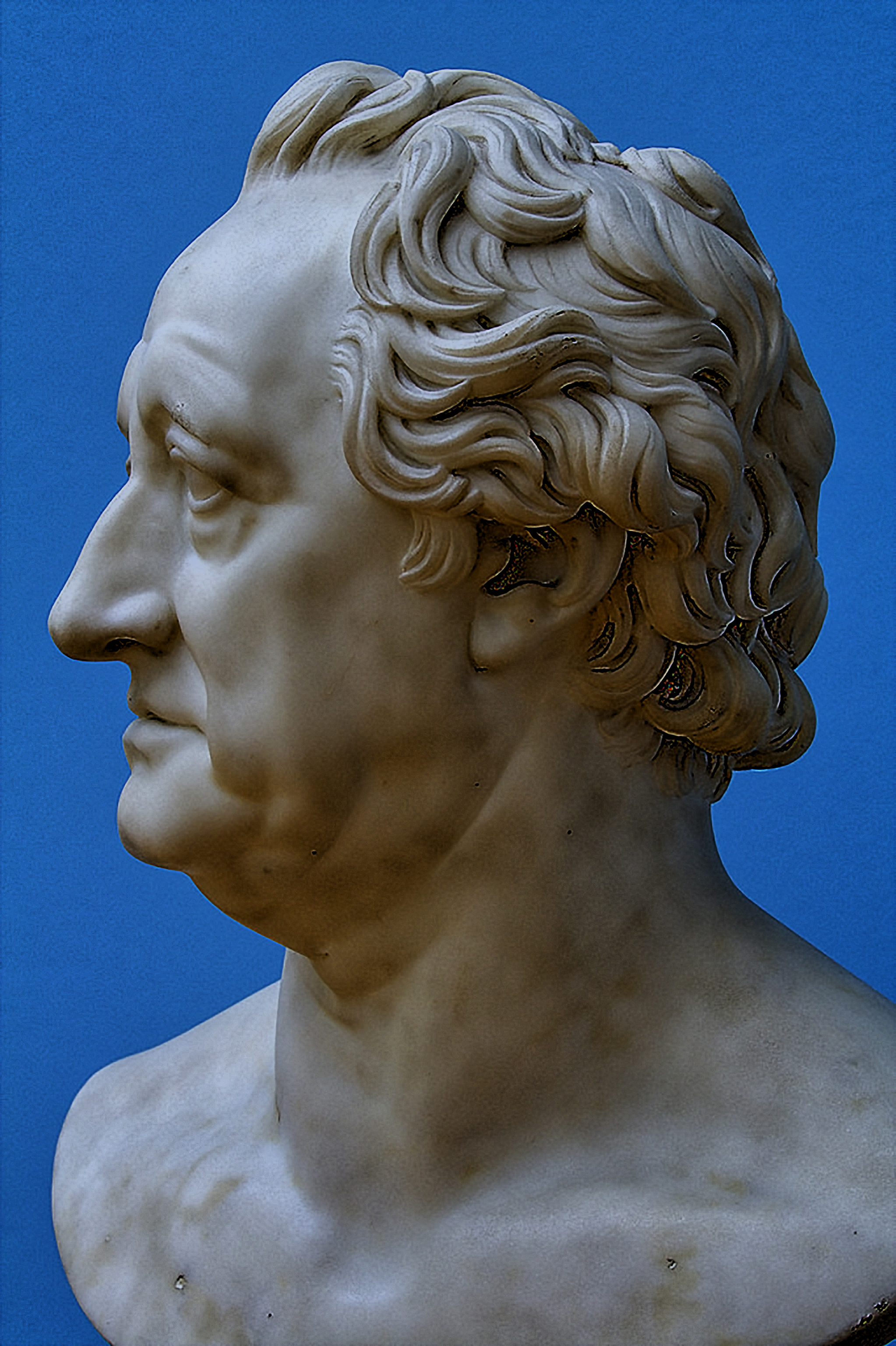
Rauch – sculpture of Goethe, Leipzig Museum of Fine Art, Saxony, Germany
Rauch sculpture of Goethe, Leipzig Museum of Fine Art, Saxony, Germany
Goethe’s Leipzig mentor Adam Friederich Oeser, (1717 – 1799), an advocate of Winckelmann’s for the place of Greek antique art, was the drawing teacher of Johann Wolfgang Goethe, Oeser was a student at the Vienna academy, he moved to Leipzig in 1759, and became the director at the Leipzig Academy in 1764. In 1743 a fire destroyed the Academy building. The Academy was primarily under the influence of the Dutch school of art. Since 1756 Rode was a member of the Berlin Academy of Arts. During the directorship under Blaise Le Sueur (1716 – 1783), instruction was at his residence with just an elementary drawing, Le Sueur, and a mathematics instructor. Le Sueur made a reputation for not involving himself with much of the affairs of the academy. In 1783 Christian Bernhard Rode (1725 – 1797), historical painter for Frederick the Great, was appointed Director of the Berlin Academy as successor to Le Sueur. The new building of the Berlin academy was finished in 1786. Rode’s Berlin Academy friend Daniel Chodowiecki (1726 – 1801) painter, printmaker, supported the nomination. King Friedrich Wilhelm I (1688 – 1740), had little interest in art and culture, and so the investment in the Berlin Academy had fallen into disrepair.
The Berlin Academy during Kaiser Frederick II (Frederick the Great) (1712 – 1786), was based almost exclusively on French models. Rode was unable to alter the French influence, and it was next under Chodowiecki as Director of the Berlin Academy that the reform of 1790, under the reign of Friederich Wilhelm II (1744 – 1797), took place. The last Fleming was Bernhardt Rode as Director of the Academy in 1783. In 1786 the building was restored, and the Academy refurnished with plaster casts, engravings, and drawings. A change of the education system was established by Daniel Nicholas Chodowiecki starting in 1786 / 1797 as director, after Rode’s death in 1797, and then by Gottfried Schadow as director of the Berlin Academy in 1816. As the acting director Johann Gottfried Schadow (1764 – 1850), brought in an expanded antique cast collection, as well as setting up the Rome Prize. Many of the Academies under the state guidance had seen a practical implementation of teaching the craft trade pupils within the academy system for the advancement of commerce, and manufacture within their countries. This new purpose of the academy for art as well as the trades shows up during the expansion of the curriculum, and more serious structure of the academies starting after 1750. The Vienna academy director and painter Friedrich Heinrich Füger (1751 – 1818), warned not to lose sight of the foremost task of an academy to maintain, and further the grand style. As director of “Kultus” department of the Prussian Ministry of the Interior since 1809, Wilhelm von Humbolt, Friedrich Wilhelm Christian Karl Ferdinand Freiherr von Humboldt (1767 – 1835), architect of the Prussian education system, Prussian philosopher, diplomat, involved in government posts in Prussia, part of the Goethe Weimar group, took out the “Mechanic Sciences” from the “Berlin Royal Academy of Arts and Mechanic Sciences”. Jean-Pierre-Antoine Tassaert (Antwerp 1727 — Berlin 1788) was influenced by Greek antique, as well as the French sculptor Etienne-maurice Falconnet, sculptor (1716 – 1791). He went to Paris as a young man to work in the atelier of Michel-Ange Slodtz, french sculptor (René-Michel Slodtz, 1705 – 1764) he lived in Paris for a decade, and then came to Berlin as the court sculptor to Kaiser Frederick II (Frederick the Great). J.P.A. Tassaert made sculptures for Potsdam, and directed the courses in sculpture at the Academy, where his major student and successor was Johann Gottfried Schadow.
Schadow was an adherent of the school of Classicism along with Antonio Canova (1757 – 1822), and Swedish sculptor J. T. Sergell (1736-1813), but with a keener understanding of shape orientation in his sculpture than Canova, which for Schadow was more properly influenced by Greek antique sculpture, and Winckelmann’s writing on antique. With Winckelmann’s quote as an example “ easier to discover the beauty of Greek statues than the beauty of nature….Imitating them will teach us how to become wise without loss of time”. This would indicate the understanding of the content form issues, as they are derived from nature, instead of imatating the surface style. Though there is quite a bit of sculpture especially with the Neo-Classical output that resembles Greek sculpture because of a pose, face, nose, robe, and proportions, instead of a more sophisticated understanding of the translation of complex form exhibited in the better Greek Classical, Hellenisitic, and Greco-Roman sculpture. As a written treatise on what is essential about Greek antique sculpture, the written format can only address superficially the issues of content. There is my attempt to address this content of Greek antique sculpture in my “A Brief Vocational Autobiography”, and more directly with my “Partial Description Visual Concepts Hellenistic Sculpture”. This would also relate to the underlying idea of the French academy “Académie de peinture et de sculpture”, started under Cardinal Mazarin (1585 – 1642), in 1648, with Jean-Baptiste Colbert (1619 – 1683) who reorganized the Academy of Painting and Sculpture which Cardinal Richelieu had established. Winckelmann’s student the sculptor Johannes Wiedewelt (1731 – 1802) (“Thoughts on Taste in the Arts in General”), taught at the Copenhagen academy, and when in Rome starting in 1754, among his associates were the German painter Anton Raphael Mengs, his philosophy on art, – Oeuvres Completes D’Antoine-Raphael Mengs, Volumes 1-2 , a reprint from 2009, and 2010, Italian – Pompeo Batoni, Giovanni Battista Piranesi, and German archeologist and art theorist Johann Joachim Winckelmann who arrived in Rome 1755.
Johannes Wiedewelt started sculpture under the advice of French Academy graduate sculptor Jacques François Joseph Saly (1717 – 1776), then the director, and sculpture professor at the Danish Academy of Art. Among Wiedewelt’s students were Nikolaj Abraham Abildgaard, (1743 – 1809), future Director of the Danish Academy, Alexander Trippel (1744 – 1793), the sculptor, – later started a private academy in Rome, {Gottfied Schadow (1764 – 1850), and Johann Jakob Schmid (1759 – 1798) worked with Trippel, as well as Goethe learned much of his understanding of ancient art from Alexander Trippel}, J. H. W. Tischbein, (1751 – 1829) – later the director of the Naples Academy, Franz Anton Zauner (1746 – 1822), – before teaching, and director at the Vienna academy, Johann Heinrich von Dannecker (1758 – 1841), – before founding, and as director of the Stuttgart Academy, and Bertel Thorvaldsen, (1770 – 1844). The first public exhibition of art in Prussia occurred in 1786. This date was the institution of the Age of Enlightenment under King (Kaiser) Friedirich Wilhelm II (1744 – 1797), for the modernization of Prussia. Schadow made an equestrian statue of Frederick the Great for the town Stettin. Initially the equestrian statue of Frederick the Great was intended as more neo-Classical with a Roman motif in the clothes of the statue, but instead included a contemporary Prussian look. His statue of Leopold of Dessau (1676 – 1747), is in Prussian attire, but the reliefs on the pedestal are costumed in neo-Classical Roman style. The beginning of a more practical depiction in sculpture of the time period, and national cultural context referred to as “Patriotic” style was in the early stages at this time of Schadow in the German lands, especially Prussia. Some of Schadow’s additional important sculpture works were the Quadriga of Victory over the Brandenburger Thor at Berlin; his Nymph awaking out of Sleep; and the double figure portrait of Prinzessinnen Luise und Frederike von Preußen (1797).
Schadow produced drawings after antique sculpture, portraits, designs for monuments, representations of the stages in life for men and women, the theory of canons, as well as the sexes in comparison to each other for scale, proportion, and type, and animal studies which he published as “Polyklet”, Johann Gottfried Schadow “POLICLET : oder von den Maasen des Menschen nach dem Geschlete un Alter mit Angabe der wirklischen Naturgrosse nach dem rheinländischen Zollstöcke. Berlin 1834 (The sculptor and Art Student’s Guide to the Proportions of the Human Form) or from the masses of the person; and Polykleitos, or guide to the Proportions of the Humanly form and “National Physiognomy” Johann Gottfried Schadow “National Physiognomien oder Beobachtungen uber den Unterschied der Geichtszuge und die auszehre Gestaltung des menschlichen Kopfes als Werkes von Petrus Camper. (National physiognomy or observations about the difference of facial part and the external design of the human head as a continuation of the work of Petrus Camper). Petrus Camper is now discredited pioneering anthropologist who demonstrated the relationship between all organisms by a mechanical system he called metamorphosis. He headed into controversy with a theory that facial angle correlated with intelligence. It was the nature of his drawings which interested Schadow. They appear to be scientific and employ many of the same architectural methods Schadow used in his work, //Johann Gottfried Schadow – “Lehre von den Knochen und Muskeln, von den Verhältnissen des menschlichen Körpers und von den Verkürzen, In 30 Tafeln sum Gebrauch bei Akademie der Künste”, Berlin, 1830. (Teaching from the bones and muscles, of the circumstances of the human body and foreshortening). These kinds of artistic guides were common from the early Renaissance through the mid nineteenth century. Schadow’s published guide was the first to give proportion scale with measured ruler units of inches, and feet, instead of just interrelationships of the parts in relative scale. He based his analysis on multiple life models, as well as what were the preferred Greek sculptures of the time. The majority of the drawings is rather simplistic and crude, but gives the idea of part of the establishment of the Berlin Academy curriculum, and the philosophy so important to establishing a more rigorous approach to the sculpture related to Greek antique. The use of caliper measurements to make an analysis of scale, and measured proportion is shown in many instances of manuals, as well as art of the earlier time periods, as in the Carracci studio of Bologna, and Rome in the 16th., and early 17th. Century. Another example of many made in the past is the: “Anatomie du gladiateur combattant, applicable aux beaux arts…”, Paris, 1812. Two-layer copperplate engraving, color. Jean-Galbert Salvage, (1770-1813), A military doctor of the Napoleonic era, Salvage based his drawings on dissections of soldiers “killed in duels, in their prime.” For this study of the Borghese Gladiator, an ancient Greek statue, he arranged his cadavers in the same pose as the sculpture and meticulously worked out the skeletal and muscular anatomy. Anatomical studies of important classical sculptures constituted a genre within fine art. Another is the: “Tabulae Sceleti e Musculorum Corporis Humani”, (London, 1749). Copperplate engraving with etching. Bernhard Siegfried Albinus, (1697-1770), [anatomist], Jan Wandelaar, (1690-1759), [artist], Albinus intended his figures to exemplify ideal humanity and an ideal of anatomical illustration. The cadaver, carefully chosen for its close approximation to classical ideals of proportion, stands with guardian angel hovering behind against a painterly backdrop. Another is the Italian work of: “Elementi di anatomia fisiologica applicata alle belle arti figurative”, Turin, 1837-39. Lithograph., Francesco Bertinatti, (fl. mid-1800s), [anatomist], Mecco Leone, [artist], The anatomical studies for real, imaginary and prospective sculptures and paintings became a genre in its own right in the early and middle decades of the 19th century. Another by the Roman work: “Anatomia per uso et intelligenza del disegno ricercata…”, Rome, 1691. Copperplate engraving., Bernardino Genga, (1636?-1734?), [anatomist], Charles Errard, (1609?-1689), [artist], The association between death and anatomy continued in art anatomy, even as it waned in medical texts. Genga, a Roman anatomist, specialized in studies of classical sculptures. Errard, court painter to Louis XIV, helped found the Académie Royale de Peinture and was first Director of the Académie de France in Rome. Another representation of anatomical text is the: “Ontleding des menschelyken lichaams…”, Amsterdam, 1690. Copperplate engraving with etching. Govard Bidloo, (1649-1713), [anatomist], Gérard de Lairesse, (1640-1711), [artist], published his books on theory, and practical art content – The Principles of Drawing: Or, an Easy and Familiar Method Whereby Youth are Directed in the Practice of that Useful Art, (1701), and ”Groot Schilderboek”, How to Create Beauty: De Lairesse on the Theory and Practice of Making Art, (1707). This stark dissection—with ragged flesh fully displayed and hands bound with a cord—signals a commitment to a higher level of realism. To our eyes, the picture may suggest a distressing indifference to, or even pleasure in, human suffering. Bidloo’s realistic anatomy has affinities to trompe l’oeil and still-life, two popular genres of 17th-century Netherlandish painting that often featured bones and other symbols of death. Another the Renaissance anatomy text of: “De Humani Corporis Fabrica…”,Basel, 1543. Woodcut., Andreas Vesalius, (1514-1564), [anatomist], Stephen van Calcar and the Workshop of Titian, [artists], Vesalius sought to make illustrations that were true to nature, but many of his figures conform to classical ideals of beauty and proportion, and stand in classical poses. {These anatomical pictures and text are from the National Institute of Health, Bethesda, Md., U.S.} “Elementi di anatomia fisiologica applicata alle belle arti figurative”, Turin, 1837-39. Lithograph., Francesco Bertinatti, (fl. mid-1800s), [anatomist], Mecco Leone, [artist], The anatomical studies for real, imaginary and prospective sculptures and paintings became a genre in its own right in the early and middle decades of the 19th century. Another by the Roman work: “Anatomia per uso et intelligenza del disegno ricercata…”, Rome, 1691. Copperplate engraving., Bernardino Genga, (1636?-1734?), [anatomist], Charles Errard, (1609?-1689), [artist], The association between death and anatomy continued in art anatomy, even as it waned in medical texts. Genga, a Roman anatomist, specialized in studies of classical sculptures. Errard, court painter to Louis XIV, helped found the Académie Royale de Peinture and was first Director of the Académie de France in Rome.
Jean-Galbert Salvage, (1770-1813) –
“Anatomie du gladiateur combattant, applicable aux beaux arts…”,
Paris, (1812).
Trew, Christoph Jacob (1695–1769).
Title: Tabulae osteologicae.
Publication Information: Norimbergae : [s.n.], (1767).
Gamelin, Jacques (1738–1803).
Title: Nouveau receuil d’ostéologie et de myologie.
Publication Information: Toulouse: J. F. Desclassan, (1779).
Cheselden, William (1688–1752).
Title: Osteographia, or The anatomy of the bones.
Publication Information: London: [William Bowyer], (1733).
Bidloo, Govard (1649–1713).
Title: Ontleding des menschelyken lichaams.
Publication Information: Amsterdam: Weduwe van Joannes van Someren, et al., (1690).
Anonymous.
Title: [Treatise on physiognomy].
Publication Information: [Netherlands?, ca. 1790].
Albinus, Bernhard Seigfried (1697–1770).
Title: Tabulae sceleti et musculorum corporis humani.
Publication Information: London: H. Woodfall; J. & P. Knapton, (1749).
Valverde de Amusco, Juan (ca. 1525–ca. 1588).
Title: Anatomia del corpo humano.
Publication Information: Rome: Ant. Salamanca and Antonio Lafrery, (1560).
Nicolas Henri Jacob:
Muscles of the back (study).Drawing for the Complete Treatise on the Anatomy of Man
by JM Bourgery, (1831-1854).
A Myology by Professor of Anatomy Johannes Van Horne and draftsman Marten Sagemolen:
Four books of original drawings dated from the Dutch Golden Age, (1660).
Zur Anatomie des Weiblichen Torso, Zwölf Tafeln; in geometrischen Aufrissen für Kunstler und Anatomen – Dr. Joh Christn. Gustav Lucas, professor der Anatomie
Traite Complet de La Peinture par M. Paillot de Montabert. Planches. Paris, (1829).
Das Gesetz der Formenschonheit von Johannes Bochenek, Leipzig, (1903).
Planches Anatomiques A Usage Des Juenes Gens Qui De Destinent A L’etude, De La Chirurgie, De La Medecine, De La Peinture Et De La Sculpture; Par M. Chaussier, Paris, (1823).
Anatomie Canonique Ou Le Canon De Polyclete, Retrouve par Hubertus Cornelius Anton Leopold Fock, Utrecht, (1865).
Edme Bouchardon “L’ANATOMIE NECESSAIRE POUR L’UASAGE DU DESSIN”, (1741).
Jacques Gamelin “Nouveau recueil d’ostéologie et de myologie dessiné d’après nature”, (1779).
Jean Cousin “LIVRE DE POVRATRAICTVRE”, (1595).
Francesco Bertinatti “Tavole anatomiche annesse agli elementi di anatomia fisiologica applicata alle belle arti figurative”, (1837).
Alphonse Lami “Anatomie artistique Myologie superficielle du corps humain”, (1861).
Ludwig Pfeiffer “Handbuch der Angewandten Anatomie”, (1899).
Giovannni Battista de Rubejs “De’ Ritratti ossia, Trattato per coglier le fisionomie”, (1809).
Francesco Carradori “Istruzione elementare per gli studiosi della scultura”, (1802).
Tommaso Piroli “Raccolta di Studj come Elementi del Disegno tratti dall’Antico da Raffaello e Michelangelo Con aggiunta di Alcune Tavole Anatomiche”, (1801).
Jean Bosio “Traité élémentaire des règles du dessin”, (1800).
Kollmann, Julius Konstantin Ernst. “Plastische Anatomie des Mmenschlichen Körpers”, (1886).
Elfinger, Anton. Anatomie des Menschen die Knochen-Muskel-und Bänderlehre., (1854).
M. Vagnier “Cours d’Anatomie artistique”, (1942).
Gustav Fritsch – DIE GESTALT DES MENSCHEN (1899), Berlin.
Geisela M. A. Richter “KOUROI” Oxford University press, New York, (1942).
Giambattista Sabattini “TAVOLE ANATOMICHE PER LI PITTORI, E GLI SCULTORI”, (1814).
Samuel Thomas von Soemmerring “Über die Wirkungen der Schnürbruste”, (1793) (2nd ed.).
Giambattista Sabattini “TAVOLE ANATOMICHE PER LI PITTORI, E GLI SCULTORI”, (1814).
Crisóstomo Martínez – Anatomical Atlas (Valencia , Spain , 1638 – Flanders , ca. 1694).
was a Spanish painter , engraver and microscopist, framed within the novator movement of Spanish Baroque science .Esqueletos y huesos, hacia 1680-1694, aguafuerte, Biblioteca Nacional de España.
Anatomical Atlas
In the Archive of the City of Valencia eighteen original plates are preserved, twelve of them made in Valencia and the remaining in Paris and sent from there to the professor of the University of Valencia Juan Bautista Gil de Castelldases . One of them, dedicated to the proportions of the human body, was the only one that was published in the author’s life in 1689, being reprinted in Frankfurt and Leipzig and again, along with another representing twelve skeletons in various positions, in 1740 in Paris. In 1780, the Royal Academy of Painting and French Sculpture , bought the plates and published them again in 1780.
The conserved sheets correspond to the osteology , which included new morphological aspects, such as bone embryology (ossification of cartilage) and microscopy (trabecular aspect of the same), placing themselves at the forefront of the European morphologists of the moment, contain representations Of ninety percent of the human skeleton.
August Froriep “ANATOMIE FÜR KÜNSTLER. KURZGEFASSTES LEHRBUCH DER ANATOMIE, MECHANIK, MIMIK UND PROPORTIONSLEHRE DES MENSCHELICHEN KÖRPERS”, (1880).
Julien Fau “ANATOMIE ARTISTIQUE ÉLÉMENTAIRE DU CORPS HUMAIN”, (1850).
Julien Fau “ATLAS DE L’ANATOMIE DES FORMES DU CORPS HUMAIN A L’USAGE DES PEINTERS ET DES SCULPTURES”, (1866).
Giuseppe del Medico “ANATOMIA PER USO DEI PITTORI SCULTORI”, (1811).
“CATALOGUE OF PLASTER REPRODUCTIONS FROM ANTIQUE, MEDIVAL AND MODERN SCULPTURE”, (1911).
Gottfried Schadow “POLICLET : oder von den Maasen des Menschen nach dem Geschlete un Alter mit Angabe der wirklischen Naturgrosse nach dem rheinländischen Zollstöcke. Berlin, (1834). (The sculptor and Art Student’s Guide to the Proportions of the Human Form), (1834).
Johann Gottfried Schadow “Lehre von den Knochen und Muskeln, von den Verhältnissen des menschlichen Körpers und von den Verkürzen, In 30 Tafeln sum Gebrauch bei Akademie der Künste”, Berlin, (1830). (Teaching from the bones and muscles, of the circumstances of the human body and foreshortening), (1830).
Johann Gottfried Schadow “National Physiognomien oder Beobachtungen uber den Unterschied der Geichtszuge und die auszehre Gestaltung des menschlichen Kopfes als Werkes von Petrus Camper. (National physiognomy or observations about the difference of facial part and the external design of the human head as a continuation of the work of Petrus Camper).
Petrus Camper is now discredited pioneering anthropologist who demonstrated the relationship between all organisms by a mechanical system he called metamorphosis. He headed into controversy with a theory that facial angle correlated with intelligence. It was the nature of his drawings which interested Schadow. They appear to be scientific and employ many of the same architectural methods Schadow used in his work.
Dr. Julien Fau “ATLAS DE L’ANATOMIE DES FORMES DU CORPS HUMAIN A L’USAGE DES PEINTERS ET DES SCULPTURES_DEUXIÉME ÉDITION RETOUCHÉE ET AUGMENTÉE”, (1866).
Paul Richer “8heads Canon”, (1893).
Paul Richer “7.5heads Canon”, (1890, 1893).
Paul Richer: Statuette-étalon du corps humain, (1893).
Paul Licher: Proportions moyennes de la femme – caractéristiques osseuses, (1915).
Paul Licher “Proportions moyennes de l’homme”, (1915).
Compas de proportions, (1893).
Johann Gottfried Schadow – “Lehre von den Knochen und Muskeln von den Verhaeltnissen des Menschlichen Koerpers”.
Johann Gottfried Schadow – Born: May 20, 1764, Berlin, Germany – Died: January 27, 1850, Berlin, Germany.
Johann Gottfried Schadow – Medallion: Hercules and the horses of Diomedes.
Von Johann Gottfried Schadow – geschaffenes Marmor-Grabmal für Friedrich Wilhelm Schütze in der Schlosskirche Schöneiche.
Johann Gottfried Schadow – Lehre von den Knochen und Muskeln von den Verhaeltnissen des Menschlichen Koerpers.
Blücher monument in front of the University of Rostock’s main building, created by Johann Gottfried Schadow in collaboration with Johann Wolfgang von Goethe.
Tombstone for Count Alexander von der Mark 1788 90 By Johann Gottfried Schadow 1764 1850, Alte Nationalgalerie, Berlin, Germany.
Schadow – Statue Zieten platz (Mitte) Hans Joachim von Zieten, Gesellschaft Berlin, Berlin-Mitte (Wilhelmstraße/Mohrenstraße):
Friederike von Preußen by Johann Gottfried Schadow.
Johann Gottfried Schadow, Lying girl, 1826.
Johann Gottfried Schadow, The princesses Luisa and Federica, marble statue, from 1795 to 1797.
Johann Gottfried Schadow, The princesses Luisa and Federica,
Plaster model without the basket of flowers, 1795-1797.
Johann Gottfried Schadow,
The original design for the group of princesses Luisa and Federica with a basket of flowers, 1795.
Johann Heinrich von Dannecker (1758–1841), Ariadne auf dem Panther, 1803–1814, Marmor, 146 cm Liebieghaus Skulpturensammlung, Frankfurt am Main.
Johann Gottfried Schadow Borussia personifikacja Prus z cokołu pomnika Leopolda von Dessau 1798 / 1800 Berlin.
Johann Gottfried Schadow – Frederike Unger – drawing Nach Der Originalzeichnung.
Johann Gottfried Schadow – Zeichnung – man und frau.
Johann Gottfried Schadow – Zeichnung – five women dancing.
Johann Gottfried Schadow – Zeichnung – frau leg up sitting in dress.
Johann Gottfried Schadow – Zeichnung – das taenzerpaar vigan.
Johann Gottfried Schadow – Zeichnung – Vigano.
Johann Gottfried Schadow – Zeichnung – Vigano.
Johann Gottfried Schadow – Zeichnung – Der Tänzer Vigano.
Schadow, Johann Gottfried, – Zeichnung – 1764 die tanzerin vigano die frau.
1792 Berlin Minerva von Johann Gottfried Schadow Johann D. Meltzer nördliches Torhaus Brandenburger Tor, Berlin.
1792 Berlin Mars als Kriegsgötter von Johann Gottfried Schadow Johann D. Meltzer nördliches Torhaus Brandenburger Tor, Berlin.
Blücher monument in front of the University of Rostock’s main building, created by Johann Gottfried Schadow in collaboration with Johann Wolfgang von Goethe.
Tombstone for Count Alexander von der Mark 1788 90 By Johann Gottfried Schadow 1764 1850, Alte Nationalgalerie, Berlin, Germany.
Schadow – Statue Zieten platz (Mitte) Hans Joachim von Zieten, Gesellschaft Berlin, Berlin-Mitte (Wilhelmstraße/Mohrenstraße):
Friederike von Preußen by Johann Gottfried Schadow.
Johann Gottfried Schadow, Lying girl, 1826.
Johann Gottfried Schadow, The princesses Luisa and Federica, marble statue, from 1795 to 1797.
Johann Gottfried Schadow, The princesses Luisa and Federica,
Plaster model without the basket of flowers, 1795-1797.
Johann Gottfried Schadow,
The original design for the group of princesses Luisa and Federica with a basket of flowers, 1795.
Schadow, Rudolf (Karl Zeno Rudolf Schadow) – BORN 9 Jul 1786, Roma – DIED 31 Jan 1822, Roma
GRAVE LOCATION Roma, Lazio: Sant’Andrea delle Fratte, 1 Via Sant’Andrea delle Fratte
Oldest son of the sculptor Gottfried Schadow and his first wife Marianne Devidels.
. In 1810 he went to Rome with his brother Wilhelm to study. In 1812 he decided to stay in Rome and in 1814 he became a Roman Catholic.
In 1818 he refused an offer to become a professor at the Academy in Düsseldorf. In 1822 he died in Rome, aged only 36. He was buried in the Sant’Andrea
delle
Fratte.
His “Die Spinnerin” (1816) is in the Wallraf-Richartz Museum in Cologne and his “Die Sandalenbinderin” (1817) in the Neue Pinakothek in Munich.
Family
• Father: Schadow, Johann Gottfried
• Brother: Schadow-Godenhaus, Wilhelm Friedrich von
Related persons
• is brother/sister of Schadow-Godenhaus, Wilhelm Friedrich von
Rudolf Schadow (1786-1822) – The Spinner-Hermitage, St. Petersburg.
Born in Rome, he had his father, Johann Gottfried Schadow, at Berlin, for his first master.
In 1810 he went to Rome and received kindly help from Canova and Thorvaldsen. His talents were versatile; his first independent work was a figure of Paris, and it had for its companion a spinning girl.[1] The latter, a portrayal of a young girl spinning, proved to be extremely popular among visitors to Rome, and even admirers of the work of Canova and
Thorvaldensen
acknowledged its worth.
Schadow
made several other versions of the work, the first probably between 1814 and 1816. The King of Prussia, Prince Esterhazy and the Duke of Devonshire all expressed a wish to include this statue in their collections. One version completed in 1820 is on display in the Hermitage, which acquired it from the Znamenka Palace, near St. Petersburg, in 1930.
Rudolf Schadow – Putting on a sandal (German: Die Sandalenbinderin)
Embracing the Roman Catholic faith, he produced statues of John the Baptist and of the Virgin and Child. In England he became known by bas-reliefs executed for the Duke of Devonshire and for the Marquess of Lansdowne.
His last composition, commissioned by the king of Prussia, was a colossal group, Achilles with the Body of Penthesilea; the model, universally admired for its antique character and the largeness of its style, had not been carried out in marble when in 1822 the artist died in Rome.
Portrait of the sculptor Rudolph (also Rudolf) Schadow. Carl Christian Vogel of Vogelstein – Carl Christian Vogel of Vogelstein 1788-1868 – State Art Collections Dresden.
Johann Heinrich von Dannecker (1758–1841), Ariadne auf dem Panther, 1803–1814, Marmor, 146 cm Liebieghaus Skulpturensammlung, Frankfurt am Main.
————————————————————————————————————————————————————————————-
Alexander Trippel – “Bust Johann Wolfgang von Goethe” (Weimar, Duchess Anna Amalia Library, Stiftung Weimarer Klassik), (1790), marble, 82 cm, And sign .: “ALEX: TRIPPEL./FECIT IN ROMA./i1790.”
Alexander Trippel – “Bust Johann Wolfgang von Goethe” (Arolsen, castle), (1788), marble, 82 cm.
Alexander Trippel – Bust Frederick II of Prussia” (Arolsen, castle), (1788/1790), marble.
Alexander Trippel – 1st edition: “Bust Johann Gottfried Herder” (Weimar, Goethe House), (1789/1790), marble.
2nd edition: “Bust Johann Gottfried Herder” (Weimar, Duchess Anna Amalia Library, Stiftung Weimarer Klassik), 1790, marble, 80 cm, And sign .: “A. TRIPPEL: / FECIT. IN ROMA./i1790. ”
http://www.goethezeitportal.de/wissen/projektepool/goethe-italien/rom-kuenstler/rom-trippel.html
Goethe, Schiller and the Goethezeit on Google+
You are here: Home > Knowledge Base > Projects Pool> Goethes Italian Tour > Artists in Rome > Alexander Trippel
Goethe’s Italian Tour, Rome
Yvette Deseyve
Artists in Rome:
Alexander Trippel
Last update: December 2006
Alexander Trippel
Alexander Trippel
Engraving from Chr. Fr. Schulze to Clemens 1775
structure
1. Short Biography
2. Trippel and Goethe
3. Important Works of Trippel from Goethe’s Roman Period
4. Literature and Weblinks
5. Legal Notice and Contact Address
1. Short Biography
In his observations on “Italy and Germany,” Karl Philipp Moritz (1756-1793) devoted a detailed report to the Swiss sculptor Alexander Trippel, working in Rome:
The name of this sculptor is well known to the public. He is now a man in the best years. Already in his early youth he suffered strange destiny, until finally his own genius led him to the school of art. With weak principles he came to Rome about twelve years ago. Less favored by happiness, he continued his studies with perseverance, which is peculiar to the genius, who, though in the midst of the greatest masterpieces of art, feels his weakness, but does not despair of his powers.
( Moritz, 1789, p. 56)
Trippel, who was born in Schaffhausen on September 23, 1744, actually came only through detours to art. Due to financial difficulties in Switzerland, the family moved to London, where Trippel began an instrument building apprenticeship which he broke up without success after a short time. Only the drawing lessons with Johann Christian Ludwig von Lücke (c. 1703-1780) led him “into the school of art”. At the age of 15, Trippel finally broke out to Copenhagen and visited the Copenhagen Art Academy under the influence of the early classicist sculptor Johann Wiedewelt (1731-1802). On the other hand, on the other hand, the work of Carl Frederick Stanley (1740-1813), on the other hand, influenced the young sculptor and awakened his wish , In Rome to study the antiquity:
For a few years it has always floated in my mind, in what way I know I could see Rome “” to see the important place, the Temppel of the arts and the creatures, where I was always a worshiper
(Trippel to Christian von Mechel, 1775, cited by Ausst.Kat. Basel Ulrich, 1995, p. 143) (Trippel to Clemens, undated, cited by Ulrich, 2004, p.
After a financial trip to Paris, where he became acquainted with the Swiss artist, Christian von Mechel (1737-1817), who was to become his most important sponsor and agent in the early years, Trippel traveled to Paris Autumn 1776 for the first time to Rome.
Early difficulties on the Roman art market forced him to return to Switzerland briefly, so that Alexander Trippel finally moved to Rome in 1778. Several attempts by Tripoli to recommend themselves for a permanent employment also outside Rome, in order to permanently improve his financial situation failed. This shows above all the rejection of his memorial design for Frederick the Great. Although he obtained honorary membership in the Prussian Academy, he was no more conducive to his application to the vacant post as court sculptor in Dresden, nor did his active efforts to mediate part of the Mengs’ legacy to Dresden. Thus Alexander Trippel remained until his death on September 24, 1793, in Rome, where his sculptor’s workshop enjoyed great prestige, and he was temporarily occupied by Gottfried Schadow (1764-1850) and Johann Jakob Schmid (1759-1798). Trippel himself made a name for himself primarily as a portrait artist and with his drawing school not far from Trinità dei Monti. Numerous porcelain works and a few tomb projects, such as the Gessner and Chernyshev tomb, consolidated his place among the German-speaking artists of Rome.
Only the art-historical analysis of the entire Ãuvre Alexander Trippel in the 1990s allowed a comprehensive insight into his work after the previously almost exclusive reception of Trippel as an artist of the busts for Goethe and Herder. Amazingly, Trippel can be found in literary sources far more than in his traditional pictorial works – about 30 sculptures and 180 preserved graphic sheets: the correspondence with his patrons Christian von Mechel and Johann Rudolf Burckhardt (1750-1813) provide information on his work , His art purchases together with Hofrat Friedrich von Reiffenstein (1719-1793) and the enthusiastic reception of his works both in Rome and in the north of the Alps. Diary recordings by the painter Marianne Kraus (1765-1838) and the travel reports by Count Stolberg (1750-1819), as well as reports on the visits to the studios of Moritz and Goethe complement the picture, so that Alexander Trippel can be described as a key figure of German classicism.
2. Trippel and Goethe
Alexander Trippel, an antique expert, restorer and sculptor, was closely connected with the circle of the antiquarianists around Friedrich von Reiffenstein, Aloys Hirth (1759-1837) and Karl Philipp Moritz, can not be identified immediately after Goethe’s arrival in Rome in the close environment of the poet , The mediator function for the German-speaking artists in Rome was first and foremost the painter Angelika Kauffmann (1741-1807), who initially watched carefully the contacts of Goethe with other Roman artists and challenged Trippel to cynical commentaries:
Herr Göde came here about four weeks ago (under the name of a German scholar, Miiller), lodges at the table, he goes with no one but the Reiffenstein and the Angelika Kauffmann, for they have made a conspiracy that he is nowhere to go, As they lead him, so this great lion is walking around the street through the alley.
(Ausg.Kat. München Maisak 1998, p. 80)
Only a single visit to the studio at Trippel in November, 1786, is at first mentioned. The production of a portrait bust of Goethe in the following year did not return to the initiative of Trippel, as once the portrait work of Kauffmann and Tischbein to the homage of the poet, but was caused as external commissioning. It was only Goethe’s character studies and his attempt to capture the proportions of the human body more accurately by means of plastic modeling, bringing him closer and closer to Trippel. Thus, Goethe enthusiastically reported on the progress made in his modeling studies and his instructive conversation with Alexander Trippel:
Now, at last, the essence of all the things known to us, the human figure, has occupied me, and I […]. Drawing is not at all, and I have therefore decided to make a model, and that seems to want to move back. […] It is then that my stubborn study of nature, my diligence with which I have proceeded in the comparatively anatomical anatomy, now enables me to make a whole difference in nature and the antiquities To see what is difficult for the artists in detail, and that when they finally get it, they can only possess it for themselves, and can not communicate it to others “(HA Bd 11, p. 386, 15-35). “A most agreeable, instructive conversation, directly in touch with my wishes and purposes, I connected with the sculptor Trippel in his workshop when he modeled my bust, which he was to work out for the prince of Waldeck in marble. It was not for the study of the human form, and for its proportions, as a canon, and as a different character, to be elucidated under other conditions.
(Goethe to Charlotte von Stein, 1787, cited by Schaffhausen, 1993, p. 106)
Trippel and Goethe shared the idea of an inseparable link between art and science, in particular antiquity and the study of nature. However, “[Trippel], in increasing measure and true to the image of true Neo-Classicalism, later cemented by Goethe and Johann Heinrich Meyer (1760-1832), as a practically German-Roman creation, the [[Trippel] Denied “(Schaffhausen, Ulrich 1993, p. 11). Consequently, Trippel also strictly denied contact with the French academy in Rome and set up an independent drawing academy for his followers to pursue studies.
Trippel’s private drawing academy, near the Spanish Steps, pursued as the ultimate goal of intensifying the study of nature, in particular the study of the human act, and to compensate for the study of antiquity required in Rome. As well as the son of Salomon Gessner (1730-1788), Johann Heinrich Wilhelm Tischbein (1751-1829) enjoyed the teaching of Trippel’s private academy as prominent pupils
3. Important works of Trippel from Goethe’s Roman period
2nd edition: “Bust Johann Wolfgang von Goethe” (Weimar, Duchess Anna Amalia Library, Stiftung Weimarer Klassik), 1790, marble, 82 cm, And sign .: “ALEX: TRIPPEL./FECIT IN ROMA./i1790.”
1st edition: “Bust Johann Wolfgang von Goethe” (Arolsen, castle), 1788, marble, 82 cm
“I do not mind that the idea, as if I had looked so much, remains in the world” – the bust Johann Wolfgang von Goethe
Above a simple, profiled pedestal rises the Marmorküste of Goethe. The evenly shaped, oval face is framed by dynamic curls that fall down to the shoulders. The suggestion of an anastole, as graced by the portraits of Alexander the Great, and the simple toga, which is held together on the shoulder, which closes the bust in great soft lines, underscore the ancient character.
On August 23rd, and shortly thereafter, on August 28th, 1787, Goethe, in his Italian Journey, reported on the making of his bust by the sculptor Alexander Trippel:
It is my bust, and that cost me three mornings this week.
(HA Vol 11, pp 387, 11-12)
Have I already said that Trippel is working my bust? The prince of Waldeck ordered it from him. He is already finished, and it makes a good whole. She is working in a very solid style. When the model is ready, he will make a plaster mold over it, and then begin the marble, which he then wishes to work out after his life; Because what can be done in this matter can not be achieved in any other.
(HA Vol 11, pp 388, 10-17)
Already in January 1787, Goethe and Prince Christian August von Waldeck (1744-1798) had met in Rome. The common veneration of the two for Friedrich II of Prussia, the “great king,” whom Goethe dedicated an obituary in his Italian voyage (HA Vol. 11, p. 162, 32-34), prompted Waldeck to order two of his pendants Busts at Alexander Trippel. The busts of the Prussian king and the poet’s prince, now standing at the castle of Arolsen, correspond to their formal design. In the cloaks, which are decorated by a Medusa’s head on the one hand, and an antique tragedy mask on the other, the couple’s testimony is concentrated: the wise war hero stands against the young genius of the fine arts and sciences as the creator of the Iphigenia tragedy. This detail was lapsed with the repeated execution of the bust for Duchess Anna Amalia of Saxony-Weimar (1739-1807), replacing it with a neutral clasp with acanthus rosette. Thus the latter was able to take a new relationship with the bust herder (1744-1803) commissioned at the same time by Trippel.
Bust of Frederick II of Prussia
“Bust Frederick II of Prussia” (Arolsen, castle), 1788/1790, marble
The bust of Goethe’s by Alexander Trippel was stylized as a highly esteemed, ideal Goethe representation, unlike Kauffmann’s sensitive Goethe portrait. This idealization, which is confirmed by research, can be traced back to the influence of the Apollo of Belvedere, honored by Goethe, has given rise to an ever-changing debate about the mimesis concept of the bust, both in contemporary as well as contemporary art-historical studies.
Not only the main forms, but also the most individual traits are formed with the truth that one can not misunderstand them, although the costume of the ancients always astonishes the eye at the first sight, and the striking similarity of a bust always behaves as much as it does Thereby gaining artistic beauty.
(Alois Hirt, 1789, cited by Schaffhausen, 1993, p. 107)
My bust is very good; Everyone is satisfied with it. Certainly she has worked in a beautiful and noble style, and I do not mind that the idea, as if I had looked so, remains in the world.
(HA Vol 11, p. 397, 9-12)
Alexander Trippel’s Goethe busts were, especially in the face of the portrayed personality, but also due to the limited transmission of other works of Trippel to his celebrated principal work. At least two more casts of the Goethe bust, produced by Trippel, are demonstrable. One was owned by Archiv Reiffenstein, the other had been requested by painter Angelika Kauffmann. Already in the first half of the nineteenth century, numerous casts were produced in almost every material, such as a variety of sizes and prices, as a “souvenir” and “educational quotation” (ZSAK Maaz 1995, p. 283). Prints and later photographic reproductions provided a widespread reception of Trippel’s Goethe busts.
Goethe-Busten
“O of the sorry pendants!” – the bust of Johann Gottfried Herder
1st edition: “Bust Johann Gottfried Herder” (Weimar, Goethe House), 1789/1790, marble
2nd edition: “Bust Johann Gottfried Herder” (Weimar, Duchess Anna Amalia Library, Stiftung Weimarer Klassik), 1790, marble, 80 cm, And sign .: “A. TRIPPEL: / FECIT. IN ROMA./i1790. ”
Already on the first day of his arrival in Rome, Herder was confronted with the Goethe bust painted by Alexander Trippel in the house of painter Angelika Kauffmann. Only a little later the desire for an adequate counterpart should follow from different sides:
O the sorrowful companions! G. has been idealized as an Apollo; How shall I look poor with my bald head? The better, so I stand naked & Poor there
(Herder 1798, cited by AusK.Kat München Maisak 1998, p. 88.)
Kauffmann himself immortalized Herder – like the portrait of Goethe – in a rapturous youthful manner, which Herder accepted with benevolence. On the other hand the execution in marble by Alexander Trippel. On behalf of Duchess Anna Amalia, at the end of February, 1789, Trippel began her portrait of Herder as a counterpart to his celebrated Apollo-Goethe bust. The bust of Herder rises above a round base, which is only slightly arched. Heavy folds indicate the robe in an antique, unadulterated toga, which is lacking the elegantly closing clasp of the Goethe bust. In contrast to the Goethedarstellung, her face is filled with a full face of her realism, with her tear-sacks and unmotivated mouth, there is no idealizing grace, so that Herder demanded improvements:
I wanted a little more hair on my forehead. Now she is almost bald in the bosom, which makes me even too philosophical. It seems to me that the contrast between me and Goethe is too strong.
(Herder, 1789, cited by the Ausg.Kat., Munich Maisak 1998, p. 88)
Because of the faulty marble, an intact new marble reception had to be made anyway, Trippel made numerous changes to the second version, which considerably increased the attractiveness of the depicted. The second bust, now also in Weimar, reproduces the same neckline with the same drapery drape, but the massiveness of the pleats was significantly reduced. Even the headform changed Trippel in favor of a refined representation, in which also the tear-bags and the fullness of the face were greatly reduced.
The exceptional circumstance that both bracts have been retained in the same place allows a direct comparison which clearly shows the degree of idealization. The second interpretation of Herder as a timeless, ancient philosopher could at least have attracted the admiration of Moritz, who, in his observations on “Italy and Germany,” wrote an emphatic praise for the busts of the sculptor Alexander Trippel:
Alexander had a Lysippus, Plato, and Socrates had their alems, through whose hands they were drawn to the latest posterity: happy that ours had found a triple!
(Moritz, 1789, p. 66)
4. Literature and Weblinks
Literature:
Exhibition cat. Basel Debrunner 1995
Debrunner, Albert M .: “Goethe’s Basler Stays and his Friendships with Johann Rudolf Burckhardt”, in: Roda von, Burkhard, Schubiger, Benno (Hrsg.): Longing for Antiquity. The Haus zum Kirschgarten and the beginnings of classicism in Basel, Ausst.Kat. Basel, Basel, 1995, pp. 159-168.
Exhibition cat. “Ulrich
Jörg Burckhardt as the patron of the sculptor Alexander Trippels (144-1793), in: Roda von, Burkhard, Schubiger, Benno (Hrsg.): Longing antiquity. The Haus zum Kirschgarten and the beginnings of classicism in Basel, Ausst.Kat. Basel, Basel, 1995, pp. 143-158.
Exhibition cat. “Ulrich
Jörg Burckhardt as the patron of the sculptor Alexander Trippels (144-1793), in: Roda von, Burkhard, Schubiger, Benno (Hrsg.): Longing antiquity. The Haus zum Kirschgarten and the beginnings of classicism in Basel, Ausst. Basel, Basel, 1995, pp. 143-158.
Exhibition cat. Munich Maisak 1998
Maisak, Petra: “Happy Psyche is no longer a tragedy”. Angelika Kauffmann’s encounter with Goethe, Herder and the Weimar Circle, in: Baumgärtel, Bettina (Eds.): Angelika Kauffmann, Ausst.Kat. Munich, Ostfildern-Ruit 1998, S 79-90.
Exhibition cat. Schaffhausen 1993
Swiss Institute of Fine Arts (eds.): Alexander Trippel (1744-1793). Sculptures and Drawings, Ausst.Kat. Schaffhausen, Schaffhausen, 1993.
Exhibition cat. Schaffhausen Ulrich 1993,
Ulrich, Dieter: “Alexander Trippel, the greatest sculptor in Rome, and therefore in the world …”, in: Museum zu Allerheiligen Schaffhausen, Swiss Institute of Art Science (eds.): Alexander Trippel (1744-1793). Sculptures and Drawings, Ausst.Kat. Schaffhausen, Schaffhausen 1993, pp. 9-13.
Moritz 1789
Moritz, Karl Philipp: VI. Description of a memorial of Count Tzernichev, edited by Mr. Alexander Trippel, in: Italy and Germany, with regard to customs, customs, literature, and art, Berlin, 1789, pp. 55-68.
Ulrich 2004
Ulrich, Dieter: Alexander Trippel (1744-1793) as a “case”. Origin, identity, and sense of belonging of a Swiss sculptor as a part of the turn to German-Roman classicism, in: Griener, Pascal, Imesch, Kornelia (Hrsg.): Classicism and Cosmopolitanism. Program or problem? Exchange in art and art theory in the 18th century, Chur 2004, pp. 249-266.
ZSAK Howard 1995
Howard, Seymour: Alexander Trippel and Bartolomeo Cavaceppi in the Roman Art Market, in: Directorate of the Swiss National Museum Zurich (Ed.): Zeitschrift fur Schweizerische Archäologie und Kunstgeschichte, Vol. 52, Heft 4, Zurich 1995, p -234.
ZSAK Maaz 1995
Maaz, Bernhard: “That the idea, as if I had looked so much, remains in the world” – Alexander Trippel’s Goethe bust: work and effect, in: Directorate of the Swiss National Museum Zurich (ed.): Zeitschrift für Schweizerische Archäologie And Art History, vol. 52, vol. 4, Zurich 1995, pp. 281-292.
ZSAK Schnyder 1995
Schnyder, Rudolf: The Sculptor and the Porcelain Manufactory or the Transformation of Venus in Wilhelm Tell, in: Directorate of the Swiss National Museum Zurich (ed.): Zeitschrift für Schweizerische Archäologie und Kunstgeschichte, Vol. Pp. 223-234.
ZSAK Ulrich 1995
Ulrich, Dieter: Michelangelo, Raphael and the Old. Alexander Trippel as illustrator: The attempt to reconstruct the artistic reference points of an early classicist sculptor in: Directorate of the Swiss National Museum Zurich (eds.): Zeitschrift für Schweizerische Archäologie und Kunstgeschichte, Vol. 52, Issue 4, Zurich 1995, p. 225- 246th
Web Links:
Documents for Alexander Trippel in the City Archives Schaffhausen:
http://www.stadtarchiv-schaffhausen.ch/Bibliothek/Biographien-Literatur_t.htm
To the Basel sponsor of Alexander Trippel, Johann Jakob Burckhardt:
http://pages.unibas.ch/klassarch/geschichte/burckhardt.html
Trippel in the museum Bad Arolsen:
http://www.museum-bad-arolsen.de/index.php
Trippel in the Allerheiligen Museum Schaffhausen:
http://www.vms-ams.ch/index.php?id=632&action=detail&museumid=590
5. Legal notice and contact address
All templates originate from a private collection. Private use and non-commercial use for artistic, cultural and scientific purposes is permitted provided source (Goethezeitportal) and URL ( http://www.goethezeitportal.de/index.php?id=rom_trippel ) are given. Commercial use or use for commercial purposes (eg for illustration or advertising) is only permitted with the express written permission of the author. No copyright owner is known to the Goethezeit Portal; If there is still a copyright, please contact us.
Contact:
Prof. Dr. Georg Jäger
Ludwig Maximilian University of Munich
Department of German Philology
Schellingstr. 3
80799 Munich, Germany
E-mail: georg.jaeger@germanistik.uni-muenchen.de .
Back to top
Supported by the Bavarian State Ministry
of Science, Research and Art
CULTURAL BAVARIA
Christian Friedrich Tieck, German, 1776-1851, by sculptor Christian Rauch, plaster cast. Original modelled in 1816-18, Ny Carlsberg Glyptotek, Copenhagen, Denmark
Tieck, Christian Friedrich sculpture by Rauch,
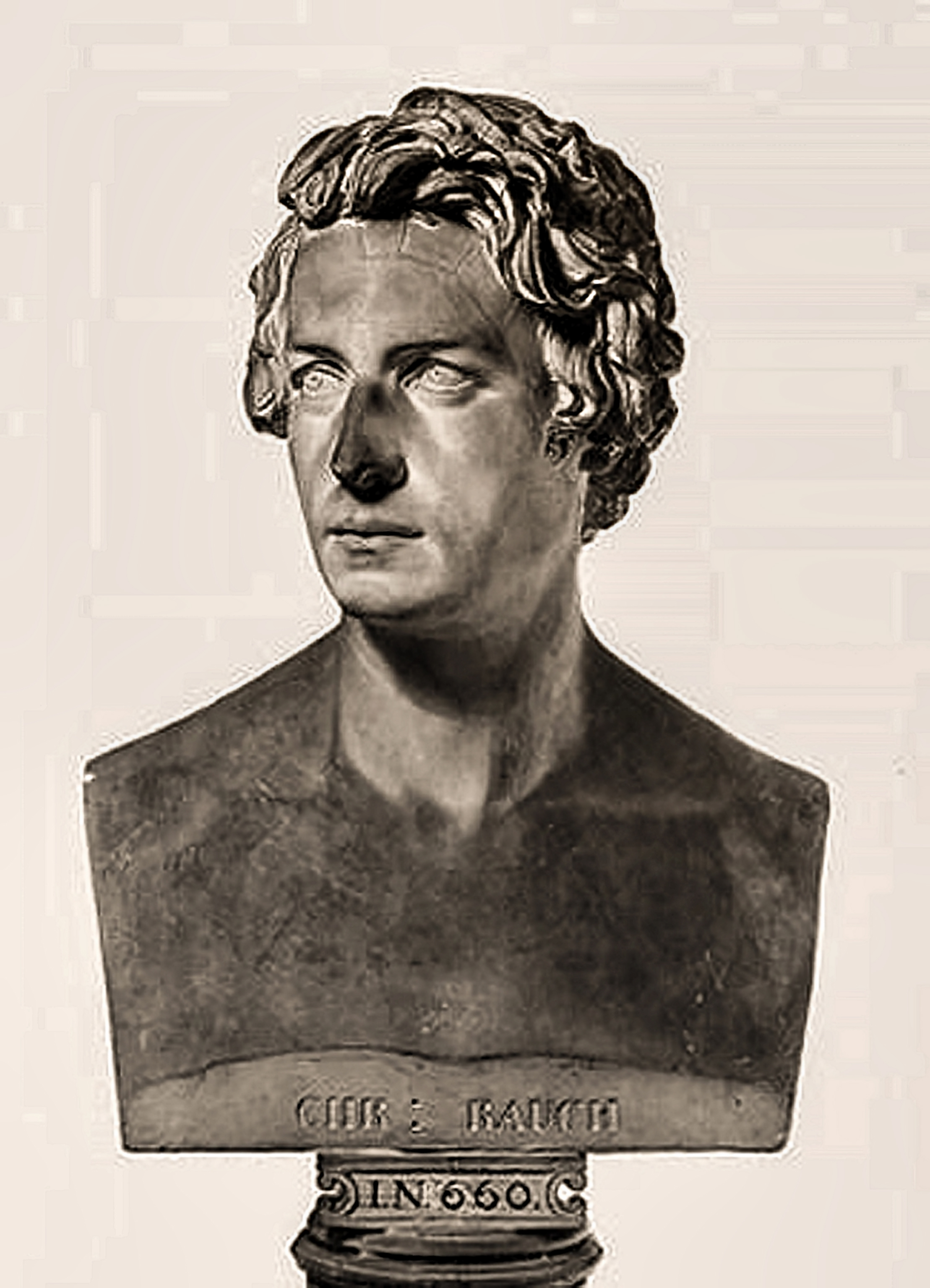
Tieck, Christian Friedrich – portrait bust sculpture by Christian Daniel Rauch
Johann Gottfried Schadow’s main students were Christian Friedrich Tieck (1776–1851) who spent fourteen years in Rome, and worked on the sculpture for the Royal Theatre of Berlin; Rudolph Schadow (1786–1822) son of Johann Gottfried Schadow, made ideal genre sculpture, Wilhelm von Schadow-Godenhaus (1788–1862), became well known as a painter, and became the director of the Dusseldorf Academy in 1826; Christian Daniel Rauch (1777-1857), with his most famous work being the monument of Queen Louise at the Mausoleum at Charlottenburg; General Scharnhorst statue, Berlin; General Bulow, Berlin; Albrecht Dürer, Nuremberg; Blucher monument, Breslau, made after a design by Schadow; Maximilian I., Munich; statue of Frederick the Great, Berlin, 1839 to 1851; and his Goethe bust, Leipzig. When Rauch was thirteen years old, he began his five year study with the sculptor Friedrich Valentin, sculptor (1752 – 1819). He was made an assistant from 1795-1797 to the sculptor and academy professor Johann Christian Ruhl, sculptor (1764 – 1842) in Kassel. Rauch became Gottfried Schadow’s official assistant in 1803, modeling reliefs after sketches made by Gottfried Schadow.Schadow’s most prominent student was Christian Daniel Rauch (1777 – 1857). C.D. Rauch went further into the examination, and influence of Greek antique sculpture within his own development, as well as the influence of Wilhelm von Humboldt (1767 – 1835), Bertel Thorvaldsen (1770 – 1844), and the writings of Johann Wolfgang von Goethe (1749 – 1832).
Rauch established the maturity of intent, procedure and technique for the Berlin Academy that was the main influence in the German regions for several generations. Relevant with the later period of this art training, and production was the installment of the The Pergamum Altar, and earlier further extensive Greek Hellenistic sculpture (or Greco Roman copies of Hellenistic Greek sculpture), during then Wilhelminian Germany for the modernization of Prussia. Dresden and it’s collections of Greek sculpture were started earlier in the seventeenth, and eighteenth century. The cross pollination between the various German speaking region academies, as well as the pertinent writings, and personalities on Classicism came to a high sophistication at the Berlin, Dusseldorf, Munich, Dresden, and Vienna academies at the end of the eighteenth century, up until the later nineteenth century. The plaster cast collection of Greek antique in Dresden numbered over five thousand, in Berlin the number was over seven thousand plaster casts of antique, the same type of antique large collections were at Dusseldorf, Munich, and Vienna. Kaiser Wilhelm I (1797 – 1888), and Kaiser Wilhelm II (1859 – 1941) supported traditions of European art that evolved from the influence of Greek antique, and refused the growing degenerate decline in art of the modern. Kaiser Wilhelm II’s main counsel was the painter, and Director of the Academy, Anton von Werner (1843-1915), though this painter has the modernist influence of the photograph obviously in his artwork. It was in this instance probably more nationalist ferver than objective high values in sustaining “High Art”. The following generations were the most prominent sculptors associated with the Academy of Berlin from Rauch’s instruction: Drake, Blaser, Schievelbein, Kiss, Wolff, Shaper.Johann Friedrich Drake (18o5 – 1882) is represented with his equestrian statue of Kaiser Wilhelm I. at Cologne, and in his sculptures of Rauch and Schinkel at Berlin. Gustav Bläser (1813–1874) of Cologne sculpted the Francke monument at Magdeburg. Friedrich Hermann Schievelbein (1817—1867) made the sculpture group Pallas instructing a youth on the use of the spear, placed on the palace bridge in Berlin. Schievelbein’s frieze of the Destruction of Pompeii, Nues Museum, was influenced by the frieze of the Apollo Temple at Phigaleia. August Kiss (1804—1865), predominantly sculpted animals in bronze, best known for his Mounted Amazon fighting a Tiger, front steps of the Alte Museum at Berlin. Albert Wolff (1814 – 1892), being a direct line from Rauch. Albert Wolff carried more closely to Rauch in content, and style, The main students of Albert Wolff were Reinhold Begas (1831 – 1911), straddled the line between weaker modern influences of the French sculpture school from the nineteenth century Romantic mixed with his inherited content from Rauch, and the mostly unfortunate influence from Bernini’s sculpture, branded Wilhemian Neo-Baroque / WilhelminischerNeubarock. R. Begas had a high level of sophistication in form content in his best works, and impressive development in his other sculpture that was left in an undeveloped state, missing supporting shape content on a deeper level, as finished works. Albert Wolff’s other student Fritz Shaper (1841 – 1919) carried more closely the tradition of the German school from Rauch. Ernst Herter (1846 – 1917) was most influenced and involved in Greek antique, Neo-Hellenistic, more than Neo-Baroque. Herter received an award to study in Copenhagen where it looks like he may have encountered Andreas Kolberg’s (1817 1869) sculpture, studied at the Academy of Arts in Berlin and later as an apprentice of Ferdinand August Fischer, Gustav Blaeser and Albert Wolff as well.
The Berliner Secession formed in 1898 with Walter Leistikow as the main modernist leader. The influence toward modernist tendencies started earlier in the mid century in Berlin. There was support against following France in the decline of art through the century by Kaiser Wilhelm I, and then to a lesser degree by Kaiser Wilhelm II. Artists working, and teaching in the region were divergent in the content value of the art work produced, and the training offered. Many artist in the Germanic regions did continue against the prevailing tide of modernism, and the superficial art that replaced earlier higher standards. But the Berliner Secession was the festering moderism finally taking hold in the region. Walter Leistikow was expelled from the Berlin Academy of Fine Art for his lack of artistic talent. Much in the way that the French Impressionists started a revolt by having gallery shows independent of the French Academy of Fine Art. The gallery shows in France were funded by some of the wealthiest families in France, the parents of the talentless students – expelled, or not accepted in to the French Academy of Fine Art. This broke the system that the French Academy had to deny exhibition of non credited art work, which would have been deemed amateur, and inferior. Artists like Degas joined in on the private wealthy families revolution when there was the realization of how much money was backing the process. One might look at Degas, an average student at the Academy of Fine Art in Paris, ( École des Beaux-Arts ) as quite the opportunist. The École des Beaux-Arts, started its decline during Napoleon Bonaparte, with artists pushed to produce more superficial state propaganda style for his reign, the early form of the photograph introduced soon after, into a copy device for the artists source work, as well as influencing a superficial surface quest for more, and more imitation of flesh effects, and realism. Plaster Casts of Antique Greek sculpture became more of a tonal reproduction exercise, instead of a training in complex form, and then mostly disbanded from the later training altogether. Also the new age of Democracy in France, which fueled a dumbing down of aesthetics, (though no intention is meant on my part to imply a critique of the value of Democracy here) , as well as the philosophy that anything new in art was better than the old standards based from Greek Antique, in the age of technological, and societal change. These changes in the French Academy of Fine Art were in stages. Curriculum of the Ecole de Beaux Arts changed every five to twenty years or so throughout the 19th. Century, culminating in its complete artistic decline. There were private ateliers schools in France that countered this tendency, as well as individual artists, but they were few. This was a similar situation that came to a full takeover in Berlin with the Berliner Secession formed in 1898. The German artists also succumbed to the photograph and illustration realism, but there was also a counter to this with the influence of Greek sculpture that lasted into the nineteenth century longer than in France.The modern period was solidified at the period of the November Revolution with the takeover by the “degenerate” (as referred by the traditionalists influenced by Classical, and Hellenistic Greek sculpture) artist of the contemporary modernists. Some of the Secession artists were Ernst Barlach, Lovis Corinth, Georg Kolbe, Kathy Kollwitz, and Wilhelm Lehnbruch. There was an attempt to rid the Academy of the modernist camp in 1933, and effective in 1937 with the Gleichschaltung (Gleichschaltung: n., the standardization of political, economic, and social institutions as carried out in authoritarian states.) of the Nazi’s. The merits of earlier art from the Greek antique, as well as the 19th. and late 18th. Century in Prussia, and the other Germanic regions best work was predominantly missing in this period of the 1930s, and 1940s. The majority of the art that was reflected in this war period of the Nazi’s had more to do with the Bauhaus realism, the late 19th. Century modernism post Classical, and post Hellenistic influenced art. There were a few obscure sculptors within the Axis, and Axis aligned regions, and states, with more sound work, though generally they are not remembered in art history. This Bauhaus / late 19th. century modernist realism influence, and early 20th. century German modernist schools were the larger influence on Russian propaganda sculpture of the Soviets, and later Chinese Communists. , – (P. Brad Parker)
Rauch text below from Wikpedia:
Some of the sculptors of note from the Academy:
Christian Daniel Rauch, – sculptor,, Potsdam, Prussia, Germany, – (*1777 in Arolsen in Hessen; †1857 in Dresden) was one of the most important and most successful sculptors of the German Classicism. He was a pupil of Johann Gottfried Schadow. When Rauch was thirteen years old, he began his five year study with the sculptor Friedrich Valentin. He was made an assistant from 1795-1797 to the sculptor and academy professor Johann Christian Ruhl in Kassel. Rauch became Gottfried Schadow’s official assistant in 1803, modeling reliefs after sketches made by Gottfried Schadow. Gottfried Schadow had been the director of the Berlin Royal Academy sculpture workshop for twenty four years when Rauch was accepted as his assistant. Rauch read works of Goethe and Schiller which were the prominent sources of the Classicism of the period.In 1804 under Frederich William III, Rauch was granted an annual scholarship of 125 Talern, and twelve groschens for a six year period of study in Italy. In Rome he befriended Antonio Canova, and Bertel Thorvaldsen. In 1809 Rauch had his annual scholarship increased to 400 Taler. After William of Humboldt supported it, Rauch in the autumn 1810 received a commission order to Prussian king Friedrich William III., because his 36 year old wife Luise had died. Thorwaldsen favoured Rauch for the commission without competition for the tomb, and in a similar way later Rauch favored his friend and favorite pupil Ernst Rietschel in the commission for the Weimar Goethe-Schiller monuments. Rauch lived alternating between Rome and Carrara, together with Friedrich Tieck, another pupil of Gottfried Schadow. Rauch from the distance of Italy experienced the fall of Prussia as well as the war of liberation. Beside many prince and field gentleman statues he made also bronze and marble busts of Goethe, and Dürer, also busts of famous Germans were made for Walhalla (Parthenon inspired memorial place) in Regensburg. Sculpture Works: Christian Daniel Rauch: The married couple Niebuhr, marble relief in the old persons cemetery, Bonn Adelheid of Humbold as Psyche, seated, marble statue, Rome 1810 Grave monument of the Luise of Prussia (Berlin, in the Mausoleum in Charlottenburg), 1815, marble. Marble statues of Bülow, and Blücher beside Schinkels in Berlin, 1819 life-size Goethe bust, 1820 Monument A.H. Franckes , Saale, 1825-1828 Monument for Friedrich of Kleist for Merseburg, 1825/26
Goethe, Statuette, 1828
Statues of the Polish princes Mieczyslaw and Boleslaw for the Posener cathedral, 1841
Work for the Walhalla (with Danube-baptize): Büsten of Raphael Mengs (1808), Hans Sachs, van Dyck, admiral Tromp, Martin beautiful (1813), Snyders (1814), Blücher (1817), count Diebitsch Sabalkansky (1830), crowd refuge (1831), Dürer (1837) and 6 Victorien (2 sitting, 4 standing)
sitting statue max of Joseph I., Erzgusss of J.B. Stieglmair (1825/35)
Dürer in Nuremberg (1830/1840), ore casting of J.D. Burgschmiet
Model for Dürer monument in Nuremberg, 1849, of Jakob Daniel Burgschmiet 1849 in bronze poured.
Sarcophagus figure of Friedrich William III., Berlin, 1846
· Equestrian Statue of King Frederick II of Prussia (Frederick the Great), Unter der Linden, in Berlin 1851
1864 poured of Hermann Gladenbeck, lost after WWII was over in 1945 when the Soviet Union bombed to rubble the capitol of East Prussia – Königsberg, / In 1992 Replaced the statue of Immanuel Kant for Kings Castle by Marion Dönhoff in Käliningrad, – not the same Rauch sculpture
Iron statues of two lying lions in Luebeck before the Holsten Gate
Moses in Prayer, supported of the high priests Aaron and Hur, group of marbles at the Church of Peace (Friedenskirche) in Potsdam
Rauch school
By the large number of his pupils Rauch had a large and direct influence on the artists of its time. Some of his pupils that became prominent artists: Friedrich Drake, who designed the Berlin’sSiegessäule – Victory Column, and Ernst Rietschel , who created the Goethe Schiller monument in Weimar, Albert Wolff.
Sculptors below are from the beginning of the mid 17th. century through the18th century up to the period of Rauch. The styles represented by a few of the sculptors below give some context to Rauch arriving to his sculpture content from the European tradition. Thorvaldsen, Canova, Flaxman, etc… were in the basic same group of neo-Classical as Rauch. Rauch has a more sophisticated, and solid sculpture than Canova, or Flaxman, as well as better than most of Thorvaldsen’s work. None of these four sculptors are particularly noteworthy for their figure sculpture. Rauch was a great portrait / bust sculptor, but his figure sculpture was of a less successful quality. Houdon is the older generation, and has significant content from Greek Hellenistic sculpture in his bust work, which is only approached of these four sculptors mentioned here by the best work of Rauch, and to a lesser degree by Thorvaldsen. The sculptors below are not a full representation of all that could be included. Houdon has a whole page to his work, with some of his teacher Pigalle included, toward the last few pages of this blog. More will be included as commentary on these works and sculptors as I return throughout the blog, as time allows. } Blogger PBP Christian Daniel Rauch, – sculptor, , Goethe, Leipzig, Sachsen, Germany, – (* 2 January 1777 in Arolsen in Hessen; † 3 December 1857 in Dresden) was one of the most important and most successful sculptors of the German classicism. He was a pupil of Johann Gottfried Schadow
///////
Rauch, Christian Daniel German, 1777-1857 Field Marshal Blücher Plaster cast. Original modelled 1815. Plaster, H. 58.5 cm,
///////
Rudolph Siemering (born in Königsberg on 10 August 1835; died 23 January 1905) Siegesdenkmal Leipzig – (Leipzig Victory Monument) enthüllt 1888 – Bildhauer Rudolf Siemering
Büste Heinrich Rüdiger von Ilgen für die Siegesallee in Berlin, enthüllt 1902, Bildhauer Rudolf Siemering
Kaiser Wilhelm I. für die Börse in Berlin 1906, von Bildhauer Rudolf Siemering
The Washington Monument, sculpted by Rudolf Siemering, in Eakins Oval, just in front of the stairs of the Philadelphia Museum of Art, Philadelphia, PA, USA.
Bison, bronze, Tiergarten, Berlin, Germany – von Bildhauer Rudolf Siemering
Signature/Inscription: Iscription: FUERST BLUECHER VON WAHLSTADT, and verso: Nach dem Leben v: Chr:Rauch im J:1815 im A. (?)Ny Carlsberg Glyptotek, Copenhagen, Denmark
////// Tieck, Christian Friedrich German, 1776-1851 The Sculptor Christian Rauch Plaster cast. Original modelled in 1816-18. Plaster, H. 67 cm, Signature/Inscription: Inscription on the front of the base: CHR:RAUCH, plus, on the back, Fried. Tieck. 23 April 1818. Ny Carlsberg Glyptotek, Copenhagen, Denmark ////////// Louise von Mecklenburg-Strelitz, königin von PreussenROYAL CONSORT (Prussia) BORN 10 Mar 1776, Hannover – DIED 19 Jul 1810, Hohenzieritz (castle near Neustrelitz) REAL NAME Louise Auguste Wilhelmine Amalie GRAVE LOCATION Berlin: Mausoleum Charlottenburg, Berlin Daughter of Karl I, Duke of Mecklenburg-Strelitz. In 1793 she married crown prince Friedrich Wilhelm of Prussia, who became king Friedrich Wilhelm III in 1797. They had nine children, among them the future emperor Wilhelm I. After the battle of Jena they fled to Königsberg and then to Memel. Louise visited the French quarters at Tilsit in 1807, hoping to obtain better conditions for Prussia. She didn’t succeed, but it was said that this was only because her husband broke in impatiently on her conversation with the emperor before the latter gave in. It is certain that her fearless encounter with the emperor impressed many and added to her popularity. In 1809 she returned to Berlin. She was serioulsly ill in the summer of 1809. In June, 1810 she fell ill again of a severe pneumonia and she died on July 19th,1810, only 34 years old. After her death she became a symbol of all virtues that a good Prussian woman should posess. ////////// Some 19th. century Berlin Academy graduates:
* Reinhold Begas – (1831 – Berlin – 1911 Berlin) Son of painter Karl B., brother of Carl – 1843 Berlin academies under Schadow – in 1848 in the studio Rauch. 1. independent work> Hagar and Ismael <(1852). In 1855 Rome scholarship – till 1858 there in the circle Lenbach-Böcklin-Feuerbach. In 1861 with Böcklin and brook Len call in großherzogl. Art school of Weimar – in 1863 Berlin. In 1863-64 Rome 1865 Berlin – in 1869-70 and 1892 Rome. Artistic direction in the victory avenue (1895-1901 – and two Gruppenvon to him. One of the best sculptors of the 19th. Century –-, Specifically for his non modern style, not his realist impressionist outdoor or soft surface indoor impressionist work. Neo-Hellenistic Baroque / Lesser quality Impressionist Realist work / Neo Hellenistic Realism / Neo- Renaissance / Romantic Academic ; /// * Carl (Karlhienz ) Begas – (1845 Berlin – 1916 Köthen) Neo – Hellenistic very impressive neo Hellenistic sculpture of a Faun in the Alte Museum Berlin, Son of painter Karl B. – in the Berlin academy (1862 – 64) studies and in the studio seiners of brother Rheinhold, afterwards in the workshop of Louis Sussmann- Hellborn, him in the monuments> Frederich d. Gr. <and> Frederich Wilhelm III <({ Rathaus} city hall Berlin; town house Wroclaw (Breslau) in 1869) involved. 1. free works are Beethoven bust (1866) and charity group (1868. In 1869 and 1887 busts röm belong to Rome – during these years. Knabenund girls (bust of an Italian, in 1879, Stuttgart, Staatsgal.). Public orders in Berlin for the old (Alte) museum, the Academy of the Arts and the Zueghaus. 1890 successors to K. Hassenpflug in the teaching post the Kasseler Academy of Arts till 1898. Employee of his brother in the Berlin national monument for emperor Wilhelm I. (1892-97, 1950 outworn) and in the (Siegesallee) victory avenue (1899).; /// * Ernst Herter -Neo – Hellenistic , Excellent work – Better than Begas for his outdoor work, particular note his “Wounded Achiles” (influenced by Cortot‘s (early 19th. Century / late 18th. Century {which is influenced by the Hellenistic sculpture – “Dying Gaul”/and obviously the articulation of the Rhodian school – Laokoon, etc…faceted geometric glyptek shape dominating the turning rythems – of simplier conclusion than more complex Greek Hellenistic}) sculpture of the “Fallen Gladiator” in the Louvre – previously placed in Versaille) at the Greek Revival estate of the wife of Kaiser Wilhelm II on the island of Corfu, Greece; Fritz Heinmann – Romantic Academic Realism / Neo –Hellenistic ; /// Heinz Hoffmeister (1851 Saarlouis – in 1894 Berlin) sculptor, Painting-around author;: Schüler from C. and R. Cauer in Kreuznach, A. Wittig in Karlsruhe and the Berlin academy. College under A. Wolff. Since 1973 in Berlin resident. Study traveling to Spain, Nord-Africa, East. Involved in the decoration of the armoury with two bronze statues: Wrangle and from Goeben in the fame hall. Numerous official orders and monuments. Hansmann-monument (1888, Aachen); Mendelssohn’s monument (1890, Dessau); figürlicher jewellery in the main entrance of the town castle in Berlin; portrait busts of the imperial family (emperor Frederich III, emperor Wilhelm II, empress Augusta Viktoria). Gravestones (statue L. Of Ravine’ on old franz. Churchyard in Berlin – not recd) One of the letzen works was the draft for a monument of the Gr. Electors in Friesack (not ausgef). Company Gladenbeck led several works of the artist in her sales catalog (Whistling faun, faun on panther, Cupid, psyche, Beethoven, resurrection). Groups: Nymph and Bacchus boy – Ganymed on the eagle of the Zeus; Busts: Closer W. Müller (Cologne, Wallraf Richartz museum) – painter P. Flickel – Herzog Ernst II v. Castle Col-Gotha; Heinrich H., Ger. sculptor, painter and author (1851-1894), pupil v. K. and R. Cauer in Kreuznach, later b. Wittig a. d. Academy. Düsseldorf., anschl. b. Wolff a. d. Academy. Berlin, active in Berlin and on Capri, lit. cf Th. B., bronze bust of a faun with kiss mouth, hairband and bird’s claw, rs. sign. “Heinz Hoffmeister” “, Gießereistempel AG before. H. Gladenbeck and son, on column from Zöblitzer Serpentin (Saxony), on the foot min best of all, H 27.5 cms. ” ; /// Theodor Erdmann Kalide – Neo- Hellenistic, – Berlin artist (1801-1863). (b Königshütte, Upper Silesia [now Chorzów, Poland], 8 Feb 1801; d Gleiwitz [now Gliwice, Poland], 23 Aug 1863). German sculptor. At the age of 15 he was apprenticed at the Königliche Eisengiesserei in Gleiwitz, where he soon began sculpting cast-iron plaques. In 1819 Johann Gottfried Schadow summoned him to Berlin, where he was instructed in chasing by Coué and worked in the Berlin Eisengiesserei. In 1821 he transferred to the studio of Christian Daniel Rauch. Following Rauch’s example and under his influence, Kalide produced such large animal sculptures as the Resting Lion and the Sleeping Lion (several casts, e.g. zinc, 1824; Berlin, Schloss Kleinglienicke). From 1826 to 1830 Kalide worked on equestrian statuettes, including those of Frederick William II (zinc), after the model by Emanuel Bardou (1744–1818), and Frederick William III (e.g. cast iron; both Berlin, Schloss Charlottenburg, Schinkel-Pav.). In 1830 he became a member of the Berlin Akademie. His most popular works included the life-size bronze group Boy with a Swan (1836), which was installed on the Pfaueninsel in Berlin as a fountain (several casts, all untraced). Kalide achieved wide recognition and aroused violent controversy with his almost life-size marble figure Bacchante on the Panther (1848; Berlin, Schinkelmus., badly damaged). This work transgressed the accepted boundaries of classical art, above all in the figure’s provocative pose, and was perceived as shocking. In its uninhibited sensuality and its blending of the human and the animal, it offended the conservative Berlin public, and consequently Kalide received few new commissions. He had no success with competition designs and became increasingly embittered. He spent his last years at Gleiwitz, where he died. After a theory in the iron foundry Gleiwitz got the well-known artist Gottfried Schadow the young Kalide into its workshop to Berlin. From there Kalide changed later into the then more popular workshop of Christian Daniel Rauch. Solved from the classically determined influence, its own artistic temper developed Schadows and Rauch more for the expression of powerful movements. Its largest artistic acknowledgment found Kalide 1836 with the well figure “The boy with swan”, which received 1851 on the Londoner world exhibition price medal and which Friedrich William IIITH for the lock park Charlottenburg acquired. (verschollen). Theodor Kalide (1801-1864) shows here a trunkene, naked woman, who räkelt herself on the back of a Panthers and gives by an adventurous setting the Raubtier from their bowl to drink. This group released a scandal after its demonstration on the citizens of Berlin academy exhibition of 1848. Kalide accused it hurts the Decorum (behaviour), by showing humans and animal on a stage. During Kiss into its Amazone still the noble fight between humans and Raubtier makes it represented here in animalisch, driveful omittingness common thing. This group of figures is natureful in their to see dionysischen beginning in greatest possible distance from the apollonischen people ideal of the classicism and can as “splendourful proclamation anti-classical Unmen” Bloch / Grzimek 1978, 137) be quite designated. After the presentation of this work Kalide kept no more orders in Berlin and had in the native Schlesien, withdraws, in order to be able to continue to work than sculptors. The Bacchantin on the Panther is received, there only as Torso in the citizens of Berlin national gallery it in to 2. World war was heavily damaged. ; /// Otto Lang – Romantic Academic Realism ; /// Michael Lock – Neo – Hellenistic / 19th. & early 18TH. Century Academic ; /// * Carl Cauer – (1828 Kreuznach – 1885 Kreuznach) Pigalle influence and Hellenistic sculpture influence ; /// Ludwig Brunow – – (1843 Lutheran/Mecklenburg – in 1913 Berlin) rider’s monument Grand Duke Frederich Franz II (1893, Schwerin), rider’s monument emperor Wilhelm I. (1905, Erfurt) 19th. Century realism, Neo Boroque, – Frederich I., in 1883 Berlin, former. Armoury, Ruhmeshalle.this one is particularly good – it’s neo baroque; Brunnow – (1843 Lutheran/Mecklenburg – 1913 Berlin) Reiterdenkmal Großherzog Frederich Franz II. (1893, Schwerin), Reiterdenkmal Kaiser Wilhelm I. (1905, Erfurt) 19th. Century realism, Neo Boroque, – Frederich I. , 1883 Berlin, ehem. Zeughaus, Ruhmeshalle.this one is particularly good – it’s neo baroque ; /// Rudolf Marcuse – Neo – Hellenistic ; /// Julius ( Karl Adalbert) Moser – Neo – Hellenistic / Neo – Classical ; /// Richard Ohmann – Neo – Hellenistic / 19th. Century Realism ; /// Friedrich Johann Pfannschmidt – 19th.Century soft French Academy Style – but executed well ; /// Paul Peterich – 19th.Century Realism ; /// Johannes Pfuhl – Neo – Baroque – very impressive, unusual style for the 19th. century. Johannes Pfuhl (born 20 February 1846 in Löwenberg, province of Silesia, died May 5, 1914 in Baden-Baden) was a German sculptor. Johannes Pfuhl from Silesia studied from 1861 to 1865 at the Kunstakademie Berlin with practical training in the studio with sculptor Hermann Schievelbein. As the first major work he created the monument of the Freiherrn of the stone in Nassau in 1872. In 1878 he studied in Italy. Afterwards, he again worked in Charlottenburg in his own studio. Perseus frees Andromeda -Today at the Wilson Park in Poznań, Bronze 1882 Second copy in 1896. His son Ernst Pfuhl (1876-1940) was a well-known archaeologist./ ; /// Johannes Rottger (also Düsseldorfer Akad. ) – Neo – Hellenistic / 19th. Century Academic ; /// Fritz (Hugo Wilhelm) Schaper – Neo – Hellenistic / 19th. Century Academic ; Martin Schauss – Neo – Hellenistic / Soft 19th. Century French Style ; /// Walter Schmarje Transitional Style Period , elements of R.Begas ( his instructor ) Influence but also modern tendencies ; /// Moritz Schulz – Neo – Hellenistic / Neo – Classical / 19th. Century Academic ; /// Rudolf Schweinitz – Neo – Hellenistic / Neo – Classical ( study in Copenhagen & Italy of influence ) ; /// Victor Heinrich Seifert ( Vienna, Austria late 19th. 1870 – 1953 ) studied in Berlin with E. Herter, L. Manzel, & P. Breuer – Neo – Hellenistic / Late 19th. Century Academic ; /// Constantin Starck – ( 1866 Riga – 1939 ) 19TH. Century Academic / Hellenistic Realism; Ernst Westphahl – 19TH. Century Academic / Neo – early 18th. Century ; /// Carl Friedrich Wichmann ( 1775-1836 ) – Neo – Classical ; /// Albert Moritz Wolf – Neo – Hellenistic / 19th. Century Academic , Animals ; Martin Wolff -Neo – Hellenistic / 19th. & mid 18th. Century Academic ; Fritz Zadow – Transitional Soft late 19th. Century; /// August Kiss Academic 19th. Century / Neo Classical ; /// Hans Weddo von Glümer – (1867 Pyritz / Pommern – ?) Schüler der Kunstgewerbeschule und der Berliner Akad. – Meisterschüler von R. Begas. Debüt auf der Akad. – Ausstlg. 1890. – Nixe – Naturbursche (1892) – very nice bronze – neo Hellenistic influence – female in Grecian robe holding strands of very large and long sunflowers. – Karl Löwe Denkmal (1897, Stettin, Prueßen / Poland) , Kaiser Wilhelm Denkmal (Magdeburg) , Frederich der Große Denkmal (1906, Letschin) , Frederich der Große Denkmal (1906, Prenzlau) , Kaiser Frederich III. Denkmal (1906, Prenzlau und Magdeburg) , Ferdinand v. Schill (Stralsund) , Staatsminister Dr. v. Bötticher Berlin, Reichsamt des Innern) ; /// Nikolaus Geiger – (1849 Lauingen / Bayern – 1897 Berlin) Neo Hellenistic / one of the most interesting sculptors of the 19th. Century- Kaiser Barbarossa, Kaiser Wilhelm – Thuringen, Germany 1861 Steinmetzlehre in Lauingen – nebenher Gewerbeschule Augsburg – verläßt vorzeitig die Lehre – Akad. München – 1866 – 1872 Kgl. Akad. Bei Joseph Knabl und in Privatateliers tätig. 1873 Wechsel nach nach Berlin – Modelleur für Stuckornamente. 1878 -1879 Rom – 1880 Paris – 1881 Wien – 1881 – 1884 München (Malereistudium). 1893 Mitglied der Akad. Der Künste Berlin – 1896 Kgl. Professor der Berliner Akad. Verheiratet mit der Bildhauerin Henny Geiger-Spiegel. – Secessions – Kriegerdenkmal (ab 1888, Indianapolis, Indiana, U.S.A.) , Grab Amalie Hoffman, um 1889 (gest 1889 – seit 1882 Besitzer Ing. Hoffman, Berlin, Kirchhof St. Matthäus – Gemeinde) , Fries und Gruppe (1886, Berlin, Dresdner Bank) – Giebelfeld <Anbetung der Hl. drei Könige> (Vollend. 1898 von Henny Geiger-Spiegel; Berlin, St. Hedwigs – Kirche) Nikolaus Geiger – (1849 Lauingen / Bavaria – in 1897 Berlin) Neo Hellenistic / one of the most interesting sculptors of the 19th. Century – emperor Barbarossa, emperor Wilhelm– Thuringen, Germany In 1861 stonecutter apprenticeship in Lauingen – alongside vocational school Augsburg – leaves prematurely the apprenticeship – academy. Munich – In 1866 – in 1872 Kgl. Academy. With Joseph Knabl and in private studios active. 1873 changes after to Berlin – Modelleur for stucco ornaments. In 1878-1879 Rome – in 1880 Paris – in 1881 Vienna – in 1881 – in 1884 Munich (painting study). In 1893 member of the academy. Of the arts Berlin – in 1896 Kgl. Professor of the Berlin academy. Married with the sculptor Henny Geiger-Spiegel. – Secessions – war memorial (from 1888, Indianapolis, Indiana, U.S.A.), grave Amalie Hoffman, about 1889 (gest in 1889 – since 1882 owner engineer Hoffman, Berlin, churchyard Saint Mattew – municipality), frieze and group (1886, Berlin, Dresdner Bank) – tympanum <adoration of Holy three kings> (Vollend. In 1898 from Henny Geiger-Spiegel; Berlin, Saint Hedwigs – church); /// Georg August Gaul – (1869 Großauheim / Hanau – 1921 Berlin) Neo – Hellenistic / 19th. Century Academic – Animals,; /// Gustav Eberlein – (1847 Spiekerhausen – 1926 Berlin) technically very good, early work is solid neo Hellenistic / 19th. Century realism but evolved into junk of the pre modern. (* 14. July 1847 in Spiekershausen; † 5 February 1926 in Berlin) was a German sculptor, painter and a writer. It was around 1900 after Reinhold Begas that a usually busy artist of the citizens of Berlin sculptor school 19. Century. From it come among other things the Goethe monument in Rome, the Richard Wagner monument and the Lortzing monument in the citizen of Berlin zoo, the monumental work „God father haucht Adam the Odem “in Hannoversch flowing, the national monument of Argentina and further four person monuments in Buenos Aires, the kolossale „German well “in Santiago de Chile, still received rider monuments in Hamburg Altona, Geislingen and Coburg (rider monument from duke Ernst II., 1899 production) as well as person monuments in king stone, Goettingen and Dransfeld as well as sculptures in Wiesbaden (yard theatre) and Berlin (theatre of the west). The majority of its bronze monuments was melted in the Second World War, among them the emperors Wilhelm I – rider monuments in Mannheim, Elberfeld, Gera, Mönchengladbach, forest home, Neheim and Hann. Flow; the Friedrich III. – Fixed image in Elberfeld; the double monument emperor Wilhelm I. and Bismarck in Ruhr place; the Bismarck monument in Krefeld; the crucifix before the garrison church in Kiel and the Kolossalgruppen in the trade museum Stuttgart. From its two groups for the victory avenue in Berlin two marble statues and three Assistenzfiguren are received. Eberlein in the area of the haven guessing and small plastics was particularly successful. Altogether are well-known over 900 works of the sculpture, painting and Schriftstellerei. The list of works contains over 600 illustrations. Many museums in Germany and abroad possess works of Eberlein, under it the old person national gallery in Berlin (among other things thorn extractors). On art exhibitions in Berlin and Munich Eberlein with works was regularly represented. Politically Eberlein stepped out around 1900 by its commitment against the Lex Heinze and its employment for the peace between France and Prussia. Due to his critical attitude and his disapproval against support to the artworks of Augusts Rodin and Constantin Meunier all of their sculptures were removed from about 16 to 20 works from the large citizens of Berlin art exhibition 1900 „on highest instruction “. From over 300 gypsum originals became in the Städt. Museum Hann. Flow over half on the Schutthalde thrown. From a floor luggage situation of the yearly 1962 about 80 sculptures and 11 painting could be restored between 1983 and 1989. Some of it are located today in important museums (among other things German historical museum, Berlin). The grave Eberleins on the old person pc. – Matthäus Kirchhof is an honour grave of the city Berlin. The Internet sides of the Gustav Eberlein research registered association offer material, among other things an extensive bibliography, over this artist and its surrounding field. Professor Rolf Grimm has the presidency.; /// Max Klein ( Hungarian ) Excellent work Neo – Hellenistic /Romantic 19th. Century Academic ; /// Julius Jules Franz – (1824 Berlin – 1887 Berlin) neo Classical / neo Hellenistic / 19th. Century realism – Hirte von Einem Panther Angefallen, 1852 Shepard Attacked by a Panther, protected by his dog – 1852, bronze, – Schwerin, also Potsdam, Park Sanssouchi – 1850 – Shäfer und Hun dim Kampf mit einem Panther ; /// Rheinhold Boeltzig – (1863 Berlin – ?) Fruchtsammlerin, 1907 – very nice neo Hellenistic ; /// Konrad Kiesel (1846 Düsseldorf – 1921 Berlin) Zunächst Architektur an der Berliner Bauakad. Studiert – dann 6 Jahre Bildhauerei im Atelier von F. Schaper – wechselte spatter zur Malerei – Schüler von Fritz Paulsen in Berlin, spatter von Wilhelm Sohn in Düsseldorf. K. ließ sich 1885 in Berlin nieder – 1886 Titel <Kgl. Professor> – 1892 Ordentl. Mitglied der Berliner Akad. Der Kunste., – Hebe, den Adler tränkend, um 1870, Berlin, Privatbesitz., – bronze – female in a Grecian robe with eagle; /// Rudolph Siemering (born in Königsberg on 10 August 1835; died 23 January 1905) was a German sculptor known for his works in Germany and the United States.He attended the art academy in Königsberg and then became the pupil of Gustav Bläser in Berlin. For the decoration of Königsberg University, he furnished medallion portraits of its learned men. In 1860 he produced his “Penelope” and in 1860 a sitting figure in marble of King Wilhelm for the Exchange in Berlin; and a terra-cotta statue of Leibnitz for the Academy of Science at Perth, Australia, productions remarkable for realistic modeling and imposing expression. In 1871 he executed the masterly relief “Uprising of the People at the Summons of their King”; and the following year a design for the Goethe monument. Washington Monument, Benjamin Franklin Parkway, Philadelphia. His next work was the statue of Frederick the Great for Marienburg (1877). In 1882, he completed a monument to Albrecht von Graefe, a noted oculist. This was followed by a statue of Martin Luther (1883) at Eisleben. For the market place at Leipzig, he made a war monument: “Germany,” as an armed heroine (1888). Worthy also of special notice was the sitting statue of Emperor William I with the four colossal equestrian figures — King Albert of Saxony, Emperor Frederick, Bismarck, Moltke and eight figures of soldiers. He was the author of the colossal equestrian statue of Washington whose pedestal is enriched with reliefs and accessory sculptures. This impressive monument was unveiled in Fairmount Park, Philadelphia, May 1897 (completed 1883). Siemering’s group, “Saint Gertrude Hospitably receiving a Traveling Scholar,” was finished and set upon the Bridge of Saint Gertrude (Gertraudenbrücke) at Berlin in 1896. Another notable work is the marble group of “Frederick William I” (1900) in the Sieges-Allée. He was also the author of numerous portrait busts.
Munich: Max von Widnmann – Maximilian Ritter von Widnmann (* 16 October 1812 in Eichstätt , March 3, 1895 in Munich ); /// Johann von Halbig – 1814 – 1882; /// Ludwig Michael von Schwanthaler (* 26. August 1802 in München; † 14. November 1848 ebenda) war ein bayerischer Bildhauer und gilt als Hauptmeister der klassizistischen Plastik in Süddeutschland.; /// Ferdinand Miller, ab 1851 von Miller (* 18. Oktober 1813 in Fürstenfeldbruck; † 11. Februar 1887 in München); /// Ferdinand Freiherr von Miller (* 8. Juni 1842 in München; † 18. Dezember 1929 ebenda) war Bildhauer, Erzgießer, Kommunalpolitiker und Direktor der Kunstakademie in München.; /// Jacob Ungerer (* 13. Juni 1840 in München; † 27. April 1920 ebenda) war Bildhauer und Professor an der Akademie der Bildenden Künste in München. Er studierte bis 1864 an der Akademie der Bildenden Künste in München bei Prof. Max von Widnmann. Nach einer zweijährigen Studienreise nach Italien bezog er in München ein eigenes Bildhaueratelier. 1890 wurde er zum Professor für Bildhauerei an die Akademie der Bildenden Künste München berufen. Für den Justizpalast schuf Ungerer den Figurenschmuck sowie 4 Apostel für den Altar der Kirche St. Ursula in Schwabing.; ///
Scandinavia / Baltic : * Andreas Kolberg ( 1817 – unknown background from my research – I suspect his family is associated with Kolberg, Eastern Pomerania (Pommern, Land am Meer), Ost Preußen – 1869 ) – Hellenistic / one of the top sculptors for the 19th. Century period. – Lifesize ,“Drunkin Faun“, Neo-Hellenistic – beautiful sculpture one of the Best of the period, Bronze , Copenhagen – Vesterbro //; Johan Peter Molin – Sweden //; * Constantin Starck – ( 1866 Riga – 1939 ) Neo Hellenistic / 19TH. Century Academic, 1885 – 87 Kunstschule Stuttgart, 1887 – 91 Berliner Academy., Schüler von A: Wolff, F: Schaper, E: Herter – 1891 98 Meisterschüler von R. Begas – danach bis 1910 Lehrer der Unterrichtsanstalt des Berliner Kunstgewerbemuseums – 1898 Mitglied der Acad. der Künste Berlin. Werke für Berlin:
Italian 19th. century sculptors of note: * Francesco Barzaghi, – Milan – Neo-Hellenistic – and less appealing 19th. century realism: (Milano 1839 -1892). – Milan – Neo-Hellenistic – Attended the studies of Puttinati and Tantardini, and later on enrolled at the Academy of Brera, where he is student of Hunters. Professor at the Academy of Brera;/// * SAINT Saccomanno, Neo Hellenistic influence, one of the best Italian sculptors of the 19th. Century – (Genoa 1833 – 1914) Studied with Varni at the Academy Ligustica, (Tomba Chiarella, 1872), ( De Coast, 1877), Tomba Nicolò Lavarello (1890). “Eternal Sleep” – Tomba Carl Grass (1883), Tomba Acquarone (1899) – ; * Agusto Rivalta, – Genoa – Neo-Hellenistic – Romantic Academic Realism – , (Alexandria, Piemonte, Italy 1837- Florence 1925) studies end Ligustica Academy, in 1859, Florence, studied with Dupré. Staglieno ten works, between which the Tomba Carl Beam (1872), the Tomba Drago (the 1884) and Tomba Pallavicino Genoa ;/// * Giovanni Duprè – Giovanni Duprè – Italian Sculptor, 1817-1882, Opposed mannered imitation of the works of Antonio Canova. Dupré was the son of a carver in wood. Institute of art of Siena moved to Florence aligned with Bartolini. .;/// * Lorenzo Bartolini, – Italian Sculptor, 1777-1850, some nice elements in some work but essentially illustrative realism in much of his output;/// Pietro Tenerani ; /// Adriano Cecioni ; /// Giulio Monteverde
Spanish sculptors of note 19th. century: Luis Bonifas ; Damian Campany ; Jose Piquer Y Duart
French sculptors of note: * Jean-Pierre Cortot – – Paris, 1787 – Paris, 1843 Neo-Hellenistic early 19th. Century excellent “Le soldat de Marathon annonçant la victoire” 1834, Louvre, Paris, One of the four sculptural groups at the base of the Arc are The Triumph of 1810 (Jean-Pierre Cortot), Works – Paris: Arc de triomphe de l’Étoile: relief of Triumph (1810), Equestrian statue of Louis XIII, in the square of Louis XIII in the place des Vosges (1825) , In the Louvre: Daphne and Chloe (1824–1827) , Place de la Concorde: the French cities, statues representing Brest and Rouen (1835–1838) // * Ernest Dubois 1863 – 1931 (not Paul Dubois) Neo-Hellenistic – “The Pardon” marble life size – excellent composition and beautifully sculpted Neo Hellenictic – Glyptotek, Copenhagen. His late sculpture toward the very end of the 19th. century and very early 20th. century looks like he went insane and produced sculpture that looks like a different person made the works – and not well done – modernist. // * Jules Dalou – Mixed Styles – 1838 – 1902, Neo Hellenistic -17th. Century / Rubens / Romantic – Academic – some work being of poor quality (slick, and lacking any content), lacking in Hellenistic influence, staying within the weak French influence of Academic naturalism, other work arriving at more interesting and impressive better designed elements, uneven output; // * Antoine-Louis Barye – Romantic Academic 19th. Century his work has tendencies toward illustration. A flatness in dimension is present in his sculpture – condensed volume as a photograph will influence, but also a strange attempt at Archaic Greek sculpture influence. //; * Jules Moigniez – nicely sculpted bird subjects with an influence from Hellenistic Greek animal / bird sculpture; // * David D’Angers – Pierre-Jean David (Angers, 1788-Paris, 1856) his best work being his releifs ;// Ferdinand Pautrot ; //Charles Valton – student of Barye, made some more naturalistic animal sculpture, with underlying foundation of well executed form from the influence of Greek Greco-Roman animal sculpture; //Pierre Jules Mene naturalistic – but reasonably well executed animal sculpture – romantic realism style //; Christophe Fratin //; * Jean-Jacques Pradier (1790 – June 4, 1852) was a Swiss-born French sculptor best known for his work in the neoclassical style – very beautifully designed Greco-Roman / Hellenistic / Classical influenced sculpture – Hellenistic, Home base Geneva, Switzerland. //; Jean Baptiste Auguste Clesinger //; Francois Rude – a link to the relatives that studied with him for a more founded study in remnants of 18th. Century French Academic, not the more common weak naturalism of the French Romantic Academic of the 19th. Century //; Fremiet //; Jean Bapiste Carpeaux – F. Rude’s nephew – most of the work weak in content of structured form, a few quite well executed sculptures, of note the life size “Girl listening to a Conch Shell” – primarily just the torso / rib cage, the remainder is less fortunate, his best work being the “Three Graces” in a fully dimensional sculpture – table top //; Ernest Christophe //; Joseph Chinard
‘
‘
Bertel Thorvaldsen, Danish (active Rome and Copenhagen) 1770 – 1844, Portrait Bust of the Honorable Mrs. Pellew [later Lady Pellew], Made in Rome, Italy, 1817, Marble, Height: 18 1/2 inches (47 cm) Base: 4 3/8 x 8 7/8 x 8 7/8 inches (11.1 x 22.5 x 22.5 cm), Philadelphia Museum of Art, Philadelphia, PA, U.S.A.
[contact-form-7 id=”1819″ title=”Contact form 1″]