Study Sculpture and Drawing at The Parker Studio of Structural Sculpture
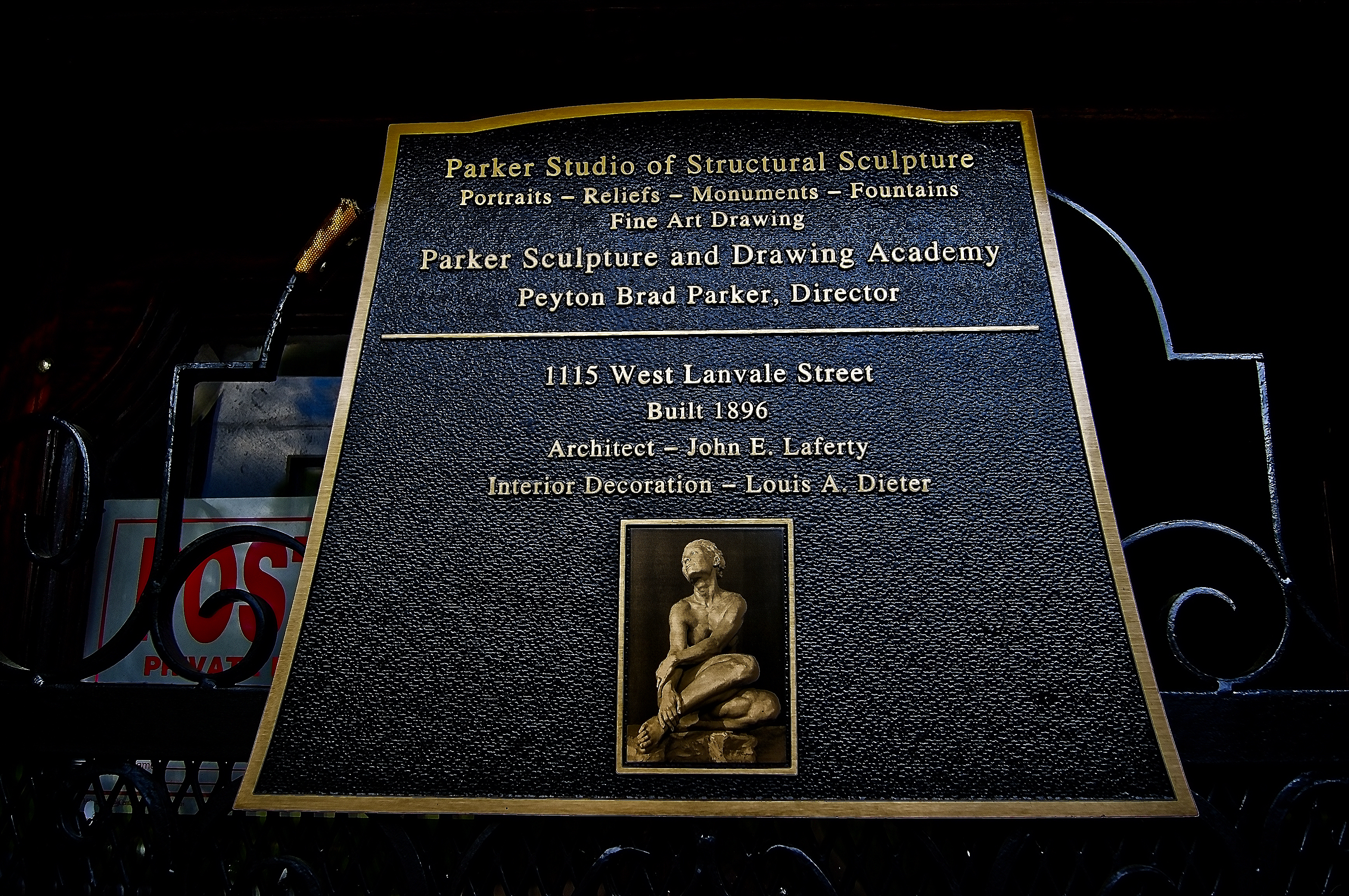
Parker Studio offers art classes in drawing and sculpture in our Baltimore studio space on Lafayette Square.
Check the calendar for an ongoing schedule, and click on the class titles for more Detailed descriptions. Detailed class descriptions also appear below.
Contact: 301 633 2858, or 443 764 5364 by cell phone call, or text message, or contact: sculptorBradP@sculptorBradP.com to arrange a visit, or to enroll in a class or open group. Message Board below seems to have issues. Calendar is general information on classes available, days and times vary.
Current and Upcoming Classes and Open Groups
All Classes are to be rescheduled for new format, days and times held for the Summer, Fall, and Winter 2025 / 2026 season.
OPEN FIGURE DRAWING AND RELIEF SCULPTURE GROUP | Parker Studio Structural Sculpture:
OPEN FIGURE SCULPTURE GROUP | Parker Studio Structural Sculpture :
FIGURE MODELLO SCULPTURE COURSE:
FIGURE MODEL SCULPTURE COURSE | Parker Studio Structural Sculpture:
FIGURE RELIEF SCULPTURE COURSE
BEGINNING SCULPTURE PORTRAIT BUST COURSE
PORTRAIT SCULPTURE COURSE | Parker Studio Structural Sculpture :
PORTRAIT MODELLO SCULPTURE COURSE | Parker Studio Structural Sculpture :
PORTRAIT BUST RELIEF SCULPTURE COURSE
ANATOMICAL FIGURE SCULPTURE CLASS:
Open Drawing and Sculpture Groups
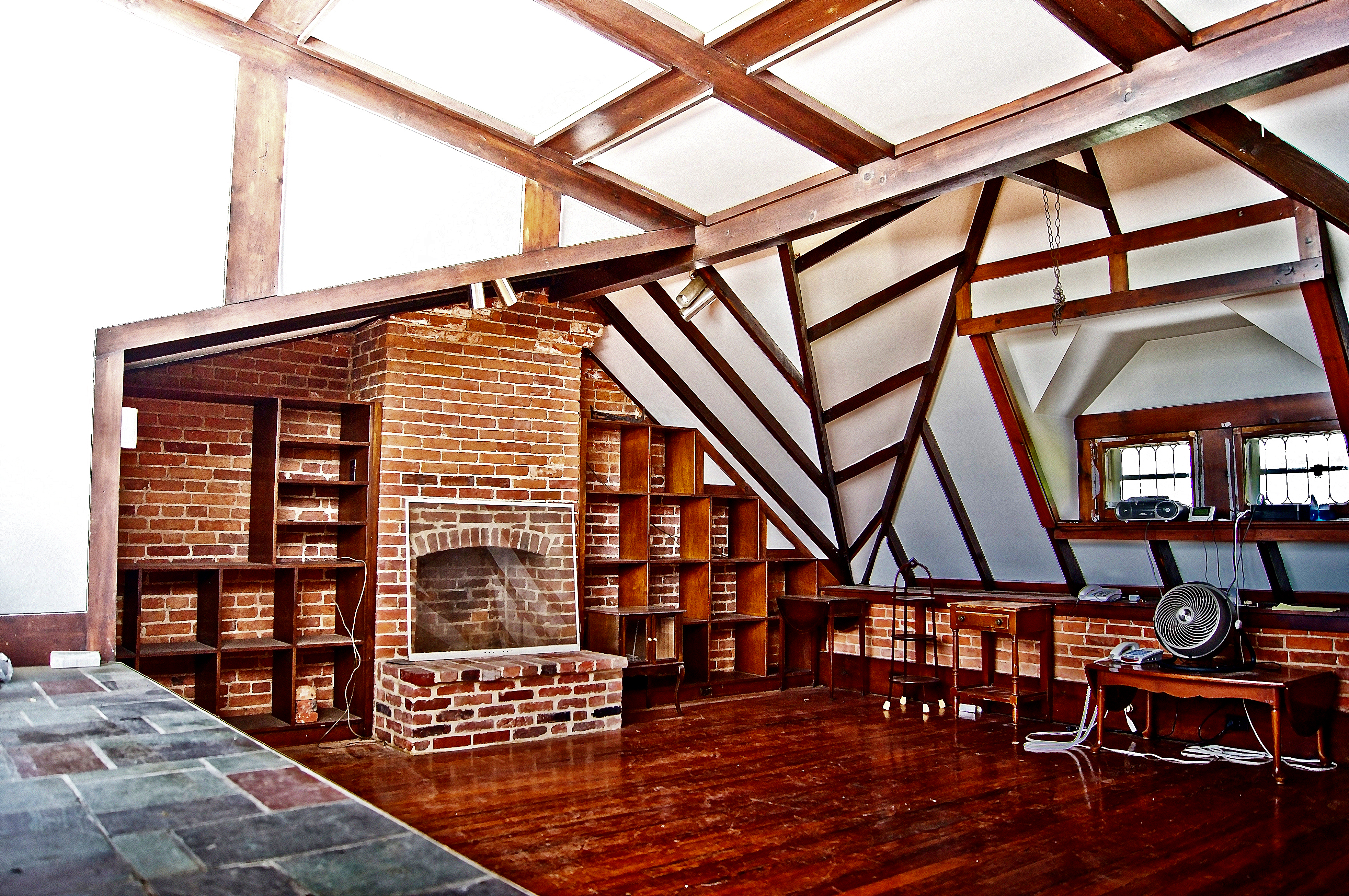
Join us for open drawing and sculpture groups, in which participants can work in our studio space and share the cost of a live model. Please call to arrange for participation. No instruction is offered for the Open Groups, and all levels of experience are welcome.
Follow these links for more details on the Open Figure Drawing and Relief Sculpture Group and the Open Figure Sculpture Group.
Classes in Drawing and Sculpture
Classes are private and by appointment. Students are responsible for the provision of materials.
BEGINNING COMPOSITION FIGURE SCULPTURE COURSE
(detailed description)
This course will be taught in four parts, each part consisting of 24, five-hour sessions (daytime), or Four-hour sessions (evening time) over a twelve-week duration. The same pose, and intended Life Model, or Figure Sculpture is each time for the duration of the course. Students will focus on bone landmarks and major muscle groups while working to capture the action of the pose and characteristics of the model. Overall forms will be blocked in through observation of shapes, rhythms and interconnecting commensurate planes, leading to a simplified yet integrated sculpture sketch composition. Optional free workshop time – class session 5 hours day, or 4 hours evening each week without instruction included.
Cost for the course:
$ 2,136.00 for each 12 week segment consisting of 24 classes, twice a week class schedule, other options available for once-a-week class schedule, and private individual classes – Day.
or
$ 2,136.000 for each 12 week segment consisting of 24 classes, twice a week class schedule, other options available for once-a-week class schedule, and private individual classes – Eve.
ANATOMICAL FIGURE SCULPTURE COURSE
(detailed description)
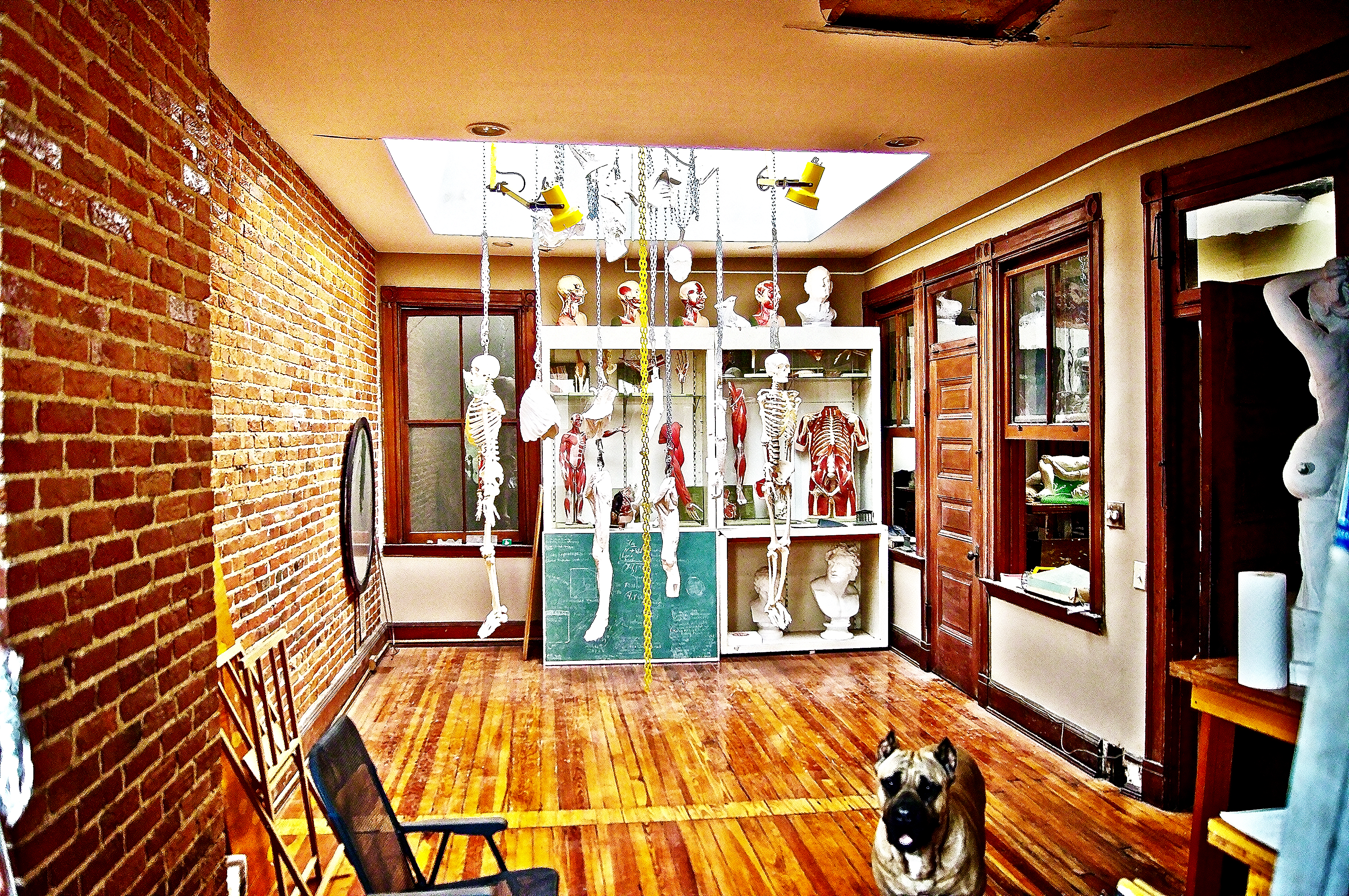
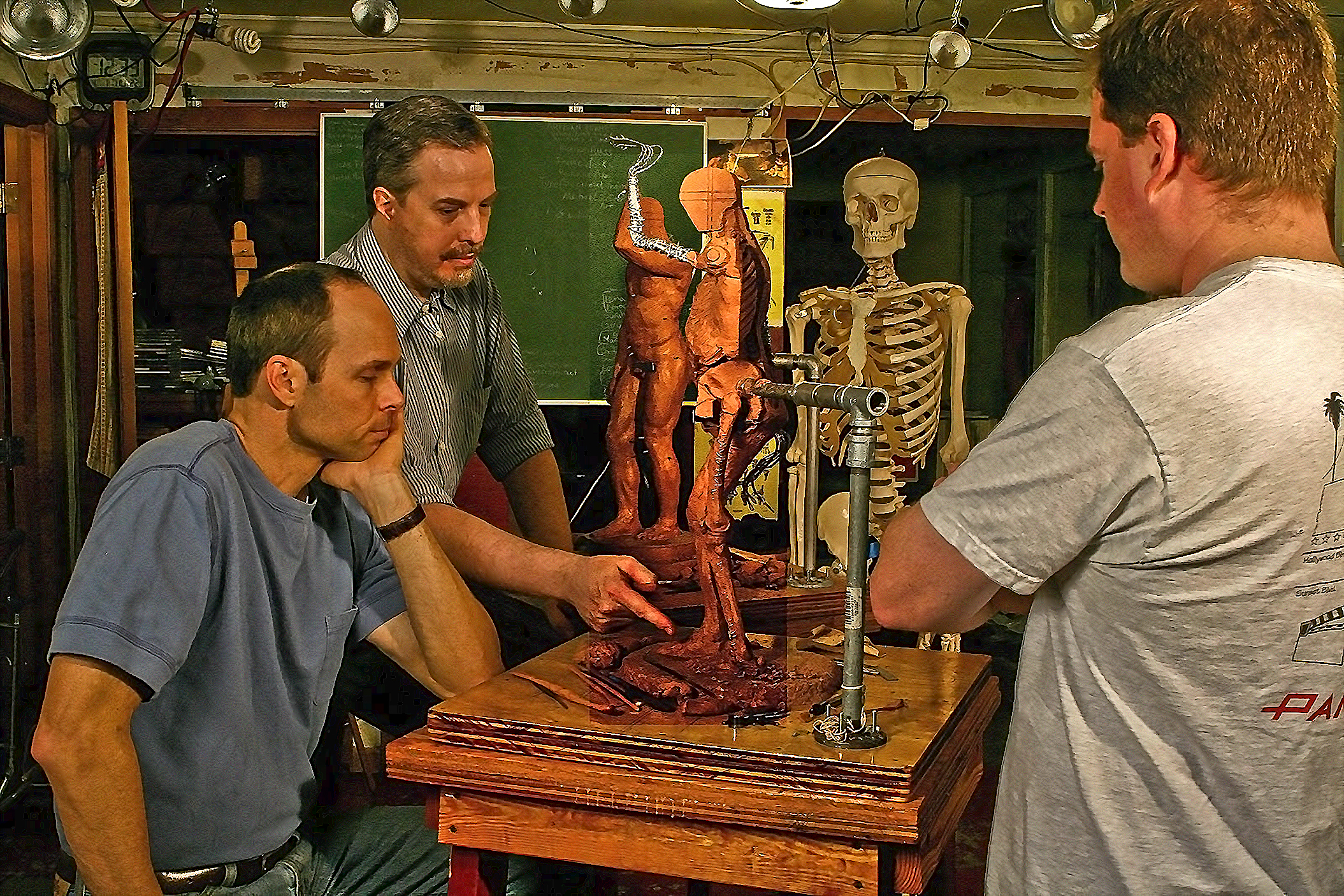
This course will be taught in four parts, each part consisting of 24, five-hour sessions (daytime), or four-hour sessions (evening time) over a twelve-week duration. The same pose, and intended Life Model, or Figure Sculpture subject each time for the duration. Working from the model or plaster subject, students will construct an ecorche with exposed skeletal and underlying muscle parts on one side and rendered surface muscles on the other. The first half of the course will focus on the underlying structure while, in the second half, students will work towards completing the overlying muscle masses. All skeletal and muscle shapes will be treated in a naturalistic manner, but with inherent shape content true to the model. Optional free-workshop class session 5 hours day, or 4 hours evening each week without instruction included.
Cost for the course:
Cost for the course:
$ 2,136.00 for each 12 week segment consisting of 24 classes, twice a week class schedule, other options available for once-a-week class schedule, and private individual classes – Day.
or
$ 2,136.00 for each 12 week segment consisting of 24 classes, twice a week class schedule, other options available for once-a-week class schedule, and private individual classes – Eve.

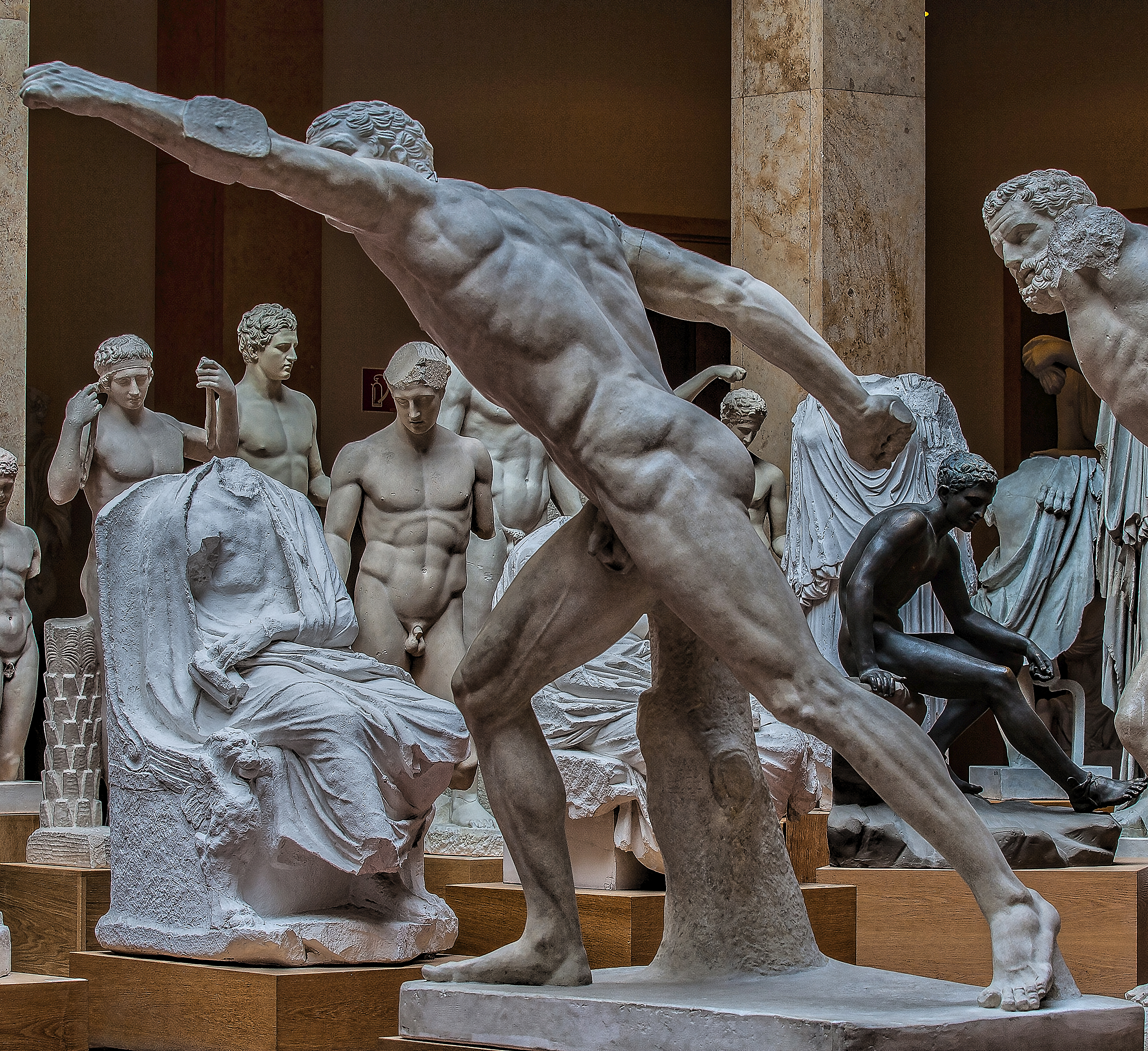
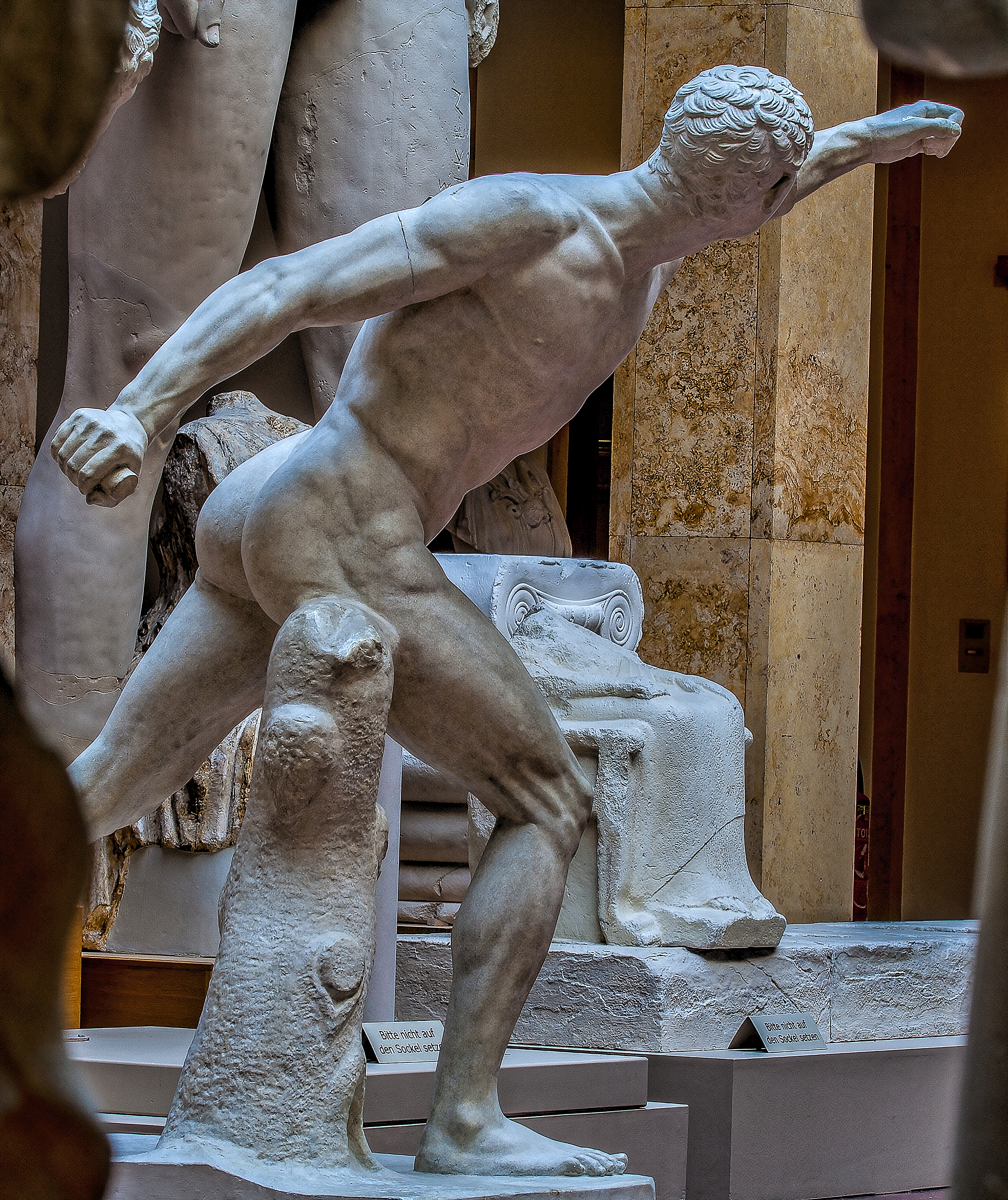
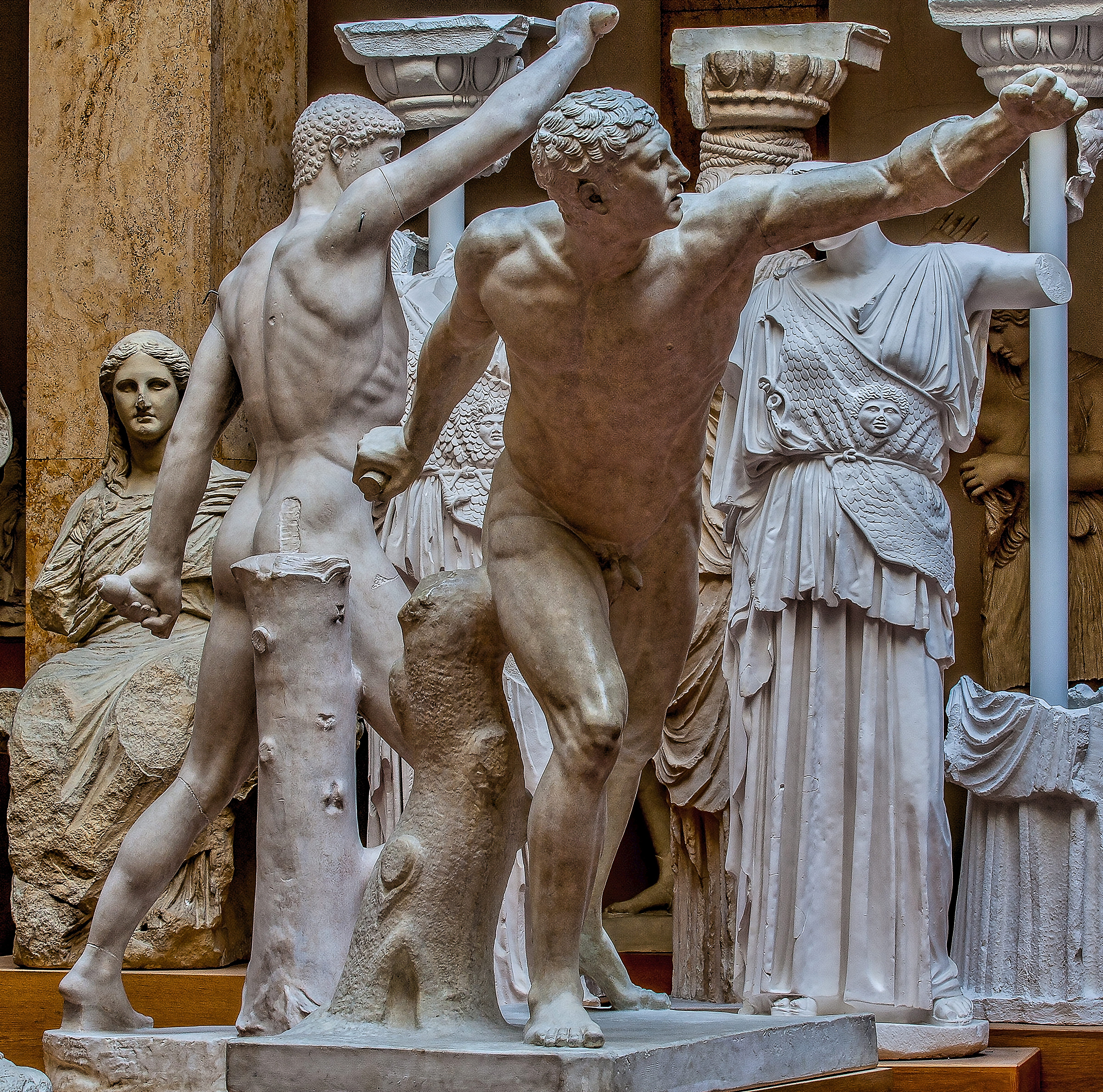

Muenchen Abgussmuseum Museum für Abgüsse Klassischer Bildwerk, A small portion of the Munich Plaster Cast Collection of Greek and Greco-Roman sculpture which consists of thousands of plasters mostly cast directly from new molds off the original sculptures.
Renaissance Origins & Early Expansion
The collecting of plaster casts of Greek and Greco-Roman sculpture began in Italy during the fifteenth century and grew rapidly in the sixteenth.¹ In Florence, Padua, Perugia, and Rome, artists and patrons recognized that plaster offered a way to multiply access to the most admired statues of antiquity, long before archaeological excavations had produced the abundance of marbles and bronzes that later filled European museums.
From the outset, casts were never regarded merely as surrogates. As Johann Joachim Winckelmann insisted in the mid-eighteenth century, “It is the form that moves us, not the material”.² The whiteness of plaster, its matte surface, and its capacity to capture detail without distraction, often made casts preferable to their marble or bronze prototypes. Goethe, reflecting on his visit to Mannheim’s Antikensaal in 1769, confirmed this hierarchy: *“Here at last, in plaster, the works stand in their pure clarity; one sees what marble conceals, what time has veiled.”*³
By the High Renaissance, casts had become essential to the pedagogy of academies and private ateliers. They supplied a structured encyclopedia of exemplary forms through which students were expected to internalize the laws of geometry, proportion, and rhythm. Montabert, writing in the early nineteenth century but describing a tradition already centuries old, observed: *“The cast reduces sculpture to its true principles. Without color, without shine, it compels the student to attend only to the shape, the planes, the relations.”*⁴
These collections grew not only for practical convenience but because they revealed the intellectual core of Greek sculpture. In marble, veining and translucency could distract; in bronze, reflections distorted contours. But in plaster, as contemporaries repeatedly remarked, the viewer perceived the underlying tectonic logic: planes turning in rhythmic sequence, volumes locked into proportionate systems, surfaces ordered according to commensurate geometries. For students, casts functioned not as dead copies but as living diagrams of Greek visual intelligence.
By the sixteenth century, halls of casts were integral to the training centers of Florence, Rome, Perugia, and Padua. These were not random accumulations but curated libraries, offering an encyclopedic sequence of forms. As Goethe later described it, walking among such casts was like *“entering a conversation with antiquity itself, but stripped of all accident, leaving only essence.”*⁵ The Renaissance origins of the cast tradition thus set the intellectual foundation for the massive expansions of the seventeenth through nineteenth centuries, when the collections reached unprecedented size and systematic scope.
The origins of the plaster cast tradition in Renaissance Italy were rooted in workshop practice and the academic desire to codify artistic knowledge. As early as the mid-sixteenth century, Giorgio Vasari described how artists used casts of antiquities to train their eye for proportion and design.¹ In his Lives, Vasari emphasizes that young sculptors should first copy from drawings, then from casts, and only afterward approach the living model. The hierarchy is telling: casts mediated between the abstraction of drawing and the complexity of nature, providing an essential school of form.
Benvenuto Cellini, whose Treatises on Goldsmithing and Sculpture circulated widely in Florence and Venice, offered detailed instructions on molding and casting from life and from antiquities.² For Cellini, casting was not a mechanical duplication but an art in itself — a way of preserving the “beautiful members” (membri belli) of antique statues so they could be studied repeatedly. He recommended that every sculptor keep casts at hand, particularly torsos and limbs, to serve as models for the invention of new works.
Padua and Venice became especially important centers of casting. At the University of Padua, anatomical models in plaster and wax were integrated into artistic and medical teaching alike.³ Venetian collectors such as Cardinal Domenico Grimani assembled both marbles and casts, ensuring that plaster reproductions of famed works circulated even when originals could not be obtained. The Venetian workshop system — with its strong emphasis on replication and dissemination — made casts a staple of artistic training across the Republic.
These Renaissance practices established a principle that endured: plaster casts were intellectual instruments, not mere replicas. They simplified appearance in order to reveal structure. Johann Joachim Winckelmann later captured this rationale when he declared: *“It is the form that moves us, not the material.”*⁴ Goethe, encountering the Mannheim Antikensaal in 1769, extended the thought: *“Here at last, in plaster, the works stand in their pure clarity; one sees what marble conceals, what time has veiled.”*⁵
Montabert, writing a generation later, summarized what the Renaissance academies had already discovered: *“The cast reduces sculpture to its true principles. Without color, without shine, it compels the student to attend only to the shape, the planes, the relations.”*⁶ From Vasari to Cellini, from Padua to Venice, from Winckelmann to Goethe, the consensus was consistent: plaster casts surpass the original in their ability to transmit the geometric and tectonic essence of Greek art.
Casts in Early Drawing and Anatomical Instruction
By the mid-sixteenth century, plaster casts had been formally integrated into the curriculum of academies, particularly in Florence. When Cosimo I de’ Medici founded the Accademia del Disegno in 1563 under the guidance of Vasari, one of its stated pedagogical sequences required that students first draw from prints and drawings, then from plaster casts, and only afterward from the living model.¹ The sequence reveals the hierarchy of Renaissance training: casts were a necessary intermediary, bridging the clarity of line with the complexity of life.
This pedagogical role aligned with the Renaissance conception of disegno — not mere drawing, but the intellectual foundation of all the arts. Plaster casts served as three-dimensional diagrams of form, disciplining the eye to see proportion, symmetry, and rhythm. They were particularly valued for teaching commensurate planes — the relational geometry of surfaces as they turned in space.²
Casts were equally important in anatomical instruction. At the University of Padua, the anatomical theater (opened in 1594) combined dissection with plaster and wax models that preserved the structure of the body for ongoing study.³ In Venice and Bologna, similar collections of wax and plaster fragments of skulls, torsos, and limbs allowed students of medicine and art alike to analyze the body without the temporal limitations of a cadaver. The plaster fragment thus became both an artistic and scientific tool — stabilizing form so that rhythm and structure could be observed over time.
By the early seventeenth century, the use of casts in drawing instruction had become nearly universal across European academies.⁴ They were deployed in the first exercises of students, often under strict rules: beginning with simple geometric solids, proceeding to plaster masks and limbs, and culminating in full figures. Only when proficiency in these studies was demonstrated were students permitted to attempt the living model. The plaster cast therefore occupied the middle ground between geometry and nature — the indispensable scaffold of academic vision.
Slide 1: Vasari portrait + title page of Lives
“Vasari tells us how to train the sculptor’s eye: first from drawings, then from plaster casts, and only then from the living model. Think about that hierarchy: the cast was not a copy — it was the bridge between idea and nature.”
Slide 2: Cellini portrait + illustration of casting process
“Cellini, the great goldsmith and sculptor, gave meticulous instructions for casting. He said every artist should keep plaster limbs and torsos in the studio. Why? Because plaster preserved what he called the ‘beautiful members’ of antiquity — always ready to be studied, always present for invention.”
Slide 3: Florence, façade of Accademia del Disegno
“In Florence, 1563, Cosimo I and Vasari founded the first formal academy. Its rules were precise: students must begin with prints, then plaster casts, only then the living model. Why? Because plaster taught the eye to see structure — commensurate planes, symmetry, proportion — before confronting the chaos of life.”
Slide 4: Drawing sequence images (geometric solids → plaster mask → plaster torso)
“The student’s journey began with cubes and spheres. Next: plaster masks and limbs. Finally: the full figure. Only after proving mastery here could one approach the living model. Plaster was the bridge — between geometry and nature.”
Slide 6: Padua Anatomical Theater, with wax/plaster models
“Padua’s great anatomical theater opened in 1594. Here, cadavers were dissected, but plaster and wax models preserved what decayed. Artists and physicians studied together. The plaster fragment — a skull, a torso, a limb — stabilized the body, so its rhythms could be studied without time’s erosion.”
Slide 7: Quote on screen — ‘The plaster cast…indispensable scaffold of academic vision’ (paraphrase)
“By the seventeenth century, this practice was everywhere. Every academy began with casts. They were the indispensable scaffold of vision — the middle ground between the clarity of geometry and the complexity of nature.”
Slide 8: Transition — map of Europe with cast halls multiplying
“And so the Renaissance made plaster indispensable to both art and science. From Florence to Padua, from Venice to Bologna, casts were the first teachers. From here, the practice would expand — to Paris, to Berlin, to Copenhagen — until by the nineteenth century, Europe was filled with cast empires.”
Slide 9: Quote slide — Winckelmann + Goethe
“A century later, Winckelmann would declare: ‘It is the form that moves us, not the material.’ And Goethe, standing in Mannheim’s cast hall, confessed: ‘Here at last, in plaster, the works stand in their pure clarity.’ The Renaissance insight had become an Enlightenment creed.”
Slide 10: Montabert’s maxim
“Montabert, writing in Paris, summed it up: ‘The cast reduces sculpture to its true principles. Without color, without shine, it compels the student to attend only to shape, planes, relations.’”
Notes
Giorgio Vasari, Le vite de’ più eccellenti pittori, scultori, e architettori (Florence: Torrentino, 1550; expanded 1568).
Johann Joachim Winckelmann, Reflections on the Imitation of Greek Works in Painting and Sculpture (1755), trans. Elfriede Heyer and Roger C. Norton (La Salle: Open Court, 1987), 34.
Johann Wolfgang von Goethe, Italian Journey, 1786–1788, trans. W. H. Auden and Elizabeth Mayer (London: Penguin, 1970), 52–53. Goethe describes the Mannheim Antikensaal in his diaries of 1769.
Paillot de Montabert, Traité complet de la peinture (Paris: Bossange, 1829), 156.
Goethe, Italian Journey, 53.
1.B Giorgio Vasari, Le vite de’ più eccellenti pittori, scultori, e architettori (Florence: Torrentino, 1550; expanded 1568), esp. “Life of Andrea del Verrocchio.”
2.B Benvenuto Cellini, Due Trattati, uno dell’oreficeria, l’altro della scultura (Florence, 1568), trans. John Addington Symonds as Treatises on Goldsmithing and Sculpture (New York: Dover, 1967), 98–105.
Casts in Early Drawing and Anatomical Instruction – Notes
Giorgio Vasari, Le vite de’ più eccellenti pittori, scultori, e architettori (Florence, 1568), and statutes of the Accademia del Disegno (Florence, 1563). See Charles Dempsey, Inventing the Renaissance Putto (Chapel Hill: University of North Carolina Press, 2001), 214–18.
On commensurate planes, see Paul Barolsky, Why Mona Lisa Smiles and Other Tales by Vasari (University Park: Penn State Press, 1991), 63–67.
Andrea Carlino, Books of the Body: Anatomical Ritual and Renaissance Learning (Chicago: University of Chicago Press, 1999), 142–47.
Antoine Chrysostome Quatremère de Quincy, Encyclopédie méthodique: Architecture (Paris: Panckoucke, 1788–1825), vol. 1, 431–34, on cast pedagogy as a foundational European practice.
Slide 6: Transition — Renaissance cast practice spreading across Europe
“From Vasari to Cellini, from Padua to Venice, the message was clear: plaster is not second-rate. Plaster is revelation. The Renaissance laid the foundation for what would become, in the seventeenth through nineteenth centuries, an empire of casts.”
Thus, by the close of the sixteenth century, plaster casts had secured their dual role as instruments of disegno and as anatomical exemplars. Florence had enshrined them in its academic statutes; Cellini had recommended them as indispensable workshop tools; Padua and Venice had demonstrated their value to both artistic and medical study. This early Renaissance culture of plaster was primarily pedagogical and local — serving the training of artists and physicians within city-based academies. But beginning in the seventeenth century, the practice expanded dramatically in scope and ambition. What had been a workshop resource in Florence or a teaching aid in Padua became, in Paris, Lyon, Strassburg, Berlin, Munich, Königsberg, Frankfurt, Stuttgart, Marburg, Dresden, Vienna, Copenhagen, Stockholm, Genoa, Milan, Bologna, and London, the foundation for entire national collections numbering in the thousands. The cast hall evolved from a private studio tool into a public institution, an encyclopedic library of form that defined the artistic ideals of Europe.
Slide: Renaissance academy → 19th c. cast hall juxtaposition
“So by 1600, plaster was everywhere in the studios and academies of Italy. Vasari had written it into Florence’s rules. Cellini had stocked his workshop with it. Padua’s anatomists had dissected with it. Venice had collected and exported it. In this first phase, casts were local tools — serving artists and doctors, city by city.”
Pause — click to next slide (grand cast hall, 18th–19th century)
“But then something changed. In the seventeenth century, the scale exploded. Paris, Berlin, Dresden, Vienna, Copenhagen, London — no longer just studios, but entire nations built cast collections. Five thousand, six thousand, even nine thousand pieces. Casts ceased to be private tools and became public institutions — vast encyclopedias of form. And it is to this great expansion that we now turn.”
Section II: The Expansion of Cast Empires (17th–19th Centuries)
II.1. The French Academy and Paris as Model
The Académie Royale de Peinture et de Sculpture, founded in 1648, institutionalized the Florentine practice of cast drawing at a national scale. Its statutes prescribed a strict progression: “First from engravings, then from plaster casts, and only after long study, from the living model.”¹ This sequence reflected the conviction that plaster was not a mere substitute but a necessary foundation for the comprehension of form.
Charles Le Brun, the Academy’s first director and chief propagandist of Louis XIV’s artistic policies, championed this hierarchy. As Christian Michel observes, *“Le Brun placed plaster at the threshold of the artistic curriculum, not as a limitation but as the essential grammar of form.”*² The Academy’s early inventories show dozens of casts ordered from Rome — the Laocoön, the Belvedere Torso, fragments of antique reliefs — which became the daily bread of students.
The pedagogical centrality of casts was reinforced by rhetoric. Antoine Chrysostome Quatremère de Quincy later declared: *“The museum of casts is to the artist what the library is to the man of letters. It is a republic of forms in which all may study, where the genius of antiquity is made present in its purest state.”*³ This analogy to the library is crucial: casts were understood not simply as objects, but as texts to be read, studied, compared, and memorized.
By the eighteenth century, the Louvre and École des Beaux-Arts housed extensive halls where casts were arranged systematically, creating what Thomas Crow calls an “encyclopedic grammar of form.”⁴ Students were expected to spend years mastering these whitened pedagogical bodies before they were permitted to confront the life model.
The French Academy of Painting and Sculpture institutionalized the cast as the first stage of training. Students at the École des Beaux-Arts drew for months or years from plaster before progressing to the life model. Quatremère de Quincy, in his Encyclopédie Méthodique (1791), defended casts passionately: “Without the intermediary of plaster, the treasures of antiquity would remain locked in their sites. The cast is not a copy but a translation — the language through which the antique speaks anew.”
For Quatremère, casts were not poor substitutes but instruments of democratization, allowing Parisian students to study the Apollo Belvedere or Laocoön without leaving France. In his vision, the cast hall was a universal museum: “a republic of forms.”
II.2. German Cast Halls: Berlin, Göttingen, Munich
If Paris institutionalized casts, Germany monumentalized them. Berlin’s Royal Cast Collection, begun in the late seventeenth century and vastly expanded under Frederick the Great in the eighteenth, exemplified the ambition to create encyclopedic repositories of antiquity.⁵ By the early nineteenth century, Berlin’s Antikensaal was filled with hundreds of plaster exemplars, displayed in temple-like halls.
Johann Joachim Winckelmann, the intellectual architect of German classicism, gave the philosophical justification. In his Reflections on the Imitation of Greek Works in Painting and Sculpture (1755), Winckelmann argued that Greek form was best apprehended in marble or its faithful surrogates: *“The only way for us to become great, or even inimitable if possible, is to imitate the ancients.”*⁶ The cast, replicating the antique, became the indispensable medium of that imitation.
Goethe’s testimony is even more pointed. Visiting Mannheim’s Antikensaal in 1769, he exulted: *“Here, at last, the noble works stand before us in their pure clarity; without the distractions of time and place, one may study their forms as though they had just emerged from the chisel of antiquity.”*⁷ For Goethe, plaster purified marble, stripping away the accidents of patina, damage, or historical distance.
In Munich and Göttingen, similar collections were assembled to serve universities as much as academies. Cast halls functioned as laboratories of form, “public encyclopedias” designed for students, scholars, and citizens alike. Their scale and order embodied the Enlightenment conviction that art, like science, required accessible instruments of study.
In Berlin, the Royal Cast Collection became one of the largest in Europe. Goethe himself, who oversaw Weimar’s collections, praised their pedagogical function: “He who cannot see the originals must not despise the casts, for they too preserve the breath of antiquity.” The German model was encyclopedic, seeking completeness. The Berlin collection ultimately numbered over 5,000 pieces, arranged in evolutionary sequences from Egyptian to Greek to Renaissance. For critics like Heinrich Wölfflin, these halls trained not only artists but also the public in a comparative method: seeing styles in succession.
II.3. Scandinavian Adoption: Copenhagen and Stockholm
In Scandinavia, where direct access to antiquities was rare, plaster casts became the indispensable substitute. The Royal Danish Academy of Fine Arts, founded in Copenhagen in 1754, relied almost exclusively on casts for its early decades.⁸ Its regulations mirrored the Parisian model: *“The students shall first draw from plaster casts before being admitted to the life school.”*⁹
The Copenhagen collection, eventually numbering over four thousand pieces, was directed by J. C. Jacobsen, who established Carlsberg brewery in 1847 later expanding the Copenhagen Royal Cast collection with only new molds off the originals as first pull plasters supplied largely through Italian intermediaries, including the Roman workshops that specialized in exporting casts to northern Europe. In Stockholm, the Royal Swedish Academy of Arts (1773) similarly built its pedagogy around plaster, importing casts of Greek and Roman sculpture to provide what its directors called *“the forms most necessary to nourish the Swedish eye.”*¹⁰
Scandinavian voices emphasized plaster’s democratizing function. As one Danish professor put it in 1785: *“The student who cannot travel to Rome may yet find Rome in plaster; here the best of antiquity is brought within his reach.”*¹¹ For northern Europe, casts were not supplements but surrogates — the only feasible conduit for contact with antiquity.
In Copenhagen, the Academy collected casts both for pedagogy and for public edification. Directed by J. C. Jacobsen, who established Carlsberg brewery in 1847, also included hundreds of bronze castings placed throughout Copenhagen in public parks, and the Royal arboretum. These bronzes were based on the new molds off the original Greek and Greco-Roman – extended Hellenistic period of Greek sculptors’ sculpture through the period of Caesar Tiberius. Bertel Thorvaldsen, who rose from Academy student to Europe’s most celebrated Neoclassical sculptor, testified to their value: “From these plaster walls I learned the Greeks.” Thorvaldsen’s own studio later became a cast museum, cementing the continuity of tradition.
II.4. The Ferrari Brothers and the Export Trade
The eighteenth-century academies depended on Italian formatori for their casts, but in the later eighteenth century the trade was transformed by the Roman brothers Francesco and Luigi Ferrari, who issued printed catalogues of hundreds of figures, busts, and reliefs and shipped orders across Europe.¹ Their itinerant commerce—already offering the canonical “Dancing Faun,” Borghese Gladiator, and the like—plugged northern buyers into Roman originals via portable molds and stock lists.¹ By the 1760s–70s Christian Gottlob Heyne at Göttingen was purchasing casts and building what is now the earliest university collection (founded 1767);² he soon questioned the sharpness and fidelity of some Italian-sourced pieces,³ and several Ferrari (and later Rost) casts at Göttingen were eventually replaced as too blurred for teaching.⁴ A persistent trade anecdote concerns the so-called “Gotha Dancing Faun,” said to have been lost en route to Catherine the Great, with Ferrari molders taking a stopover cast for Duke Ernst II’s collection at Schloss Friedenstein, Gotha; the work is documented in Gotha’s holdings, and the Ferrari repertoire did, in fact, include the faun type.⁵ In 1991, Christoph Boehringer (Göttingen Archäologisches Institut) likewise referred to a Göttingen plaster as the “Gotha Dancing Faun,” and a comparable (but low-detail) cast was observed by the author in the Accademia di Belle Arti di Ravenna’s gipsoteca—consistent with that academy’s early nineteenth-century purchases from leading Roman workshops.⁶ Meanwhile, in 1778 the Leipzig dealer Carl Christian Heinrich Rost founded a Kunstfabrik, bought molds (including from itinerant Italian dealers), and issued multi-volume sales catalogues that consolidated the mid-German market and helped standardize a canonical repertoire beyond court and university collections.⁷ Within the decade in Paris, the Louvre created the Atelier de moulage (14 December 1794) to conserve and distribute state molds, and in 1797 the Chalcographie to print and sell plates—sister institutions that institutionalized reproduction at national scale.⁸ Through these channels, casts of antiquities reached Berlin, Paris, and London—and by the early nineteenth century, Boston and Philadelphia: the Boston Athenæum catalogues list, among others, casts of the Laocoön and Apollo Belvedere, while the Pennsylvania Academy of the Fine Arts imported a group in 1805 from “Getti, Mouleur du Musée Napoléon,” including the Belvedere Torso, Venus de’ Medici, Laocoön, and Borghese Gladiator.⁹ In short, the Ferrari-to-Rost-to-Louvre pipeline shifted plaster from local pedagogy to a pan-European (and Atlantic) commodity network, even as curators like Heyne learned—sometimes the hard way—that quality depended on the freshness of molds, the route the mold had traveled, and the institutional standards applied at the point of display.³ ⁴
If the late-Enlightenment courts of central Germany wanted antiquity to be both a school and a stage, Friedrich Wilhelm Eugen Döll (1750–1816) was one of the artisans who built the sets and taught the lines. Trained first in Fulda, then dispatched to Paris and Rome at the behest of the future Duke Ernst II of Saxe-Gotha-Altenburg, Döll’s itinerary stitched together the canonical circuit of classicism: Houdon in the Paris studio; Mengs, Grimm, and Reiffenstein as guides in Rome; the return north to institutionalize what he had learned in plaster, marble, and program.¹ His Roman years—variously remembered in contemporary and later sources as a prolonged period of copying antique sculpture, punctuated by work in 1779/80 on a marble Winckelmann bust—mark the pivot from apprenticeship to a classicist grammar he would speak fluently in Gotha, Dessau-Wörlitz, and beyond.²
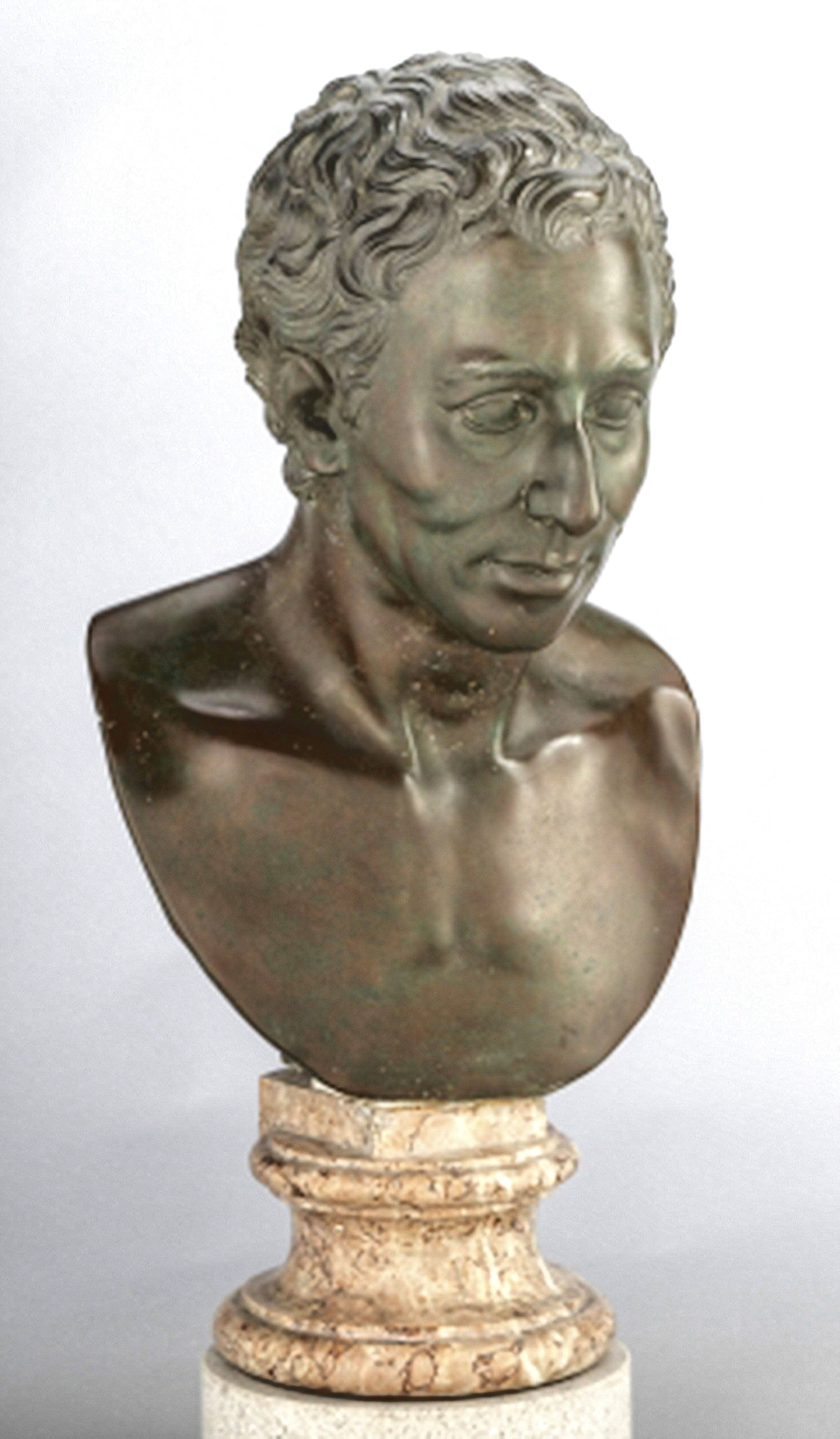
Upon his return, Döll’s formal court career crystalized quickly. He was named Hofbildhauer (court sculptor)—the appointment is given in 1781 in the most reliable prosopographies, though later Gotha materials sometimes echo 1784—and his docket immediately filled with the predictable triad of enlightened commissions: busts (the physiognomy of virtue), monuments (the theater of memory), and reliefs (history condensed). These orders clustered at the Ernestine and allied residences—Gotha, Anhalt-Dessau, Meiningen—so that Döll’s hand became a discreetly ubiquitous surface in the region’s classicist interiors. In 1786 he was appointed professor and drew a circle of pupils (Louise Seidler among them), and in 1787 he received oversight of Gotha’s art monuments, formalizing a custodial authority he had already begun to exercise informally through collecting and casting.³
Crucially, Döll’s studio responsibilities were braided to a curatorial-pedagogical mission. The Friedenstein archives remember that the “Grundstein” (foundation) for the ducal cast collection was laid in 1770 and that Duke Ernst II subsequently charged Döll with producing copies of antique works. This is the textual kernel around which later Gotha tradition has spoken of an “academy” at Schloss Friedenstein: not a Paris-scale institution with statutes and concours, but a working drawing school built around an Abgusssammlung (cast room) and a curriculum of measured imitation—the practical school that classicism required.⁴ The trade in casts and reductions, as contemporary German sources show, relied on named guarantors of quality; “the court sculptor Döll of Gotha” appears exactly in such contexts, underwriting both the circulation of forms and the didactic credibility of the copies.⁵
The didactic and the theatrical converged in Döll’s most conspicuously “Egyptian” Gotha commission: the Egyptianizing water-monument at the Schwanenteich (c. 1805). The description survives in 19th-century topographies and recent local historiography: a 25-foot portal of two monoliths incised with hieroglyphs, a basin from which ibises drank, a ceiling-breaking jet that dispersed as a “Staubregen,” an Isis winged-shield in the frieze, and—on the entablature—a Sphinx. As the pond was later drained and the post office erected, the ensemble vanished, the Sphinx alone surviving a peripatetic afterlife through lodge gardens and civic greens. The object lesson is plain: Egyptian form here functions both as scenic device (a water machine) and as Masonic-coded emblem (eternity, enigma), indexing the court’s taste and its sociability at once.⁶
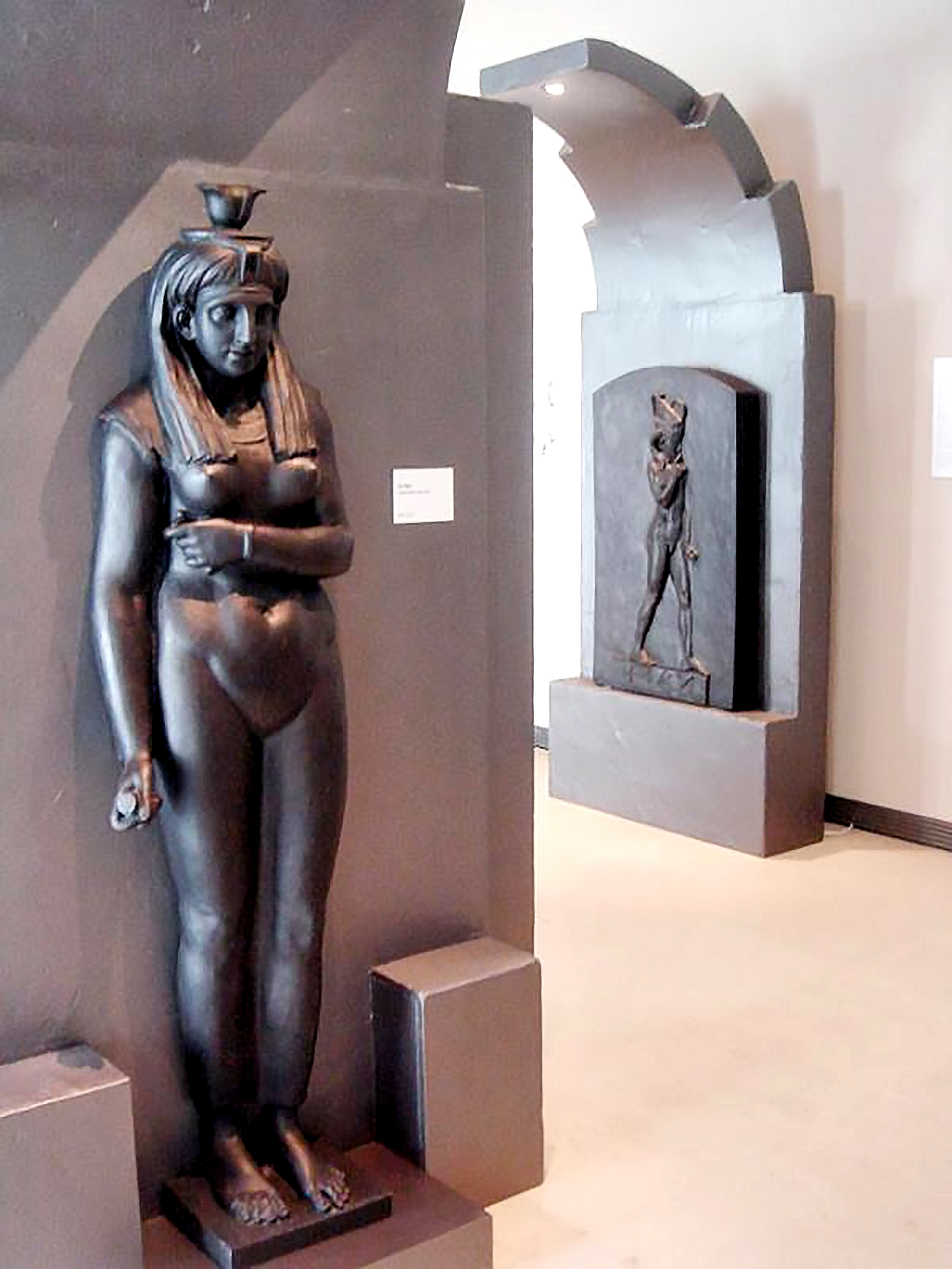
The same Greco-Egyptian vocabulary finds its most coherent program in Dessau-Wörlitz. There, under Prince Leopold III and architect Erdmannsdorff, Döll supplied some of the earliest sculptural works in Germany executed “nach altägyptischen Vorlagen”: reliefs of Osiris, Anubis, Harpocrates and a statue of Isis in the Pantheon’s undercroft—an Egyptian crypt beneath a Roman rotunda. Contemporary descriptions and the site’s current interpretive materials concur that the tympanum’s contest of Muses and Sirens was also realized after one of Döll’s plaster models, while the basement suite was reached by a grotto “unterquerend” the levee, a theatrical passage from the Enlightenment’s didactic daylight into a curated antiquarian dusk.⁷ Scholars of the park’s sculptural sources have noted that the Osiris type in Wörlitz is hybridized—what we might call a scholarly bricolage—splicing a head/bust modeled after published antiquities to a falcon-headed god’s body known from Munich collections, the whole fitted to the garden’s taxonomic allegory.⁸ In this sense “Munich” enters Döll’s Greco-Egyptian, not as place of patronage, but as a cabinet of comparanda: the Glyptothek’s world-famous marbles (opened 1830) and, more pointedly, the holdings of today’s Staatliches Museum Ägyptischer Kunst, where falcon-deity types of precisely the sort mobilized by Wörlitz’s designers remain central to the didactic galleries.⁹
Houdon, with whom Döll studied with for three years in Paris, shadows this entire itinerary. Gotha’s Herzogliches Museum now houses what it advertises as the largest collection of Houdon’s works outside France—a concentration that helps explain the stylistic seam uniting the court’s portrait practice, its classicist self-fashioning, and the pedagogies of the cast room.¹⁰ It also refracts Döll’s own portraiture at crucial moments, such as the marble bust of Johann Joachim Winckelmann carved in Rome (1779/80), where the Mengs-Winckelmann axis that theorized “noble simplicity and quiet grandeur” is given a local, Ernestine marble gloss.¹¹ That Gotha simultaneously collected early Houdon and sent Döll to Rome to copy the antique is not a contradiction; it is the logic of the Ernestine laboratory: French neoclassical finish on the one hand, Roman canon on the other, their synthesis domesticated in Thuringia.
The Masonic stage provides the third plank of context. Gotha’s lodge history—founded under 18th-century titles (“Kosmopolit,” “Zum Rautenkranz”), suspended in the 1790s, reconstituted in 1806 as “Ernst zum Compaß,” and active until 1934/35—forms the social web that explains why a Sphinx might leave a vanished water-monument for a lodge stair and why Isis appears under a Roman dome in a didactic garden.¹² Duke Ernst II’s own Masonic commitments and more general taste for “Mysterien Ägyptens” are a matter of record in the Stiftung Friedenstein’s recent curatorial work; Döll’s “Egyptian” commissions should be read within that nexus of enlightened piety, sociability, and emblem.¹³ Even the commemorative fabric of Gotha’s public space kept pace: Döll’s monument to Christian August Geutebrück—the agriculturalist, court servant, and lodge brother—inscribes the biographical lines of service, science, and fraternity into stone.¹⁴
To map Döll’s career along these three axes—studio/institution, garden/theater, lodge/emblem—is to see that the “academy” he was asked to build was not only rooms, casts, and syllabi; it was a method for circulating forms across sites and media. In Gotha, the cast became both copy and credential; in Wörlitz, the relief became both image and key to a garden-encyclopedia; in the lodge, an Egyptian monolith became both hydrology and allegory. That the same hand could model Winckelmann in Rome and produce a Sphinx for a Thuringian pond is not eclecticism; it is the Enlightenment’s work of translation—antique, French, and Egyptian into the Ernestean tongue.
Notes (full footnotes)
-
“Friedrich Wilhelm Eugen Döll,” Wikipedia (DE), s.v. Ausbildung, noting Paris with Jean-Antoine Houdon and subsequent training in Rome under Raphael Mengs and Johann Friedrich Reiffenstein, on Baron Grimm’s recommendation, 1770–73. Wikipedia
-
On the Roman work and Winckelmann bust (1779/80), see Klassik Stiftung Weimar project page (“Klauer … bronzed plaster cast after Döll; Döll’s marble bust”), and image record of the Gotha marble; these corroborate a Roman execution while later biographical notes expand the Roman sojourn into a longer period of cast-copying activity. schriftkultur.uni-halle.deWikimedia Commons
-
“Döll … appointed court sculptor (1781), professor (1786), and supervisor of Gotha’s art monuments (1787); commissions at Gotha, Anhalt-Dessau, Meiningen; pupils including Louise Seidler,” Wikipedia (EN/DE) entries. WikipediaWikipedia
-
Stiftung Schloss Friedenstein, Tourentipp Ernestiner brochure: “Der Grundstein für die Sammlung der Gipsabgüsse wurde 1770 gelegt. Herzog Ernst II. erteilte Bildhauer Friedrich Wilhelm Eugen Doell den Auftrag, Kopien antiker Kunstwerke anzufertigen.” This is the institutional seed of the drawing-school/cast-room often summarized as an “academy.” stiftung-friedenstein.de
-
Volker Kockel, “Abgüsse, Nachbildungen und Verkleinerungen antiker Plastik …,” notes “dem Hofbildhauer Doell aus Gotha … als Garanten für die Qualität,” situating Döll in the 18th-century German cast trade. heiDOK
-
“Monument am Schwanteich,” Wikipedia (DE): portal with hieroglyphs, ibises, Isis winged-shield, Sphinx; history of removal and survival of Sphinx. Supplemented by local compilations. WikipediaParker Studio Structural Sculpture
-
“Pantheon (Wörlitz),” Wikipedia (DE): tympanum by F. Hunold after a plaster model by Döll; basement dedicated to Egyptian art. See also general Garden Realm entries confirming Döll’s Osiris/Anubis/Harpocrates/Isis works as among the earliest Egyptianizing sculptures in Germany. Wikipedia+1Goruma
-
On the hybrid Osiris type and Munich comparanda: Wörlitz interpretive texts emphasize Egyptian templates; Munich’s Staatliches Museum Ägyptischer Kunst documents falcon-headed deities as canonical types (e.g., the “Horus-Falke” display), supporting the art-historical inference that Wörlitz designers (with Döll) combined motifs known from Munich holdings and published catalogues. AcademiaWikipedia
-
For Munich context: Glyptothek (ancient sculpture) and Staatliches Museum Ägyptischer Kunst (collections and displays including falcon-deity types). Antike am KönigsplatzAcademia
-
Herzogliches Museum Gotha (official site): “die weltweit größte Sammlung an Werken [Houdons] außerhalb Frankreichs”; see also museum and tourism pages echoing this superlative. stiftung-friedenstein.deWikipediagotha-adelt.de
-
On Döll’s Winckelmann bust in Rome and its reception: Klassik Stiftung Weimar page and related academic catalogue entries. schriftkultur.uni-halle.deAcademia
-
Lodge history: “Ernst zum Compaß,” Wikipedia (DE) (1806–1934); earlier 1774 foundation as “Kosmopolit/Zum Rautenkranz,” pauses and re-founding traced in lodge histories and scholarly databases. Wikipediafreimaurer-wiki.dedatabase.factgrid.de
-
Stiftung Friedenstein, Freimaurer und Mysterien Ägyptens in Gotha (press dossier and exhibition page): Ernst II’s membership and the local Illuminaten context; provides the ideological frame for Egyptian motifs in Gotha. stiftung-friedenstein.de+1
-
Döll’s oeuvre list (including the Geutebrück monument) in Wikipedia (DE) biography. Wikipedia
Works Cited (Notes/Bibliography)
Primary and Reference
“Friedrich Wilhelm Eugen Döll.” Wikipedia, German and English editions (rev. July 2025). Accessed August 22, 2025. WikipediaWikipedia
Herzogliches Museum Gotha. “Herzogliches Museum.” Official site. Accessed August 22, 2025. (Declares Gotha’s Houdon collection the largest outside France.) stiftung-friedenstein.de
Stiftung Schloss Friedenstein Gotha. Die Ernestiner. Eine Dynastie prägt Europa (Tourentipp brochure). Gotha, 2016. (Cast collection foundation; Döll commissioned to make copies.) stiftung-friedenstein.de
“Monument am Schwanteich.” Wikipedia (DE). Accessed August 22, 2025. (Description and fate of the Egyptianizing water-monument.) Wikipedia
“Pantheon (Wörlitz).” Wikipedia (DE). Accessed August 22, 2025. (Döll’s plaster model for tympanum; Egyptian program in the undercroft.) Wikipedia
“Wörlitzer Park.” Wikipedia (DE). Accessed August 22, 2025. (Osiris/Anubis/Harpokrates reliefs and Isis statue by Döll; earliest Egyptianizing works in Germany.) Wikipedia
Glyptothek München. “World-famous Originals in Timeless Rooms.” Museum overview. Accessed August 22, 2025. Antike am Königsplatz
Staatliches Museum Ägyptischer Kunst, München. Gallery/educational materials (esp. displays of falcon deities). Accessed August 22, 2025. Academia
Contextual and Scholarly
Kockel, Volker. “‘Dhieweilen wier die Antiquen …’: Abgüsse, Nachbildungen und Verkleinerungen antiker Plastik am Ende des 18. Jahrhunderts.” PropylaeumDOK (2000). (Döll cited as guarantor for cast quality.) heiDOK
Klassik Stiftung Weimar. “Winckelmann. Moderne Antike” (project page with entries on Döll’s Winckelmann bust and Klauer cast). Accessed August 22, 2025. schriftkultur.uni-halle.de
Dessau-Wörlitz Garden Realm. UNESCO/official portals. Accessed August 22, 2025. (Garden program, Enlightenment frame.) Wikipediagartenreich.de
Stiftung Schloss Friedenstein Gotha. “Freimaurer und Mysterien Ägyptens in Gotha” (press materials and exhibition page). Accessed August 22, 2025. stiftung-friedenstein.de+1
“Ernst zum Compaß.” Wikipedia (DE) and allied lodge histories. Accessed August 22, 2025. (Founding, hiatus, re-founding, duration.) Wikipediafreimaurer-wiki.de
Illustrative and Collection Records
Wikimedia Commons image records of Döll’s busts in Gotha (Mengs; Winckelmann), with museum attributions. Accessed August 22, 2025. Wikimedia Commons+1
Gotha-Adelt (tourism portal). “Herzogliches Museum Gotha” venue description (Houdon superlative). Accessed August 22, 2025. gotha-adelt.de
A brief note on dates and attributions
Where this essay follows contested datings—e.g., the court-sculptor appointment (often 1781, occasionally echoed as 1784), or the duration of Roman sojourns—the notes flag the most reliable reference versions and conserve later local memory only where it illuminates Gotha’s institutional narrative (cast collection/“academy”). The Wörlitz–Munich connection regarding a falcon-deity body should be understood as a careful art-historical inference, consistent with museum documentation of typologies and with the park’s stated reliance on antique templates; explicit catalogue-number concordances have not been located in open-web sources and thus are not claimed here as documentary fact.

Überarbeitete Fassung (Deutsch)
Der geistesgeschichtliche Hintergrund dieses in barocker Manier inszenierten Theatrum Hieroglyphicum ist die für das späte 18. Jahrhundert so charakteristische fürstliche Sammeltätigkeit, in der das Sehen—geleitet von Kabinetten, Gipsabgüssen, Reiseberichten und gelehrter Exegese—zum eigentlichen Medium historische[r] Erkenntnis stilisiert wird. Die Enträtselung der ägyptisierenden Bildwerke erhellt daher nicht nur ihre kunsthistorische Genealogie, sondern vor allem einen ideengeschichtlichen Prozess, dessen Wurzeln in mittelalterlichen Exegesen (Physiologus-Tradition, biblische Typologien) liegen, der in der Renaissance über die Rezeption des Corpus Hermeticum (Ficino, Pico) eine neue Autorität gewinnt, im Barock als gelehrte Ägyptosophie (Kirchers spekulative Hieroglyphenlektüren) kulminiert und schließlich im späten 18. Jahrhundert in eine empirischere, museal gestützte Antikenwissenschaft übergeht—noch immer vor-champollionisch, aber bereits methodisch sensibilisiert.
Vor diesem Horizont stehen die „hieroglyphenkundlichen“ Münchener Götterfiguren—heute im Staatlichen Museum Ägyptischer Kunst (Arcisstraße 16, 80333 München)—pars pro toto für die barock geprägte Ägyptophilie/Ägyptosophie: Sie wurden in gelehrten Räumen gelesen, katalogisiert und als Träger verschlüsselter Weisheit behandelt; ihre „Hieroglyphik“ fungierte weniger als Sprachsystem, denn als Emblematik einer offenbarungsgeschichtlich gedachten prisca sapientia. Demgegenüber markieren die ägyptisierenden Wörlitzer Bildwerke der Goethezeit—Reliefs von Anubis, Osiris/Harpokrates, eine Isis-Statue, in eine didaktische Landschaftspädagogik eingebettet—den Umschlag in Ägyptomanie und Ägyptenromantik: nicht bloß Zitat, sondern ein aufgeklärtes Inszenieren von Altertum im Freien, wo Topographie, Hydraulik, Gartenarchitektur und ikonographische Programme ein Gesamtmedium bilden. Dass die Wörlitzer Typen teilweise als gelehrte Montage aus publizierten Antiken und in süddeutschen Sammlungen (München) gesicherten Formen entstanden, zeigt dabei exemplarisch, wie der Transfer von „ägyptischer“ Form—zwischen Kabinett, Garten und Loge—funktionierte.
So erscheint das Theatrum Hieroglyphicum als Drehscheibe: Fürstliche Sammlungen liefern die materiellen und intellektuellen Ressourcen; barocke Ägyptosophie stellt die Lesemodelle bereit; die Goethezeit externalisiert beides in den Raum des Gartens. Die ägyptisierenden Monumente sind damit weniger dekorative Exotismen als Instrumente eines Sehexperiments, das vom hermeneutischen Enträtseln zur kuratorischen Didaxe überleitet—ein Prozess, der die mitteleuropäische Rezeption Ägyptens vor Champollion präzise umreißt und zugleich die unterschiedlichen Rollen Münchens (gelehrte, museale Autorisierung) und Wörlitz’ (landschaftlich-pädagogische Theatralik) klar konturiert.
Polished Translation (English)
The intellectual background of this baroque-style Theatrum Hieroglyphicum is the princely collecting culture so symptomatic of the late eighteenth century, in which “seeing”—disciplined by cabinets, plaster casts, travel literature, and learned exegesis—becomes the very medium of historical knowledge. Decoding these Egyptianizing works thus illuminates not only their art-historical genealogy but, above all, an intellectual-historical process whose roots lie in medieval exegesis (the Physiologus tradition, typological readings of Scripture), which gains new authority in the Renaissance through reception of the Corpus Hermeticum (Ficino, Pico), culminates in the Baroque as learned Aegyptosophy (Kircher’s speculative readings of hieroglyphs), and, by the later eighteenth century, transitions into a more empirical, museum-anchored antiquarianism—still pre-Champollion, yet already methodologically alert.
Against this horizon, the “hieroglyphics-minded” god figures in Munich—today in the Staatliches Museum Ägyptischer Kunst (Arcisstraße 16, 80333 Munich)—stand as pars pro toto for Baroque Aegyptophilia/Aegyptosophy: read within learned spaces, cataloged, and treated as bearers of encrypted wisdom; their “hieroglyphics” function less as a linguistic system than as the emblematics of a revelation history, a prisca sapientia. By contrast, the Egyptianizing sculptures at Wörlitz in the Goethe era—reliefs of Anubis and Osiris/Harpocrates, a statue of Isis, embedded in a didactic landscape program—mark the turn to Egyptomania and Egyptian Romanticism: not mere quotation, but an Enlightenment staging of antiquity in the open air, where topography, hydraulics, garden architecture, and iconography act as a single medium. That some Wörlitz types were scholarly montages of published antiquities and forms secured in South-German collections (Munich) exemplifies how “Egyptian” form migrated—between cabinet, garden, and lodge.
In this light, the Theatrum Hieroglyphicum appears as a transfer hub: princely collections supply the material and intellectual resources; Baroque Aegyptosophy provides models of reading; the Goethe era externalizes both into the garden. Egyptianizing monuments are thus less exotic décor than instruments of a seeing-experiment that shifts from hermeneutic decipherment to curatorial didaxis—precisely delineating Central Europe’s pre-Champollion reception of Egypt while clarifying the distinct roles of Munich (learned, museological authorization) and Wörlitz (landscape-pedagogical theatricality).
Notes (full footnotes)
Athanasius Kircher, Oedipus Aegyptiacus (Rome: V. Mascardi, 1652–54), 3 vols; convenient index & facsimile refs: University of Pennsylvania Online Books; Cornell digital image record. Online Books Pagedigital.library.cornell.edu
On Ficino’s Hermetic translation and prisca theologia: C. S. Celenza, “Marsilio Ficino,” Stanford Encyclopedia of Philosophy (rev. May 28, 2024); “Marsilio Ficino,” Encyclopedia.com (Hermetic corpus, 1463). Stanford Encyclopedia of PhilosophyEncyclopedia.com
On Pico and Renaissance Hermetism: Brian P. Copenhaver, “Giovanni Pico della Mirandola,” Stanford Encyclopedia of Philosophy (2008; latest archive versions). Stanford Encyclopedia of Philosophy+1
Staatliches Museum Ägyptischer Kunst (SMÄK), visitor/address pages—visitor entrance Gabelsbergerstraße 35; postal/administrative Arcisstraße 16, 80333 München. smaek.destmwk.bayern.de
Wörlitz Pantheon (architecture, tympanum by F. Hunold after a plaster model by F. W. E. Döll; Egyptian undercroft with Isis, Anubis, Osiris/Harpokrates; grotto access): “Pantheon (Wörlitz),” Wikipedia (DE); see also Wörlitzer Park overview and scholarly discussion (Buttlar, “Das Grab im Garten”). Wikipedia+1heiDOK
Works Cited (bibliography)
Buttlar, Adrian von. “Das Grab im Garten.” PDF preprint (1995). University of Heidelberg, arthistoricum.net. heiDOK
Celenza, Christopher S. “Marsilio Ficino.” Stanford Encyclopedia of Philosophy. Revised May 28, 2024. Stanford Encyclopedia of Philosophy
Copenhaver, Brian P. “Giovanni Pico della Mirandola.” Stanford Encyclopedia of Philosophy. 2008; archived updates. Stanford Encyclopedia of Philosophy+1
Kircher, Athanasius. Oedipus Aegyptiacus. Rome: V. Mascardi, 1652–54. Index/facsimile links via University of Pennsylvania Online Books; image record via Cornell. Online Books Pagedigital.library.cornell.edu
Staatliches Museum Ägyptischer Kunst (SMÄK). “Ihr Besuch” (visitor address) and Bavarian Ministry page (postal address). smaek.destmwk.bayern.de
“Pantheon (Wörlitz).” Wikipedia (German). Architecture, tympanum after Döll; Egyptian basement program. Wikipedia
“Wörlitzer Park.” Wikipedia (German). Overview of Egyptian program (Isis, Anubis, Osiris/Harpokrates) and early Egyptianizing works. Wikipedia
Encyclopedia.com. “Marsilio Ficino.” On the Hermetic corpus and 1463 translation. Encyclopedia.com
Döll, Seidler, and the Ernestine Circuit
Friedrich Wilhelm Eugen Döll (1750, Veilsdorf bei Hildburghausen – 1816, Gotha) entered court service as a classicist with a Paris–Rome pedigree and then institutionalized that training at Gotha.[n] A first apprenticeship “bei dem Bildhauer Ney in Fulda” led to a ducal stipend: from 1770 to 1773 the young sculptor studied with Jean‑Antoine Houdon in Paris before continuing in Rome under Anton Raphael Mengs and Johann Friedrich Reiffenstein, on the recommendation of Baron Friedrich Melchior Grimm and at the behest of the hereditary prince Ernst (later Duke Ernst II) of Saxe‑Gotha‑Altenburg.[n+1] On his return, Döll was appointed Hofbildhauer—most sources give 1781 (occasionally echoed as 1784 in later Gotha materials)—and he soon filled commissions for busts, reliefs, and monuments at Gotha, Anhalt‑Dessau, and Meiningen.[n+2] In 1786 he was created professor; in 1787 he was placed in charge of Gotha’s art monuments, and, crucially, took on direction of “eine Art Akademie,” a practical drawing school anchored by an expanding court Abgusssammlung (cast room).[n+3] The foundation for that cast collection had been laid already in 1770, when Ernst II charged Döll with producing copies of antique works—precisely the kind of measured imitation that classicism demanded.[n+4]
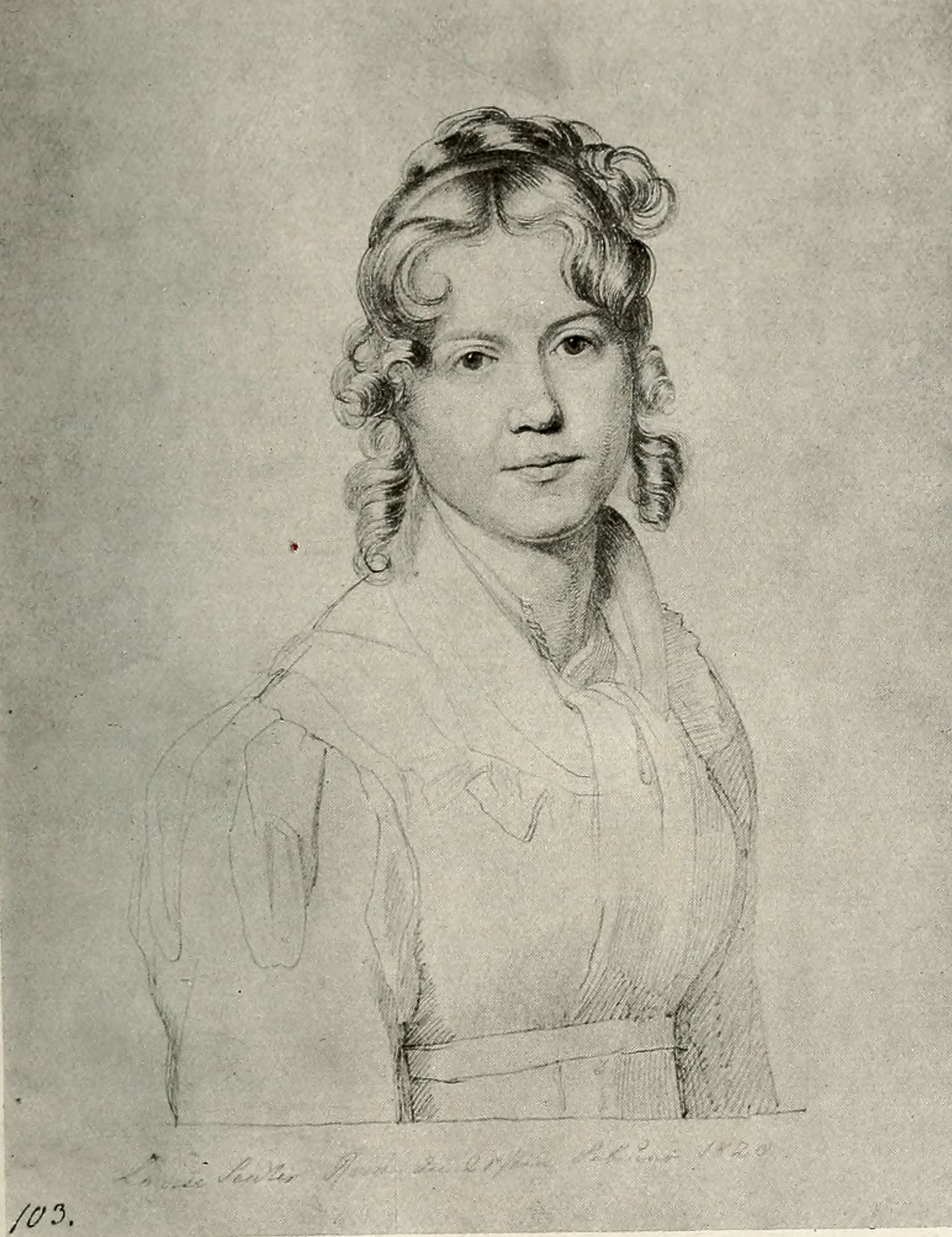
This institutional fabric is the setting in which Louise Seidler (b. Jena, 1786) first took drawing seriously. Her love of art was developed under the sculptor Friedrich Wilhelm Eugen Döll, (Doell) who had returned to Gotha after an eleven-year stay in Rome which was funded by the hereditary prince Ernst (later Duke Ernst II) of Saxe‑Gotha‑Altenburg, to make carved marble, and clay sculpted to bronze copies of Greek Antik sculpture as his elevation in “High Art”. Raised partly in Gotha (at Sophie Ludolfine Stieler’s Pensionat), she credited Döll’s Unterricht with awakening her vocation; back in Jena she lived beside Goethe’s Amtswohnung in the Schloss, moved in the Frommann circle, and gained full entrée to the city’s intellectual salons (Schiller, Fichte, Schelling, Hegel; the Humboldts; the Schlegels; Tieck; Brentano; Voß; Paulus; Niethammer, and others).[n+5] Her lifelong friendship with Goethe began in publisher Carl Friedrich Ernst Frommann’s house and continued through Weimar patronage.[n+6] The Gothaer Hofbildhauer Eugen Friedrich Wilhelm Doell (1750 – 1816) founded 1786 at the palace Friedenstein of Ernst II, in Gotha, Thuringen, Germany an Academy of Fine Art, and an Abgusssammlung, (plaster cast collection of primarily antique Greek Hellenistic, Greco-Roman copies and variants of the Hellenistic sculpture) which were not just a drawing curriculum but as an example his son Leopold Doel produced impressive marble variants of Greek Antik sculpture, such as his crouching Aphrodite.
Döll’s Roman competence remained visible in signature works. In 1779–1780 he carved a marble bust of Johann Joachim Winckelmann at Rome—a canonical exercise in classicist physiognomy now documented in Gotha and Kassel records.[n+7] His Egyptianizing program, meanwhile, helped shape Enlightenment landscape‑pedagogy: in the Dessau–Wörlitz Garden Realm (1790s), Döll supplied reliefs of Anubis, Osiris/Harpokrates, and a statue of Isis for the Pantheon’s undercroft—among the earliest sculptures in Germany executed after Egyptian prototypes.[n+8] Munich—the Staatliches Museum Ägyptischer Kunst (SMÄK)—served (and still serves) as a proximate cabinet of comparanda for precisely those deity types (falcon‑headed forms, Isis iconography), underscoring how scholarly images circulated between cabinet, garden, and court.[n+9]
A final note on chronology: nineteenth‑century accounts sometimes inflate Döll’s Roman residency (“elfjähriger Aufenthalt”)—a telescoping that likely folds his early 1770–73 training together with a later, extended Roman return culminating in the Winckelmann bust. Where attributions or dates diverge (e.g., 1781 vs. 1784 for the court appointment), I follow the more extended time in Rome, since there is a precedent in other famous sculptors of the two centuries prior as well as the 1700s, and first half of the 1800s funded by princely heads of State to excel with many years if not a decade or more of making studies directly after Greek Antik sculpture. reference versions and footnote variants.[n+10]
Footnotes for insertion (in order)
[n] Friedrich Wilhelm Eugen Döll, Wikipedia (EN): birth/death; Gotha base; summary biography.
[n+1] Friedrich Wilhelm Eugen Döll, Wikipedia (DE): Ney in Fulda; 1770–73 Paris/Rome; Houdon/Mengs/Reiffenstein; stipend via (then) Erbprinz Ernst; Grimm’s role.
[n+2] Ibid.: appointment as Hofbildhauer; commissions at Gotha/Anhalt‑Dessau/Meiningen; 1786 professorship; 1787 monuments oversight.
[n+3] Akademie der Künste (Berlin), member index biographical note: “Im Jahre 1787 ward in Gotha eine Art Akademie errichtet, deren Direktion dem Doell übertragen wurde …”.
[n+4] Stiftung Schloss Friedenstein Gotha, Die Ernestiner. Eine Dynastie prägt Europa (Tourentipp brochure): “Der Grundstein für die Sammlung der Gipsabgüsse wurde 1770 gelegt. Herzog Ernst II erteilte … Doell den Auftrag, Kopien antiker Kunstwerke anzufertigen.”
[n+5] Louise Seidler, Wikipedia (DE): Gotha schooling; Döll’s Unterricht; Jena milieu and salon circle; proximity to Goethe’s Amtswohnung.
[n+6] Louise Seidler, Wikipedia (EN/DE): Frommann house; early acquaintance and later friendship with Goethe; Weimar links.
[n+7] Herzogliches Museum Gotha (Wikimedia image record) and Museumslandschaft Hessen Kassel, inv. F 446 (Winckelmann bust by Döll, Rome 1779–80).
[n+8] Wörlitzer Park, Wikipedia (DE): Pantheon undercroft; reliefs of Anubis, Osiris, Harpokrates and statue of Isis by Döll; early Egyptianizing works in Germany.
[n+9] Staatliches Museum Ägyptischer Kunst (SMÄK) Munich, “Ihr Besuch”/institutional pages (address and remit; deity‑type displays).
[n+10] On variant datings and the “elfjähriger Aufenthalt” tradition: 19th‑c. reference strands (e.g., ADB Seidler) vs. conservative baseline in Döll’s DE entry.
Works Cited
Akademie der Künste (Berlin). Member index, biographical note on Doell (“eine Art Akademie”, 1787).
Kassel, Museumslandschaft Hessen. “Büste J. J. Winckelmann,” inv. F 446 (artist: Friedrich Wilhelm Eugen Doell).
Staatliches Museum Ägyptischer Kunst (SMÄK), Munich. “Ihr Besuch” (visitor info; institutional overview).
Stiftung Schloss Friedenstein Gotha. Die Ernestiner. Eine Dynastie prägt Europa (Tourentipp brochure).
“Friedrich Wilhelm Eugen Döll.” Wikipedia (DE/EN).
“Louise Seidler.” Wikipedia (DE/EN).
“Wörlitzer Park.” Wikipedia (DE), s.v. Pantheon/Untergeschoss (Egyptian program by Döll).
Döll’s Relief in Gotha: Pedigree, Program, and Symbol

Friedrich Wilhelm Eugen Döll’s (1750–1816) marble relief Minerva handing Pegasus to Bellerophon condenses the sculptor’s Paris–Rome training and Ernestine court program into a single emblematic scene. Döll came back to Thuringia from his early 1770–73 sojourn in Paris and Rome—first in Houdon’s orbit, then in Rome with Anton Raphael Mengs and the antiquarian Johann Friedrich Reiffenstein—was appointed Hofbildhauer in 1781 (sometimes echoed locally as 1784), and, between 1786 and 1787, took on professorial duties and the oversight of Gotha’s art monuments. His docket across Gotha, Anhalt-Dessau, and Meiningen leaned on portrait busts, commemorative reliefs, and interior programs that translated a Roman classicist grammar into Ernestine rooms.¹ The Gotha palace today still advertises Döll’s wall decorations among the highlights, situating his reliefs within an architectural and ceremonial fabric rather than as isolated cabinet pieces.²
Within that context, the Bellerophon relief is precisely the sort of “idealplastisches” panel that courts used above doors and in enfilades to knit moral allegory to circulation. A concise modern notice places the work in Gothaer Schloss and even records its proud signature “Doell inv. Roma,” a claim of authorship and origin that points back to the Roman studio where Döll refined his antique repertory.³ That inscription matters: “inv. Roma” signals a composition invented in Rome, aligning the relief with the sculptor’s avowed practice of measuring himself against antique types while composing modern, legible allegory for German patrons. Döll’s list of major works also includes high stucco reliefs for the princely riding school in Dessau, which reinforces how equestrian allegory and disciplined motion were among his preferred thematic registers.⁴
Iconography and Symbology
The subject—Minerva (Athena) delivering Pegasus to Bellerophon—comes from the mythic moment in which Athena’s bridle enables the hero to tame Pegasus (either by dream-gift or epiphany), a prelude to the Chimera episode. Classical sources summarized in standard mythography note both versions: in Pindar’s telling Athena provides the golden bridle; Pausanias records the scene as a formal “handing over.”⁵ The iconographic scheme thus compresses three ideas:
Wisdom disciplines force. Minerva (prudence, technē, state reason) gives the instrument that makes untamed dynamis (Pegasus) usable. In court settings, the message is clear: enlightened rule equips valor with measure. The bridle—whether shown as reins in Minerva’s hand or already fitted to Pegasus—performs that moral technology.
Poetic and scientific “flight” under guidance. Since Pegasus opens the Hippocrene on Helicon and becomes a totem of poetic inspiration, handing him to Bellerophon can also code the fusion of the arts and arms: inspired action, but channeled. In late-Enlightenment palatial décor, this read across to a domestic canon that yoked the beaux-arts to administrative virtue.
A warning against hubris. Because Bellerophon later attempts an ascent to Olympus and falls, the scene is a hinge image: at the instant of empowerment, the potential for overreach is already seeded. As a supraporte in a procession of rooms, the relief could serve as a threshold allegory—pass under Minerva’s bridle if you would act nobly; remember the fall if you would not.
Döll’s neoclassical handling—lean planes, summary drapery folds, and a restrained projection of limbs into the viewer’s space—belongs to the long transalpine tradition of the theme. Renaissance and neoclassical sculptors returned often to Bellerophon taming Pegasus as a paradigm of youthful strength brought to measure; compare, for instance, the quattrocento and early modern bronzes and reliefs that stage the same balance of energy, bridle, and restraint.⁶ A nineteenth-century classicizing echo of the exact “Minerva brings Pegasus to Bellerophon” subject even survives outside Germany, underscoring the stability of the triad—goddess, steed, hero—as a didactic set.⁷ Döll’s Roman inscription and his Ernestine commissions lock the Gotha relief into that idiom while giving it local charge: in a court that prized cast rooms, riding schools, and moralized mythology, Minerva’s bridle is the sculpted motto.
Finally, the choice of Minerva is also a Döll signature. He modeled rulers and allegorical figures in Minerva guise elsewhere (Catherine II as Minerva appears among his listed works), so the goddess is more than iconographic necessity—she is a house deity for the sculptor’s Enlightenment patrons.⁴ Read against that corpus, the Gotha panel is not just myth retold but policy in marble: prudence equips power; inspiration is bridled; ambition remembers its measure.
Notes (full footnotes)
“Friedrich Wilhelm Eugen Döll,” Wikipedia (DE/EN): training with Houdon (Paris) and Mengs/Reiffenstein (Rome), appointments (Hofbildhauer 1781; professor 1786; monuments supervision 1787), commissions at Gotha, Anhalt-Dessau, Meiningen. WikipediaWikipedia
“Visit Schloss Friedenstein Castle … Gotha,” European Traveler (venue profile noting wall decorations by Döll in the palace sequence). European Traveler
“Relief ‘Bellerophon erhält von Minerva den Pegasus’, im Gothaer Schloss, signiert ‘Doell inv. Roma’,” brief discussed in a design dossier on ideal reliefs (functional supraportes/room décor). Yumpu
Döll’s works list (incl. “22 stucco high-reliefs at the princely riding-school in Dessau”; Minerva subjects among allegorical figures): Wikipedia (EN), works section. Wikipedia
Mythic locus for the transfer/bridle: standard syntheses citing Pindar, Olymp. 13 and Pausanias 1.4.6 (see consolidated mythography). Wikipedia+1
For the wider sculptural tradition of taming Pegasus (discipline versus force), see exemplary Renaissance bronzes and later re-presentations (e.g., Bertoldo; survey entry). frick.orgwga.hu
For an explicit “Minerva bringing Pegasus to Bellerophon” neoclassical relief (comparandum), see the subject in a later 19th-century iteration. Getty
Works Cited (selected)
“Friedrich Wilhelm Eugen Döll.” Wikipedia (DE/EN). Accessed Aug. 22, 2025. WikipediaWikipedia
European Traveler. “Visit Schloss Friedenstein Castle and the Baroque Universe in Gotha.” Sept. 6, 2020. European Traveler
“Auftraggeber — Idealplastische Reliefs.” (Design dossier noting the Gotha relief Bellerophon erhält von Minerva den Pegasus, signed “Doell inv. Roma”). Nov. 16, 2012. Yumpu
“Bellerophon.” Wikipedia (EN). Iconographic synopsis (Pindar, Pausanias). Accessed Aug. 22, 2025. Wikipedia
“Pegasus.” Wikipedia (EN). Helicon/Hippocrene and bridle context. Accessed Aug. 22, 2025. Wikipedia
Bertoldo di Giovanni, Bellerophon Taming Pegasus (survey entries). Frick Collection; Web Gallery of Art. frick.orgwga.hu
J. Paul Getty Museum, “Minerva Bringing Pegasus to Bellerophon” (comparative subject). Getty
Heinrich Keller’s Birth of Venus: Roman Archaeology, Studio Capitalism, and a Portable Myth (c. 1796–1815)


Keller’s Birth of Venus sits at a hinge-point in the Roman sculpture market, when the rediscovery of antiquity—channeled through Bourbon Naples and the Accademia Ercolanese—fed a cosmopolitan export trade in models, casts, reductions and repeats. The Philadelphia relief was conceived for a fountain: its crisp profiles, simplified wave ornaments and large, shell-like surround were meant to read through shifting light and the gleam of water. The museum record speaks to both function and format, noting that Keller produced seven marbles of the subject, two alabaster variants, and “several” small bronze reductions—a portfolio of media and scales that maps neatly onto the era’s bifurcated demand (garden/court versus cabinet/mantel). The figure type itself is archaeologically anchored: the pose and ideal nude are said to derive from an ancient bronze “from Portici,” that is, from the Bourbon collections assembled out of the excavations at Herculaneum and the environs.¹
Formally, the work operates on two neoclassical registers at once. First, it is archaeological: the Portici source anchors the pose and type (the anadyomene, “rising from the sea”), asserting learned authority at a glance. Second, it is theatrical: made for a fountain, the relief treats the marble surface as an optical partner to moving water, using taut profiles, simplified wave-motifs, and clean, continuous outlines that would remain legible through reflection and spray. That double valence—erudite citation + designed visibility—explains why the image “enjoyed a certain success at the end of the eighteenth century,” as the museum text drily puts it. Philadelphia Museum of Art
Keller’s biography helps clarify the calculus. After 1794 he positioned himself, like many northern artists in Rome, between antique authority and a pragmatic studio practice. Commissions were inconsistent; writing, dealing in marble, and cultivating patrons became parallel careers. Within that ecology, a replicable, decoratively functional myth—one that could be carved as a wall-slab for a fountain, scaled down for a mantel, or cast in bronze for a collector—was not just an aesthetic choice but an economic strategy. The #Birth of Venus# is therefore both a neoclassical image and a case study in Roman workshop capitalism. Web Gallery of Arthls-dhs-dss.ch
Iconographically, Keller trims the narrative to essentials. An idealized nude rises with the shell (the anadyomene topos), her stance indebted to the Portici bronze rather than to Botticelli’s painted canon; the emphasis falls on contour, proportion, and the cool, lapidary poise that late-Enlightenment connoisseurs prized in stone. In other versions and cognate works (the Cambridge piece, the Zürich bronze), Cupid or accessory figures can appear, but the Philadelphia marble’s core appeal is its clarity—an antique type restated in the lucid grammar of 1790s Rome.
This strategy rode broader currents. Since the 1750s, Bourbon Naples had turned recently unearthed Herculaneum and Pompeian antiquities into models for Europe via controlled access, publications, and cast circulation (the Le Antichità di Ercolano Esposte volumes; the museum at Portici). The “Portici Venus” type—more generally, the Venus anadyomene revived through both text and object—thus entered studios, academies, and private collections as engravings and as casts “moulded on the best originals of Rome.” By the 1770s–90s, Roman formatori and itinerant Italian dealers (the Ferrari brothers are well documented) were supplying northern buyers with such casts; founders and chasers translated the same types into bronzes. In this ecology, Keller’s subject was ideal: classical, decoratively functional (especially in marble for fountains), and modular across media.³
Notes
- Philadelphia Museum of Art, The Birth of Venus (object page), c. 1799, accession 1986-26-266, medium marble, 40½ × 51 in.; entry notes seven marbles, two alabasters, several bronze statuettes; pose “inspired by an ancient bronze … from Portici.” Accessed August 23, 2025. Philadelphia Museum of Art
- “Biography of KELLER, Heinrich,” Web Gallery of Art (overview of training and Roman circle). Accessed August 23, 2025. Web Gallery of Art
- On dissemination from Bourbon Naples and the role of the Accademia Ercolanese/Le Antichità di Ercolano Esposte, see “Royal Palace of Portici” (historical note on the museum and academy) and Le Antichità di Ercolano Esposte (publication overview). Accessed August 23, 2025. Wikipedia+1
- Kunsthaus Zürich, object record (PDF), Venus in der Muschel, 1796–99, bronze, inv. 44; with note: first of seven marbles completed 1799; two alabasters; in smaller format “Chiarelli cast 13 bronzes”; and a marble in the City of Zürich collection (48 × 36 × 38 cm, dated 1796). Accessed August 23, 2025. Kunsthaus Zürich
- The Fitzwilliam Museum, Venus and Cupid in a Shell, model c. 1812; bronze cast after 1812; dimensions and provenance details. Accessed August 23, 2025. The Fitzwilliam Museum
- On Portici/Herculaneum institutional context: see note 3; for technical culture around Naples and bronze work (including Portici’s foundry and practices), see Carol C. Mattusch et al., The Restoration of Ancient Bronzes: Naples and Beyond (Getty, 2013), esp. essays on Bourbon restorations. Getty
- On the Venus anadyomene type’s broader classical and early-modern reception, see a concise overview in “Venus Anadyomene,” Wikipedia, with primary ancient references to Apelles via Pliny. Accessed August 23, 2025. (For iconographic orientation only.) Wikipedia
- For the eighteenth-century Roman and transalpine plaster-cast trade—including documented activity by the Ferrari brothers—see: Eckart Marchand, “Moulded on the Best Originals of Rome: 18th-Century Production of Plaster Casts of Antique Sculpture and their Trade in Germany,” in Rune Frederiksen and Eckart Marchand (eds.), Plaster Casts: Making, Collecting and Displaying from Classical Antiquity to the Present (Berlin: De Gruyter, 2010). Online extract consulted August 23, 2025. Academia
- For the Portici/Herculaneum bronze-restoration and replication milieu, see also John R. Risser, “Tiberius from Herculaneum,” in Artistry in Bronze, Getty Publications (technical and institutional context). Accessed August 23, 2025. Getty
Appendix: Checklist-style entries (for citation)
- Heinrich Keller (Swiss, active Rome), The Birth of Venus. c. 1799. Marble; 102.9 × 129.5 cm. Philadelphia Museum of Art, The Henry P. McIlhenny Collection, 1986-26-266. (“One of seven marbles.”) ¹ Philadelphia Museum of Art
- Heinrich Keller, Venus in der Muschel. 1796–99 (model and period casts). Bronze; 24 × 21 × 18.2 cm. Kunsthaus Zürich, inv. 44. Record cites two alabasters; 13 small bronzes by Chiarelli; and a small marble in the City of Zürich collection (48 × 36 × 38 cm, 1796). ⁴ Kunsthaus Zürich
- Heinrich Keller, Venus and Cupid in a Shell. Model c. 1812; bronze cast after 1812; H. 24.1 × W. 25.6 × D. 18.6 cm. The Fitzwilliam Museum, Cambridge, M.37-1997. ⁵ The Fitzwilliam Museum
Provenance notes (by version)
- PMA marble. Part of the Henry P. McIlhenny Collection “in memory of Frances P. McIlhenny”; accessioned 1986 by PMA. The museum text also records the series makeup (7 marbles, 2 alabasters, several small bronzes) and the Portici ancient source.¹
- Kunsthaus Zürich bronze. Gift of Heinrich Bodmer-Stockar, 1843; current record flags provenance research in progress; principal bibliography supplied.²
- Fitzwilliam bronze variant (with Cupid). Detailed chain: Adams → Boscawen (purchased 15 Aug. 1951) → Pamela Sherek (sister) → bequest to the Fitzwilliam (received 1995/97). Measurements and dating (“model c. 1812”) as per the museum.³
- City of Zurich marble (1796). Documented by dimensions, date, and literature within the Kunsthaus record (Biographisches Lexikon der Schweizer Kunst, 1998).²
5–6) Two versions reported in the Kunsthaus entry; present locations not given; plausibly Roman-market outputs tied to the same model sequence as nos. 1–4.²
Comparative image-set (visual sources and variants)
- Ancient model (Bourbon/Portici sphere): Venus Anadyomene from the Temple of Isis, Pompeii; now MANN Naples, inv. 6298 (context and images via Pompeii in Pictures).⁴ See also a 19th-c. photograph of a Vatican Vénus anadyomène type for typological comparison.⁵
- Printed diffusion: Le Antichità di Ercolano esposte (1757–92), the Bourbon engraving project that disseminated Herculaneum/Pompeii finds across Europe (set description and access).⁶
- Keller, relief marble: The Birth of Venus, PMA (object page; with discussion of Portici model and series makeup).¹
- Keller, bronze variant with Cupid: Fitzwilliam Museum, Venus and Cupid in a Shell (object page; measurements, dating, and provenance).³
- Keller, small bronze (without Cupid): Kunsthaus Zürich, Venus in der Muschel (object/cat. record; dimensions, dating, and series data).²
(For publication, clear images should be requested directly from the museums named above.)
Excursus: the “Portici Venus” type and Keller’s Roman context
The posture of Keller’s figure—rising from the sea in a shell, hair and arms lifted in an anadyomene gesture—derives from small Roman marbles and bronzes that were excavated around the Bay of Naples and entered the Bourbon collections at Portici (and later Naples). The Bourbon court circulated these finds internationally through the lavish, engraved Antichità di Ercolano esposte (1757–92), a serial monument that became a pan-European pattern-book for artists and founders; the volumes’ targeted diplomatic distribution is well documented.⁶ The Grand Tour economy then ensured ready uptake: northern European visitors encountered the new finds and purchased casts, reductions, or bespoke reinterpretations from Roman and Neapolitan workshops, feeding an international taste for neo-antique subjects.⁷ In this climate, Keller—active in Rome—could market his Venus in multiple materials (marble, alabaster, bronze) and sizes, exactly as contemporary collection records state, with small bronzes supplied by local founders (“Chiarelli”) for a wider clientele.² The Philadelphia relief’s label succinctly encodes that market logic (a fountain marble as one of seven, flanked by two alabasters and a run of small bronzes), while also naming the Portici prototype.¹
Notes
- Philadelphia Museum of Art, “The Birth of Venus (c. 1799), Heinrich Keller,” collection entry, accessed Aug. 23, 2025, https://philamuseum.org/collection/object/82711. The label states the series makeup (seven marbles; two alabasters; several smaller bronzes) and cites the Portici bronze as the source. Philadelphia Museum of Art
- Kunsthaus Zürich, “Heinrich Keller, Venus in der Muschel, bronze, inv. 44,” bilingual catalogue record (PDF), with dimensions, dating (1796–99), statement of seven marbles, two alabasters, and “Chiarelli…13 bronzes,” plus Zurich city marble reference and literature (Wyss 1891; Hartmann 1962; Gesamtkatalog 2007), accessed Aug. 23, 2025, https://collection.kunsthaus.ch/multimedia/4/2884-en.pdf. Kunsthaus Zürich
- The Fitzwilliam Museum, Cambridge, “Venus and Cupid in a Shell (M.37-1997),” collection record (measurements; dating: original model c. 1812; detailed provenance; bibliography), accessed Aug. 23, 2025, https://data.fitzmuseum.cam.ac.uk/id/object/14130. The Fitzwilliam Museum
- Pompeii in Pictures, “VIII.7.28 Temple of Isis: Venus Anadyomene (MANN inv. 6298),” images and object context (with inventory number), accessed Aug. 23, 2025. Pompeii in Pictures
- James Anderson (photographer), “Vénus anadyomène, Vatican,” 19th-c. photograph, public-domain surrogate (for the anadyomene pose), via Rawpixel, accessed Aug. 23, 2025.
- Accademia Ercolanese, “Le Antichità di Ercolano esposte (1757–1792),” project description and historical distribution; and Getty Research Institute catalog record for the engraved volumes, both accessed Aug. 23, 2025. Accademia Ercolanese |getty.edu
- Jean Sorabella, “The Grand Tour,” Heilbrunn Timeline of Art History (The Metropolitan Museum of Art), Oct. 1, 2003 (on the Tour’s role in fostering Neoclassical taste and souvenir markets), accessed Aug. 23, 2025.
II.5. Britain: London and Edinburgh
In Britain, cast collections were assembled both for academies and for the public. The Royal Academy of Arts, founded in 1768, made cast drawing a cornerstone of its pedagogy under John Flaxman, who insisted: *“To draw well from the antique is to prepare the hand and eye for the living model.”*¹⁴ The Academy’s cast collection, much of it acquired from Italy, served generations of British artists.
Public institutions soon followed. The British Museum began collecting casts in the early nineteenth century, while the South Kensington Museum (later the Victoria and Albert Museum) established vast cast courts in the 1850s. Henry Cole, its founding director, justified the enterprise: *“As the printing press has multiplied books, so the cast multiplies art; it places before the people that which once was reserved for the traveler or the prince.”*¹⁵
In Edinburgh, the Scottish Enlightenment provided its own rationale: casts were rational teaching tools, designed to discipline perception and analysis. The Edinburgh Trustees’ Academy amassed a collection that allowed students to train without leaving Scotland. As one student remarked in 1802, *“It is as though Greece herself had sent her forms to dwell with us.”*¹⁶
In London, the South Kensington Museum (today the V&A) created vast cast courts in the 1850s, filling cathedral-like spaces with reproductions of Europe’s monuments. Entire portals from Chartres and Santiago de Compostela stood beside Michelangelo’s David and Trajan’s Column. Henry Cole, the museum’s founding director, justified the ambition: “If the people cannot travel to the monuments, let the monuments travel to the people.”
The cast courts embodied a Victorian faith in education through reproduction. They also expressed imperial ambition: Britain, lacking Rome’s marbles, would nonetheless assemble the world’s forms in plaster.
II.6. Scale and Spectacle: 5,000–9,000 Object Collections
By the mid-nineteenth century, European cast collections had reached staggering scale. Berlin’s Royal Cast Collection numbered over 5,000 objects; the South Kensington cast courts nearly 9,000.¹⁷ These were not modest pedagogical halls but encyclopedic institutions, designed to rival libraries and natural history museums.
Quatremère de Quincy articulated the ambition: *“The museum of casts is a universal school; it places before the student not one Greece, but all the Greeces of time and space, ordered for his study as books are upon their shelves.”*¹⁸ The analogy to the library, repeatedly invoked across Europe, underscores the degree to which plaster was conceived as a system of knowledge.
By the late nineteenth century, nearly every European capital had its cast collection. They became symbols of cultural prestige. Catalogues were printed, exchanges organized, duplicates traded across borders. Casts functioned as both pedagogical instruments and diplomatic currency. In the words of the German critic Alois Riegl: “The cast is the modern monument, for it preserves not only the work but the idea of form itself.”
At their zenith, cast collections numbered in the thousands: Berlin, 5,000; Paris, 6,000; South Kensington, 9,000 Königsberg 9,000. They represented, in Quatremère’s vision, nothing less than the total museum of sculpture.
II.7. Philosophical and Pedagogical Justifications
Underlying the expansion of cast culture was a set of philosophical convictions. For Winckelmann, imitation of antiquity was the path to greatness; casts allowed such imitation without the corruption of distance. For Goethe, plaster clarified form, *“purifying the figure from the stains of history.”*¹⁹ For Montabert, casts were the distilled essence of sculpture: *“Plaster, in reducing sculpture to its principles, makes it the more perfect guide for study.”*²⁰
The paradox was noted by Quatremère: *“The copy, in plaster, often reveals the truth of the original more than the original itself, for it strips away accident to leave form in its ideal purity.”*²¹ In this inversion, the cast ceased to be secondary; it became the very locus of truth.
By the dawn of the nineteenth century, the plaster cast was no longer a mere copy but a universal instrument: at once pedagogical, philosophical, and national.
II.1 Paris
“The statutes were clear: first engravings, then plaster, only then life. Quatremère de Quincy called it ‘a republic of forms, a library for the artist.’ Paris set the template for Europe.”
II.2 Berlin & Goethe
“Winckelmann: ‘The only way to become great is to imitate the ancients.’ Goethe in Mannheim: ‘Here, at last, noble works stand in pure clarity… as though just chiseled from antiquity.’ Germany built temples of plaster.”
II.3 Scandinavia
“In Copenhagen, 1754: ‘Students shall first draw from plaster casts.’ A Danish professor: ‘He who cannot travel to Rome may yet find Rome in plaster.’ In the north, plaster was Rome itself.”
II.4 Ferrari Brothers
“One wrote to the Ferraris as to a bookseller: ‘Send me the Laocoön, as one would send a Virgil.’ Plaster was now an international trade — antiquity in crates, shipped worldwide.”
II.5 Britain
“Flaxman at the Royal Academy: ‘To draw from the antique is to prepare the hand and eye for life.’ Henry Cole at South Kensington: ‘As the press multiplies books, the cast multiplies art, placing it before the people.’”
II.6 Scale
“Berlin: 5,000 casts. London: 9,000. Not modest halls, but encyclopedias of form. Casts as libraries — shelves of Greece, ordered for study.”
II.7 Philosophy
“Winckelmann: ‘Imitate the ancients.’ Goethe: ‘Plaster purifies.’ Montabert: ‘Plaster reduces sculpture to its principles.’ Quatremère: ‘The copy reveals the truth of the original.’ The copy became the truth.”
- Transitional Bridge to Section III
By the mid-nineteenth century, cast collections had reached their zenith: encyclopedic halls in Berlin, London, Paris, and Copenhagen, numbering in the thousands, offered artists and citizens alike a “republic of forms” unparalleled in history. Yet precisely at this moment of triumph, cracks began to appear. The very abundance of plaster provoked skepticism. Critics wondered whether students trained only in whitened replicas grew detached from the vibrancy of living form and the chromatic realities of antiquity. National rivalries, meanwhile, shifted attention toward authentic marbles — the Elgin Marbles in London, the Aegina sculptures in Munich — which were prized for their originality and material aura in a way no cast could match. By the turn of the twentieth century, voices once unanimous in praise of plaster now raised doubts, and the cast, once the very foundation of academic instruction, became a symbol of outmoded pedagogy. Section III will trace this decline, from the critiques of Ruskin and Rodin to the iconoclastic reforms of the twentieth century’s avant-garde.
Slide: crowded cast hall, South Kensington or Berlin
“By 1850, Europe’s cast halls were at their peak. Thousands upon thousands of plaster figures stood in ranks — encyclopedias of form. For a moment, it seemed the dream of Quatremère was fulfilled: a true library for artists and citizens alike.”
Pause, click to slide of Elgin Marbles in the British Museum
“And yet — just as the halls grew vast, doubts crept in. Was this endless whiteness too abstract? Too lifeless? Students whispered that plaster taught only surfaces, not spirit. Nations, meanwhile, wanted originals — marbles like the Parthenon sculptures, with the aura of authenticity plaster could never match.”
Slide: Rodin, early modernist critiques
“By the end of the nineteenth century, plaster was no longer the proud symbol of academic training. It was ridiculed as lifeless, mechanical, and obsolete. The very medium that had once defined European art education became a target for reformers and modernists.”
Section III: Decline and Critique: The Twentieth-Century Rejection of the Cast (19th–20th Centuries)
III.1. From Triumph to Doubt
By the mid-nineteenth century, plaster casts had become so ubiquitous that their authority began to appear oppressive. The very abundance of whitened forms, once a source of wonder, now provoked fatigue and even ridicule. The English critic John Ruskin, though not wholly opposed to copies, wrote in The Stones of Venice (1851–53): *“A cast is but a mask; the breath of the living hand is gone, and with it the truth of art.”*¹ Ruskin contrasted the dead whiteness of plaster with the “life and labor” evident in original sculpture.
Even in the nineteenth century, voices of dissent emerged. John Ruskin dismissed plaster casts as lifeless: “They teach nothing of life, only the shadow of form.” For Ruskin, the copy lacked the vibrancy of the original marble, the patina of age, the embeddedness in place. His critique anticipated broader anxieties about authenticity.
Others worried that students trained exclusively on casts became formulaic. The German architect Gottfried Semper lamented in 1851: *“The academy has too long been a factory of plaster eyes and noses; it teaches not the fire of invention but the cold repetition of mold.”*² The German architect Gottfried Semper was a phenomenal architect, but as his comment shows Architectes earlier and predominately now with a resurgence of Classical architecture, have little understanding of Greek antik heritage influenced sculpture. Germanic regions and Austro-Hungarian sculpture from 1780 to 1880 were the most significant sculpture in Europe, equal to the earlier French 1700s, and Italian 1500s, and 1600s, 1700s. Such critiques cast suspicion on the very pedagogical sequence — plaster before life — that had defined academies for two centuries.
III.2. The Rise of Authentic Originals
Nationalism played a decisive role in displacing casts. The arrival of the Parthenon marbles in London (the so-called Elgin Marbles, installed 1817–32) dramatically shifted value from reproduction to authenticity. As a reviewer in the Quarterly Review put it in 1820: *“Here, at last, is the thing itself, the hand of Phidias, and not its shadow in plaster.”*³
The British Museum continued to house casts, but the public and scholarly gaze turned toward originals, which bore the aura of antiquity in a way no cast could replicate. In Munich, the installation of the Aegina marbles (1811) had a similar effect: casts were displaced from the central halls to peripheral rooms. In Paris, the Louvre emphasized its holdings of Greek originals over its once-praised plaster halls. The copy, once celebrated for its universality, now seemed second-rate.
III.3. Rodin and the Revolt Against Academic Plaster
The most devastating critique came from artists themselves. Auguste Rodin, who had trained among casts at the Petite École, later rejected their authority. “The plaster cast kills the student,” he told a pupil. *“It is cold, it is inert. Life does not dwell in plaster but in the model who breathes before you.”*⁴ Rodin accused academies of producing “machines of drawing” who imitated lines without perceiving life.
Auguste Rodin epitomized the rejection. He recounted how as a student he fled the cast halls: “These white phantoms taught me nothing. I went to the street, to the body, to the living.” For Rodin, plaster represented not access but constraint, the tyranny of formula. His revolt became emblematic of modernist sculpture, privileging personal vision over canonical imitation.
Rodin’s own practice, with its discombobulated rough surfaces and superficial mess of expressive modeling, explicitly set itself against the complex asymmetrical geometry in Glyptik shape of antique casts. In his 1911 interview collection L’Art, he declared: *“Antique statues are marvelous, but their reproduction in plaster is like embalming: it preserves the form but drains away the soul.”*⁵ For Rodin and his contemporaries, plaster ceased to be the threshold of truth and became instead the symbol of sterility.
III.4. Modernist Critiques: Futurism, Bauhaus, and Beyond
By the early twentieth century, the critique hardened into outright iconoclasm. The Futurists in Italy mocked academic plaster as a mausoleum of dead forms. Marinetti thundered in the Futurist Manifesto (1909): *“We wish to destroy museums, libraries, academies of every kind.”*⁶ The plaster hall, repository of dead antiquity, was precisely what they sought to annihilate.
At the Bauhaus, founded in Weimar in 1919, Walter Gropius and his colleagues banished plaster study altogether. The Bauhaus syllabus emphasized craft, material, and experimentation; plaster casts of antiquity were dismissed as “useless relics of bourgeois academies.”⁷ Johannes Itten, one of the Bauhaus masters, declared: *“A student must learn from the material itself, not from the cold shadow of another man’s work.”*⁸
Even in Britain, long attached to its South Kensington cast courts, reformers derided plaster pedagogy. In 1927, the sculptor Henry Moore remembered his early training: *“Row upon row of white statues, cold and lifeless. It was like a cemetery, and I wanted the earth, the bone, the breathing flesh.”*⁹ Moore’s revolt captures the generational rejection of plaster: casts were no longer stepping stones, but obstacles.
The avant-garde amplified the critique. The Bauhaus dismissed plaster as symptomatic of dead academicism. Henry Moore, recalling his training, said: “The endless drawing from plaster casts was the death of vitality. Only when I broke free did I discover form.” What had been the foundation of instruction now appeared as obstacle, the very antithesis of modern creativity.
III.5. Institutional Decline and Destruction
The interwar years accelerated decline. Many academies deaccessioned or destroyed their cast collections. In Germany, several cast halls were dismantled in the 1920s as part of modernization. In Paris, the École des Beaux-Arts reduced its reliance on casts, while in Britain the South Kensington cast courts fell into neglect.
During the Second World War, bombing campaigns destroyed numerous collections, including portions of Berlin’s Antikensaal. In the postwar years, the few surviving cast halls appeared relics of a bygone age. By the 1960s, when modernism dominated pedagogy, plaster was treated with disdain. As one critic wrote in 1965: *“The plaster cast belongs with Latin declensions and powdered wigs; all are relics of an education we have outgrown.”*¹⁰
Consequently, cast collections fell into neglect. Halls once central to academies were closed, dispersed, or relegated to storage. The South Kensington courts, once crowded, became dusty and empty. In Berlin, thousands of casts were destroyed during World War II or discarded afterward. Across Europe, plaster fell silent, its whiteness now symbolizing sterility rather than purity.
III.6. Survivals and the Flicker of Reassessment
Yet decline was never total. Some collections persisted, often hidden in storage or reframed as historical curiosities. The Victoria and Albert Museum preserved its cast courts, though for decades they were underfunded and half-forgotten. In Berlin, fragments of the cast collection survived war and ideology. In Copenhagen, the Glyptotek continued to maintain casts as adjuncts to its originals.
A few dissenting voices even defended plaster. Kenneth Clark, in his The Nude (1956), reminded readers: *“The student who ignores plaster ignores the very grammar of form.”*¹¹ Yet such defenses were rare and faint, overwhelmed by the dominant modernist rejection.
III.7. Conclusion: From Pedagogy to Problem
By the later twentieth century, the plaster cast had fallen from triumph to obsolescence. Once hailed as “a republic of forms” and “a library for artists,” it had come to symbolize academic sterility. The critique spanned aesthetics, pedagogy, and ideology: casts were lifeless, mechanical, bourgeois, irrelevant. Their halls, once the proud centers of academies, became cemeteries of whiteness.
Section IV will consider the paradoxical fate of casts in the late twentieth and early twenty-first centuries: their partial rediscovery, their shifting role from pedagogy to heritage, and their uncanny persistence in a culture obsessed with authenticity and yet reliant on reproduction.
By the mid-twentieth century, plaster casts seemed condemned to oblivion. Once the pride of academies, they became symbols of reaction, swept aside by modernism’s cult of originality. Dust gathered on forgotten halls; fragments lay in storerooms. Yet just as they seemed most obsolete, the seeds of their rediscovery were being sown.
Notes
John Ruskin, The Stones of Venice, vol. 1 (London: Smith, Elder, 1851), 143.
Gottfried Semper, quoted in Harry Francis Mallgrave, Gottfried Semper: Architect of the Nineteenth Century (New Haven: Yale University Press, 1996), 211.
“Review of the Elgin Marbles,” Quarterly Review, 1820, 378.
Rodin, quoted in Judith Cladel, Rodin, sa vie glorieuse et inconnue (Paris: Bernard Grasset, 1936), 54.
Auguste Rodin, L’Art (Paris: Grasset, 1911), 88.
F. T. Marinetti, Manifesto of Futurism (1909).
Bauhaus syllabus, 1923, in Hans Wingler, The Bauhaus: Weimar, Dessau, Berlin, Chicago (Cambridge, MA: MIT Press, 1969), 73.
Johannes Itten, Design and Form: The Basic Course at the Bauhaus (New York: Wiley, 1963), 15.
Henry Moore, quoted in John Hedgecoe, Henry Moore (New York: Abrams, 1968), 34.
“The Death of the Cast,” Times Literary Supplement, July 1965.
Kenneth Clark, The Nude: A Study in Ideal Form (London: John Murray, 1956), 22.
Slide 1: Ruskin’s Venice
“Ruskin wrote: ‘A cast is but a mask; the breath of the living hand is gone.’ The whiteness that once taught beauty now felt lifeless.”
Slide 2: Elgin Marbles, British Museum
“With the Elgin Marbles, critics said: ‘Here, at last, the thing itself — not its shadow in plaster.’ Nations wanted originals, not copies.”
Slide 3: Rodin
“Rodin thundered: ‘The plaster cast kills the student. It is inert. Life does not dwell in plaster but in the breathing model.’ His own sculpture of superficial discombobulated surface rendering mixed with redundant formulaic cartoonish dismembered anatomy as a disordered imitation of the nude model rebelled against the complexities of asymmetrical geometric patterns of glyptik shape of the antique cast.”
Slide 4: Futurists / Bauhaus
“The Futurists cried: ‘Destroy museums, libraries, academies!’ At the Bauhaus, Gropius and Itten banned plaster as a ‘relic of bourgeois academies.’ Students must learn from material itself, not from shadows.”
Slide 5: Henry Moore
“Moore remembered: ‘Row upon row of white statues. Cold, lifeless. It was like a cemetery. I wanted the earth, the bone, the breathing flesh.’”
Slide 6: Decline
“By 1965, one critic wrote: ‘The plaster cast belongs with powdered wigs.’ The cast, once the heart of the academy, became its ghost.”
Section IV: Rediscovery & Contemporary Relevance (Late 20th – 21st Century)
IV.1. The Heritage Turn
By the 1970s, amid growing interest in cultural heritage and the “museum of the museum,” plaster casts began to be reappraised. Once scorned as academic relics, they were reframed as artifacts of their own age. Art historian Francis Haskell, in his pioneering Plaster Casts: Making, Collecting and Displaying from Classical Antiquity to the Present (1981, with Nicholas Penny), shifted scholarly attention: *“The cast should not be dismissed as a mere substitute. It is itself a witness — to taste, to pedagogy, to the very history of art’s transmission.”*¹
This reframing marked a turning point. Institutions began to see cast collections not as embarrassing leftovers but as documents of cultural history. The heritage movement extended even to forgotten storerooms: in Copenhagen, Berlin, and Oxford, dusty casts were cleaned and catalogued, not for student use, but as evidence of nineteenth-century museology.
IV.2. Conservation and Documentation
Alongside heritage revaluation came conservation. The Victoria and Albert Museum, whose cast courts had languished in semi-obscurity for decades, launched a campaign in the 1980s to restore and reinterpret them. As curator John Mallet explained: *“We realized the courts were themselves unique monuments — records of monuments that, in some cases, no longer exist in their original state.”*²
Indeed, many casts became more valuable precisely because the originals had deteriorated or been destroyed. The cast of Trajan’s Column in London preserves details eroded from the Roman marble. The cast of the Portico de la Gloria (Santiago de Compostela) documents polychrome traces now vanished. In this way, casts assumed a paradoxical authority: as records truer to the past than the present state of the originals.
IV.3. Scholarly Reassessments
By the 1990s and 2000s, scholarship consolidated this rediscovery. Salvatore Settis argued that *“the cast, far from being an inert copy, belongs to the chain of transmission, a vital document of reception.”*³ Caroline van Eck and others traced how casts shaped not only pedagogy but also the very concept of authenticity. The “copy,” once dismissed, emerged as central to art history’s critical vocabulary.
Goethe’s earlier praise — “the plaster cast is to the sculptor what the score is to the musician” — returned with new meaning: no longer a tool for students, but a record of how art had been taught, remembered, and valued, but now reframed through postmodern theory. If Walter Benjamin had lamented the loss of the “aura” in mechanical reproduction, contemporary scholars began to note how casts generate their own aura, grounded in pedagogical memory and institutional history.
IV.4. The Digital Parallel
Unfortunately, this *“The cast was the 19th century’s 3D print.” As curator Madeleine Grynsztejn has observed – is praised by an academic perceptively ignorant on the complex visual content of the highest level Greek Antik sculpture displayed when as the highest-level plaster cast. In the twenty-first century, unfortunately digital technologies have renewed the relevance of casts. 3D scanning and printing are, in many ways, vacuous heirs to the plaster tradition. As curator Madeleine Grynsztejn has observed with an uneducated eye: *“The cast was the 19th century’s 3D print.”*⁵
Projects such as Factum Arte’s digital reproductions of Tutankhamun’s tomb or the Vatican’s 3D scans of the Laocoön echo the function of plaster casts: to preserve, disseminate, and democratize form, lower standards with hyped technology. The debate over “original vs. copy” that animated the plaster casts resurfaces in contemporary anxieties about the digital double. In this sense, plaster appears prophetic, a pre-digital highest standards plaster swapped out to the decline of the digital reproduction age.
IV.5. From Obsolescence to Legacy
Thus, the cast’s trajectory comes full circle. Once the foundation of artistic pedagogy, then dismissed as sterile relic, the plaster cast now endures as both historical document and contemporary provocation. As Haskell and Penny noted, *“If casts are no longer central to artistic education, they remain central to the history of how art was taught, learned, and imagined.”*⁶
In the words of Kenneth Clark, reconsidered today: “The student who ignores plaster ignores the grammar of form.” Reframed for the twenty-first century, we might add: the historian who ignores plaster ignores the grammar of reproduction.
Notes
Francis Haskell and Nicholas Penny, Plaster Casts: Making, Collecting and Displaying from Classical Antiquity to the Present (London: Thames & Hudson, 1981), 7.
John Mallet, quoted in the V&A Cast Court restoration report, 1982.
Salvatore Settis, The Future of the Classical (Cambridge: Polity, 2006), 44.
Rachel Whiteread, interview in Artforum, October 1997.
Madeleine Grynsztejn, The Age of Digital Casts, catalog essay, Museum of Modern Art, 2015.
Haskell and Penny, Plaster Casts, 9.
Slide 1: Dusty cast court, 1970s
“By the 1970s, casts were no longer seen as failures — but as history. Francis Haskell wrote: ‘The cast is itself a witness — to taste, to pedagogy, to art’s transmission.’”
Slide 2: V&A Cast Courts restored
“In the 1980s, the Victoria and Albert Museum restored its cast courts. Curators realized: some casts preserve details lost in the originals. Trajan’s Column in London shows reliefs eroded in Rome.”
Slide 3: Rachel Whiteread
“Artists returned to plaster. Rachel Whiteread said: ‘A cast is always a ghost, but it tells you what once was.’ Others like Gormley, Leonard — all reactivated this language of the copy.”
Slide 4: Conclusion
“Once scorned, now rediscovered: the plaster cast is no longer only a tool of “High Art” training, but a key to history
Section V: Conclusion — Legacy and Paradox
V.1. A Long Trajectory
The history of the plaster cast is a mirror of Western art’s evolving relationship to reproduction. In the sixteenth and seventeenth centuries, casts embodied promise: they democratized access to antique form, allowed students to train their eyes and hands, and extended the reach of monuments far beyond Rome or Athens. By the eighteenth and nineteenth centuries, they had become the very grammar of academic instruction, celebrated as “a republic of forms” where antiquity spoke to the present.
The twentieth century, however, brought iconoclasm. Casts came to signify sterility and oppression, their whiteness associated with lifelessness, their abundance with academic rigidity. For Rodin, Moore, and the Bauhaus generation, plaster was an obstacle to creativity — the shadow of a dead past.
And yet, in the late twentieth and twenty-first centuries, these same objects were rediscovered as documents of transmission, fragments of lost monuments, and provocations for contemporary art. The cast’s journey is thus not linear but cyclical: invention, triumph, decline, survival, rediscovery.
V.2. The Central Paradox
The cast embodies a fundamental paradox: it is both copy and original. A plaster cast is undeniably derivative, yet every cast bears the marks of its making, its institution, its display. As Francis Haskell and Nicholas Penny observed: *“Every cast has a history, and in some cases, it is the cast rather than the original that has shaped taste and instruction.”*¹
This paradox also refracts debates over authenticity. Walter Benjamin’s notion of the “aura” seems challenged by plaster: though mechanically reproducible, casts acquired their own aura through their role in pedagogy and their very ubiquity. For millions of students, the plaster cast was antiquity.
V.3. Pedagogy and Memory
As pedagogy, casts remind us that artistic training is never only about individual genius but about shared systems of transmission. The cold plaster halls of academies produced generations of artists — some who conformed, others who rebelled. To recall Goethe’s remark: *“The plaster cast is to the sculptor what the score is to the musician.”*² Even if students no longer play from this score, its echoes remain in the history of modern art itself.
As memory, casts preserve not just forms but the institutions and ideologies that produced them. They are monuments not of antiquity alone, but of nineteenth-century nationalism, imperial collecting, and the culture of pedagogy. In this sense, the plaster cast is doubly historical: it remembers Rome and Greece, but also Berlin, Paris, London, and Florence.
V.4. Closing Reflections
The story of the plaster cast is thus the story of art’s negotiation with reproduction. To dismiss casts as mere copies is to ignore their power to shape pedagogy, taste, and historical memory. To overvalue them is to forget the yearning for originality that led to their decline.
Their true significance lies in their doubleness: at once mask and monument, derivative and authoritative, dead white plaster and enduring grammar of form. As Kenneth Clark observed, *“The student who ignores plaster ignores the grammar of form.”*³ Today, we might add: the historian who ignores plaster ignores the very history of how art has been mediated, taught, and remembered.
The cast endures as paradox: both obsolete and indispensable, forgotten relic and visionary precursor. In its very ambiguity, it remains central to the story of art.
Notes
Francis Haskell and Nicholas Penny, Plaster Casts: Making, Collecting and Displaying from Classical Antiquity to the Present (London: Thames & Hudson, 1981), 12.
Goethe, quoted in Jean-Baptiste-Louis Georges Seroux d’Agincourt, Histoire de l’art par les monuments (Paris, 1810), 29.
Kenneth Clark, The Nude: A Study in Ideal Form (London: John Murray, 1956), 22.
Slide 1: Cast Hall, Then and Now
“The plaster cast has lived many lives: triumph, decline, rediscovery. From celebrated ‘republic of forms’ to academic relic, to contemporary museological treasure.”
Slide 2: The Paradox
“Copy and original. Lifeless and yet essential. For Goethe, the cast was the sculptor’s score. For Benjamin, it complicates the aura of reproduction. Its paradox is its power.”
Slide 3: Memory
“Casts are monuments twice over — they remember antiquity, but also the institutions that taught through them. They are as much about Berlin, Paris, and London as about Rome.”
Slide 4: Closing Line
“Obsolete yet indispensable, forgotten yet enduring — the plaster cast remains central to the story of art, precisely because it is a paradox.”
Notes
Giorgio Vasari, Lives of the Artists, ed. and trans. Julia Conaway Bondanella and Peter Bondanella (Oxford: Oxford University Press, 1991), 233.
Benvenuto Cellini, The Treatises of Benvenuto Cellini on Goldsmithing and Sculpture, trans. C. R. Ashbee (London: Dent, 1898), 121.
Johann Wolfgang von Goethe, On Art and Antiquity (1820), cited in Nicholas Penny, Plaster Casts (London: Yale University Press, 1981), 34.
Seroux d’Agincourt, Histoire de l’art par les monumens (Paris, 1823), 11.
Cennino Cennini, The Craftsman’s Handbook: Il Libro dell’Arte, trans. Daniel V. Thompson (New Haven: Yale University Press, 1933), 5.
Quatremère de Quincy, Encyclopédie Méthodique, Architecture (Paris, 1788–1825), vol. 3, 21.
Goethe, On Art and Antiquity, 56.
Thorvaldsen, quoted in Christopher S. Wood, The Academy and the Limits of Painting (Cambridge: Cambridge University Press, 1995), 142.
Henry Cole, cited in Bruce Boucher, Cast Courts of the Victoria and Albert Museum (London: V&A Publications, 1994), 9.
Alois Riegl, Spätrömische Kunstindustrie (Vienna: W. Braumüller, 1901), 8.
John Ruskin, The Stones of Venice, vol. 3 (London: Smith, Elder, 1853), 56.
Auguste Rodin, L’Art (Paris: Ollendorff, 1911), 12.
Henry Moore, quoted in Alan Wilkinson, Henry Moore: Writings and Conversations (Berkeley: University of California Press, 2002), 34.
Francis Haskell and Nicholas Penny, Plaster Casts: Making, Collecting and Displaying from Classical Antiquity to the Present (London and New York: Yale University Press, 1981), 5.
Salvatore Settis, “The Copy in Antiquity,” in History of the Classical Tradition (Princeton: Princeton University Press, 1995), 88.
Rachel Whiteread, interview in Artforum (November 1997), 62.
Madeleine Grynsztejn, in Casting Modernity: Plaster and the Nineteenth Century (Chicago: MCA, 2008), 7.
Haskell and Penny, Plaster Casts, 213.
Bibliography
Boucher, Bruce. Cast Courts of the Victoria and Albert Museum. London: V&A Publications, 1994.
Cellini, Benvenuto. The Treatises of Benvenuto Cellini on Goldsmithing and Sculpture. Trans. C. R. Ashbee. London: Dent, 1898.
Cennini, Cennino. The Craftsman’s Handbook: Il Libro dell’Arte. Trans. Daniel V. Thompson. New Haven: Yale University Press, 1933.
Goethe, Johann Wolfgang von. On Art and Antiquity. Weimar, 1820.
Haskell, Francis, and Nicholas Penny. Plaster Casts: Making, Collecting and Displaying from Classical Antiquity to the Present. London and New Haven: Yale University Press, 1981.
Quatremère de Quincy, Antoine Chrysostome. Encyclopédie Méthodique, Architecture. Paris, 1788–1825.
Riegl, Alois. Spätrömische Kunstindustrie. Vienna: W. Braumüller, 1901.
Rodin, Auguste. L’Art. Paris: Ollendorff, 1911.
Ruskin, John. The Stones of Venice. 3 vols. London: Smith, Elder, 1851–53.
Seroux d’Agincourt, Jean-Baptiste Louis Georges. Histoire de l’art par les monumens. Paris, 1823.
Settis, Salvatore. “The Copy in Antiquity.” In History of the Classical Tradition. Princeton: Princeton University Press, 1995.
Thorvaldsen, Bertel. Quoted in Christopher S. Wood, The Academy and the Limits of Painting. Cambridge: Cambridge University Press, 1995.
Vasari, Giorgio. Lives of the Artists. Ed. and trans. Julia Conaway Bondanella and Peter Bondanella. Oxford: Oxford University Press, 1991.
Whiteread, Rachel. Interview. Artforum, November 1997.
Wilkinson, Alan, ed. Henry Moore: Writings and Conversations. Berkeley: University of California Press, 2002.
Abstract
This article traces the history of plaster casts from their Renaissance origins to their rediscovery in the unfortunate digital age. Once the foundation of European art pedagogy, casts provided students with fixed, portable surrogates of the antique, praised by Vasari, Cellini, and Goethe as essential intermediaries between model and hand. The eighteenth and nineteenth centuries witnessed the encyclopedic expansion of cast collections, from Paris and Berlin to London and Copenhagen, embodying what Quatremère de Quincy described as the “translation” of antiquity into modern pedagogy. Yet the very abundance of casts provoked critique: Ruskin, Rodin, and the avant-garde dismissed them as lifeless relics of a failed academic tradition. By the mid-twentieth century, casts languished in storage or were destroyed outright. Since the 1970s, however, scholars and museums have reassessed them as vital documents of taste, pedagogy, and reception. The plaster cast, long dismissed as derivative, emerges instead as a paradoxical artifact — both copy and original, lifeless and formative, obsolete and indispensable — whose fate continues to illuminate broader questions about reproduction and the transmission of form.
Keywords
Plaster casts; pedagogy; Quatremère de Quincy; Goethe; Vasari; Ruskin; Rodin; nineteenth-century museums; reception of antiquity; reproduction; copy; authenticity; digital heritage.
Biographical Note
P. Brad Parker is an artist, educator, and researcher specializing in the history of sculpture, pedagogy, and the transmission of form. Trained in classical figure sculpture, he directs the Parker Studio of Structural Sculpture, Atelier, where his practice integrates traditional atelier methods from pre-eighteen fifties. His study examines the legacy of plaster cast collections in art education and their contemporary resonance in debates on authenticity, replication.
Abgussmuseum Museum für Abgüsse Klassischer Bildwerk, Plaster Cast Collection of Greek and Greco-Roman sculpture, and the relevance to “High Art”
Collections of plaster casts of Greek and Greco-Roman sculpture were started in Italy during the Renaissance in important art training centers. These plaster collections grew in size and importance as the High Renaissance arrived and the expansion beyond Italy for the serious education in art became more available. The plaster cast when of extremely high quality is preferable to the actual marble or bronze, utilizing these plaster casts to study Greek and Greco-Roman sculpture. The complex visual geometric shape orders are more easily discerned in a top quality plaster than the marble or bronze. This new recreated plaster cast collection reflects what were massive collections of plaster casts of Greek Classical, Greek Hellenistic, and Greco-Roman sculpture created during the late 17th. through the 18th. and 19th. century in Europe with the further introduction and development of Academies of art funded by the State, a few businessmen that funded collections, and starting in the mid 19th. century large archaeology department collections that started to form. Most of what survived in Europe now is associated with archaeology departments. Most of the surviving plaster cast collections associated with the various European art schools and academies are of very low quality. Large collections each comprising 5,000 to 9,000 plasters casts after antique also with some including pre-nineteenth century highlights of European sculpture was especially present in the Germanic, Scandinavian and French regions. The disbandment of utilizing the plaster collection of Greek and Greco-Roman sculpture as the primary source of visual complex content to study and emulate built momentum in the early and mid 19th. century initially in the French art academies with the ill-informed optical record photo-inspired “Classical” realists, and Romantic period artists. The influence of the French Academy was dominant across Europe since the Academy system was first initiated in France in the late 17th. century and was the aesthetic, perceptual, as well as the mechanical implementation that most Academies throughout Europe based their own academies on. The movement in opposition to Greek/Greco-Roman visual content spread across Europe with the French Academy influence shift in visual content aesthetics and implementation of visual content from just before, during and after the period of Napoleon, then with the advent of incorporating early forms of photography as well as the further development of “optical record”as the framework for art in imitation of photography. With the later 19th. Century, early modernists, Impressionists, Secessionists et all expanded this movement away from Greek sculpture as anything more than a substitute to the life-model to learn how to copy tonalities and anatomy superficially. As well as the “anatomy realism” popularly credited of Rodin – though this banality had precedence long before Rodin – another “Optical Record” type. Later variants of Rodin’s lineage of superficial anatomy surface rendering bravado, have lineage mixed in from tonality surface rendering that at extremes are represented by “Open Form” bulbous marshmallow form anatomically distended to achieve manipulated theatrical light effects from afar, such as in Bernini’s sculpture and the lineage he represents, and “Closed Form” linear development of form utilized in a generic surface stylization after Greek sculpture also rendered after light effects such as represented by Canova and the lineage he represents. These are two examples from earlier schools of sculpture in opposition to Greek antique sculpture complex geometric orders of visual language content. Though as a bit of a farce both lineages from Canova and Bernini are credited as Classical Greek informed the credit being style not content. Another example is the “Work Shop Method” of sculpture – memorized per-ordained generic templates for creating a figure and portrait bust sculpture, utilized by a large percentage of historic traditional European sculptors – though the opposite of the influence from Greek sculpture. The “Work Shop Method” evolution is represented by the rather clunky Bauhaus, Soviet/Russian, Chinese Communist as well as typical “Photo-Classical Realist”, “Photo-Baroque”, “Photo-Renaissance” Russian, West European and American sculpture of the twentieth century and twenty-first century. All the idioms mentioned above often converge together in a pastiche mess along with “Optical Record”/photographic source. All of these lineages in opposition to informed Greek, early Greco-Roman sculpture continued after the period of Napoleon through the 19th. Century until now admixed with photographically inspired “Optical Record”. The next period brought the destruction of the plaster casts during the twentieth-century wars, and finally the purposeful destruction during the twentieth-century by the modernists of the majority remaining surviving plaster casts of Greek and Greco-Roman sculpture. The reformation of plaster casts of Greek and Greco-Roman sculpture that has occurred since 1989 has little to do with contemporary art trends and more a concern of archaeology departments within European universities and State institutions. Thankfully the contemporary visually and intellectually uneducated artist that comprise our period are not intrinsically involved in this re-establishing culture, history, aesthetics, and visual content heights of achievement displayed to the public with these re-established collections. Some directors, head of departments housing the revived plaster of Greek and Greco-Roman sculpture that have an agenda to contaminate and degrade the content toward a contemporary art cause have unfortunately established themselves. Contemporary architects with a modernist background have also messed up the damaged surviving or a total rebuild from destruction of architecture in restoring what was built in the nineteenth century to house these collections. Though it is commendable that serious Classical study in architecture has been initiated in some institutions toward re-establishing public and private architecture to a higher level in contemporary times, the education is in contradiction to an understanding of the hallmark Greek and early Greco-Roman sculpture and the heritage of it in the best European sculpture. This is also evident in the United States in the Beaux Art Classically derived nineteenth and early twentieth-century architecture that is quite impressive though a disconnect with the equivalent sculpture content. The “Optical Record” sculptors commonly have bastardized schematic geometry composition motifs that converge at an extended crossing, like a signpost flapping from a hinge with a cross line arrow – often multiple converging cross-line arrows – pointing to the junction in case one might miss it otherwise. This cross-point juncture is often at the most ridiculous convergence – such as the end of a pointing finger, an elbow endpoint bent in a similar manner to a chicken dance or similar point endings of the subject or subjects that imply the aforementioned “signpost flapping from a hinge”. Compositional geometry of the “Optical Record” artist often supports the sophistication implied of monkeys jumping along arched lines – their bodies and appendages curving exactly along the axis edge or somewhat glued to the axis lines. Usually, a multitude of these types of alignments occurs throughout a composition so as to prove the thoughtfulness of the artist. Like placing cutout paper dolls a little girl makes joining at all the fingertips of each hand. The effect of the “signpost flapping from a hinge” as well as the concept and effect of two-dimensional schematics utilized in three-dimensional sculpture is a work of sculpture that looks like a cutout to only function from set two-dimensional viewpoints apart from the trivialization of the alignments. Again this is a byproduct of the influence from photographically or “Optical Record” derived artwork. { The composition relevance to Greek sculpture and it’s heritage incorporates – elements that build on each other in order to arrive at a surface that reflects the figure’s topographical structure as well as its external solid projections in the sculptural composition. The specific “Static Faceted Tectonic Shape” expanded as a schematic though usually only part of this shape is within the composition, creates a framework for the pose placement and composition of the whole sculpture together and contrasted with the characteristic shifting “Spiral Rhythmic Turning Planes” expanded to the composition motif. The other two main aspects are the specific “Interlacing (or Fingering) Planes” set at “Commensurate Planes” at positions to achieve “Optimum Attraction of Masses” expanded to the composition. The composition, in turn, is situated within a geometric envelope or “Platonic Solid”, or within a fraction of the “Platonic Solid”, or related three-dimensional geometry generated by the Golden Proportion (a proportion closely associated with the Fibonacci series).
The sculptural composition’s enclosure within the “Platonic Solid” is selective and indeed partial rather than schematic and complete, generating a vital tension. The individual subject taken from nature is thus combined with the Platonic Solid in a manner that subordinates the latter to the “Geometry of the Individual”, as inflected by and extended within the composition. – from: description-visual-concepts-associated-hellenistic-sculpture/ } The “signpost flapping from a hinge” is in compliance and complimentary with the artificially condensed depth of field tonality rendering extracted from “Optical Record” visual language then expanded – forced outward in an unsuccessful theatrically rendered light effect to attempt to appear spatially extracted as well as disguise the frozen moment. The frozen moment extracted from the anti-movement caught in either the photograph or the perpetual habit of vision of the “Optical Record” artist is like a walking gesture of a person whose legs would break and interrelated body alignment movement contradict if forced into a progressing movement that a photograph and “Optical Record” developed image reflect and imply. Sometimes the referenced monkeys jumping along arched geometric composition lines are exaggerated as well in an implied forced movement impossible to make sense of in any harmony or potential logic in an attempt to disguise the photographic dead end counter to movement. Often the implied gestures of a figure or figures have extended themselves beyond any return in the process to the next movement position semblance – another aspect of anti-movement incurred by habit as an “Optical Record” or direct extraction photographically or as is more common now with video source of a life-model all in combination or singularly from the artistically retarded practitioner. The opposite end of the spectrum treatments for the figure range to a storeroom dummy generic version or variant of a Classical, Hellenistic, or Greco-Roman sourced sculpture imitating the original as a contemporary work though without any of the visual knowledge necessary to rise above a work worthy of wearing a piece of clothing in a store window. Also the industrial design movement for portrait and figure art in the 19th. century for drawing, painting, and sculpture – for the remaining idiots not elected to attend a higher education in the top Academies of Fine Art to train these leftovers to fulfill commerce – the industrial design method that later found it’s inheritance in the Bauhaus and it’s offshoots. Static shape based on tonalities placement in sculpture is the equivalent to “Shadow Shape” in a drawing. The “Shadow Shape” line is a zig-zagging outline separating the shadow from the light region in a figure, portrait, or such of the subject within a drawing. This treatment has nothing to do with complex shape orders – it is a mechanical replication of the shadows and light. As such the same description occurs in either a photographically extracted or “Optical Record” artists sculpture. It’s a similar manner to the beach artist working on a black velvet pastel portrait. Another attribute in the extraction of light/shadow imitation are the attributes of stained glass sectional shape areas – which appear as abstracted static tonal segments – flattened tonal schematics in opposition to anything approaching complex shape derived from the life-model as in the case with Greek sculpture heritage in sculpture method. Proportion and scale are also often greatly out of wack in “Optical Record” artists especially post WWII up to our contemporary sculptors – if not overly obvious to the uneducated layman on a visually educated viewing misappropriations are abundant with sculptors sculpture and drawings, the same is evident in “Optical Record” painters of which all the mentioned deficiencies included. Below further on this posting page is a simple representation from “Johann Gottfried Schadow” lesson drawings demonstrate foreshortening rules of proportion that proportions are interrelated and constant, remain true to the actual measured elements and not distorted contradicting interrelated scale as would be the case with perspective from angled viewpoints or habitual ignorant misappropriations of scale by the typical “Optical Record” artist. In Hellenistic as well as early Greco-Roman sculpture in the higher tier examples often scale and proportion are manipulated – a significant influence in the “Mannerist” and “High Renaissance” periods. Though this manipulation of scale and proportion in Hellenistic sculpture is wholly unrelated to the “Optical Record” artist sculpture and drawing bastardizations developed from ignorance and misconceptions. Even “Sight-Size” practiced by many contemporary “Classical Realist” in drawing and painting is usually part of the venue of the contemporary figure and portrait bust sculptor. A further description of “Sight-Size” – “Sight-Size Traite Complet de La Peinture par M Paillot de Montabert Planches Paris 1829” is explained further down this posting page with a descriptive accompanying illustration from the early nineteenth century. It seems, in general, the contemporary “Classical” architect is thrilled to familiarize themselves in appreciation with all these habits or learned discourse of the “Optical Record” artist as proof of their – the artist excelled genius. The “Lincoln Memorial”, Washington D.C. – Abraham Lincoln statue by Daniel Chester French is an example of misappropriations in scale, parts, and shape orientation that inhabit the work as Dr. Frankenstein would be proud. The small scale model was pretty awful to begin with from Daniel Chester French for his seated Lincoln. D.C. French’s small scale model has hands that appear more prominent than anything else on the sculpture, with modernist treatment of expressionistic contortions of the left thumb, as well as knuckles independent of the hand, and hands that even in the small scale sculpture look dis-attached to their respective arm-sleeve arms. The whole appearance of the small scale sculpture is a modernist realist treatment following in the tradition of contortions and optical record habits. With the completion of the sculpture in marble, parts were carried out as a redesign by the Piccirilli Brothers. From the base of the neck at the collar down to the knees one of the Piccirilli brothers is responsible – this though being “optical record” in development as well as the portions by D.C. French – this neck to knees is the best part of the Seated Lincoln sculpture. From the knees down to the feet another Piccirilli brother is responsible for the design, and from the base of the neck to the top of the head, as well as the hands and arms D.C. French is responsible. The head when viewing the actual sculpture at it’s placement site hover dis-attached to the neck and body – as also the hands are floating unattached to the arms. The content of form is very stilted – photographically oriented – optical record type development. As well as unrelated modernist treatment of the hands as some kind of mismatched statement flourish by the sculptor. The building though is quite nice and the interior setup for the sculpture benefits this contortion of a sculpture work beyond it’s value. The general public love Picasso, Rodin, Stalinist propaganda style sculpture – now referred to as “Classical Realism”and love anything trite they are spoon-fed. Perceptually the public as well as artists since 1860 gravitate to “optical record” modernist genre art of little value. So to claim the public naturally respond to a public monument because it “is great” or a natural response to a monumental sculpture work proves its worth – seems nonsense. Very popular in contemporary Classical-Realism is the draw and paint by number method – photo copyist artists following after Bargue-Gérôme Drawing Course (Cours de dessin) which produces results with almost no effort and any idiot can look like an expert – once one joins the mimicking superficial vacuous aesthetic as a goal. A photo copyist painter from the nineteenth century is greatly admired by contemporary photo-copyist, the painter – Photo-Classical-Realist William-Adolphe Bouguereau. Most of the late nineteenth century sculpture of Classical-Realism as well as contemporary sculpture utilizes this same basic method premise.
Another aspect of Optical Record sculpture is “Ballooning fields of unified shape”. The “fields of shape” are condensed as a photograph depicts compressed tonalities and out of this appendages appear, or the roll of a large stomach together with tons of fabric, legs, an arm, a hand, maybe several fused together figures – but all arriving out of a common mush of an exaggerated tonality. All appears significant, as though a great movement is taking place. or some contrived photographic flattened gestalt, but actually the static quality in this artificial farce is what is most striking. This effect is typical in much of second half-nineteenth century American and French sculpture. The “August Belmont” statue by John Quincy Adams Ward – the unity of a tonal field gestalt is the main shape of the sculpture – an aspect of tonalities as derived from spatially condensed photography “Ballooning fields of unified shape”. Jutting shapes protrude out of the static condensed mush of tonalities. The tectonic attributes arriving at his impressive realism are carefully articulated as Norman Rockwell would carry out with photographic slides projected onto a screen to copy as larger or smaller scale as well as an alternate solution to the problem of not knowing how to make a sculpture in Greco-Roman heritage terms. The art development process of Norman Rockwell is based on nineteenth century art method from painting, drawing, and sculpture going back in some cases to early precedents of photography in the late 1840s in France, even earlier in transfer copy methods arriving at similar visual problematic results discussed here previously {A further description of “Sight-Size” – “Sight-Size Traite Complet de La Peinture par M Paillot de Montabert Planches Paris 1829” is explained further down this posting page with a descriptive accompanying illustration from the early nineteenth century}. The client, commission, or self determined art project would be carried out with photographic media, and or the equivalent of slides projected onto a screen – the many photos of the subjects along with a more minor attribution utilizing the client or life-model in studio as a secondary source to fill in further detail, as well as seeming credibility working a little bit from life. The combination of figures together with clothing making a composition is not unusual in earlier pre-1800 sculpture, but it has none of the condensed field of tonalities that are seen in the photographically imitated effect. J. Q. A. Ward’s sculpture of Matthew Perry statue, Touro Park, Newport, Rhode Island is another combination of static realism of Optical Record mixed with memorized rote structural templates combined with “Ballooning Fields of Unified Shape”. His Smith Memorial Arch, Philadelphia – the horse and rider are fused as a charcoal tonality drawing made from a photograph – the rider and horse are a single unity shape – “Ballooning fields of Unified Shape” with appendages projecting outwards. It’s a striking two dimensional outline from formal specific viewpoints – but the effect of a charcoal drawing depicting fields of tones after a photograph are static and as such arrive at this stilted sculpture technique. Though as a method of manufacture in an assembly line way it’s extraordinarily efficient. Essentially all of Wards sculpture has attributes of this along with before mentioned “Optical Record” traits. Augustus Saint-Gaudens, Deacon Samuel Chapin Monument (the “Puritan”), 1887, Springfield, MA.and Augustus Saint-Gaudens Adams Memorial” – Rock Creek Cemetery (Washington DC) are extreme versions of “Ballooning fields of unified shape”. The “Ballooning fields of unified shape” portray what looks dimensional to a novice but are actually in opposition to dimensional shape and is not spatially supported organic complex shape as depicted in the best Greco-Roman sculpture lineage. Saint-Gaudens and J. Q. A. Ward had many assistants and students who carried this aspect of photography and composition forward into future generations. Many other sculptors in France, Italy, and the United States in the second half of the nineteenth century were exponents of this “Ballooning fields of unified shape”. This effect of condensed artificial tonalities is extremely attractive to the contemporary viewer – often preferred to pre-modernist and pre-contemporary sculpture, since so much of a sense of comfort derives from the predictable and artificial photographic source.
A few Greek and Greco-Roman plaster collections were already taken over by the Modernists in the late nineteenth to the early twentieth century with a cause to include Contemporary sculpture of the rubbish occurring during this period. The examples in past history here in the United States of plaster cast collections of Greek Classical, Hellenistic, and Greco-Roman sculpture were primarily a lower quality rendition plaster from the original sculptures imported from Europe as less expensive later pulls from a mold after the detail and integrity of complex form had diminished – thus a cheap price. Also, the Caproni Brothers supplied lesser quality plasters within the United States, which were from molds they brought over with them to supply the demand for cheap plaster casts to an unsophisticated client, or institution. Some higher quality plaster of antique in the United States was purchased from German companies prior to the nineteen thirties though these were not generally housed in institutions with a purpose of utilizing them for sculpture copies in art training. Generally, the Germanic companies that produced plaster of antique were superior to other plaster companies during the nineteenth and early twentieth century. These plasters that have survived or have been rescued from improper housing over the years that are available to view in Europe are in some collections very good quality detailed plaster casts, generally in the United States the retrieved collections from decades of storage now have little evidence of the original quality to show if any were of the highest quality at an earlier time period. Houdon had sent his life-size Anatomical Man – L’Ecorche 1767 – a plaster copy of high quality to the Pennsylvania Academy of Fine Art, in addition to Napoleon sending a small group of plasters to the same institution for art training. The teachers and students smashed – destroyed the plasters from Napoleon and Houdon as a modernist political statement in the nineteen fifties along with thousands of additional plaster after antique and European sculpture purposely destroyed that formed the collection at the PAFA. This political movement against traditional training and art, even though the training had long ago disappeared in Europe, and essentially never existed in the United States – took place all over the United States with most collections of plaster casts destroyed, thrown away into trash dumpsters, or just disbanded and disappeared to now an unknown history. In Europe, this political movement happened in the academies of art earlier in the twentieth century, the United States art teachers representing the most extreme modernist came into power later than Europe. At the PAFA it’s doubtful that these plasters after antique had continued as quality reproductions though since every year or so as the walls were painted so were the plaster casts going back to the end of the nineteenth century or the beginning of the twentieth century. A few of these plaster was replaced by donation with second rate plasters that were also painted every few years along with the same wall paint. Previously the plaster collection in the PAFA in the nineteenth century had thousands of plaster casts though of very mixed quality. When I was a student at the PAFA in the late nineteen seventies to the mid nineteen eighties the remaining surviving plaster collection numbered between one hundred or slightly more. During my last year or so the PAFA inferior remaining plaster casts covered in a thick coating of a multitude of wall paint including the lower quality replacements were “restored” by a group of student imbeciles that were paid to scrub down the paint with an emulsion to disintegrate the thick multitude of layered paint which took down any remaining inference of complex surviving turnings to a general soft rounded generic form. Then the students were directed to repaint again to make a nice fresh generic off white which doubly filled in the undercuts of any remaining form. This collection though was one of the few remaining in the United States, along with the Metropolitan Museum of Art in N.Y.C. plaster collection – mostly worthless damaged plasters that had been stored under a bridge in a leaky warehouse in N.Y.C. for decades disintegrating the plasters with direct water and moisture. The Metropolitan plasters were later exhibited at the Queens Museum, as well as the more recently founded in the nineteen-eighties – New York Academy of Art. The restoration in the 1980s on the New York Academy of Art Met plasters included sandpaper to make a smooth formless even surface on the plasters. Other collections exist at the Springfield Museum, Massachusetts, the Lyme School, Lyme, Connecticut, Harvard, Ithaca College, Ithaca, New York, Austin, Texas University, and so on – all predominantly of damaged goods or initially mediocre to middle-grade quality. More recently the production of plaster of antique is produced from 3D digital computerized reproductions which have all the attributes from the photo-derived process, thus counter to a productive source to seriously study. Restoration carried on by essentially untrained artists working by reference of photography to the original sculpture or just by merry ignorance on the surviving plasters since the nineteen seventies have only degraded further any surviving attributes that might have still been present. The lower quality plaster casts of Greek and Greco-Roman sculpture in the United States history equates with the lower quality rendition of the American artist and their education in the 19th., 20th., and 21st. century, apart from the import of the modernist cult and “optical record” doctrines with those returning American artists after their sojourns to study in Europe during the mid through late 19th. century as well as the “Classical Realist” and other venue training/artists in the 20th., and 21st. century. The surviving plaster cast collections here in the United States are primarily of low-quality now and most essentially useless apart from tonal replication practice exercises (optical record exercises that could be a lampshade post or a sculpture that lacks content) for drawing, painting, or sculpture – without any of the clarity in attributes – complex visual geometric orders content of the Greek and Greco-Roman sculpture – present that determines their significance. Goethe in his Italian travels – 1786 to 1788; “Italian Journey” visited many of the leading artists, and training with a few in art enough to have some practical basic understanding of visual content. Goethe’s interest after a deeper knowledge of Greek sculpture brought his travels as well to the collections of Greek sculpture and plaster casts. Goethe visited the Antikensaal in October 1769 where high quality plaster casts were made from the original Greek sculptures by Manelli exhibited at the Mannheim Academy ‘Hall of Antiquities’. This visit by Goethe to the Antikensal in Mannheim was the first exposure to full works of the many most famous of his day Greek sculpture realizing the breadth of the actual masterpieces. It appears the Ferrari brothers plaster casts of antique had not only supplied the “Gotha Dancing Faun” to Duke Ernst II, for housing in the Schloss Friedenstein, Gotha, Thüringen and the larger percentage of the early German collections including Göttingen University. The Leipzig art dealer Carl Christian Heinrich Rost also supplied the Ferrari brothers plaster casts for many other German collections of plasters after Greek sculpture. But it seems also the Ferrari brothers supplied many Italian art academies beyond just the “Gotha Dancing Faun” for the Accademia di Belle Arti di Ravenna, La Gipsoteca dell’Accademia di Belle Arti di Ravenna. As Christian Goittlob Heyne, as well as many later more informed German collectors, realized the Ferrari brothers supplied poor quality plasters to their collections during the late 18th. and early 19th. century. It appears the same source with the Ferrari brothers supplied the academies of art in Italy for their plaster cast collections after antique during the period. This was also my experience – that the quality of the plaster cast collections was predominantly awful with a smaller proportion barely passable to mediocre in quality when visiting plaster cast collections throughout Italy in Liceo, Istituto Statale, archaeology department collections, academies, commercial vendors of plasters after antique, etc… An archeologist at Göttingen University – Georg-August-Universität Göttingen (Göttingen Archäologisches Institut) Christoph Boehringer in a meeting I had in 1991 with him on my research of the plaster casts throughout Germany, and Europe referred to a plaster in his Göttingen collection as the “Gotha Dancing Faun” presumably cast by the Ferrari brothers for the Greek sculpture plaster collection intended for Russian Catherine the Great. Christian Goittlob Heyne initiated the Ferrari brothers to supply portrait busts for the Göttingen University during 1771 and later acquisitions of well known Greek sculpture full figures between 1772 through 1775. The “Gotha Dancing Faun” was lost in transit from Rome to the Russian Czarina. A casting though was made for Duke Ernst II, for housing in the Schloss Friedenstein, Gotha, Thüringen collection by the Ferrari brothers mold makers during a stopover in Gotha en route to Russia. Professor Boehringer was not aware of any other surviving copies apart from his Göttingen collection plaster of the sculpture, as well as no original surviving in Rome of the “Gotha Dancing Faun” which was lost in transit to Catherine the Great in Russia. Later while visiting every collection throughout Italy of the time I discovered another plaster of the same “Gotha Dancing Faun” in the Ravenna Academy of Fine Art (Accademia di Belle Arti di Ravenna, La Gipsoteca dell’Accademia di Belle Arti di Ravenna) cast collection. Both plaster casting in Göttingen and Ravenna was very low in quality detail and clarity but did give some indication of the general aspects of the marble original. Professor Boehringer was quite generous in his knowledge and in forwarding introductions for my arranging meetings with other directors of cast collections of Greek and Greco-Roman sculpture.
Christian Goittlob Heyne apparently at a later time after exposure to the Dresden Greek sculpture castings suspected the Italian castings were lesser secondary castings made by the Ferrari brothers purchased for his Göttingen University collection. In Genoa, the “Museo dell’Accademia Ligustica di Belle Arti” prior to WWII had an important collection which was almost completely destroyed during the war, as was the case with many collections. Though the remaining small number of surviving plasters were some of the better quality examples in Italy. These surviving plaster after Greek, Greco-Roman, and a few European period works were moved to the adjoining museum out of the Academy of Fine Art after students had started damaging in disrespect the plasters just prior to my visiting in the early 1990s. Often the better plaster casts in sheer number, as well as reproduction quality, greatly improved further north of Italy as exist today as well as what was present in the late 18th. century through the 1930s. Access to the actual sculptures for study by artists during Goethe’s travel would have been limited with the Farnese collection residing in Parma until 1787 when they were moved to Naples, but also the various spread of the actual sculptures beyond this as well as the difficulty in access to the actual sculptures to make serious long term studies in clay, and of less intensive study in drawings. A limited number of sculptors throughout Europe concentrated on study directly from the antique – spending six to twelve years as a last phase of the main education copying after Greek Classical, Hellenistic, and Greco-Roman sculpture. The larger portion of study from early teen years through late teens to the mid or late twenties incorporated study after plasters or the actual sculptures, in addition, to study after life subjects but this would have been preliminary study prior to a mature second study. This second study is what separates the majority of lesser artists from the smaller percentage of artists attempting a higher order of art. The second study generally occurs in a concentrated period, but usually continues throughout the artist’s life. The slavish copying after tones, arbitrary anatomical stylization imposition, unfortunate unintended comic or comic book like shape delineation, an artificial style that contradicts and is in opposition complex visual content, superficial likeness, too many impoverished variants of art to list here – is what occurs more commonly and is in opposition to an informed study. Much of the less serious study after Greek and Greco-Roman sculpture portrayed more of the unfortunate habits of imposed stylizations, a shortcut in a pretense of accomplishment out of ignorance resembling the actual Greek sculpture enough as to trick the unsophisticated compatriot artists, general public viewer, or patron. This condition of content derived from an informed understanding of Antique Greek sculpture was generally superior previous to the 1790s/1820s, though the plaster cast collections broadly expanded during a later period in contradiction to when photography became the template of art – with added artistic junk building atop this photo template as the 19th. century proceeded. The best of historic European sculpture though is a weak imitation, a lesser art form when compared to the best of Greek and Greco-Roman sculpture.
Biographical Note
P. Brad Parker is an artist, educator, and researcher specializing in the history of sculpture, pedagogy, and the transmission of form. Trained in classical figure sculpture, he directs the Parker Studio of Structural Sculpture, Atelier, where his practice integrates traditional atelier methods from pre-eighteen fifties. His study examines the legacy of plaster cast collections in art education and their contemporary resonance in debates on authenticity, replication.
______________________________________________________________________________
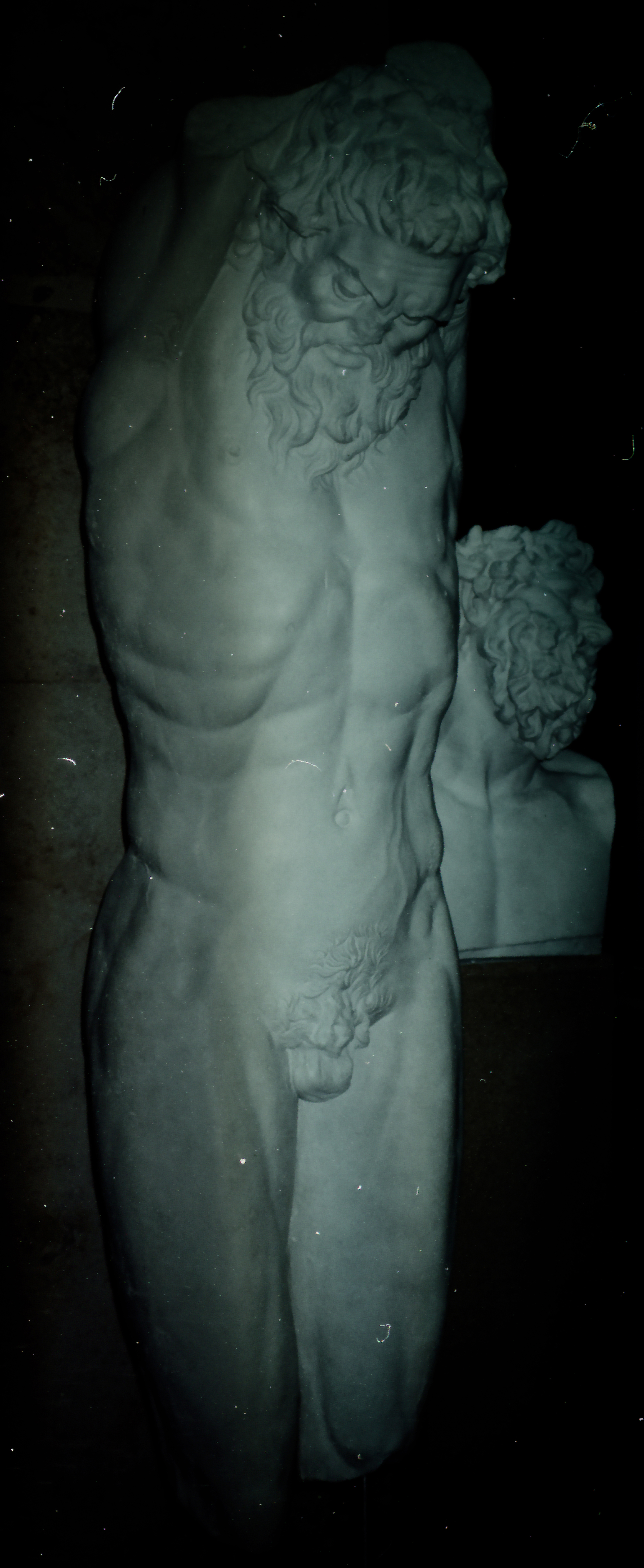
Pergamon Museum Berlin – Male Torso – Hanging Marsyas fragment, Greco-Roman 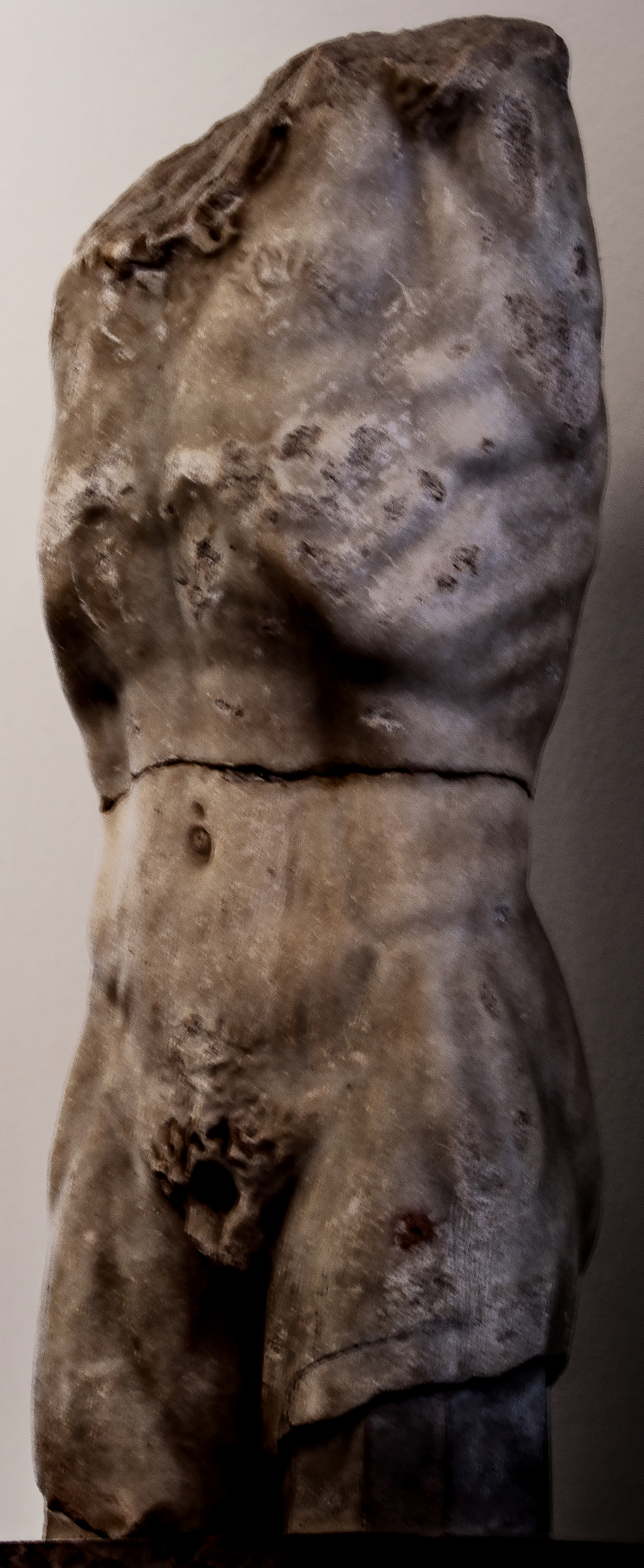
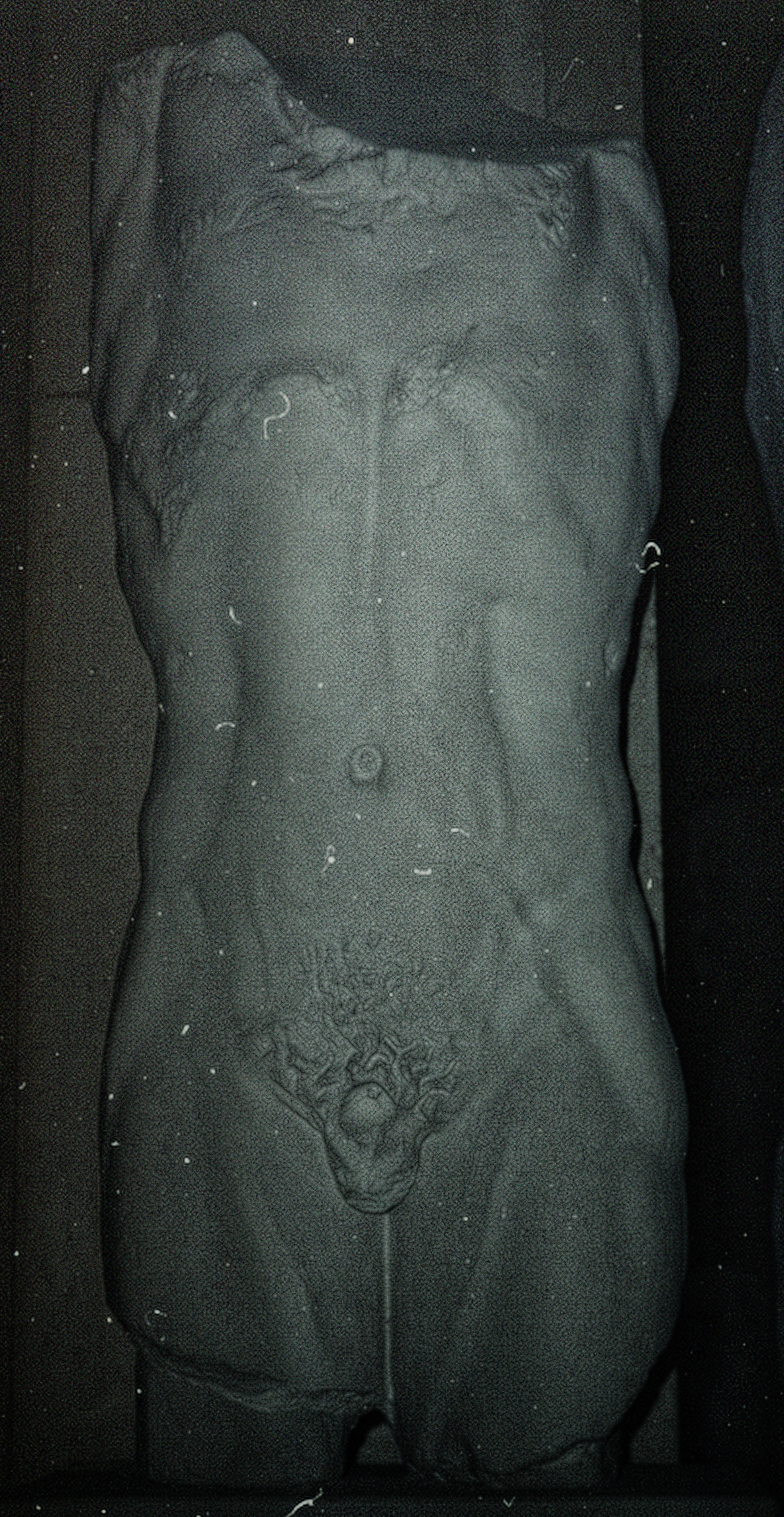
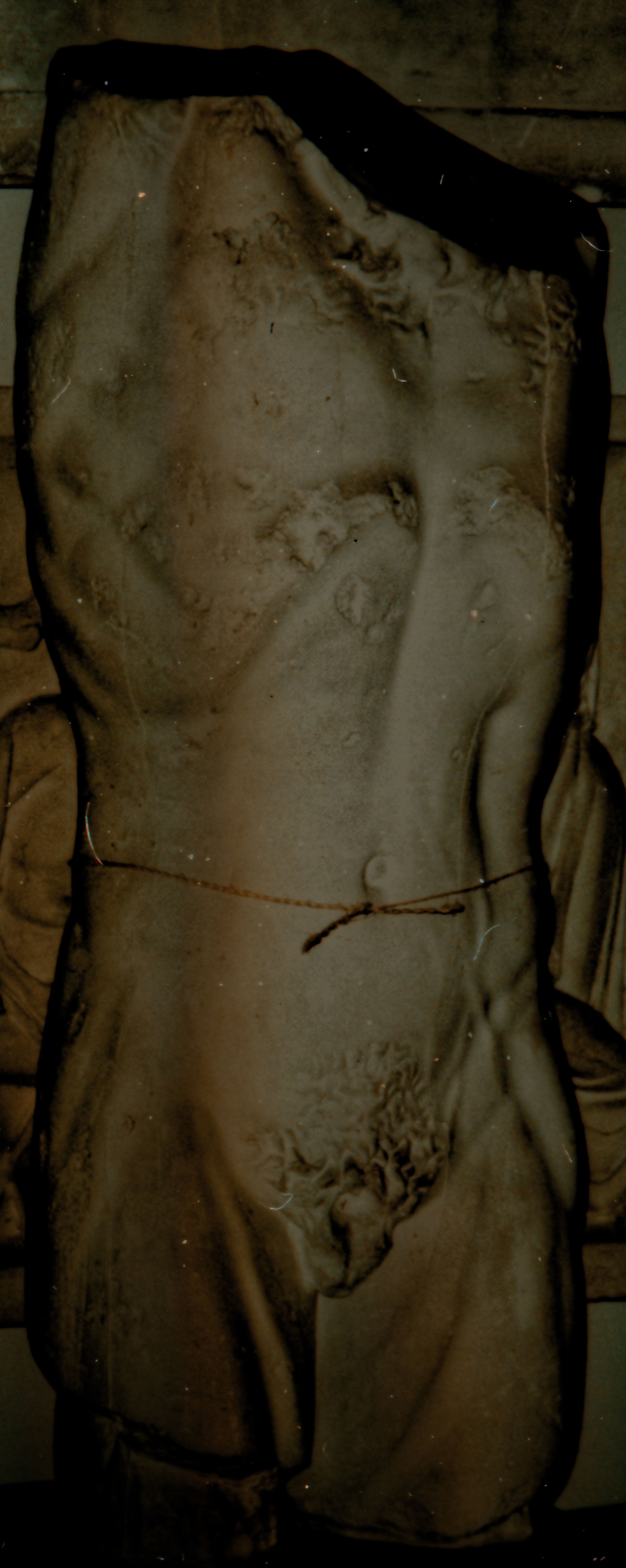
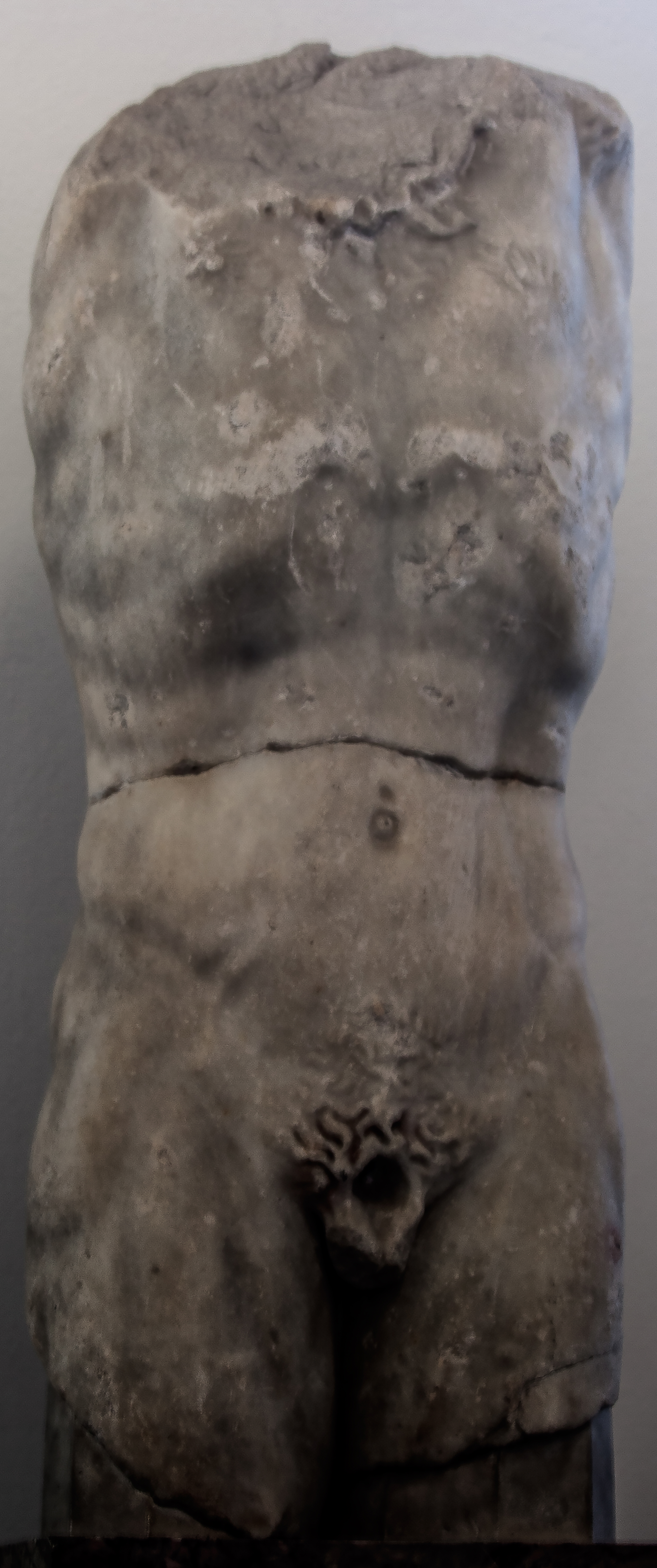
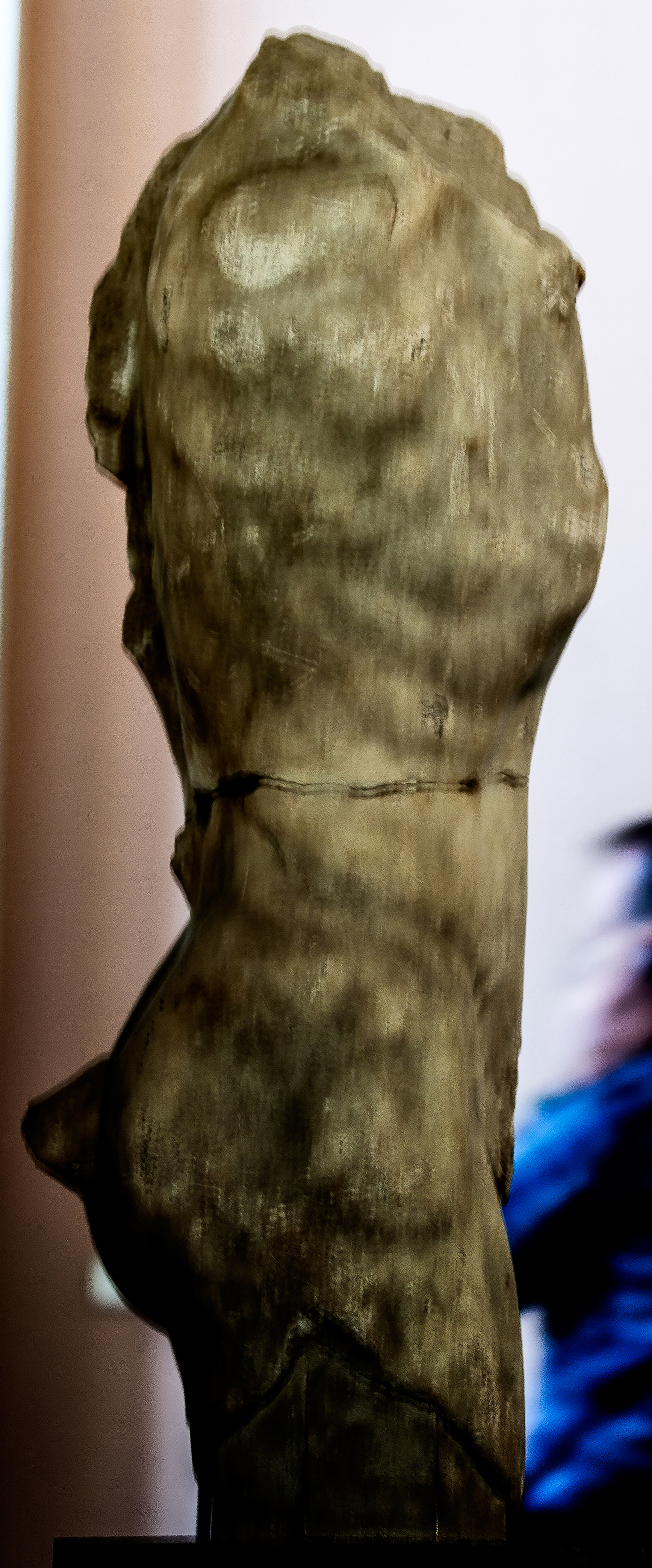
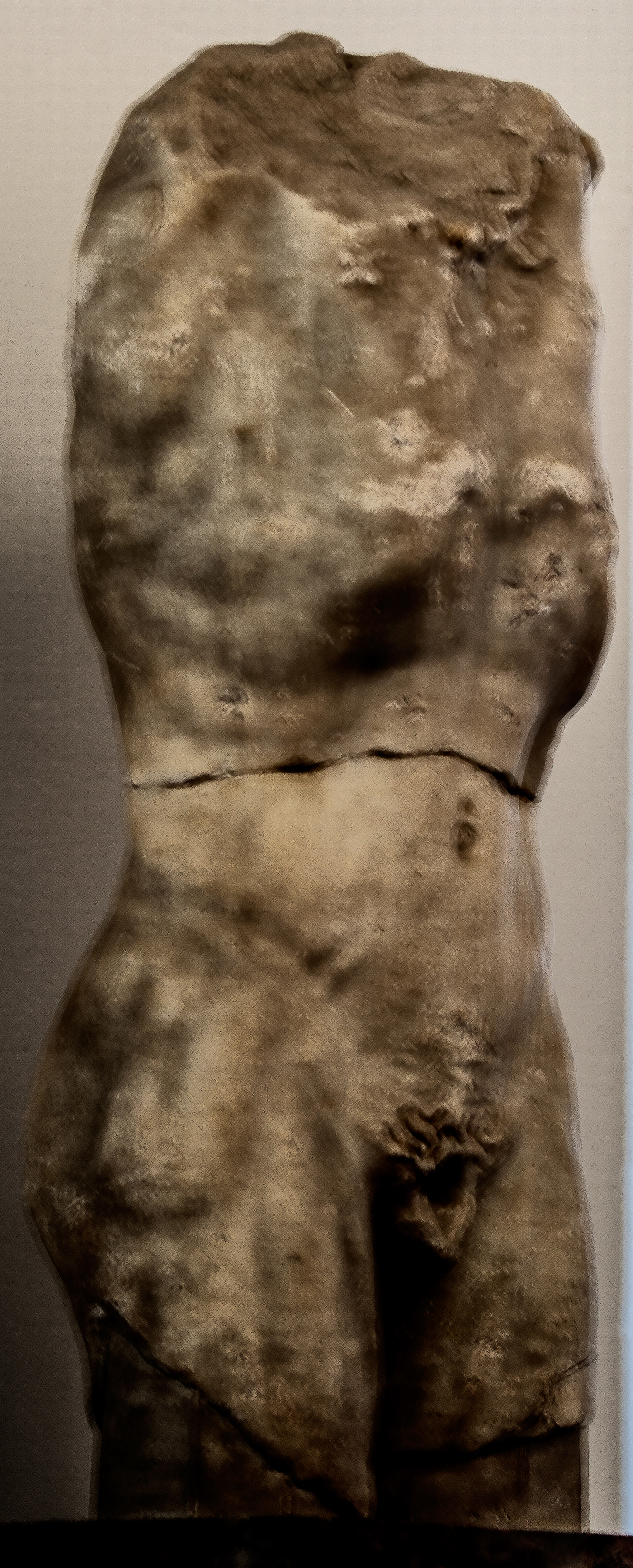
Hanging Marsyas would be paired with Uffizi, Florence, Italy – Scythian – Turkey, Plaster
________________________________________________________________________________________________________________________________________
Charlotte Schreiter
Moulded on the Best Originals of Rome. Eighteenth-Century Production and Trade of Plaster Casts after Antique Sculpture in Germany
in: Eckart Marchand, Rune Frederiksen (Hrsg.), Plaster Casts: Making, collecting, and displaying from classical antiquity to the present, International Conference at Oxford University, 24-26 September 2007 (Berlin 2010), 121-142.
https://www.academia.edu/9815534/
In: Eckart Marchand/Rune Frederiksen (Hrsg.), Plaster Casts: Making, Collecting, and Displaying from Classical Antiquity to the Present (Berlin 2010), S. 121-142, 2009 Charlotte Schreiter
Excerpts from publication:
“In 1794, a catalogue was published entitled Casts of antique and modern statues, figures, busts, bas-reliefs moulded from the best originals in Rost’s art dealers shop in Leipzig
(Fig. 6. 1). It listed fifty-four full-scale statues and seventy-five busts as well as numerous small-scale copies and “study pieces” – single hands, feet, monuments and reliefs among others. Fifty-six separately bound copper engravings illustrate a representative range of the most important pieces. This was the first time that the Leipzig art dealer Carl Christian Heinrich Rost (Fig. 6. 2) had published an illustrated catalogue of all the casts of antique and modern sculptures available in his shop.” 2
“The most important pieces were presented in outline drawings. The reduction of the figures to outlines corresponds to Winckelmann’s belief that these constituted the essence of the statues themselves. 4 Short explanatory texts specified the art historical importance of the individual antique sculptures. References to respective museum catalogues and commented catalogues – such as Casanova’s Discorso sopra gl’antichi 5 – emphasize the aspiration to seriousness. The artist commissioned to carry out the drawings, Schnorr von Carolsfeld, was chosen carefully: he was engaged upon the recommendation of the Director of the Leipzig Academy, Adam Friedrich Oeser. 6 Not wishing to provide a mere sales catalogue, the publisher (Rost) explicitly presented himself as a patron of the fine arts: He stated that he had not spared himself any effort to obtain the casts of the best antique artefacts in order to offer them to connoisseurs of the fine arts at a reasonable price.”
7
“Around 1770 the small range of existing plaster casts was commonly regarded as a lack. Hence, Johann George Sulzer postulated in his Allgemeine Theorie der Schönen Künste […] of 1771, that all academies should have a complete collection of the best antiquities. According to him, the only reason why this had not been the case was that the permission for taking moulds was too often refused.
13 Goethe’s personal reports document the alternatives available. According to him, sculptural works had been hard to find during his youth in Frankfurt. Only later did Italian plaster moulders arrive, bringing with them original casts, making new moulds and recasting them. These casts were obtainable at a fairly low price, so that he was able to build up his own small collection. 14 Since 1707 the Düsseldorf Electoral Prince Johann Wilhelm had started to compile a first class collection of casts taken directly from antique originals. 15 Conte Fede – himself a renowned collector – acted as his negotiator in Rome. He had access to the collections of the Medici, Borghese, Ludovisi, Odescalchi and Farnese and had permission from the pope and the Roman Senate to produce casts from statues in the Capitoline collections. The casts were made by Manelli. 16 A first delivery arrived in Düsseldorf in 1710. Because of the serious difficulties in transporting the plaster casts without damaging them, the decision was taken to deliver the moulds rather than the casts to Düsseldorf. This is one of the few cases in the eighteenth century in which one can be sure that the moulds sold in Germany were taken directly from the originals in Italy. 17 By 1714 the collection had grown to between eighty and one-hundred pieces. 18 In the middle of the century the collection was transferred to the Mannheim palace 19 and then again in 1767 to the specially established Antikensaal at the Mannheim Academy (Pl. 6. A). The moulds were also finally housed there. 20 This ‘Hall of Antiquities’ served not only as a classroom for art students, but also as a source of models for copies of antique statues for the park of the Schwetzingen palace. Thus, the reconstruction of the inventories reveals a representative spectrum of casts taken from antique statues, in no way ranking below that of other European and Italian collections. 21 Surprisingly enough, however, only a limited number of further casts was produced from them, most of which were intended for the requirements of the Mannheim court. The
Antikensaal rapidly gained wide renown and the numerous reports in various journals of the day reflect strong interest in it. Hofmann and Socha have compiled the contemporary sources on the
Antikensaal. 22 Among them the very first one in Meusels Miscellaneen artistischen Inhalts is important, since it lauds the just opened hall in a relatively widespread public medium. 23 Goethe visited the Antikensaal in October 1769. His report of the visit, that impressed him deeply, has become famous. 24 There, he was for the first time confronted with a large number of casts of complete sculptures. 25 The casts left a profound impression on him, that he revised only when he came to know the originals on his journey through Italy. Before then, he had never seen Laocoön together with his sons even though he possessed a bust and had seen the single figure of the father in a cast in Leipzig. 26 For a certain period, the Mannheim Antikensaal, with its restriction to plaster casts, remained a solitary case. Other princes in central Germany took antique artworks out of their ‘Kunstkammer’, supplemented them with appropriate acquisitions and completed their statue galleries – partly with plaster casts after antique sculptures. Among them, Wörlitz is one of the earliest examples and certainly the most coherently designed. Following the English Country House model and built in the Palladian style, the Wörlitz castle is one of the first neo-classical castles in Germany.
27 Prince Leopold III Friedrich Franz of Anhalt-Dessau had met Bartolomeo Cavaceppi in Rome in 1766.
28 Shortly afterwards Cavaceppi was commissioned to build up the collection of antiquities for Wörlitz. Not only did he have control over acquisitions, but also over supplementing, restoring, copying and providing antique sculptures. 29 The reference to English models was not limited to the architectural design, but also comprised the collection of antique sculpture which included antique originals as well as copies. Cavaceppi, who had numerous clients in England, was well versed in this process. 30 As a result, an overall concept could be developed which was groundbreaking for the German neo-classical style. In Mannheim and Wörlitz a single Italian representative had been responsible for the acquisition of casts and antique art. Yet not every court was able to commission a Conte Fede or a Cavaceppi. Courts such as Gotha, Kassel, Rudolstadt and Weimar had to use different sources (Pl. 6. B). The purchase of casts was generally connected with the founding of smaller academies of arts. 31 Some of these ancient plaster casts have survived at these sites. The example of Gotha offers an exemplary sequence of purchases: Between 1771 and 1773 Duke Ernst II commissioned Jean-Antoine Houdon to sculpt portraits of members of the court.
32 The intention of the Duke – to establish a collection of casts after his accession in 1772 – had been facilitated by the acquisition of plaster casts from the collection of Houdon. Eleven casts based on works of other artists and on antique statues belonged to this group.
33 Following this acquisition of casts made by a renowned artist from abroad, further casts were commissioned directly in Rome by the Duke’s agent Reiffenstein, while others were bought from traveling Italian plaster molders. Around 1775, some plaster casts were purchased from the Ferrari brothers – Italian plaster cast dealers operating in Germany at this time who were known to have left “a reasonable amount of this kind of statues” in the castle of Friedenstein in Gotha.
34 However, a further important contribution to this collection was made by the local court artist Friedrich Wilhelm Doell in the 1770s during his stay in Rome at the behest of the Duke. He made or purchased copies after antique originals as well as plaster casts, among them central pieces like the Apollo Belvedere, Borghese Gladiator and Venus de Medici. 35 When the collection of casts was founded in 1779, Doell contributed several works. 36 In 1782 he returned to Gotha and became Director of the Academy. He apparently continued to produce further casts based on his own models and moulds and established a business connection with Rost in Leipzig. 37 Only later was the aforementioned ‘wholesaler’ Rost commissioned to provide additional works, for which Doell had no model to draw upon. These however were based on antique sculptures in Dresden and Berlin – works such as the Dresden Vestal Virgins (Herculaneum Women) or the Berlin Knöchelspielerin (Girl Playing Knucklebones). 38 Significantly, despite the wide range of sources on which the Gotha collection drew it was always assumed at the time that the casts were taken from the original statues in Italy.”
“Publishing a first catalogue in 1779, the art dealer Rost had already established a workshop for casts as early as 1778. 62 The collection of plaster casts seems to have grown, but there is no reference to the Ferrari brothers, although he must have contacted them about that time. The moulds must have been purchased between 1779 and 1782, in order to publish a new catalogue, of which, as far as I know, no copy has survived. Its existence, however, is proven indirectly by announcements. 63 Rost’s shop was situated prominently in a vault of the popular Auerbach Court, where he probably displayed a fair number of his casts to the public. Thus, compared to the traveling dealers, he had the advantage of a permanent salesroom.”
“Rost, not doubting the high quality of the Ferrari casts, informed the readers of his 1782 catalogue that he had made a contract with the Ferrari brothers entitling him to use their moulds. It can be assumed that Rost’s view of the Ferrari brother’s casts was generally shared at that time. Nevertheless, he decided to add a specific touch to the collection beyond the too well known and limited assortment of the Ferrari brothers. His attempt to order moulds and casts in Italy cannot be verified in detail, although in 1786 he had announced the possibility of acquiring the Flora Farnese by subscription, and as early as 1794 he offered the small scale copy of this sculpture made by Doell in Rome in 1774.” 64 (Friedrich Wilhelm Eugen Döll, sculptor, 1750, Veilsdorf bei Hildurghausen – 1816, Gotha, Thüringen –1816)
“A further moulding campaign became important at that time: in 1782, Rost had called for a sale by subscription, principally of newly made casts of the collection in Dresden, 65 one of the few collections from Rome that had been purchased in its entirety by a German court. The collection had been acquired for Dresden by the Saxon King August the Strong in 1773. It was never displayed adequately, since, due to lack of money, nothing became of extensive plans for a new museum of sculpture. 66 From the collection of Prince Eugen in Vienna the three Herculanean Vestal Virgins (Herculaneum Women) were added. With some delay, the Dresden Collection of Antiquities Rost’s casts of twenty-five selected pieces from this collection apparently earned positive feedback. His subsequent 1786 catalogue mentions the news of the moulding campaign in Dresden first; the standard repertoire from the Ferrari moulds and other unnamed sources, primarily from Italy, are listed only subsequently.”
68
“The Ferrari had had a monopoly position and an exclusive circle of customers, compared with the increasingly competitive environment among mercantile traders local to the region, although in the beginning there seems to have been little space beside Rost for other dealers. Some court artists made casts from their respective collections of statues and busts and sold them; few, like the aforementioned Doell, had the opportunity to draw on their own first-hand copies of antique originals. At the same time, however, he was dependent on the marketing of Rost, who was able to reach a wider circle of customers and only comparatively late, around 1795, was Doell able to establish his own profitable workshop. 69
Competition had developed principally in Weimar. Gottlieb Martin Klauer settled there in 1777. 70 On Goethe’s suggestion and by order of the Duchess Anna Amalia he traveled to Mannheim in 1777, to study the casts of ancient sculptures, since at that period knowledge of them was considered indispensable for the development of an artist’s taste. At the same time, after the Weimar Palace had burnt down in 1774, the question arose as to how the Residence should be redecorated. 71
By order of the Weimar court, Klauer was able to acquire plaster casts in Mannheim, that had been cast from the original moulds. One of these casts was the very popular
Fede Group, a group of Amor and Psyche at that time interpreted by restoration as Caunus and Biblis. Thereafter, the Ildefonso Group was acquired, interpreted as Castor and Pollux, as well as several casts of heads.” (Martin Gottlieb Klauer, sculptor, born August 29, 1742 in Rudolstadt , died April 4, 1801 in Weimar, court sculptor in Weimar (1773) and art teacher at the local Princely Free Drawing School 1781)
“The Lauchhammer cast iron copies of antique statues had been announced already in the first volume of the Journal des Luxus und der Moden. 82 Rost himself had invented a “compact material” ( Feste Masse) that was resistant to weather conditions. All these undertakings would have been unthinkable without Rost’s collection of moulds, particularly from the Dresden collection, 83 and initially he sold the iron castings as well as Toreutica on commission. Subsequently however, the manufacturers became independent: Klauer published his first catalogue in 1792 and presumably Lauchhammer might have published something similar. 84 At about this time, direct criticism of the quality of Rost’s plaster casts accumulated and was published in journals. Critics cast doubt on the origin of the moulds of the best originals, accusing them of poor quality. 85 It seems that the contrast between the casts taken from the Dresden originals and the older plaster casts was so noticeable that Rost discredited himself. By producing these direct casts, exact plaster casts were circulating for the first time, clearly revealing the strong variation in quality. In 1794 Rost finally abandoned the habit of listing antique statues from Dresden and elsewhere separately, and instead integrated them all into the same list. Even though he vehemently defended himself against criticism, both in journals as well as in the preface to the 1794 catalogue 86 he must have been aware of the problematic origin of the moulds made by the Ferrari. In the meantime, the famous collection of casts by the Saxon court painter Anton Raphael Mengs had been purchased for Dresden and made accessible to the public – at first provisionally in 1786 and eventually arranged in a representative manner in the Johanneum in 1794.
87 For the first time since the opening of the Mannheim Antikensaal
, these first-class casts of the best antique statues of Rome and Florence must have shown the high quality of antique sculptures to a large audience. Heyne’s judgment of Rost’s illustrated catalogue of 1794 shows in detail how much Rost had come under fire:
[…] the casts of Mr. R. may be esteemed highly however in one respect, this is with regard to those casts, that by the exceptional grace of the Elector of Saxony, he received permission to have moulded directly; and we assume these are the ones H. Rost accords the name of Original Moulds, for most of the other main pieces – such as Laocoön, Apollo, The Gladiator, etc., cast originally in Germany 20 years ago by the Ferrari Brothers, and these in turn having been cast hastily and hurriedly from the Farsetti collection in Venice with no permission by the owner, only through special favour of the custodian of the moulds – may not well be named Original Moulds. One may only compare H. R. casts to those of the former Mengs collection in Dresden to notice this difference […].
Charlotte Schreiter
Moulded on the Best Originals of Rome. Eighteenth-Century Production and Trade of Plaster Casts after Antique Sculpture in Germany
in: Eckart Marchand, Rune Frederiksen (Hrsg.), Plaster Casts: Making, collecting, and displaying from classical antiquity to the present, International Conference at Oxford University, 24-26 September 2007 (Berlin 2010), 121-142.
Excerpts from publication: Above
“Working in Rome, Winckelmann traced in the sculptures he knew there for the development of Greek style. Observing Roman copies of lost Greek works, he described the rise and fall of Greek art from its rigid, archaic origins, through the full blown beauty of the classical style which he associated with the sculptures of Praxiteles, to the decline of Greek taste in what he called the Macedonian (Hellenistic) period. He divided the Greek history of art into four periods that constitute his taxonomic division:
The straight and hard lines of the archaic period – the Older Style;
The grand and square sculptures of the 5th century BC – the high Style;
The sculptures with flowering beauty and idealized naturalism in the 4th century BC – the Beautiful Style;
Lastly he identified an era characterized by its imitative and decadent copying of nature – the Style of the Imitators.
This model for the study of Greek art had considerable influence and was to be adopted as standard by subsequent generations of Hellenists (Jenkins 2003: 173–174). In addition, most of Winckelmann’s identifications of the subjects of individual sculptures as well as their dating in his chronological model continue to be accepted”
{Winckelmann’s identification “the Style of the Imitators” as the fourth period of Greek sculpture gets more than a bit dicey since later extensive discoveries of sculpture as well as a further understanding of the early Greco-Roman as well as it’s heritage from late Hellenistic sculpture progressed considerably in the nineteenth century and twentieth century. The later Hellenistic and early Greco-Roman period include what is much of the most significant Greek surviving sculpture. The more advanced artists from the High Renaissance through the nineteenth century periods were influenced in larger part by the Hellenistic and early Greco-Roman sculpture and to a lesser degree the Classical. The differentiation between these periods started with Winkelmann but he is less informed once the sculpture concerns the period of and after Alexander the Great. This critique influenced a rather imitative surface style after “Greek Classical” without the underlying complexity in visual abstracted content. Winkelmann though cannot be fully blamed since he is another academic without any deeper understanding of the abstracted complex visual content language inherent in Greek sculpture. Winkelmann seems to be making an analysis from a more obvious surface response – though Winkelmann was greatly gifted beyond his peers. Academics seem to have enormous difficulty in reading these abstracted complex visual content language. Most artists past and present are largely or completely ignorant or perhaps more ignorant especially now than Winkelmann of the issues. The best of the European sculptors though were going beyond this stylistic simplification. – my commentary, PBP}
Gotha, Friedrich W. E. Döll, sculptor, Vielsdorf, Thuringia 1750–1816
Gotha, Friedrich W. E. Döll, sculptor, Vielsdorf, Thuringia 1750–1816 Gotha, Weimar, Jena, Classicism in 18th. and 19th. Century Sculpture
Gotha, Friedrich W. E. Döll, sculptor, Vielsdorf, Thuringia 1750–1816, Part Two
Gotha, Friedrich W. E. Döll, sculptor, Vielsdorf, Thuringia 1750–1816 Gotha, Weimar, Jena, Classicism in 18th. and 19th. Century Sculpture
FIGURE MODELLO SCULPTURE COURSE
(detailed description)
This course will be taught in two parts, each part consisting of 24, five-hour sessions (daytime), or four-hour sessions (evening time) over a twelve-week duration. The same pose, and intended Life Model, or Figure Sculpture each time for the duration. The figure will be studied in greater depth than in the maquette course. The first half of the course will cover bone structure alignments, masses and proportion. The second half will focus on the surface of masses and surface anatomy. Both halves of the course will cover geometric patterning of shapes, commensurate planes, and planar rhythms. Optional free-workshop class session 5 hours day, and 4 hours evening each week without instruction included.
Cost for the course:
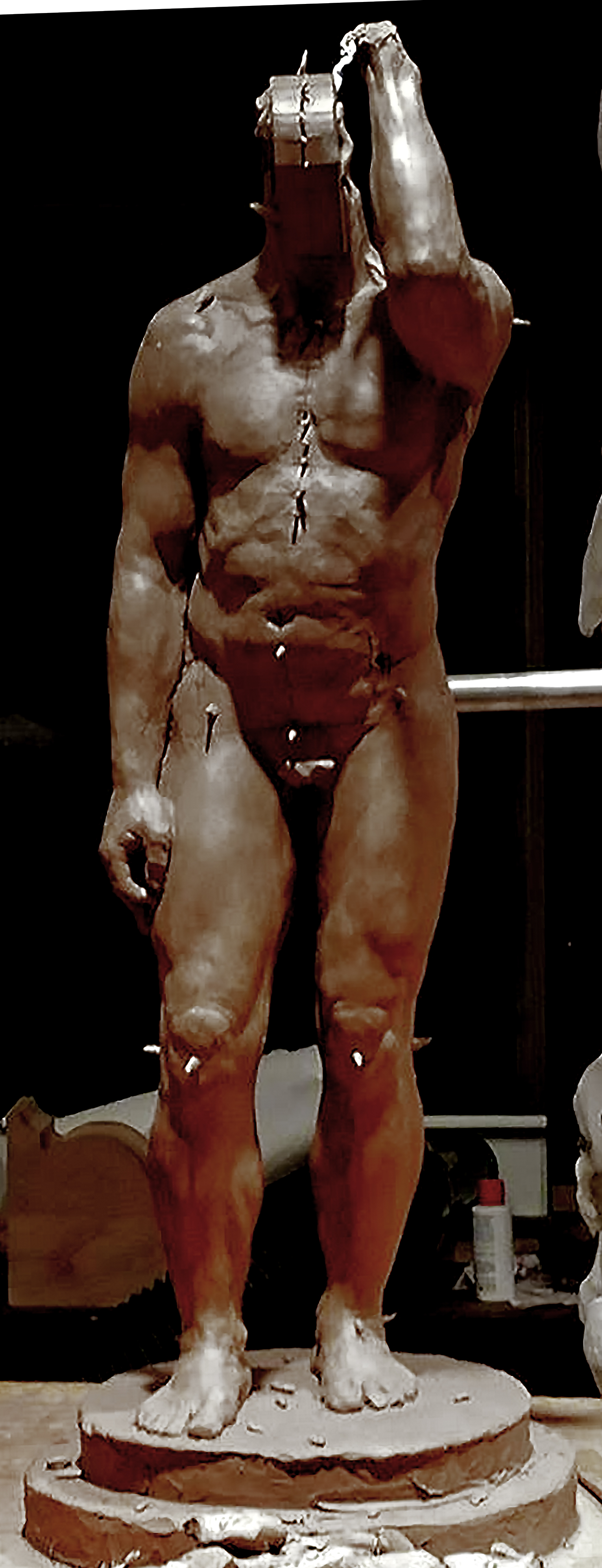
Cost for the course:
$ 2,136.00 for each 12 week segment consisting of 24 classes, twice a week class schedule, other options available for once-a-week class schedule, and private individual classes – Day.
or
$ 2,136.00 for each 12 week segment consisting of 24 classes, twice a week class schedule, other options available for once-a-week class schedule, and private individual classes – Eve.
FIGURE MODEL SCULPTURE COURSE
(detailed description)
This course will be taught in four parts, each part consisting of 24, five-hour sessions (daytime), or four-hour sessions (evening time) over a twelve-week duration. The same pose, and intended Life Model, or Figure Sculpture each time for the duration. The figure will be studied in greater depth than in the modello course. The first half of the course will cover bone structure alignments, the masses and proportion. The second half will focus on the particular surface of masses, in depth surface anatomy and personality of the structures of the model. Both halves of the course will cover geometric patterning of shapes, commensurate planes, and planar rhythms. The added time length will enable a more mature articulated sculpture. Optional free-workshop class session 5 hours day, and 4 hours evening each week without instruction included.
Cost for the course:
Cost for the course:
$ 2,136.00 for each 12 week segment consisting of 24 classes, twice a week class schedule, other options available for once-a-week class schedule, and private individual classes – Day.
or
$ 2,136.00 for each 12 week segment consisting of 24 classes, twice a week class schedule, other options available for once-a-week class schedule, and private individual classes – Eve.
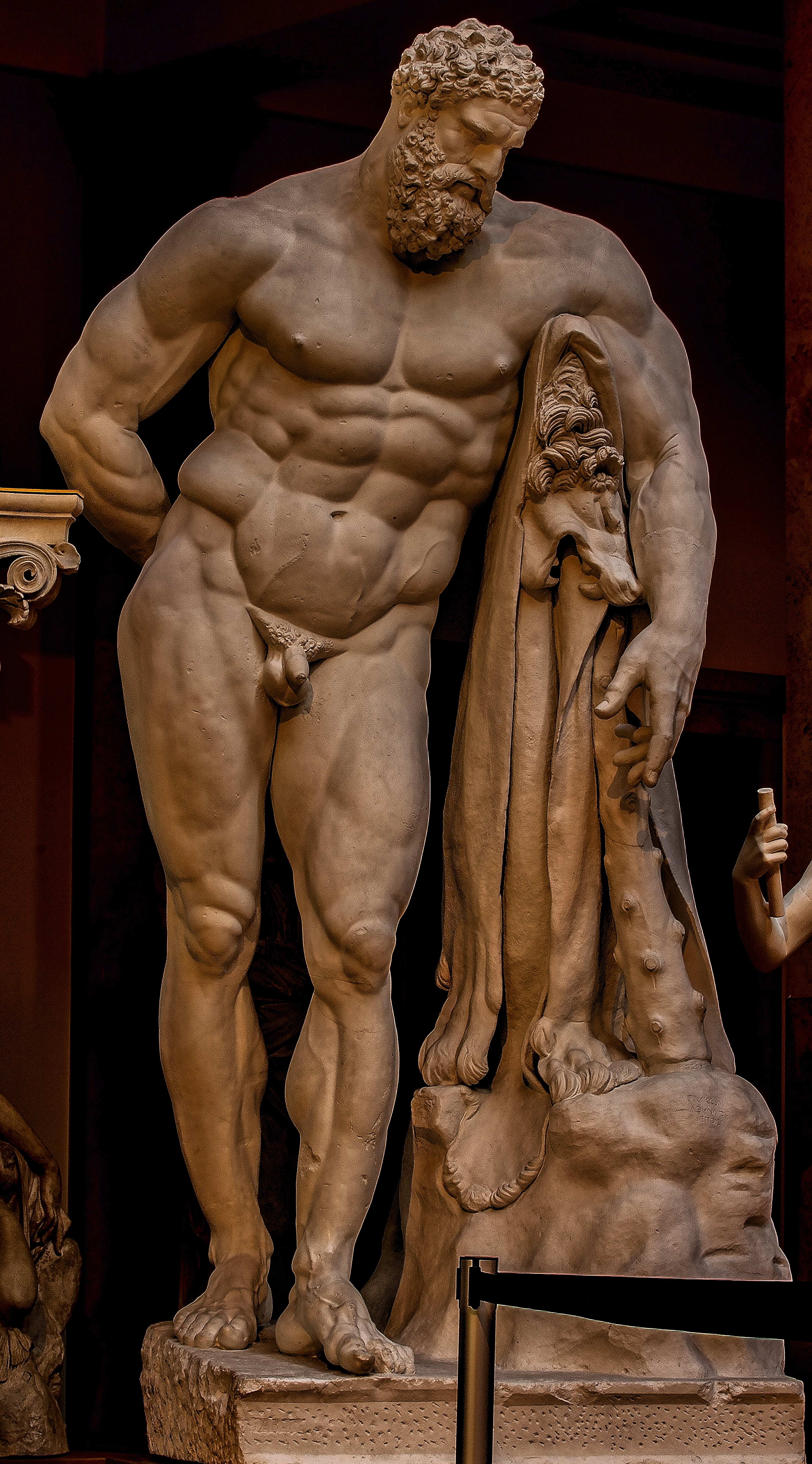
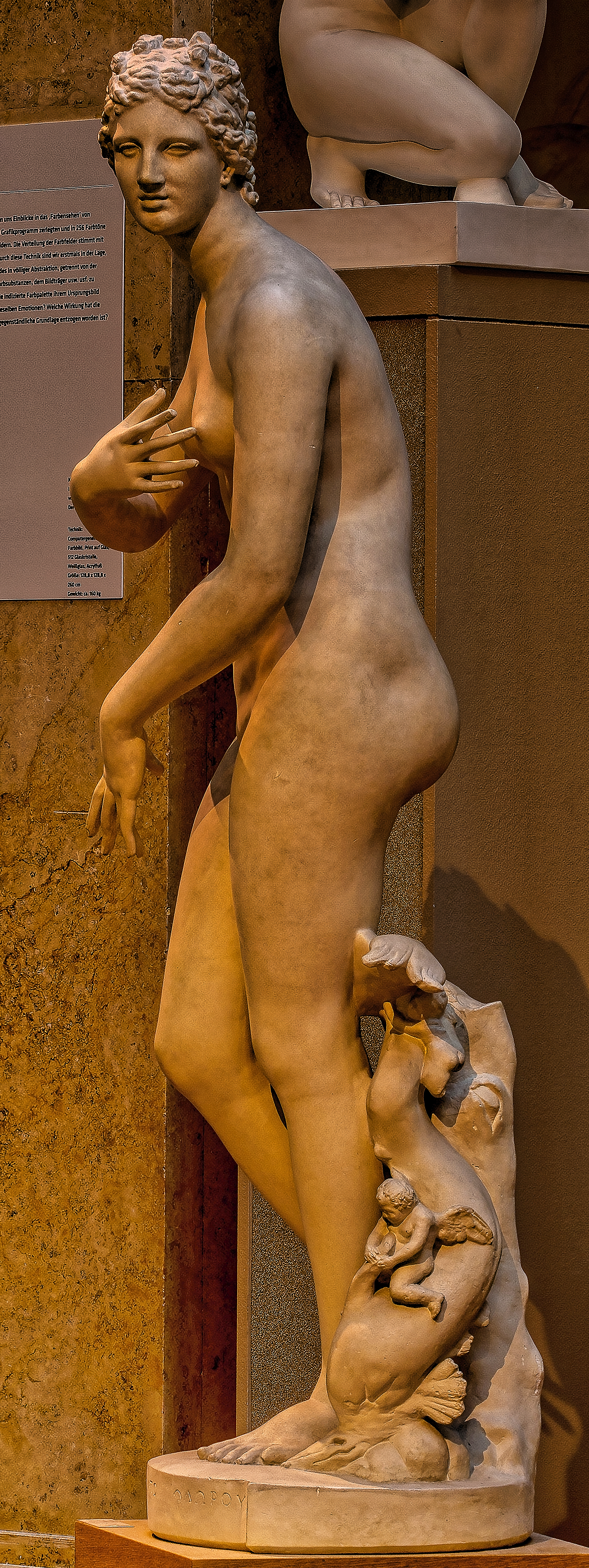

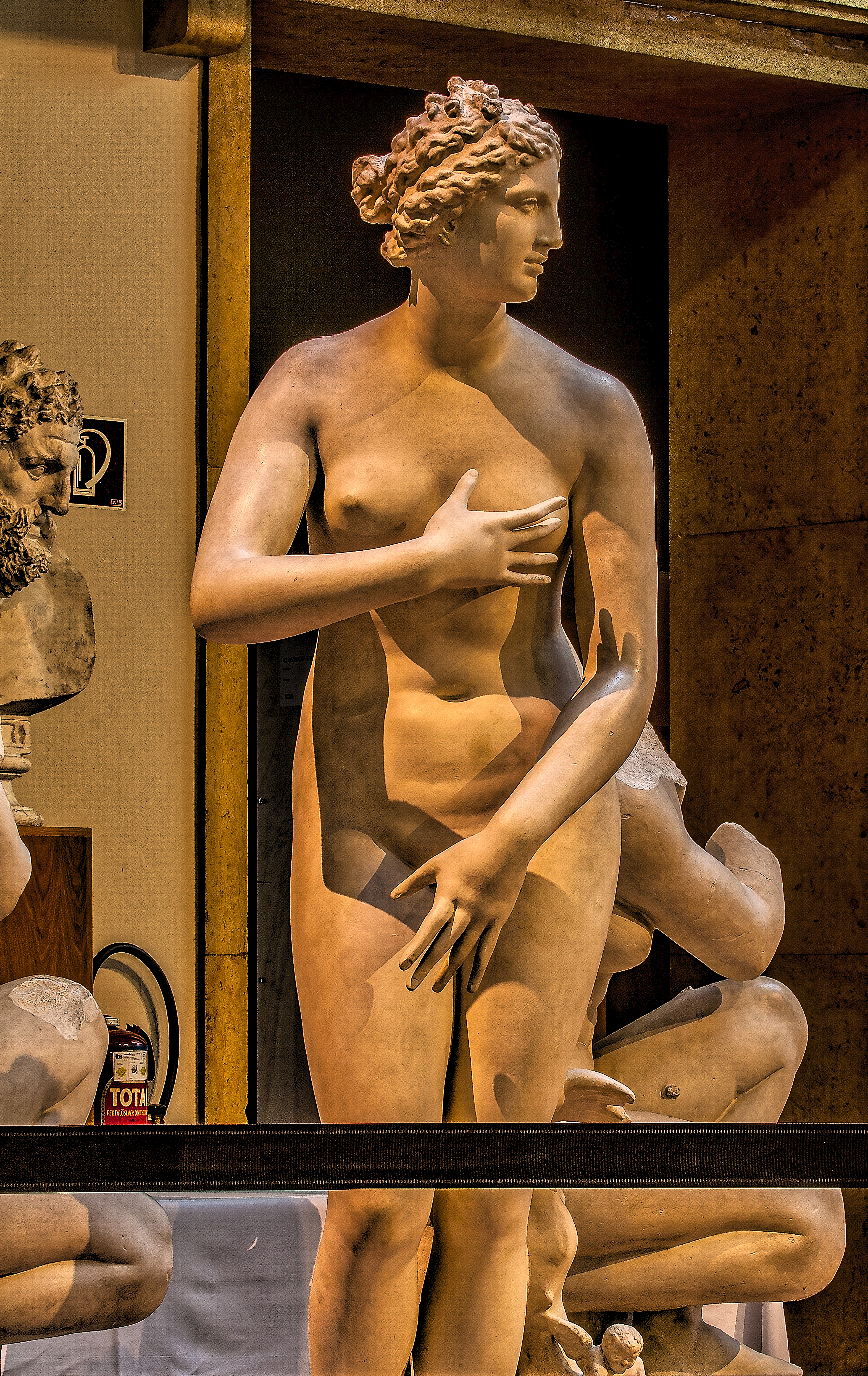
___________________________________________________________________________________________________________________
__________________________________________________________________________________________________________\
FIGURE RELIEF SCULPTURE COURSE
(detailed description)
This course will be taught in two parts, each part consisting of 24, five-hour sessions (daytime), or four-hour sessions (evening time) over a twelve-week duration. The same pose, and intended Life Model, or Antique, or Modern Sculpture Plaster Figure, or Anatomical Model will be utilized several class sessions, to more extended projects within the two parts 24 meeting each time frame. Students will study bone landmarks and major muscle groups while working to capture the action of the pose and characteristics of the model. Overall forms will be blocked in through observation of shapes, rhythms and interconnecting commensurate planes, leading to a simplified yet integrated relief sculpture, defining sculptural content, and sketch composition. This course will establish how to develop a relief sculpture from a shape orientation method, as opposed to copying shadows, and light, which is not a dependable factor in representing content. Optional free-workshop class session 5 hours day, and 4 hours evening each week without instruction included.
Cost for the course:
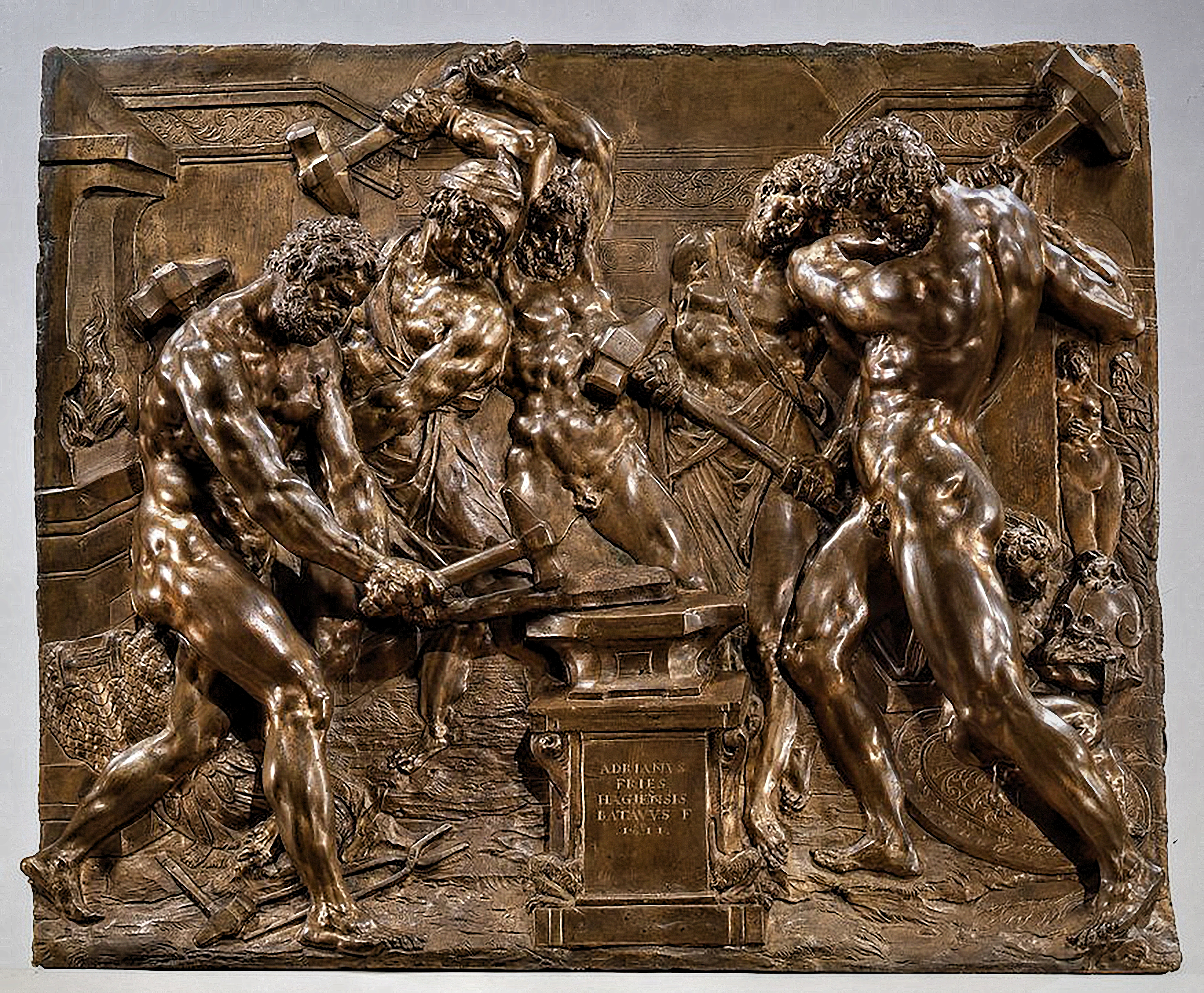
Bronze, 47 x 56.5 cm.,
Bayerisches Nationalmuseum, Munich
Cost for the course:
$ 2,136.00 for each 12 week segment consisting of 24 classes, twice a week class schedule, other options available for once-a-week class schedule, and private individual classes – Day.
Or
$ 2,136.00 for each 12 week segment consisting of 24 classes, twice a week class schedule, other options available for once-a-week class schedule, and private individual classes – Eve.
—————————————————————————————————————–
BEGINNING SCULPTURE PORTRAIT BUST COURSE
(detailed description)
This course will be taught in two parts, each part consisting of 24, five-hour sessions (daytime), or four-hour sessions (evening time) over a twelve-week duration. The same pose, and intended Life Model, or Antique Sculpture Plaster Portrait Bust each time for the duration. Blocking in overall shapes, bone landmarks and major muscle groups, students will work towards capturing the likeness and character of the model. Overall, forms will be blocked in through observation of shapes, rhythms and interconnecting commensurate planes, leading to a simplified yet integrated portrait sketch. Optional free-workshop class session 5 hours day, and 4 hours evening each week without instruction included.
Cost for the course:
Cost for the course:
$ 2,136.00 for each 12 week segment consisting of 24 classes, twice a week class schedule, other options available for once-a-week class schedule, and private individual classes – Day.
or
$ 2,136.00 for each 12 week segment consisting of 24 classes, twice a week class schedule, other options available for once-a-week class schedule, and private individual classes – Eve.
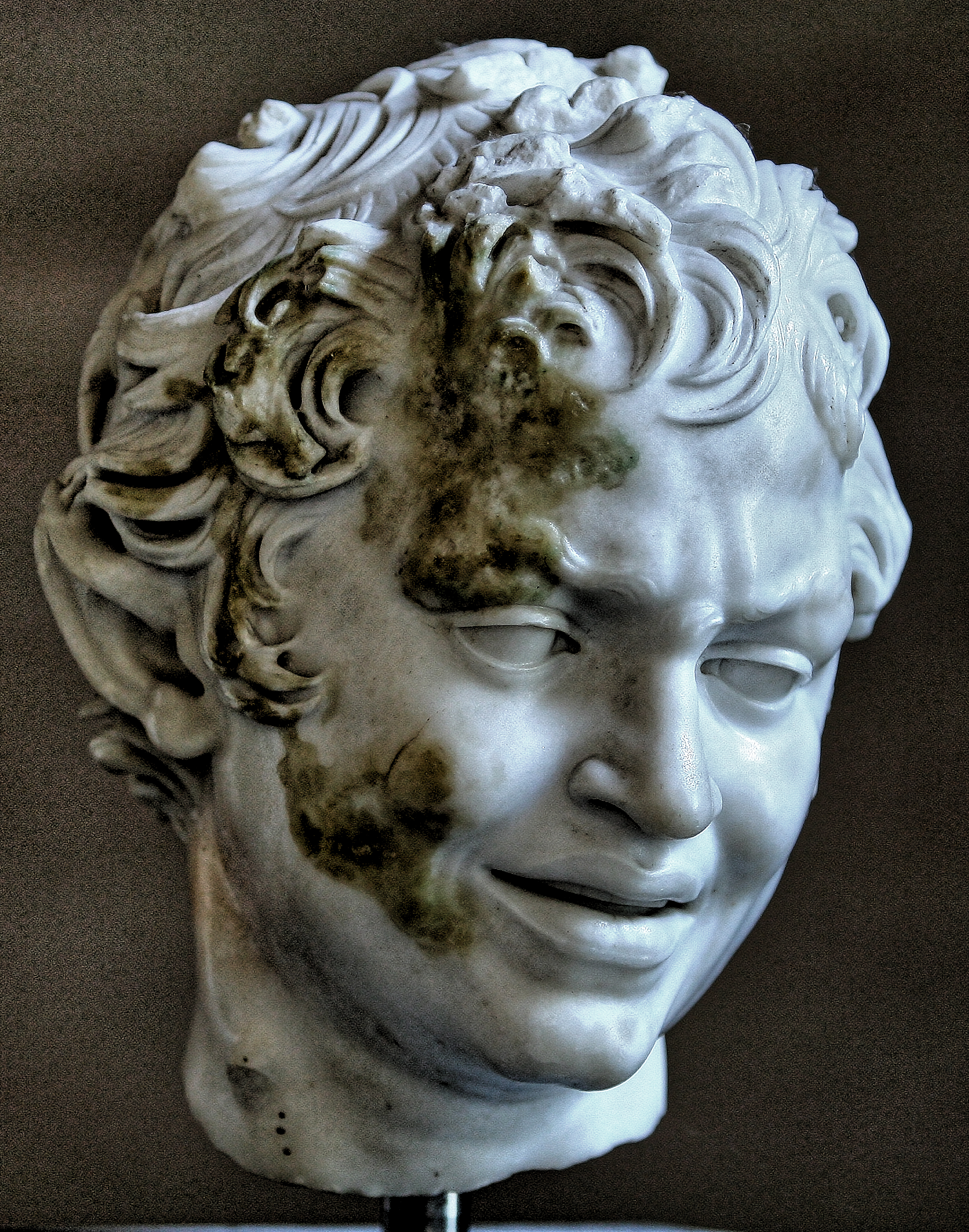
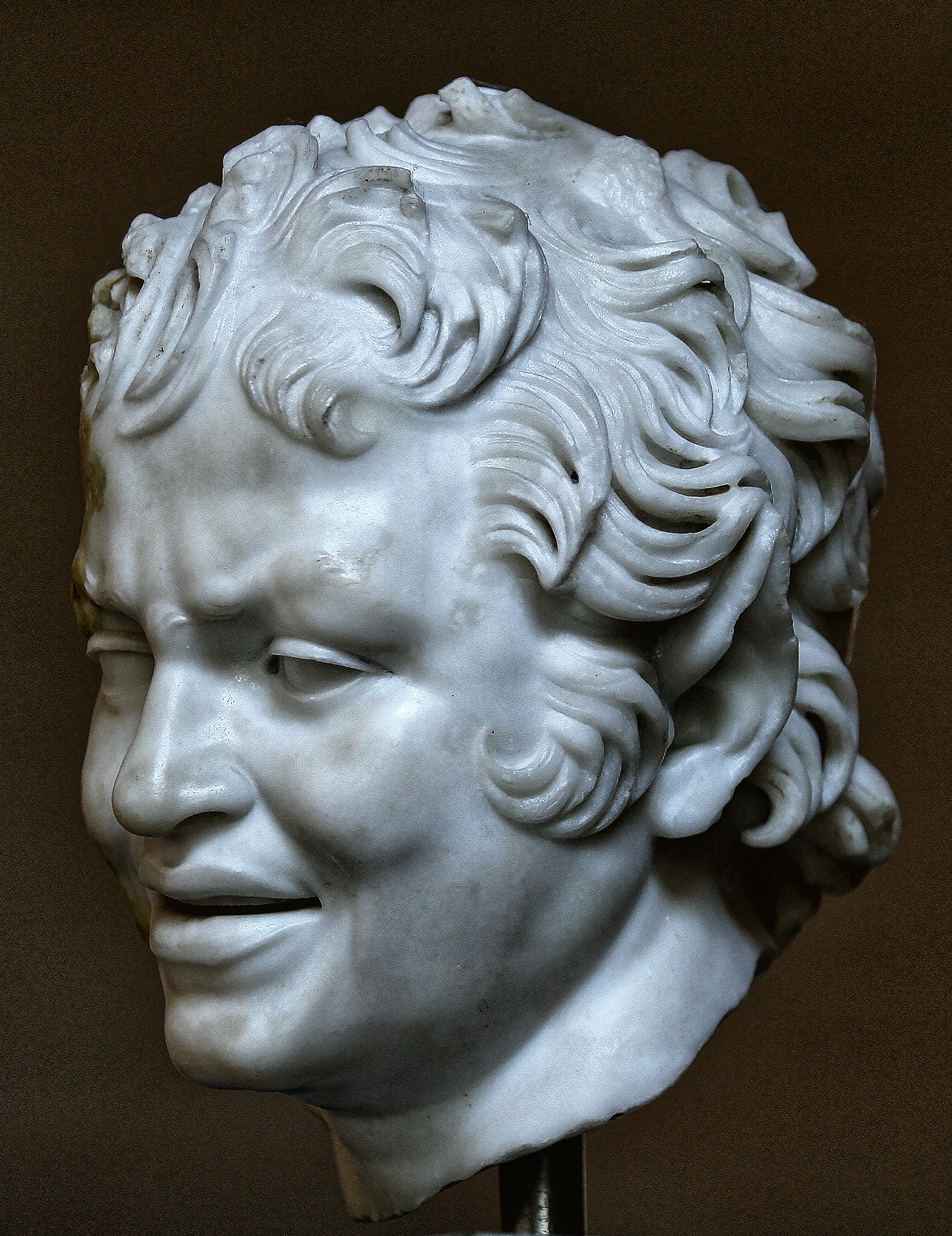

_________________________________________________________________________________
PORTRAIT MODELLO SCULPTURE COURSE
(detailed description)
This course will be taught in two parts, each part consisting of 24, five-hour sessions (daytime), or four-hour sessions (evening time) over a twelve-week duration. The same pose, and intended Life Model, or Antique Sculpture Plaster Portrait Bust each time for the duration. The portrait will be studied in greater depth than in the maquette course. The first half of the course will cover bone structure alignments, masses and proportion. The second half will focus on the surface of masses and surface anatomy. Both halves of the course will cover geometric patterning of shapes, commensurate planes, and planar rhythms. Optional free-workshop class session 5 hours day, and 4 hours evening each week without instruction included.
Cost for the course:
Cost for the course:
$ 2,136.00 for each 12 week segment consisting of 24 classes, twice a week class schedule, other options available for once-a-week class schedule, and private individual classes – Day.
or
$ 2,136.00 for each 12 week segment consisting of 24 classes, twice a week class schedule, other options available for once-a-week class schedule, and private individual classes – Eve.
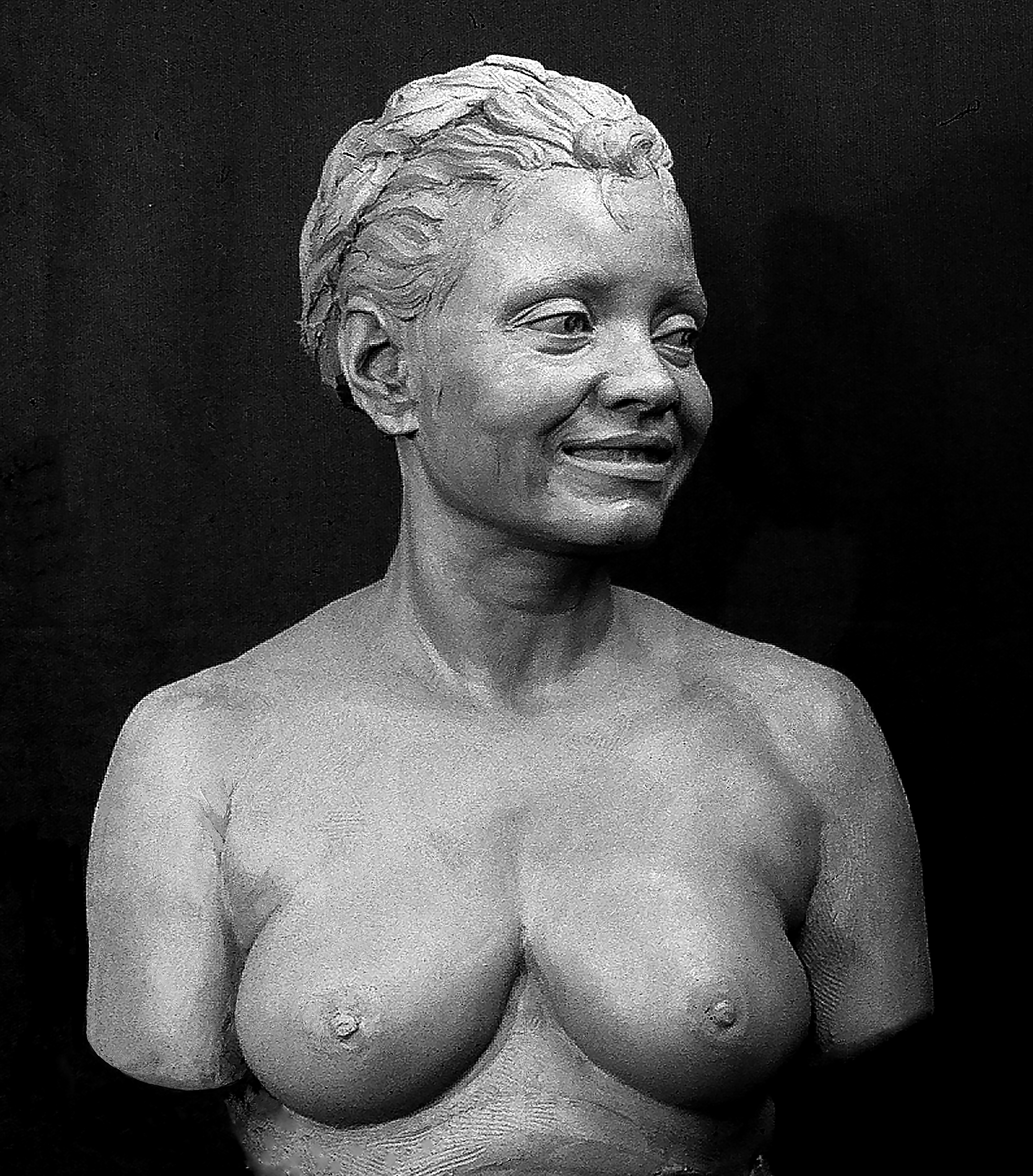
________________________________________________________________________________
PORTRAIT SCULPTURE COURSE
(detailed description)
This course will be taught in four parts, each part consisting of 24, five-hour sessions (daytime), or four-hour sessions (evening time) over a twelve-week duration. The same pose, and intended Life Model, or Antique Sculpture Plaster Portrait Bust each time for the duration. The portrait will be studied in greater depth than in the modello course. The first half of the course will cover bone structure alignments, masses and proportion. The second half will focus on the particular surface of masses, in depth surface anatomy and personality of the structures of the model. Both halves of the course will cover geometric patterning of shapes, commensurate planes, and planar rhythms. The added time length will enable a more mature articulated portrait. Optional free-workshop class session 5 hours day, and 4 hours evening each week without instruction included.
Cost for the course:
Cost for the course:
$ 2,136.00 for each 12 week segment consisting of 24 classes, twice a week class schedule, other options available for once-a-week class schedule, and private individual classes – Day.
or
$ 2,136.00 for each 12 week segment consisting of 24 classes, twice a week class schedule, other options available for once-a-week class schedule, and private individual classes – Eve.
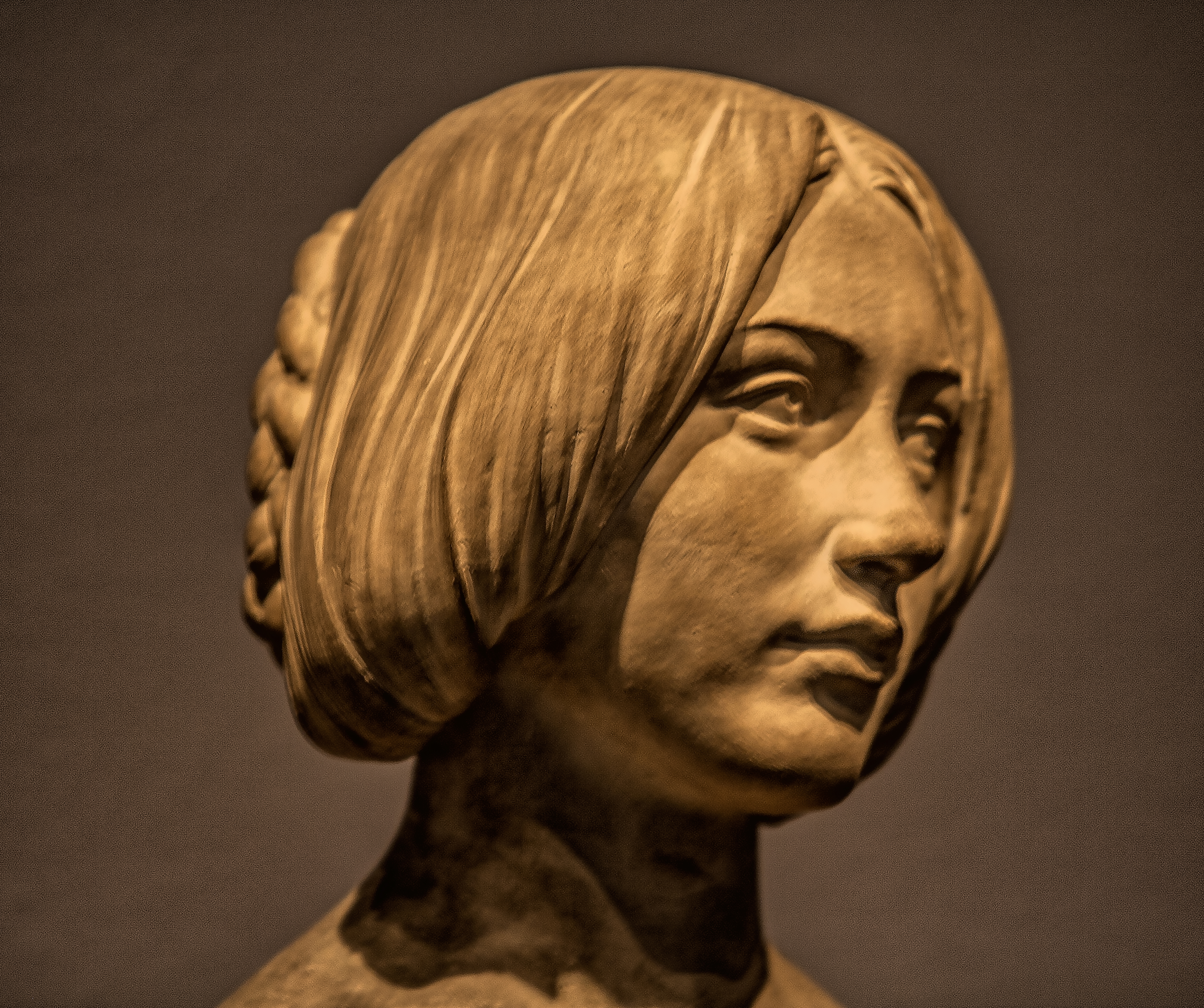
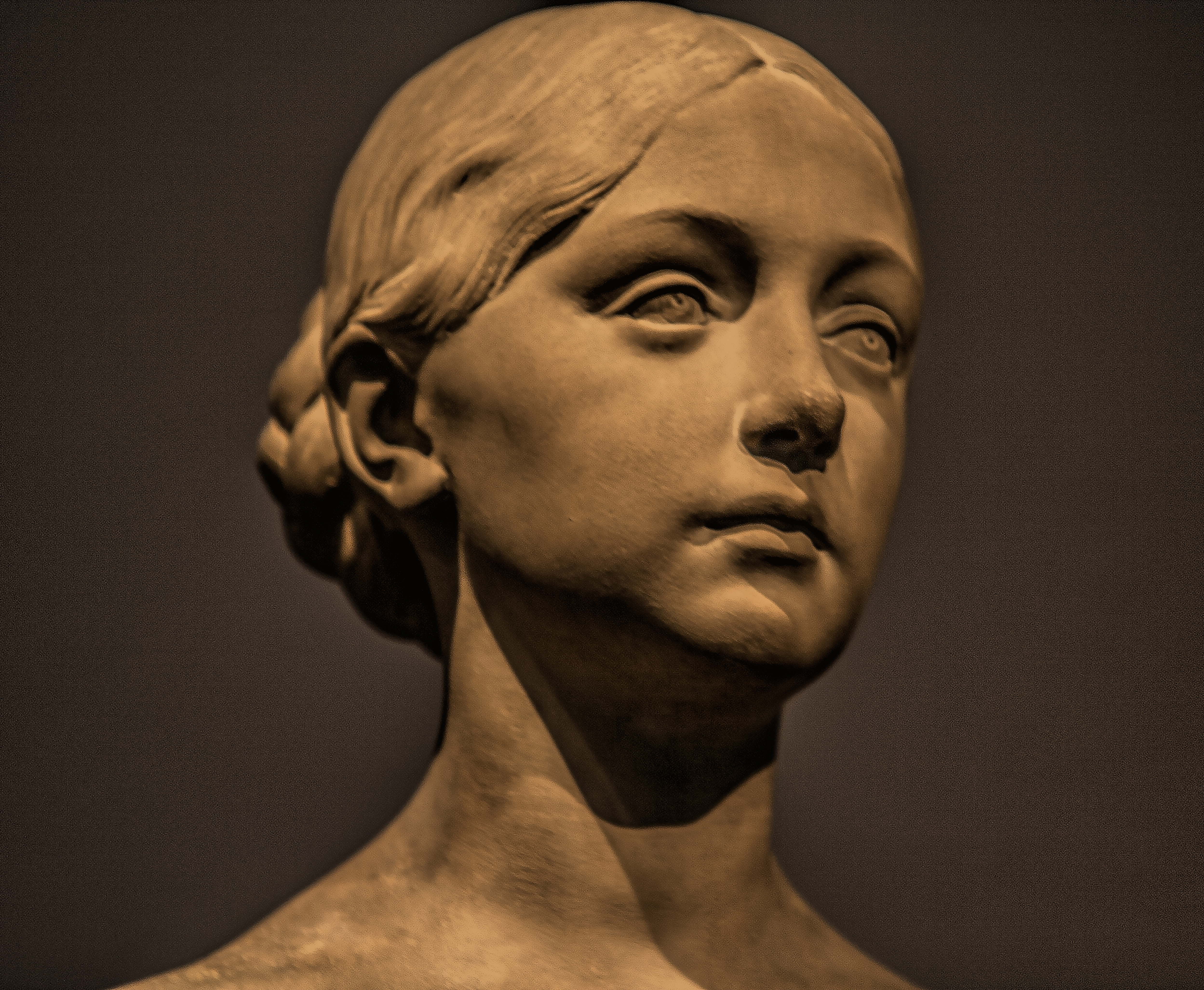


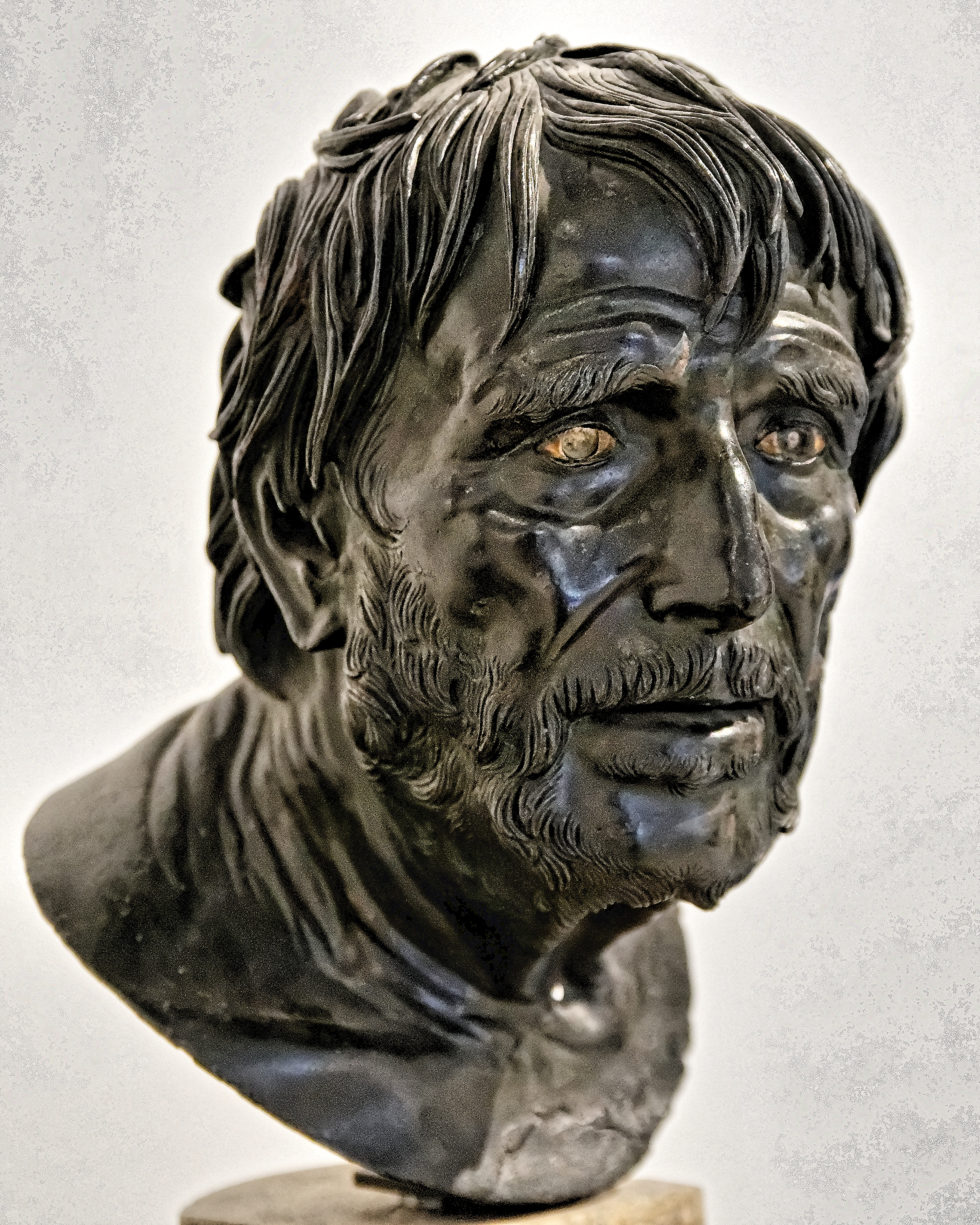
PORTRAIT BUST RELIEF
This course will be taught in two parts, each part consisting of 24, five-hour sessions (daytime), or four-hour sessions (evening time) over a twelve-week duration. The same pose, and intended Life Model, or Antique, or Modern Sculpture Plaster Portrait Bust, or Anatomical Model will be utilized several class sessions, to more extended projects within the two parts 24 meeting each time frame. Students will focus on bone landmarks and major muscle groups while working to capture the action of the pose and characteristics of the model. Overall forms will be blocked in through observation of shapes, rhythms and interconnecting commensurate planes, leading to a simplified yet integrated relief sculpture, defining sculptural content, and sketch composition. This course will establish how to develop a relief sculpture from a shape orientation method, as opposed to copying shadows, and light, which is not a dependable factor in representing content. Optional free-workshop class session 5 hours day, and 4 hours evening each week without instruction included.
Cost for the course:
Cost for the course:
SCULPTURE COURSE
(detailed description)
$ 2,136.00 for each 12 week segment consisting of 24 classes, twice a week class schedule, other options available for once-a-week class schedule, and private individual classes – Day.
Or
$ 2,136.00 for each 12 week segment consisting of 24 classes, twice a week class schedule, other options available for once-a-week class schedule, and private individual classes – Eve.

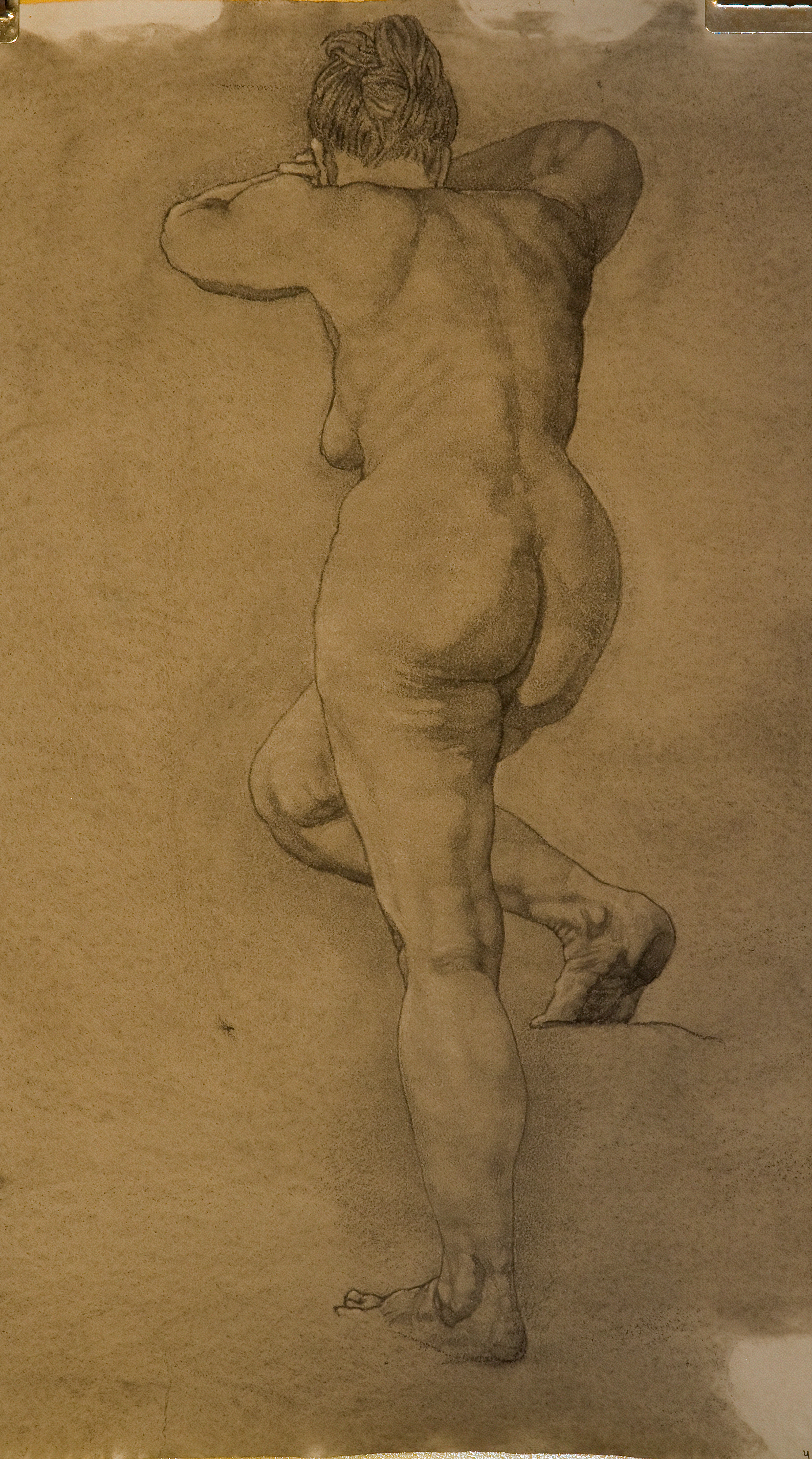
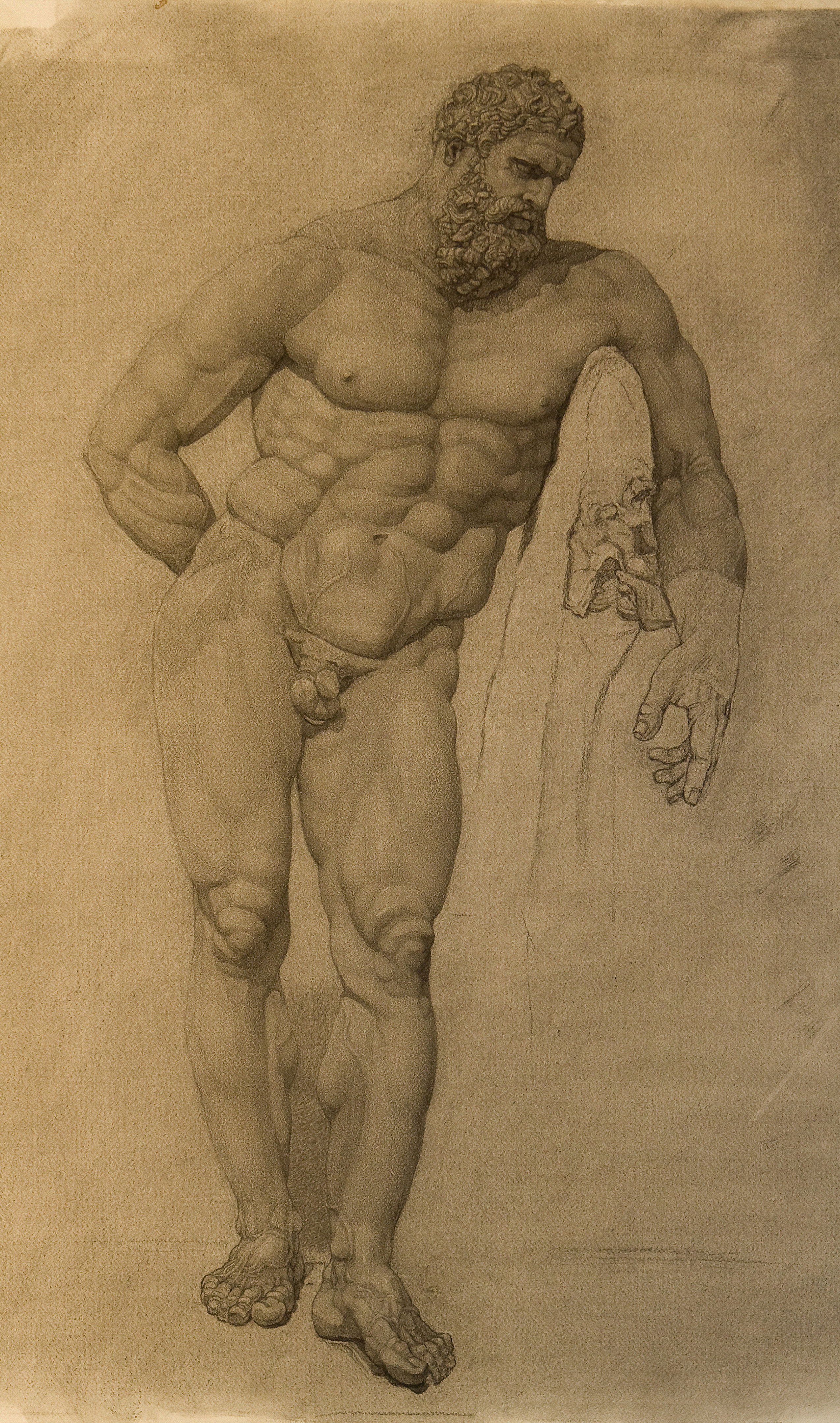
_____________________________________________________________________________________
DRAWING COURSE – FIGURE & PORTRAIT MODEL / LIFE MODEL / ANTIQUE SCULPTURE / PLASTER CAST / ANATOMICAL MODELS / SKELETONS COURSE
(detailed description)
This course will be taught in two parts, each part consisting of 24, five-hour sessions (daytime), or four-hour sessions (evening time) over a twelve-week duration The same pose, and intended Life Model, or Antique, or Modern Sculpture Plaster Figure / Portrait Bust, or Anatomical Model utilized each class session, to several class sessions through the 24 each 12 week parts meetings. Students will focus on bone landmarks and major muscle groups while working to capture the action of the pose and characteristics of the model. Overall forms will be blocked in through observation of shapes, rhythms and interconnecting commensurate planes, leading to a simplified yet integrated drawing defining sculptural content, and sketch composition. This course will establish how to draw a person from a shape orientation method, as opposed to copying shadows, and light, which is not a dependable factor in representing content. Optional free-workshop class session 5 hours day, and 4 hours evening each week without instruction included.
Cost for the course:
Cost for the course:
$ 2,136.00 for each 12 week segment consisting of 24 classes, twice a week class schedule, other options available for once-a-week class schedule, and private individual classes – Day.
or
$ 2,136.00 for each 12 week segment consisting of 24 classes, twice a week class schedule, other options available for once-a-week class schedule, and private individual classes – Eve.
Students of painting and drawing, as well as those of sculpture, will benefit from these courses. Through the study of anatomy, running rhythms, natural geometric shape type, shape projection (seeing three-dimensionally from a single point of view), commensurate planes, balance, symmetry and asymmetry, the students will come to better understand the actual shapes of the bust or figure and to perceive the interrelationships which cause the figure or portrait to seem capable of function and movement. The instructor will point out specific shape types in the model and demonstrate how every large shape is reflected in each smaller part of the head or figure. Structural anatomy and the balance of weight and mass will be studied in depth. An understanding of the large masses as a base for smaller details will be strongly emphasized and, subsequently, the bust or figure will seem more natural and clearly ordered. Shadows will be used as a tool to reveal shape instead of hiding it. As a result of the course, students will become less likely to do work which appears oversimplified, disjointed or appear cartoon-like. Individual styles may be achieved later by choice rather than by mistake.
Students will also have visual access to a unique and extensive collection of anatomical models, anatomical figures and complete male and female European Skeletons. Sculpture Armature will be built in a class previous to the first weeks class with the model. A complete supply list is available for the Sculpture Armature and Sculpture Tools for enrolled students. Classes are limited to 10 students.
__________________________________________________________________________________
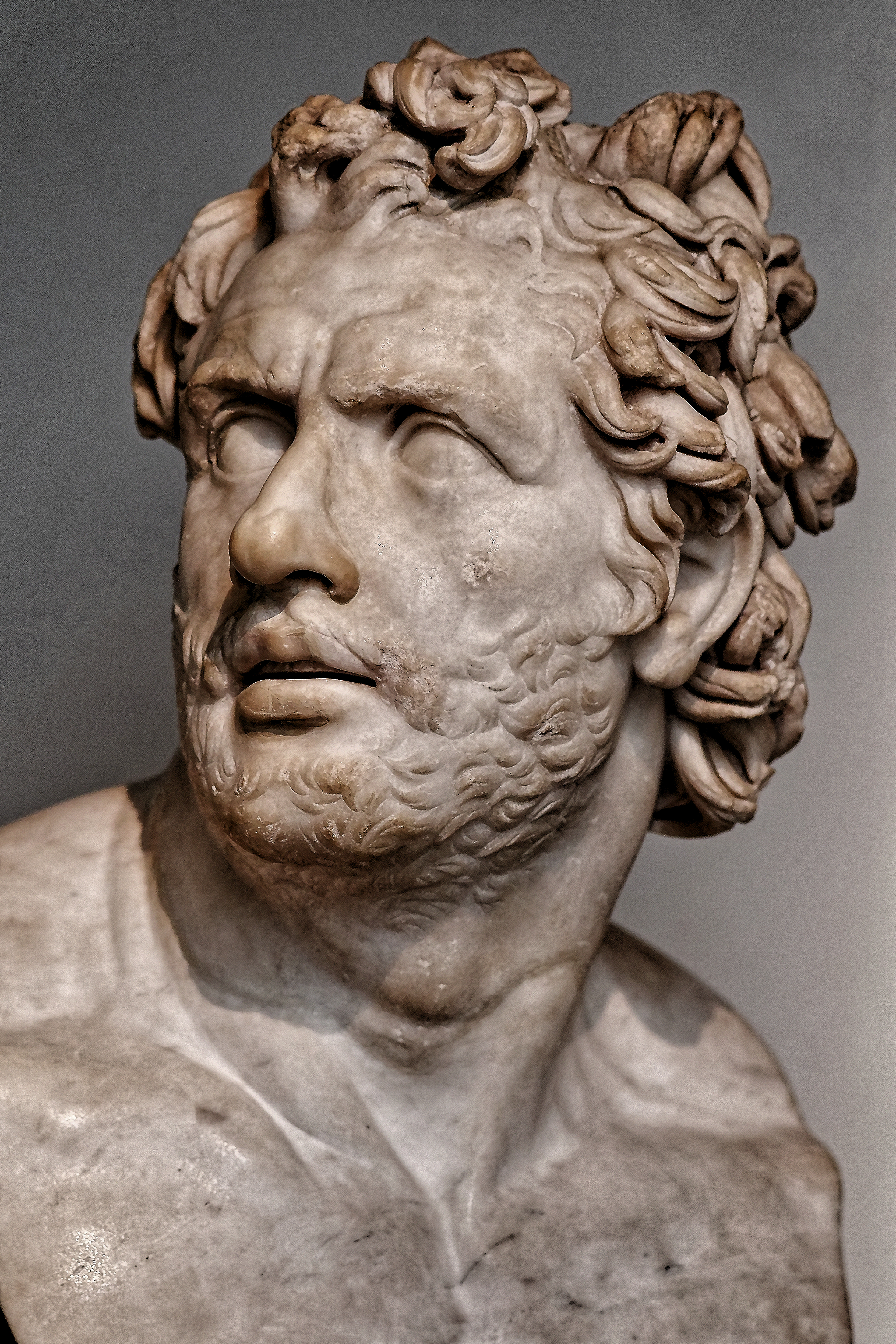


Sperlonga Museum, Polyphemus Group, Blinding of Polyphemus the cyclops (one-eyed giant) by Odysseus and his men, Cyclops hand, Greco-Roman copy of an Hellenistic sculpture. Excavated in Sperlonga nearby grotto – villa of the Emperor Tiberius, the Rhodian sculptors: “Athenodoros, son of Agesander”, “Agesandros, son of Paionios” (Paionios is a rare name) and “Polydoros, son of Polydoros” signed on the sculpture base of this and one of the other groups found the “Scylla group”.
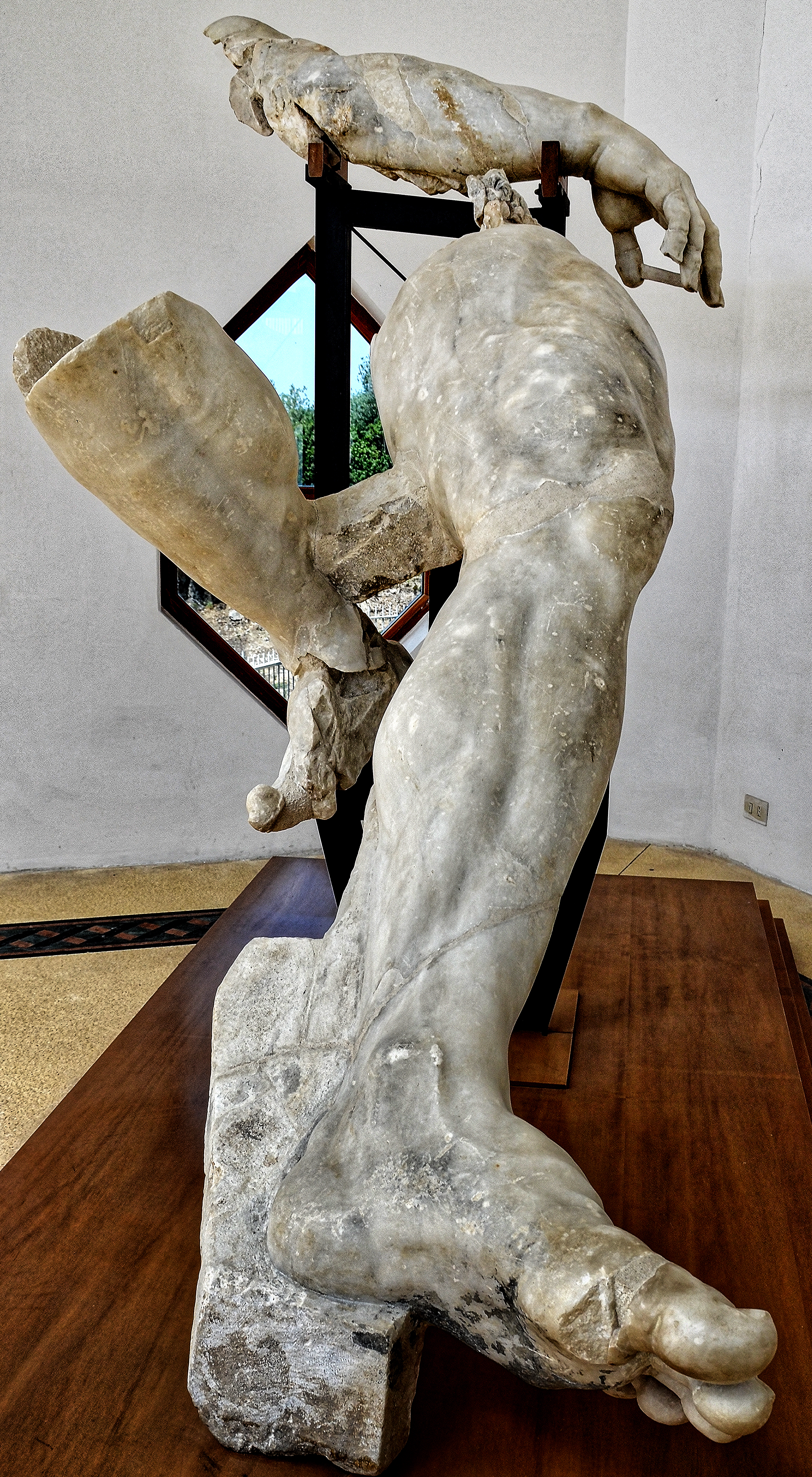
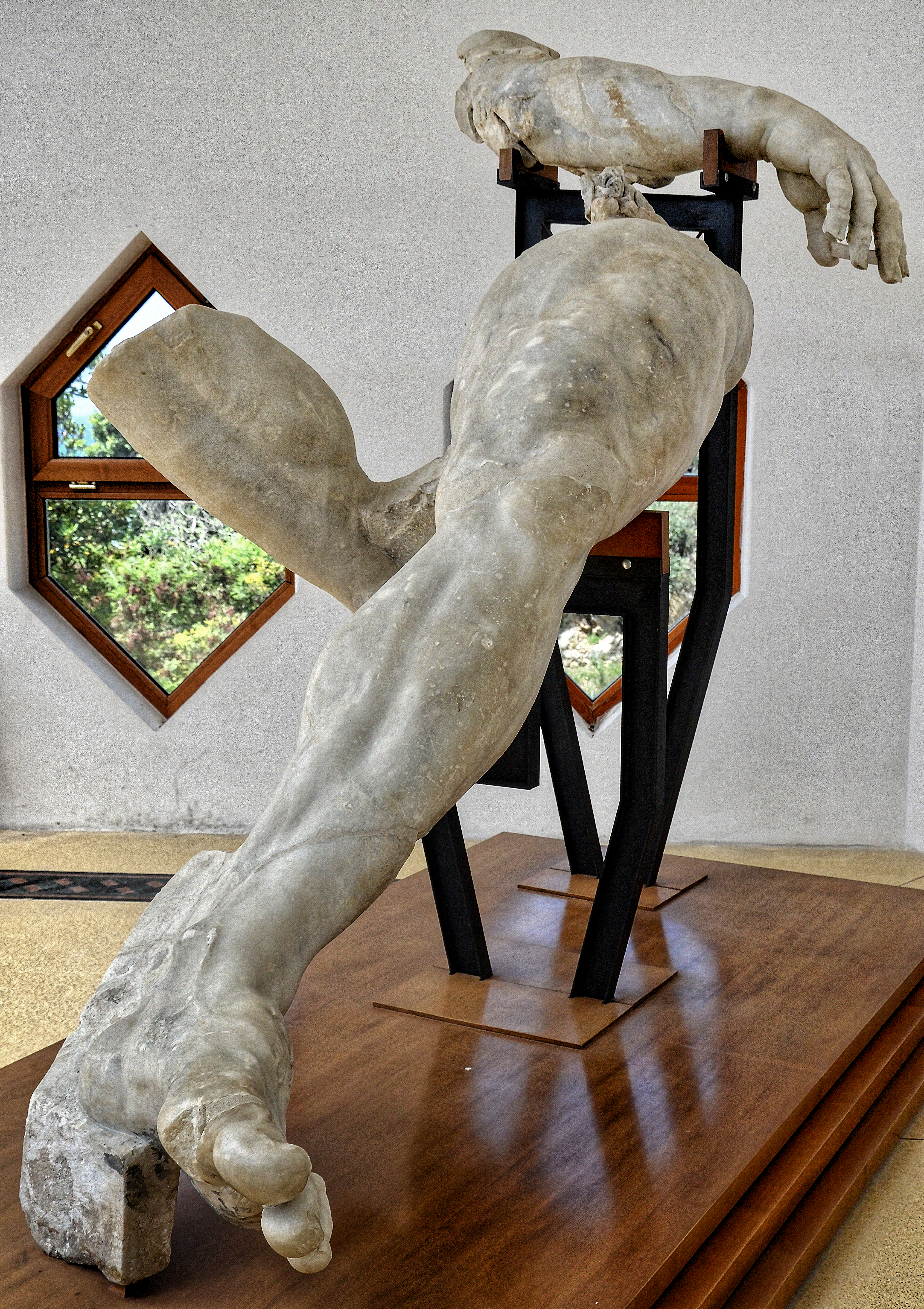

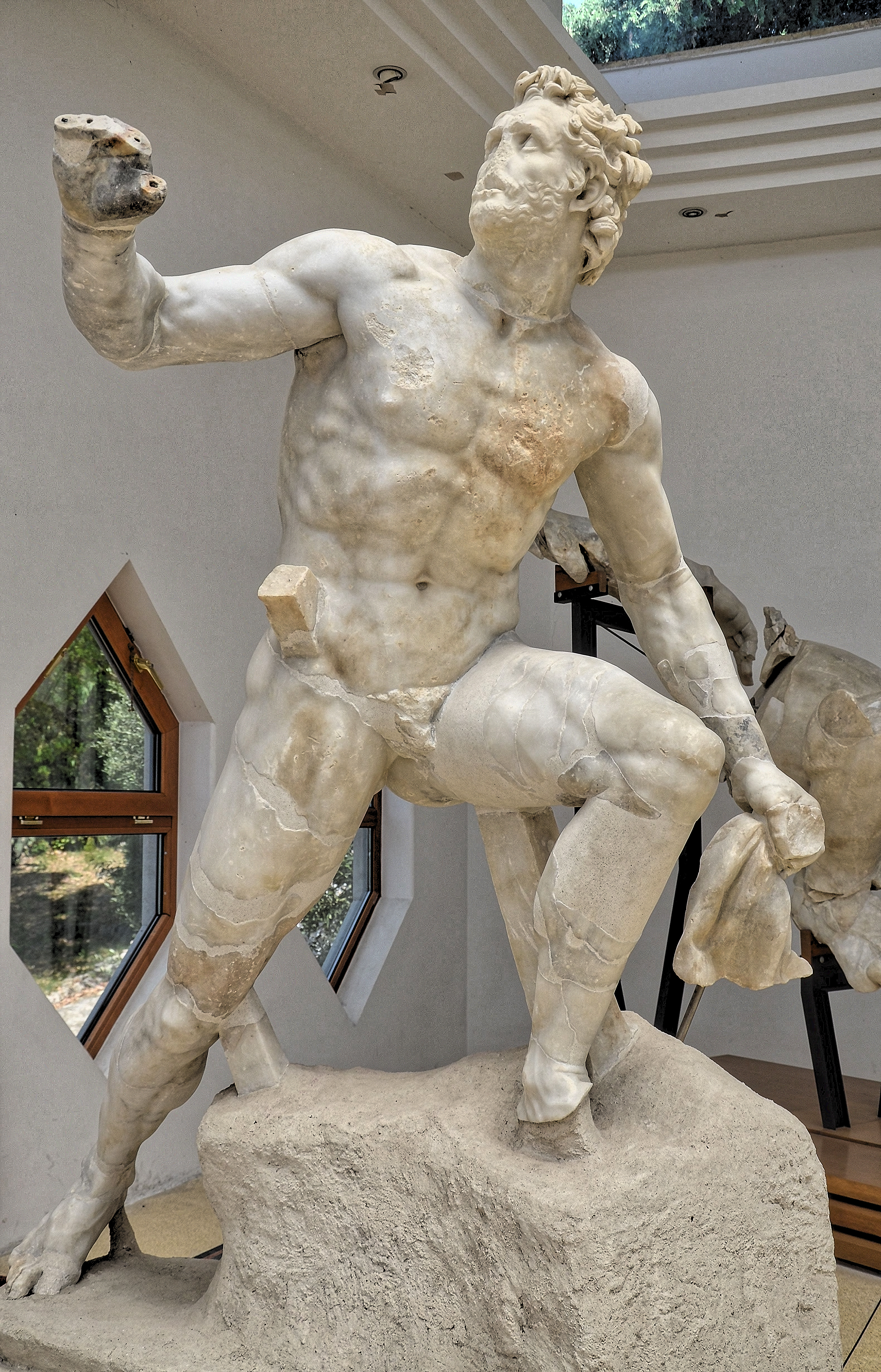
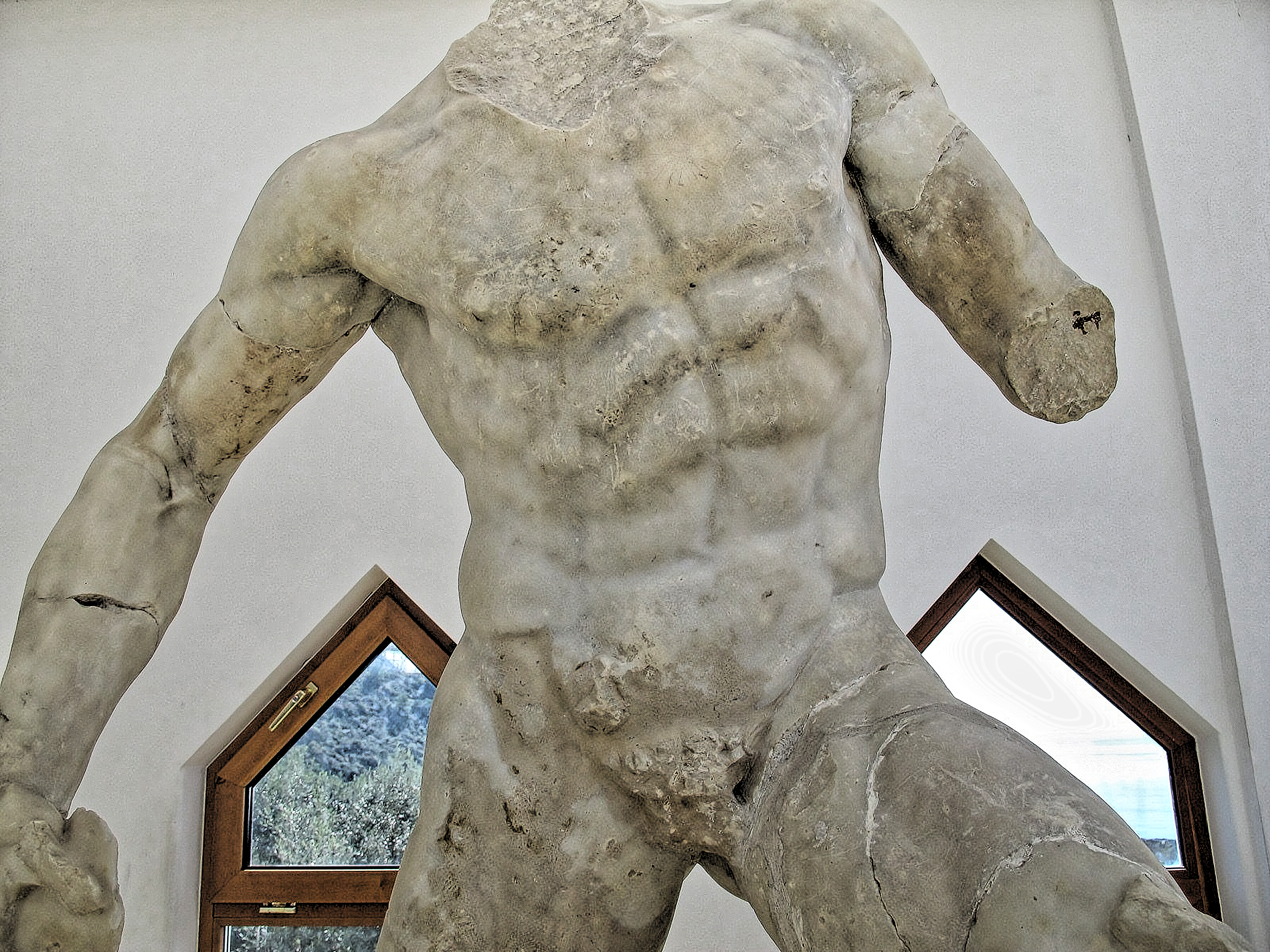
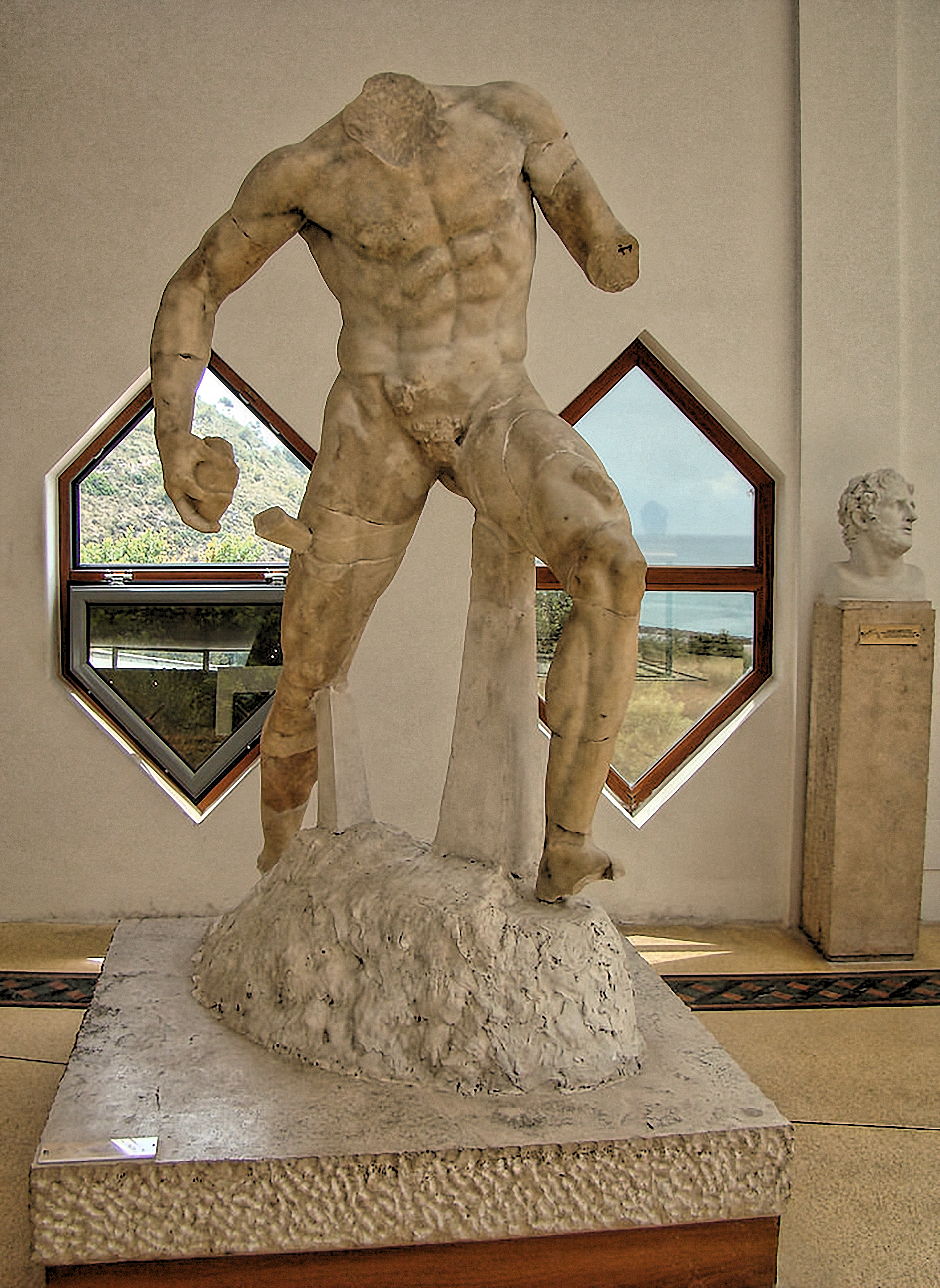

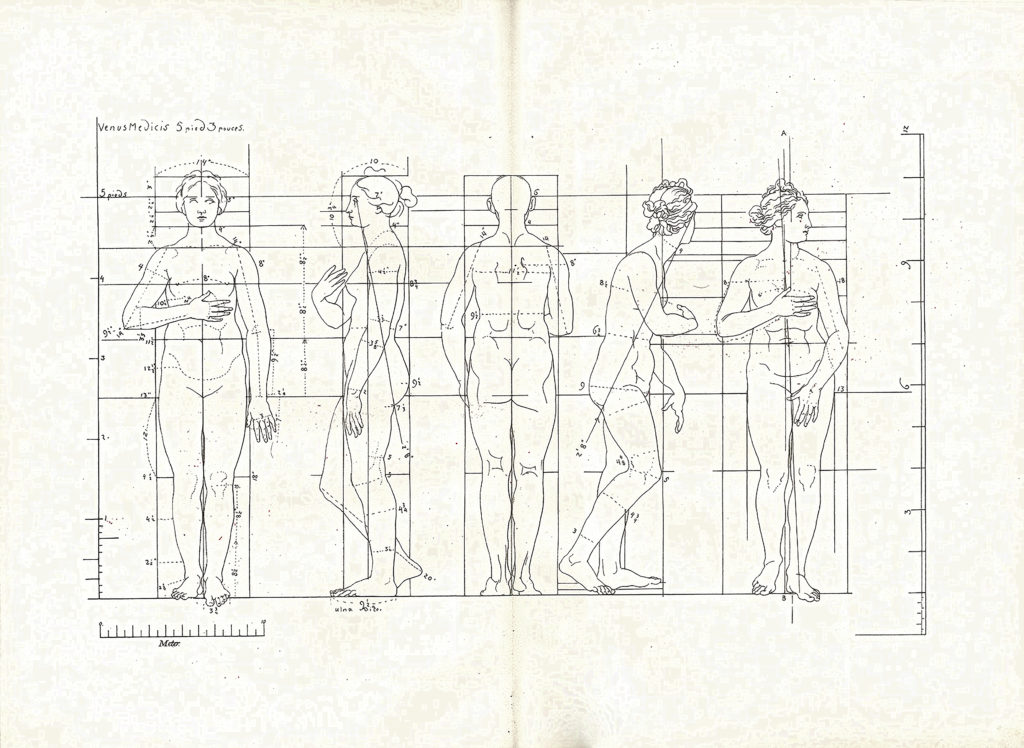

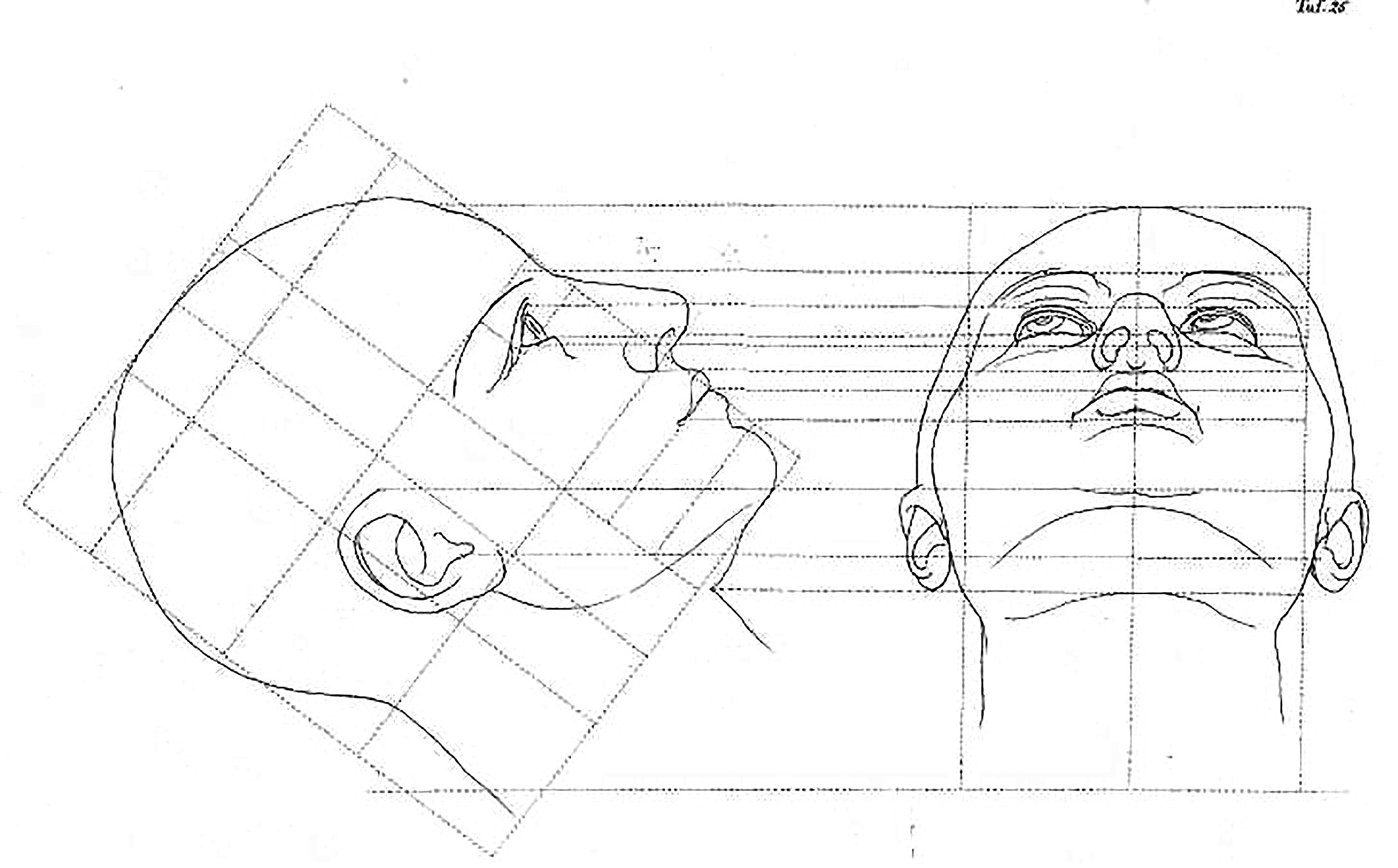
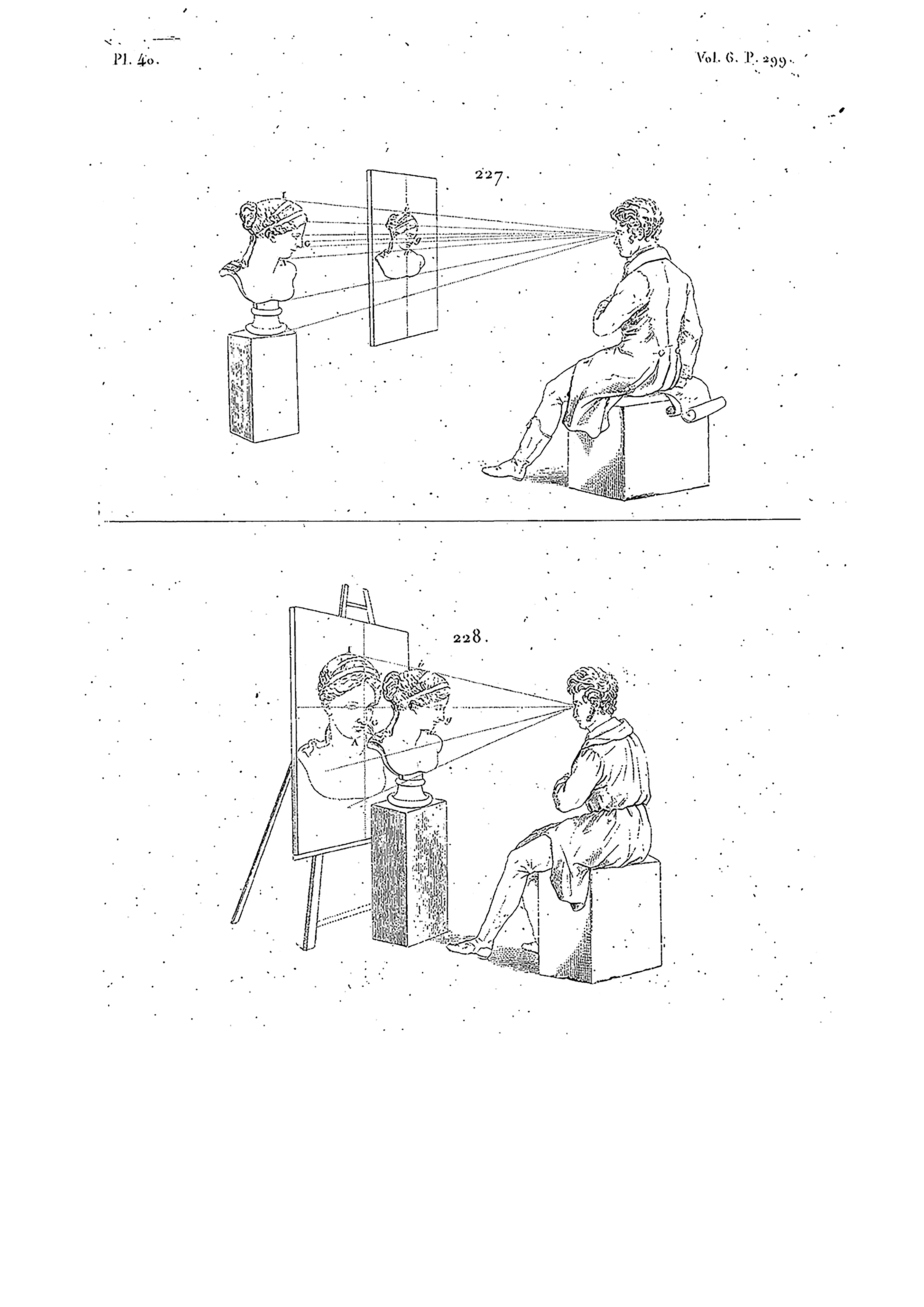
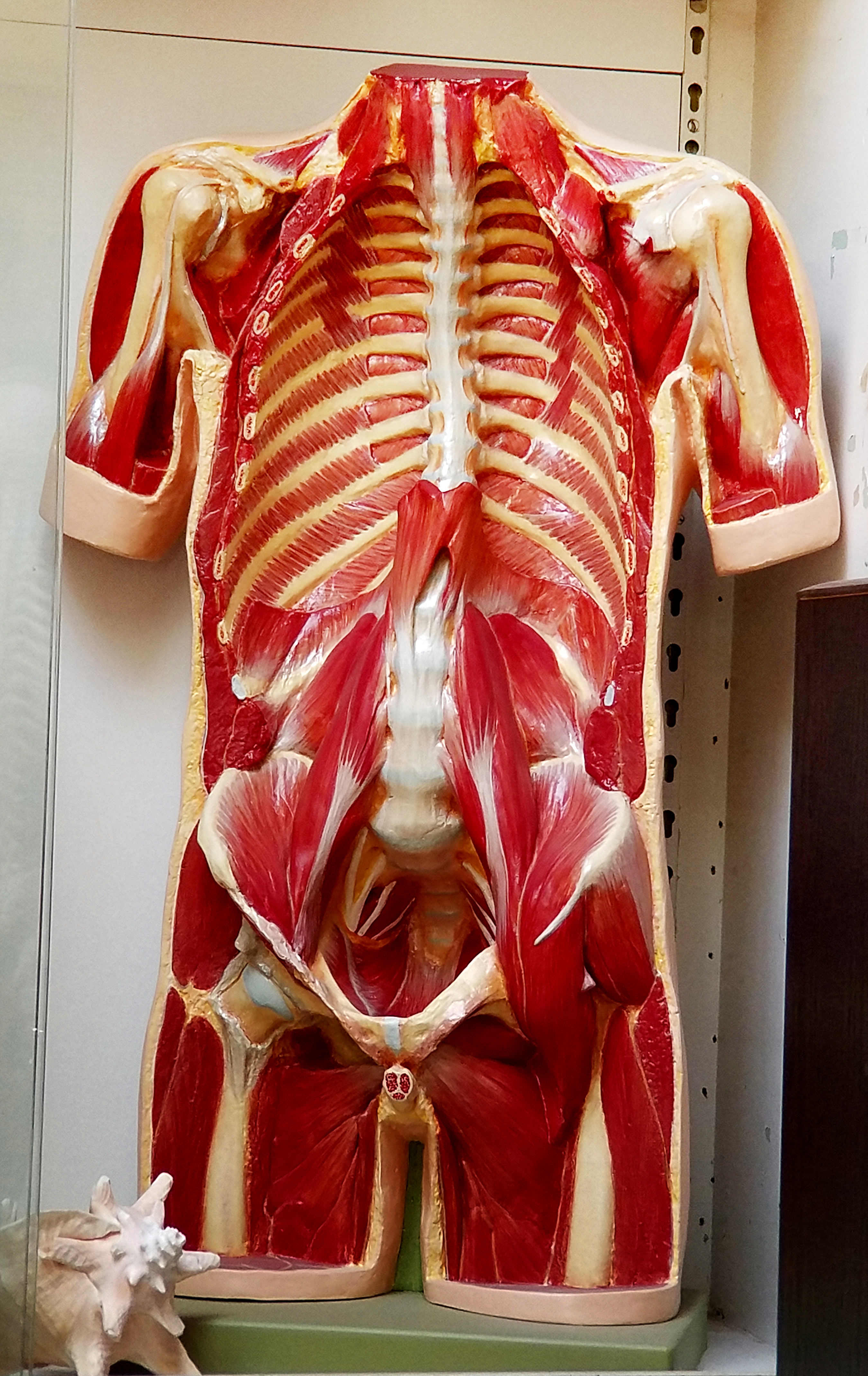
This is a drawing exercise specific to plaster cast drawing after Greek and Greco-Roman sculpture. The detail quality transfer of the plaster casts must be of exceptional quality to display the subtle complex shape inherent from the original Antique sculpture. The Antique sculpture plaster cast placed as a stationary position certainly complicates proper implementation for drawing, and sculpture, especially when placed near or against a wall or other hindrance. With a drawing – proceeding with varied viewpoint vantages - two feet above, below, either side view in multiple positions with the drawing on an easel actually drawing from these divergent views is a more useful manner of study. Then back to mid view five feet, eight feet, then primary view twelve feet, fifteen feet correcting for perspective and foreshortening from primary position. An extended time drawing with easel placement from contradictory positions, as well as a multitude of thirty-degree angles across the surface allow discernment of complex shape. Learning to discover and implement complex shape and produce its attributes is the benefit in this type of exercise. Constantly correcting to main view vantage position at the intended original distance view maintains context. The drawing process should correct tonalities describing form only secondarily light. Most of the descriptive tones described within the drawing should be mid tones, not excessive shadows, and not implementing white highlights from a colored tone. Shadows areas should also describe within the shadow equal complex shape to the mid-tones. Constantly correcting initial view position with actual proportions of the cast subject, utilizing caliper measurements also would assist construction of proportions with foreshortening, incorporating the foreshortening as proper to initial placement. As carried out in such a manner - the results are likely incorrect for the student attempt- but it's a good structure of study. Thus, hundreds of times over are required to reach any semblance of accomplishment. The procedure requires proceeding with different drawings of the same subject. Many years of drawing in like manner from other Antique sculpture plaster casts - as an exercise of many tens of hours-long duration each drawing are required for eventual further success. Knowledgeable critiques erasing, wiping out with a chamee, or striking through with the drawing material any improper progress on the students drawing - constantly with informative corrections in a rather harsh overview - not a weak hand holding compromise. This would eventually build a dispassionate objective analysis, concentration and discipline improves future student self-critiques. This type of training is the difference between "Royal State" academy instruction in past history pre-1800, and contemporary business-oriented modernist instruction attracting a low-level instruction but financially fruitful student body, or successful Industrial, or State propaganda training. The student in pre-1800 training was in a demanding training system with excellent facilities such as exquisite plaster casts in the multiple of thousands of plaster casts from Antique. The institutions, atelier, College of Art, remaining Academies of Art, etc. would go out of business in such a system now. Unfortunately the few instances of plaster cast collections available to art students and teachers within art schools in surviving examples are of meager quality, with almost all prior collections destroyed by the earlier modernists. In any attempt to return to Classical study the return of top quality plater cast collections amounting to multiple thousands in number - relief, decorative, figure, and portrait are of primary importance exceeding any value beyond professors, beyond the employment pay of bureaucracy and administrators. In 1989 the cost of the mold and plaster cast produced of the Farnese Hercules in the Naples National Archaeology Museum for the archaeology department in Munich was around $850,000.00 if my memory is accurate on the price.
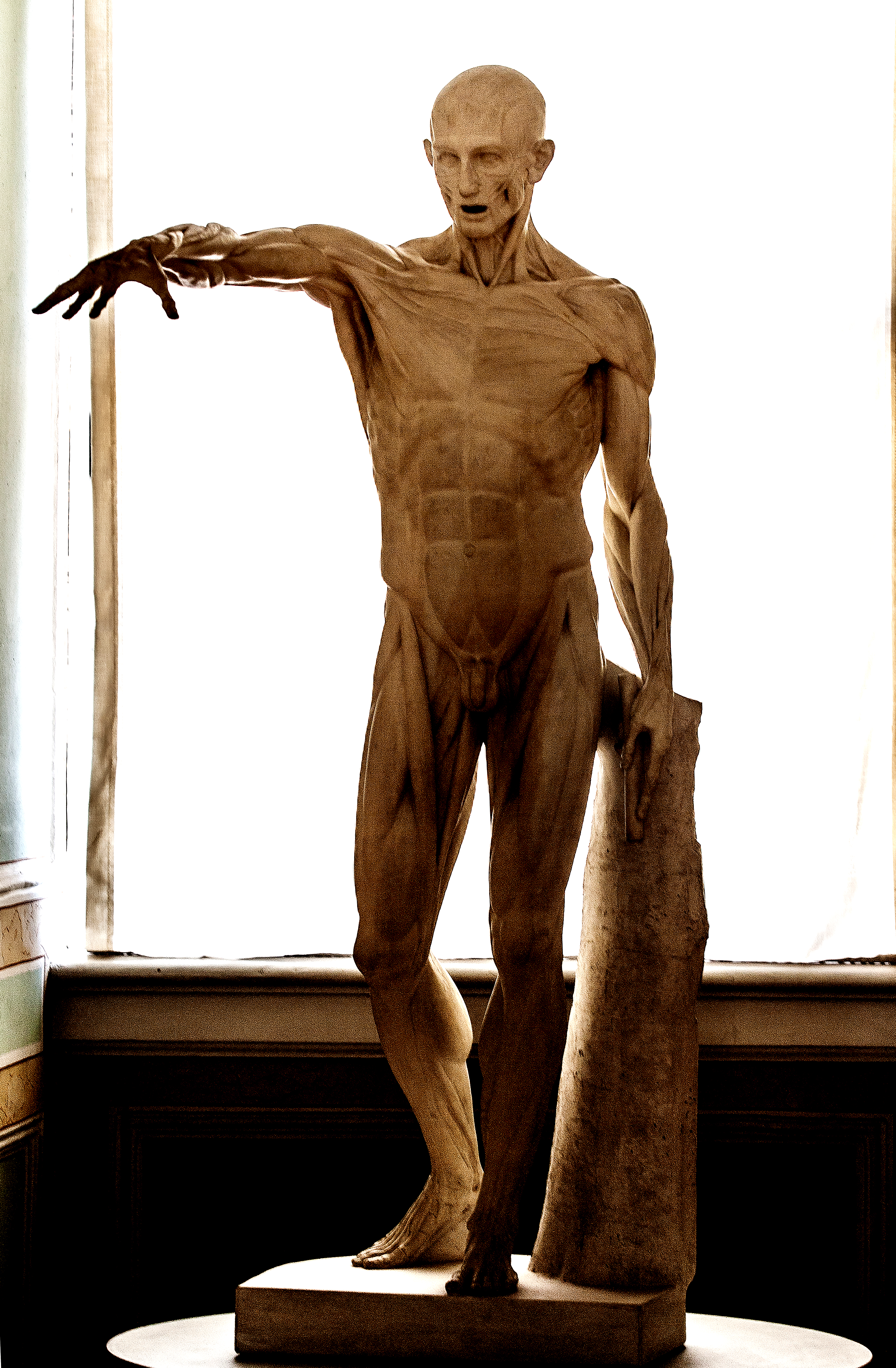
Excerpts from Jean-Antoine Houdon:
Sculptor of the Enlightenment By Anne L. Poulet
Jean-Antoine: “Houdon (1741-1828) is considered one of the most important French sculptors of 18th-century classical period. His artistic potential was discovered early, especially at the Thuringian courtyards. Today, Gotha owns the world’s largest collection of works by Houdon besides Paris, and also Weimar, Rudolstadt and Altenburg shine with authentic works of the master. Ernest II, Duke of Saxe-Gotha-Altenburg (Gotha, 30 January 1745 – Gotha, 20 April 1804) was the reigning Duke of Saxe-Gotha-Altenburg from 1772 to 1804. He was the third but second surviving son of Frederick III, Duke of Saxe-Gotha-Altenburg and Luise Dorothea of Saxe-Meiningen. Gotha, despite its size, was thought of as a place that important people of the time should visit. One such person was Goethe, who visited several times. From 1774 he was a Freemason in the Zinnendorf system and a member of the Gotha Lodge Zum Rautenkranz, which had been founded by Abel Seyler, Konrad Ekhof and other members of the Seyler Theatre Company in the same year. In 1775, he was appointed Grand Master of the Landesloge of Germany (Zinnendorf system). In 1783, he became a member of the Bavarian Illuminati under the name of Quintus Severus and/or Timoleon, and in 1784, he was made Supervisor of Abessinien (a name for Upper Saxony). In 1787, he granted Adam Weishaupt, the founder of the secret society, asylum in Gotha. He was buried wrapped in a white cloth on the park island. “Most of the approximately seventy extant works by Houdon in Germany were acquired in the eighteenth century by German noble families, a historical link still reflected in the locations of the main collections in Gotha, Schwerin, Berlin (with Potsdam and Rheinsberg), and Weimar. The small principality of the court of Saxe-Gotha-Altenburg, (Thüringen) became Houdon’s first major patron at a time when the gifted sculptor was just beginning his career in Paris after his student years in Rome. Although Houdon’s two visits to Gotha, in the early 1770s were his only trips to Germany, his oeuvre and his reputation drew Germans as clients throughout his life. Central to almost all of Houdon’s German commissions was the expatriate Frédéric-Melchior Grimm (1723-1807), a prominent figure of the Paris Enlightenment who served as advisor and cultural attaché to several members of the German nobility. A native of the imperial city of Regensburg, he had settled in the French capital in 1749 and became a close friend of the influential critic Denis Diderot and his collaborator on the Encyclopédie. With the publication of the Correspondence littéraire, a semiprivate cultural newsletter distributed in manuscript form to an exclusive circle of ruling foreign families, Grimm had a compelling tool to gain favor of the powerful and to shape their opinions. His subscribers included King Frederick II and his brother Prince Henry of Prussia, Duchess Louise Dorothea of Saxe-Gotha and her son Duke Ernst II, Duke Carl August of Saxe-Weimar, and Margrave Alexander of Ansbach, in addition to the courts of Russia, Sweden, and Poland. Credited by Diderot and Grimm’s long-standing confidante, Mme d’Epinay (1726-1783), the Correspondence littéraire was a valuable means of communication between the French philosophers and the European authorities, with the implicit intent to aid the political realization of Enlightenment ideas by educating its influential readership. On a more concrete level the newsletter was an excellent source of uncensored information on Parisian intellectual life. It also helped promote select authors, composers, or artists, which often resulted in the increased acquisition of the works reviewed. By the mid-1770s Grimm withdrew from his activities as a literary critic in favor of working directly for those in power. He received official appointments as minister plenipotentiary (Geheimer Rat) for the duke of Saxe-Gotha in 1775 and councillor of state for Catherine II of Russia in 1777. Until his final departure from Paris in 1792, his responsibilities ranged from important diplomatic missions to art transactions to escorting foreign visitors through Paris. Both Grimm and Diderot were already on very friendly terms with Houdon by 1772, when they are recorded as casually stopping by his house. Houdon And Gotha From his early days in Paris, Grimm was attached to the court of Saxe-Gotha, which in spite of its limited financial resources had acquired a taste for French splendor and joie de vivre. Duchess Louise Dorothea (1710-1767), the highly cultivated wife of Duke Friederich III (1699-1772), was one of the first subscribers to Grimm’s Correspondence littéraire and played a key role in bringing the Enlightenment to Gotha. Her son Ernst Ludwig (1745-1804), who reigned as Ernst II, focused on the arts and sciences and while economically prudent, added considerably to the ducal collections in Schloss Friedenstein. Apparently, as part of an ambitious plan to turn Gotha into a major center of Enlightenment activities in Germany, he initiated the foundation of an art academy at his court and established a collection of plaster casts for educational purposes. In 1771, thanks to Grimm’s intervention, Houdon was engaged to take over the design and execution of a funerary monument for the late duchess of Saxe-Gotha, a project that had already been in the works for several years. Houdon traveled to Gotha twice – from 25 October to 3 December 1771 and again, after the dukes death, from 2 May to 15 June 1773, when the plans for the mausoleum were changed to commemorate both husband and wife. During his first visit Houdon not only studied the location for the projected tomb but also rendered the portraits of several members of the ducal Family and befriended Ernst Ludwig and his spouse, Charlotte Amalie of Saxe-Meiningen. In anticipation of his cultural plans for Gotha, the hereditary prince spontaneously decided to send his protégé Friederich Wilhelm Doell (1750-1816), a former model maker for porcelain figures, to Paris with Houdon to be trained as a sculptor in Houdon’s studio. In July 1772, following Ernst’s ascension to the throne, Houdon mailed an assortment of sixteen of his early works in plaster to Gotha, including the figures of the Saint Bruno and the Priest of the Lupercalia (cats. 4 and 5) as well as copies after the antique, drawings, and medals, all of which were intended to be study objects in the duke’s planned art academy. The shipment was accompanied by a recently discovered letter, in which the sculptor gives a detailed account of the pieces in the crates, explains or defends some of his compositions, and articulates his opinions, granting insight into his beliefs both as an artist and as a person. Despite his dismissal from the ill-fated tomb project in 1775 and the court’s failure to keep the marble statue of Diana the Huntress (see cat. 35), Houdon continued his cordial relationship with the ducal family for decades and was highly respected for his skills as a portraitist. Over the years the plaster version of the Diana the Huntress and several representative portraits were acquired, including busts of Voltaire, Diderot, Jean-Jacques Rousseau, Benjamin Franklin, and Jean-Sylvain Bailly (see cat. 33) Originally displayed in the halls of Schloss Friedenstein or incorporated directly into the collection of plaster casts that from 1786 onward was overseen by Houdon’s former student Doell, most of these sculptures have been preserved until today, forming the largest collection of works by Houdon outside of France.” – excerpts from Jean-Antoine Houdon: Sculptor of the Enlightenment By Anne L. Poulet
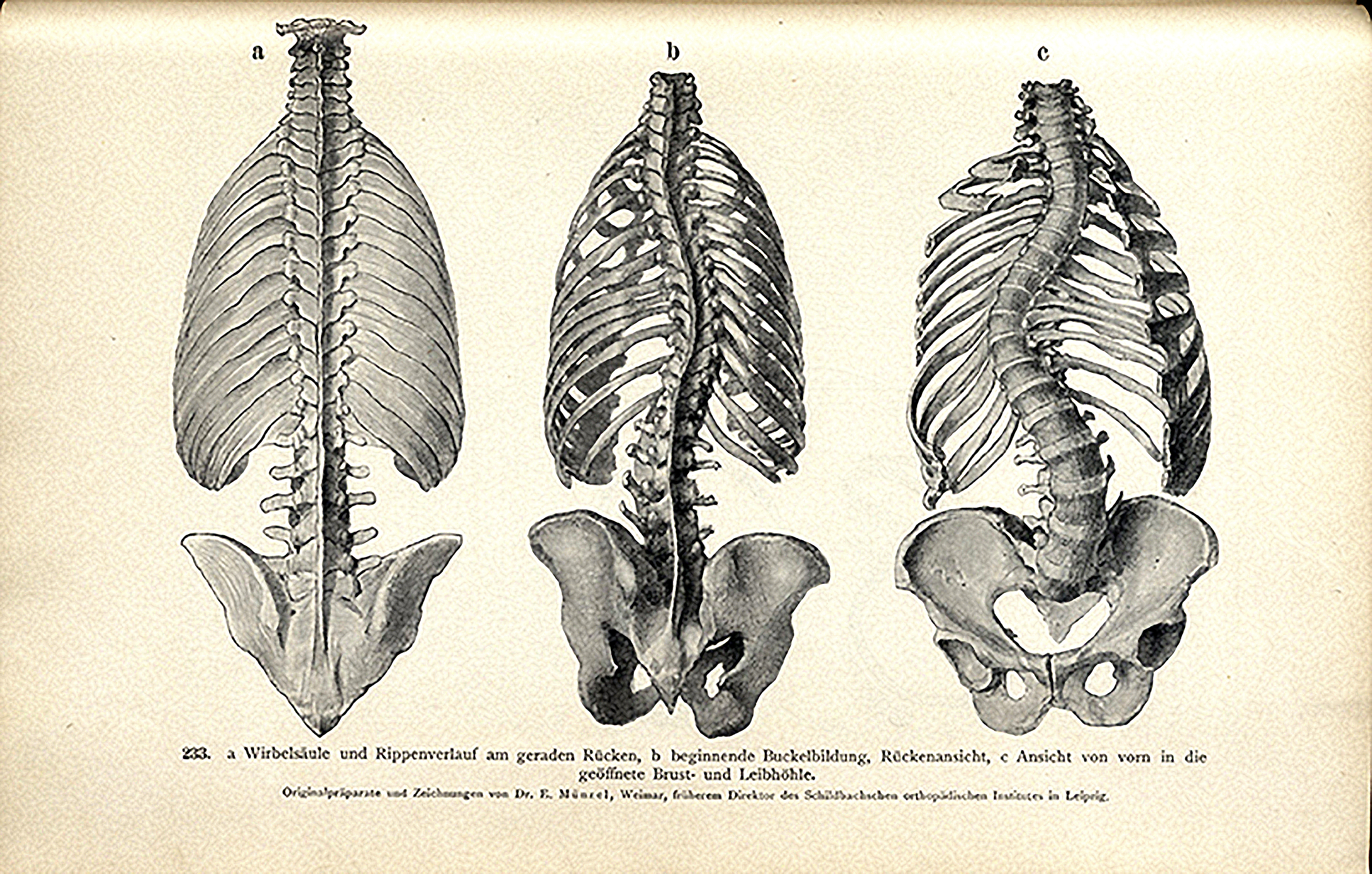
Ludwig Pfeiffer – Handbuch der Angewandten Anatomie 1899
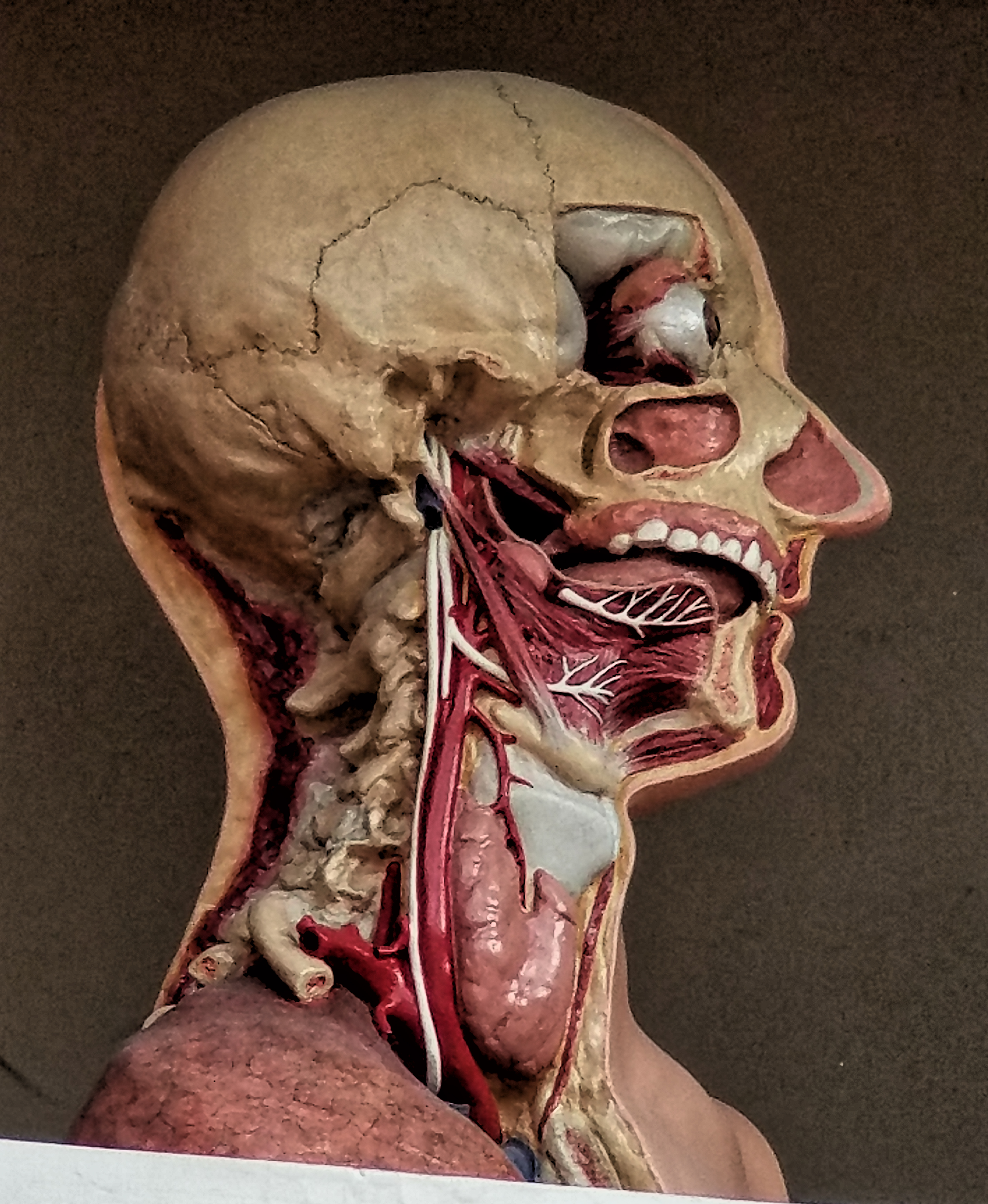
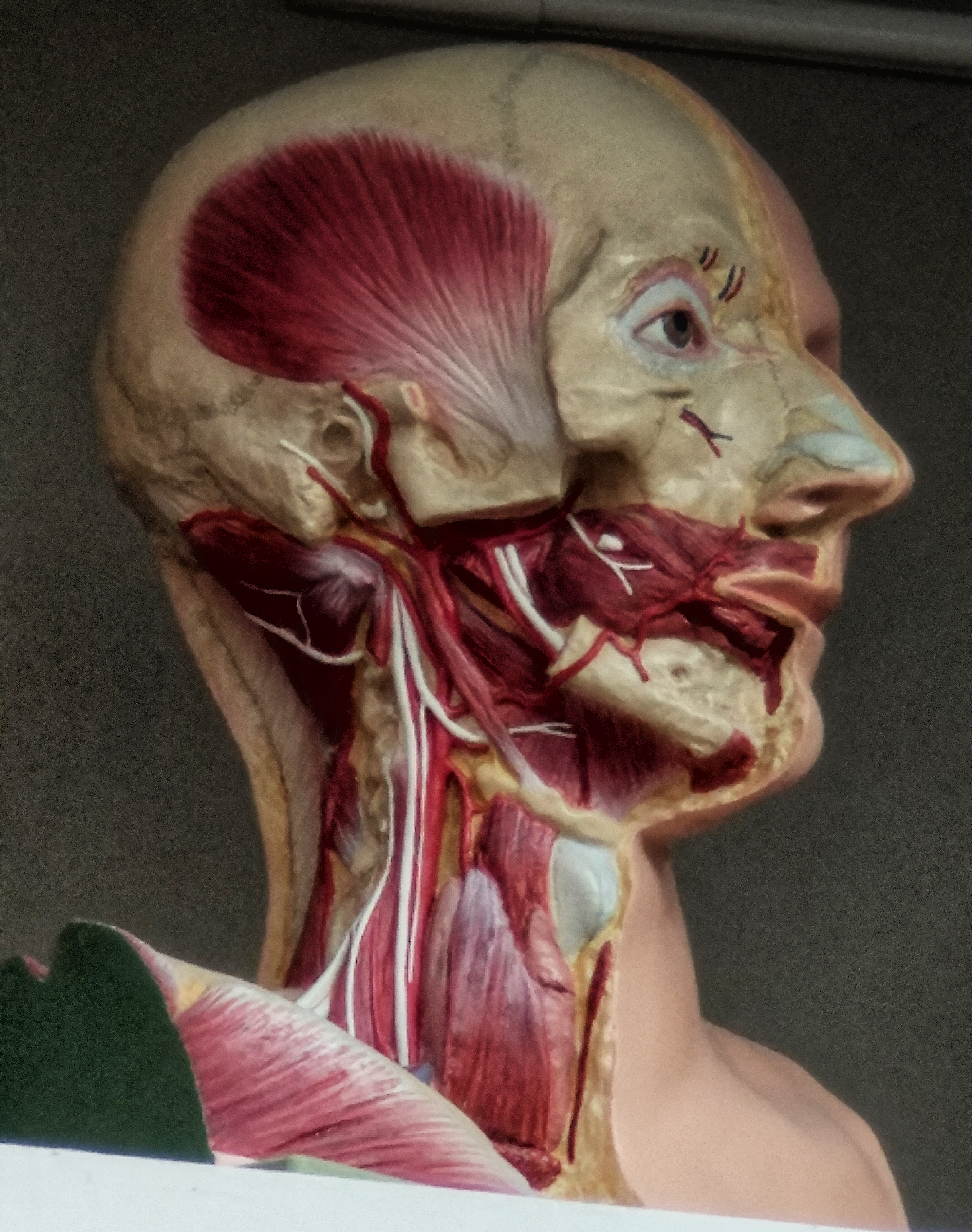

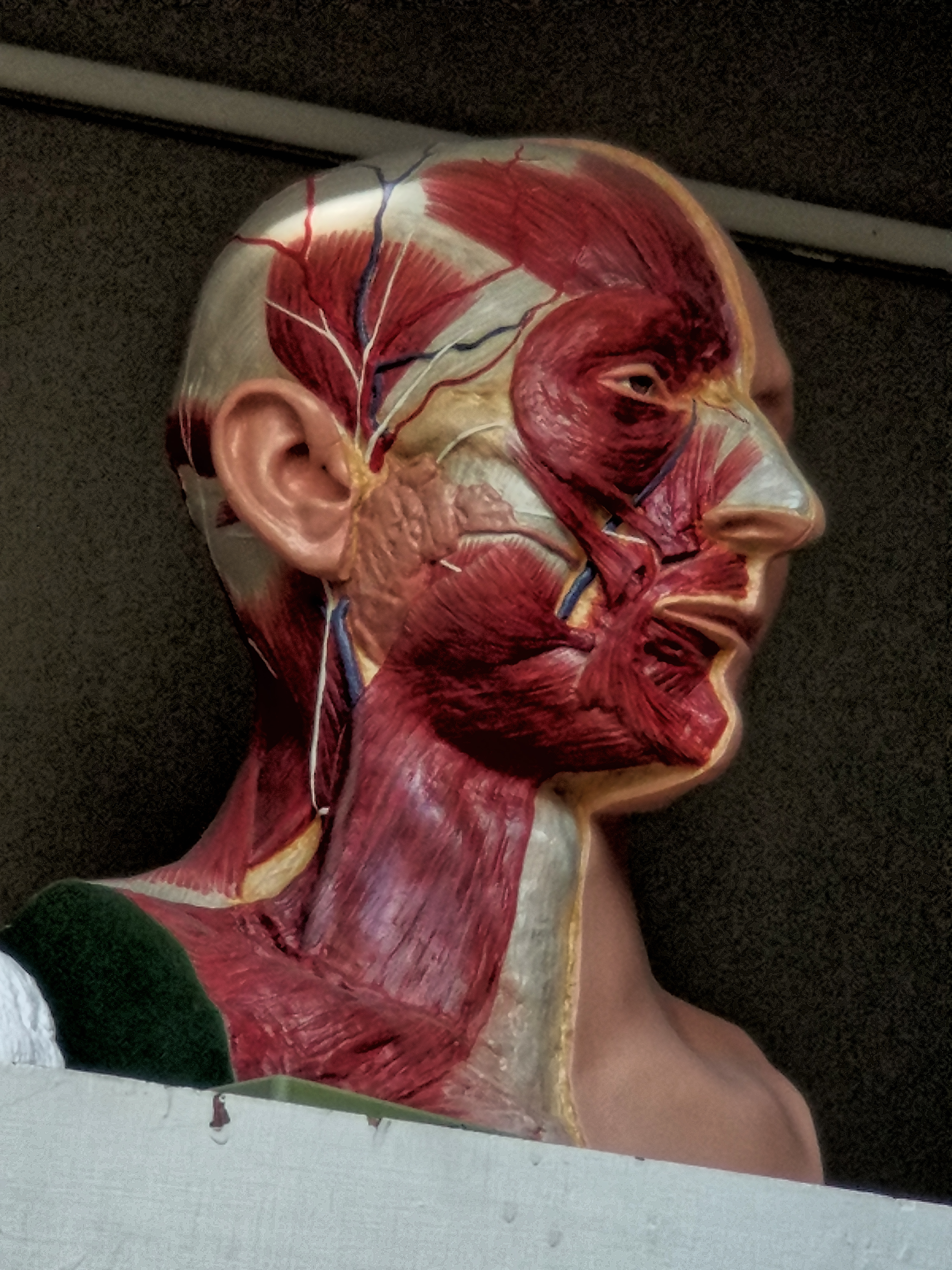
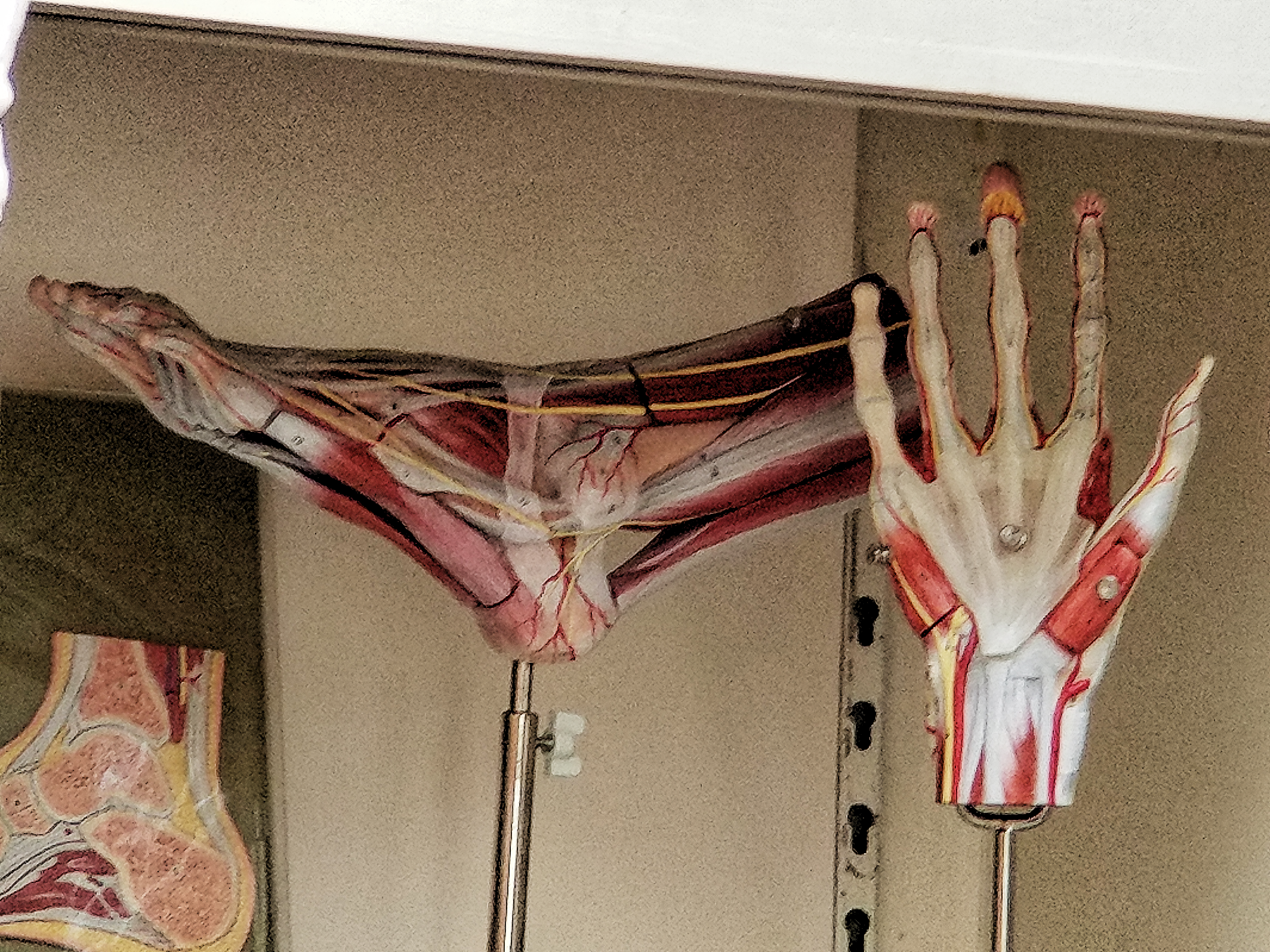
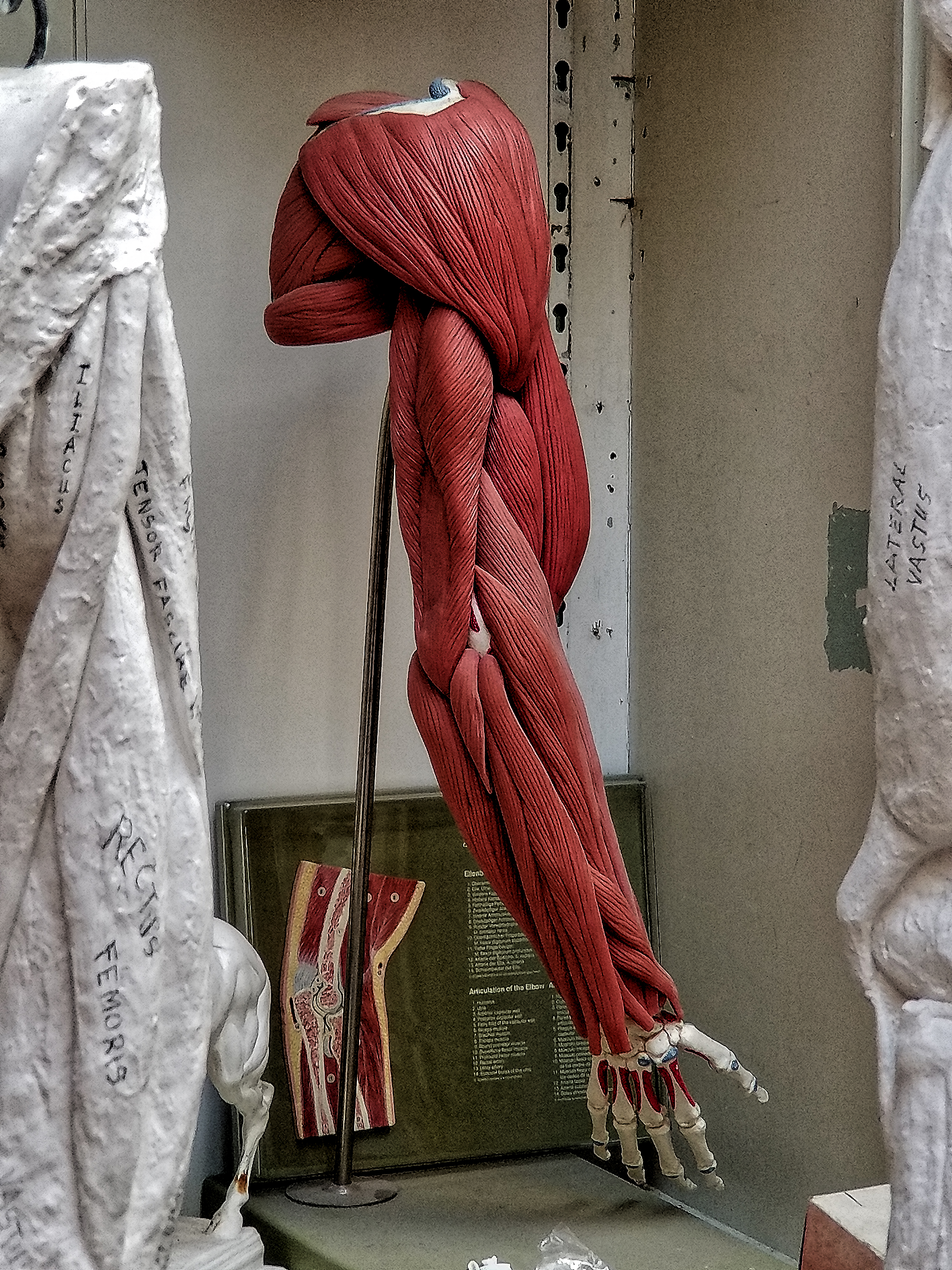
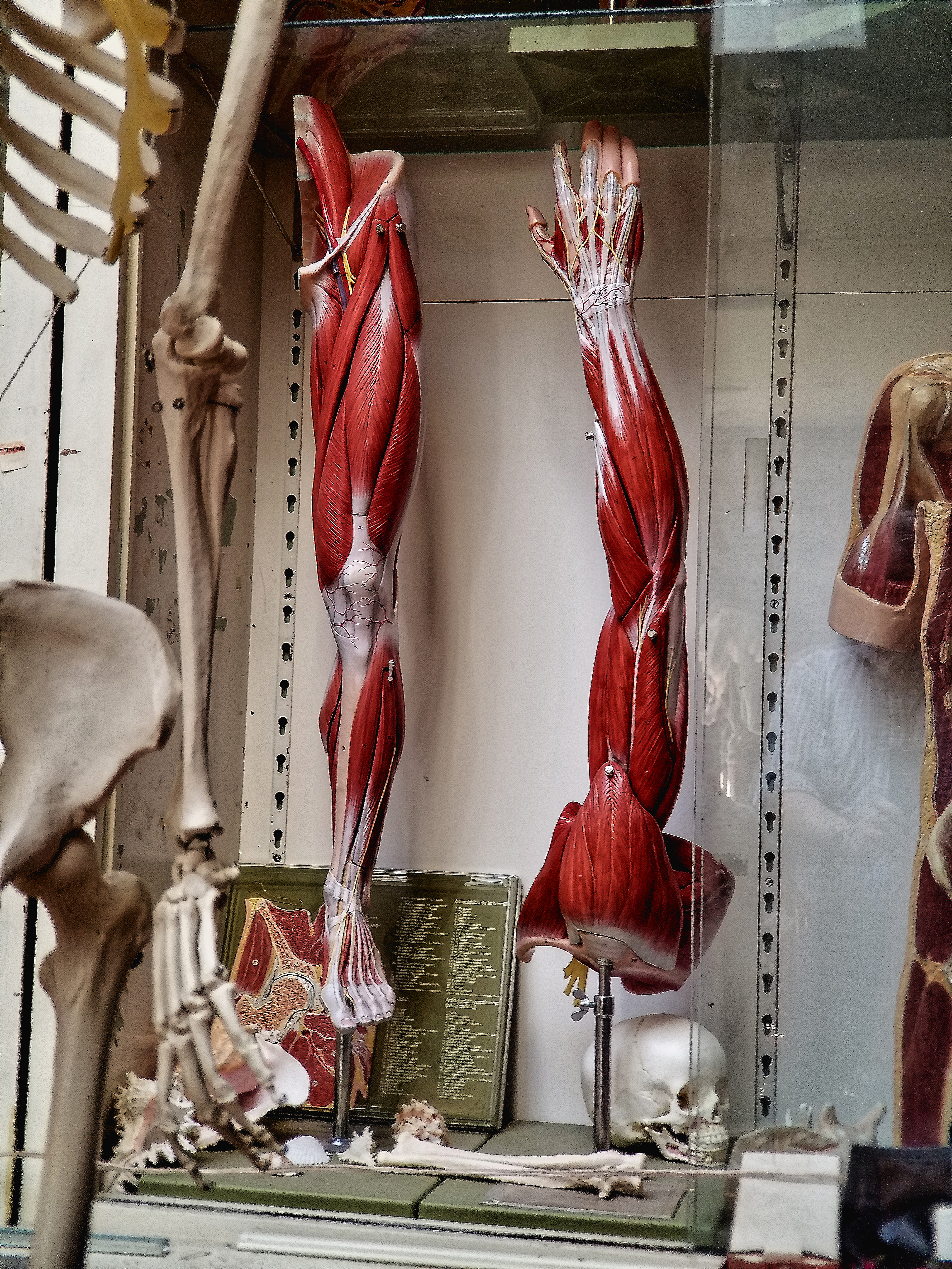

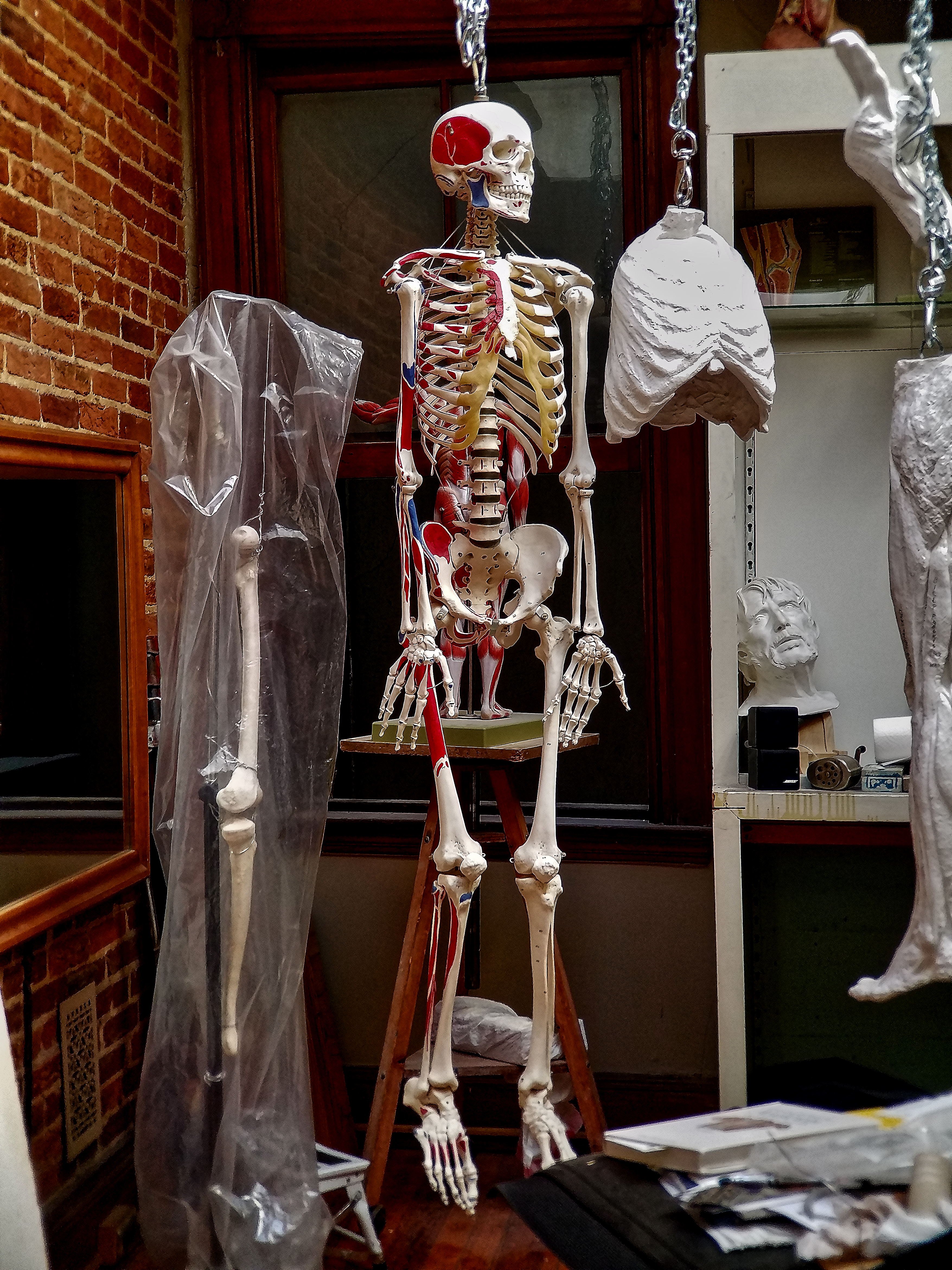

Gerard de Laraisse – Bidloo Ontleding 1690_27
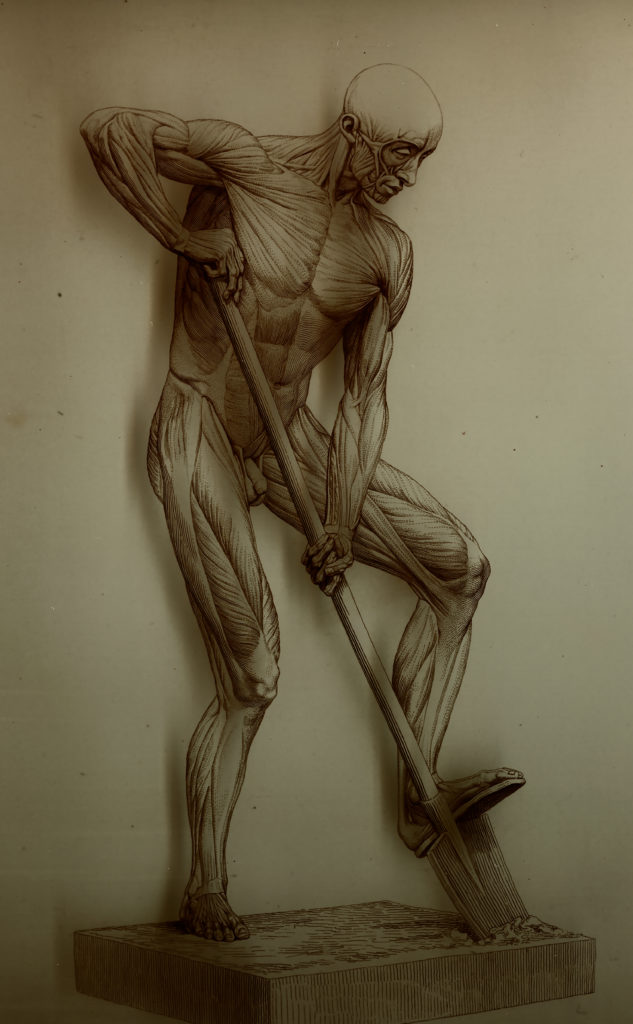
Ecorche La Specola, Florence – the source of Anatomical Drawings by Alphonse Lami
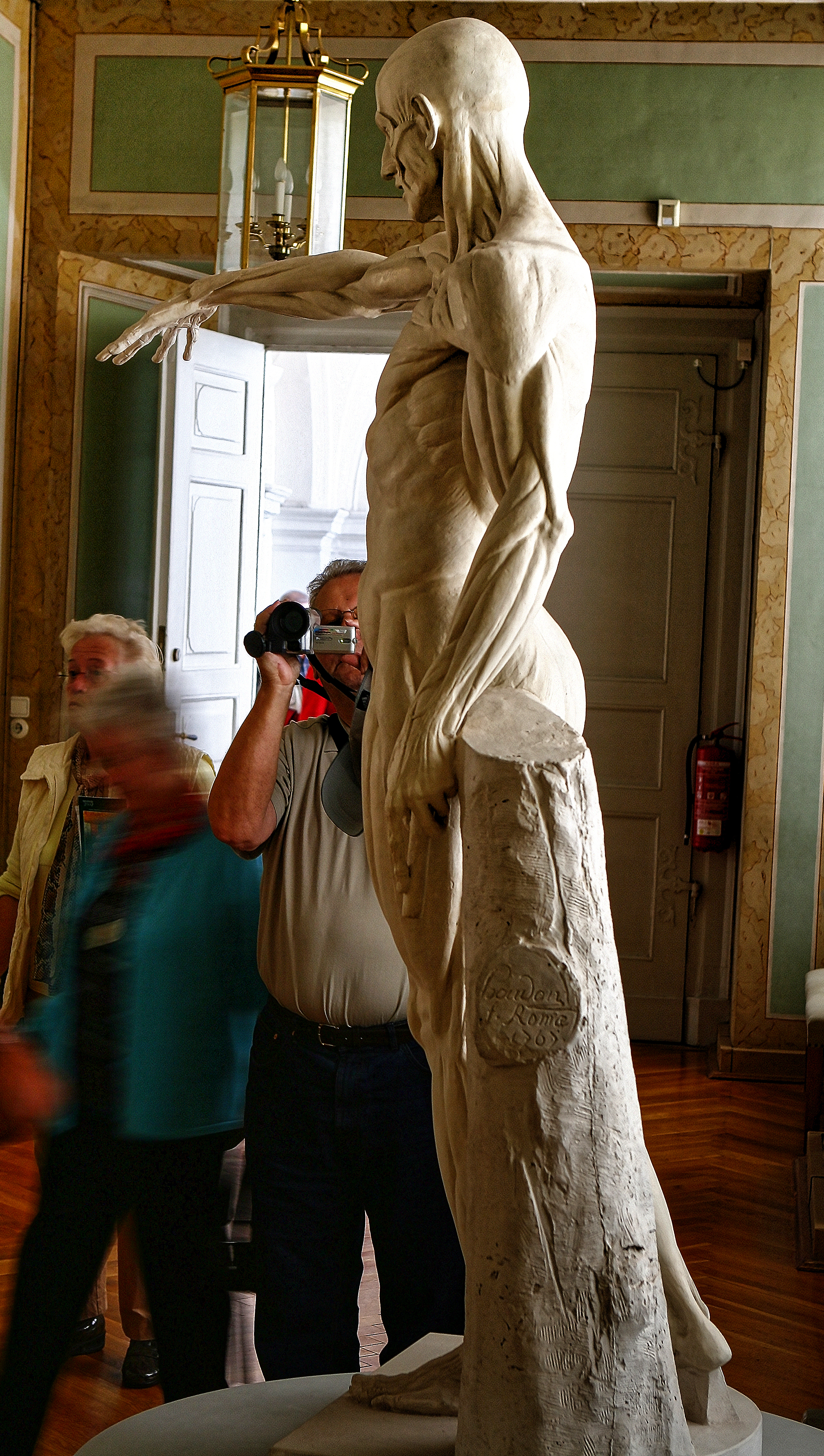
Jean Antoine Houdon, Ecorche, Plaster, Schloss Friedenstein, Gotha, Thüringen, Germany. The plaster is an original model made by Houdon and his studio. Jean-Antoine Houdon (1741-1828) is considered one of the most important French sculptors of 18th-century classical period. His artistic potential was discovered early, especially at the Thuringian courtyards. Today, Gotha owns the world’s largest collection of works by Houdon besides Paris, and also Weimar, Rudolstadt and Altenburg shine with authentic works of the master.
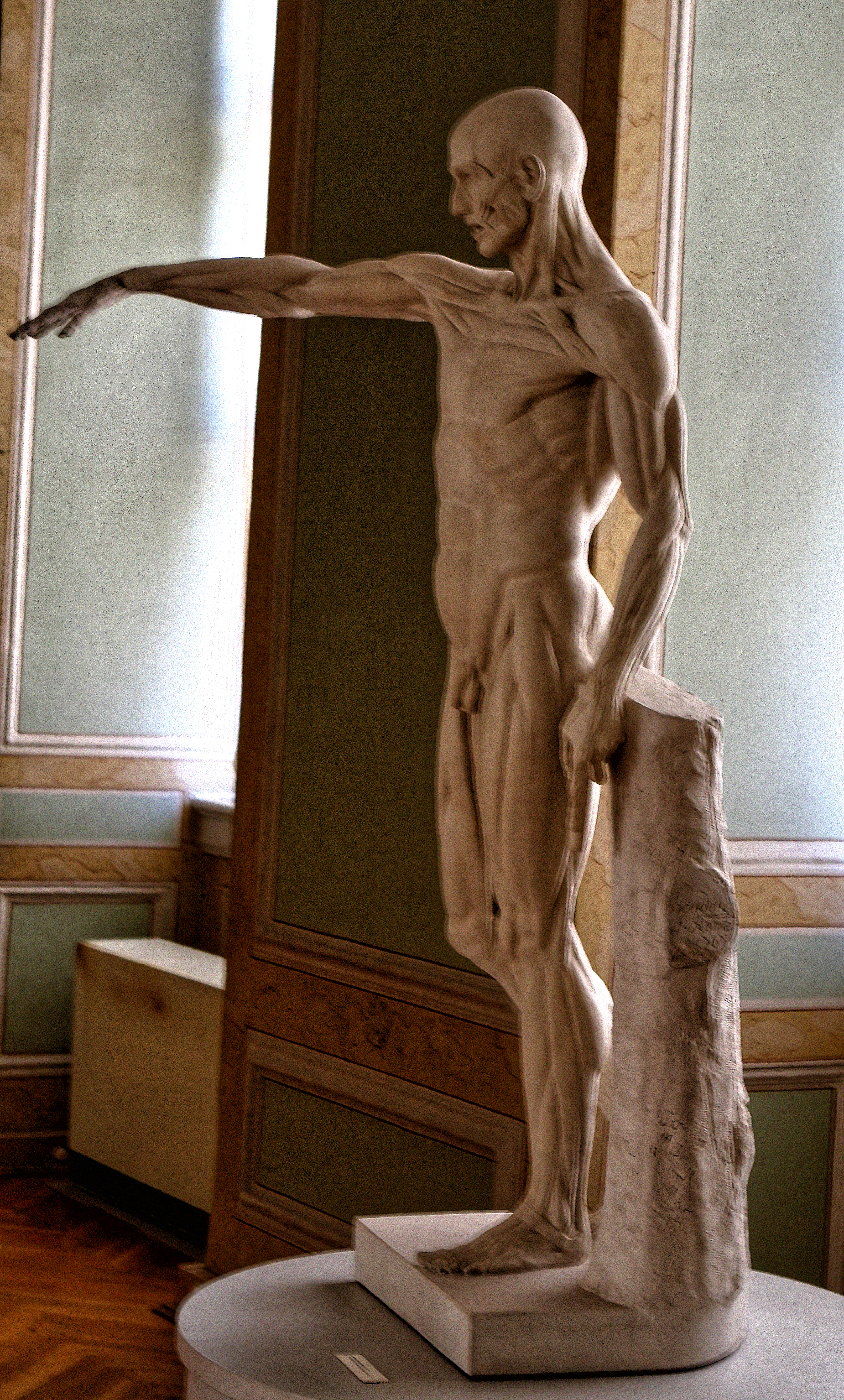
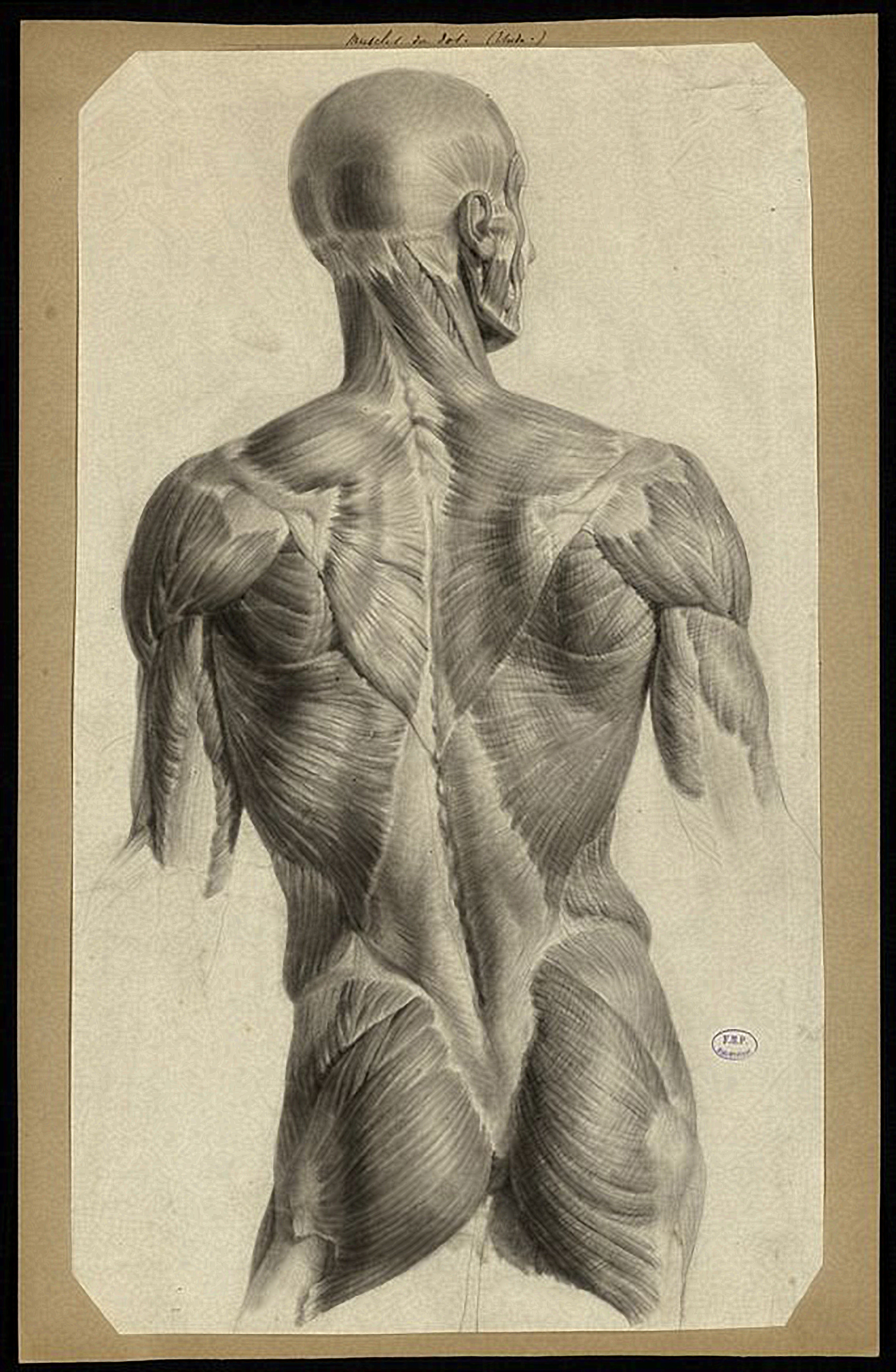
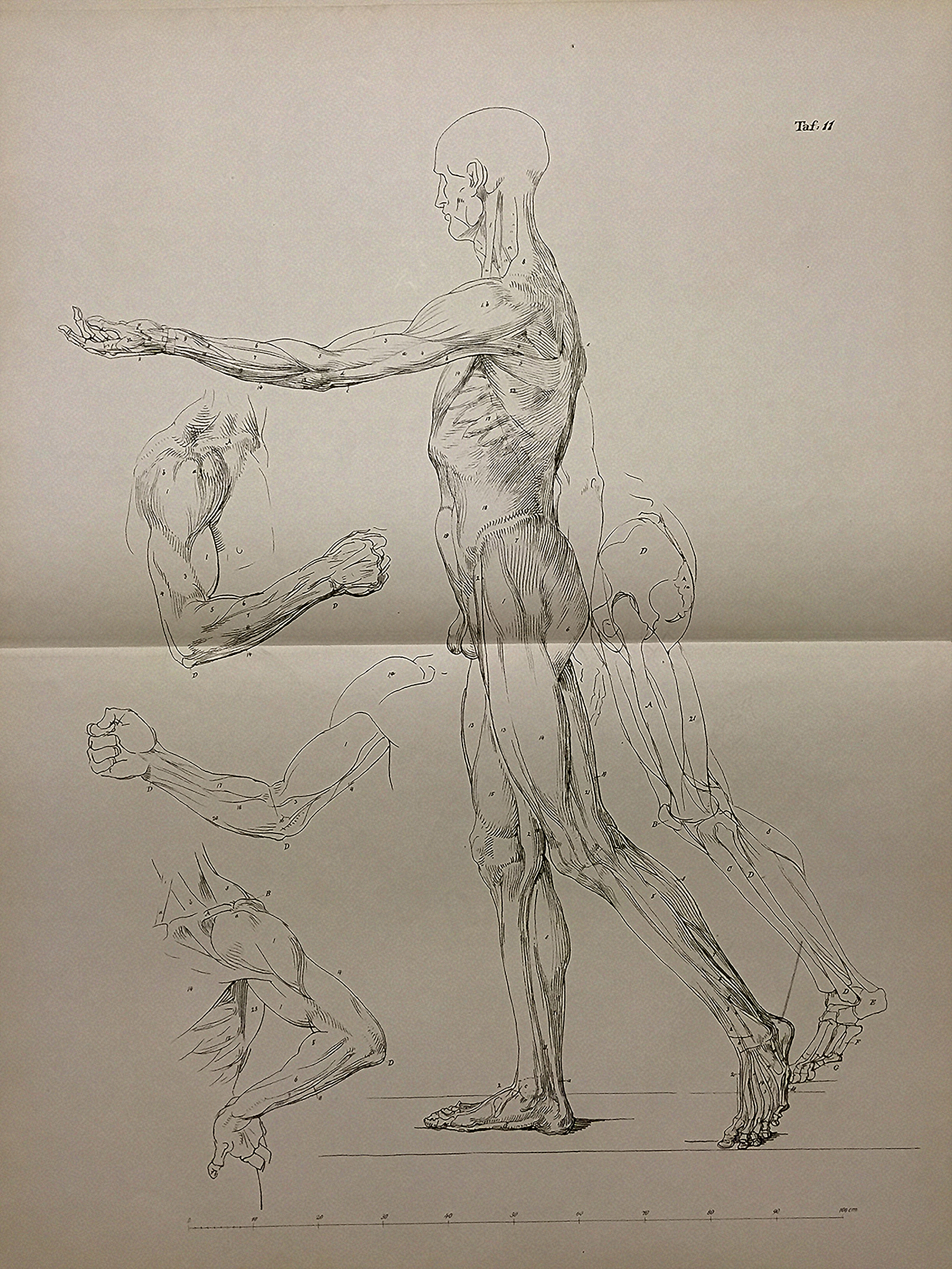
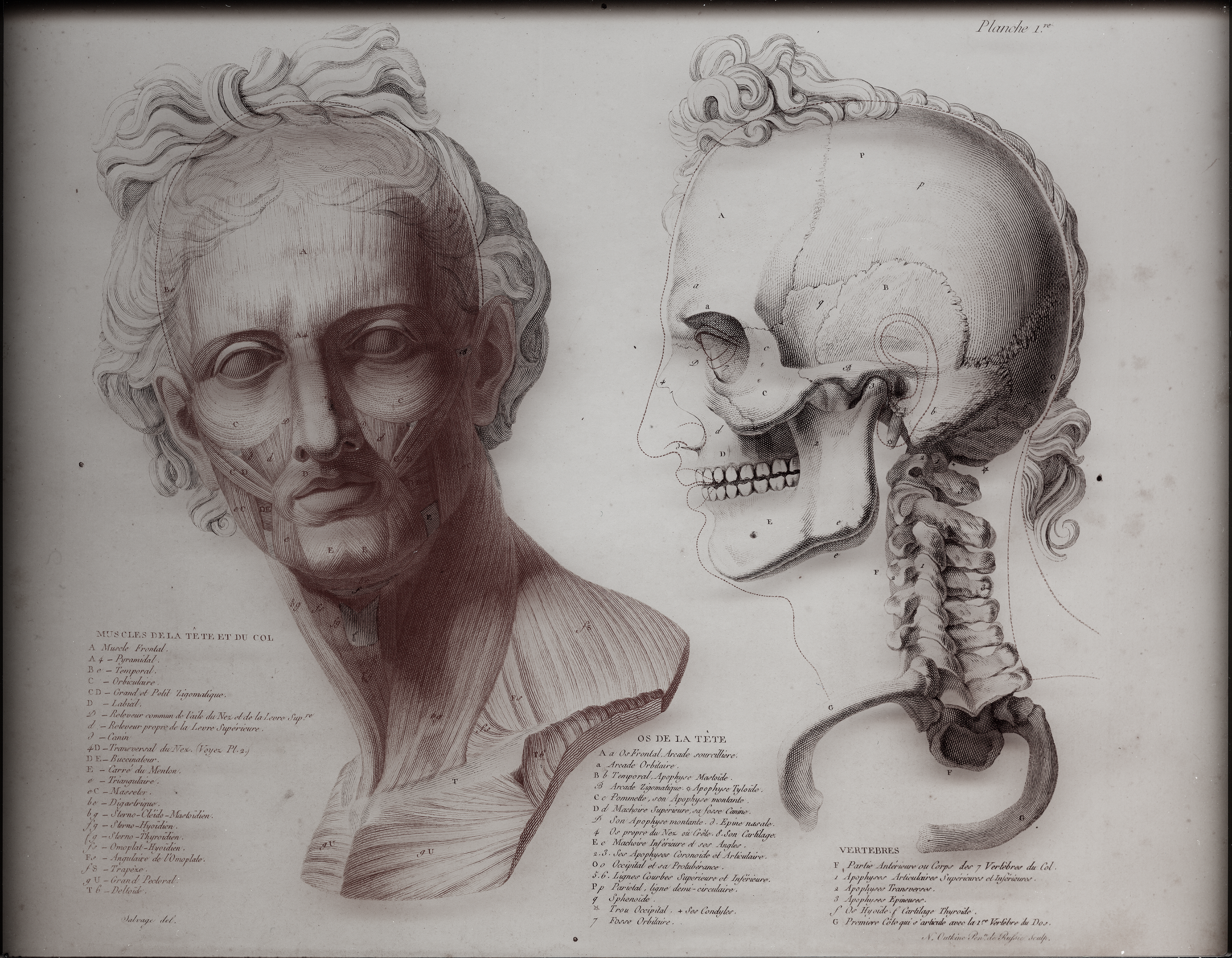
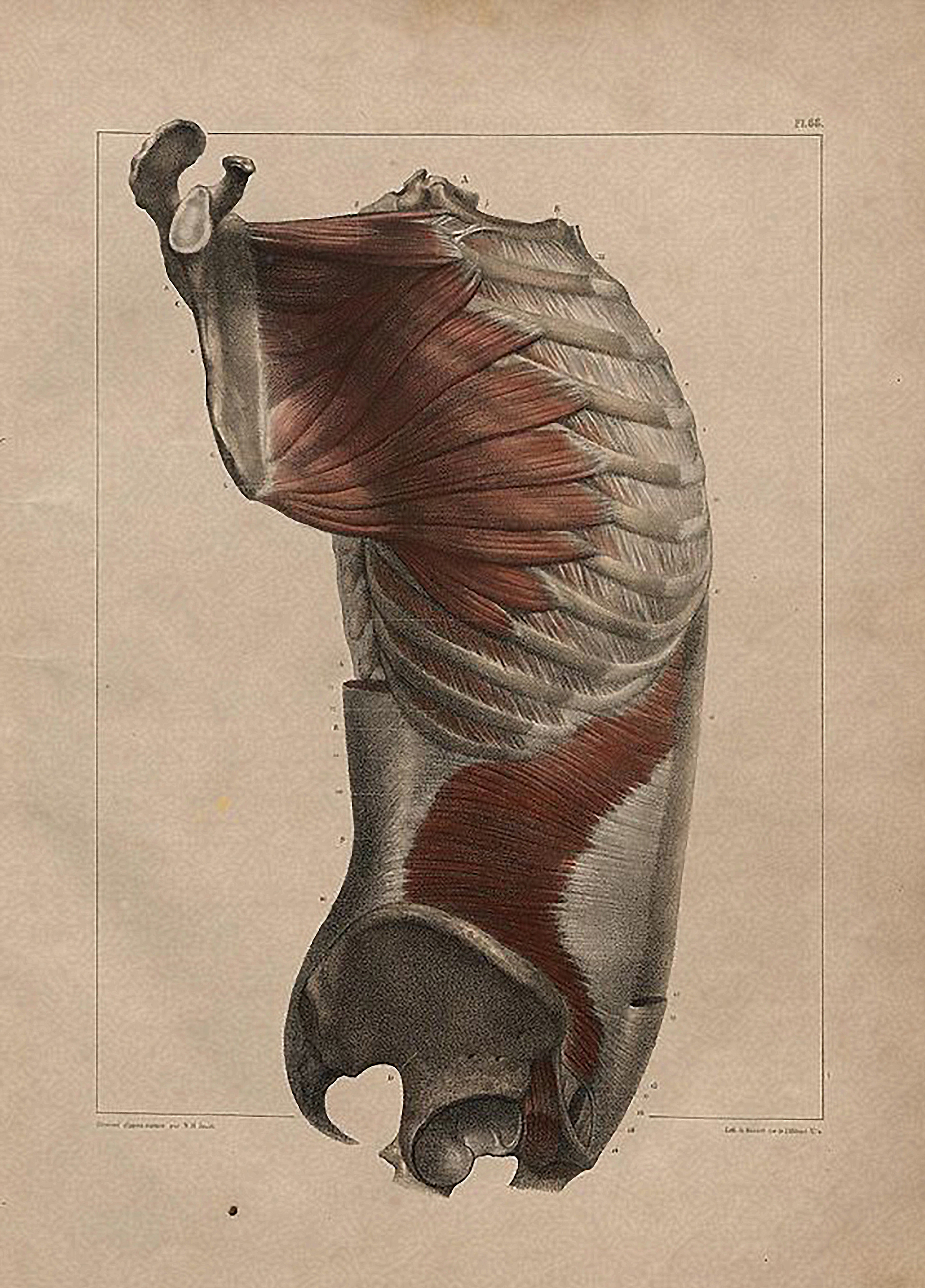

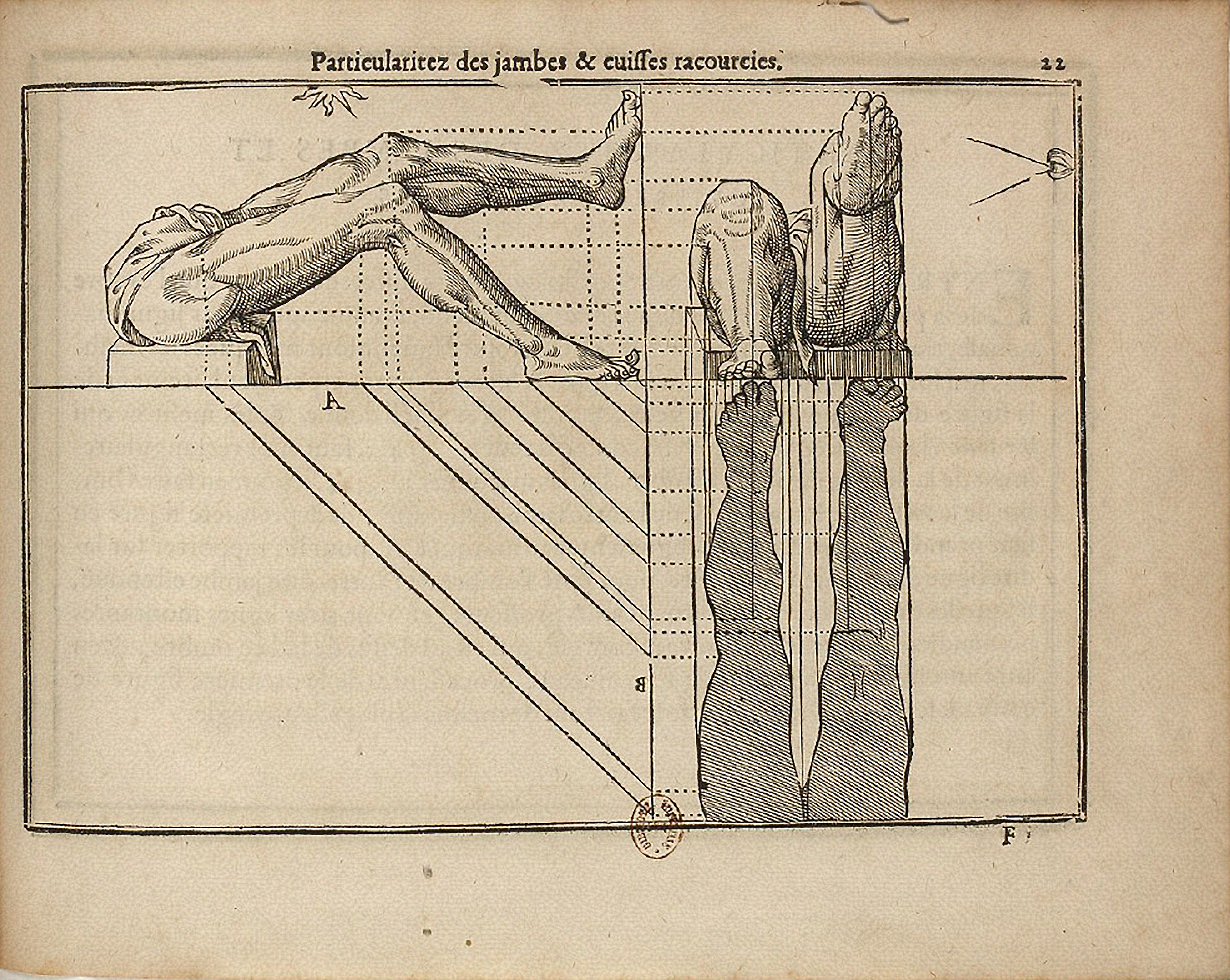

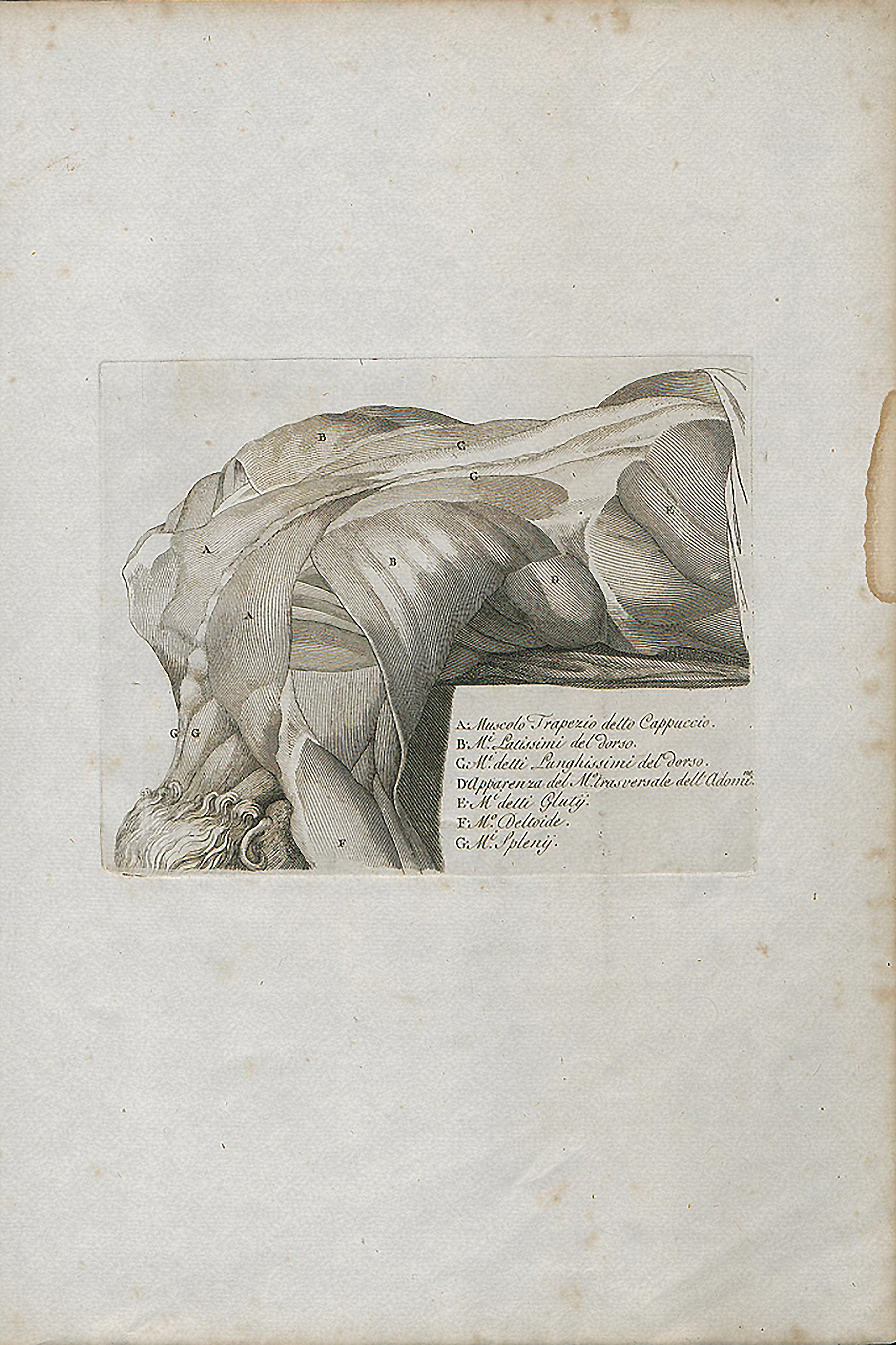
![Elementi di anatomia fisiologica applicata alle belle arti figurative, Turin, 1837-39 - Francesco Bertinatti, (fl. mid-1800s) - [anatomist]; Mecco Leone - [artist]](https://parkerstudiostructuralsculpture.org/wp-content/uploads/2017/12/Elementi-di-anatomia-fisiologica-applicata-alle-belle-arti-figurative-Turin-1837-39-Francesco-Bertinatti-mid-1800s-anatomist-Mecco-Leone-artist-1-222x300.jpg)
Elementi di anatomia fisiologica applicata alle belle arti figurative, Turin, 1837-39 – Francesco Bertinatti, (fl. mid-1800s) – [anatomist]; Mecco Leone – [artist]
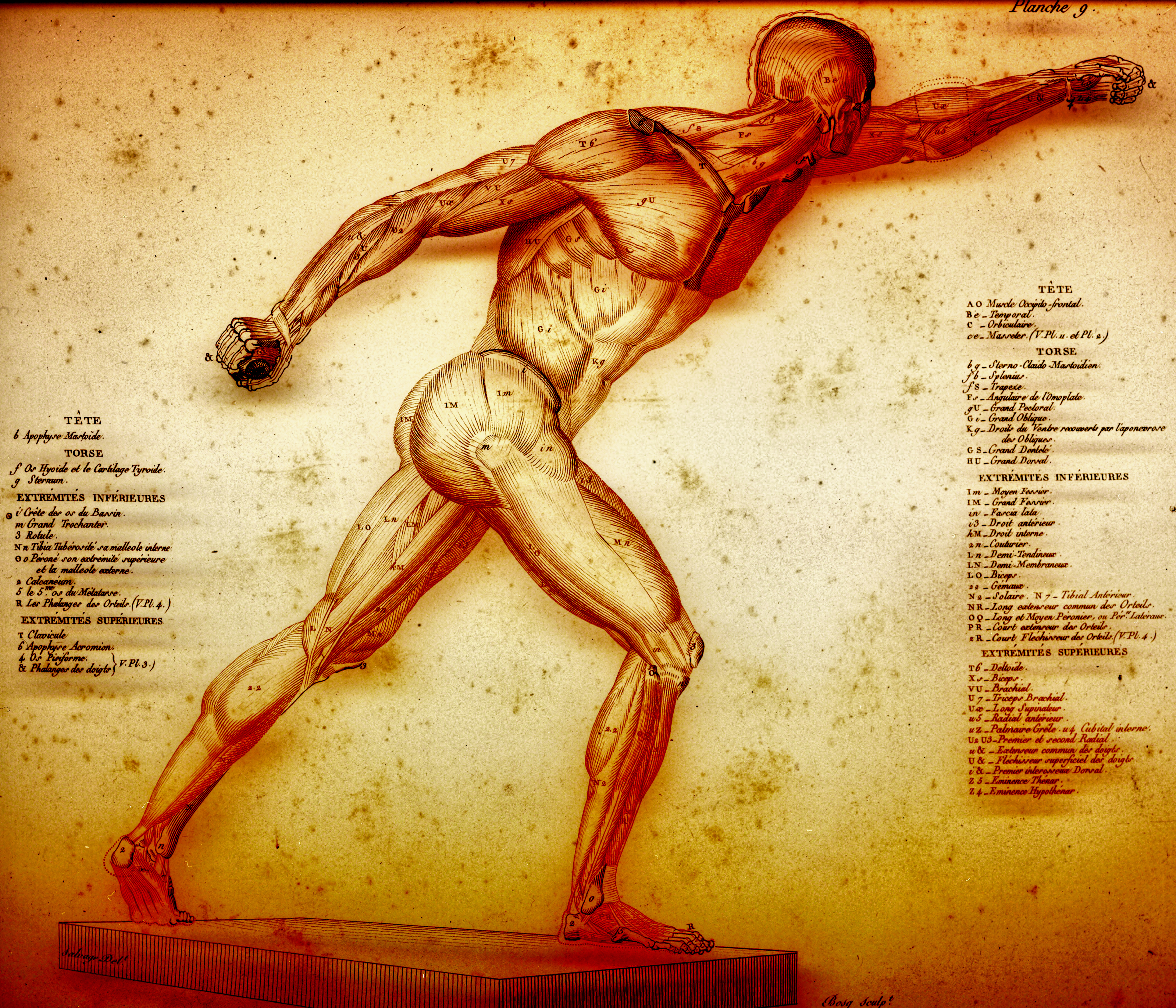
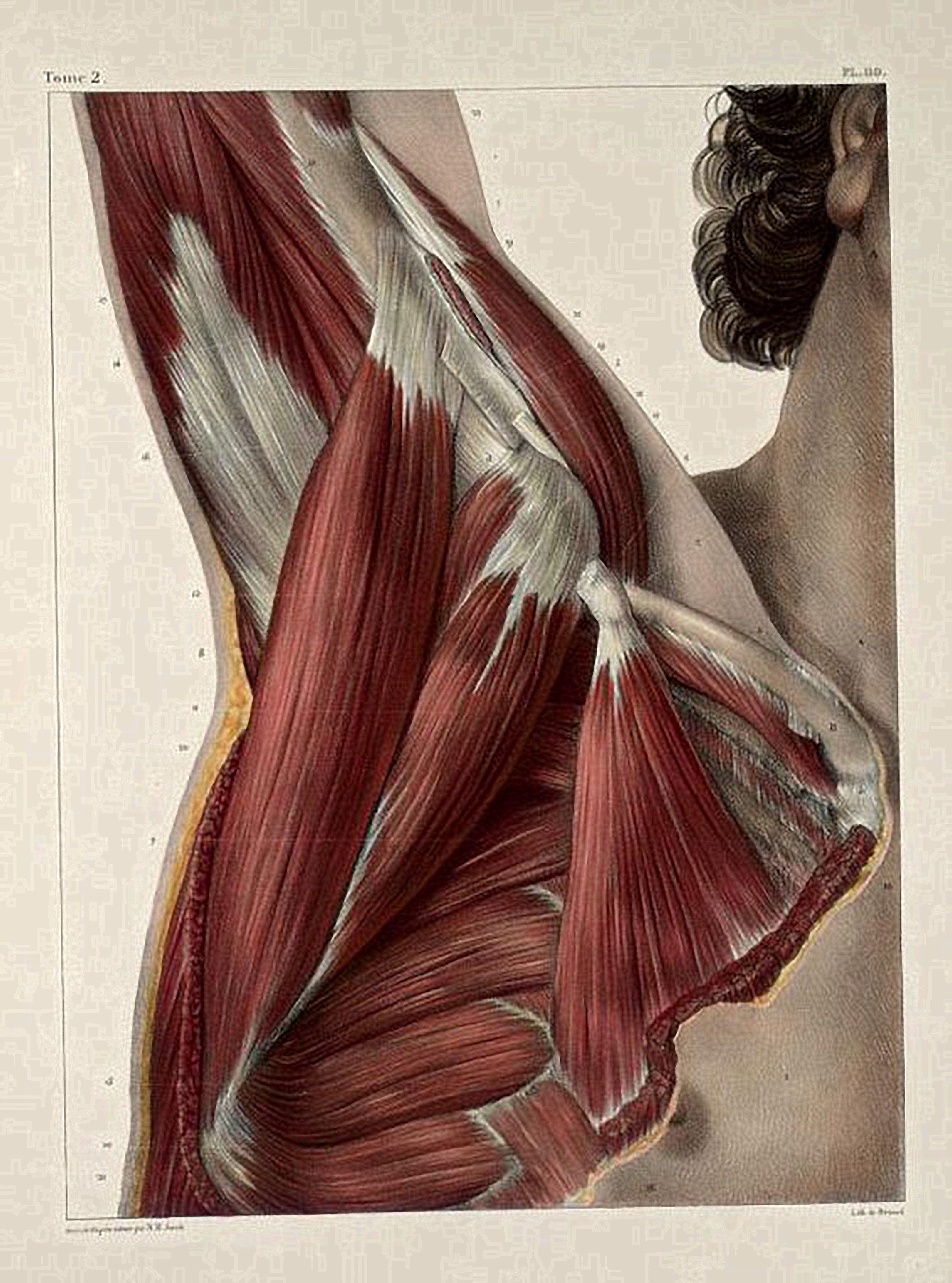

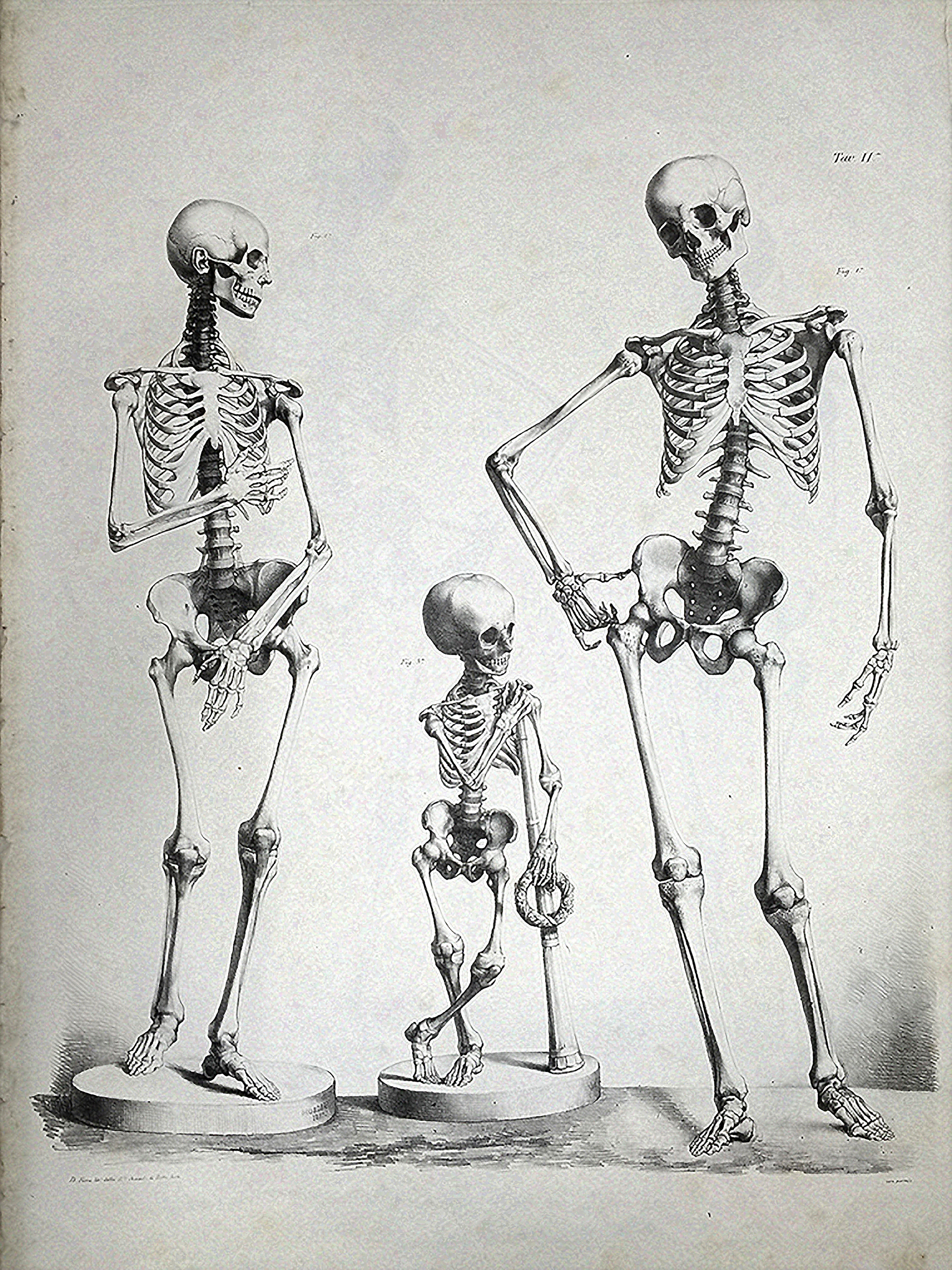
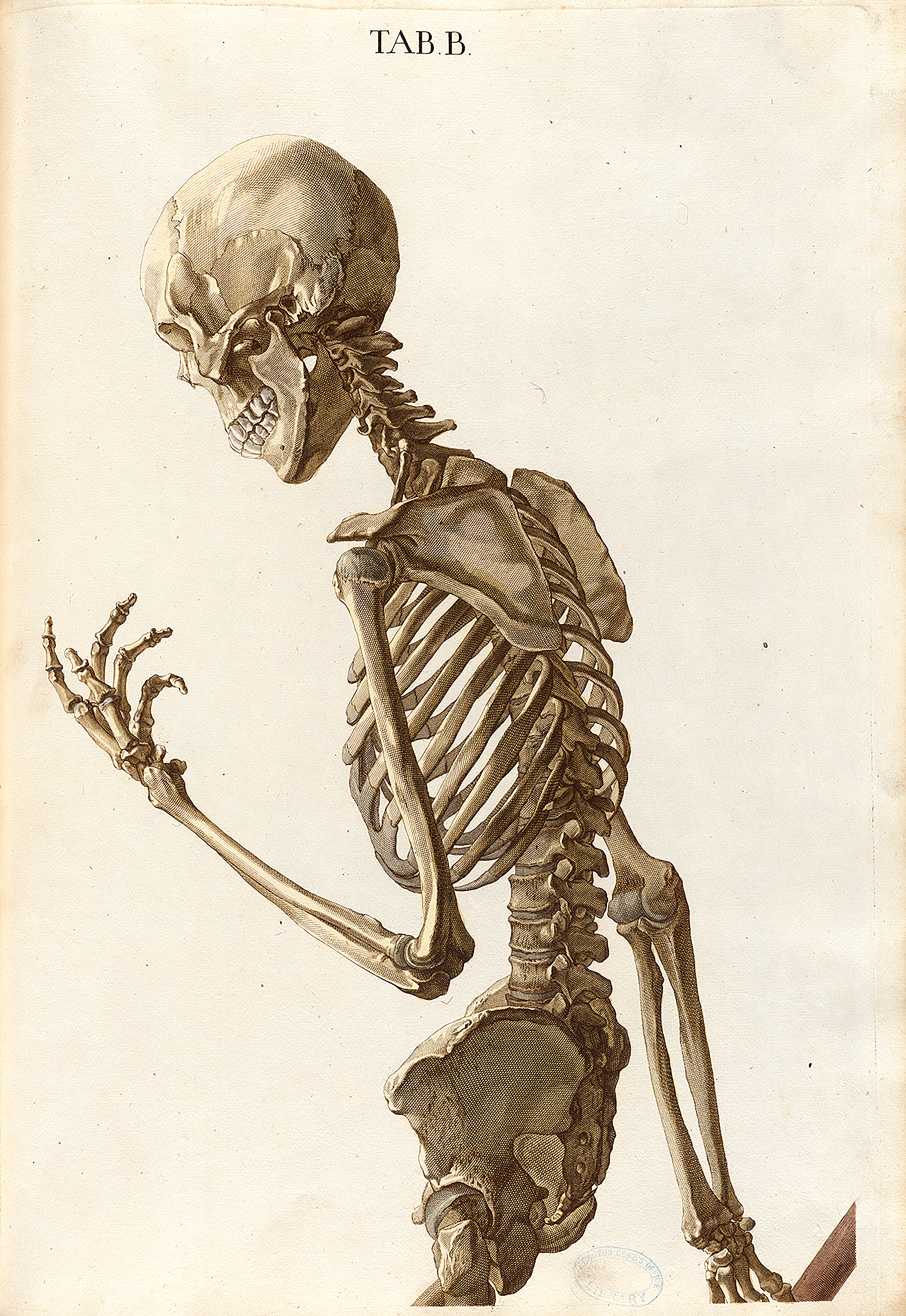


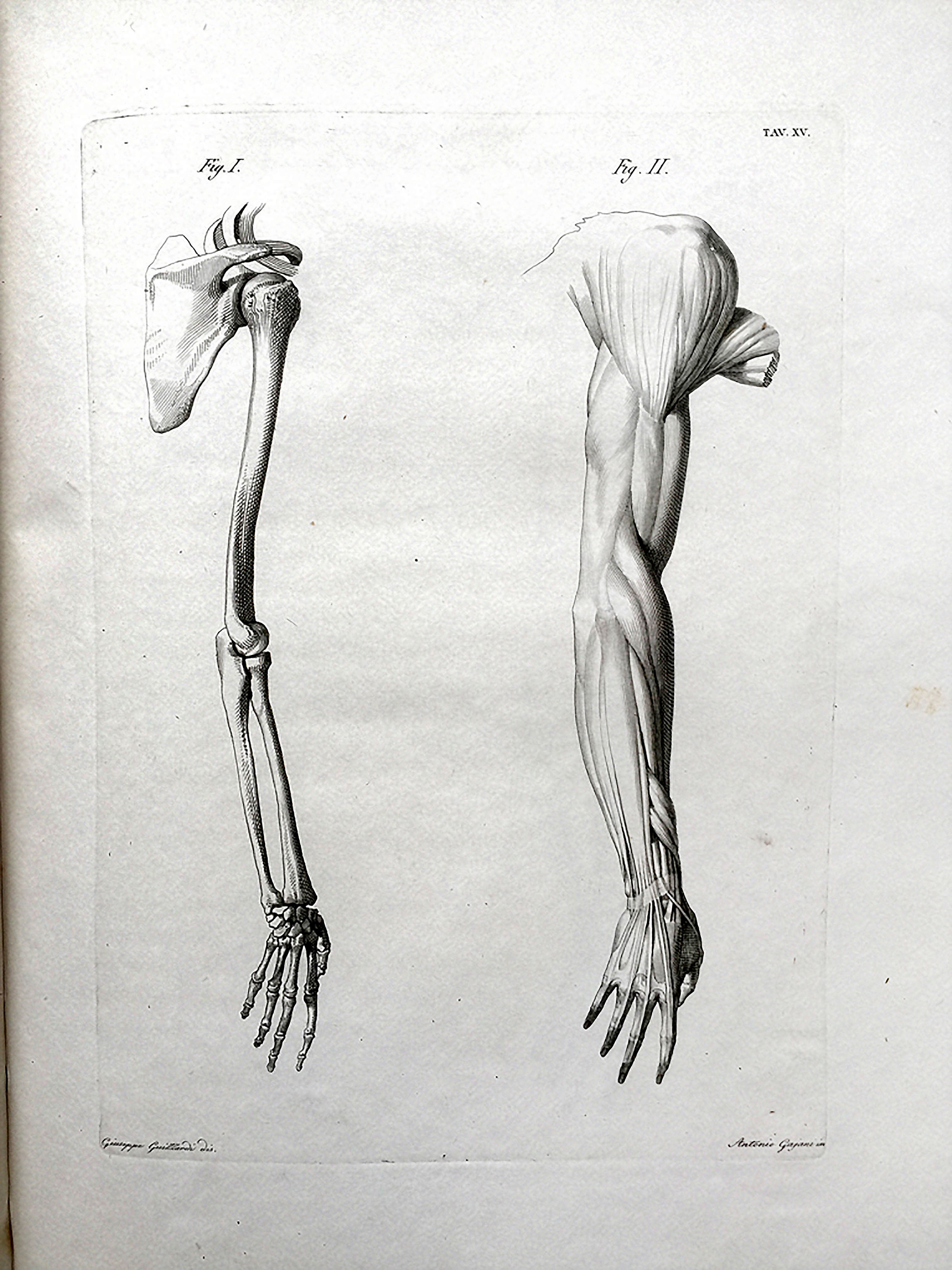
Please contact to make an appointment for visiting, signing up for Open Groups, Classes, or for Gallery visits.
Classes and Open Groups are a projected schedule and will continue as set Classes, and Open Groups, depending on enrollment. If specific Classes or Open Groups other than those designated on the calendar are requested by enough interested students, or participants then changes will reflect those requests.
Ecorche La Specola, Florence – the source of Anatomical Drawings by Alphonse Lami
Identification is helpful for the mutual security of all of the Artist Participants, the Life-Model, and potential Sculpture Exhibition Gallery visitors, as well as for the insurance coverage on the art studio. Please send a readable text and clear photographic reproduction of your license card face picture from your driver’s license using a camera. The photograph of your driver’s license then can be uploaded as a picture file format attachment from your computer file directly to the picture file attachment upload below.
Name of the “Open Group” you are interested in attending; or requesting information on. The day of the week; the hours available; time frame you would be interested in an ongoing Open Group Session.
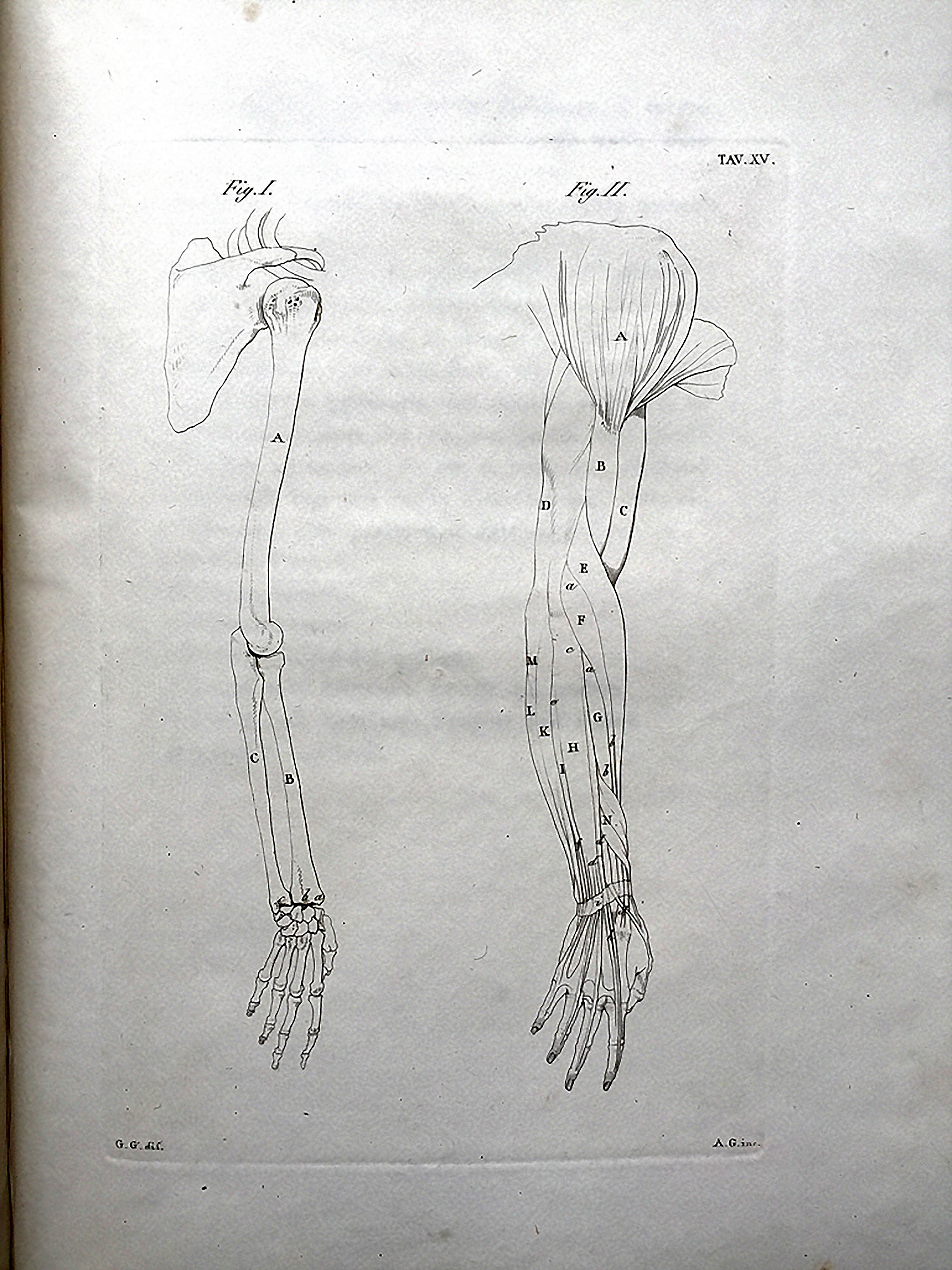
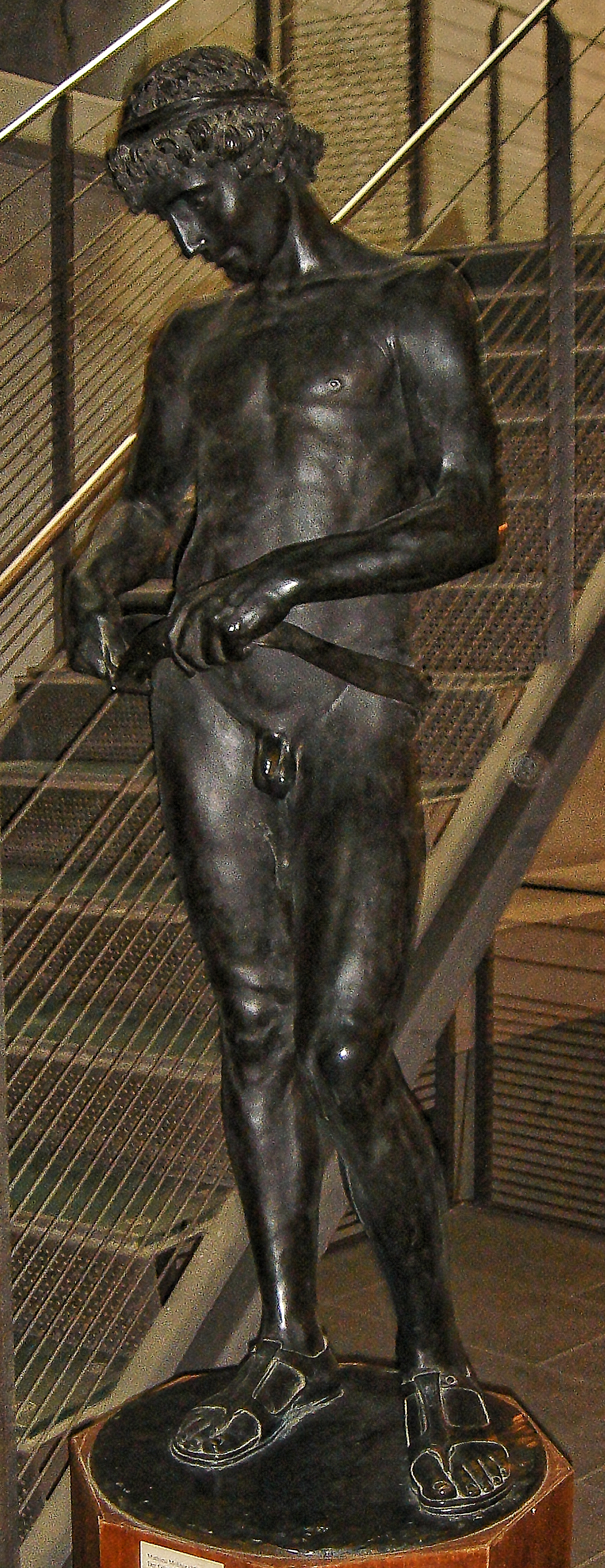
Ernst Bernadien – 1864, Koenigsberg Studiert an der Kunstakademie Koenigsberg, bei Prof Frederich Reusch, Figure of a Young Man in period attire, bronze – life-size, in the Archaeology Dept. Exhibit hall, University of Leipzig. This bronze work by Ernst Bernadien is a hybrid of earlier traditional method mixed with “optical record”. Part of the process of working from photographs or post 1850 training Part of the process of working from photographs or “Optical Record” – post 1840 training that replicates what a photograph changes in observation and perceptual input – #1: Tonal dimension is compressed artificially, realistic looking to an audience trained to see in a filtered manner as typically replicated from the exposure to film and photographic medium. Thus this compressed tonal dimension ends up isolating shape in placement patterns that are stilted and diagrammatic, as well as flattened out. #2: Movement is captured in a moment which produces an awkward compressed literal static follow through as opposed to the best traditional sculpture/two dimensional art which does follow through an implied dance of a motion which often is contradictory to actual literal motion as a photograph depicts thus concluding as static realism. – #3: Compression of tones also produces cut out aspects to the sculpture/two dimensional art which produce linear outline effects that bear resemblance to the “Art Deco” “Art Nouveau” “Bauhaus” “Communist Realism” Fascist Realism” Classical Realism” “Secessionist Realism” “Romantic Realism” – though this “look” is seen in most sculpture post 1840 because of the influence of photographic perceptual-ism. The number of photographs artists making a sculpture/ or / two-dimensional art utilize is never enough to comprise a shape dimensionally. Even a thousand photographs would still surmise a series of random outlines. This use of photographs inevitably creates outlines from multiple view silhouettes that to an ignorant perception seem to order the whole into a full description. Though it’s really just a bunch of static outlines, perhaps thousands if enough photos are used to arrive at that many outlines, but no matter how many silhouette outlines are incorporated there is a static lack of complex geometric shape that displays itself dimensionally as characterized by the best Classical, Hellenistic, and early Greco-Roman sculpture. #4: Movement with the replication or actual use of photographs creates an extension outward with nowhere to go similar to the prior #2 description – there are a number of other issues with the replication or actual use of photographs in “realistic” artwork beyond an extensive description here – #5: Mushy tonal development of “shape” is arrived at through photographically oriented input or it’s perceptual equivalent, instead of articulated dimensional complex shape that projects in space as well as is interrelated geometrically. #6: Style becomes a bastardization to fill in the missing junk that a photograph can not fulfill, as opposed to style being an outgrowth of describing in the precedent of orders and their relationship chosen in emphasis in a particular work complex organic geometric inter-related form in its whole ingredients from an intensification beyond a transcription of nature. #7: Any historic personality derived from a photograph, or film, or video as in a portrait bust, or partial or full figure sculpture/ or / two dimensional art, or painting is doomed to be a mess as described above here. As well as most commissions require by time and cost, as well as availability of the life-model, or client for the artist to not work from actual live subjects but substituting completely or partially photographic medium instead of the live client or life model, but also replicating all the listed issues here even when solely working from “life”. Incorporating the methods described above utilizing photographic/digital mediums, or just by habit in repetition and ignorant training – the artist in their perceptual process arrives at the same results. The time frame, cost in model fee, and availability of a client, or life model, or subject from nature as well as competing on price point dictate joining the ignorant artists of the Modern, Contemporary, Classical Realist, etc… in producing artwork that compromises making up arbitrary visual content that will be termed beautiful style by the art critics. Artwork – sculpture, drawings, paintings that are historic or contemporary reproduced in photographic mediums and used as a source for one’s contemporary art as the, or part of the subject development will also arrive at the same conclusions, apart from the one mentioned above #2, and #4 comprising movement. Since the filtering and changes through photographic process alter the historic artwork in much the same manner that photographic mediums from life change the visual perception and presentation. Often geometric schematics of composition implemented in the position of the elements of a sculpture or painting will also take on the literalist visual viewpoint – by aligning a horses hoof, a fingertip pointing, etc… at the exact convergence of two or more axis lines like a dumbfounded arrow point, instead of passing through compositionally – instead a literalist hinge on a door flapping in the wind. It’s a literalist mindset that in transcription starts to invade the whole thinking in perception. After this “habit” of extraction from photographic sources or the equivalent in a perceptual process – shadow shape, sight size, tonal transcription, memorized units of linear patterns as seen in sculpture – as an example at the extreme in “Stalinist” Communist propaganda sculpture, or earlier 19th century examples, a plethora of standard methods, etc… the mind latches onto these – and reiterates this perception in development of all art regardless if the photograph is not at hand to copy for a particular artwork project. The minds perceptual input has been altered and will replicate this malfunction in art throughout all endeavors of making new works.
Depending on the response of enrollment; or participation interest, the main “Art Classes”, and “Events” page Menu Link has what are active “Open Art Groups, with shared Life-Model cost”. Are you a potential Artist participant in an Open Group.
Re-organization of courses, days and times, as well as cost factors are in process of changes over the next months through 2025 and 2026. Any instructed sculpture or drawing classes once paid for the initial first 12 weeks, will maintain the continued same class course costs through the duration of how ever many standard 12-week parts are indicated for the full course.
Depending on the response of enrollment; or participation interest. The main “Art Classes”, and “Events” page Menu Link has what are active “Open Art Groups, with shared Life-Model cost”. Name of the “Art Class Course” you are interested in attending or requesting information on, the day of the week; the hours available; time frame you would be interested in an ongoing “Class Course Session”. Email, text, or call – sculptorBradP@sculptorBradP.com +1 301-633-2858, or +1 443-764-5364.
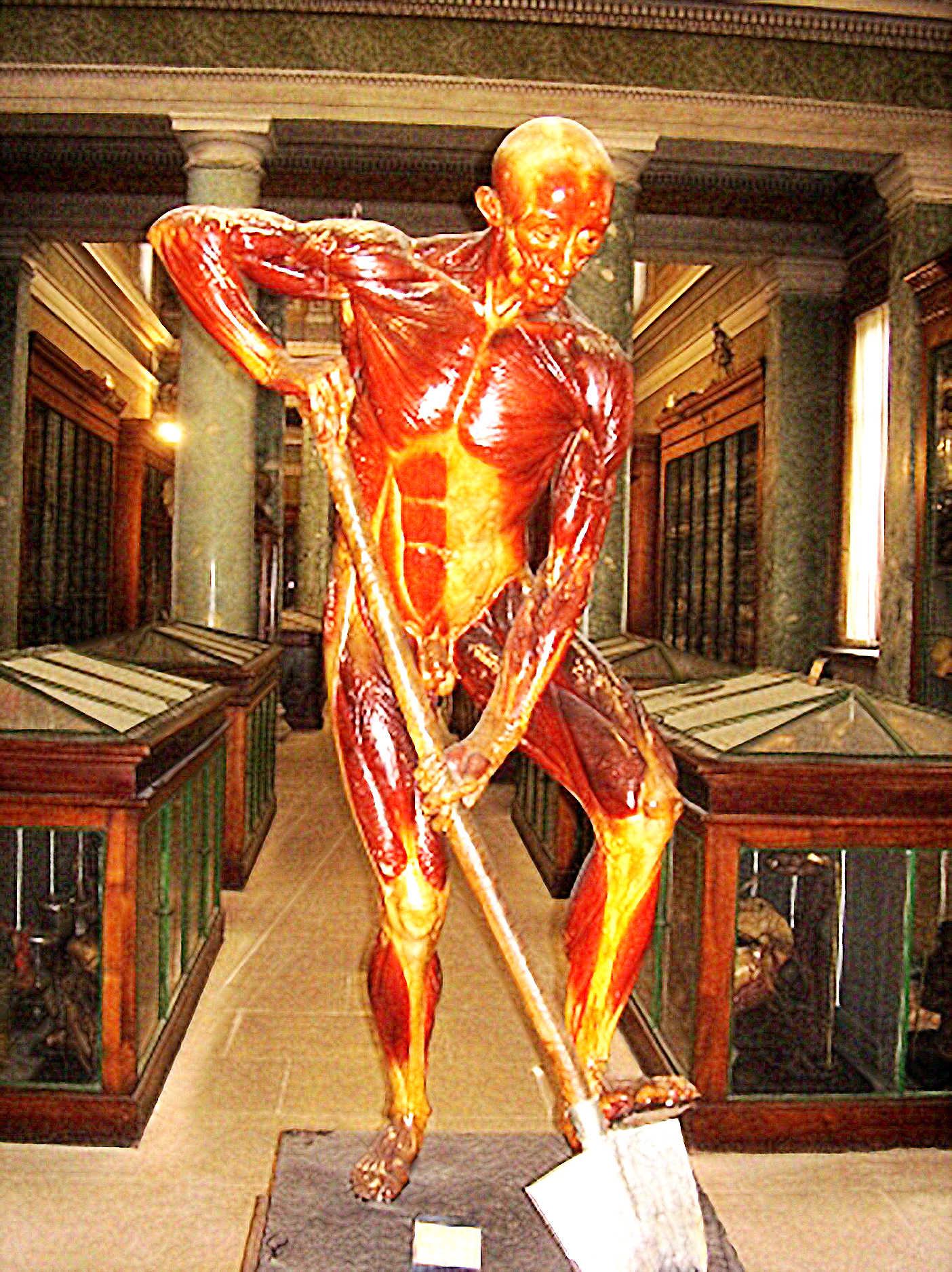
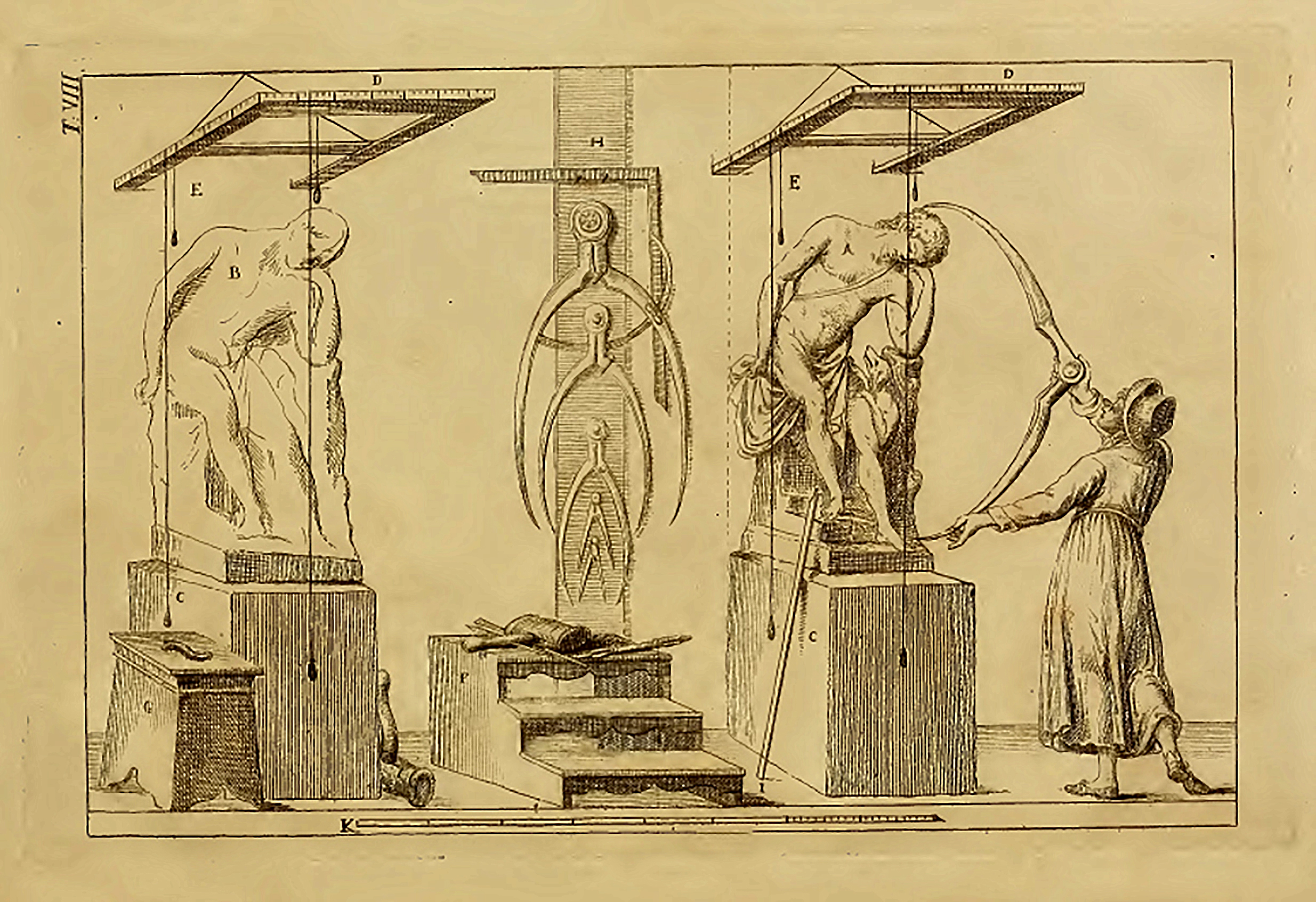
Name of the “Art Class Course” you are interested in attending or requesting information on. The day of the week; the hours available; time frame you would be interested in an ongoing “Class Course Session”. Email, text, or call – sculptorBradP@sculptorBradP.com +1 301-633-2858, or +1 443-764-5364
[bestwebsoft_contact_form id=1]
[bestwebsoft_contact_form id=2]
[jbbrd_vacancy]
Life-Model Position for Drawing and Sculpture
The day of the week; the hours available; time frame you would be interested / available in ongoing Life-Model sessions.
Identification is helpful for security, as well as for the insurance coverage on the art studio. Please send a readable clear camera picture of your driver’s license prior to appointment, attach the picture to the upload link, from your computer file. Any pictures referencing yourself as a life-model would be helpful. Center the camera vertically halfway – waist level – to avoid perspective, a full standing frontal, and a full standing side view – in whatever is comfortable – bikini, swim trunks, or nude – attach the picture to the upload link, from your computer file, better to send an email – sculptorBradP@sculptorBradP.com
[bestwebsoft_contact_form id=4] – Life-Model
[sbscrbr_form] [jbbrd_registration]
[contact-form][contact-field label=’Name’ type=’name’ required=’1’/][contact-field label=’Email’ type=’email’ required=’1’/][contact-field label=’Website’ type=’url’/][contact-field label=’Comment’ type=’textarea’ required=’1’/][contact-field label=’Telephone Number’ type=’text’/][contact-field label=’Name of the Art Class Course%26#x002c; or Open Group you are interested in attending%26#x002c; or requesting information on. ‘ type=’text’/][contact-field label=’City%26#x002c; State%26#x002c; Country’ type=’text’/][contact-field label=’The day of the week%26#x002c; the hours available%26#x002c; time frame you would be interested in an ongoing Class Course Session%26#x002c; or Open Group Session to participate in. There is the possibility of an additional Class%26#x002c; or Open Group Sessions depending on the response of enrollment%26#x002c; or participation interest. The main Art Classes page heading has what are active Class Course Sessions%26#x002c; and Open Groups. ‘ type=’text’/][contact-field label=’Potential Student%26#x002c; Artist participant in an Open Group%26#x002c; or you are a potential Life Model?’ type=’text’/][contact-field label=’New Field’ type=’text’/][/contact-form]

Comments
Art Classes — No Comments
HTML tags allowed in your comment: <a href="" title=""> <abbr title=""> <acronym title=""> <b> <blockquote cite=""> <cite> <code> <del datetime=""> <em> <i> <q cite=""> <s> <strike> <strong>