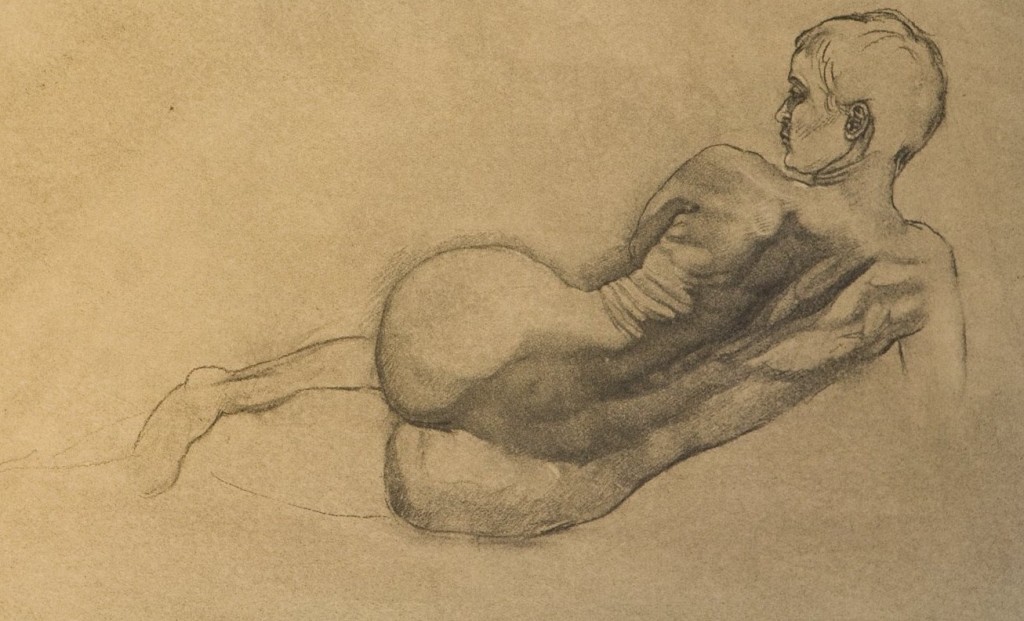
ANATOMICAL FIGURE SCULPTURE COURSE
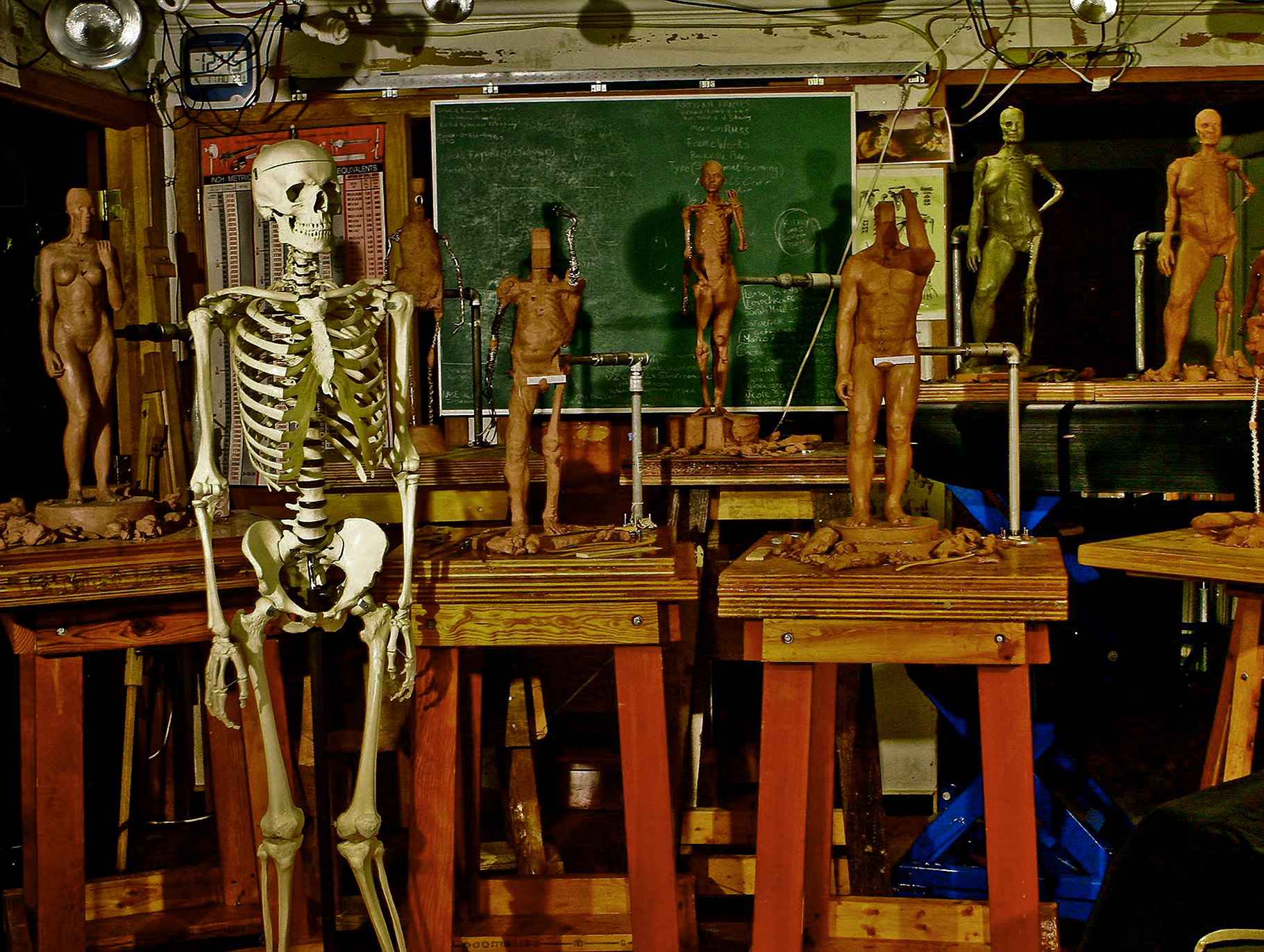
Sculptures and learning aids from the anatomical sculpture class, in the old Bethesda studio.
Contact: 301 633 2858, or 443 764 5364 by cell phone call, or text message, or contact: sculptorBradP@sculptorBradP.com to arrange a visit, or to enroll in a class or open group. Message Board below seems to have issues. Calendar is general information on classes available, days and times vary.
Figure Sculpture with Anatomical Study (Écorché)
Course Structure
- The course is divided into four parts.
- Each part runs for 12 weeks, with 24 sessions total.
- Two scheduling options:
- Daytime: 24 sessions, 5 hours each (including 30–60 min review).
- Evening: 24 sessions, 4 hours each (including 30 min review).
- Students work with the same pose and life model (or anatomical model) throughout each part.
- Optional free workshop time 5 hours day, 4 hours evening (without the life model) is available to practice from a demonstration sculpture, or plaster cast subject. Workshop time is included in tuition but must be scheduled at the start of the semester and cannot be rescheduled.
Course Content
- Students will construct an écorché figure (half skeletal/muscular structure, half surface anatomy).
- First half: build the skeleton and deep muscles.
- Second half: complete overlying muscle masses.
- Work is done in plasteline (non-drying clay).
- Emphasis is on naturalistic anatomy faithful to the model.
Tuition
- $2,136 per quarter (12 weeks / 24 sessions), twice per week.
- Other options available: once-a-week classes and private lessons (Day/Evening).
Course Objectives
- Develop perception of patterned shape.
- Learn to measure angles and proportions.
- Understand glyptek shape as it describes form.
- Build rhythms of turning to create effective compositions.
- Establish visual scale from life to sculpture.
- Understand commensurate planes.
- Learn basic anatomy.
Armature Preparation
-
- Chavant NSP (Non-Sulfur, soft or medium hardness Brown) or Chavant Le Beau Touche HM (High Melt) clay.
- Studio provides: wheeled sculpture stands, limited loaner armatures (with replacement parts required). Limited loaner sculpture tools on loan only in class
__________________________________________________________________________________________________________
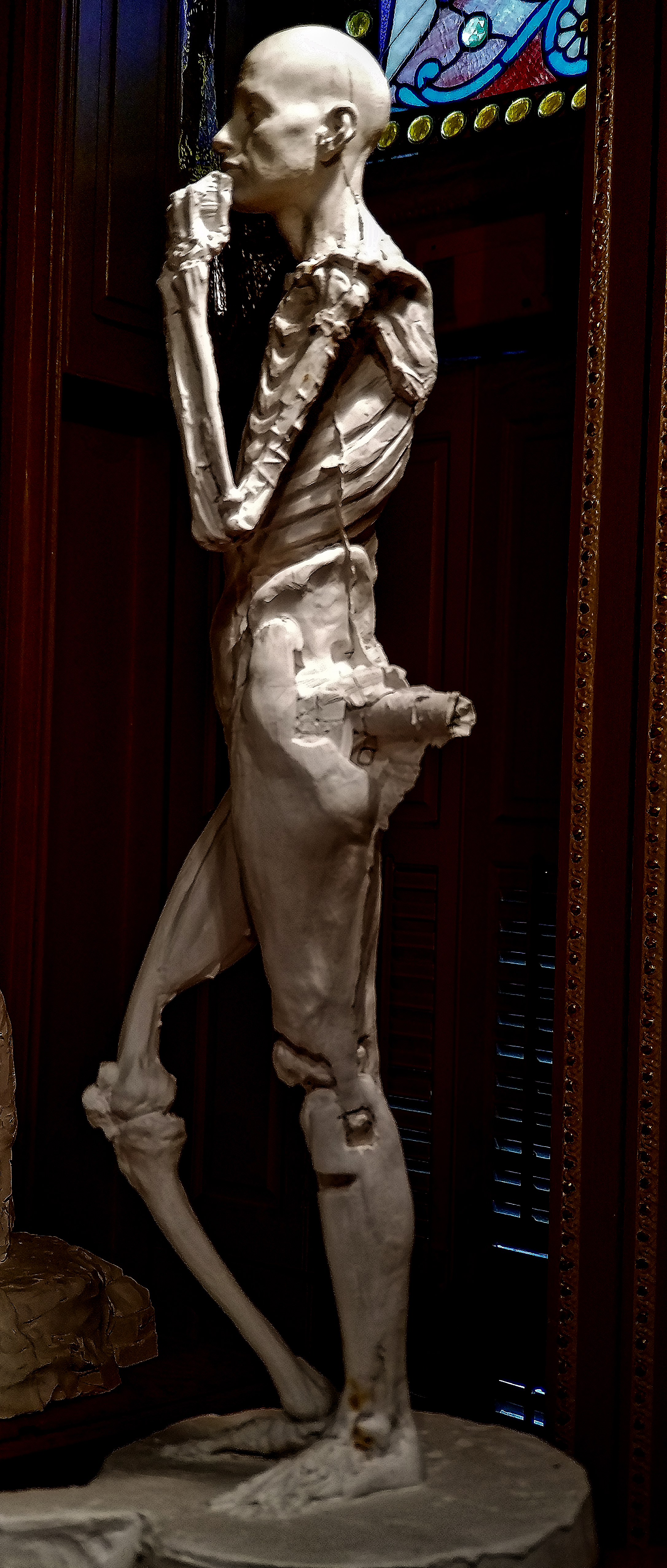
Anatomy Figure Class Demonstration Sculpture, Plaster – unchased – raw, Ana Russian Left Side View 6
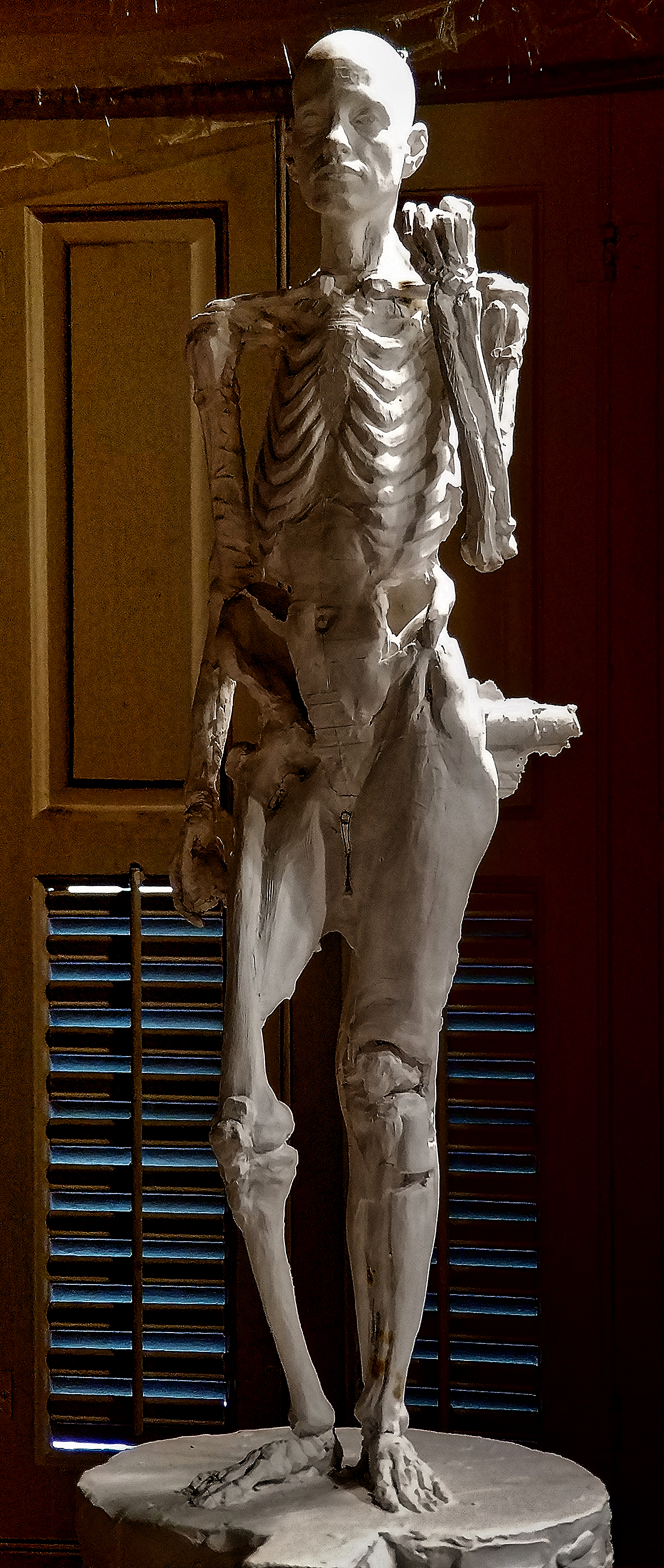
Anatomy Figure Class Demonstration Sculpture, Plaster – unchased – raw, Ana Russian Front View 4
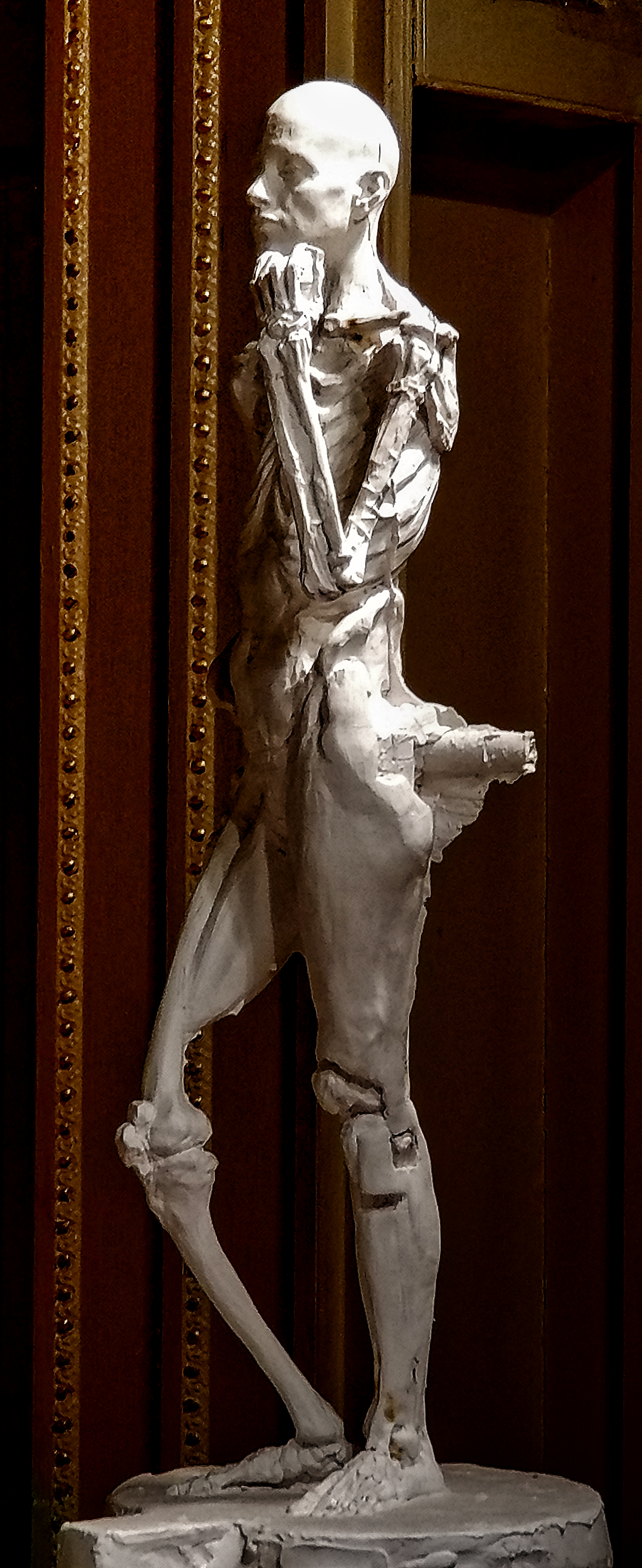
Anatomy Figure Class Demonstration Sculpture, Plaster – unchased – raw, Ana Russian Left Side View 5
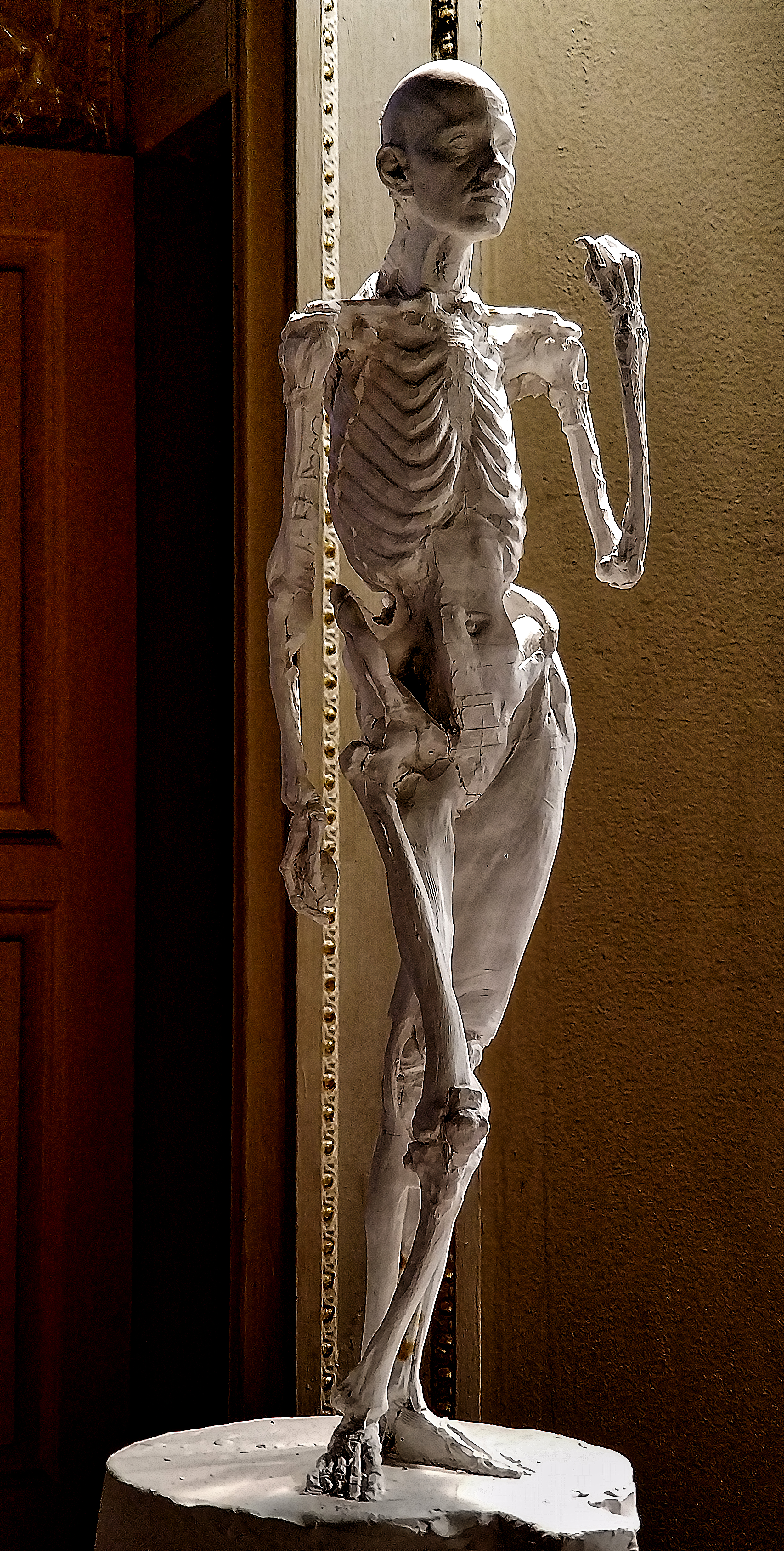
Anatomy Figure Class Demonstration Sculpture, Plaster – unchased – raw, Ana Russian Right Front View 3
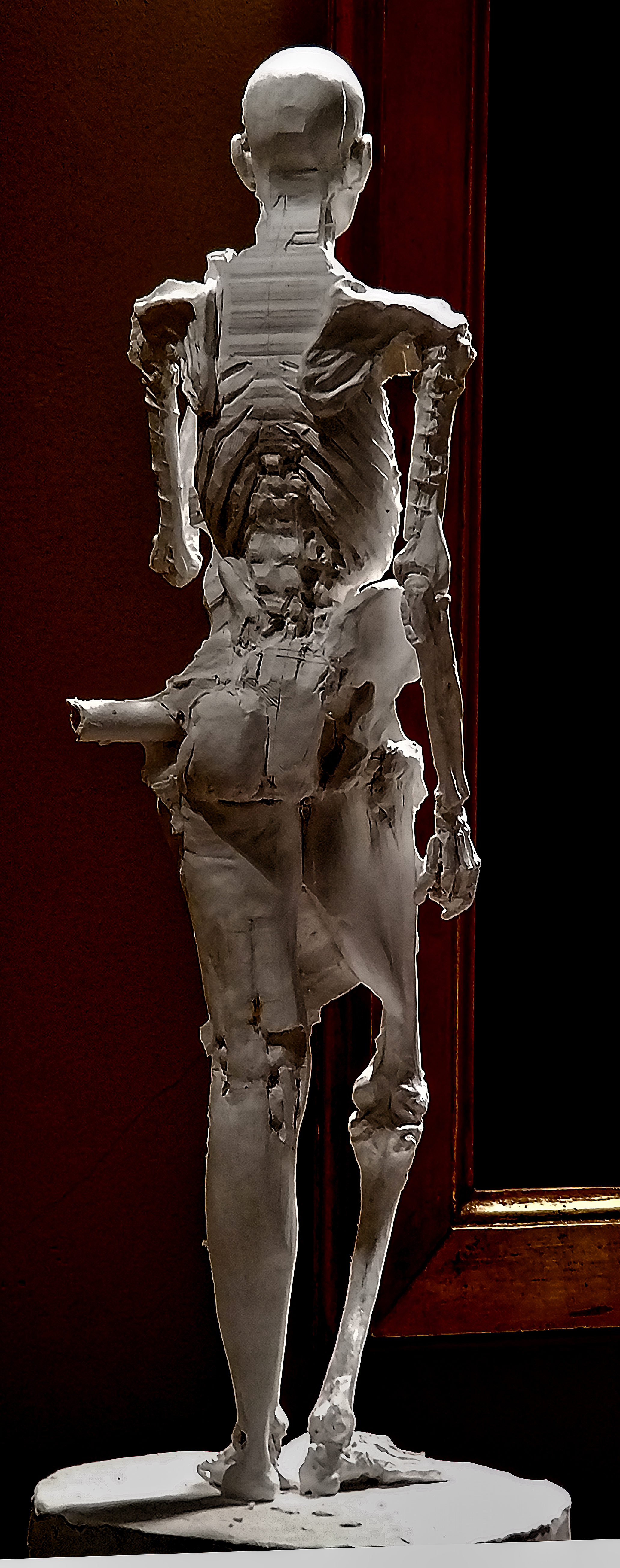
Anatomy Figure Class Demonstration Sculpture, Plaster – unchased – raw, Ana Russian Back View 2

Anatomy Figure Class Demonstration Sculpture, Plaster – unchased – raw, Ana Russian Front Side View 1
____________________________________________________________
Course Description
This course is designed for students of painting, drawing, and sculpture who want to strengthen their understanding of the human figure. Through the study of anatomy, rhythm, natural geometric forms, projection of shapes, balance, symmetry, and asymmetry, students will learn to see the figure as a living structure—capable of function and movement.
The instructor will highlight specific shape types in the model, showing how larger forms echo in smaller parts of the head or body. Students will study structural anatomy, weight, and mass, with emphasis on understanding large forms as the foundation for detail. Shadows will be used as a tool to reveal shape, not conceal it.
By the end of the course, students will avoid oversimplified or cartoon-like work, instead producing figures that appear natural, clear, and well-ordered. Individual artistic styles may then be developed by choice, not by accident.
Students will also have access to an extensive collection of rare anatomical and sculptural references, including:
-
Early 20th-century German hand-painted plaster dissections (head/neck in four layers, full torso, and hands).
-
European male and female skeletons.
-
Anatomical models of various scales.
-
Full-body plaster dissections from New York.
-
Antique European sculpture casts and anatomical figure plasters.
________________________________________________________________________________________________________________________________________________________________
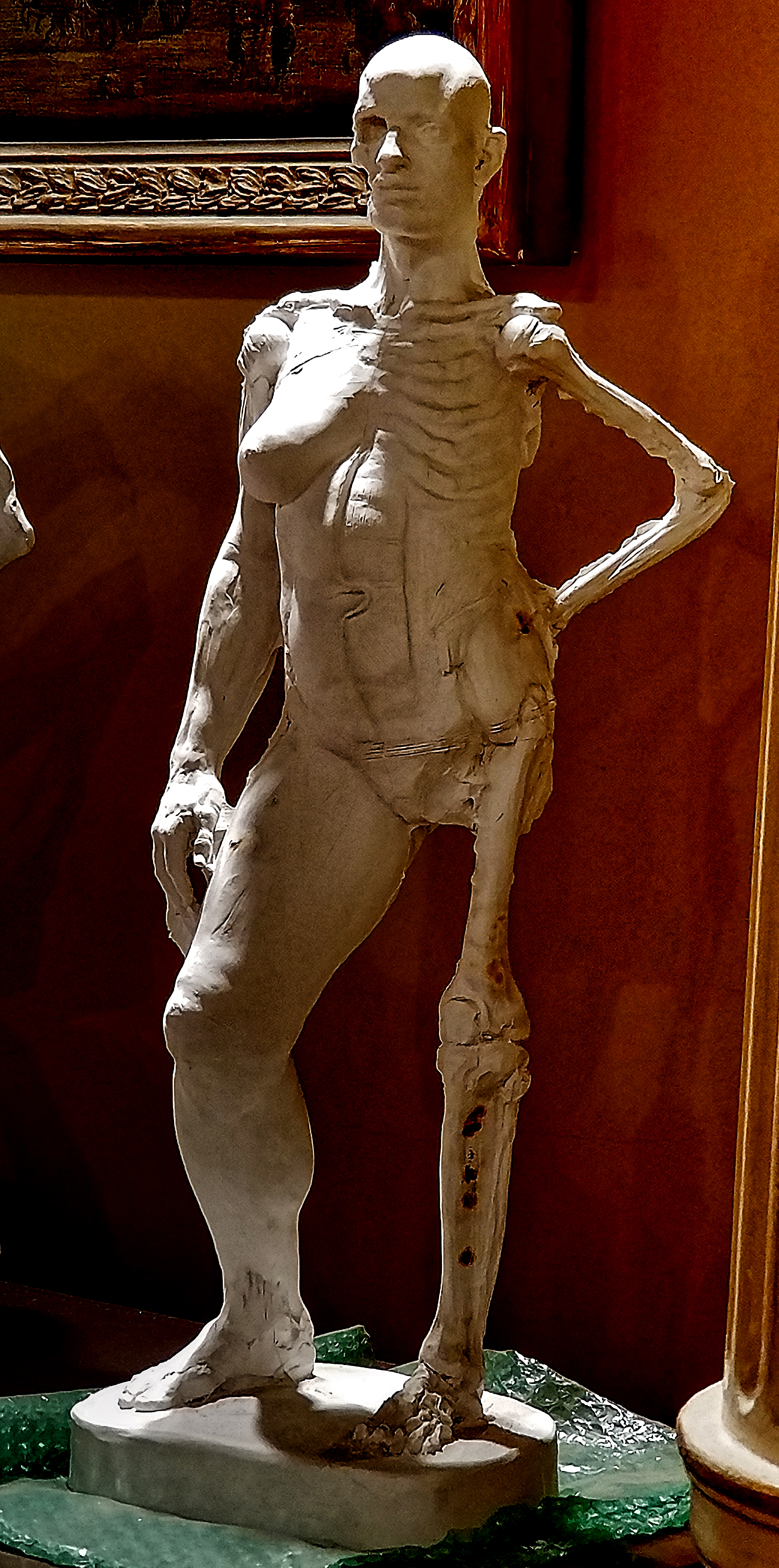
Anatomy Figure Demonstration Sculpture From Class, Plaster – unchased – raw, Anna Prussian Front View Right 9
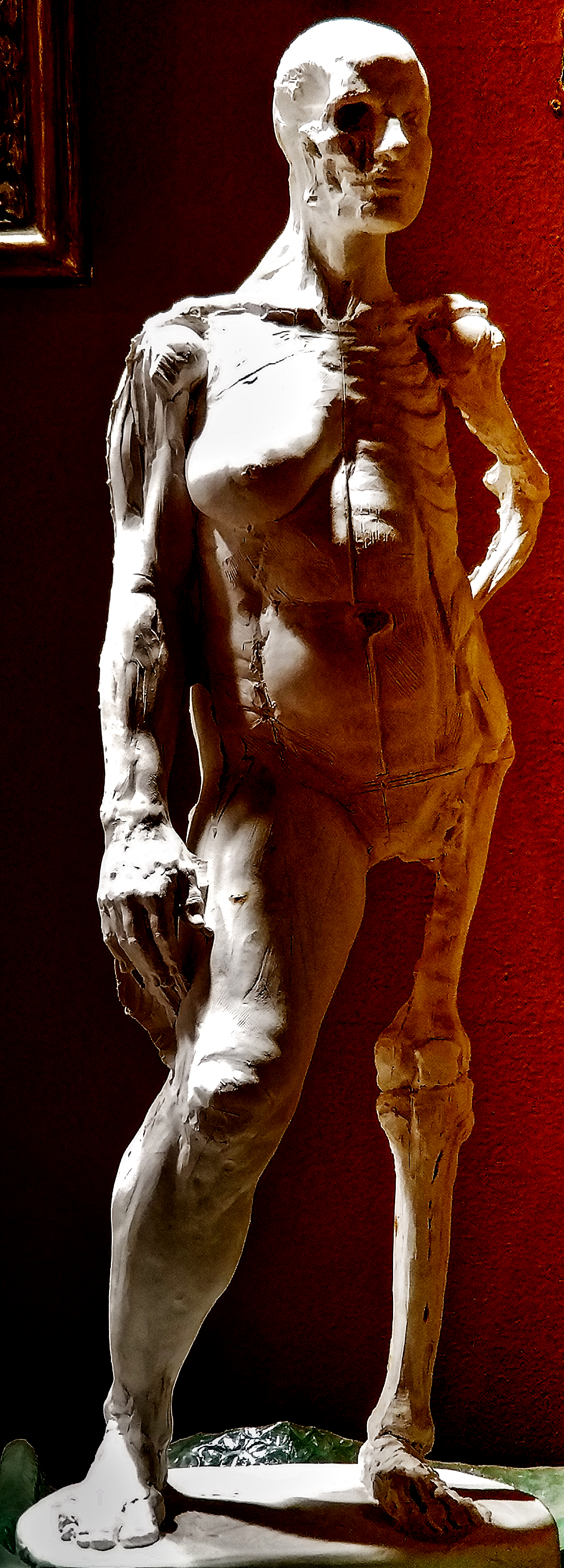
Anatomy Figure Demonstration Sculpture From Class, Plaster – unchased – raw, Anna Prussian Front View 8
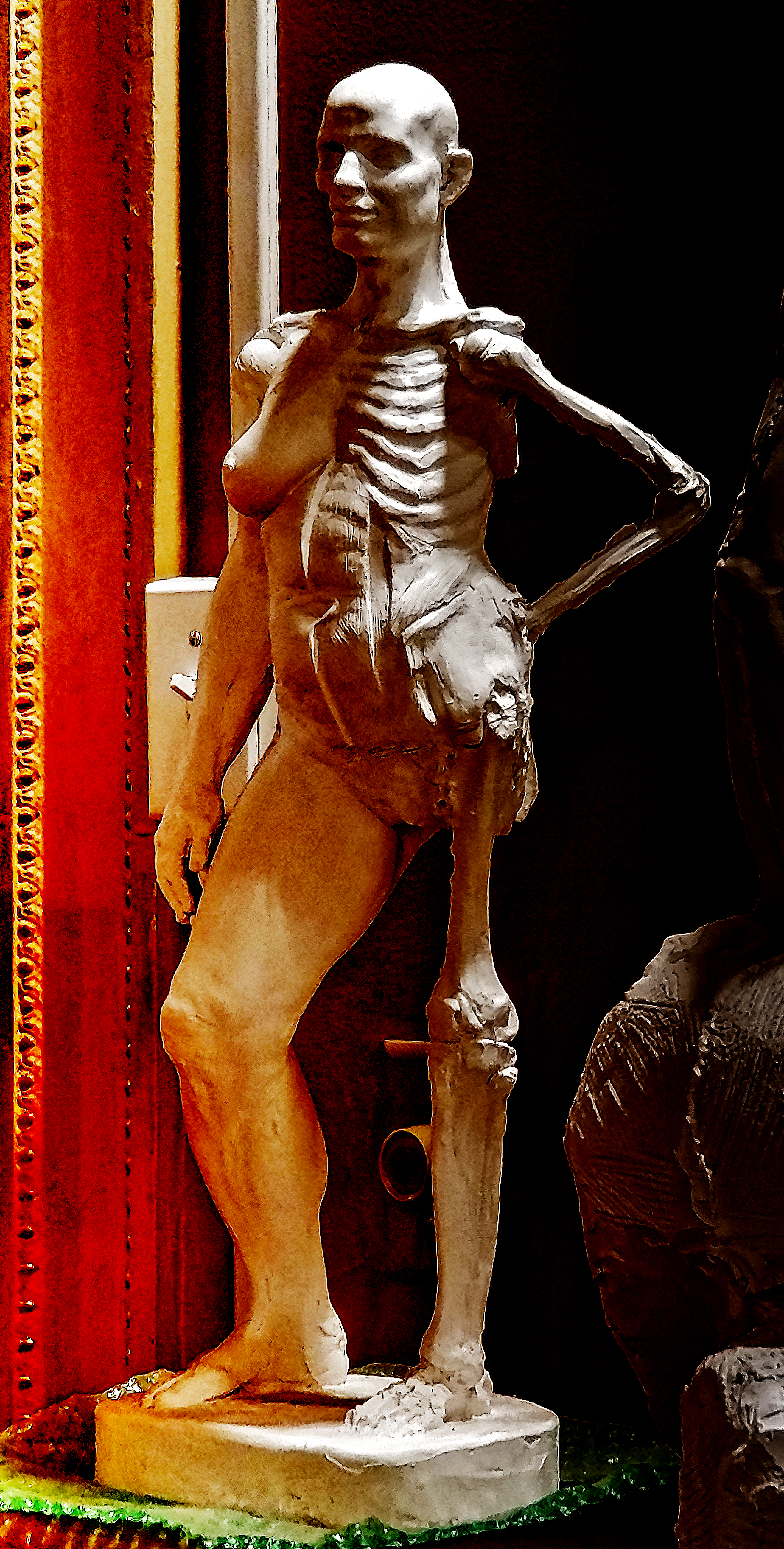
Anatomy Figure Demonstration Sculpture From Class, Plaster – unchased – raw, Anna Prussian Front Side View 7
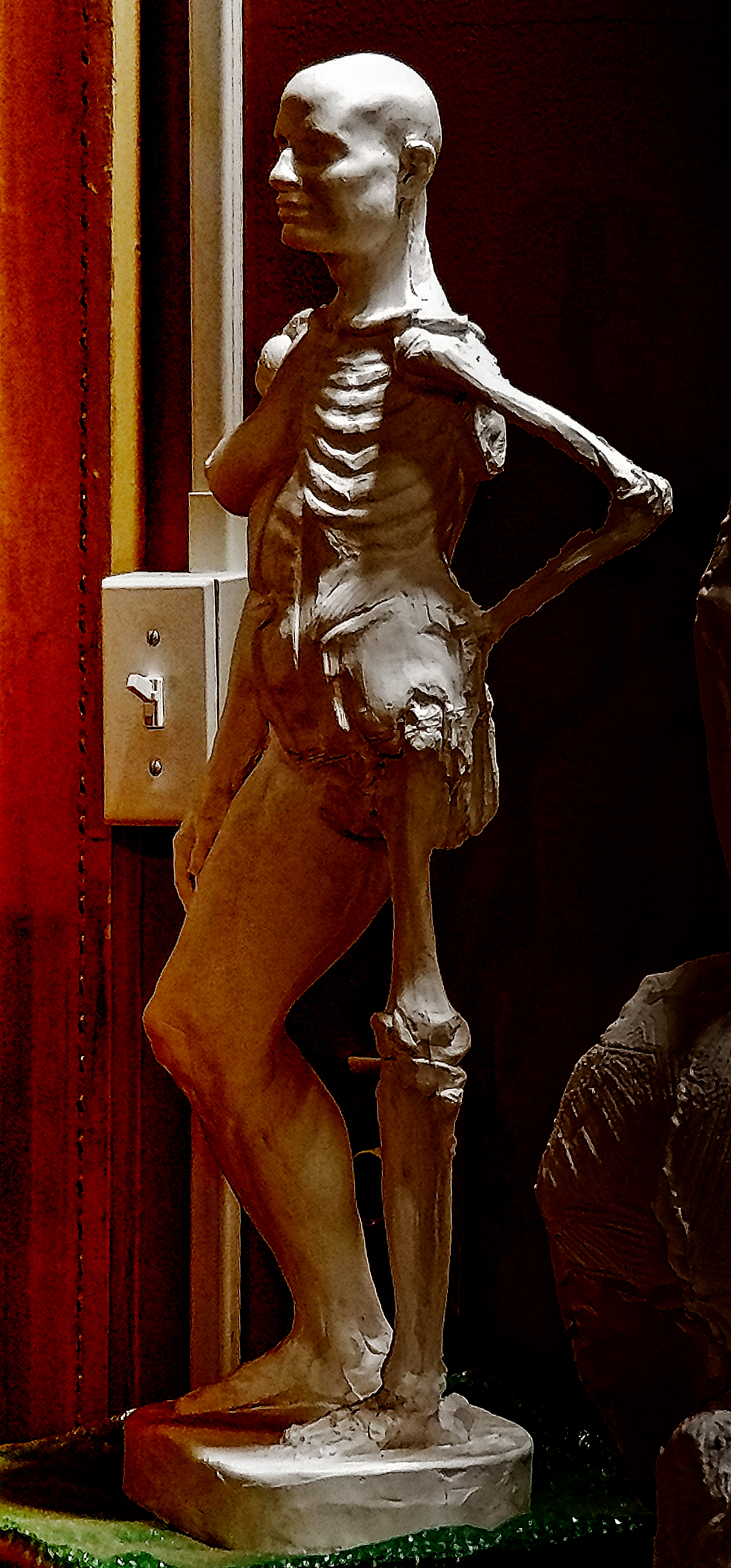
Anatomy Figure Demonstration Sculpture From Class, Plaster – unchased – raw, Anna Prussian Side View 6
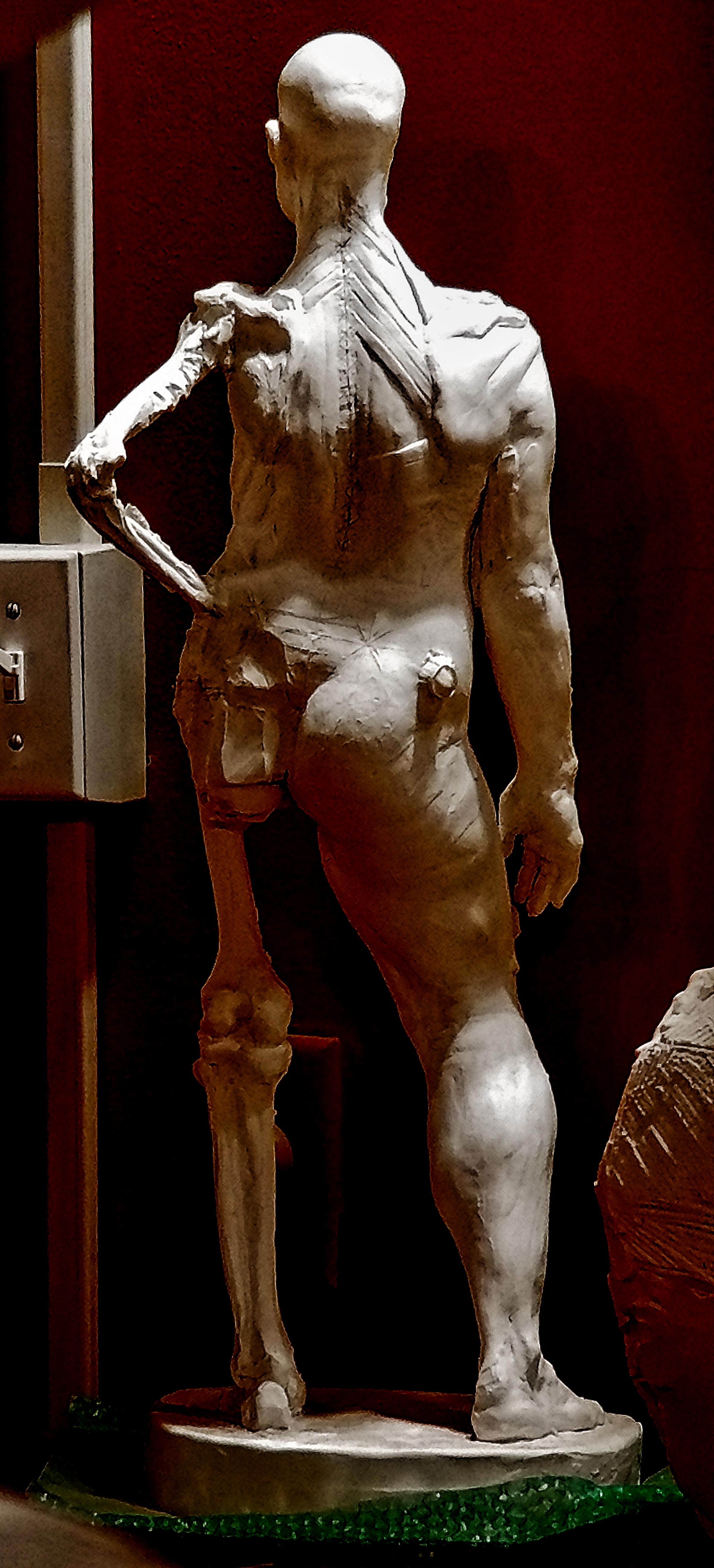
Anatomy Figure Demonstration Sculpture From Class, Plaster – unchased – raw, Anna Prussian Back View 5
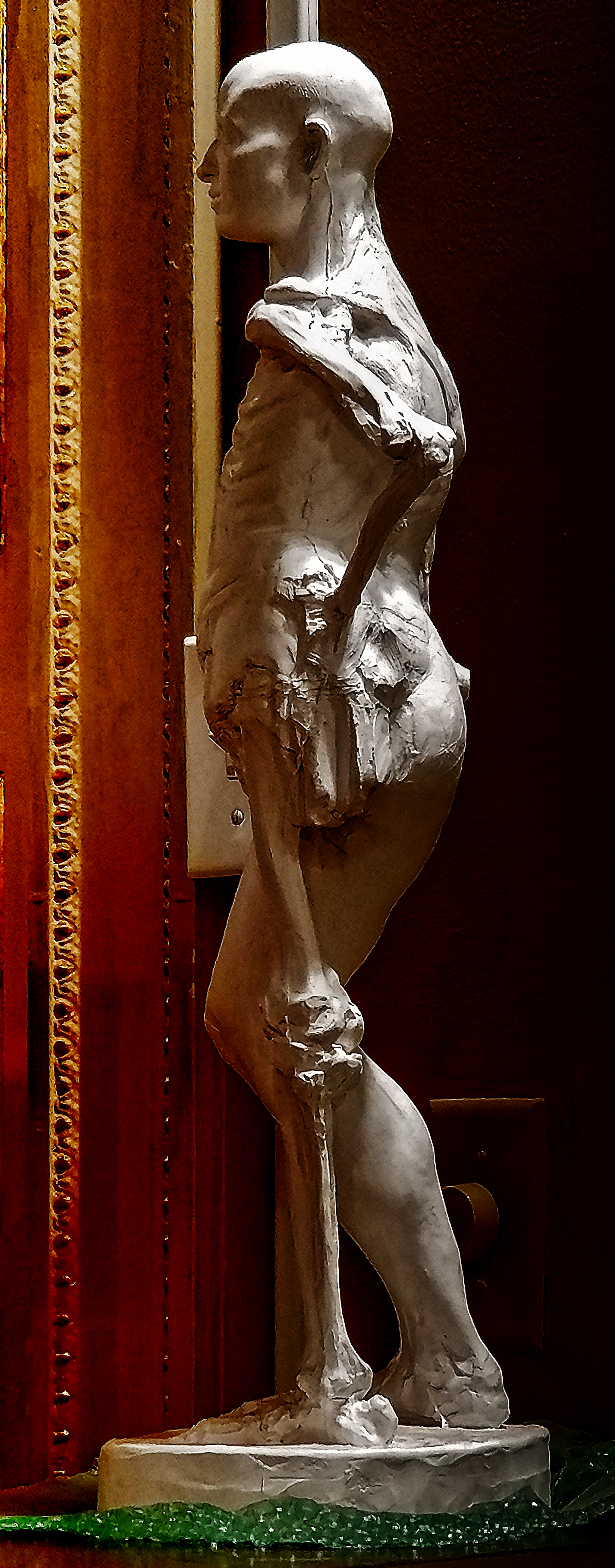
Anatomy Figure Demonstration Sculpture From Class, Plaster – unchased – raw, Anna Prussian Back Side View 4
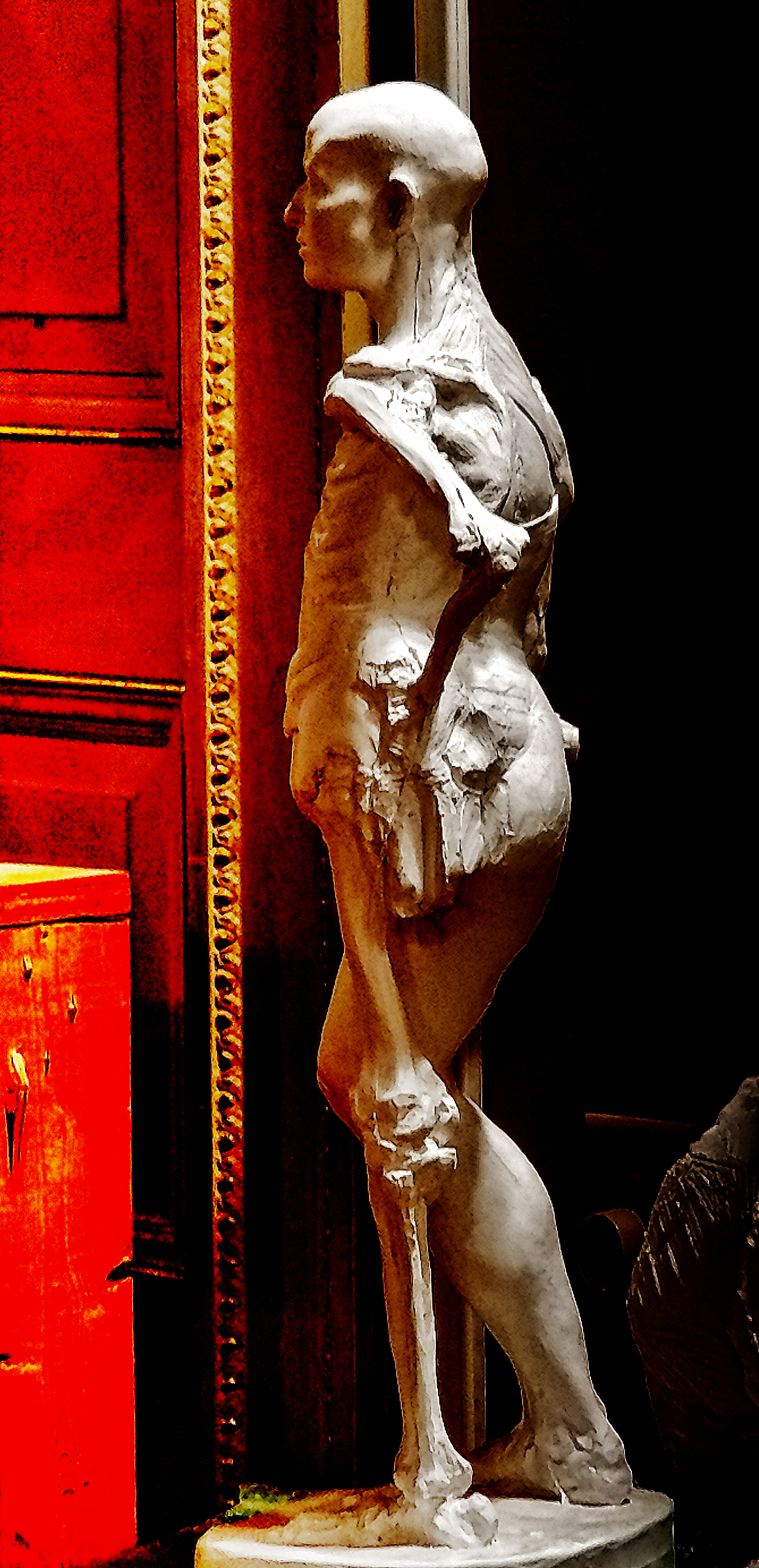
Anatomy Figure Demonstration Sculpture From Class, Plaster – unchased – raw, Anna Prussian Back Side View 3
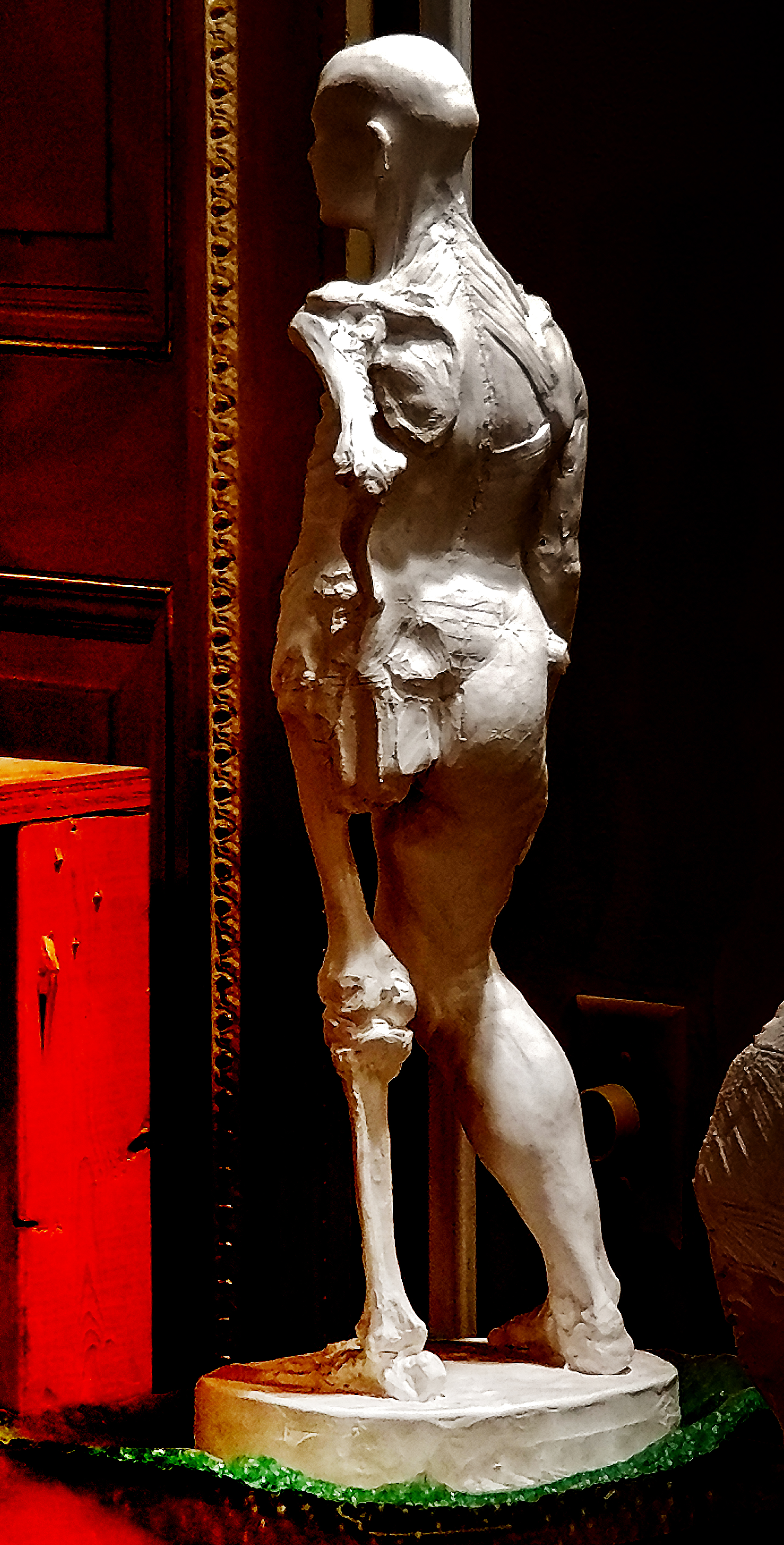
Anatomy Figure Demonstration Sculpture From Class, Plaster – unchased – raw, Anna Prussian Back Left 2 View
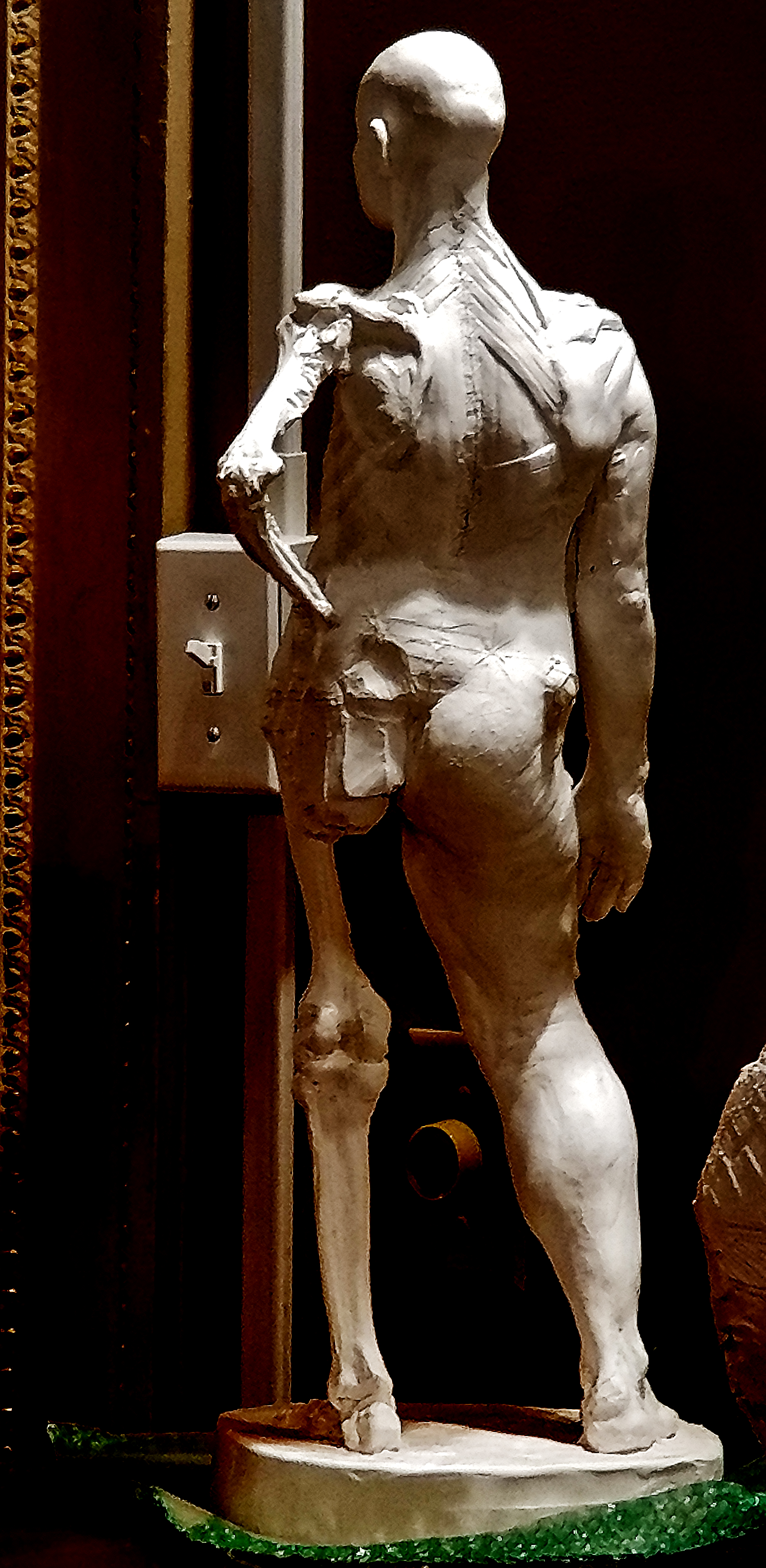
Anatomy Figure Demonstration Sculpture From Class, Plaster – unchased – raw, Anna Prussian Back View 1
________________________________________________________________________________________________________________________________________________________________
Parking is free, there is plenty of space available for the model and students to park on the Square, as well as additional parking behind the townhouse in a private parking area.
____________________________________________________________________________________________________________________
Mr. Parker is a graduate of the Pennsylvania Academy of the Fine Arts where he studied for six years.
Mr. Parker studied concurrently at the Frudakis Academy of Fine Art at which time he received a National Sculpture Society Merit Scholarship. Later study in Europe in the first half of the 1990s.
Private Sculpture Studio, Drawing & Sculpture Classes, By Appointment – Open Drawing & Sculpture Group Sessions, Commissioned Portrait Bust Sculpture, Fountain Sculpture, Figure Sculpture, & Relief Sculpture Compositions. Private Gallery of exhibited sculpture, by appointment.
[contact-form][contact-field label=’Name’ type=’name’ required=’1’/][contact-field label=’Email’ type=’email’ required=’1’/][contact-field label=’Website’ type=’url’/][contact-field label=’Comment’ type=’textarea’ required=’1’/][contact-field label=’Telephone Number’ type=’text’/][contact-field label=’Name of the Art Class Course%26#x002c; or Open Group you are interested in attending%26#x002c; or requesting information on. ‘ type=’text’/][contact-field label=’City%26#x002c; State%26#x002c; Country’ type=’text’/][contact-field label=’The day of the week%26#x002c; the hours available%26#x002c; time frame you would be interested in an ongoing Class Course Session%26#x002c; or Open Group Session to participate in. There is the possibility of an additional Class%26#x002c; or Open Group Sessions depending on the response of enrollment%26#x002c; or participation interest. The main Art Classes page heading has what are active Class Course Sessions%26#x002c; and Open Groups. ‘ type=’text’/][contact-field label=’Potential Student%26#x002c; Artist participant in an Open Group%26#x002c; or you are a potential Life Model?’ type=’text’/][contact-field label=’New Field’ type=’text’/][/contact-form]

Comments
ANATOMICAL FIGURE SCULPTURE COURSE — No Comments
HTML tags allowed in your comment: <a href="" title=""> <abbr title=""> <acronym title=""> <b> <blockquote cite=""> <cite> <code> <del datetime=""> <em> <i> <q cite=""> <s> <strike> <strong>